The Persil Power
Fiasco
How Unilever failed to research about consumer behavior
Presented by:-
Mutahira Dar
Semester III MBA , Section ‘C’
Presidency Business School
Company profile:-
 Anglo- Dutch multinational
company.
 Founded in 1933.
 Headquartered
in London and Rotterdam.
 One of the oldest multinational
companies .
 Its products are available in
around 190 countries.
 Unilever owns over 400 brands.
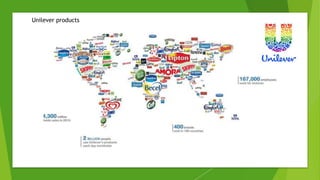
Unilever products
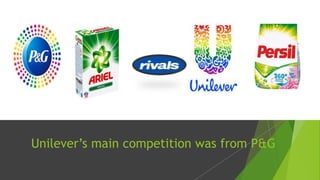
Unilever’s main competition was from P&G
So, what was Persil Power and why
did it attract so much flak?
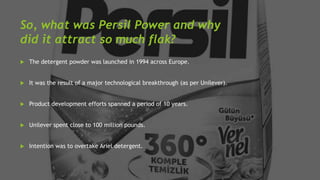
 The detergent powder was launched in 1994 across Europe.
 It was the result of a major technological breakthrough (as per Unilever).
 Product development efforts spanned a period of 10 years.
 Unilever spent close to 100 million pounds.
 Intention was to overtake Ariel detergent.
What was unique about
Persil power ?
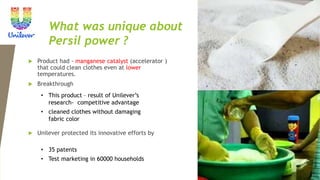
 Product had - manganese catalyst (accelerator )
that could clean clothes even at lower
temperatures.
 Breakthrough
 Unilever protected its innovative efforts by
• This product – result of Unilever’s
research- competitive advantage
• cleaned clothes without damaging
fabric color
• 35 patents
• Test marketing in 60000 households
P&G springs into action-
failure of Persil
 After testing, P&G found that under certain
conditions, Persil powder damaged the
clothes.
 The catalyst could damage colored clothes at
high temperatures.
 A big failure for Unilever.
 Negative publicity by P&G.
• lost the legal battle
• forced to withdraw the product
• lost 300 million pounds spent in development
and marketing.
So what went wrong?
 Unilever had conducted most of its tests in Dutch
households
 In Northern Europe, people washed their white and
colored clothes separately.
 In Southern Europe, clothes were washed together in
hot water.
 Problem:-
1. Manganese catalyst was fine at low temperatures.
2. But it reacted with certain dyes at hot temperatures.
 So, it was a niche product (cold water ,white
garments)
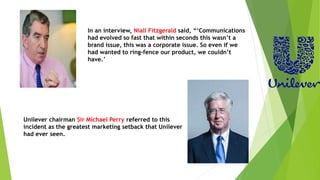
In an interview, Niall Fitzgerald said, “‘Communications
had evolved so fast that within seconds this wasn’t a
brand issue, this was a corporate issue. So even if we
had wanted to ring-fence our product, we couldn’t
have.’
Unilever chairman Sir Michael Perry referred to this
incident as the greatest marketing setback that Unilever
had ever seen.
Consequences
 People avoided this product with a thought that
it will destroy their clothes.
 The product was a flop.
 Most retailers quickly took the product from
their shelves.
 Unilever launched a crisis management program
 1995 – Persil power replaced with Persil New
Generation.
 Great organizations learn from their failures
instead of carping about it or fixing
accountabilities when the damage is already
done.
 This experience taught Unilever to promote
greater cross-functional co-ordination
between R&D and marketing functions.
 The company institutionalized the process of
setting up dedicated innovation centers
instead of adopting an ethnocentric
approach.
 No brand is an island.
 Products have to be tested under all
conditions.
Q1.What are the aspects of consumer behavior that
Unilever missed? How did it affect their business?
 Unilever only focused on one segment of market that
is Northern Europe where people washed clothes
separately and in low temperatures. (NICHE
PRODUCT) but sold product in other geographies.
 Failed to test product in all conditions.
 Lagged behind in research of usage norms in different
geographies.
 Effects on business:-
• product was withdrawn
• negative publicity by P&G
• loss of 300 million pounds
Q2.Does this case study highlight the
importance of understanding consumer
behavior before a business decides to
innovate a product?
 Yes, because it helps to understand
Difference in consumer behaviors in different geographies
Varied expectations of consumers
Reasons why consumers buy a product
Likes and dislikes of consumers
Impact of brand failure on corporate reputation
The significant risk for Unilever was…
• If one product encounters a problem the image of other products could be
damaged
• Dent in brand reputation
• Loss in customer’s trust and confidence in the brand
Thank you…

THE PERSIL POWER FIASCO

  • 1.
    The Persil Power Fiasco HowUnilever failed to research about consumer behavior Presented by:- Mutahira Dar Semester III MBA , Section ‘C’ Presidency Business School
  • 2.
    Company profile:-  Anglo-Dutch multinational company.  Founded in 1933.  Headquartered in London and Rotterdam.  One of the oldest multinational companies .  Its products are available in around 190 countries.  Unilever owns over 400 brands.
  • 3.
  • 4.
  • 5.
    So, what wasPersil Power and why did it attract so much flak?  The detergent powder was launched in 1994 across Europe.  It was the result of a major technological breakthrough (as per Unilever).  Product development efforts spanned a period of 10 years.  Unilever spent close to 100 million pounds.  Intention was to overtake Ariel detergent.
  • 6.
    What was uniqueabout Persil power ?  Product had - manganese catalyst (accelerator ) that could clean clothes even at lower temperatures.  Breakthrough  Unilever protected its innovative efforts by • This product – result of Unilever’s research- competitive advantage • cleaned clothes without damaging fabric color • 35 patents • Test marketing in 60000 households
  • 7.
    P&G springs intoaction- failure of Persil  After testing, P&G found that under certain conditions, Persil powder damaged the clothes.  The catalyst could damage colored clothes at high temperatures.  A big failure for Unilever.  Negative publicity by P&G. • lost the legal battle • forced to withdraw the product • lost 300 million pounds spent in development and marketing.
  • 8.
    So what wentwrong?  Unilever had conducted most of its tests in Dutch households  In Northern Europe, people washed their white and colored clothes separately.  In Southern Europe, clothes were washed together in hot water.  Problem:- 1. Manganese catalyst was fine at low temperatures. 2. But it reacted with certain dyes at hot temperatures.  So, it was a niche product (cold water ,white garments)
  • 9.
    In an interview,Niall Fitzgerald said, “‘Communications had evolved so fast that within seconds this wasn’t a brand issue, this was a corporate issue. So even if we had wanted to ring-fence our product, we couldn’t have.’ Unilever chairman Sir Michael Perry referred to this incident as the greatest marketing setback that Unilever had ever seen.
  • 10.
    Consequences  People avoidedthis product with a thought that it will destroy their clothes.  The product was a flop.  Most retailers quickly took the product from their shelves.  Unilever launched a crisis management program  1995 – Persil power replaced with Persil New Generation.
  • 11.
     Great organizationslearn from their failures instead of carping about it or fixing accountabilities when the damage is already done.  This experience taught Unilever to promote greater cross-functional co-ordination between R&D and marketing functions.  The company institutionalized the process of setting up dedicated innovation centers instead of adopting an ethnocentric approach.  No brand is an island.  Products have to be tested under all conditions.
  • 13.
    Q1.What are theaspects of consumer behavior that Unilever missed? How did it affect their business?  Unilever only focused on one segment of market that is Northern Europe where people washed clothes separately and in low temperatures. (NICHE PRODUCT) but sold product in other geographies.  Failed to test product in all conditions.  Lagged behind in research of usage norms in different geographies.  Effects on business:- • product was withdrawn • negative publicity by P&G • loss of 300 million pounds
  • 14.
    Q2.Does this casestudy highlight the importance of understanding consumer behavior before a business decides to innovate a product?  Yes, because it helps to understand Difference in consumer behaviors in different geographies Varied expectations of consumers Reasons why consumers buy a product Likes and dislikes of consumers Impact of brand failure on corporate reputation
  • 15.
    The significant riskfor Unilever was… • If one product encounters a problem the image of other products could be damaged • Dent in brand reputation • Loss in customer’s trust and confidence in the brand
  • 16.