N A T I O N A L S K I L L Q U A L I F I C A T I O N F R A M E W O R K
( U G C )
C O M P I L E D B Y
G V E N K A T E S H
NSQF
Introduction
 India : Demand- Supply mismatch
 Need for skilled workforce
 Skill development for students needed .. Better
employability
 National Vocational Educational Qualification
framework (NVEQF) …. NSQF (National Skills
Qualification Framework)
 Sector Skill Councils (SSCs) developing Qualification
Packs (QPs) & National Occupational Standards
(NOSs)
NSQF : 3 Schemes (Skill based Education)
 Implementation of community colleges : 2014-15
 B.Voc – expand scope of vocational education
 Vertical mobility to students admitted into
community colleges (for diploma) so that they could
pursue degree in a college or university
 Further impetus to vocational education through
DEEN DAYAL UPADHYAY CENTRES FOR
KNOWLEDGE ACQUISITION & UPGRADATION
OF SKILLED HUMAN ABILITIES & LIVELIHOOD
(KAUSHAL)
What is NSQF?
 Competency based framework – qualifications as per
knowledge, skills and aptitude
 NSQF Levels graded from 1 to 10 (based on learning
outcomes)
 National Occupational Standards (NOS) –
knowledge and skill needed for effective performance
in a job role.
 QP (Qualification Pack) : Sum of NOSs
 NSDC : National Skill Development Corporation has
set up SSCs – Sector Skill Councils
Outcomes of NSQF
 Mobility between vocational and general education
 Recognition of Prior Learning (RPL) – transition
from non formal to an organized job market
 Standardized and consistent training outcomes
across India
 Global mobility of skilled workforce from India
Credits
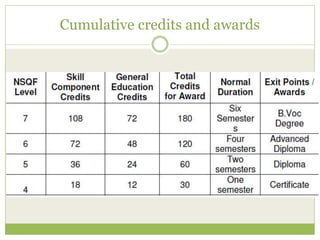
 Certificate - 6 months course (30 credits) (NSQF Level
4)
 Diploma – 1 year course (60 credits) (Level 5)
 Advanced Diploma -2 year course (120 credits) (Level 6)
 B. Voc Degree – 3 year course (180 credits) (Level7)
 P.G. Diploma – 1 year after B. Voc (60 credits) (Level 8)
 M. Voc Degree – 2 years after B. Voc (120 credits)(Level
9)
 Research Level (M Phil or PhD) (Level 10)
 Multiple entry and exit options provide greater flexibility
to students
Curriculum
 40% General Education Component
 60% Skill Component (Employment oriented)
 Curricula and system certification as per SAMVAY
(Skill Assessment Matrix for Vocational
Advancement of Youth)
 Inputs from industry experts encouraged where NOS
(National Occupational Standard) not available
General Education Component
 Aim is to provide holistic development
 Courses like communication skills, soft skills, ICT
skills, critical thinking, problem solving,
environmental studies and value education
Cumulative credits and awards
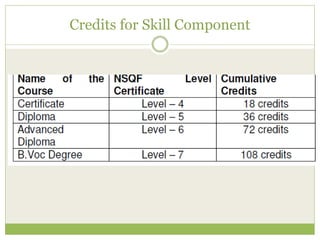
Credits for Skill Component
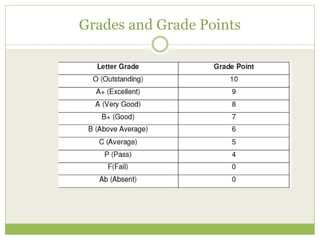
Grades and Grade Points
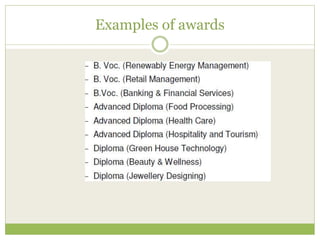
Examples of awards
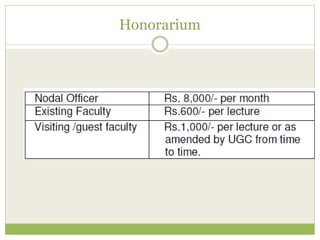
Honorarium

National Skill Qualification Framework

  • 1.
    N A TI O N A L S K I L L Q U A L I F I C A T I O N F R A M E W O R K ( U G C ) C O M P I L E D B Y G V E N K A T E S H NSQF
  • 2.
    Introduction  India :Demand- Supply mismatch  Need for skilled workforce  Skill development for students needed .. Better employability  National Vocational Educational Qualification framework (NVEQF) …. NSQF (National Skills Qualification Framework)  Sector Skill Councils (SSCs) developing Qualification Packs (QPs) & National Occupational Standards (NOSs)
  • 3.
    NSQF : 3Schemes (Skill based Education)  Implementation of community colleges : 2014-15  B.Voc – expand scope of vocational education  Vertical mobility to students admitted into community colleges (for diploma) so that they could pursue degree in a college or university  Further impetus to vocational education through DEEN DAYAL UPADHYAY CENTRES FOR KNOWLEDGE ACQUISITION & UPGRADATION OF SKILLED HUMAN ABILITIES & LIVELIHOOD (KAUSHAL)
  • 4.
    What is NSQF? Competency based framework – qualifications as per knowledge, skills and aptitude  NSQF Levels graded from 1 to 10 (based on learning outcomes)  National Occupational Standards (NOS) – knowledge and skill needed for effective performance in a job role.  QP (Qualification Pack) : Sum of NOSs  NSDC : National Skill Development Corporation has set up SSCs – Sector Skill Councils
  • 5.
    Outcomes of NSQF Mobility between vocational and general education  Recognition of Prior Learning (RPL) – transition from non formal to an organized job market  Standardized and consistent training outcomes across India  Global mobility of skilled workforce from India
  • 6.
    Credits  Certificate -6 months course (30 credits) (NSQF Level 4)  Diploma – 1 year course (60 credits) (Level 5)  Advanced Diploma -2 year course (120 credits) (Level 6)  B. Voc Degree – 3 year course (180 credits) (Level7)  P.G. Diploma – 1 year after B. Voc (60 credits) (Level 8)  M. Voc Degree – 2 years after B. Voc (120 credits)(Level 9)  Research Level (M Phil or PhD) (Level 10)  Multiple entry and exit options provide greater flexibility to students
  • 7.
    Curriculum  40% GeneralEducation Component  60% Skill Component (Employment oriented)  Curricula and system certification as per SAMVAY (Skill Assessment Matrix for Vocational Advancement of Youth)  Inputs from industry experts encouraged where NOS (National Occupational Standard) not available
  • 8.
    General Education Component Aim is to provide holistic development  Courses like communication skills, soft skills, ICT skills, critical thinking, problem solving, environmental studies and value education
  • 9.
  • 10.
  • 11.
  • 12.
  • 13.