THE PASSIVE
VOICE
Álvaro de Luna
Inglés de 2º de Bachillerato
Use of the passive voice
• La voz pasiva permite enfatizar una acción o un estado. El
sujeto de la acción no tiene relevancia, no se conoce o se
asume que todo el mundo lo conoce.
• La voz pasiva de proceso se usa para enfatizar una
acción. La voz pasiva de estado describe un suceso una
vez que este ya ha finalizado.
• Sin embargo, la voz pasiva de proceso no se suele
emplear. Se recurre a ella principalmente en el lenguaje
oficial o en ciertos artículos de prensa. En el lenguaje
corriente se usa más bien la voz activa o la voz pasiva
refleja .
Form of the passive verb
Tense Active Passive
Present Simple Tourists visit be castle. The castle is visited by tourists.
Past Simple Tourists visited the castle. The castle was visited by tourists.
Future Simple Tourists will visit the castle. The castle will be visited by
tourists.
Modals Tourists should visit the castle. The castle should be visited by
tourists.
Present Continuous Tourists are visiting the castle. The castle is being visited by
touritst.
Past Continuous Tourists were visiting the castle. The castle was being visited by
touritst.
Present Perfect Simple Tourists have visited the castle. The castle has been visited by
tourits.
Past Perfect Simple Tourists had visited the castle. The castle had been visited by
tourists.
Modal Perfect Tourists must have visited the
castle.
The castle must have been visited
by tourists.
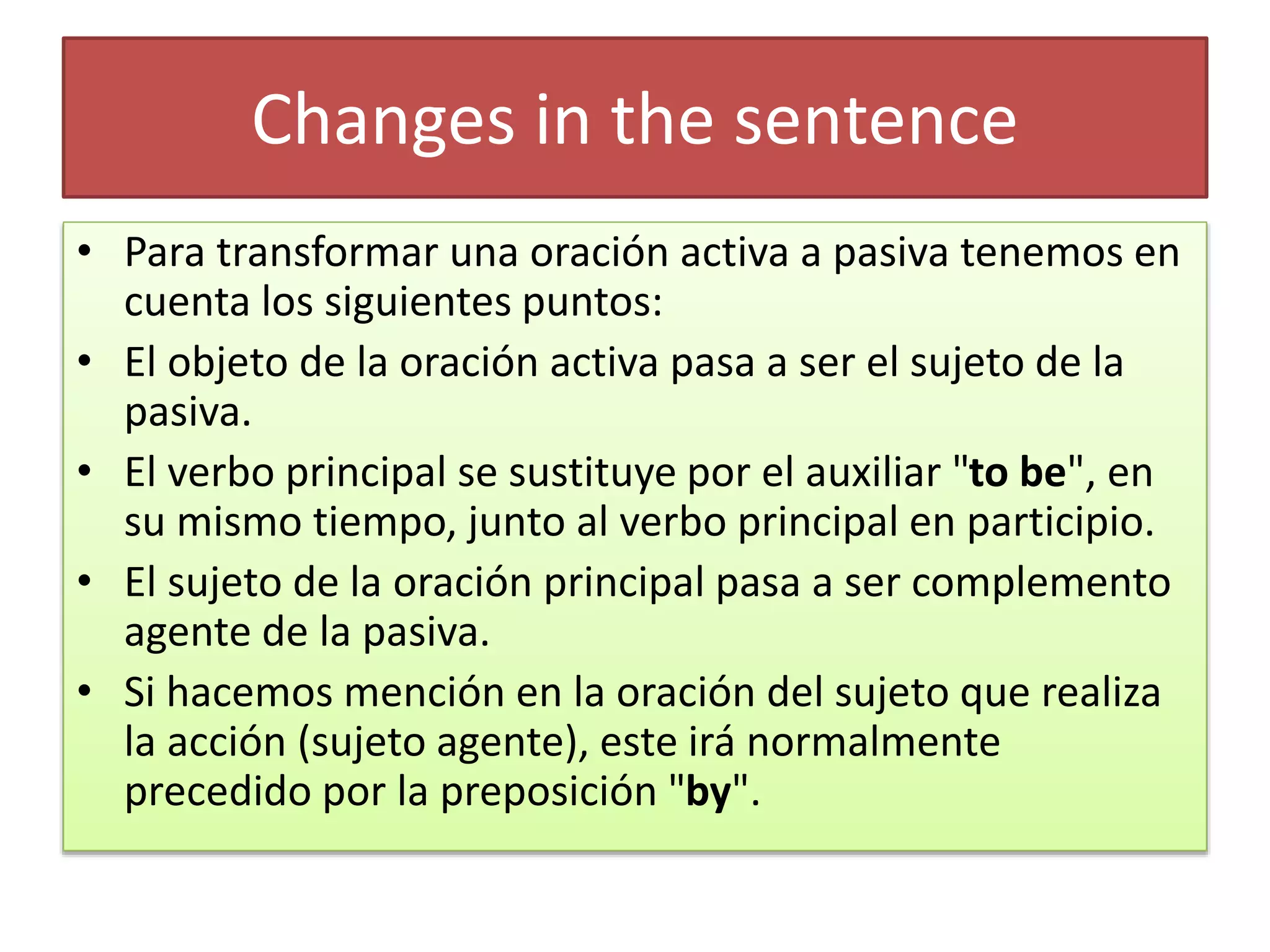
Changes in the sentence
• Para transformar una oración activa a pasiva tenemos en
cuenta los siguientes puntos:
• El objeto de la oración activa pasa a ser el sujeto de la
pasiva.
• El verbo principal se sustituye por el auxiliar "to be", en
su mismo tiempo, junto al verbo principal en participio.
• El sujeto de la oración principal pasa a ser complemento
agente de la pasiva.
• Si hacemos mención en la oración del sujeto que realiza
la acción (sujeto agente), este irá normalmente
precedido por la preposición "by".
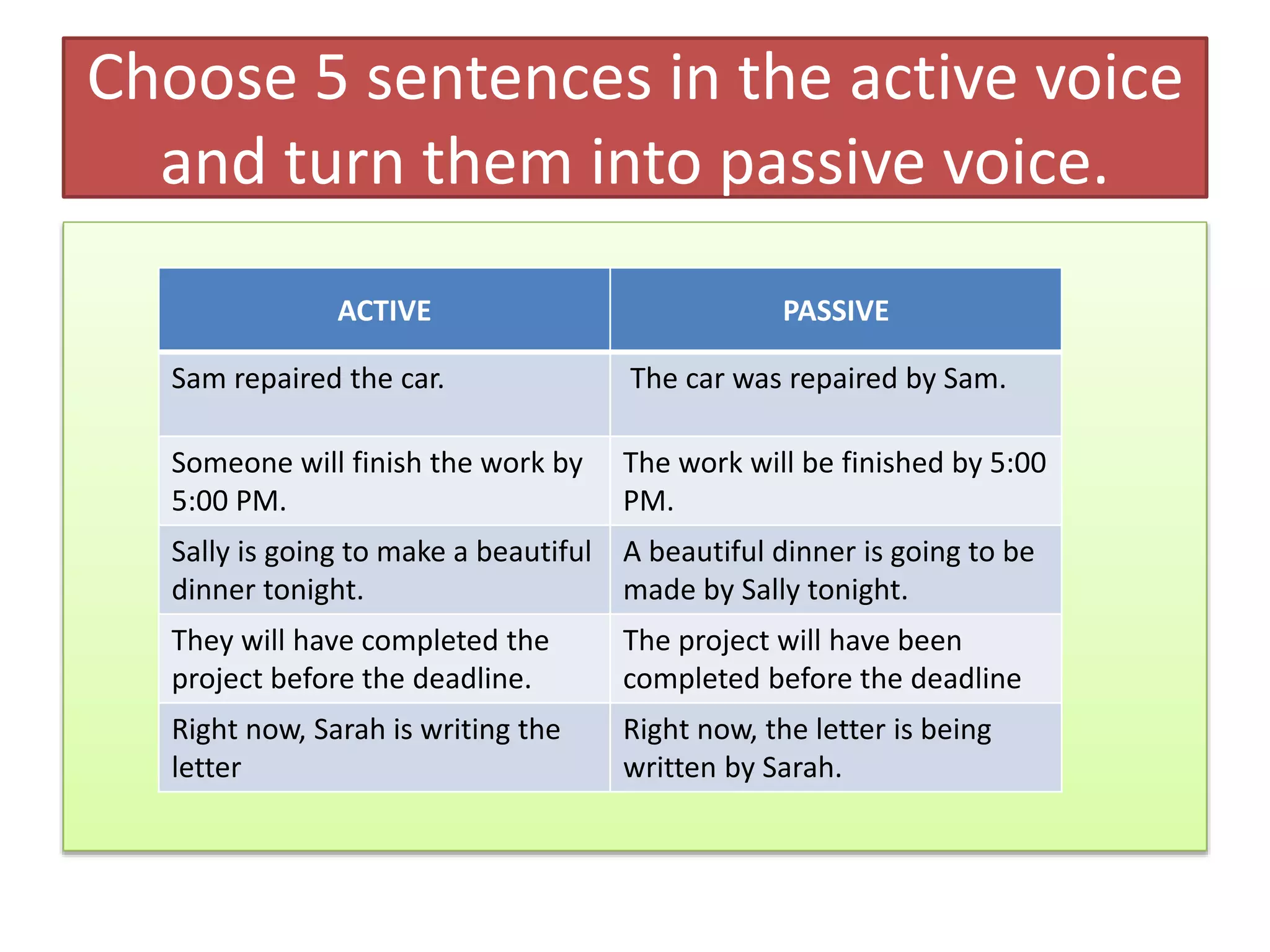
Choose 5 sentences in the active voice
and turn them into passive voice.
ACTIVE PASSIVE
Sam repaired the car. The car was repaired by Sam.
Someone will finish the work by
5:00 PM.
The work will be finished by 5:00
PM.
Sally is going to make a beautiful
dinner tonight.
A beautiful dinner is going to be
made by Sally tonight.
They will have completed the
project before the deadline.
The project will have been
completed before the deadline
Right now, Sarah is writing the
letter
Right now, the letter is being
written by Sarah.
THE END

La pasiva en inglés. (álvaro de luna)

  • 1.
    THE PASSIVE VOICE Álvaro deLuna Inglés de 2º de Bachillerato
  • 2.
    Use of thepassive voice • La voz pasiva permite enfatizar una acción o un estado. El sujeto de la acción no tiene relevancia, no se conoce o se asume que todo el mundo lo conoce. • La voz pasiva de proceso se usa para enfatizar una acción. La voz pasiva de estado describe un suceso una vez que este ya ha finalizado. • Sin embargo, la voz pasiva de proceso no se suele emplear. Se recurre a ella principalmente en el lenguaje oficial o en ciertos artículos de prensa. En el lenguaje corriente se usa más bien la voz activa o la voz pasiva refleja .
  • 3.
    Form of thepassive verb Tense Active Passive Present Simple Tourists visit be castle. The castle is visited by tourists. Past Simple Tourists visited the castle. The castle was visited by tourists. Future Simple Tourists will visit the castle. The castle will be visited by tourists. Modals Tourists should visit the castle. The castle should be visited by tourists. Present Continuous Tourists are visiting the castle. The castle is being visited by touritst. Past Continuous Tourists were visiting the castle. The castle was being visited by touritst. Present Perfect Simple Tourists have visited the castle. The castle has been visited by tourits. Past Perfect Simple Tourists had visited the castle. The castle had been visited by tourists. Modal Perfect Tourists must have visited the castle. The castle must have been visited by tourists.
  • 4.
    Changes in thesentence • Para transformar una oración activa a pasiva tenemos en cuenta los siguientes puntos: • El objeto de la oración activa pasa a ser el sujeto de la pasiva. • El verbo principal se sustituye por el auxiliar "to be", en su mismo tiempo, junto al verbo principal en participio. • El sujeto de la oración principal pasa a ser complemento agente de la pasiva. • Si hacemos mención en la oración del sujeto que realiza la acción (sujeto agente), este irá normalmente precedido por la preposición "by".
  • 5.
    Choose 5 sentencesin the active voice and turn them into passive voice. ACTIVE PASSIVE Sam repaired the car. The car was repaired by Sam. Someone will finish the work by 5:00 PM. The work will be finished by 5:00 PM. Sally is going to make a beautiful dinner tonight. A beautiful dinner is going to be made by Sally tonight. They will have completed the project before the deadline. The project will have been completed before the deadline Right now, Sarah is writing the letter Right now, the letter is being written by Sarah.
  • 6.