VOZ PASIVA
Virginia
Osorio
Zamora

PASSIVE
VOICE
Para comenzar estableceremos la
diferencia con el lenguaje que
utilizamos habitualmente llamado
“voz activa” en el cual la acción
del verbo recae sobre el sujeto,
mientras que en la “voz pasiva” la
acción del verbo recae sobre el
objeto.
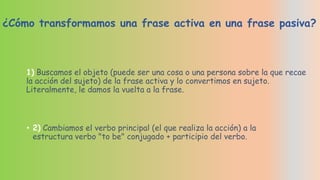
¿Cómo transformamos una frase activa en una frase pasiva?

1) Buscamos el objeto (puede ser una cosa o una persona sobre la que recae
la acción del sujeto) de la frase activa y lo convertimos en sujeto.
Literalmente, le damos la vuelta a la frase.

• 2) Cambiamos el verbo principal (el que realiza la acción) a la
estructura verbo "to be" conjugado + participio del verbo.
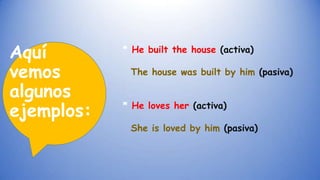
Aquí
vemos
algunos
ejemplos:

* He built the house (activa)
The house was built by him (pasiva)
* He loves her (activa)

She is loved by him (pasiva)
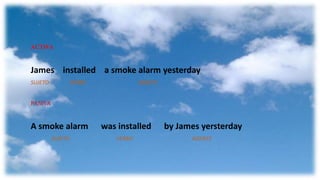
ACTIVA

James installed a smoke alarm yesterday
SUJETO

VERBO

OBJETO

PASIVA

A smoke alarm

was installed

by James yersterday

SUJETO

VERBO

AGENTE
Dependiendo de la forma en que
se encuentre el verbo en la voz
activa pasa a un tiempo verbal o
a otro para la voz pasiva
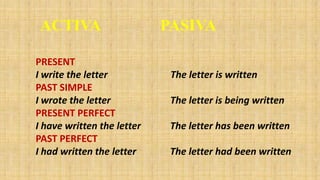
ACTIVA
PRESENT
I write the letter
PAST SIMPLE
I wrote the letter
PRESENT PERFECT
I have written the letter
PAST PERFECT
I had written the letter

PASIVA
The letter is written
The letter is being written

The letter has been written
The letter had been written
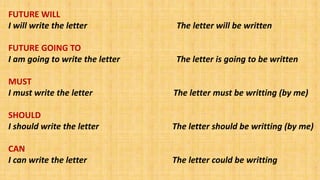
FUTURE WILL
I will write the letter

The letter will be written

FUTURE GOING TO
I am going to write the letter

The letter is going to be written

MUST
I must write the letter

The letter must be writting (by me)

SHOULD
I should write the letter

The letter should be writting (by me)

CAN
I can write the letter

The letter could be writting
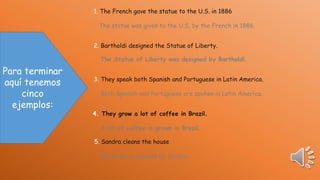
1. The French gave the statue to the U.S. in 1886
The statue was given to the U.S. by the French in 1886.
2. Bartholdi designed the Statue of Liberty.

The Statue of Liberty was designed by Bartholdi.

Para terminar
aquí tenemos
cinco
ejemplos:

3. They speak both Spanish and Portuguese in Latin America.
Both Spanish and Portuguese are spoken in Latin America.
4. They grow a lot of coffee in Brazil.
A lot of coffee is grown in Brazil.

5. Sandra cleans the house
The house is cleaned by Sandra .

Voz pasiva

  • 1.
  • 2.
    Para comenzar estableceremosla diferencia con el lenguaje que utilizamos habitualmente llamado “voz activa” en el cual la acción del verbo recae sobre el sujeto, mientras que en la “voz pasiva” la acción del verbo recae sobre el objeto.
  • 3.
    ¿Cómo transformamos unafrase activa en una frase pasiva? 1) Buscamos el objeto (puede ser una cosa o una persona sobre la que recae la acción del sujeto) de la frase activa y lo convertimos en sujeto. Literalmente, le damos la vuelta a la frase. • 2) Cambiamos el verbo principal (el que realiza la acción) a la estructura verbo "to be" conjugado + participio del verbo.
  • 4.
    Aquí vemos algunos ejemplos: * He builtthe house (activa) The house was built by him (pasiva) * He loves her (activa) She is loved by him (pasiva)
  • 5.
    ACTIVA James installed asmoke alarm yesterday SUJETO VERBO OBJETO PASIVA A smoke alarm was installed by James yersterday SUJETO VERBO AGENTE
  • 6.
    Dependiendo de laforma en que se encuentre el verbo en la voz activa pasa a un tiempo verbal o a otro para la voz pasiva
  • 7.
    ACTIVA PRESENT I write theletter PAST SIMPLE I wrote the letter PRESENT PERFECT I have written the letter PAST PERFECT I had written the letter PASIVA The letter is written The letter is being written The letter has been written The letter had been written
  • 8.
    FUTURE WILL I willwrite the letter The letter will be written FUTURE GOING TO I am going to write the letter The letter is going to be written MUST I must write the letter The letter must be writting (by me) SHOULD I should write the letter The letter should be writting (by me) CAN I can write the letter The letter could be writting
  • 9.
    1. The Frenchgave the statue to the U.S. in 1886 The statue was given to the U.S. by the French in 1886. 2. Bartholdi designed the Statue of Liberty. The Statue of Liberty was designed by Bartholdi. Para terminar aquí tenemos cinco ejemplos: 3. They speak both Spanish and Portuguese in Latin America. Both Spanish and Portuguese are spoken in Latin America. 4. They grow a lot of coffee in Brazil. A lot of coffee is grown in Brazil. 5. Sandra cleans the house The house is cleaned by Sandra .