Juan Fco Blesa
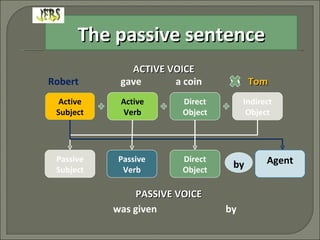
The passive sentence ACTIVE VOICE Active Subject Active Verb Direct Object Robert gave a coin by Passive Verb Passive Subject Agent PASSIVE VOICE was given by
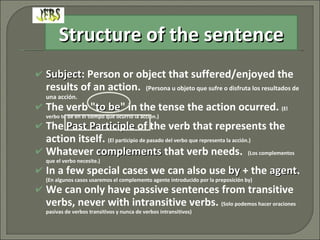
Subject : Person or object that suffered/enjoyed the results of an action.  (Persona u objeto que sufre o disfruta los resultados de una acción. The verb " to be " in the tense the action  ocurred .  (El verbo to be en el tiempo que ocurrió la acción.) The  Past Participle  of the verb that represents the action itself.  (El participio de pasado del verbo que representa la acción.) Whatever  complements  that verb needs.  (Los complementos que el verbo necesite.) In a few special cases we can also use  by  + the  agent .  (En algunos casos usaremos el complemento agente introducido por la preposición by) We can only have passive sentences from transitive verbs, never with intransitive verbs.  (Solo podemos hacer oraciones pasivas de verbos transitivos y nunca de verbos intransitivos) Structure of the sentence
Structure of the verb TENSES EXAMPLES Present Simple Pigs  are  often  used  to find truffles Present Continuous My house  is being redecorated  at the moment Present Perfect I  have  never  been   given  flowers on my birthday Past Simple This picture  was   painted  by Picasso Past Continuous When I saw him he  was   being followed  by the police Past Perfect She was angry because she  had  already  been told  three times Future Simple When you get there everything  will be finished Going to - Future They  are not going to be  easily  convinced Conditional Simple You  would be punished  if they found out Conditional Perfect If you hadn’t told them  would  I  have been invited ?
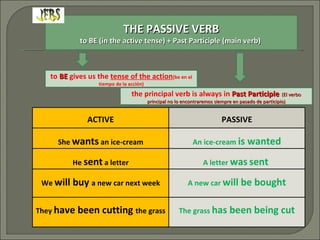
to  BE  gives us the  tense of the action (be en el tiempo de la acción) the principal verb is always in  Past Participle   (El verbo principal no lo encontraremos siempre en pasado de participio) THE PASSIVE VERB to BE (in the active tense) + Past Participle (main verb)  ACTIVE PASSIVE She  wants  an ice-cream An ice-cream  is wanted He  sent  a letter A letter  was   sent  We  will buy  a new car next week A new car  will be bought They  have been cutting  the grass The grass  has been being cut
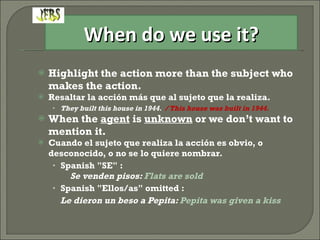
Highlight the action more than the subject who makes the action. Resaltar la acción más que al sujeto que la realiza. They built this house in 1944.  / This house was built in 1944. When the  agent  is  unknown  or we don’t want to mention it.  Cuando el sujeto que realiza la acción es obvio, o desconocido, o no se lo quiere nombrar. Spanish "SE" :  Se venden pisos:  Flats are sold Spanish "Ellos/as" omitted :  Le dieron un beso a Pepita:  Pepita was given a kiss When do we use it?
To make the  object  of the active verb  more important Para hacer el objeto del verbo activo más importante. America  was discovered in 1492 by Christopher Columbus When  the description of the  agent  is very  long Cuando la descripción del agente es muy larga. A charity record has been made by  many famous names in the world of pop music. When do we use it?
The passive sentence ACTIVE VOICE Active Subject Active Verb Direct Object Indirect Object Robert gave a coin Tom to by Direct Object Passive Verb Passive Subject Agent PASSIVE VOICE was given by
Si una oración tiene dos complementos, ponemos como sujeto el primer complemento que vaya detrás del verbo en activa, sea el directo o el indirecto. They will send  some books  to Pam  /  Some books will be sent  to Pam. They will send  Pam  some books. /  Pam will be sent  some books. Si el complemento indirecto es un pronombre, hay que cambiarlo a la forma de sujeto. She showed  me  her new house I was shown  her new house. Esta pasiva se suele utilizar con los verbos  ask, give, lend, pay, offer, promise, sell, send, show  y  tell , que llevan el doble complemento: directo e indirecto.
1/ They   built   this house  in 1466 2/  This house  was built  in 1466 1/  Channel islanders  speak   French & English 2/  French & English  are spoken  by Channel islanders 1/  This book  will change  your life 2/  Your life  will be changed  by   this book Examples
1/  They   have cut  the grass 2/  The grass  has been cut 1/  My mother  is going to give  me  a present 2/  I  am going to be given  a present  by my mother 1/  Susan   wrote   an e-mail  to him 1/  He   was written  an e-mail  by Susan Examples
1/  They   can’t answer  your question 2/  Your question  can’t be answered 1/  Someone  had to take  her  to hospital after this 2/  She   had to be taken   to hospital after the crash 1/  They  shouldn’t allow   the children  to do these things  2/  The children  shouldn’t be allowed  to do these things 1/  Someone   must tell  him  if we want him to know 2/  He  must be told  if we want him to know More examples
HAVE/ GET  something   done : Arranging for or paying for somebody to do something for you. (Get is more informal). (Esta estructura tiene un sentido pasivo, pues el nombre que va en medio recibe la acción del verbo que va en participio)  They cut his hair  He had  his hair  cut They cleaned her carpet She got  her carpet  cleaned They has mended our car. We have had  our car  mended They  translated their book. They had got  their book  translated More passive stuff HAVE +  Object  +  Past Participle
Verbs like: Believe, Think, Consider, Say, Report, Know, Expect, Feel, Understand, Find Introductory IT is used (It introductorio) It  is said  that  he started the fire.  (Se dice que el empezó el fuego) It  is thought  that  she doesn't live in London (Se piensa que ella no vive en Londres) It  was known  that  the King is coming tomorrow (Se sabía que el Rey viene mañana) More passive stuff IT + passive verb   +  complete subordinate sentence without changes
Verbs like: Believe, Think, Consider, Say, Report, Know, Expect, Feel, Understand, Find It  is said  that  he started the fire  (action in the Past) He  is said  to have started  the fire  (Infinitive Perfect) It  is thought  that  she doesn't live in London  (Present) She  is thought  to live  in London  (Infinitive Present) More passive stuff Subordinate   subject   + verb passive +   subordinate active verb in INFINITIVE.
GET  is used instead of  BE  with passive meaning. Informal English. I got stuck in a traffic jam She is getting married After  NEED / WANT  the -ing form can be used with passive meaning This job needs doing That room wants cleaning More passive stuff

Passive voice

  • 1.
  • 2.
    The passive sentenceACTIVE VOICE Active Subject Active Verb Direct Object Robert gave a coin by Passive Verb Passive Subject Agent PASSIVE VOICE was given by
  • 3.
    Subject : Personor object that suffered/enjoyed the results of an action. (Persona u objeto que sufre o disfruta los resultados de una acción. The verb " to be " in the tense the action ocurred . (El verbo to be en el tiempo que ocurrió la acción.) The Past Participle of the verb that represents the action itself. (El participio de pasado del verbo que representa la acción.) Whatever complements that verb needs. (Los complementos que el verbo necesite.) In a few special cases we can also use by + the agent . (En algunos casos usaremos el complemento agente introducido por la preposición by) We can only have passive sentences from transitive verbs, never with intransitive verbs. (Solo podemos hacer oraciones pasivas de verbos transitivos y nunca de verbos intransitivos) Structure of the sentence
  • 4.
    Structure of theverb TENSES EXAMPLES Present Simple Pigs are often used to find truffles Present Continuous My house is being redecorated at the moment Present Perfect I have never been given flowers on my birthday Past Simple This picture was painted by Picasso Past Continuous When I saw him he was being followed by the police Past Perfect She was angry because she had already been told three times Future Simple When you get there everything will be finished Going to - Future They are not going to be easily convinced Conditional Simple You would be punished if they found out Conditional Perfect If you hadn’t told them would I have been invited ?
  • 5.
    to BE gives us the tense of the action (be en el tiempo de la acción) the principal verb is always in Past Participle (El verbo principal no lo encontraremos siempre en pasado de participio) THE PASSIVE VERB to BE (in the active tense) + Past Participle (main verb) ACTIVE PASSIVE She wants an ice-cream An ice-cream is wanted He sent a letter A letter was sent We will buy a new car next week A new car will be bought They have been cutting the grass The grass has been being cut
  • 6.
    Highlight the actionmore than the subject who makes the action. Resaltar la acción más que al sujeto que la realiza. They built this house in 1944. / This house was built in 1944. When the agent is unknown or we don’t want to mention it. Cuando el sujeto que realiza la acción es obvio, o desconocido, o no se lo quiere nombrar. Spanish "SE" : Se venden pisos: Flats are sold Spanish "Ellos/as" omitted : Le dieron un beso a Pepita: Pepita was given a kiss When do we use it?
  • 7.
    To make the object of the active verb more important Para hacer el objeto del verbo activo más importante. America was discovered in 1492 by Christopher Columbus When the description of the agent is very long Cuando la descripción del agente es muy larga. A charity record has been made by many famous names in the world of pop music. When do we use it?
  • 8.
    The passive sentenceACTIVE VOICE Active Subject Active Verb Direct Object Indirect Object Robert gave a coin Tom to by Direct Object Passive Verb Passive Subject Agent PASSIVE VOICE was given by
  • 9.
    Si una oracióntiene dos complementos, ponemos como sujeto el primer complemento que vaya detrás del verbo en activa, sea el directo o el indirecto. They will send some books to Pam / Some books will be sent to Pam. They will send Pam some books. / Pam will be sent some books. Si el complemento indirecto es un pronombre, hay que cambiarlo a la forma de sujeto. She showed me her new house I was shown her new house. Esta pasiva se suele utilizar con los verbos ask, give, lend, pay, offer, promise, sell, send, show y tell , que llevan el doble complemento: directo e indirecto.
  • 10.
    1/ They built this house in 1466 2/ This house was built in 1466 1/ Channel islanders speak French & English 2/ French & English are spoken by Channel islanders 1/ This book will change your life 2/ Your life will be changed by this book Examples
  • 11.
    1/ They have cut the grass 2/ The grass has been cut 1/ My mother is going to give me a present 2/ I am going to be given a present by my mother 1/ Susan wrote an e-mail to him 1/ He was written an e-mail by Susan Examples
  • 12.
    1/ They can’t answer your question 2/ Your question can’t be answered 1/ Someone had to take her to hospital after this 2/ She had to be taken to hospital after the crash 1/ They shouldn’t allow the children to do these things 2/ The children shouldn’t be allowed to do these things 1/ Someone must tell him if we want him to know 2/ He must be told if we want him to know More examples
  • 13.
    HAVE/ GET something done : Arranging for or paying for somebody to do something for you. (Get is more informal). (Esta estructura tiene un sentido pasivo, pues el nombre que va en medio recibe la acción del verbo que va en participio) They cut his hair He had his hair cut They cleaned her carpet She got her carpet cleaned They has mended our car. We have had our car mended They translated their book. They had got their book translated More passive stuff HAVE + Object + Past Participle
  • 14.
    Verbs like: Believe,Think, Consider, Say, Report, Know, Expect, Feel, Understand, Find Introductory IT is used (It introductorio) It is said that he started the fire. (Se dice que el empezó el fuego) It is thought that she doesn't live in London (Se piensa que ella no vive en Londres) It was known that the King is coming tomorrow (Se sabía que el Rey viene mañana) More passive stuff IT + passive verb + complete subordinate sentence without changes
  • 15.
    Verbs like: Believe,Think, Consider, Say, Report, Know, Expect, Feel, Understand, Find It is said that he started the fire (action in the Past) He is said to have started the fire (Infinitive Perfect) It is thought that she doesn't live in London (Present) She is thought to live in London (Infinitive Present) More passive stuff Subordinate subject + verb passive + subordinate active verb in INFINITIVE.
  • 16.
    GET isused instead of BE with passive meaning. Informal English. I got stuck in a traffic jam She is getting married After NEED / WANT the -ing form can be used with passive meaning This job needs doing That room wants cleaning More passive stuff