ACTIVE AND PASSIVE VOICEBY MARIA GUADALUPE GARCIA CASTAÑEDA
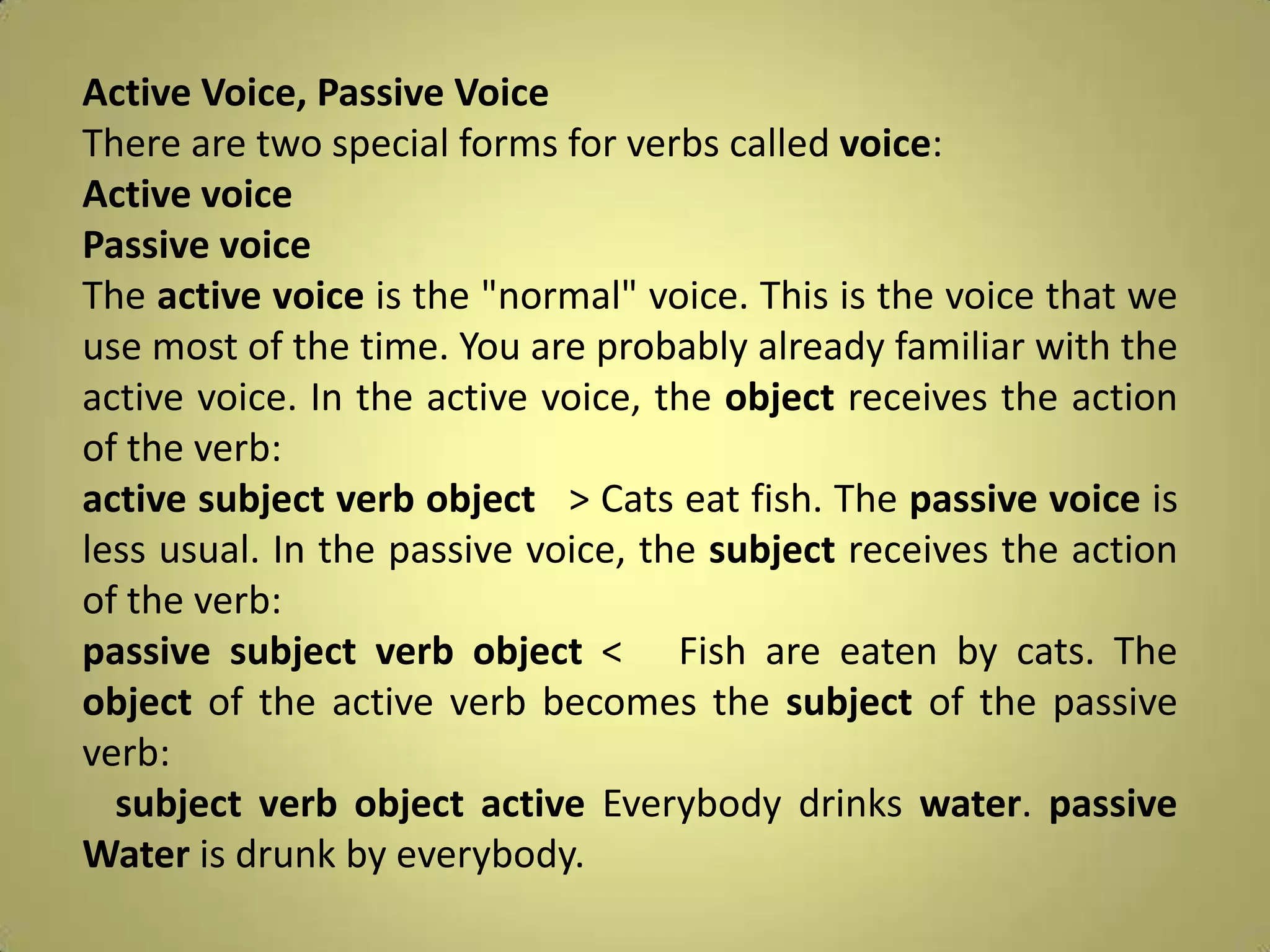
Active Voice, Passive VoiceThere are two special forms for verbs called voice:Active voicePassive voiceThe active voice is the "normal" voice. This is the voice that we use most of the time. You are probably already familiar with the active voice. In the active voice, the object receives the action of the verb:activesubjectverbobject   > Cats eat fish. The passive voice is less usual. In the passive voice, the subject receives the action of the verb:passivesubjectverbobject <   Fish are eaten by cats. The object of the active verb becomes the subject of the passive verb:  subjectverbobjectactive Everybody drinks water. passiveWater is drunk by everybody.
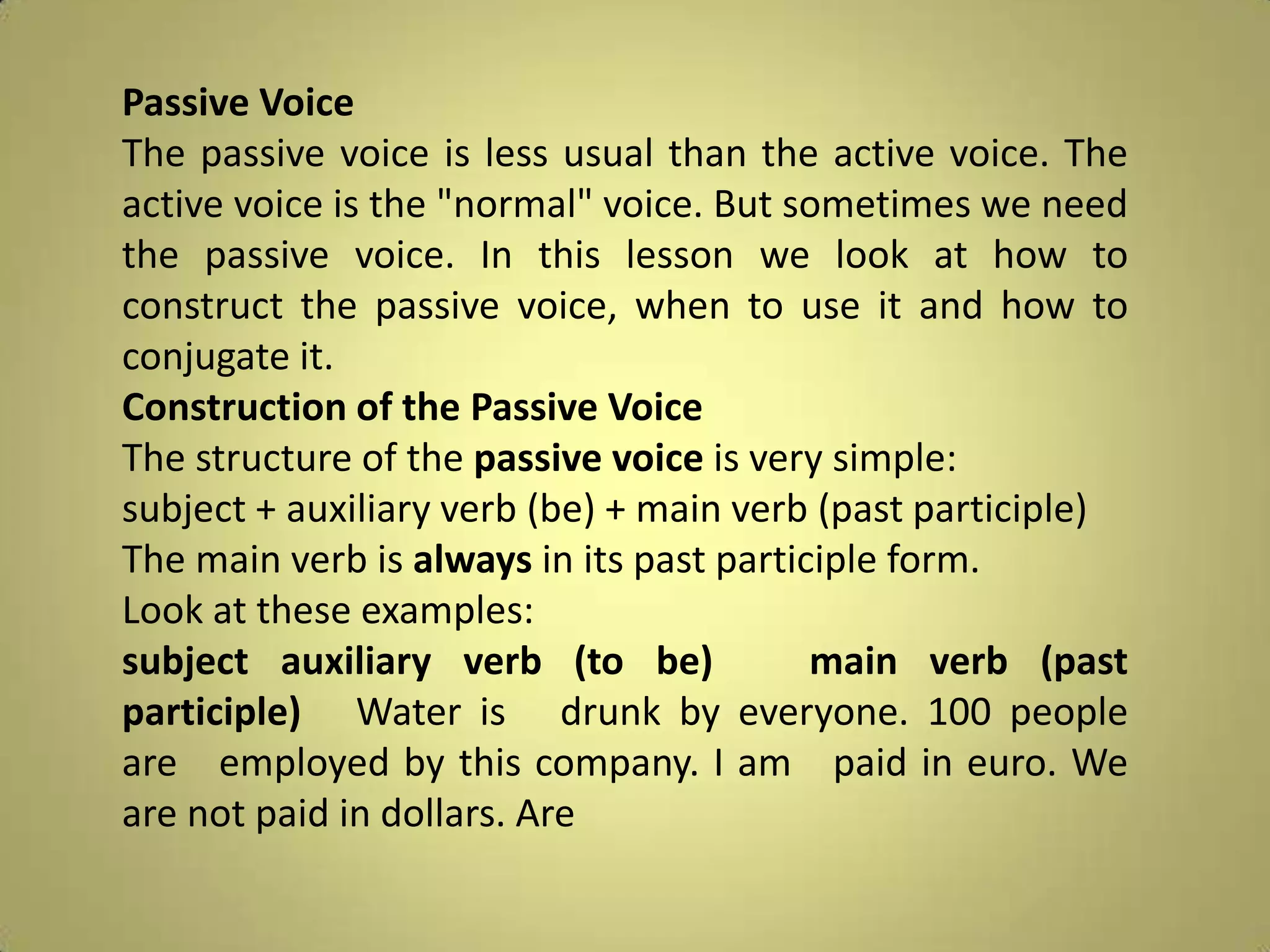
Passive VoiceThe passive voice is less usual than the active voice. The active voice is the "normal" voice. But sometimes we need the passive voice. In this lesson we look at how to construct the passive voice, when to use it and how to conjugate it.Construction of the Passive VoiceThe structure of the passive voice is very simple:subject + auxiliary verb (be) + main verb (past participle)The main verb is always in its past participle form.Look at these examples:subjectauxiliary verb (to be)   main verb (past participle)   Water is   drunk by everyone. 100 people are   employed by this company. I am   paid in euro. We are not paid in dollars. Are
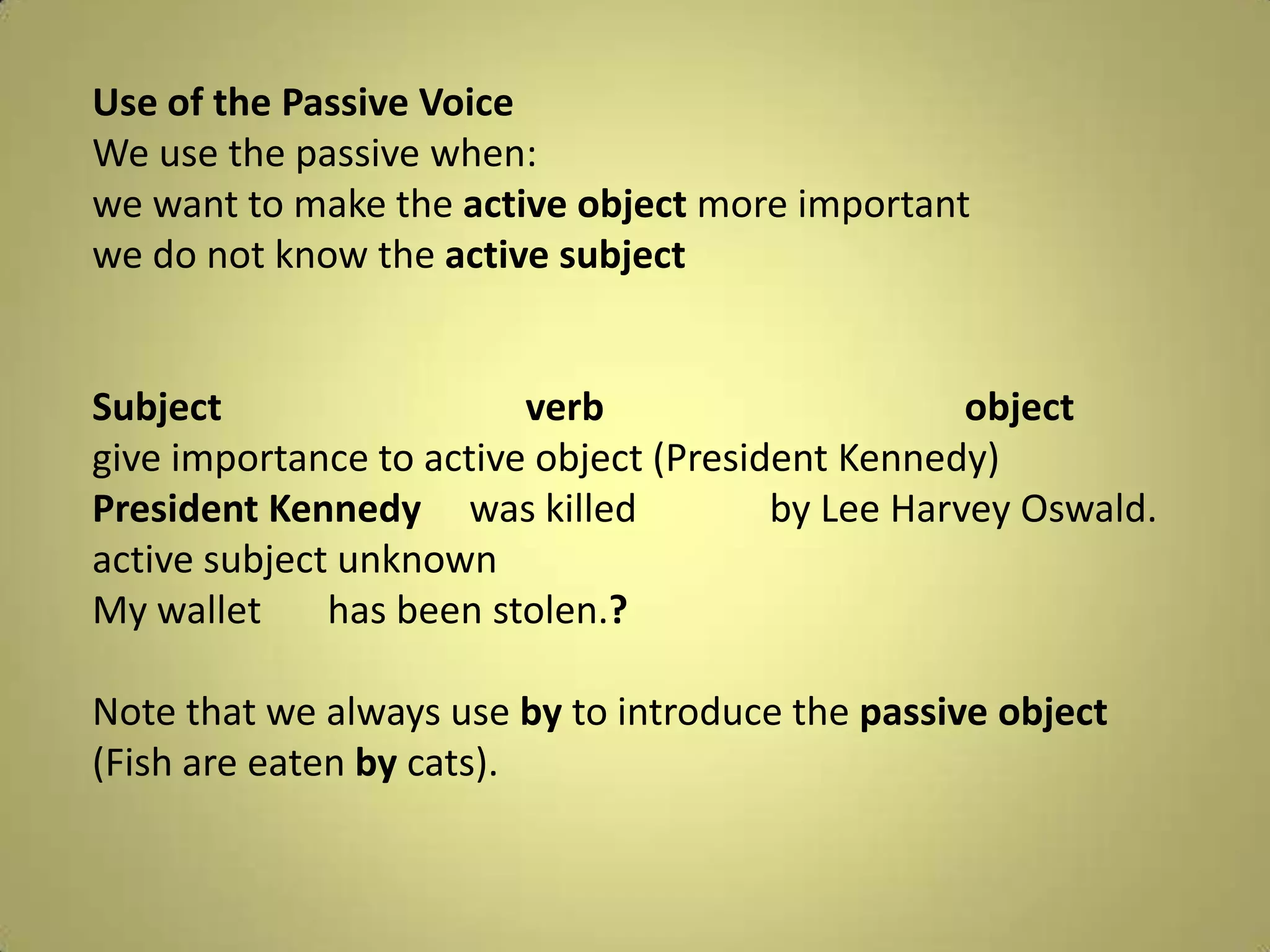
Use of thePassiveVoiceWe use thepassivewhen:wewanttomaketheactive object more importantwe do notknowtheactive subject Subjectverbobjectgiveimportanceto active object (President Kennedy)PresidentKennedy     waskilledbyLee Harvey Oswald.active subjectunknownMy wallet       has beenstolen.?Note thatwealways use byto introduce thepassiveobject (Fish are eatenbycats).
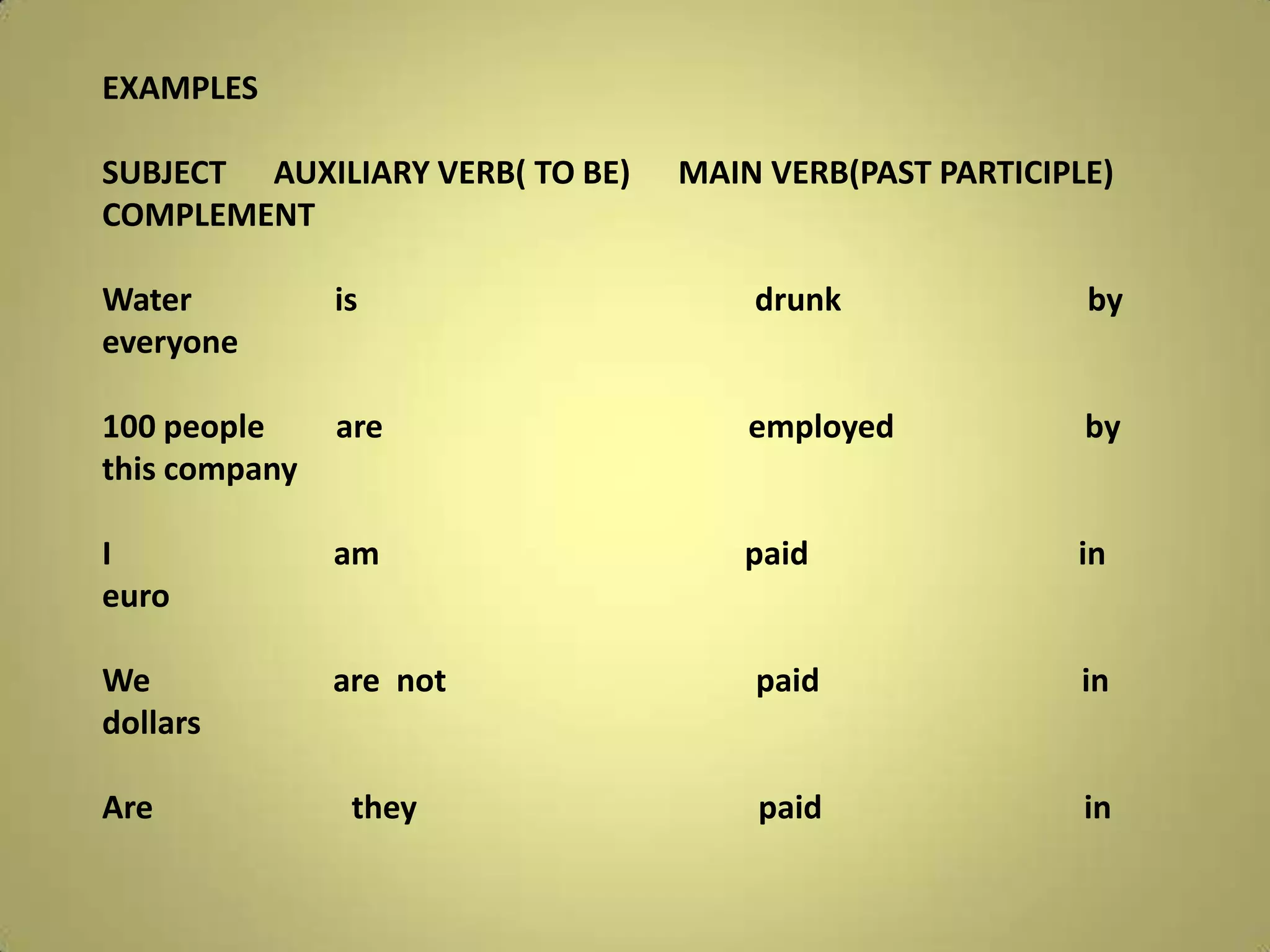
EXAMPLESSUBJECT      AUXILIARY VERB( TO BE)      MAIN VERB(PAST PARTICIPLE)            COMPLEMENTWater                  is                                                  drunk                               by everyone100 people         are                                              employed                        by  this companyI                            am                                              paid                                  in euroWe                       are  not                                       paid                                 in dollarsAre                         they                                           paid                                 in
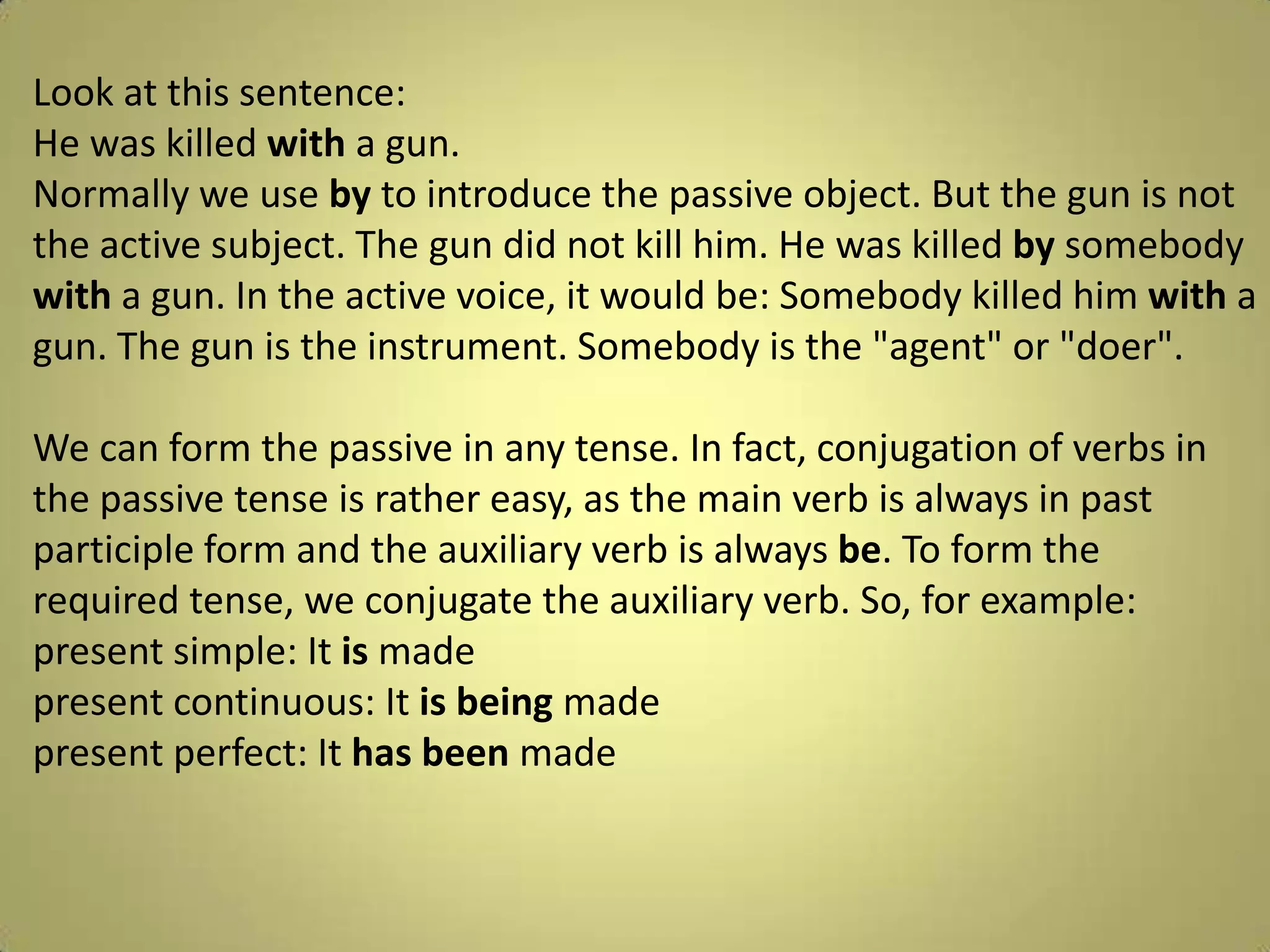
Look at thissentence: He waskilledwith a gun.Normallywe use byto introduce thepassiveobject. Butthegunisnotthe active subject. Thegundidnotkillhim. He waskilledbysomebodywith a gun. In the active voice, itwouldbe: Somebodykilledhimwith a gun. Thegunistheinstrument. Somebodyisthe "agent" or "doer".We can formthepassive in any tense. In fact, conjugation of verbs in thepassive tense israthereasy, as themainverbisalways in pastparticipleform and theauxiliaryverbisalwaysbe. Toformtherequired tense, weconjugatetheauxiliaryverb. So, forexample:present simple: Itismadepresentcontinuous: Itisbeingmadepresentperfect: Ithas beenmade
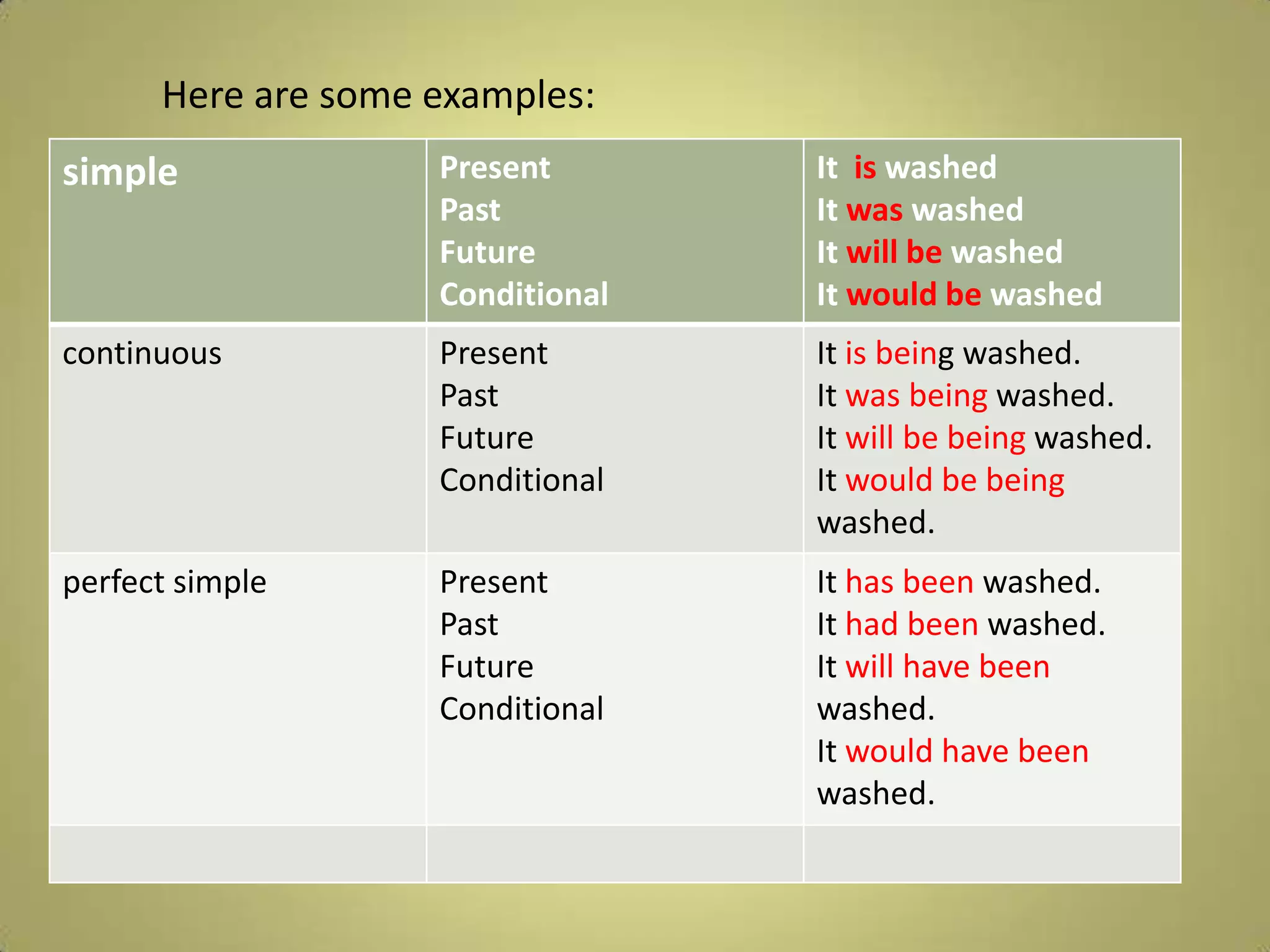
Here are someexamples:

Active And Passive Voice

  • 1.
    ACTIVE AND PASSIVEVOICEBY MARIA GUADALUPE GARCIA CASTAÑEDA
  • 2.
    Active Voice, PassiveVoiceThere are two special forms for verbs called voice:Active voicePassive voiceThe active voice is the "normal" voice. This is the voice that we use most of the time. You are probably already familiar with the active voice. In the active voice, the object receives the action of the verb:activesubjectverbobject   > Cats eat fish. The passive voice is less usual. In the passive voice, the subject receives the action of the verb:passivesubjectverbobject <   Fish are eaten by cats. The object of the active verb becomes the subject of the passive verb:  subjectverbobjectactive Everybody drinks water. passiveWater is drunk by everybody.
  • 3.
    Passive VoiceThe passivevoice is less usual than the active voice. The active voice is the "normal" voice. But sometimes we need the passive voice. In this lesson we look at how to construct the passive voice, when to use it and how to conjugate it.Construction of the Passive VoiceThe structure of the passive voice is very simple:subject + auxiliary verb (be) + main verb (past participle)The main verb is always in its past participle form.Look at these examples:subjectauxiliary verb (to be)   main verb (past participle)   Water is   drunk by everyone. 100 people are   employed by this company. I am   paid in euro. We are not paid in dollars. Are
  • 4.
    Use of thePassiveVoiceWeuse thepassivewhen:wewanttomaketheactive object more importantwe do notknowtheactive subject Subjectverbobjectgiveimportanceto active object (President Kennedy)PresidentKennedy waskilledbyLee Harvey Oswald.active subjectunknownMy wallet has beenstolen.?Note thatwealways use byto introduce thepassiveobject (Fish are eatenbycats).
  • 5.
    EXAMPLESSUBJECT AUXILIARY VERB( TO BE) MAIN VERB(PAST PARTICIPLE) COMPLEMENTWater is drunk by everyone100 people are employed by this companyI am paid in euroWe are not paid in dollarsAre they paid in
  • 6.
    Look at thissentence:He waskilledwith a gun.Normallywe use byto introduce thepassiveobject. Butthegunisnotthe active subject. Thegundidnotkillhim. He waskilledbysomebodywith a gun. In the active voice, itwouldbe: Somebodykilledhimwith a gun. Thegunistheinstrument. Somebodyisthe "agent" or "doer".We can formthepassive in any tense. In fact, conjugation of verbs in thepassive tense israthereasy, as themainverbisalways in pastparticipleform and theauxiliaryverbisalwaysbe. Toformtherequired tense, weconjugatetheauxiliaryverb. So, forexample:present simple: Itismadepresentcontinuous: Itisbeingmadepresentperfect: Ithas beenmade
  • 7.