
Cell Division
      Mr. Suresh Kumar Sharma
      RN, ACCN, MSN(PSYCHIATRY)


                Mitosis & Meiosis
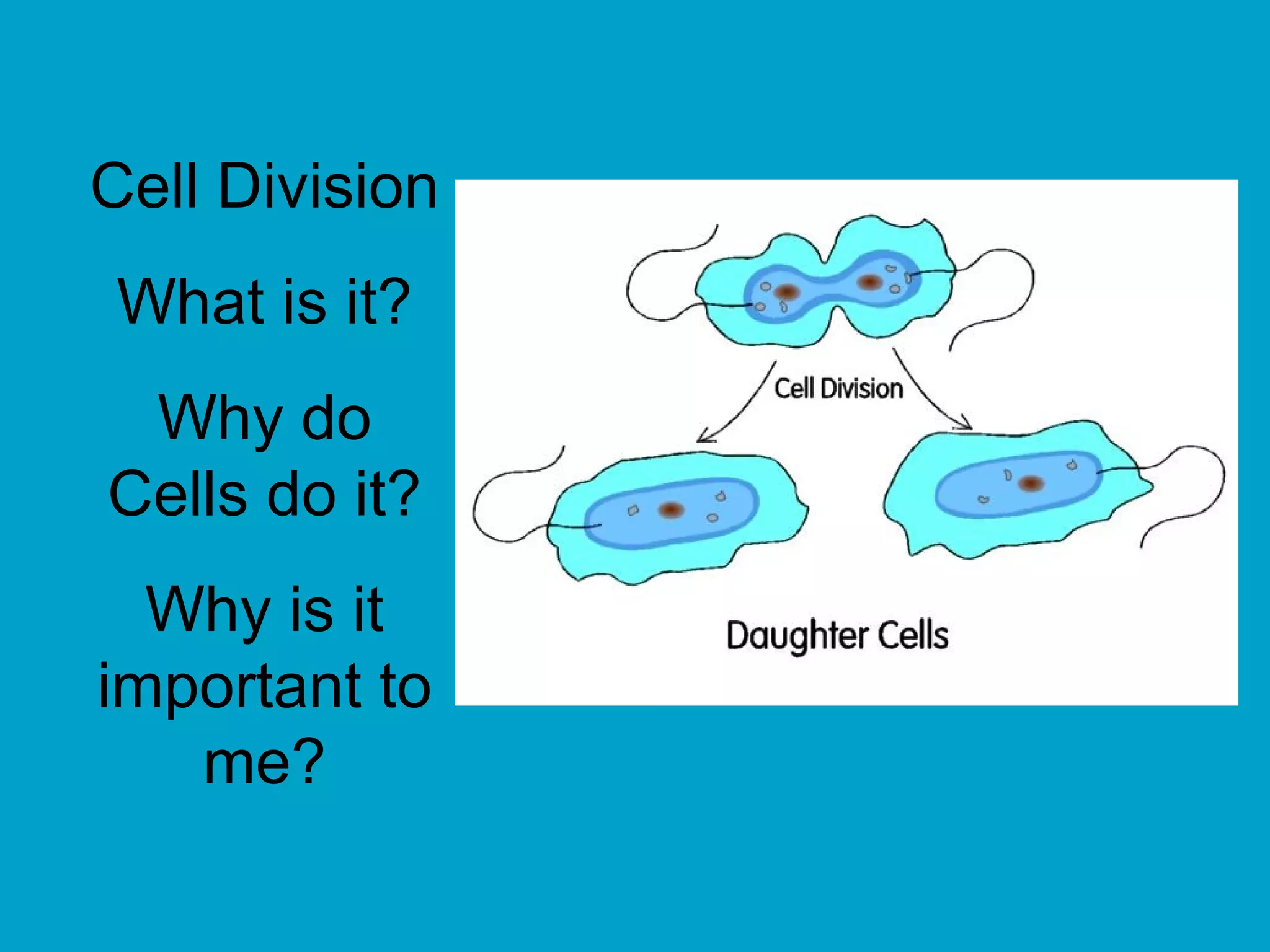
Cell Division
 What is it?
 Why do
Cells do it?
  Why is it
important to
   me?
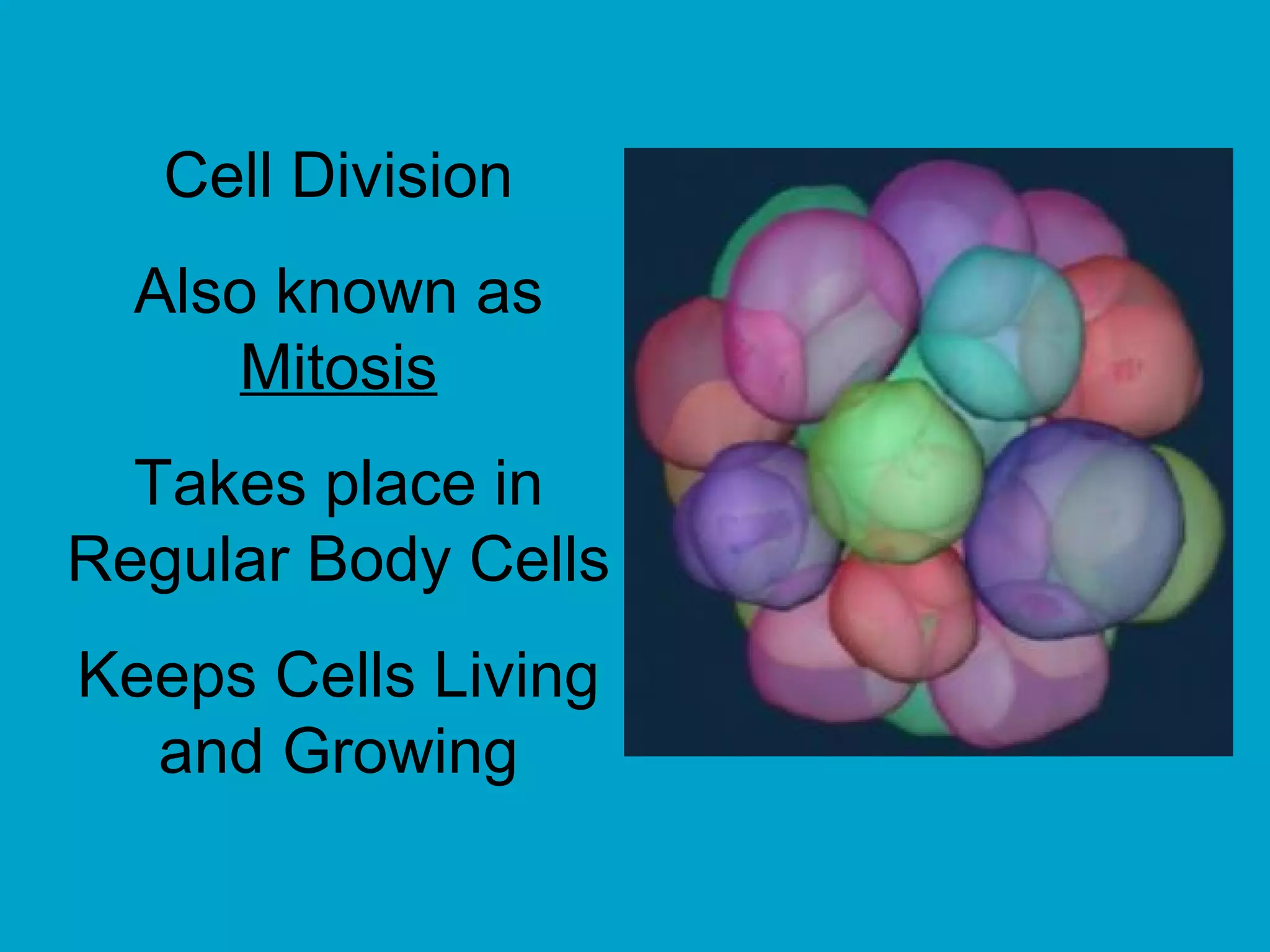
Cell Division
  Also known as
     Mitosis
  Takes place in
Regular Body Cells
Keeps Cells Living
  and Growing
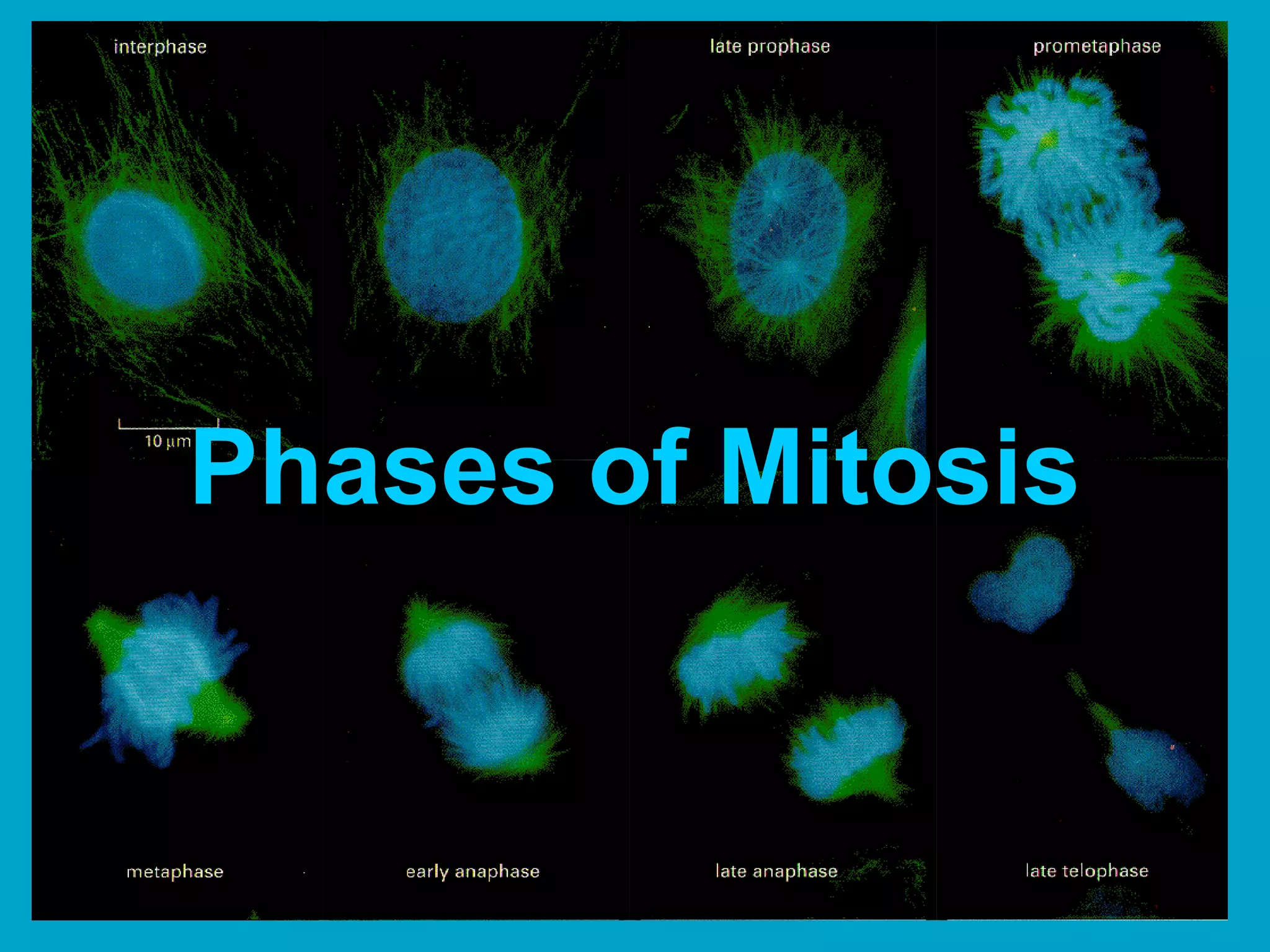
Phases of Mitosis
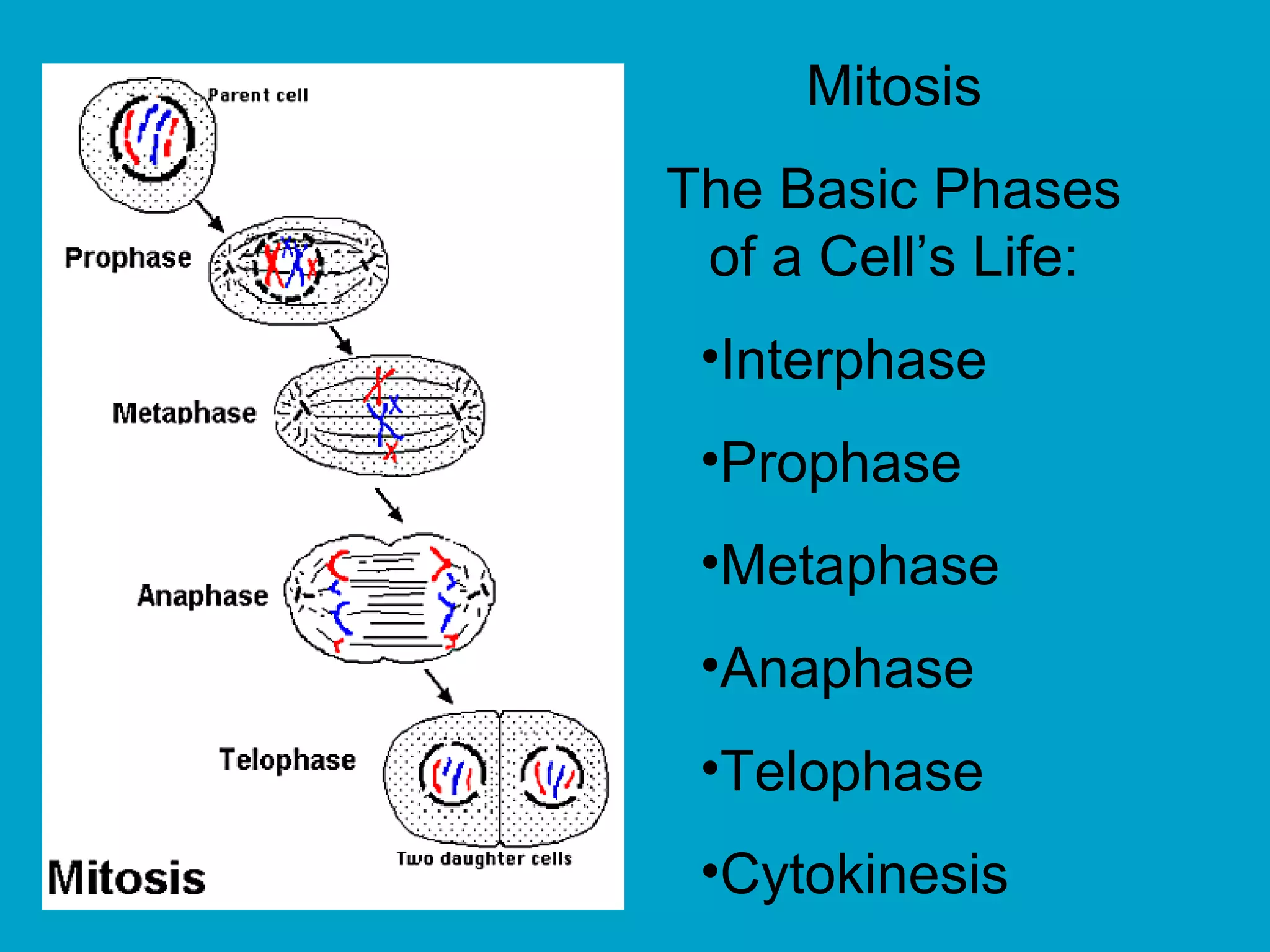
Mitosis
The Basic Phases
 of a Cell’s Life:
 •Interphase
 •Prophase
 •Metaphase
 •Anaphase
 •Telophase
 •Cytokinesis
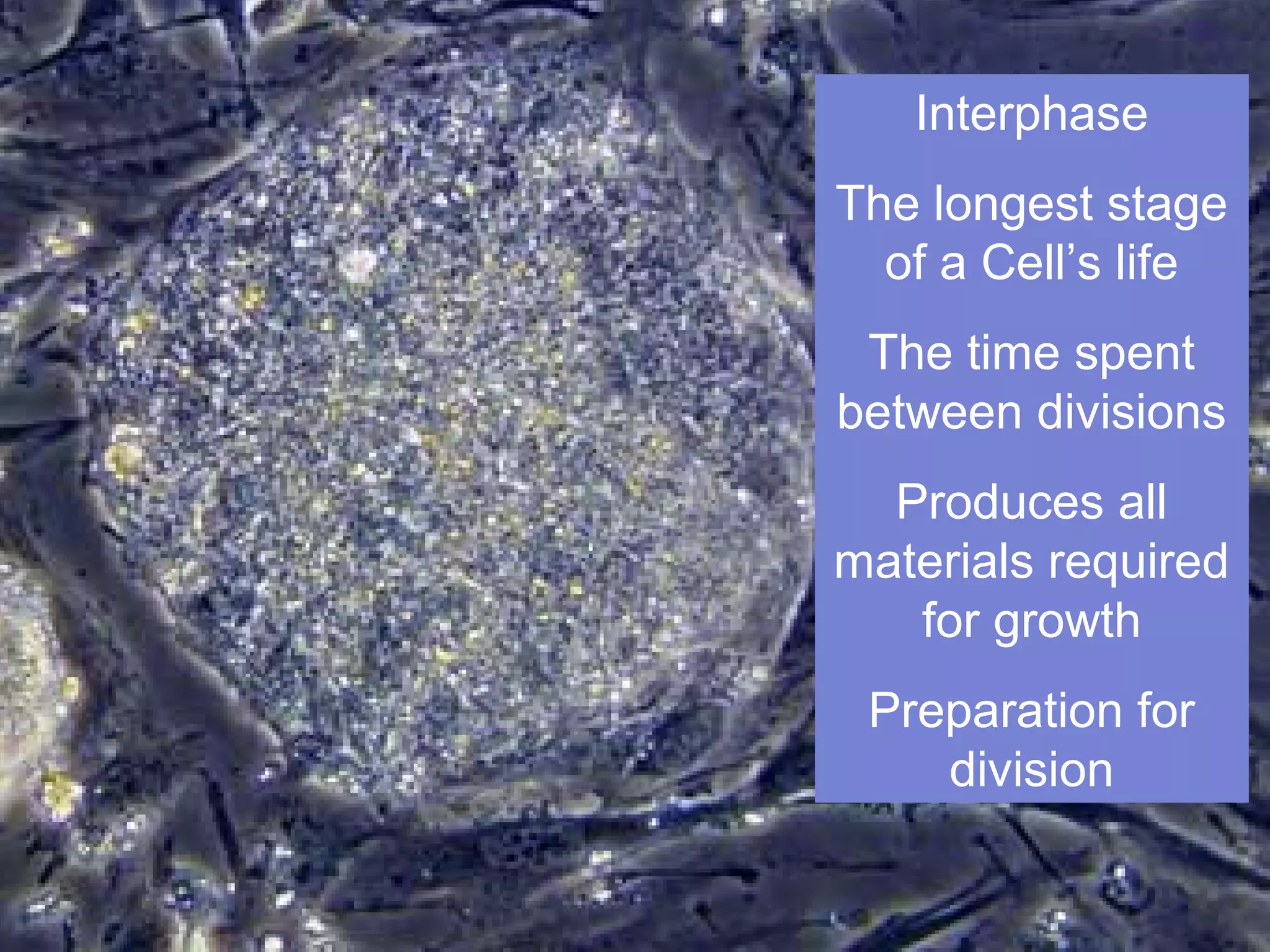
Interphase
The longest stage
  of a Cell’s life
 The time spent
between divisions
  Produces all
materials required
   for growth
 Preparation for
    division
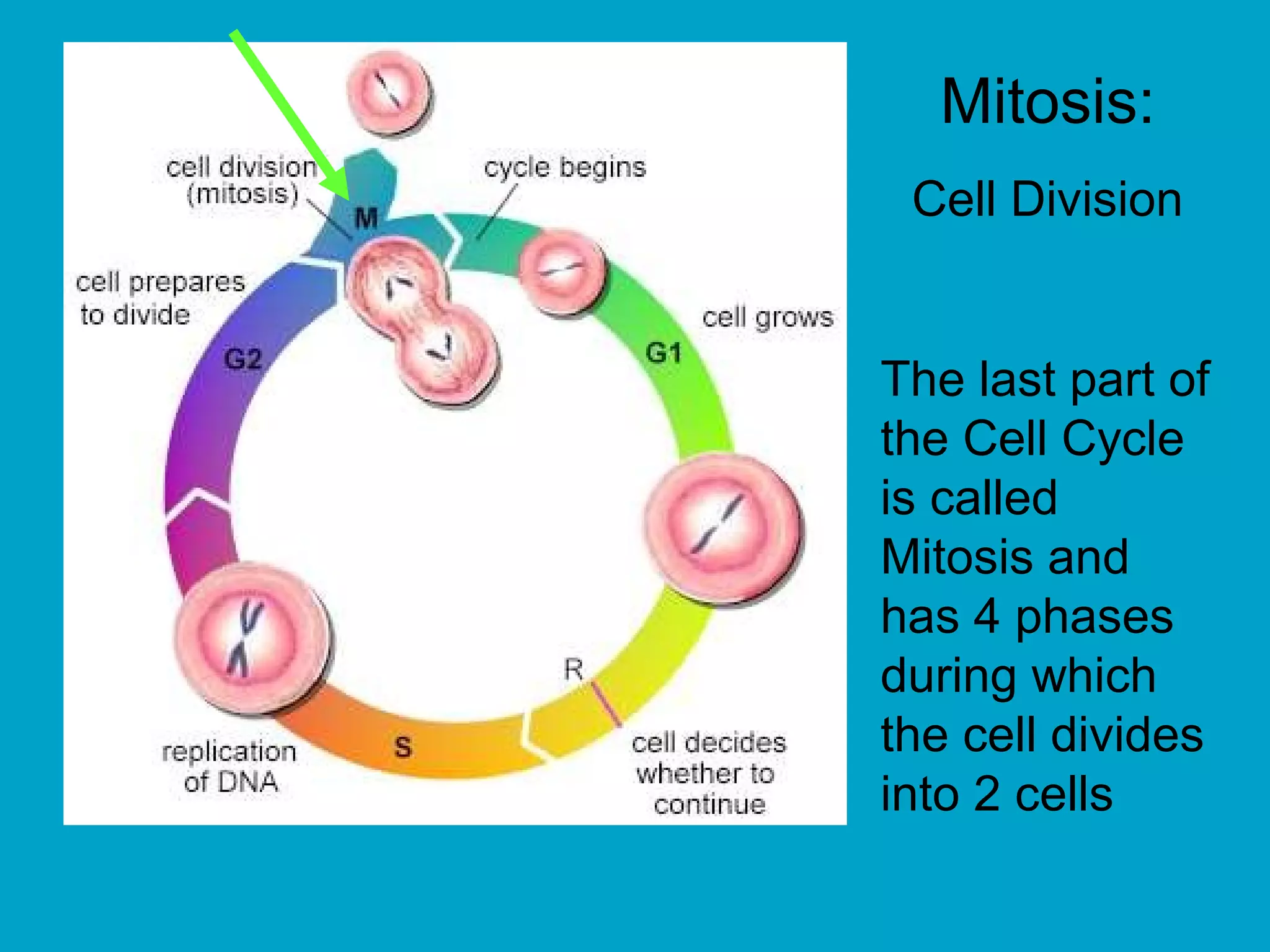
Mitosis:
 Cell Division


The last part of
the Cell Cycle
is called
Mitosis and
has 4 phases
during which
the cell divides
into 2 cells
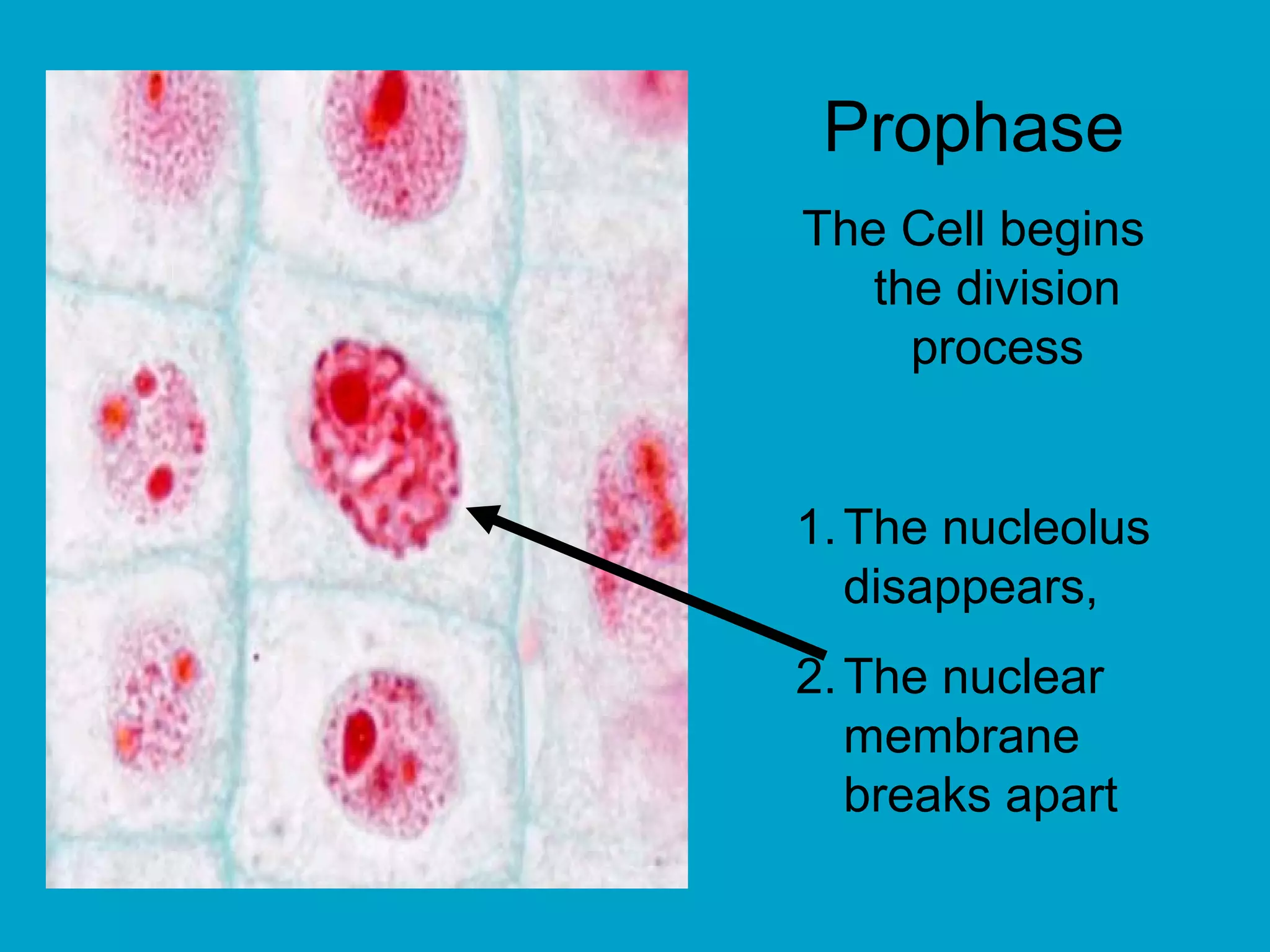
Prophase
The Cell begins
   the division
     process


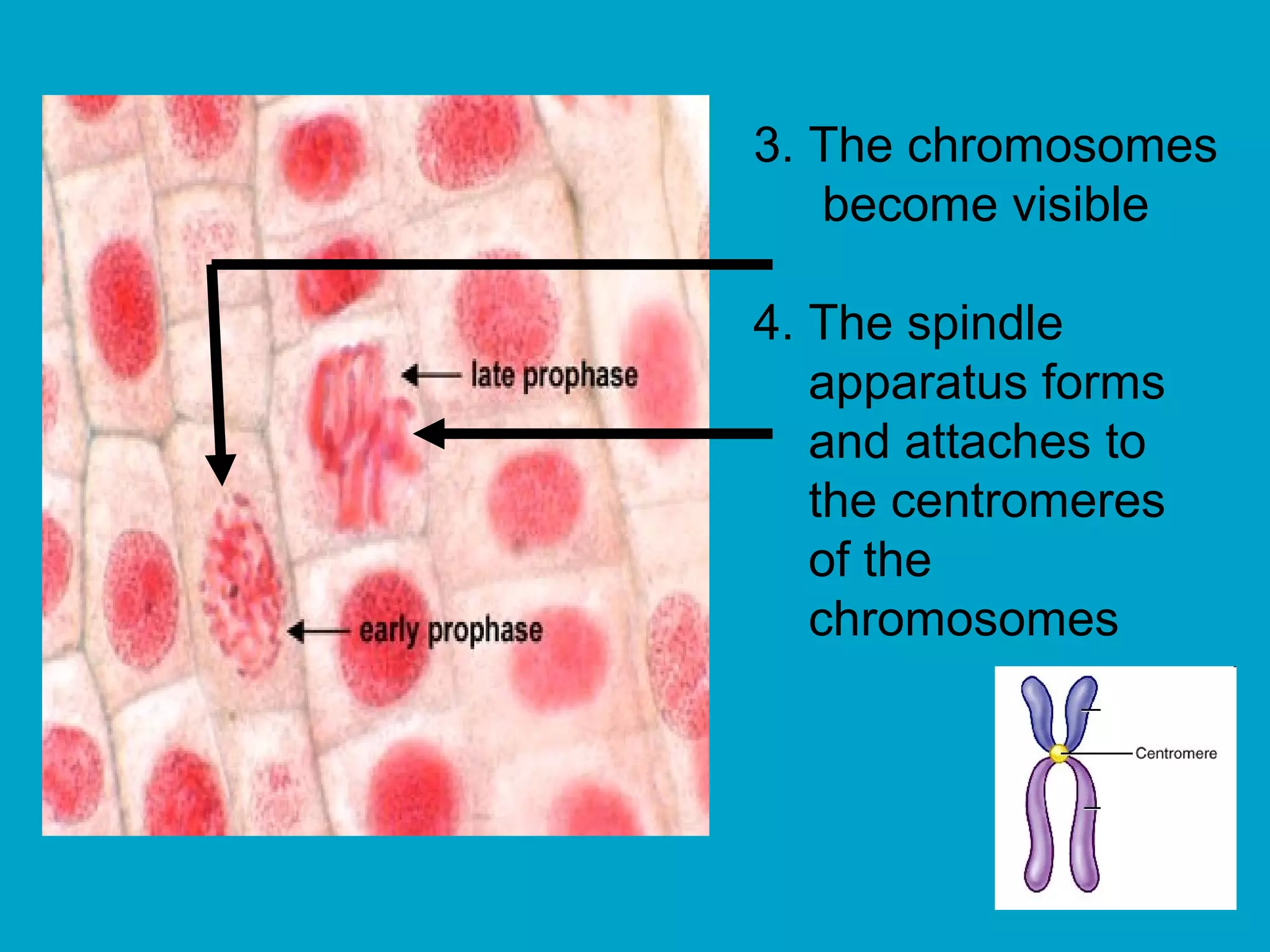
1. The nucleolus
   disappears,
2. The nuclear
   membrane
   breaks apart
3. The chromosomes
   become visible

4. The spindle
   apparatus forms
   and attaches to
   the centromeres
   of the
   chromosomes
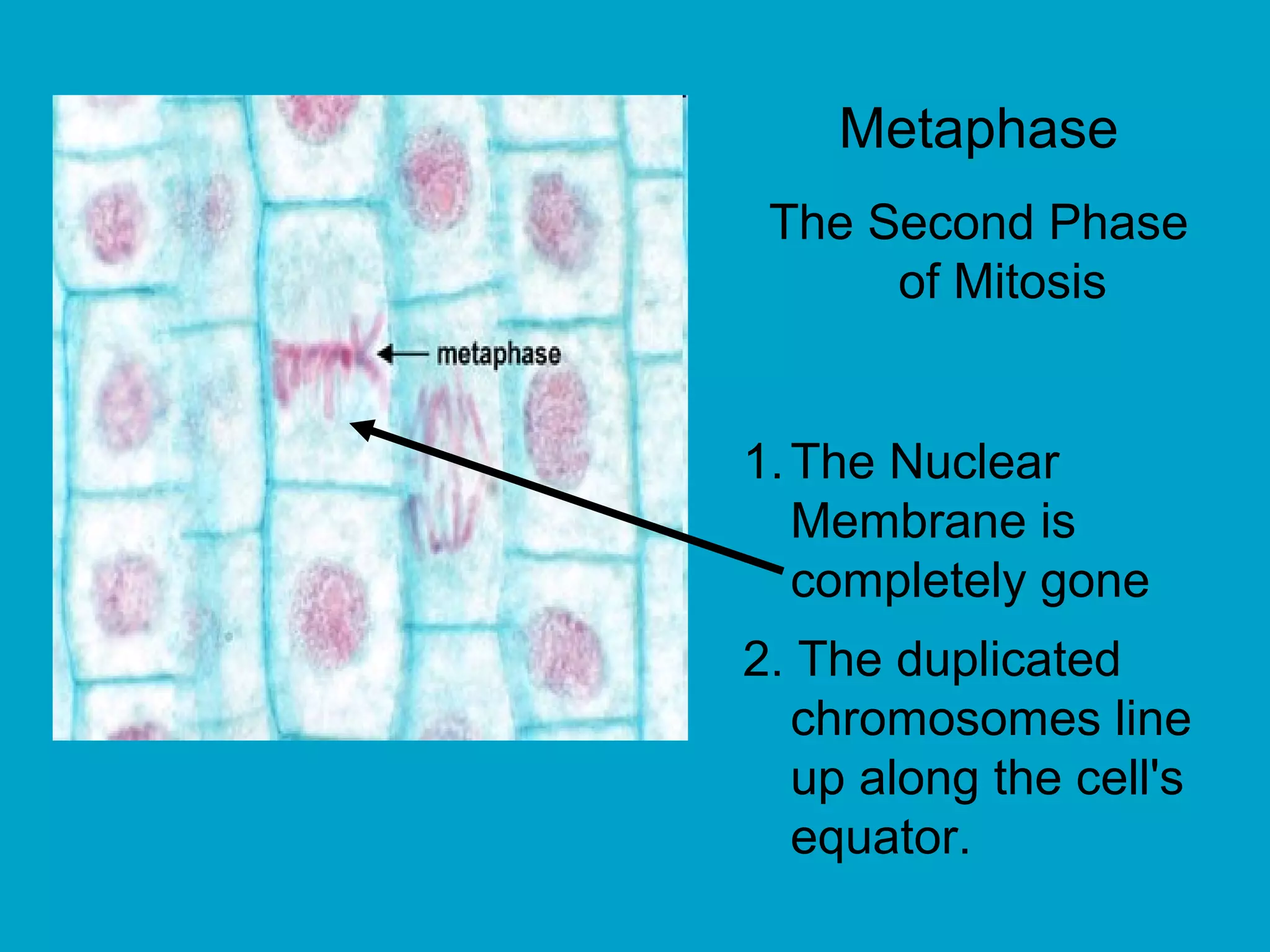
Metaphase
 The Second Phase
      of Mitosis


1. The Nuclear
   Membrane is
   completely gone
2. The duplicated
  chromosomes line
  up along the cell's
  equator.
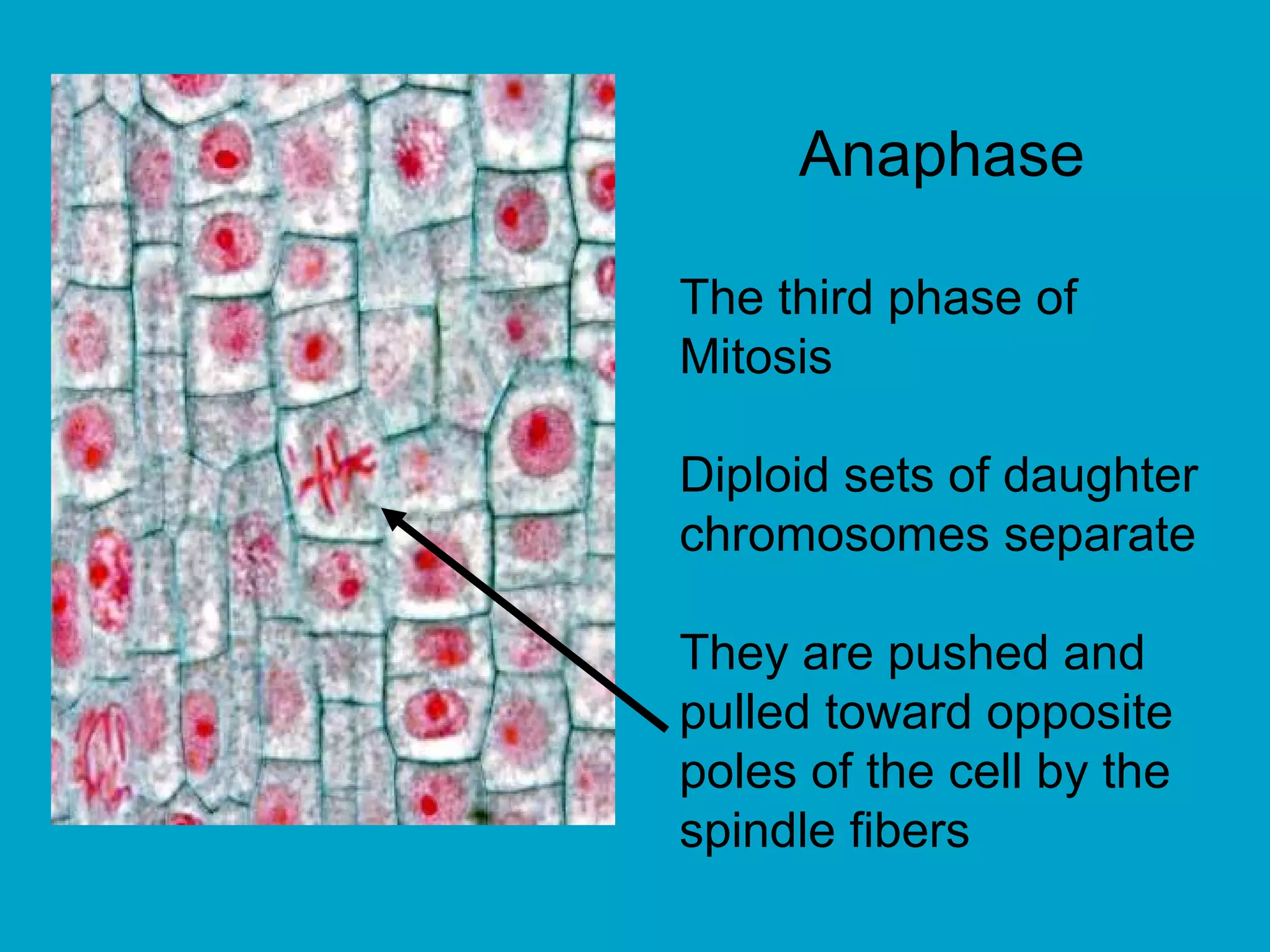
Anaphase

The third phase of
Mitosis

Diploid sets of daughter
chromosomes separate

They are pushed and
pulled toward opposite
poles of the cell by the
spindle fibers
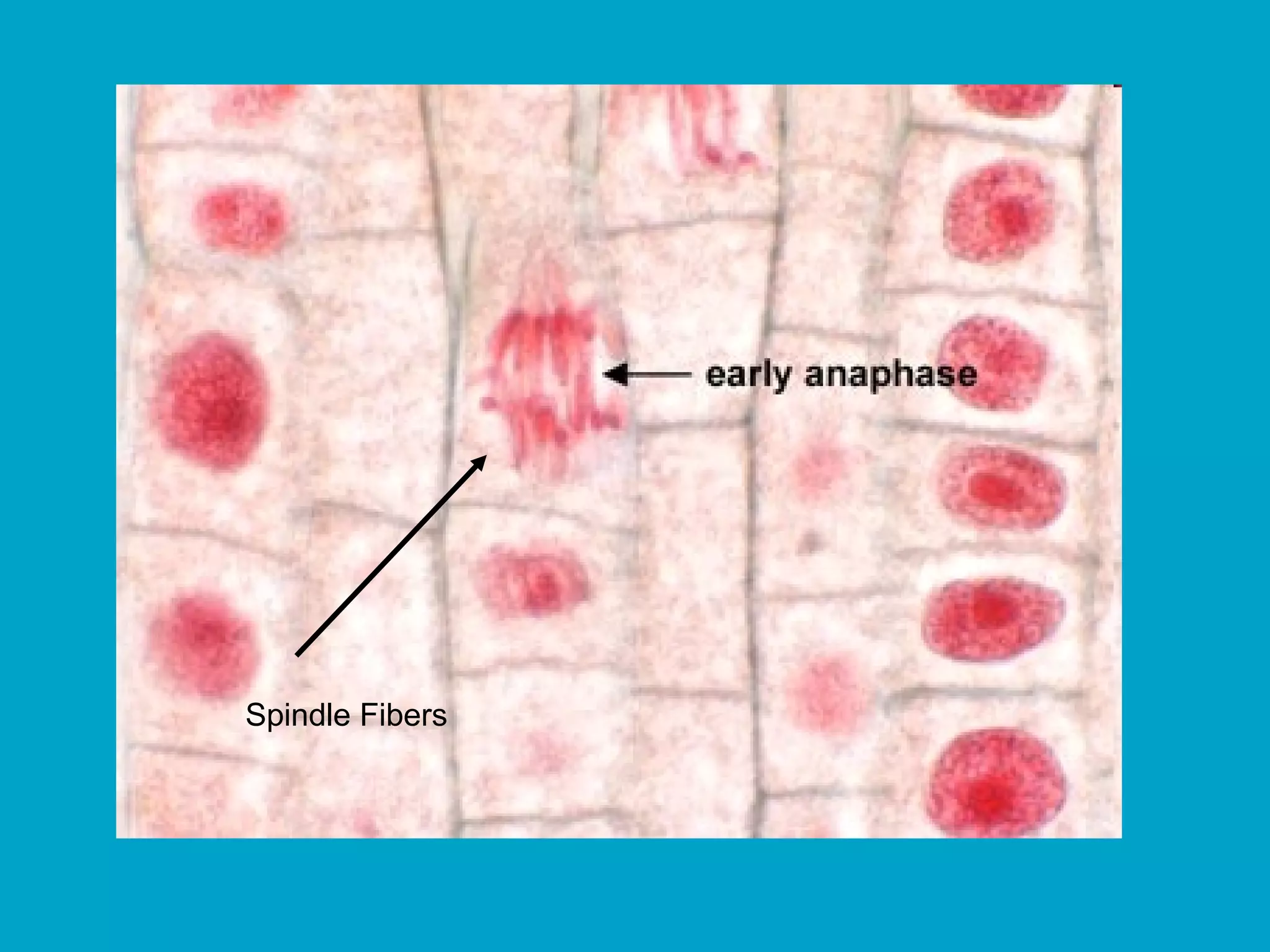
Spindle Fibers
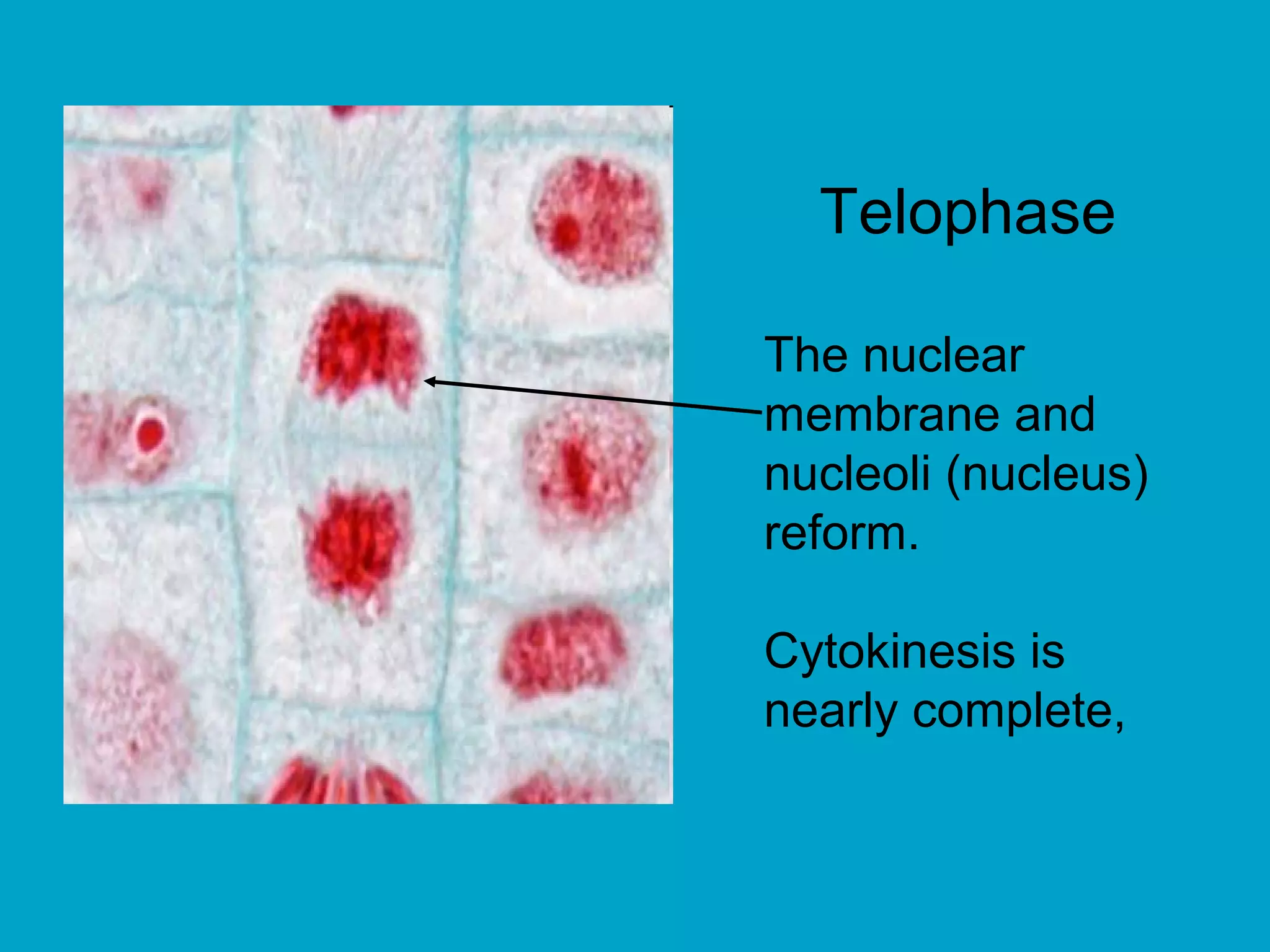
Telophase

The nuclear
membrane and
nucleoli (nucleus)
reform.

Cytokinesis is
nearly complete,
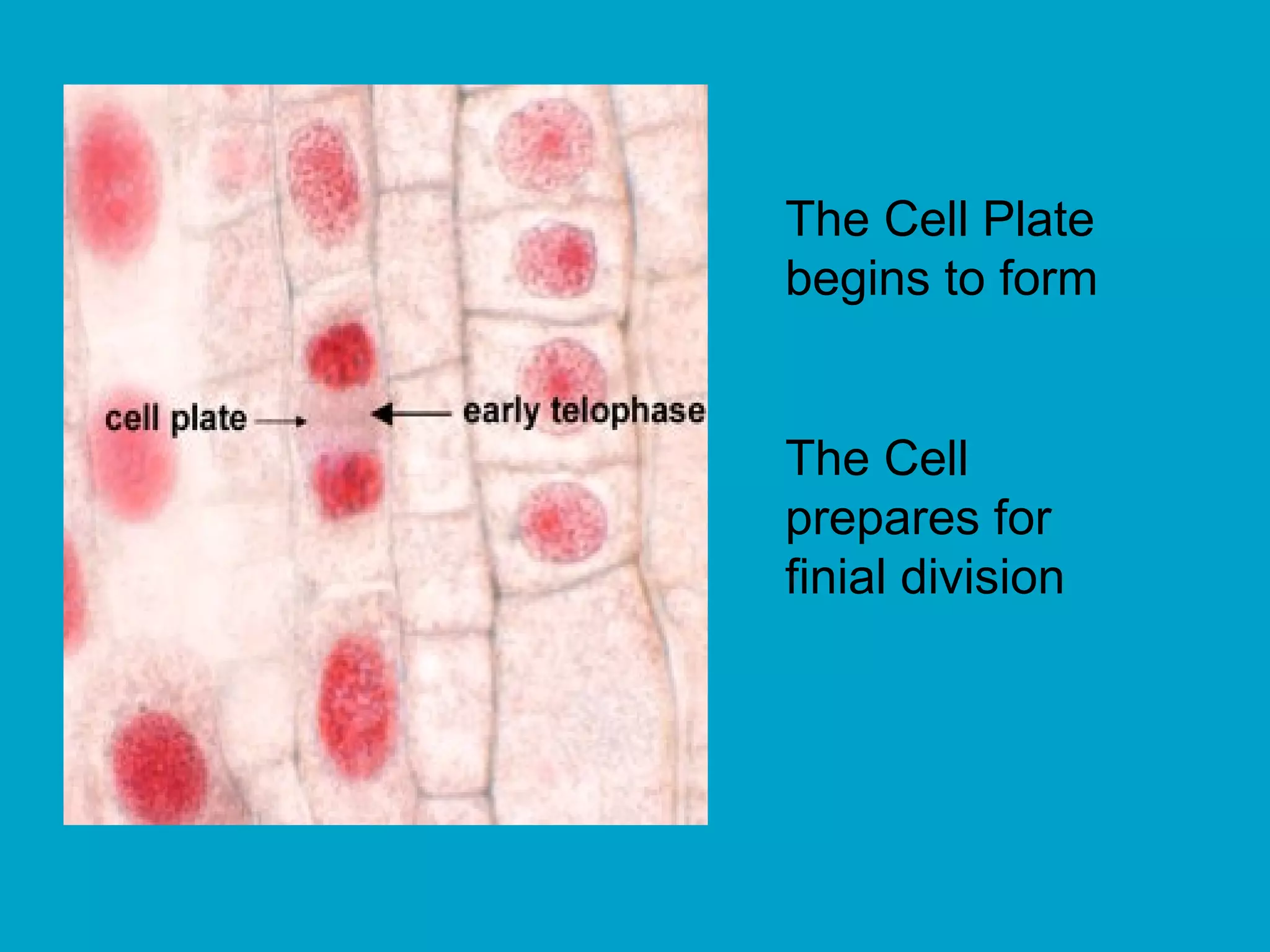
The Cell Plate
begins to form


The Cell
prepares for
finial division
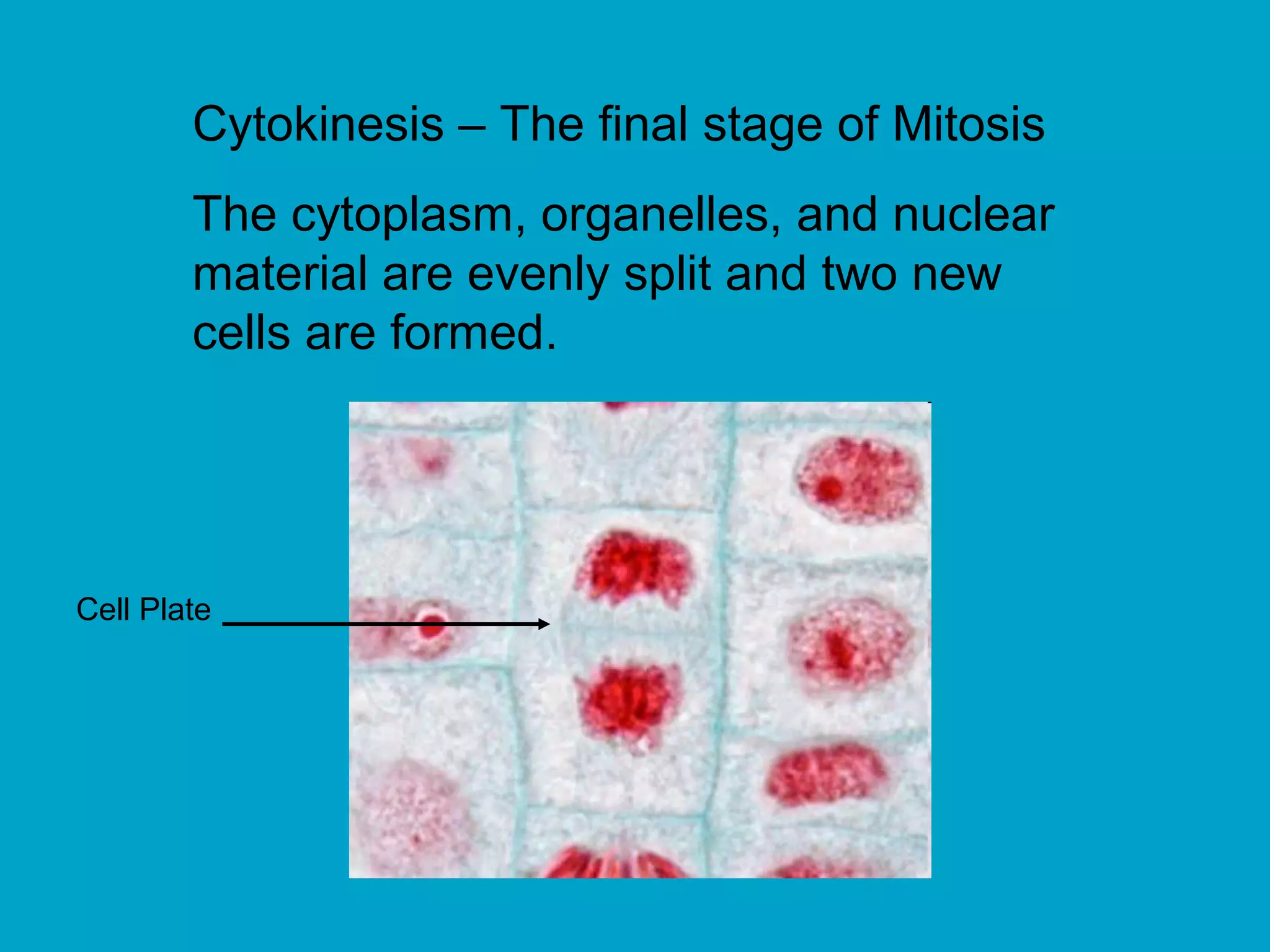
Cytokinesis – The final stage of Mitosis
        The cytoplasm, organelles, and nuclear
        material are evenly split and two new
        cells are formed.


Cell Plate
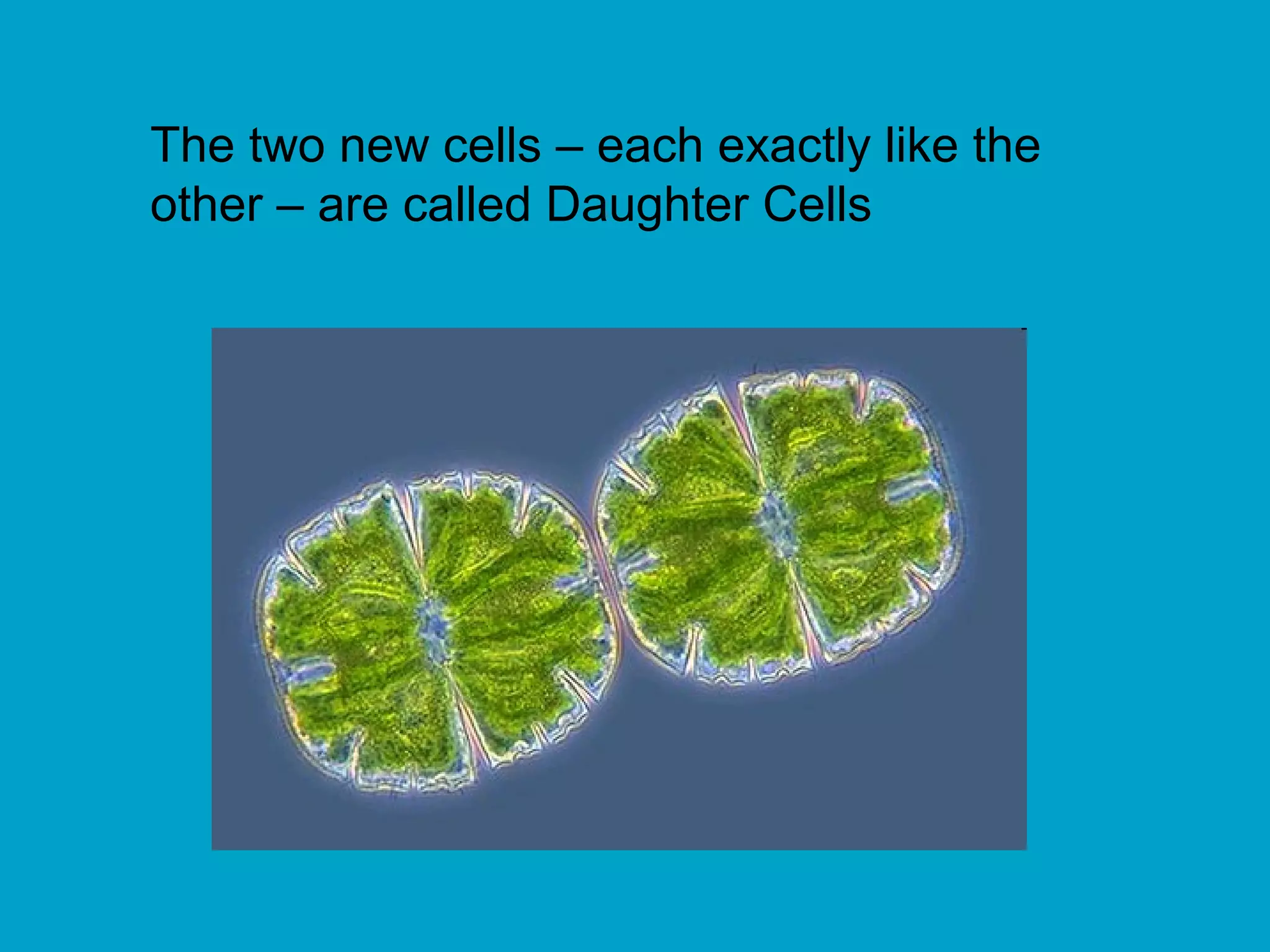
The two new cells – each exactly like the
other – are called Daughter Cells
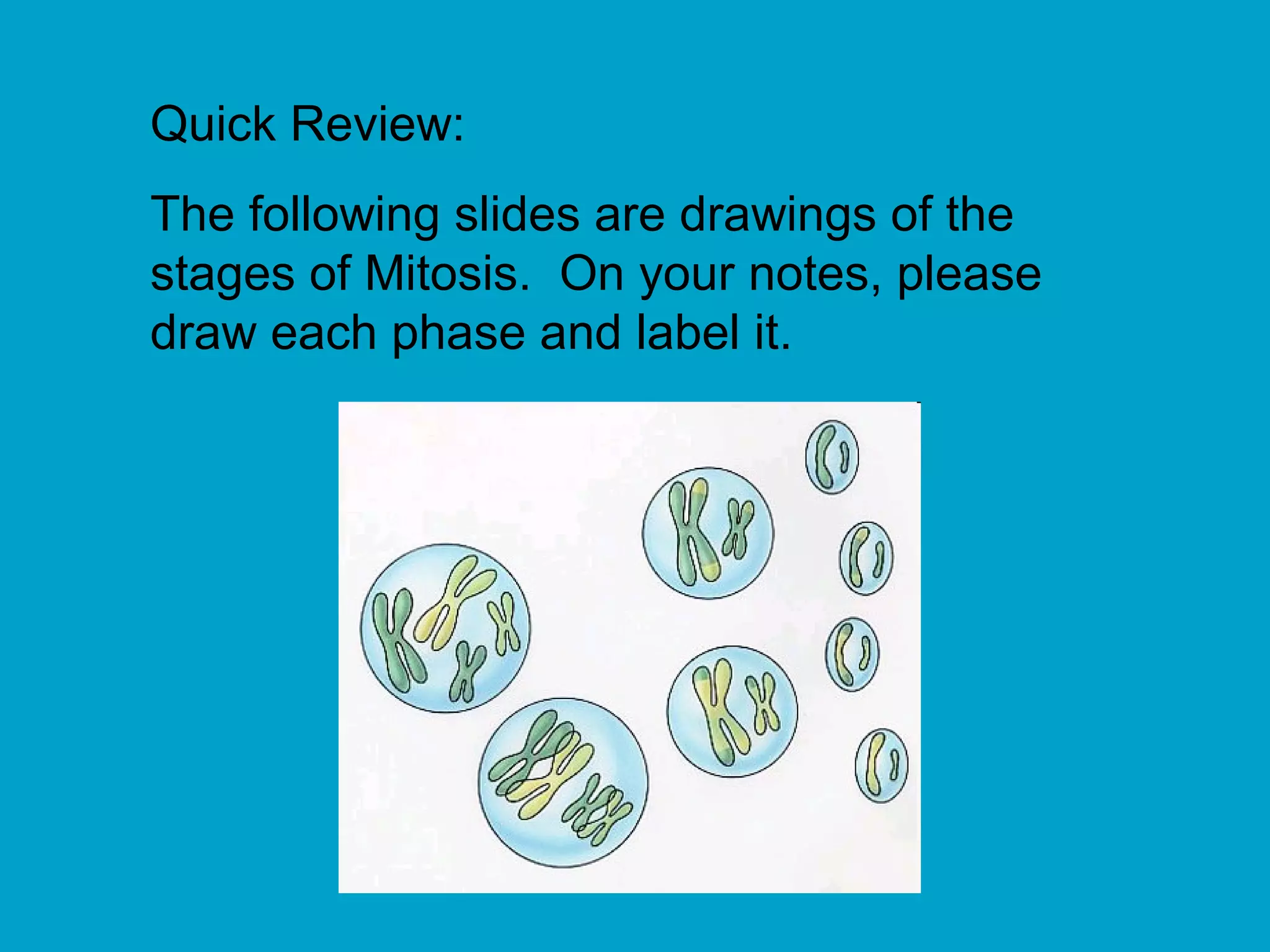
Quick Review:
The following slides are drawings of the
stages of Mitosis. On your notes, please
draw each phase and label it.
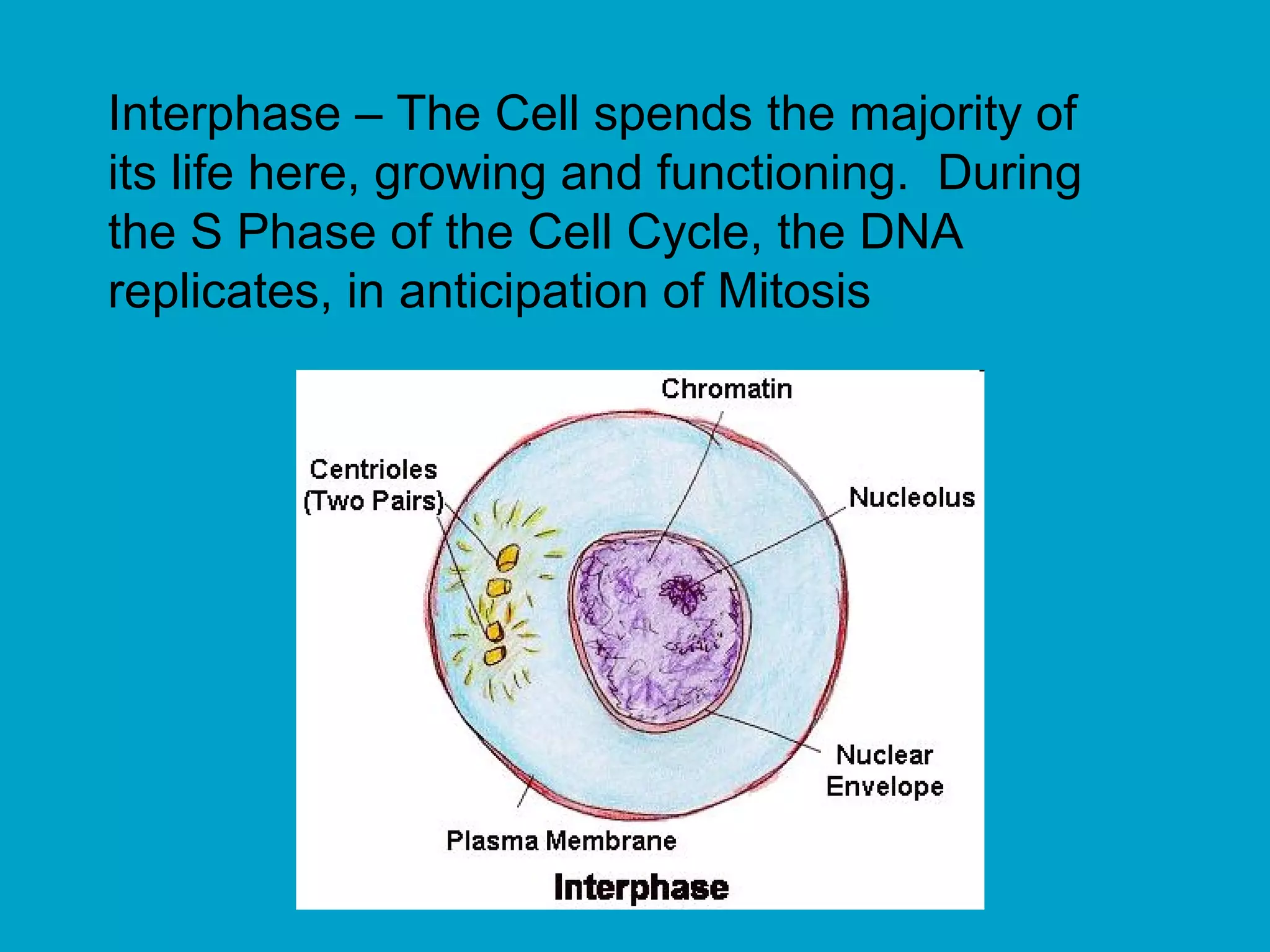
Interphase – The Cell spends the majority of
its life here, growing and functioning. During
the S Phase of the Cell Cycle, the DNA
replicates, in anticipation of Mitosis
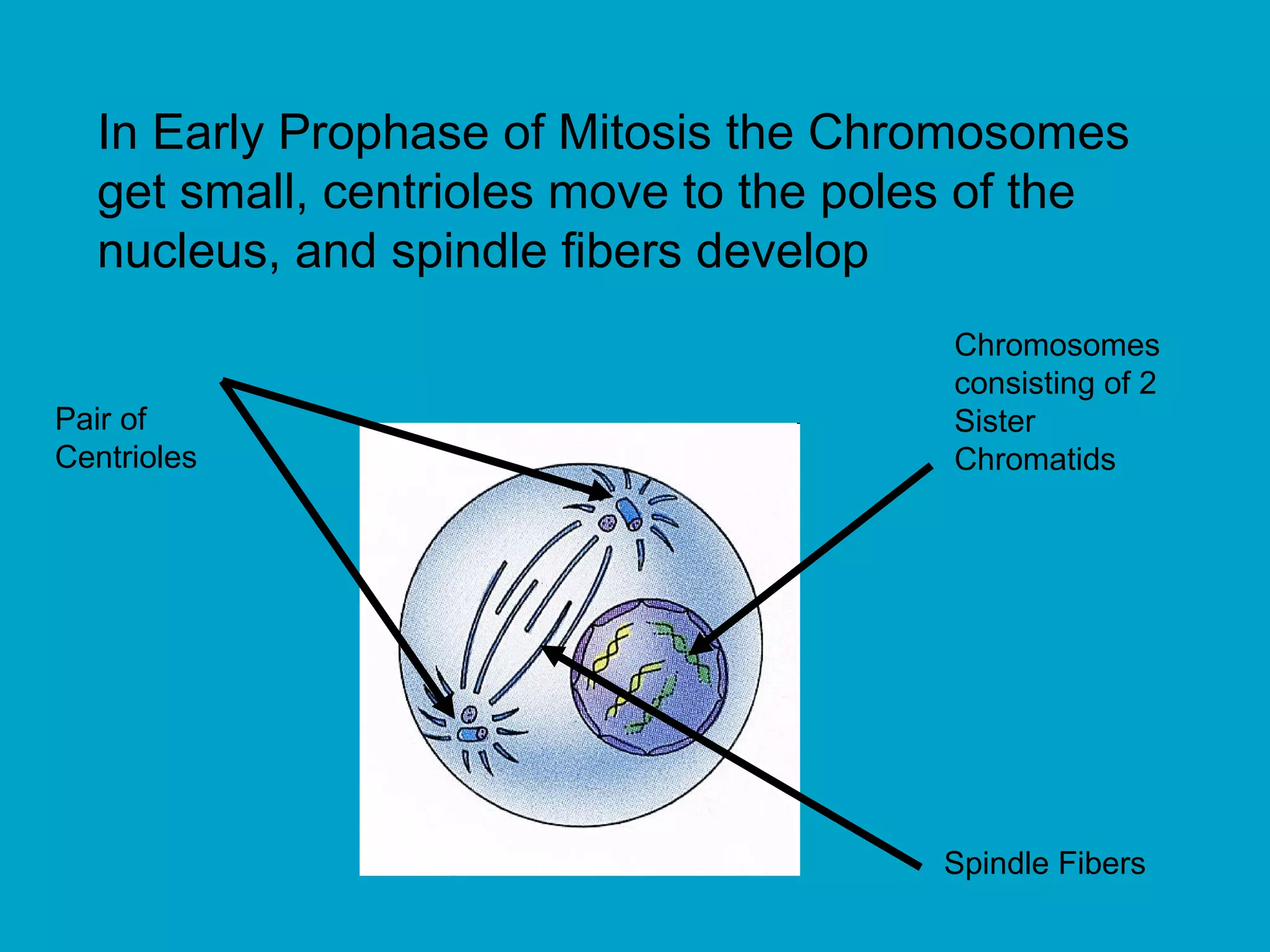
In Early Prophase of Mitosis the Chromosomes
  get small, centrioles move to the poles of the
  nucleus, and spindle fibers develop
                                        Chromosomes
                                        consisting of 2
Pair of                                 Sister
Centrioles                              Chromatids


                                       Spindle Fibers
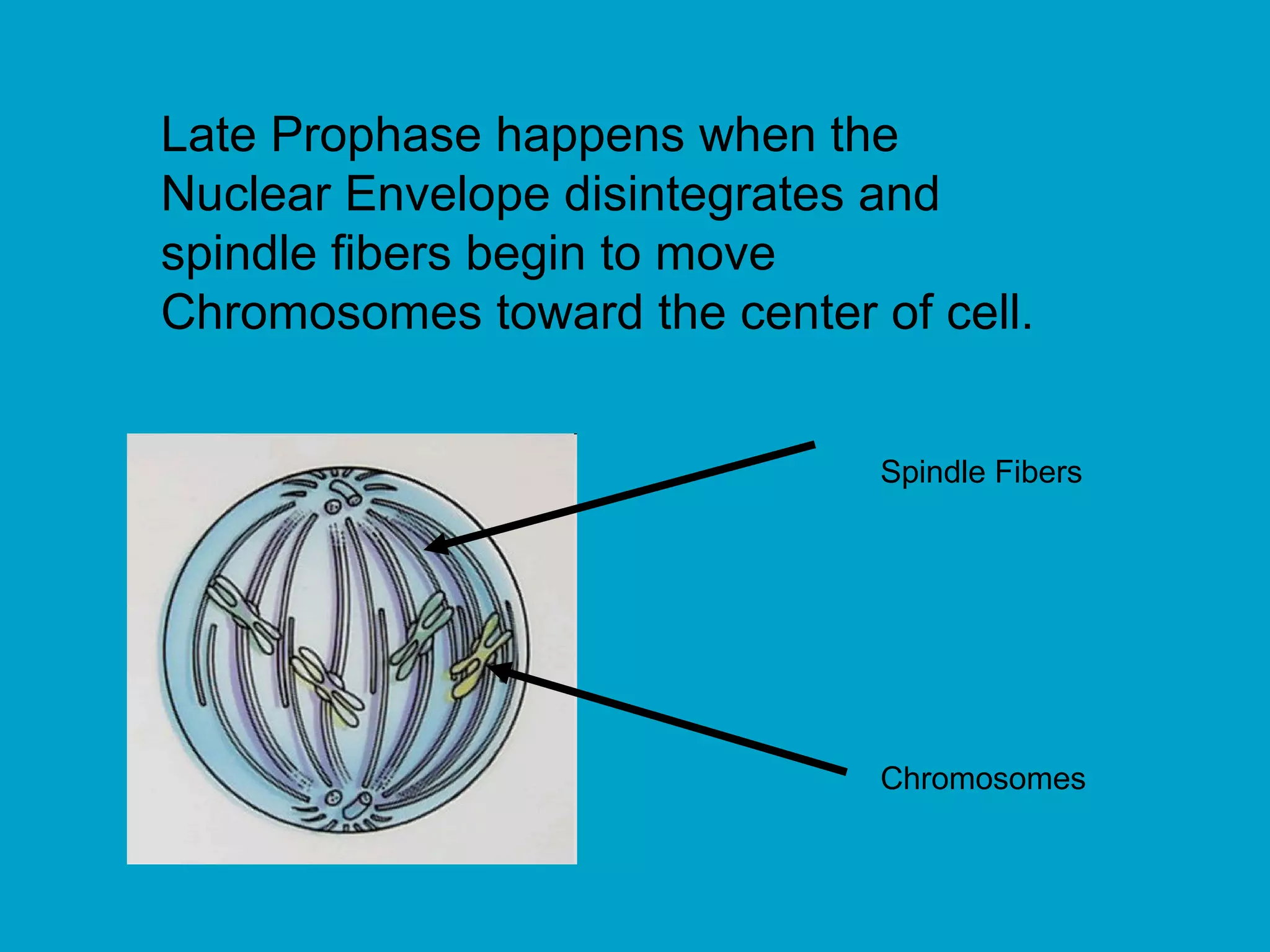
Late Prophase happens when the
Nuclear Envelope disintegrates and
spindle fibers begin to move
Chromosomes toward the center of cell.


                               Spindle Fibers


                               Chromosomes
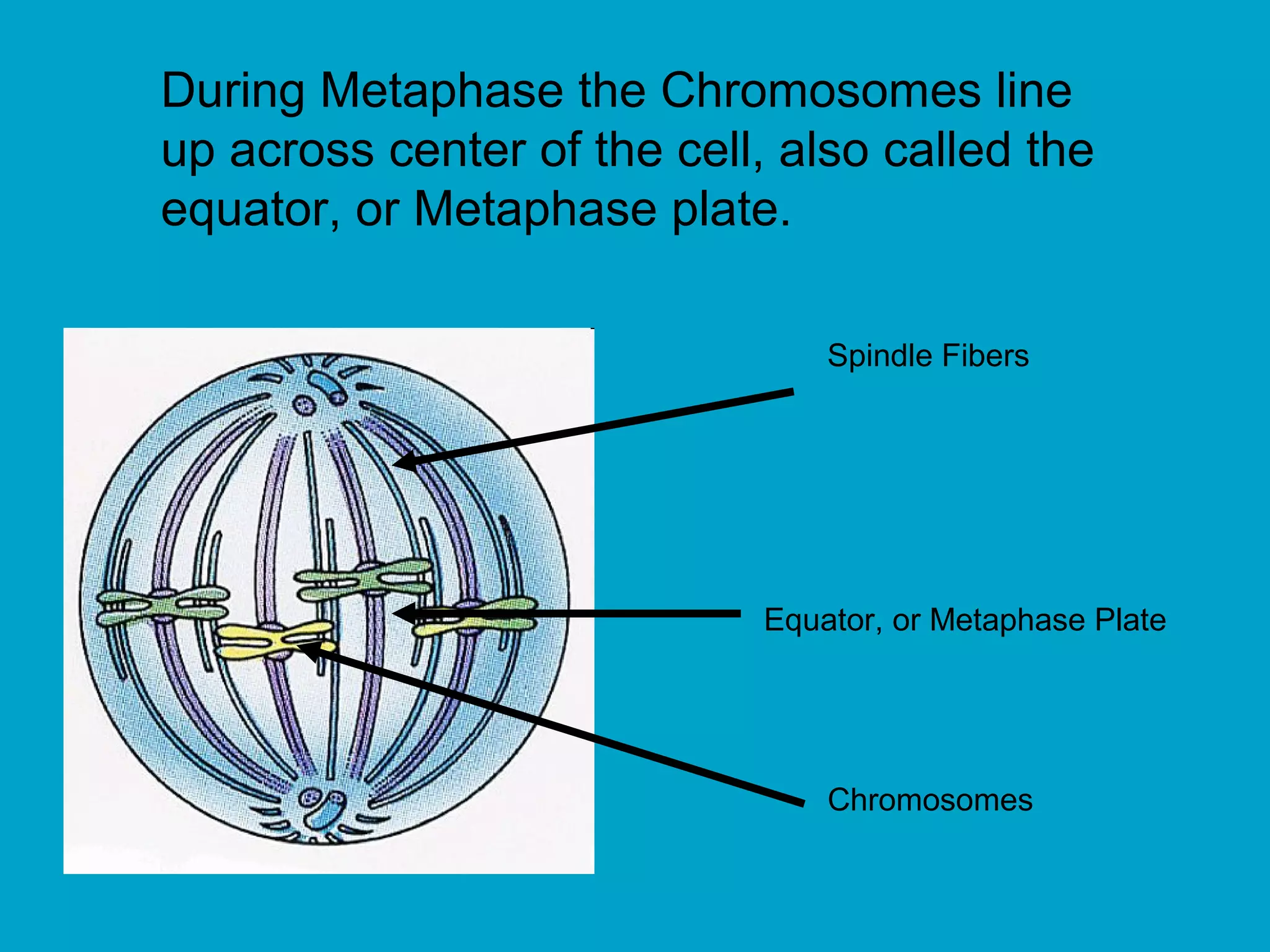
During Metaphase the Chromosomes line
up across center of the cell, also called the
equator, or Metaphase plate.

                                 Spindle Fibers


                             Equator, or Metaphase Plate


                                 Chromosomes
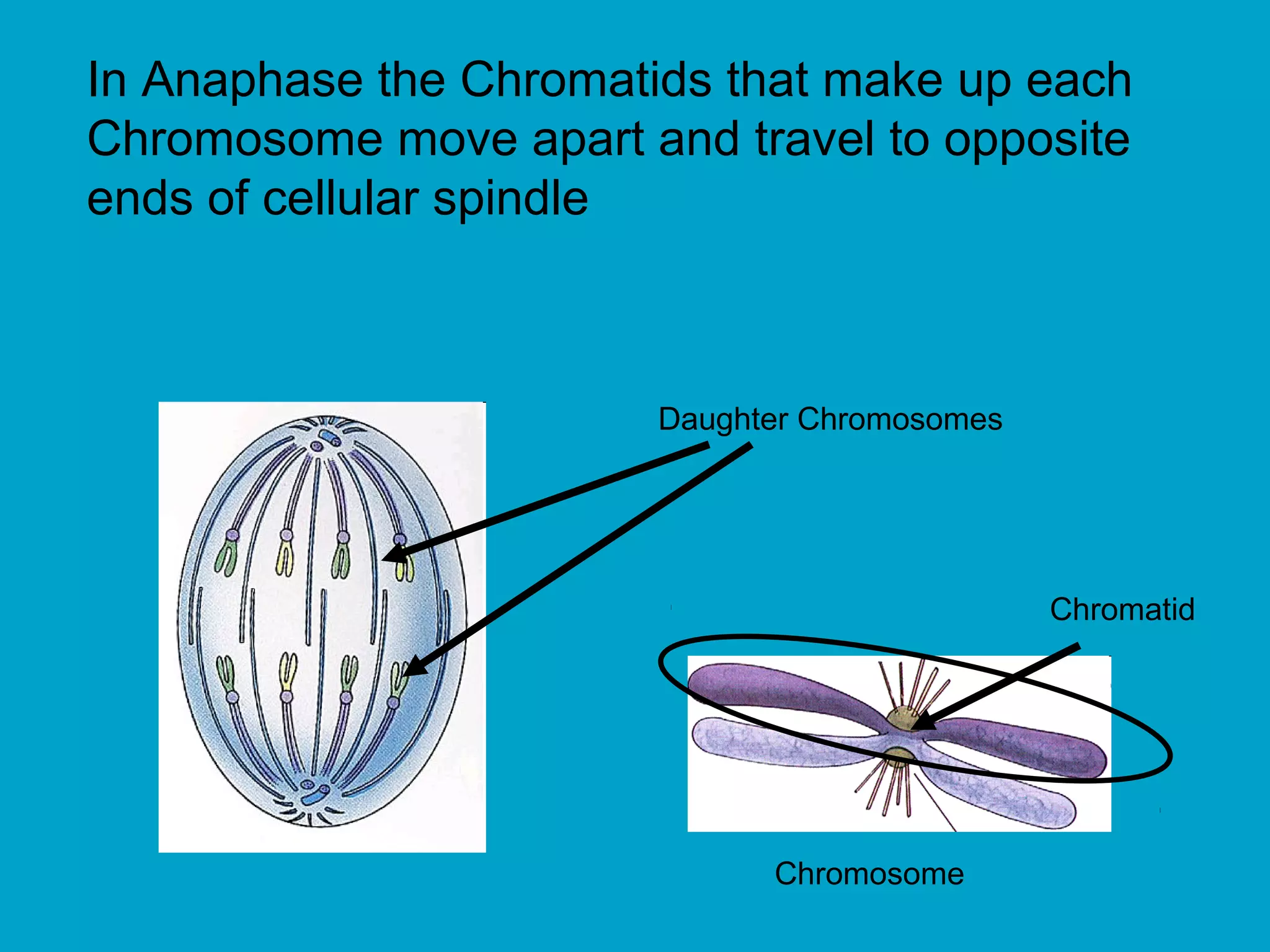
In Anaphase the Chromatids that make up each
Chromosome move apart and travel to opposite
ends of cellular spindle


                        Daughter Chromosomes


                                               Chromatid


                              Chromosome
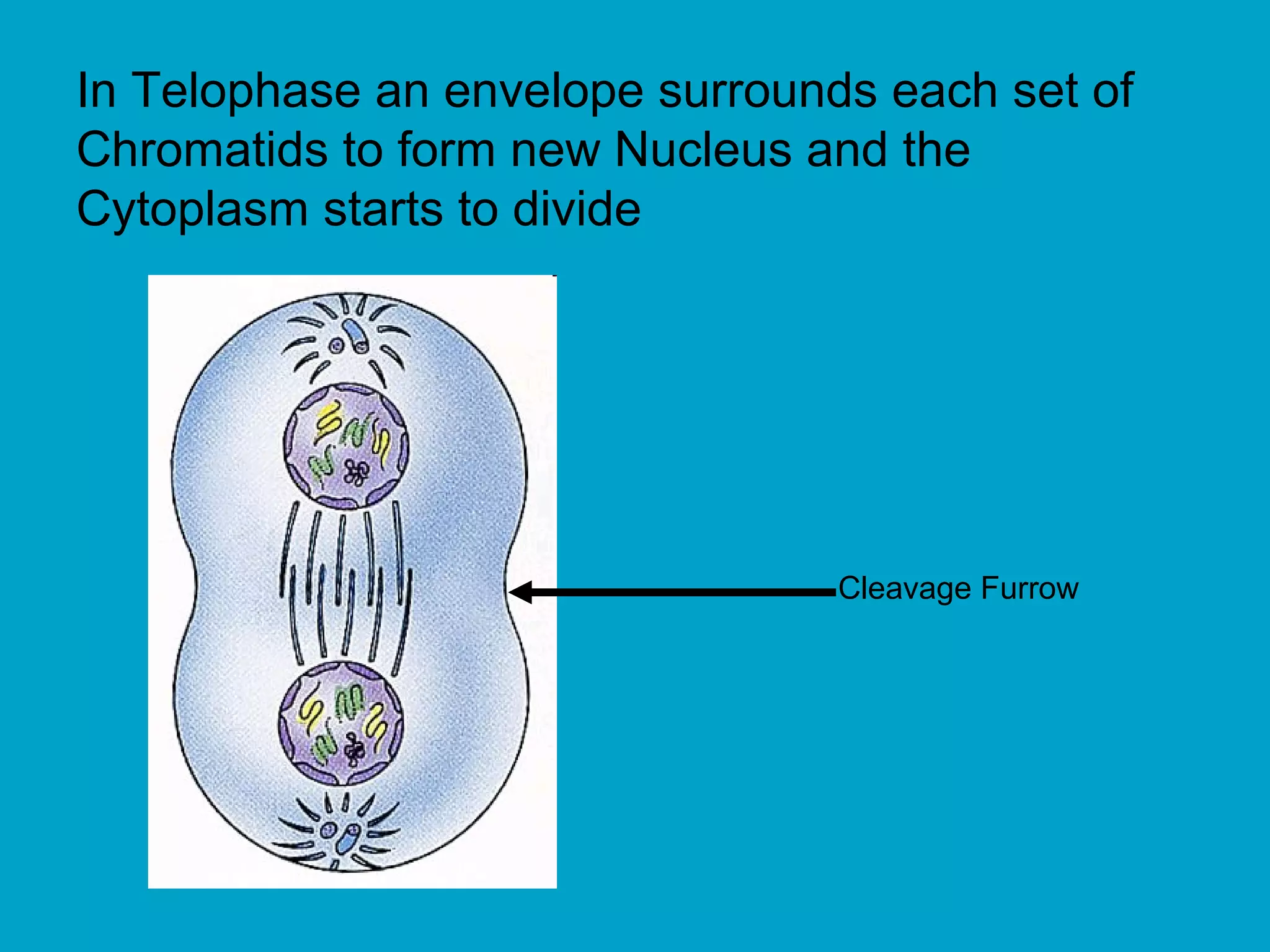
In Telophase an envelope surrounds each set of
Chromatids to form new Nucleus and the
Cytoplasm starts to divide


                                 Cleavage Furrow
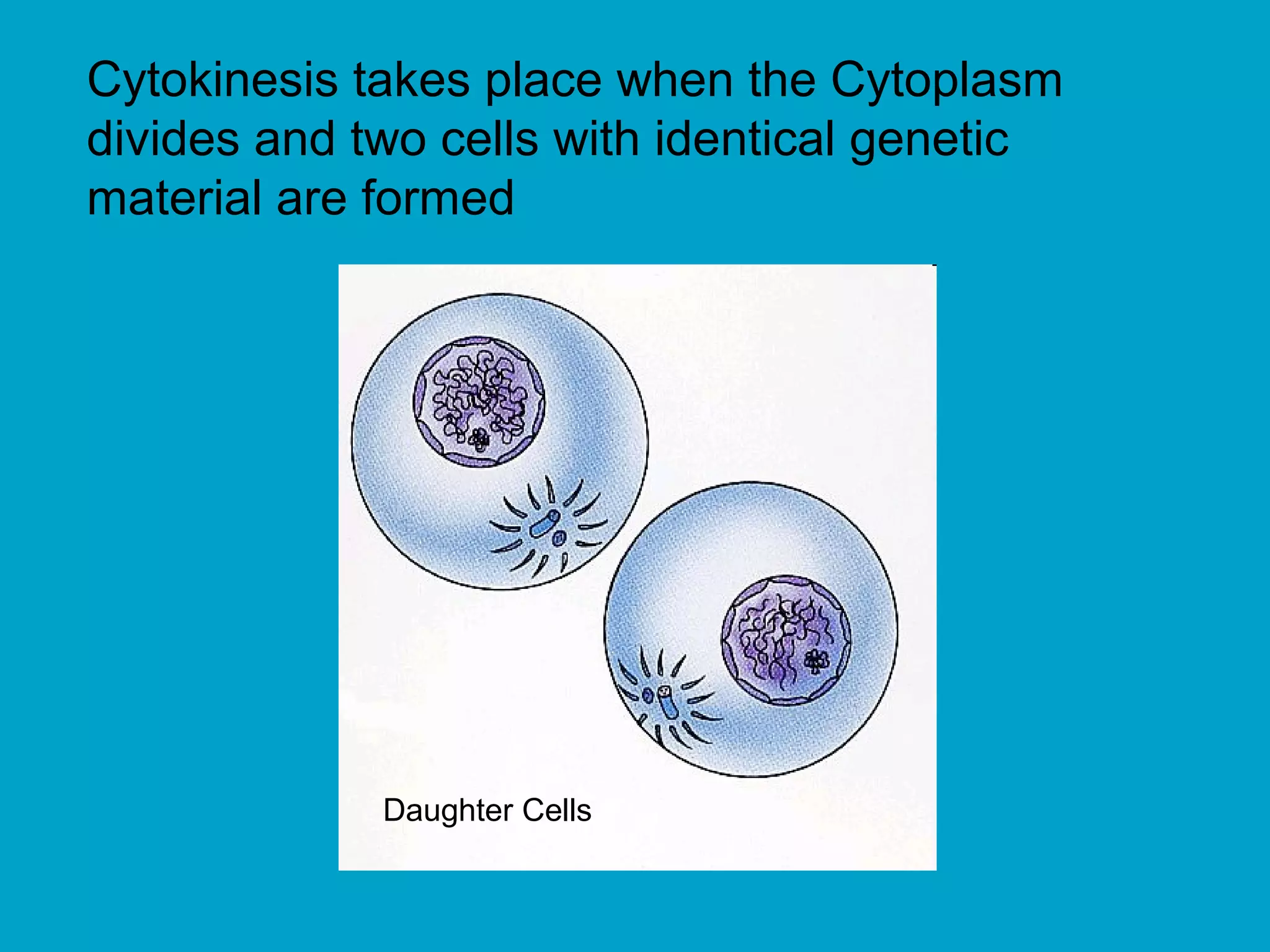
Cytokinesis takes place when the Cytoplasm
divides and two cells with identical genetic
material are formed


             Daughter Cells
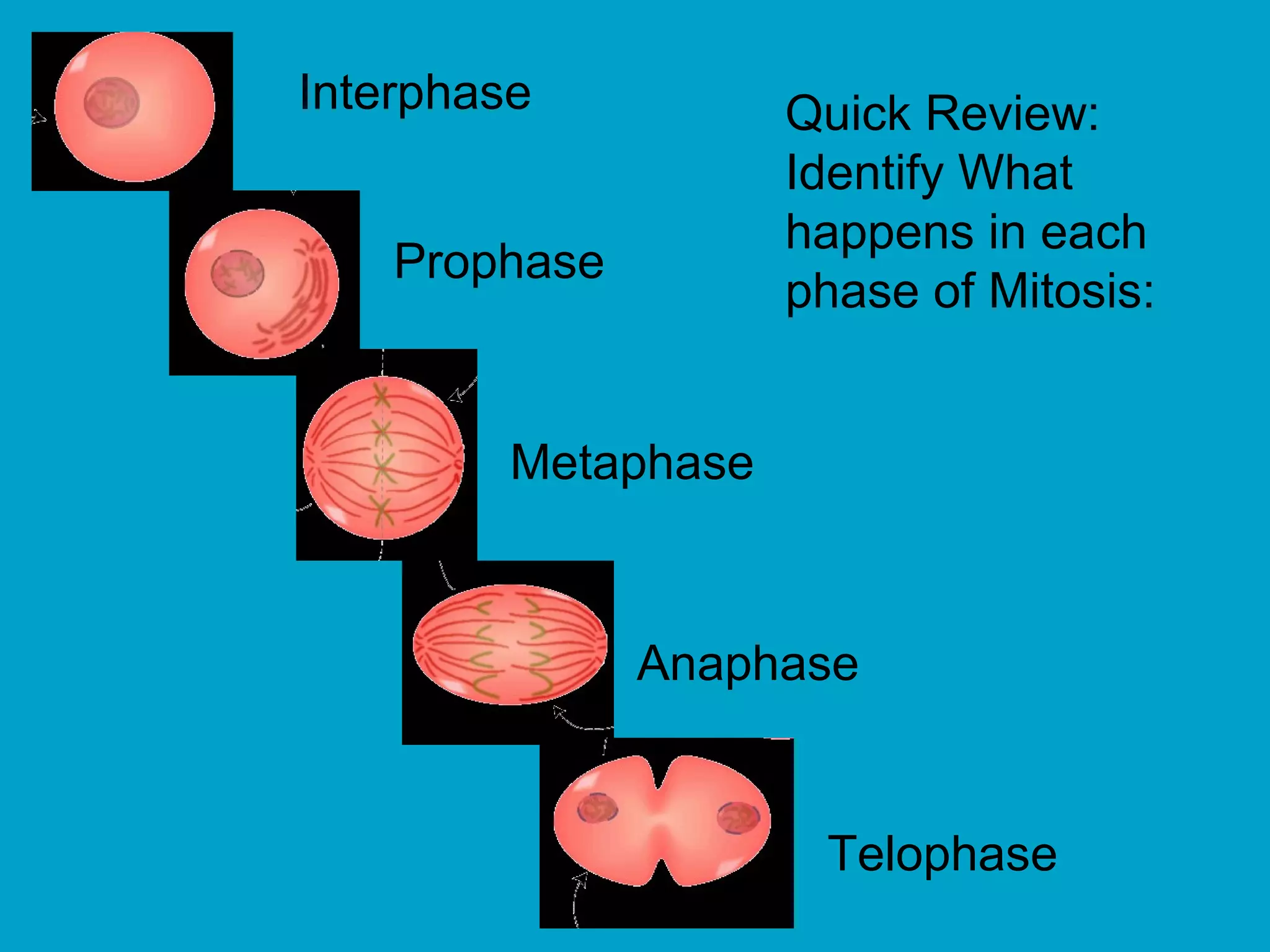
Interphase           Quick Review:
                     Identify What
                     happens in each
    Prophase
                     phase of Mitosis:


         Metaphase


               Anaphase


                      Telophase
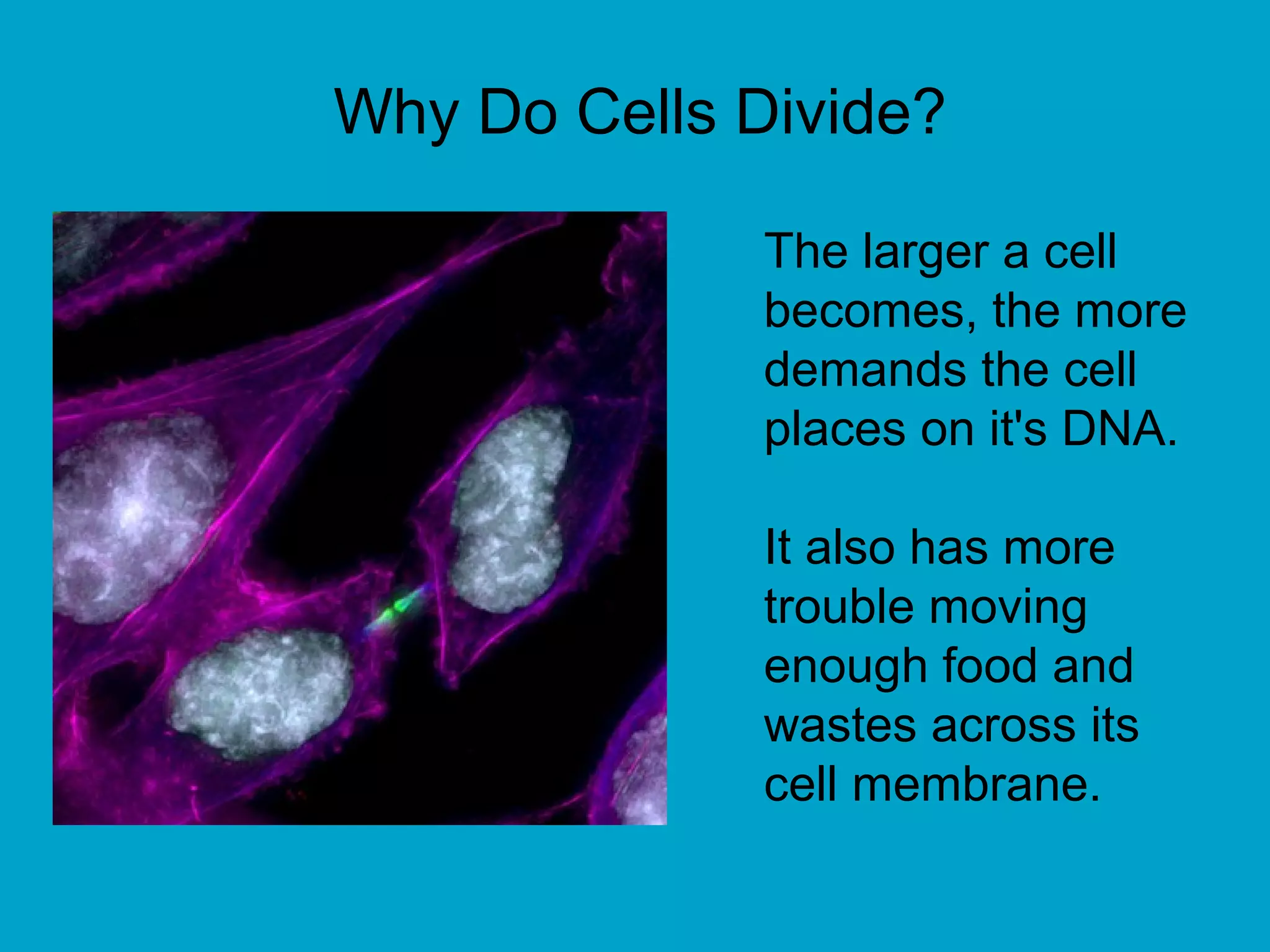
Why Do Cells Divide?

              The larger a cell
              becomes, the more
              demands the cell
              places on it's DNA.

              It also has more
              trouble moving
              enough food and
              wastes across its
              cell membrane.
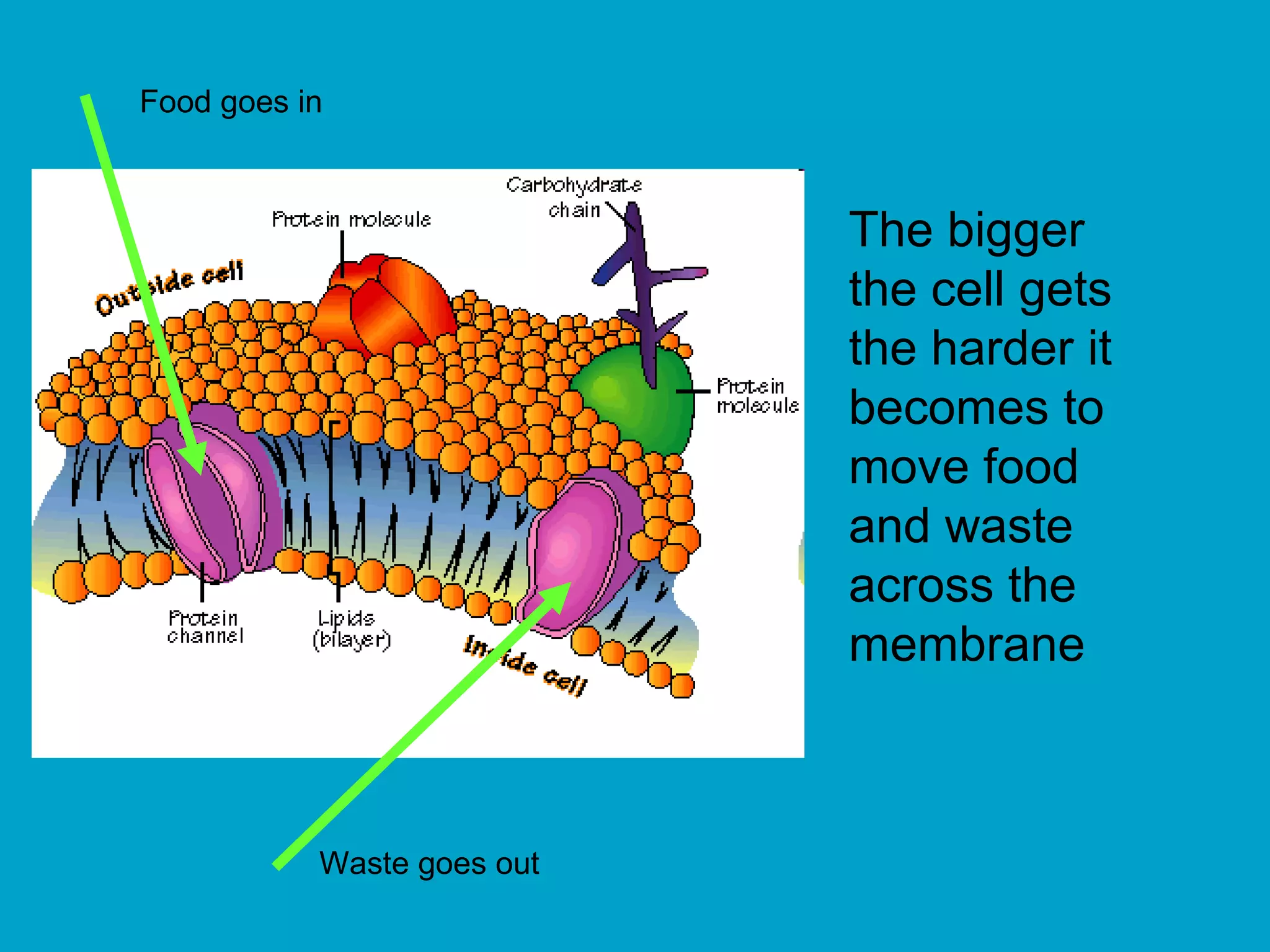
Food goes in


                            The bigger
                            the cell gets
                            the harder it
                            becomes to
                            move food
                            and waste
                            across the
                            membrane


           Waste goes out
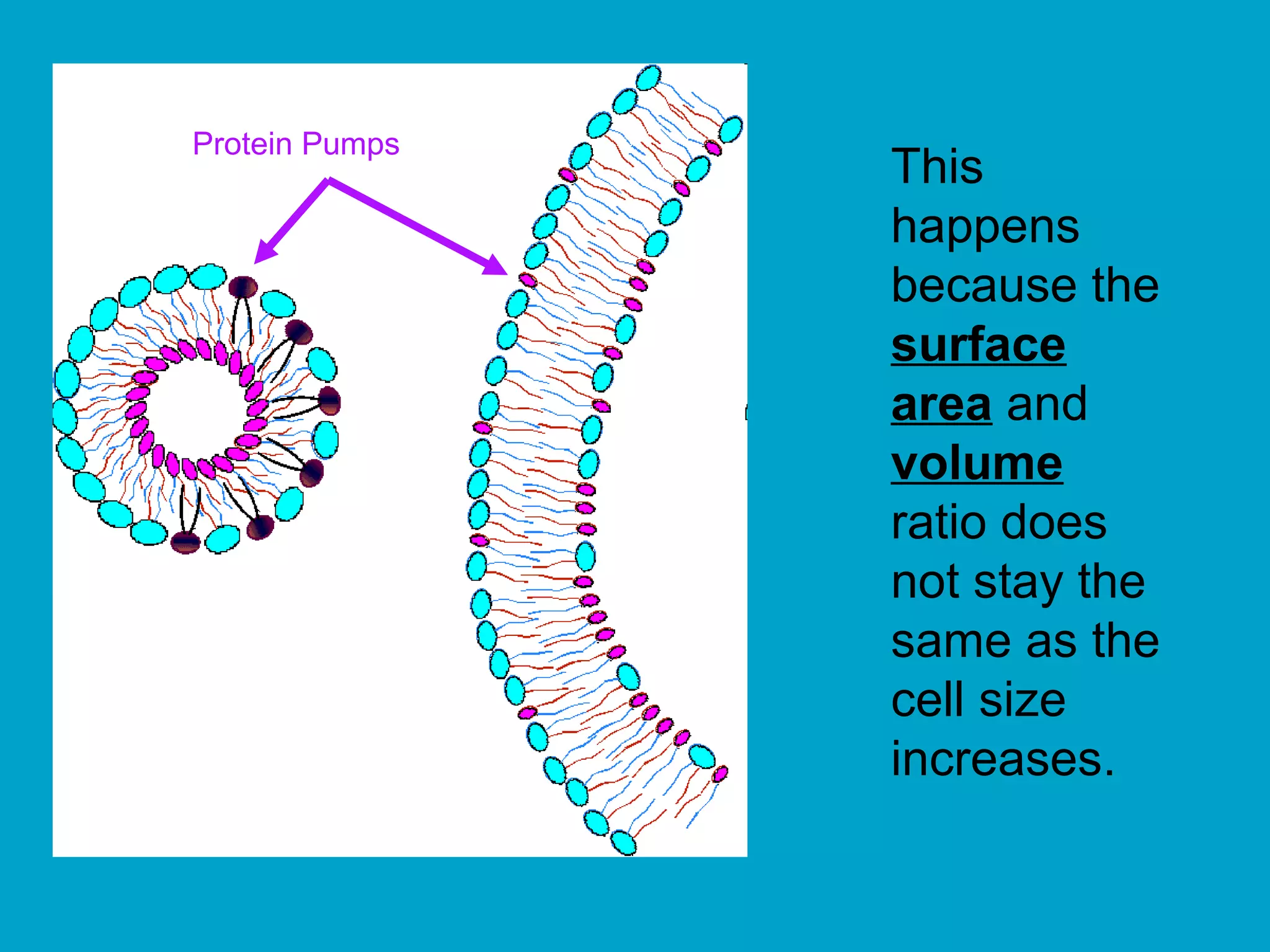
Protein Pumps
                This
                happens
                because the
                surface
                area and
                volume
                ratio does
                not stay the
                same as the
                cell size
                increases.
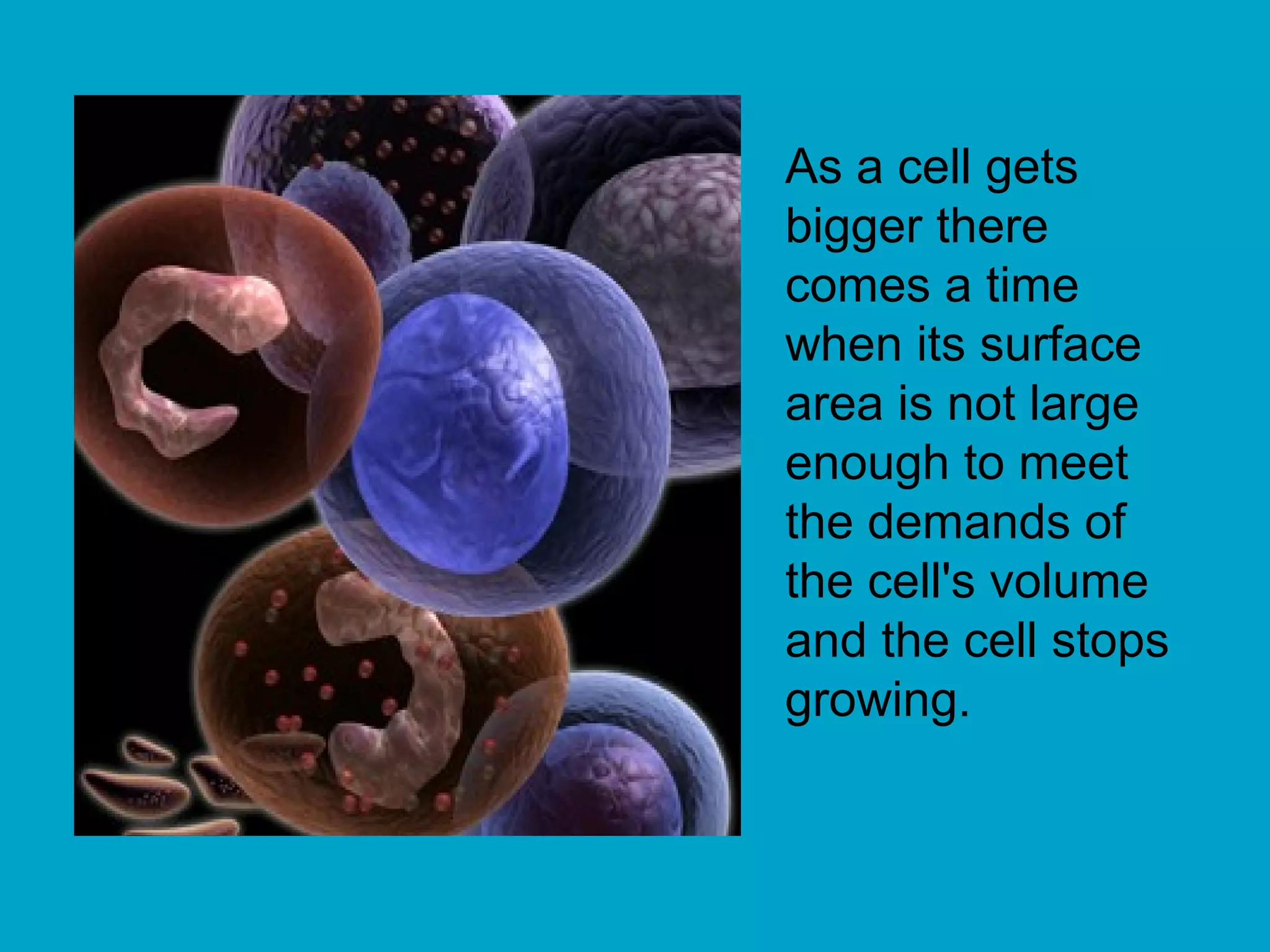
As a cell gets
bigger there
comes a time
when its surface
area is not large
enough to meet
the demands of
the cell's volume
and the cell stops
growing.
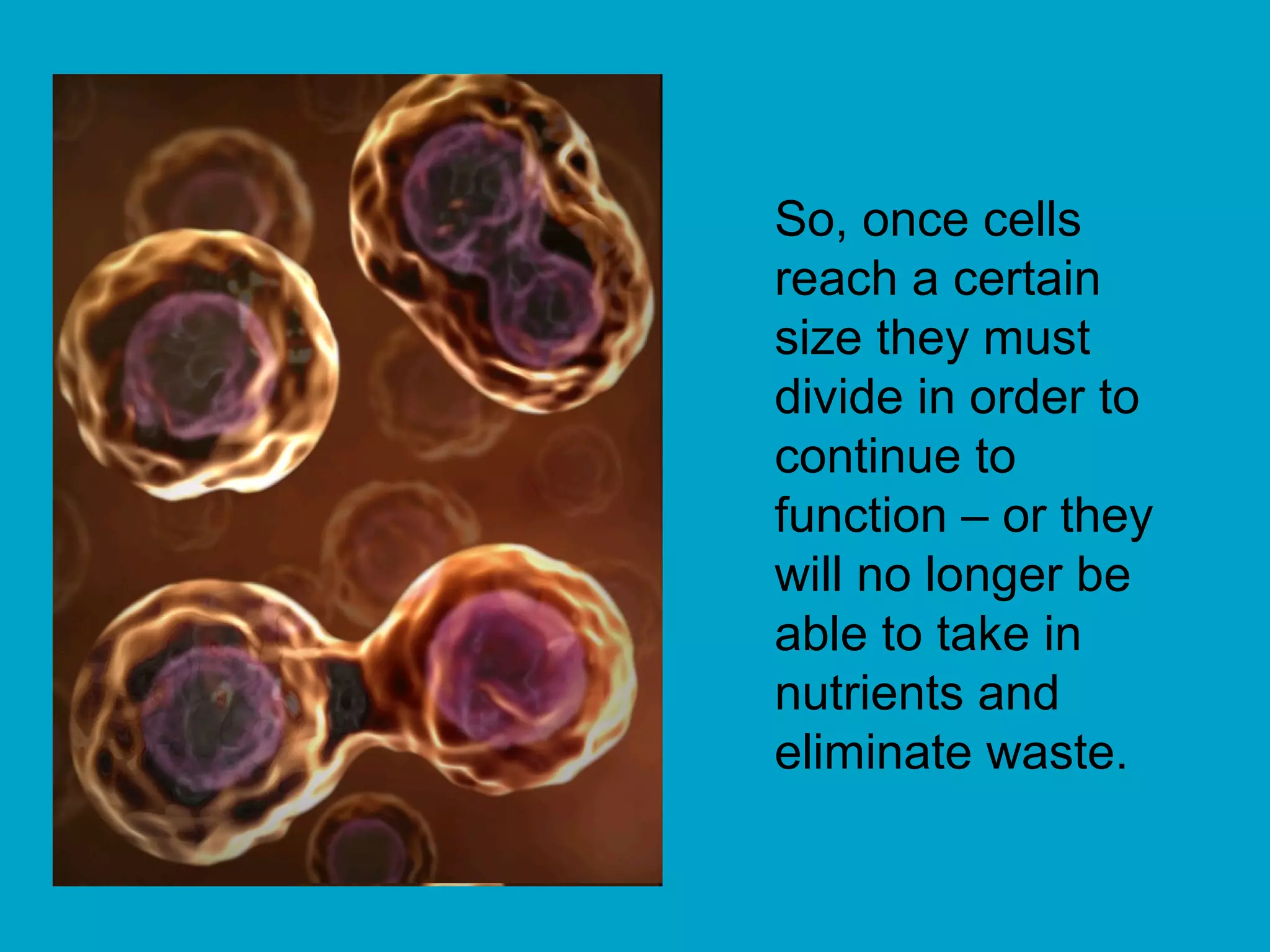
So, once cells
reach a certain
size they must
divide in order to
continue to
function – or they
will no longer be
able to take in
nutrients and
eliminate waste.
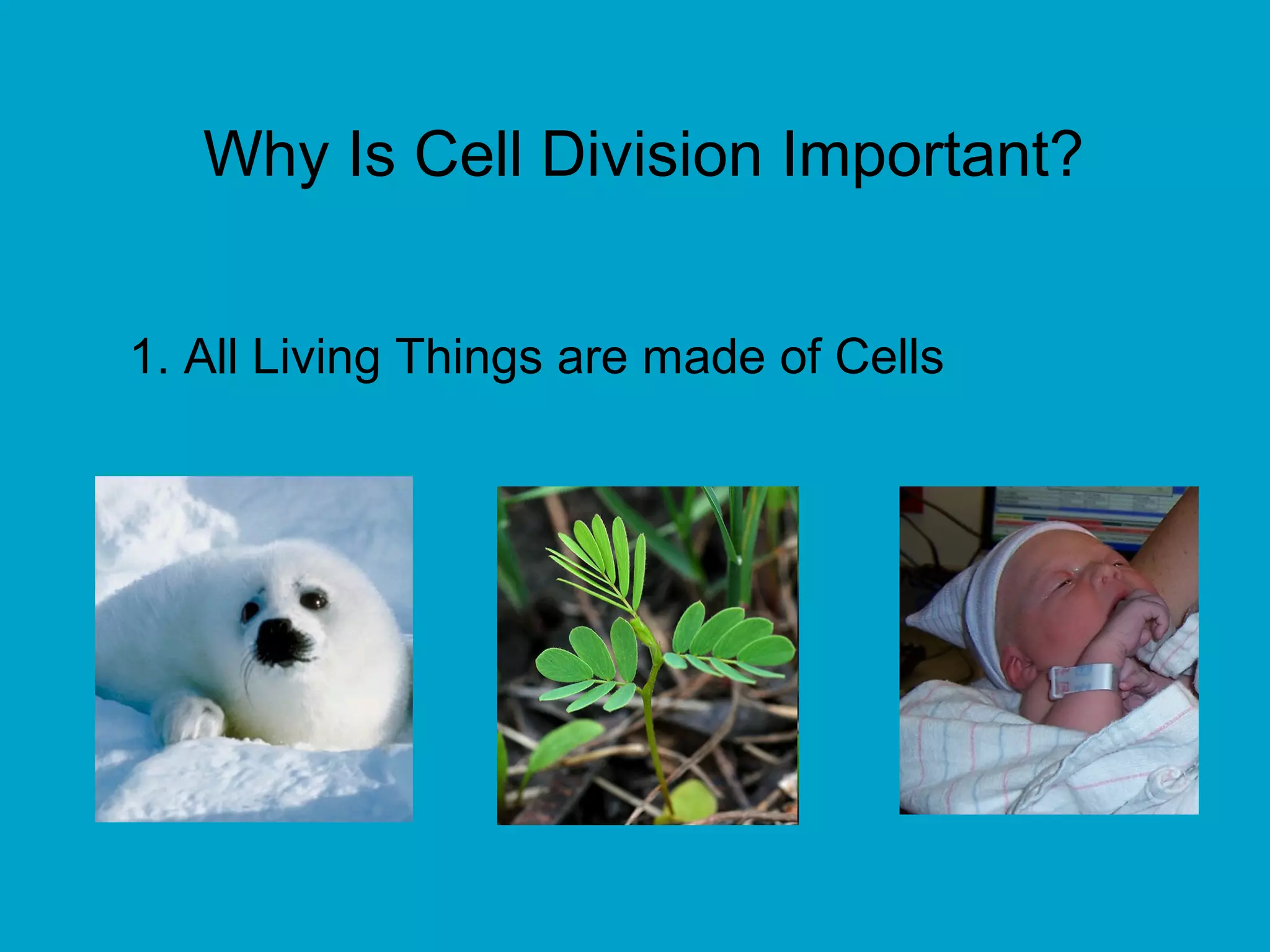
Why Is Cell Division Important?


1. All Living Things are made of Cells
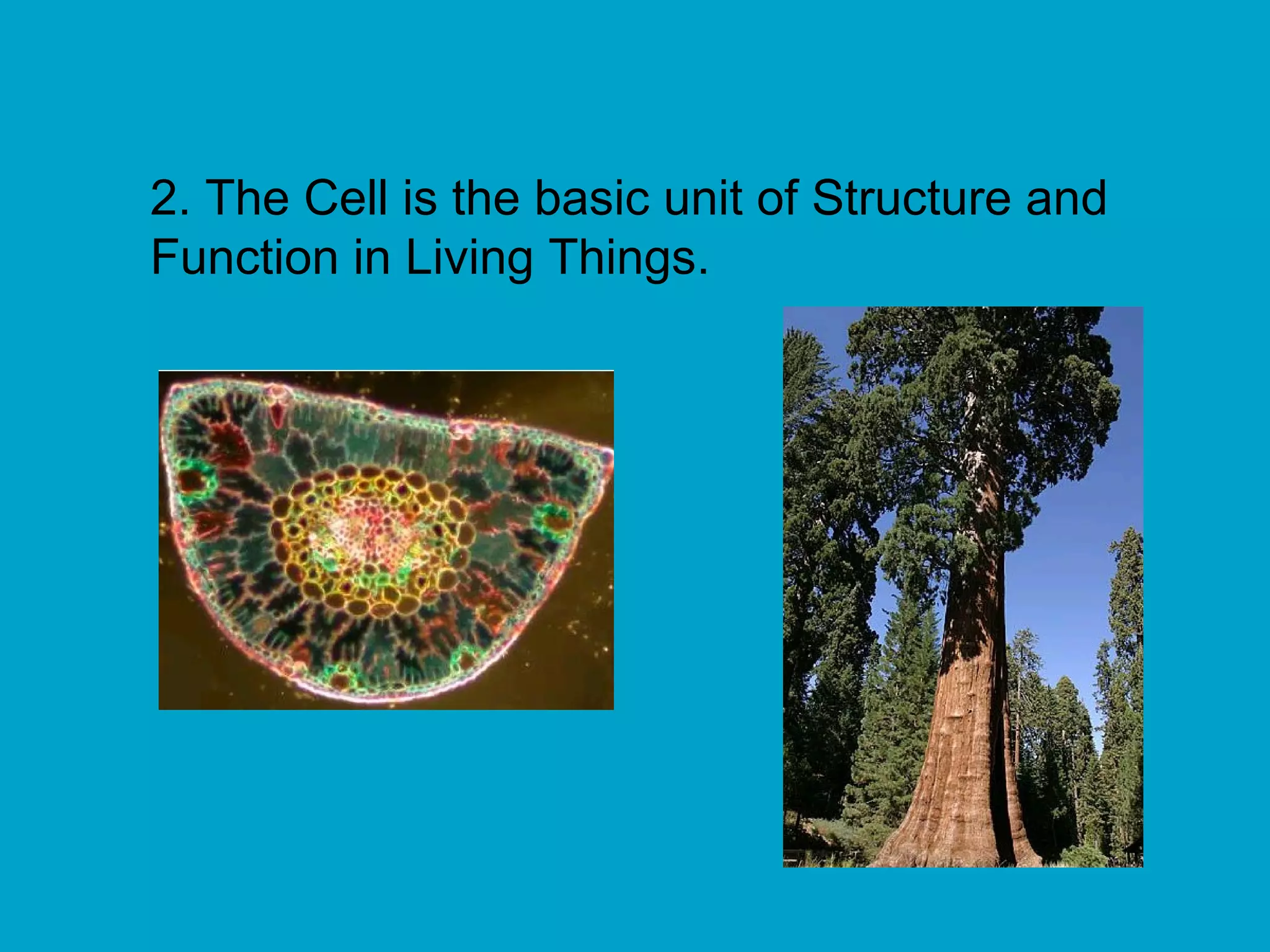
2. The Cell is the basic unit of Structure and
Function in Living Things.
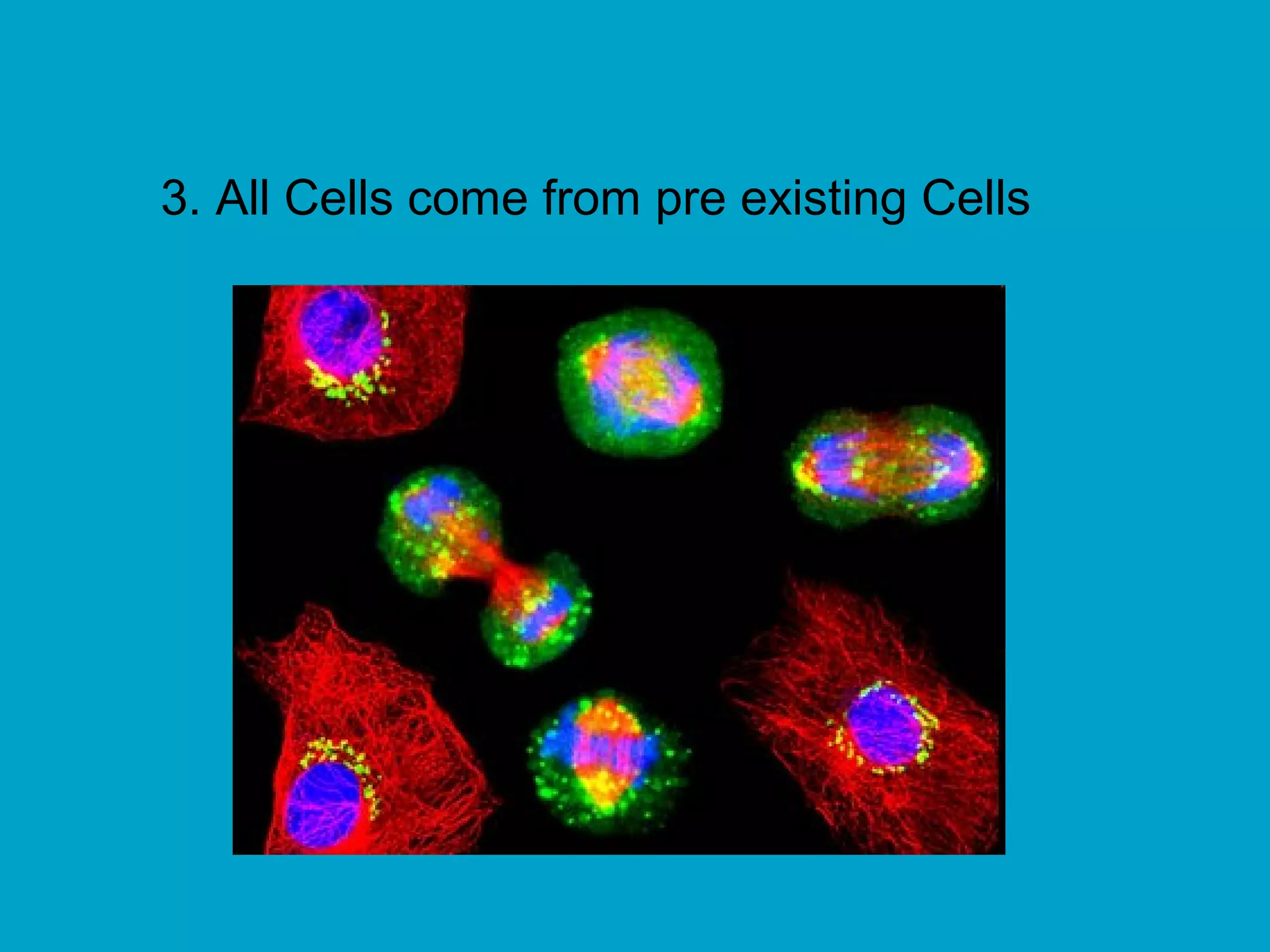
3. All Cells come from pre existing Cells
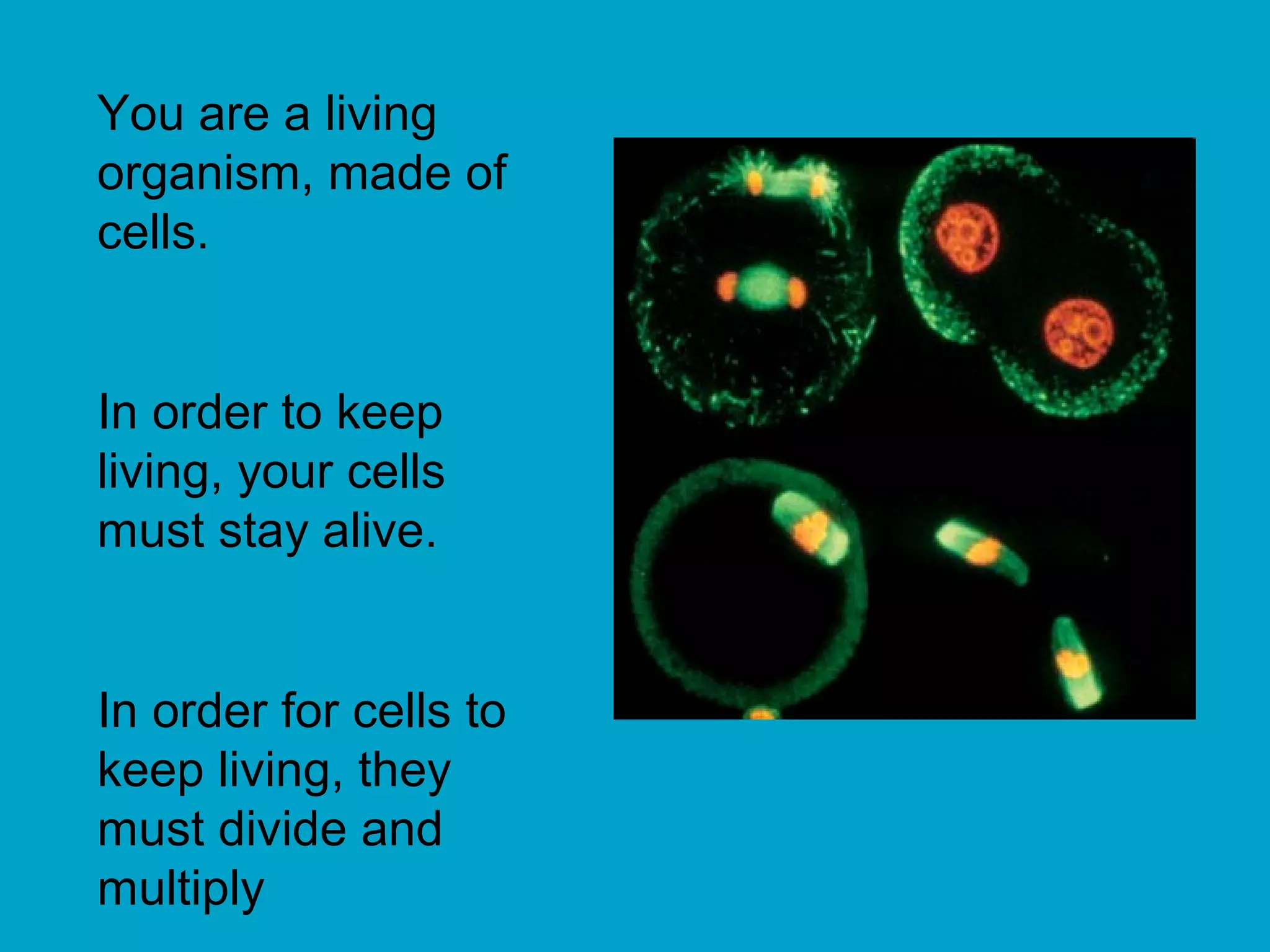
You are a living
organism, made of
cells.


In order to keep
living, your cells
must stay alive.


In order for cells to
keep living, they
must divide and
multiply
Meiosis

Why We Are Who We Are
Meiosis
Takes place in the Gametes of an organism
People have a Chromosome count of 46
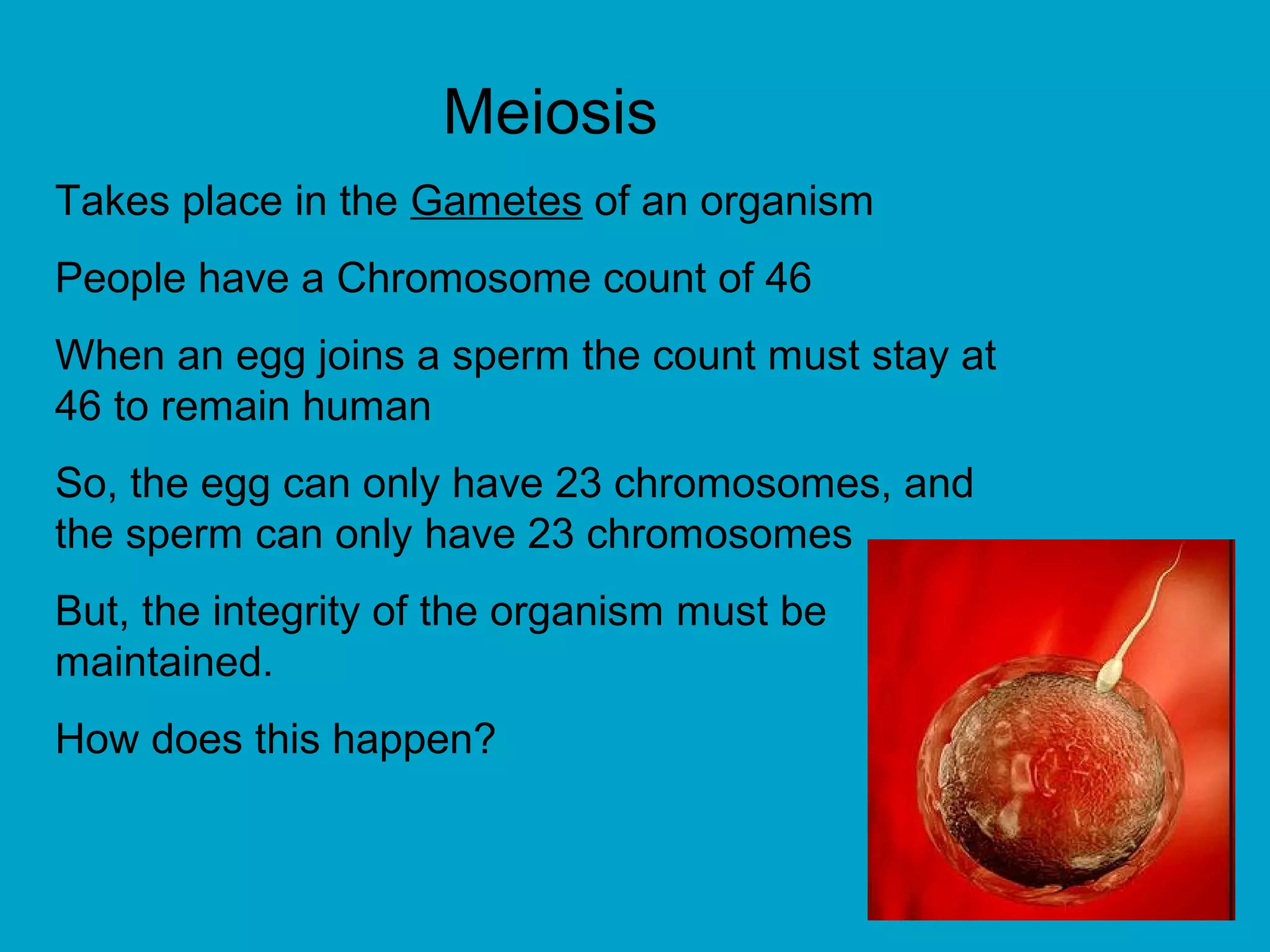
When an egg joins a sperm the count must stay at
46 to remain human
So, the egg can only have 23 chromosomes, and
the sperm can only have 23 chromosomes
But, the integrity of the organism must be
maintained.
How does this happen?
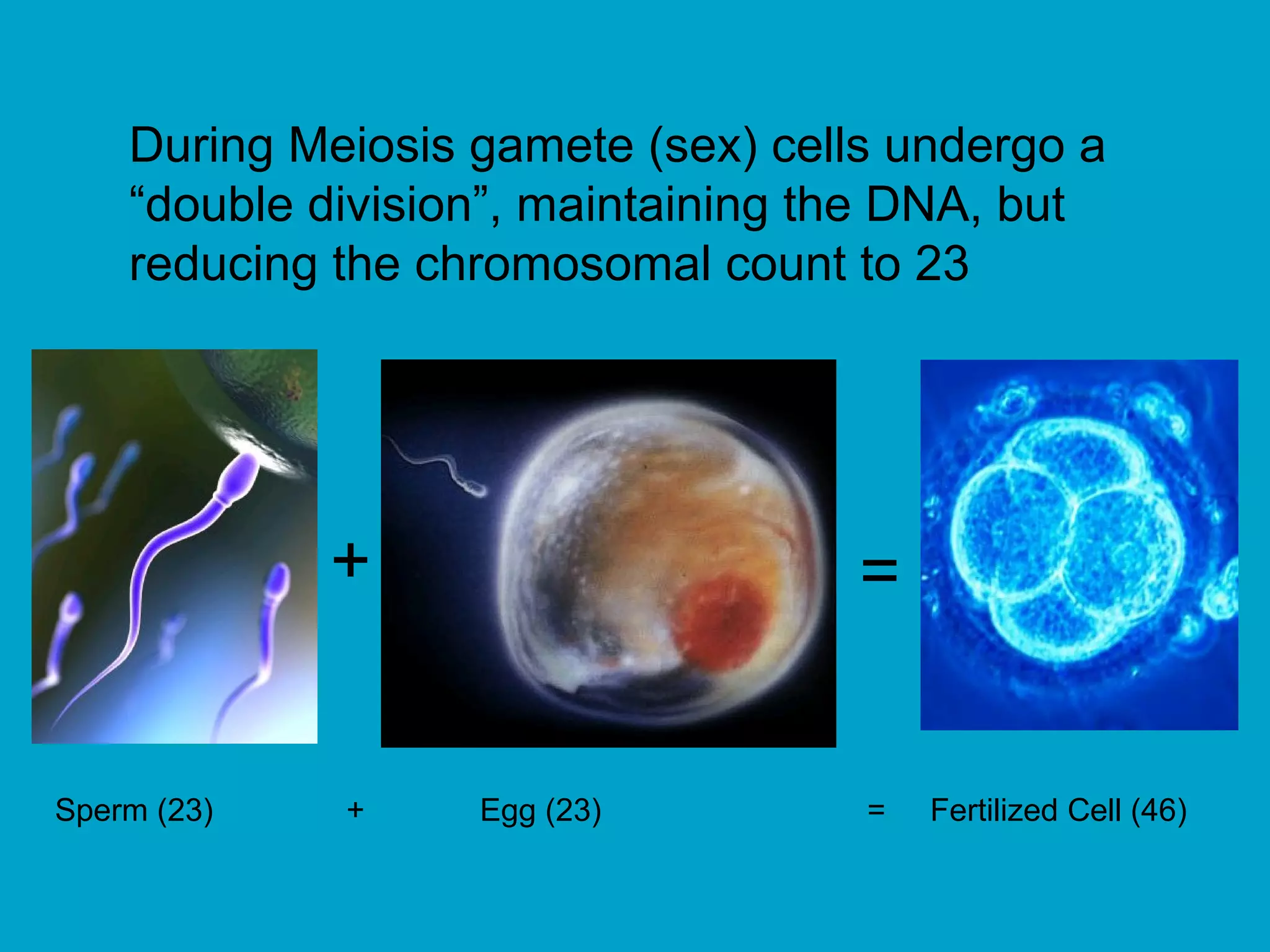
During Meiosis gamete (sex) cells undergo a
    “double division”, maintaining the DNA, but
    reducing the chromosomal count to 23


             +                      =


Sperm (23)   +     Egg (23)         =   Fertilized Cell (46)
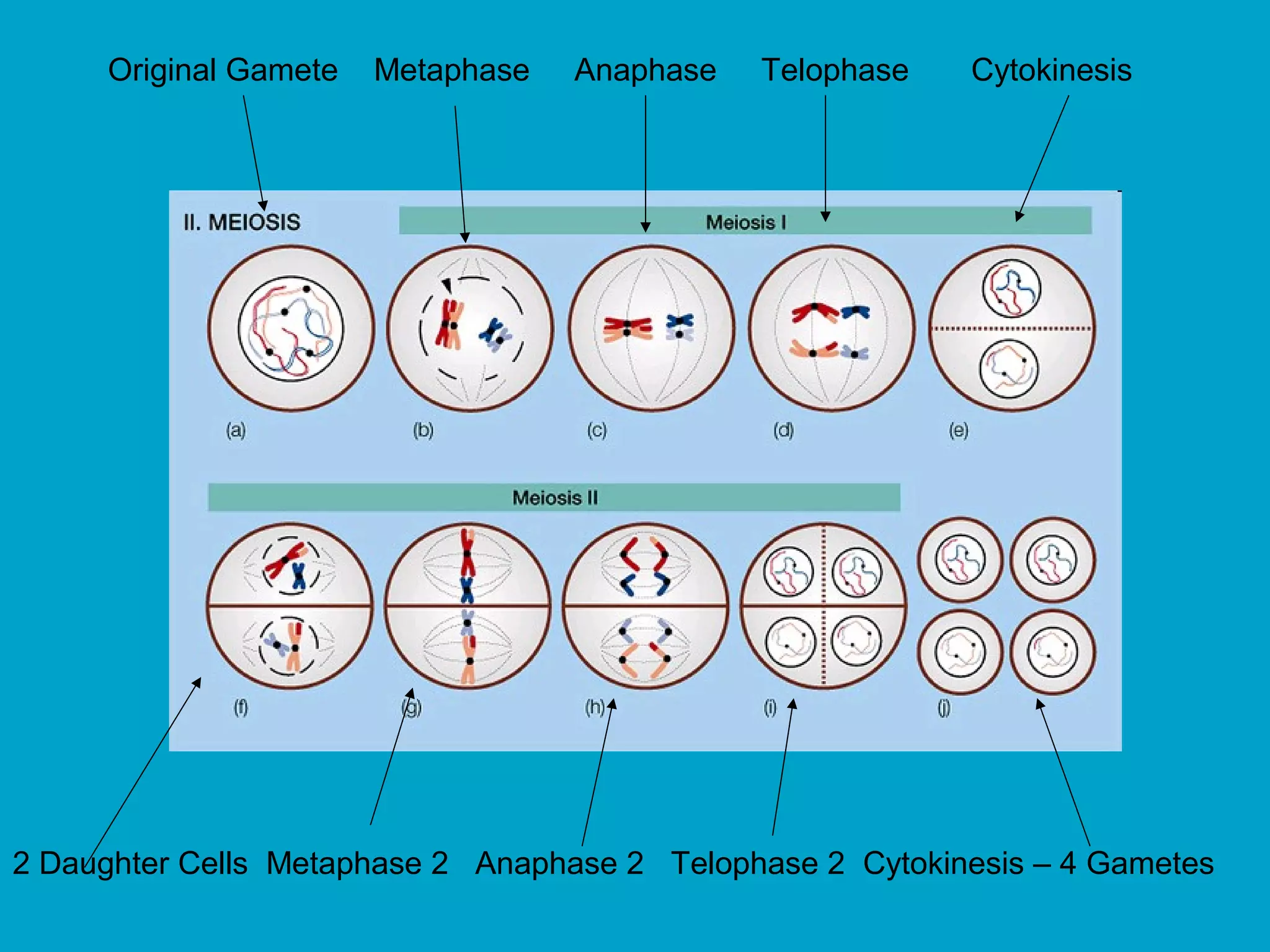
Original Gamete   Metaphase   Anaphase   Telophase    Cytokinesis


2 Daughter Cells Metaphase 2 Anaphase 2 Telophase 2 Cytokinesis – 4 Gametes
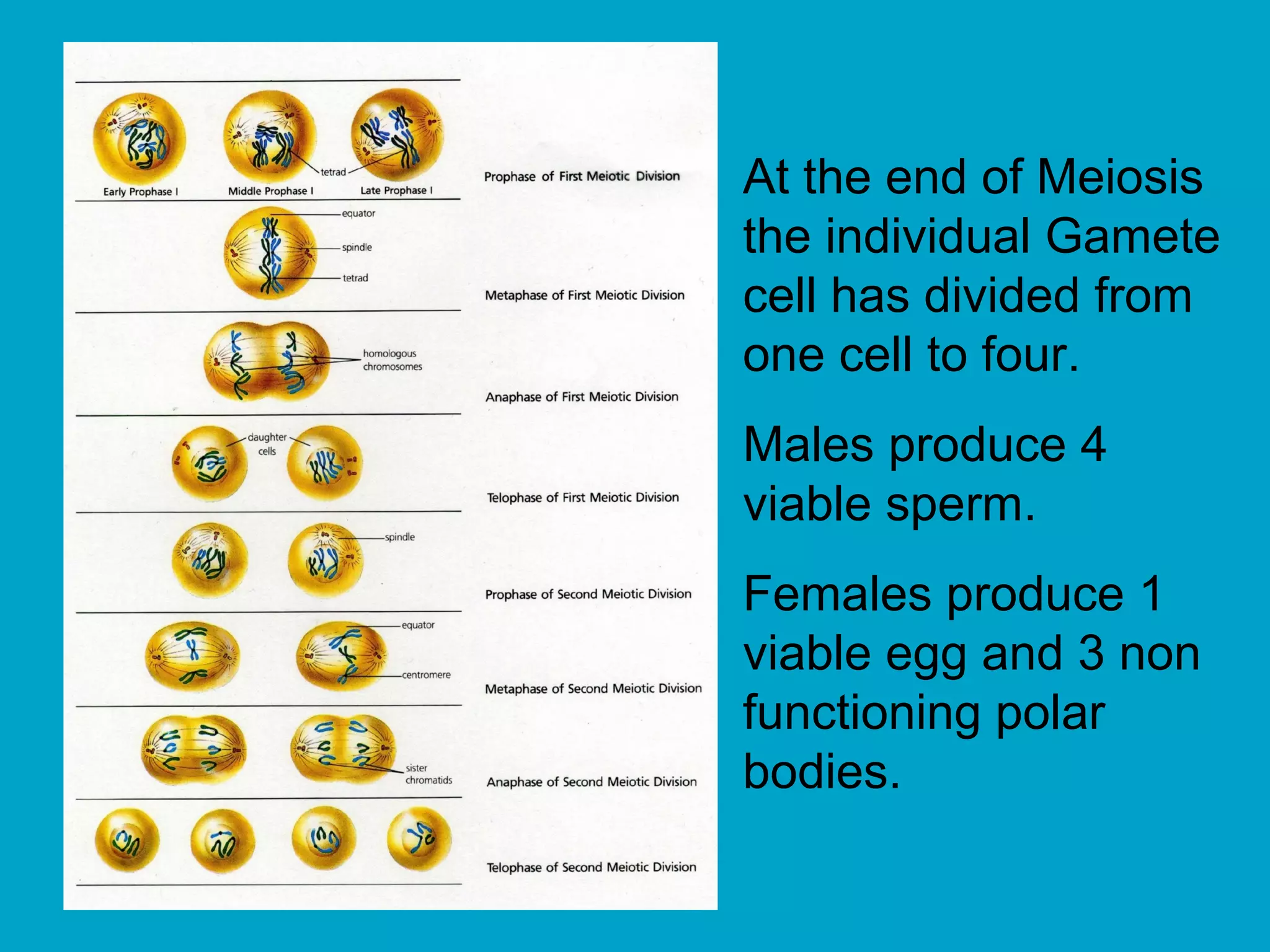
At the end of Meiosis
the individual Gamete
cell has divided from
one cell to four.
Males produce 4
viable sperm.
Females produce 1
viable egg and 3 non
functioning polar
bodies.
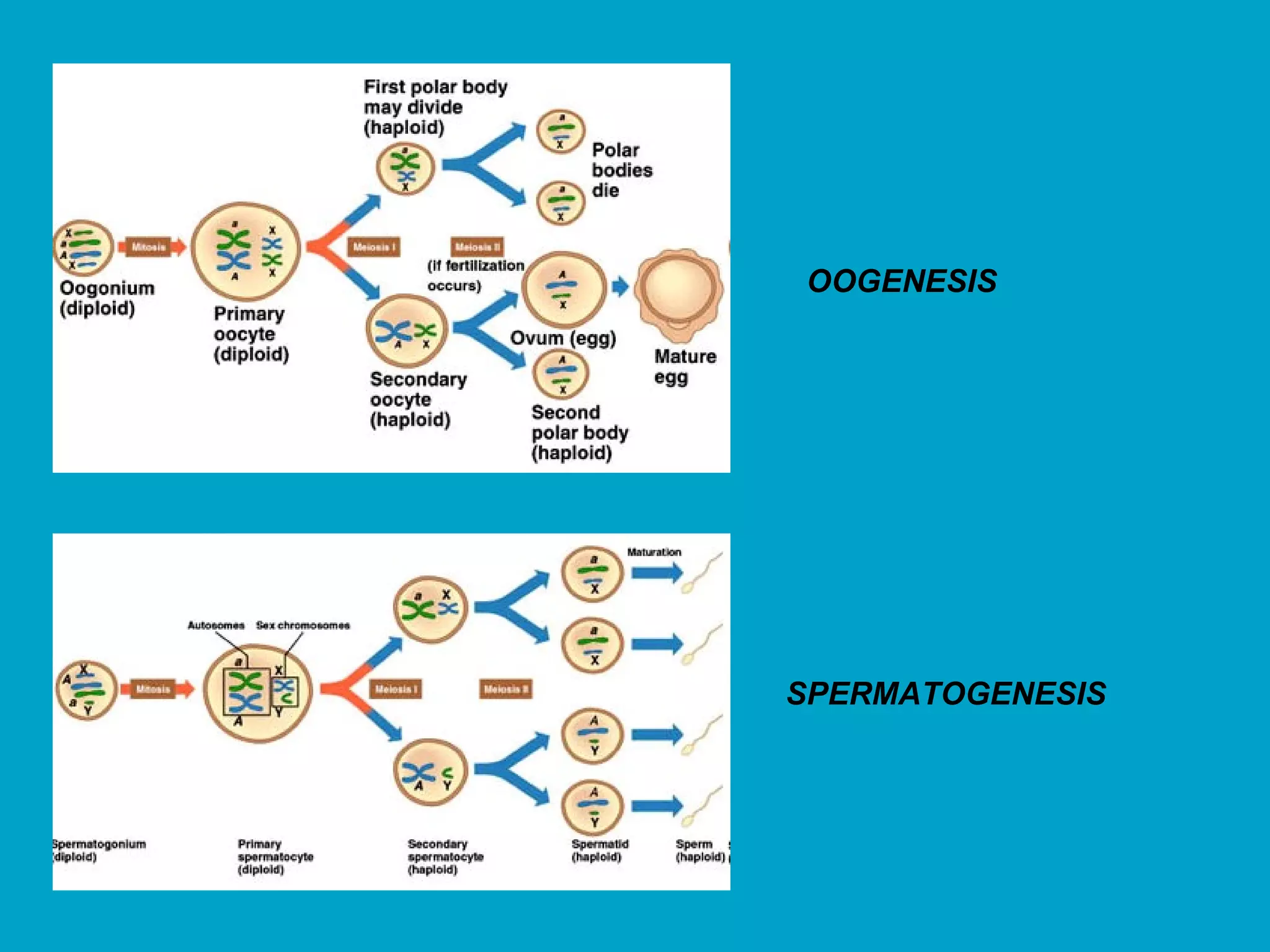
OOGENESIS


SPERMATOGENESIS
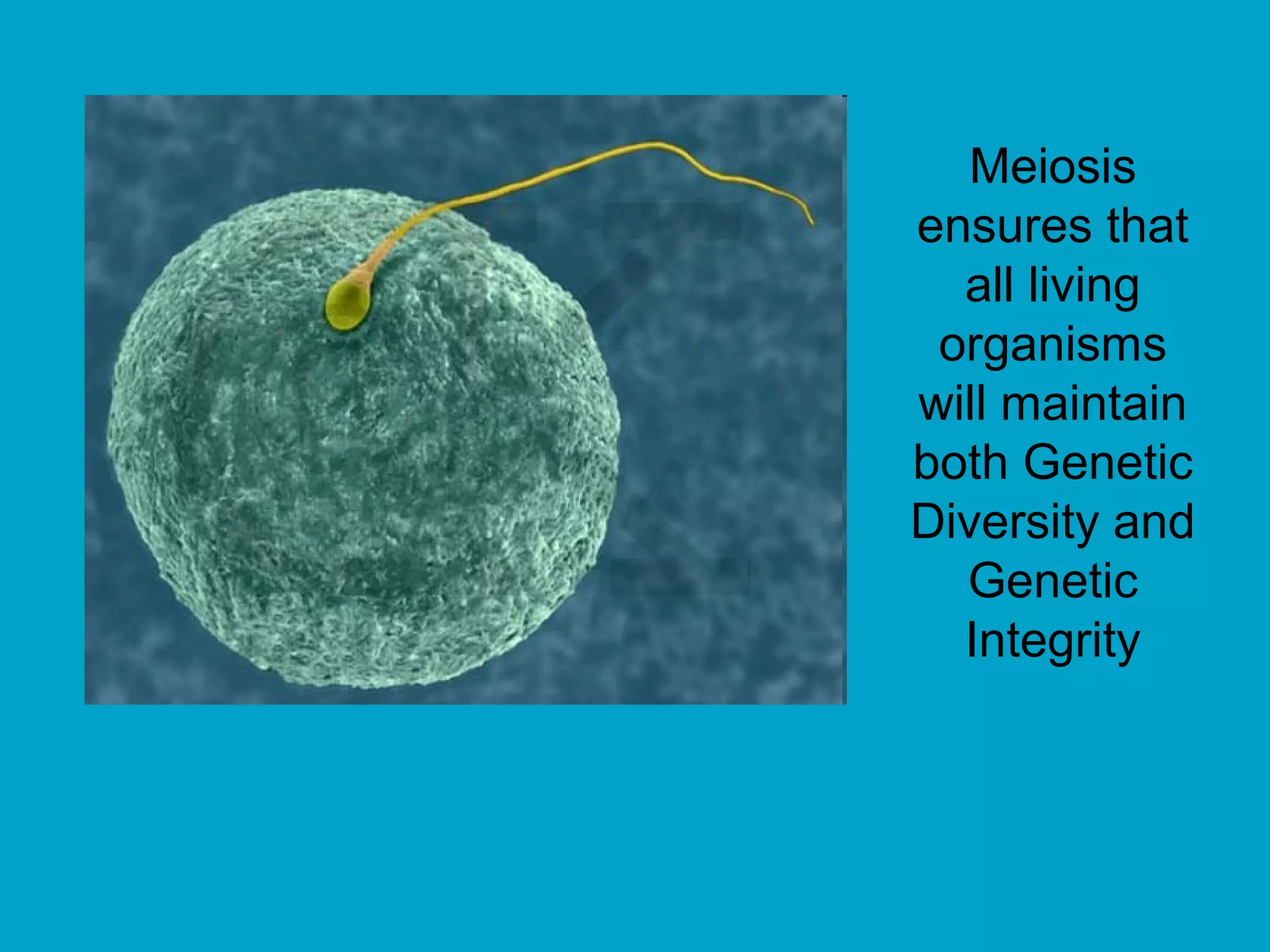
Meiosis
ensures that
  all living
 organisms
will maintain
both Genetic
Diversity and
  Genetic
  Integrity
Celldivision by suresh aadi

Celldivision by suresh aadi

  • 1.
    Cell Division Mr. Suresh Kumar Sharma RN, ACCN, MSN(PSYCHIATRY) Mitosis & Meiosis
  • 2.
    Cell Division Whatis it? Why do Cells do it? Why is it important to me?
  • 3.
    Cell Division Also known as Mitosis Takes place in Regular Body Cells Keeps Cells Living and Growing
  • 4.
  • 5.
    Mitosis The Basic Phases of a Cell’s Life: •Interphase •Prophase •Metaphase •Anaphase •Telophase •Cytokinesis
  • 6.
    Interphase The longest stage of a Cell’s life The time spent between divisions Produces all materials required for growth Preparation for division
  • 7.
    Mitosis: Cell Division Thelast part of the Cell Cycle is called Mitosis and has 4 phases during which the cell divides into 2 cells
  • 8.
    Prophase The Cell begins the division process 1. The nucleolus disappears, 2. The nuclear membrane breaks apart
  • 9.
    3. The chromosomes become visible 4. The spindle apparatus forms and attaches to the centromeres of the chromosomes
  • 10.
    Metaphase The SecondPhase of Mitosis 1. The Nuclear Membrane is completely gone 2. The duplicated chromosomes line up along the cell's equator.
  • 11.
    Anaphase The third phaseof Mitosis Diploid sets of daughter chromosomes separate They are pushed and pulled toward opposite poles of the cell by the spindle fibers
  • 12.
  • 13.
    Telophase The nuclear membrane and nucleoli(nucleus) reform. Cytokinesis is nearly complete,
  • 14.
    The Cell Plate beginsto form The Cell prepares for finial division
  • 15.
    Cytokinesis – Thefinal stage of Mitosis The cytoplasm, organelles, and nuclear material are evenly split and two new cells are formed. Cell Plate
  • 16.
    The two newcells – each exactly like the other – are called Daughter Cells
  • 17.
    Quick Review: The followingslides are drawings of the stages of Mitosis. On your notes, please draw each phase and label it.
  • 18.
    Interphase – TheCell spends the majority of its life here, growing and functioning. During the S Phase of the Cell Cycle, the DNA replicates, in anticipation of Mitosis
  • 19.
    In Early Prophaseof Mitosis the Chromosomes get small, centrioles move to the poles of the nucleus, and spindle fibers develop Chromosomes consisting of 2 Pair of Sister Centrioles Chromatids Spindle Fibers
  • 20.
    Late Prophase happenswhen the Nuclear Envelope disintegrates and spindle fibers begin to move Chromosomes toward the center of cell. Spindle Fibers Chromosomes
  • 21.
    During Metaphase theChromosomes line up across center of the cell, also called the equator, or Metaphase plate. Spindle Fibers Equator, or Metaphase Plate Chromosomes
  • 22.
    In Anaphase theChromatids that make up each Chromosome move apart and travel to opposite ends of cellular spindle Daughter Chromosomes Chromatid Chromosome
  • 23.
    In Telophase anenvelope surrounds each set of Chromatids to form new Nucleus and the Cytoplasm starts to divide Cleavage Furrow
  • 24.
    Cytokinesis takes placewhen the Cytoplasm divides and two cells with identical genetic material are formed Daughter Cells
  • 25.
    Interphase Quick Review: Identify What happens in each Prophase phase of Mitosis: Metaphase Anaphase Telophase
  • 26.
    Why Do CellsDivide? The larger a cell becomes, the more demands the cell places on it's DNA. It also has more trouble moving enough food and wastes across its cell membrane.
  • 27.
    Food goes in The bigger the cell gets the harder it becomes to move food and waste across the membrane Waste goes out
  • 28.
    Protein Pumps This happens because the surface area and volume ratio does not stay the same as the cell size increases.
  • 29.
    As a cellgets bigger there comes a time when its surface area is not large enough to meet the demands of the cell's volume and the cell stops growing.
  • 30.
    So, once cells reacha certain size they must divide in order to continue to function – or they will no longer be able to take in nutrients and eliminate waste.
  • 31.
    Why Is CellDivision Important? 1. All Living Things are made of Cells
  • 32.
    2. The Cellis the basic unit of Structure and Function in Living Things.
  • 33.
    3. All Cellscome from pre existing Cells
  • 34.
    You are aliving organism, made of cells. In order to keep living, your cells must stay alive. In order for cells to keep living, they must divide and multiply
  • 35.
  • 36.
    Meiosis Takes place inthe Gametes of an organism People have a Chromosome count of 46 When an egg joins a sperm the count must stay at 46 to remain human So, the egg can only have 23 chromosomes, and the sperm can only have 23 chromosomes But, the integrity of the organism must be maintained. How does this happen?
  • 37.
    During Meiosis gamete(sex) cells undergo a “double division”, maintaining the DNA, but reducing the chromosomal count to 23 + = Sperm (23) + Egg (23) = Fertilized Cell (46)
  • 38.
    Original Gamete Metaphase Anaphase Telophase Cytokinesis 2 Daughter Cells Metaphase 2 Anaphase 2 Telophase 2 Cytokinesis – 4 Gametes
  • 39.
    At the endof Meiosis the individual Gamete cell has divided from one cell to four. Males produce 4 viable sperm. Females produce 1 viable egg and 3 non functioning polar bodies.
  • 40.
  • 41.
    Meiosis ensures that all living organisms will maintain both Genetic Diversity and Genetic Integrity