
Cell division is the
process by which a
parent cell divides into
two or more daughter
cells.

Cell division is usually a
small segment of a
larger cell cycle.
Cell cycle is the period
from the time a new
cell is produced until
the cell completes
cell division.

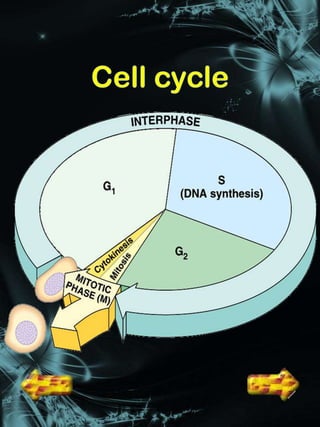
Cell cycle starts with
interphase and is
followed by mitosis
and cytokinesis.
Interphase accounts for
 about 90% of the cell
 cycle.

 This interphase is
 subdivided into three
 phases , that is

  i) G1 (growth phase 1)
 ii) S (synthesis phase)
iii) G2 (growth phase 2)
1. Proteins and new
   cytoplasm organelles such
   as mitochondria and
   chloroplasts are synthesised
   during this stage.

2. The metabolic rate of the cell
   is high.

3. The chromosomes are not
   condensed and appear as
   thread –like structure called
   chromatin.
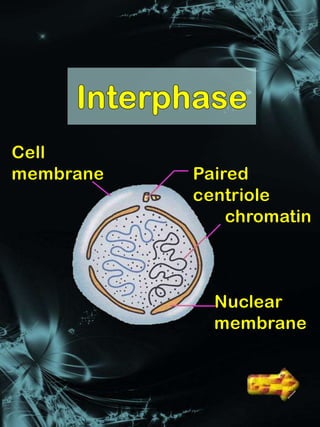
                       Interphase
1. Synthesis of DNA occurs
   during S phase.

2. DNA undergoes replication.

3. Each duplicated
   chromosome consists of two
   identical sister chromatids.


                     Interphase
1. The cell continues to grow
   and remain metabolically
   active.

2. The cell accomulate energy
   and completes its final
   preparation for cell
   division.


                     Interphase
Cell division starts with
 nuclear division
 (karyokinesis) and is
 followed by cytoplasm
 division (cytokinesis).

 Nuclear division can be
 divided into two major
 parts:

a) mitosis
b) meiosis
Is cell division that
 produces daughter cells
 with the same number of
 chromosomes as the
 parent cell.

 Occurs in:

a) meristems of plants
b) most somatic cells of
   animals
a) Produces new cells to
   replace cells that are worn
   out and damaged

b) Produces new cells for
   growth and maintenance in
   living organisms
c) Mitosis is a form of
   asexual reproduction for
   Amoeba sp. and Hydra sp.

d) Preserves the diploid
   chromosome numbers in
   somatic cells
Mitosis is divided into 4
 phases:

a) Prophase
b) Metaphase
c) Anaphase
d) Telophase
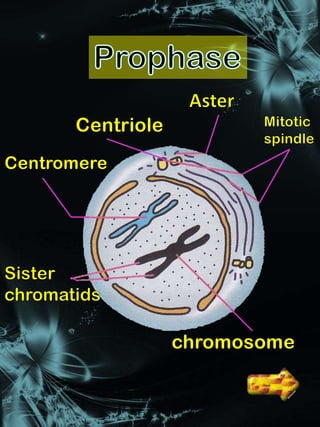
1. The chromosomes
   condense , become
   shorter and thicker ,
   become visible clear
   under light
   microscope.

2. Each chromosome
   now consists of pair
   of sister chromatids
   joined at centromere.
3. Spindle fibre begin to
   form.

4. At the end of the
   prophase , nucleus
   and nuclear membrane
   begin to disappear.
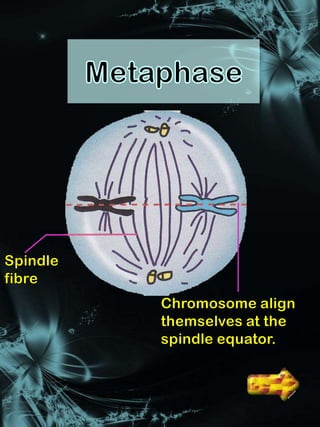
1. Metaphase begin when the
   centromeres of all the
   chrmosomes lined up on
   the metaphase plate.

2. The two sister chromatids
   are still attached to one
   another at the centromere.

3. Metaphase end when the
   centromeres divide.
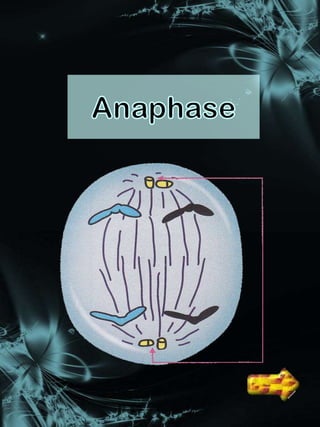
1. During anaphase , the two
   sister chromatids of each
   chromosomes separate at the
   centromere.

2. The two sister chromatids are
   pulled apart to the opposite
   poles by the shortening of the
   spindle fibres.
3. Once separated , the
   chromatids are referred to as
   daughter chromosomes.

4. At the end of anaphase , the
   two poles of the cell have
   complete and equivalent sets
   of chromosomes.
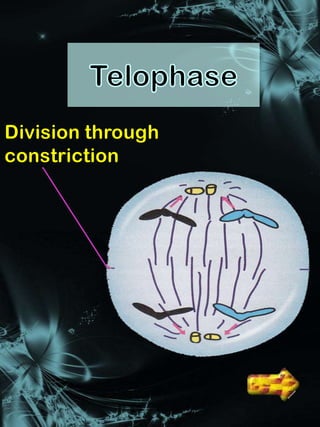
1. Telophase begin when the sets
   of chromosomes reach the
   opposite poles of the cells.

2. The chromosomes start to
   uncoil and appear as
   chromatines and become less
   visible under light
   microscope..
3. The spindle fibres
   begin to disappear.

4. The nuclear
   membrane and the
   nucleolus reforms in
   each nucleus.
Cytokinesis is the division of
the cytoplasm occurs towards
the end of the telophase.

Through cytokinesis , the
daughter cells have all the
organelles , nutrients and
other components needed to
survive and maintain
themselves.
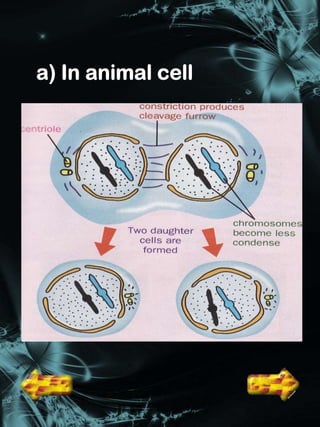
Actine filaments in the
cytoplasm contracts to
pull a ring of the plasma
membrane inwards ,
forming a groove called
cleavage furrow until the
cell is separated in two
daughter cells.
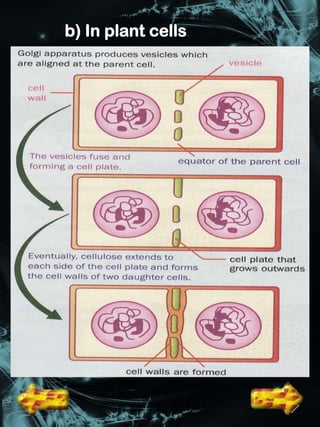
In plant cell , membrane
enclosed vesicles gather at
plant cells equator between
the nuclei.
The vesicles fuse to form cell
 plate which divide the cell
 into two daughter cells.

After cytokinesis , the new cell
enter G1 stage of interphase ,
complete the cell cycle.
Is the process of nuclear
division that reduces the
number of chromosomes in
daughter cells to half that of
the parent cell.
Meiosis consists of two
   separate nuclear divisions:

a) Meiosis I , which consists of
   prophase I , metaphase I ,
   anaphase I and telophase I
b) Meiosis II , which consists of
   prophase II , metaphase II,
   anaphase II and telophase II
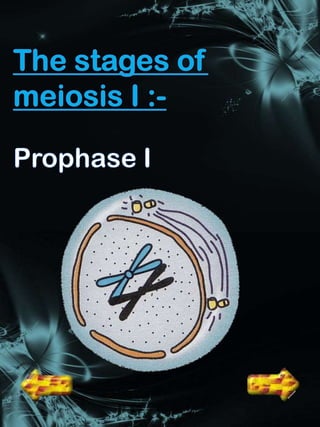
The chromosomes begin to
condense . They become
shorter , thicker and clearly
visible .

Homologous chromosomes
come together to form pairs of
bivalents through synapsis .
Each bivalent consists of a
tetrad . A tetrad consists of
two homologous
chromosomes , each of which
is made up of two sister
chromatids .

Non-sister chromatids
exchange segments of DNA in
a process of crossing over .

Crossing over causes new
combination of genes on a
chromosomes .
The points at which segments
of chromatids cross over are
called chiasmata .

At the end of Prophase I , the
nucleolus and nuclear
membrane disappear .
The two pairs of centrioles
migrate to the opposite
poles of the cell . Each pair
of centrioles acts as a
central point from which
the spindle fibes will radiate.
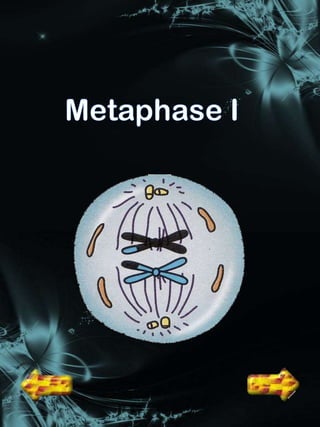
The spindle fibres pull the
tetrads to the middle of the
cell.

Pairs of homologous
chromosomes align
themselves at the metaphase
plate of the cell.
One chromosome of each
homologous pair is attached
to fibres from one pole while
its homologue is attached to
fibres from the opposite pole.
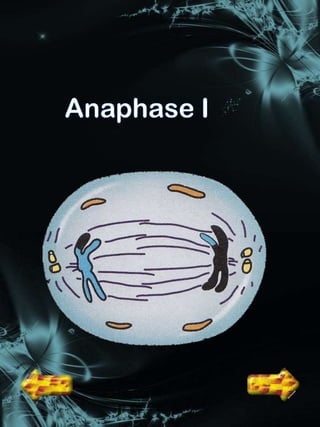
The spindle fibres pull the
homologous chromosomes
apart from one another and
move them to the opposite
poles of the cell.

Each chromosome still
consists of two sister
chromatids.
Each number of the
homologous chromosomes is
attached to spindle fibres.

At the end of anaphase I ,
each pole has only two
chromosomes (each with two
sister chromatids)
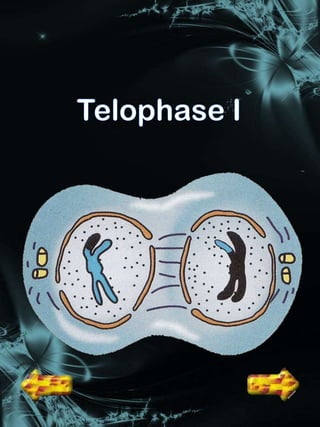
The chromosomes arrive at
the poles.

Each pole now has haploid
daughter nucleus because it
contains only one set of
chromosomes.

The spindle fibres disappear.
The nuclear membrane
reappears to surround
each group of
chromosomes.

The nucleolus then
reappears in each
nucleus .
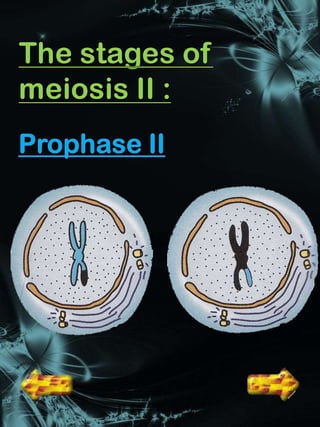
The nuclear membrane
disintegrates.

The spindle fibres re-
form in each daughter
cell .
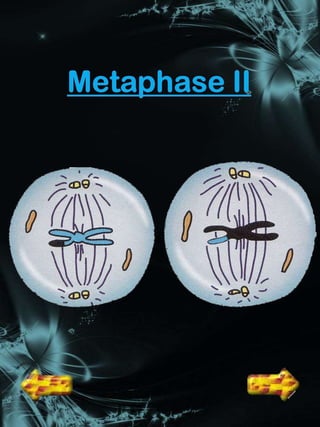
The chromosomes are
positioned randomly at the
metaphase plate with the
sister chromatids of each
chromosome pointing
towards opposite poles.

Each sister chromatids is
attached to the spindle fibres
at the centromere.
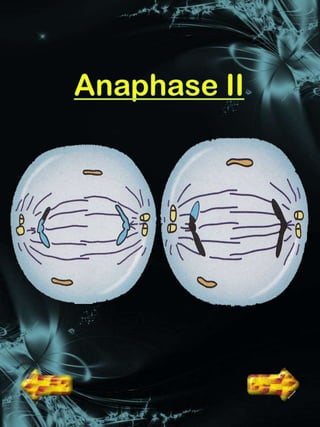
The centromeres of the sister
chromatids separate .

The sister chromatids of each
chromosome are now
individual chromosomes .

Each individual chromosome
moves towards the opposite
poles of the cell .
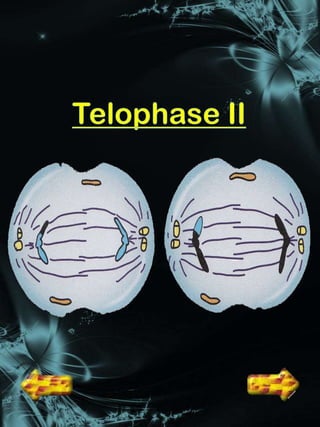
Finally , the nucleoli and
nuclear membranes re-form .

The spindle fibres break down

Cytokinesis follows and four
haploid daughter cells are
formed. Each haploid cell
contains half the number of
chromosomes and is
genetically different from the
parent diploid cell . These
haploid cells become
gametes.
cell division

cell division

  • 2.
    Cell division isthe process by which a parent cell divides into two or more daughter cells. Cell division is usually a small segment of a larger cell cycle.
  • 3.
    Cell cycle isthe period from the time a new cell is produced until the cell completes cell division. Cell cycle starts with interphase and is followed by mitosis and cytokinesis.
  • 6.
    Interphase accounts for about 90% of the cell cycle. This interphase is subdivided into three phases , that is i) G1 (growth phase 1) ii) S (synthesis phase) iii) G2 (growth phase 2)
  • 7.
    1. Proteins andnew cytoplasm organelles such as mitochondria and chloroplasts are synthesised during this stage. 2. The metabolic rate of the cell is high. 3. The chromosomes are not condensed and appear as thread –like structure called chromatin. Interphase
  • 8.
    1. Synthesis ofDNA occurs during S phase. 2. DNA undergoes replication. 3. Each duplicated chromosome consists of two identical sister chromatids. Interphase
  • 9.
    1. The cellcontinues to grow and remain metabolically active. 2. The cell accomulate energy and completes its final preparation for cell division. Interphase
  • 10.
    Cell division startswith nuclear division (karyokinesis) and is followed by cytoplasm division (cytokinesis). Nuclear division can be divided into two major parts: a) mitosis b) meiosis
  • 11.
    Is cell divisionthat produces daughter cells with the same number of chromosomes as the parent cell. Occurs in: a) meristems of plants b) most somatic cells of animals
  • 12.
    a) Produces newcells to replace cells that are worn out and damaged b) Produces new cells for growth and maintenance in living organisms
  • 13.
    c) Mitosis isa form of asexual reproduction for Amoeba sp. and Hydra sp. d) Preserves the diploid chromosome numbers in somatic cells
  • 14.
    Mitosis is dividedinto 4 phases: a) Prophase b) Metaphase c) Anaphase d) Telophase
  • 16.
    1. The chromosomes condense , become shorter and thicker , become visible clear under light microscope. 2. Each chromosome now consists of pair of sister chromatids joined at centromere.
  • 17.
    3. Spindle fibrebegin to form. 4. At the end of the prophase , nucleus and nuclear membrane begin to disappear.
  • 19.
    1. Metaphase beginwhen the centromeres of all the chrmosomes lined up on the metaphase plate. 2. The two sister chromatids are still attached to one another at the centromere. 3. Metaphase end when the centromeres divide.
  • 21.
    1. During anaphase, the two sister chromatids of each chromosomes separate at the centromere. 2. The two sister chromatids are pulled apart to the opposite poles by the shortening of the spindle fibres.
  • 22.
    3. Once separated, the chromatids are referred to as daughter chromosomes. 4. At the end of anaphase , the two poles of the cell have complete and equivalent sets of chromosomes.
  • 24.
    1. Telophase beginwhen the sets of chromosomes reach the opposite poles of the cells. 2. The chromosomes start to uncoil and appear as chromatines and become less visible under light microscope..
  • 25.
    3. The spindlefibres begin to disappear. 4. The nuclear membrane and the nucleolus reforms in each nucleus.
  • 26.
    Cytokinesis is thedivision of the cytoplasm occurs towards the end of the telophase. Through cytokinesis , the daughter cells have all the organelles , nutrients and other components needed to survive and maintain themselves.
  • 28.
    Actine filaments inthe cytoplasm contracts to pull a ring of the plasma membrane inwards , forming a groove called cleavage furrow until the cell is separated in two daughter cells.
  • 30.
    In plant cell, membrane enclosed vesicles gather at plant cells equator between the nuclei.
  • 31.
    The vesicles fuseto form cell plate which divide the cell into two daughter cells. After cytokinesis , the new cell enter G1 stage of interphase , complete the cell cycle.
  • 33.
    Is the processof nuclear division that reduces the number of chromosomes in daughter cells to half that of the parent cell.
  • 34.
    Meiosis consists oftwo separate nuclear divisions: a) Meiosis I , which consists of prophase I , metaphase I , anaphase I and telophase I b) Meiosis II , which consists of prophase II , metaphase II, anaphase II and telophase II
  • 36.
    The chromosomes beginto condense . They become shorter , thicker and clearly visible . Homologous chromosomes come together to form pairs of bivalents through synapsis .
  • 37.
    Each bivalent consistsof a tetrad . A tetrad consists of two homologous chromosomes , each of which is made up of two sister chromatids . Non-sister chromatids exchange segments of DNA in a process of crossing over . Crossing over causes new combination of genes on a chromosomes .
  • 38.
    The points atwhich segments of chromatids cross over are called chiasmata . At the end of Prophase I , the nucleolus and nuclear membrane disappear .
  • 39.
    The two pairsof centrioles migrate to the opposite poles of the cell . Each pair of centrioles acts as a central point from which the spindle fibes will radiate.
  • 41.
    The spindle fibrespull the tetrads to the middle of the cell. Pairs of homologous chromosomes align themselves at the metaphase plate of the cell.
  • 42.
    One chromosome ofeach homologous pair is attached to fibres from one pole while its homologue is attached to fibres from the opposite pole.
  • 44.
    The spindle fibrespull the homologous chromosomes apart from one another and move them to the opposite poles of the cell. Each chromosome still consists of two sister chromatids.
  • 45.
    Each number ofthe homologous chromosomes is attached to spindle fibres. At the end of anaphase I , each pole has only two chromosomes (each with two sister chromatids)
  • 47.
    The chromosomes arriveat the poles. Each pole now has haploid daughter nucleus because it contains only one set of chromosomes. The spindle fibres disappear.
  • 48.
    The nuclear membrane reappearsto surround each group of chromosomes. The nucleolus then reappears in each nucleus .
  • 50.
    The nuclear membrane disintegrates. Thespindle fibres re- form in each daughter cell .
  • 52.
    The chromosomes are positionedrandomly at the metaphase plate with the sister chromatids of each chromosome pointing towards opposite poles. Each sister chromatids is attached to the spindle fibres at the centromere.
  • 54.
    The centromeres ofthe sister chromatids separate . The sister chromatids of each chromosome are now individual chromosomes . Each individual chromosome moves towards the opposite poles of the cell .
  • 56.
    Finally , thenucleoli and nuclear membranes re-form . The spindle fibres break down Cytokinesis follows and four haploid daughter cells are formed. Each haploid cell contains half the number of chromosomes and is genetically different from the parent diploid cell . These haploid cells become gametes.