The Long QT Syndrome Overview and Management Edited by A.Kharazi M.D Cardiac electrophysiologist
LQTS Outline Background  Identification Therapies Available Current Management Ongoing Research Case Studies Conclusions
Long QT Syndrome Background and the Risk of Sudden Cardiac Death
Sudden Cardiac Death (SCD) Affects 350,000 - 400,000 each year in  the US alone Only 5% of victims survive Causes of SCD may include structural heart disease or a genetic channelopathy Recognition of risk factors can help identify those at risk of SCD
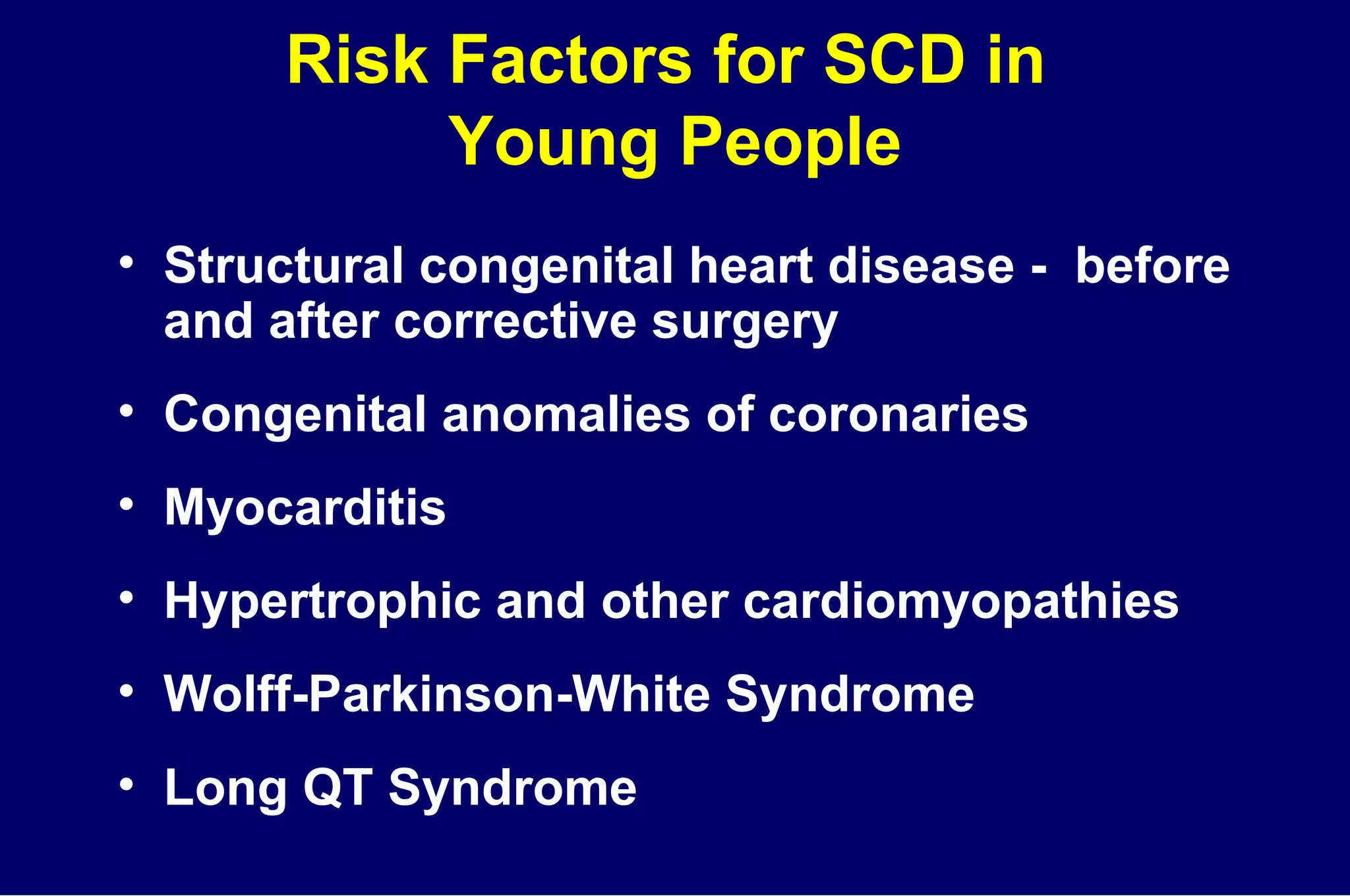
Risk Factors for SCD in  Young People Structural congenital heart disease -  before and after corrective surgery Congenital anomalies of coronaries Myocarditis Hypertrophic and other cardiomyopathies Wolff-Parkinson-White Syndrome Long QT Syndrome
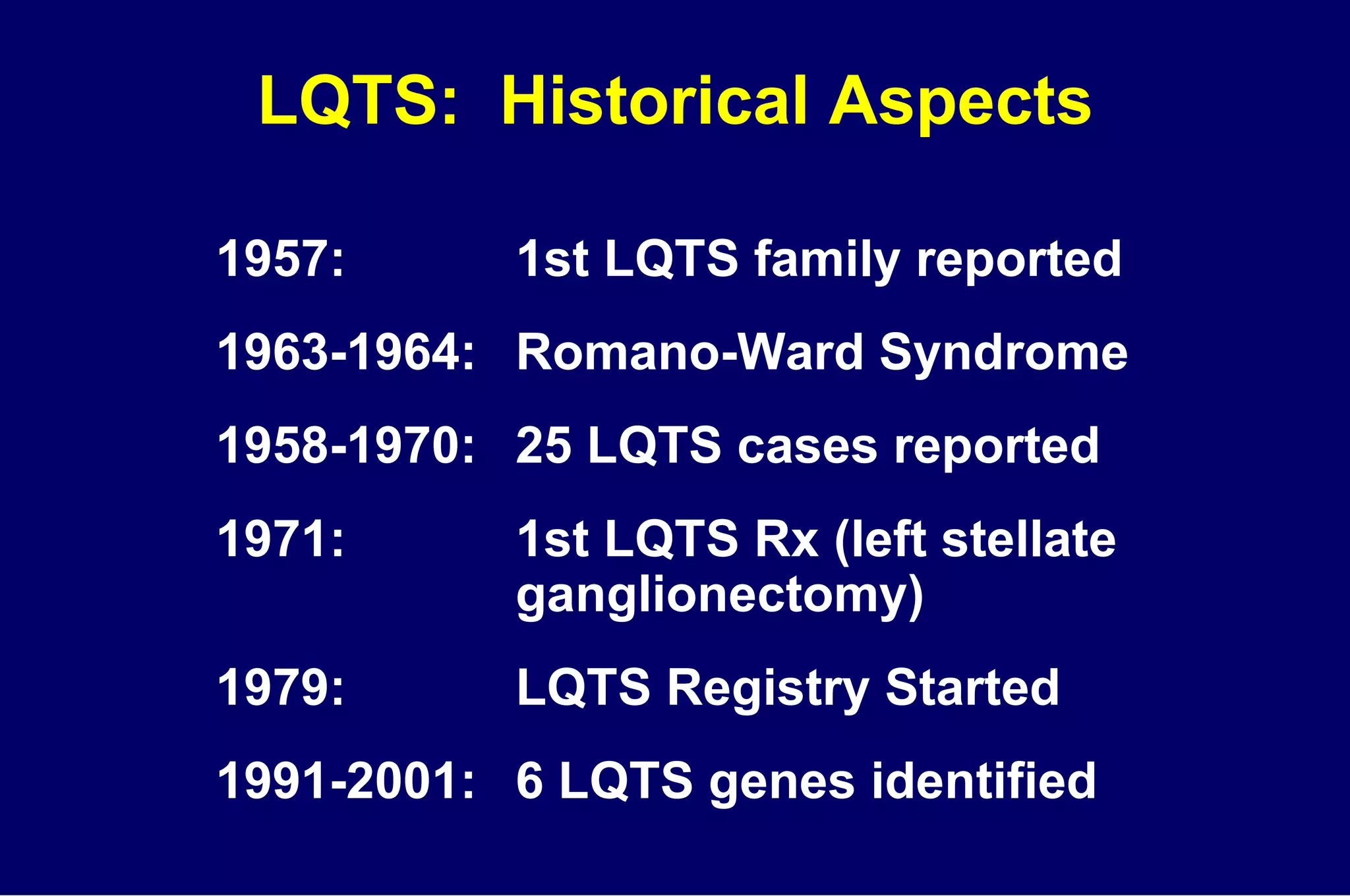
LQTS:  Historical Aspects 1957: 1st LQTS family reported 1963-1964: Romano-Ward Syndrome 1958-1970: 25 LQTS cases reported 1971: 1st LQTS Rx (left stellate  ganglionectomy) 1979: LQTS Registry Started 1991-2001: 6 LQTS genes identified
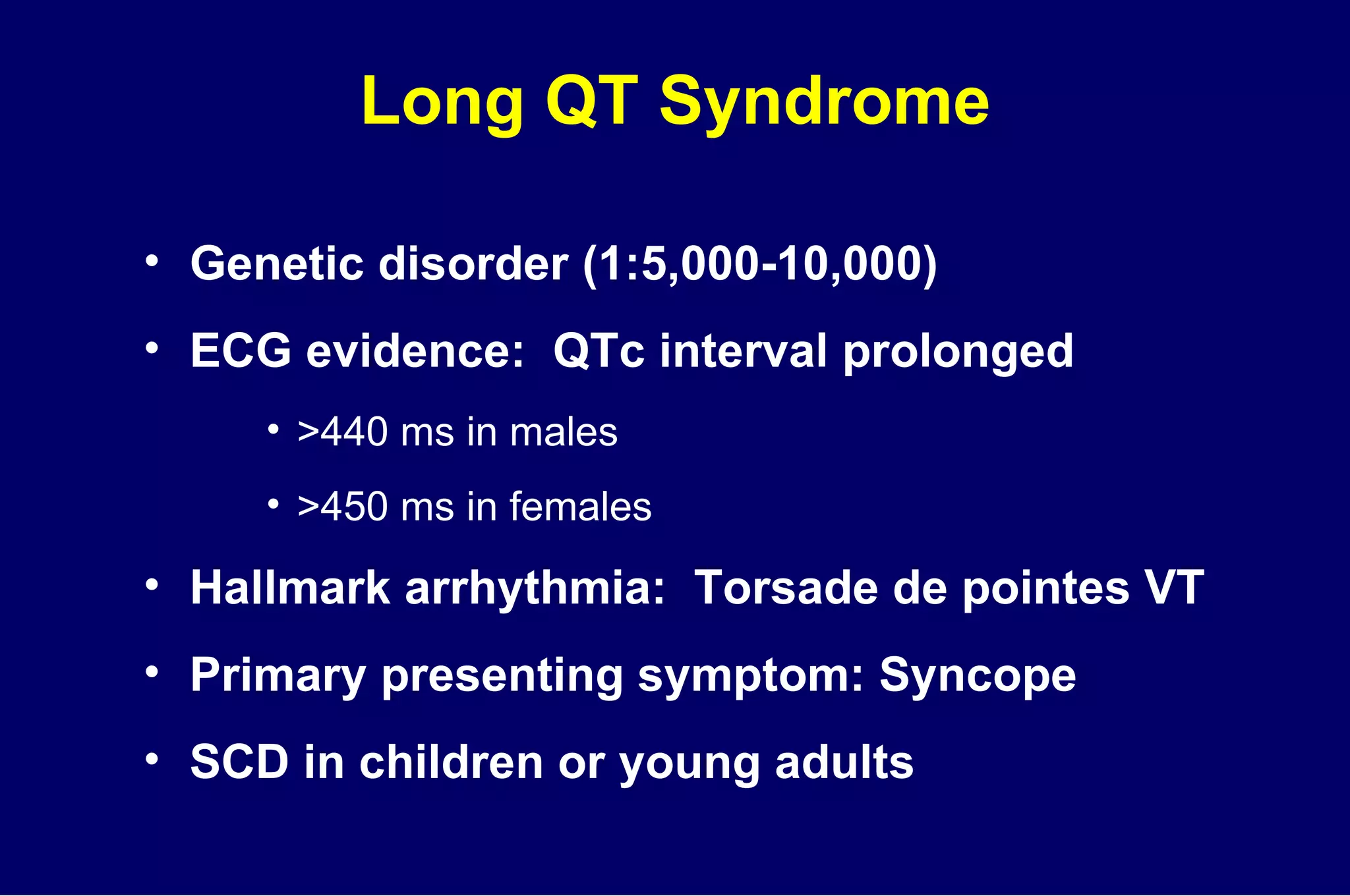
Long QT Syndrome Genetic disorder (1:5,000-10,000) ECG evidence:  QTc interval prolonged >440 ms in males >450 ms in females Hallmark arrhythmia:  Torsade de pointes VT Primary presenting symptom: Syncope SCD in children or young adults
LQTS:  Identification
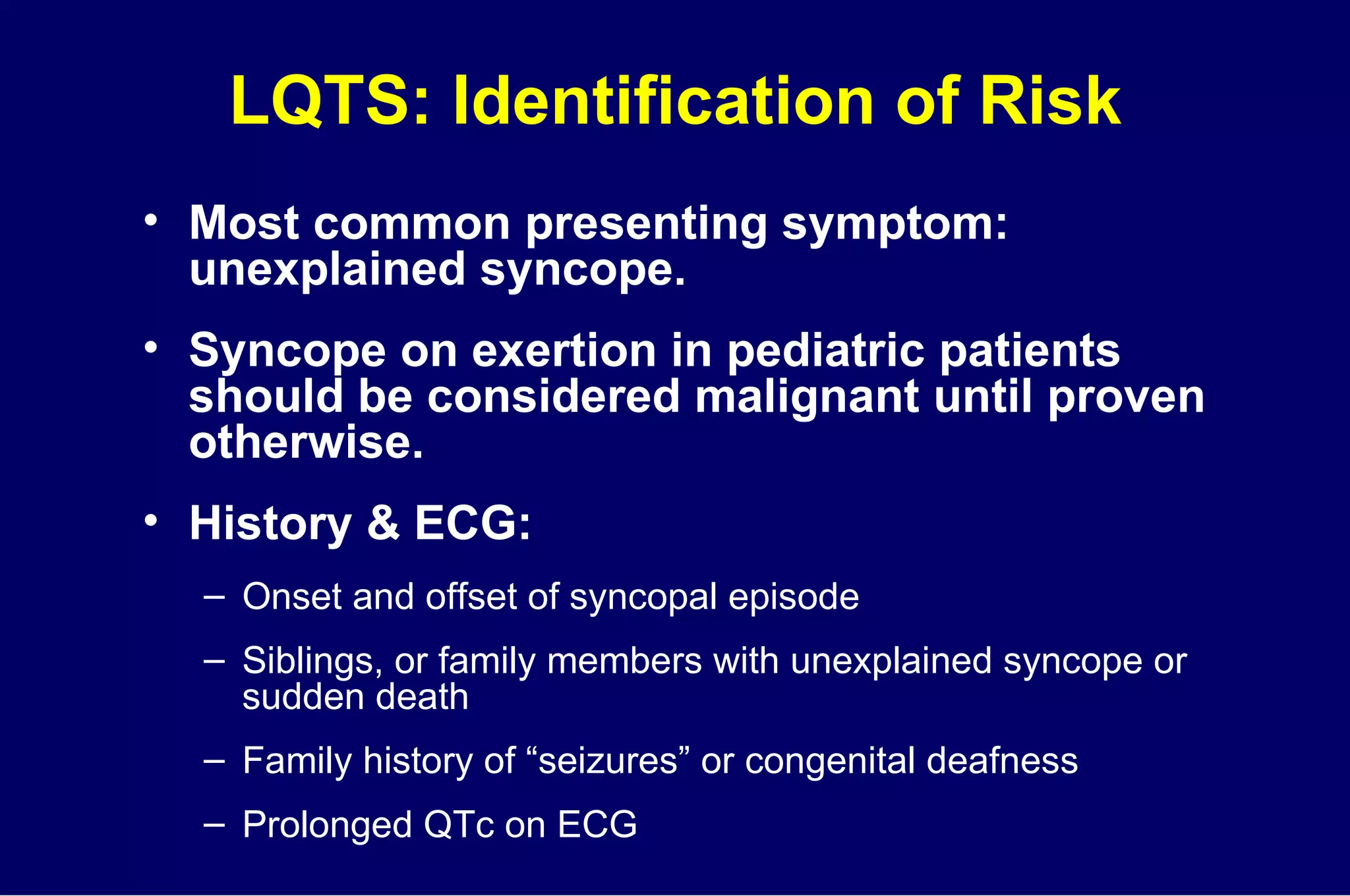
LQTS: Identification of Risk Most common presenting symptom: unexplained syncope. Syncope on exertion in pediatric patients should be considered malignant until proven otherwise.  History & ECG:  Onset and offset of syncopal episode Siblings, or family members with unexplained syncope or  sudden death Family history of “seizures” or congenital deafness Prolonged QTc on ECG
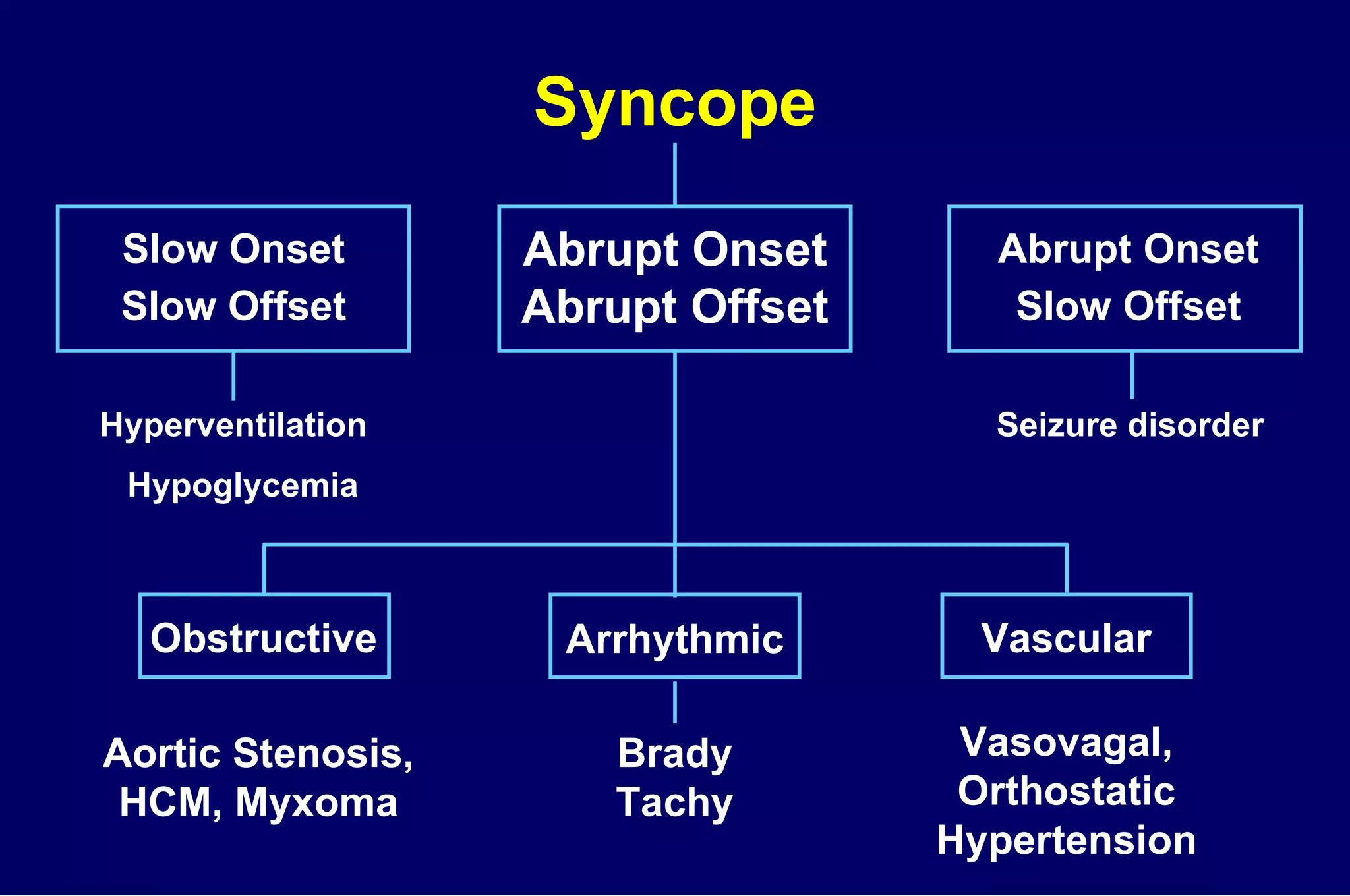
Syncope Slow Onset Abrupt Onset Abrupt Onset Slow Offset Abrupt Offset Slow Offset Seizure disorder Hyperventilation Hypoglycemia Obstructive Arrhythmic Vascular Aortic Stenosis, HCM, Myxoma Brady Tachy Vasovagal, Orthostatic Hypertension
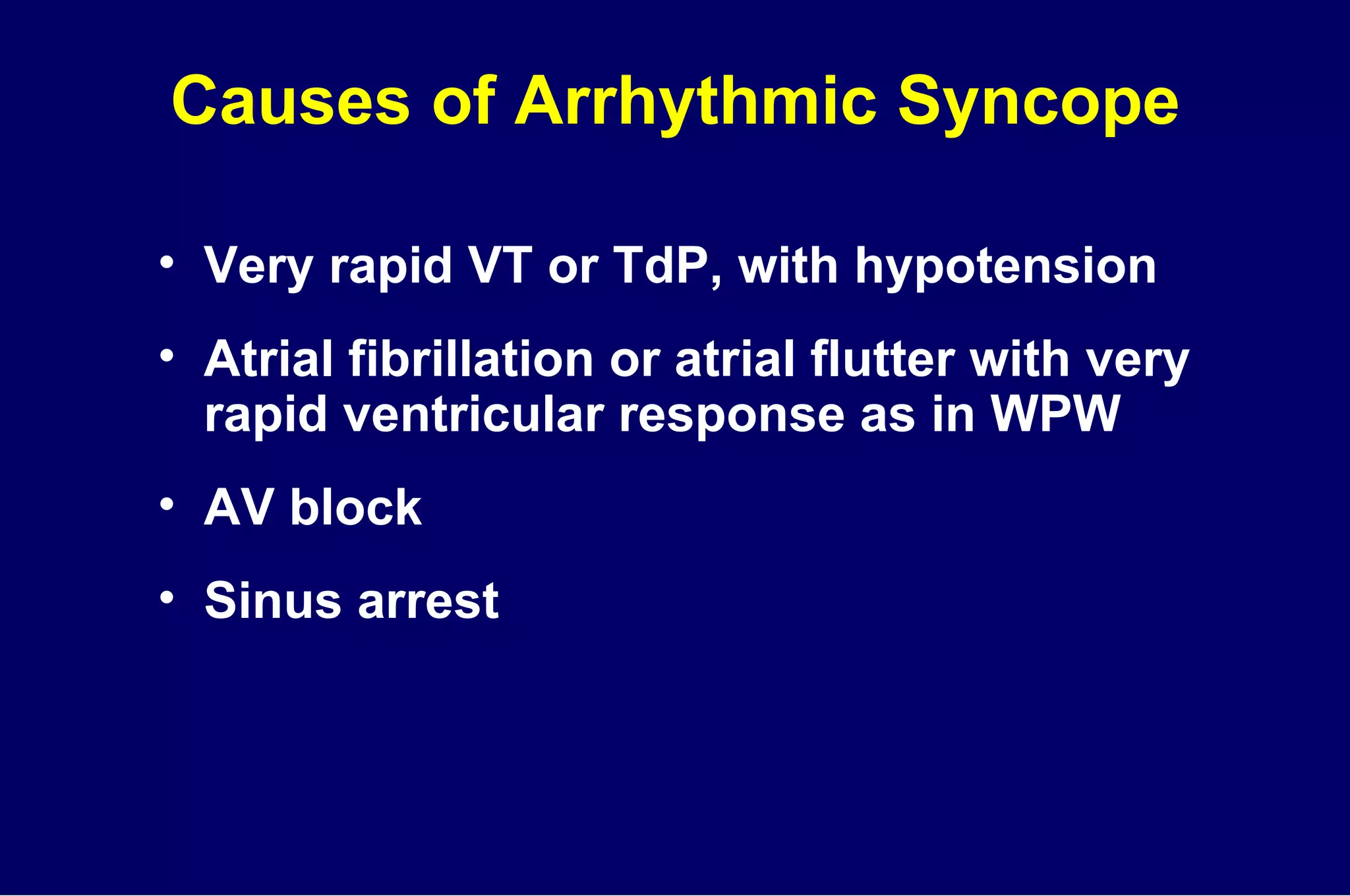
Causes of Arrhythmic Syncope Very rapid VT or TdP, with hypotension Atrial fibrillation or atrial flutter with very rapid ventricular response as in WPW AV block Sinus arrest
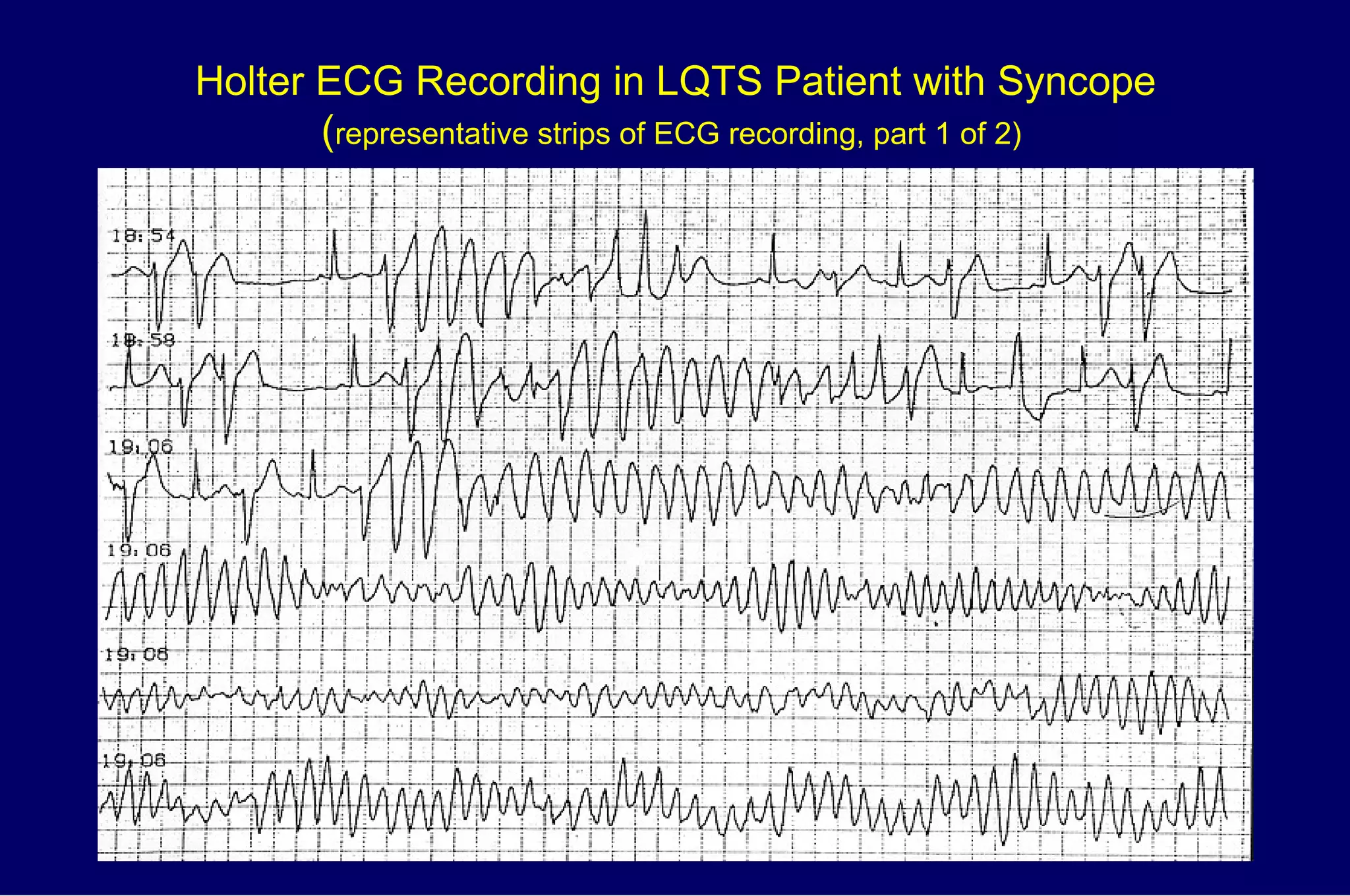
Holter ECG Recording in LQTS Patient with Syncope ( representative strips of ECG recording, part 1 of 2)
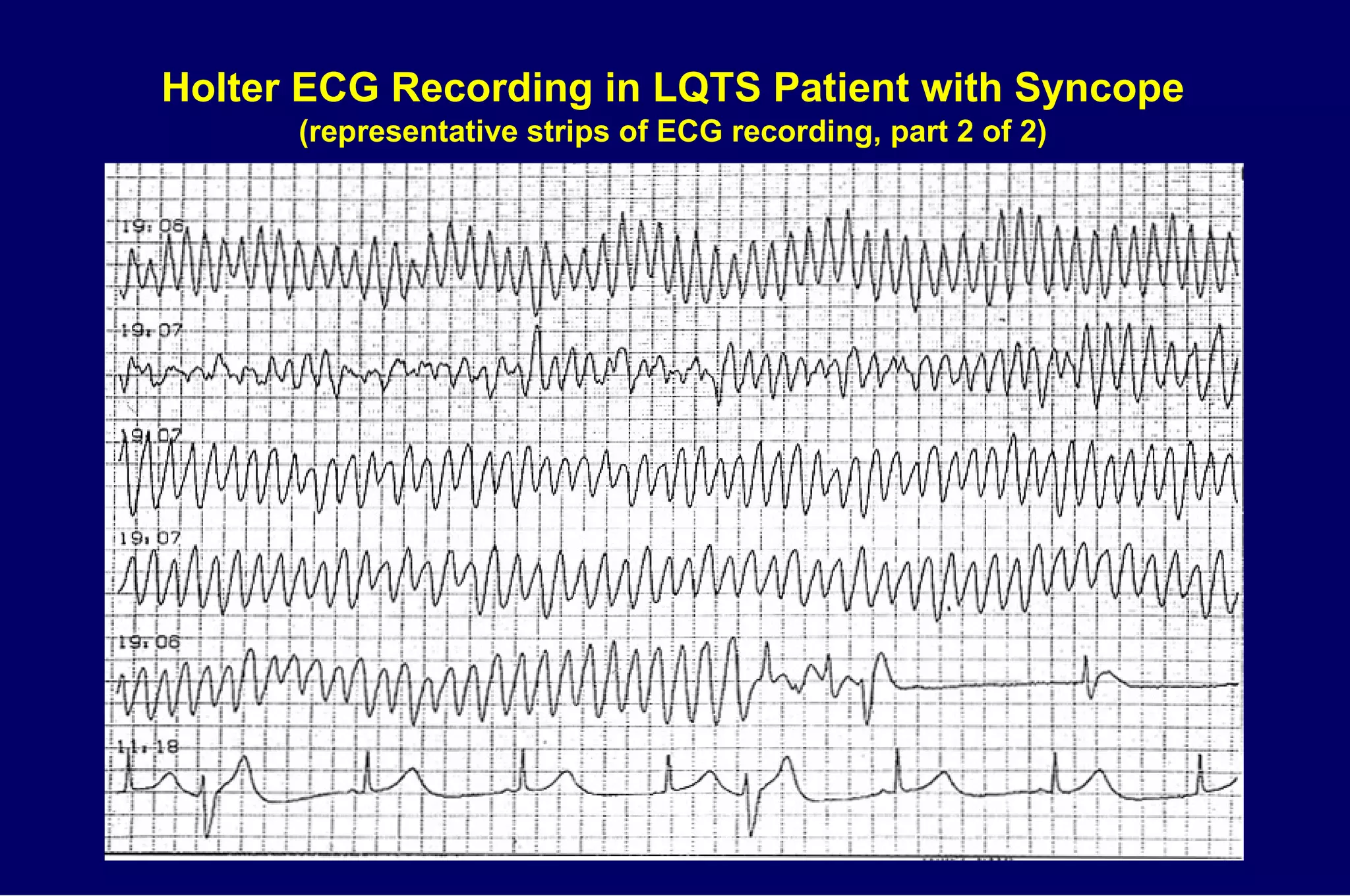
Holter ECG Recording in LQTS Patient with Syncope   (representative strips of ECG recording, part 2 of 2)
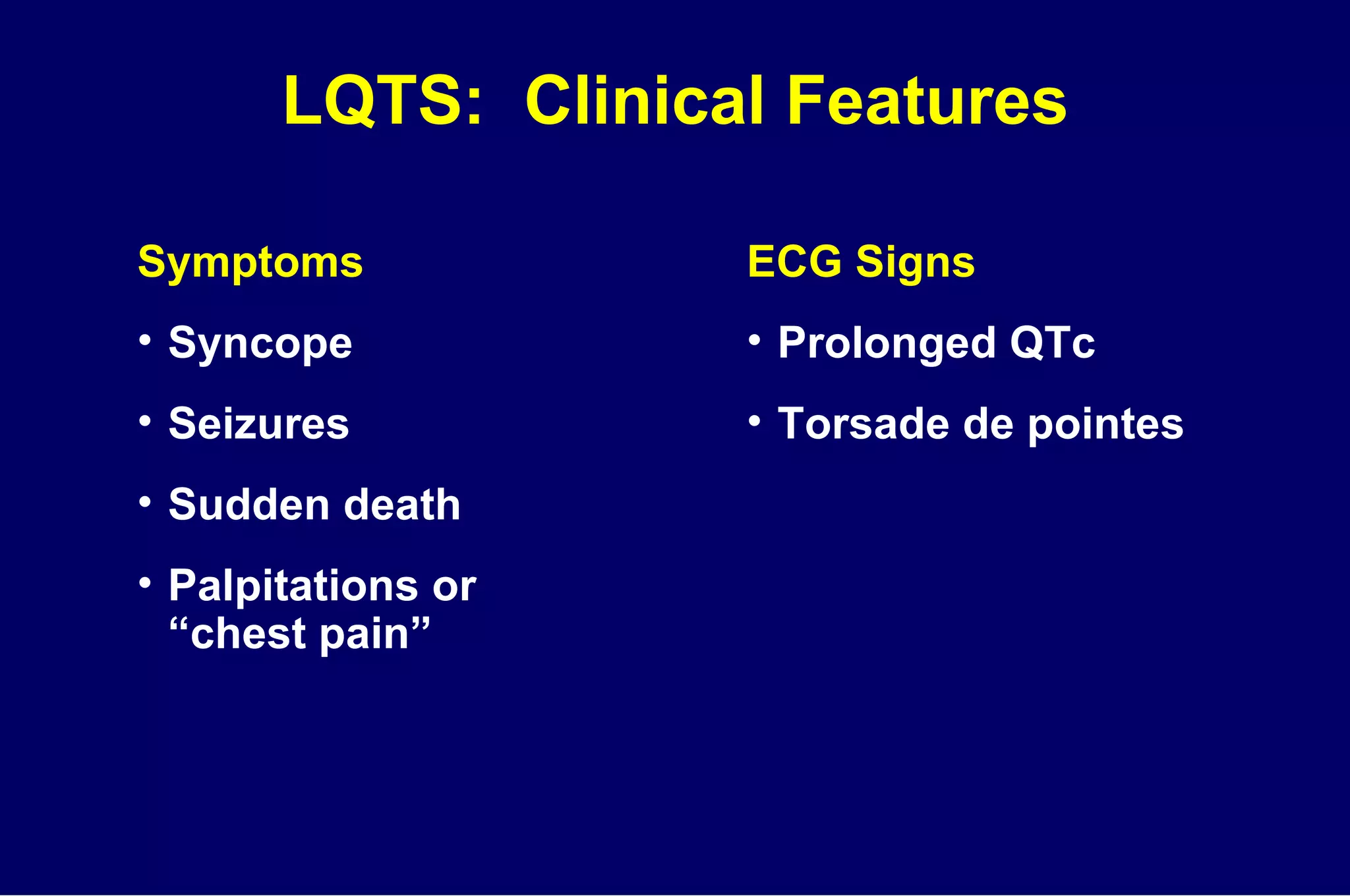
LQTS:  Clinical Features Symptoms Syncope Seizures Sudden death Palpitations or  “chest pain” ECG Signs Prolonged QTc Torsade de pointes
LQTS ECG Patterns Circ 1992;85[Suppl I]:I140-I144
Additional LQTS ECG Patterns Circ 1992;85[Suppl I]:I140-I144
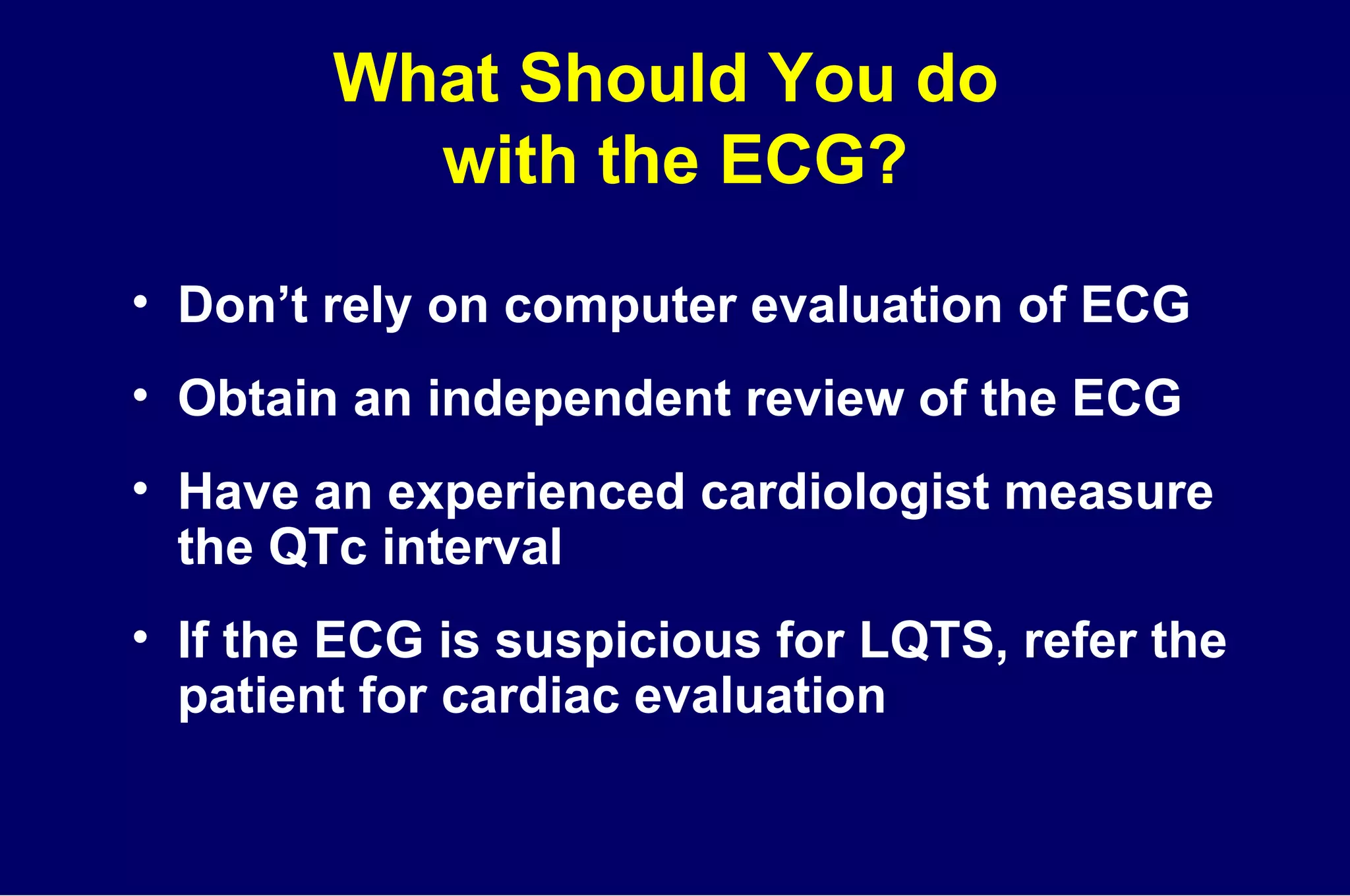
What Should You do  with the ECG? Don’t rely on computer evaluation of ECG Obtain an independent review of the ECG Have an experienced cardiologist measure the QTc interval If the ECG is suspicious for LQTS, refer the patient for cardiac evaluation
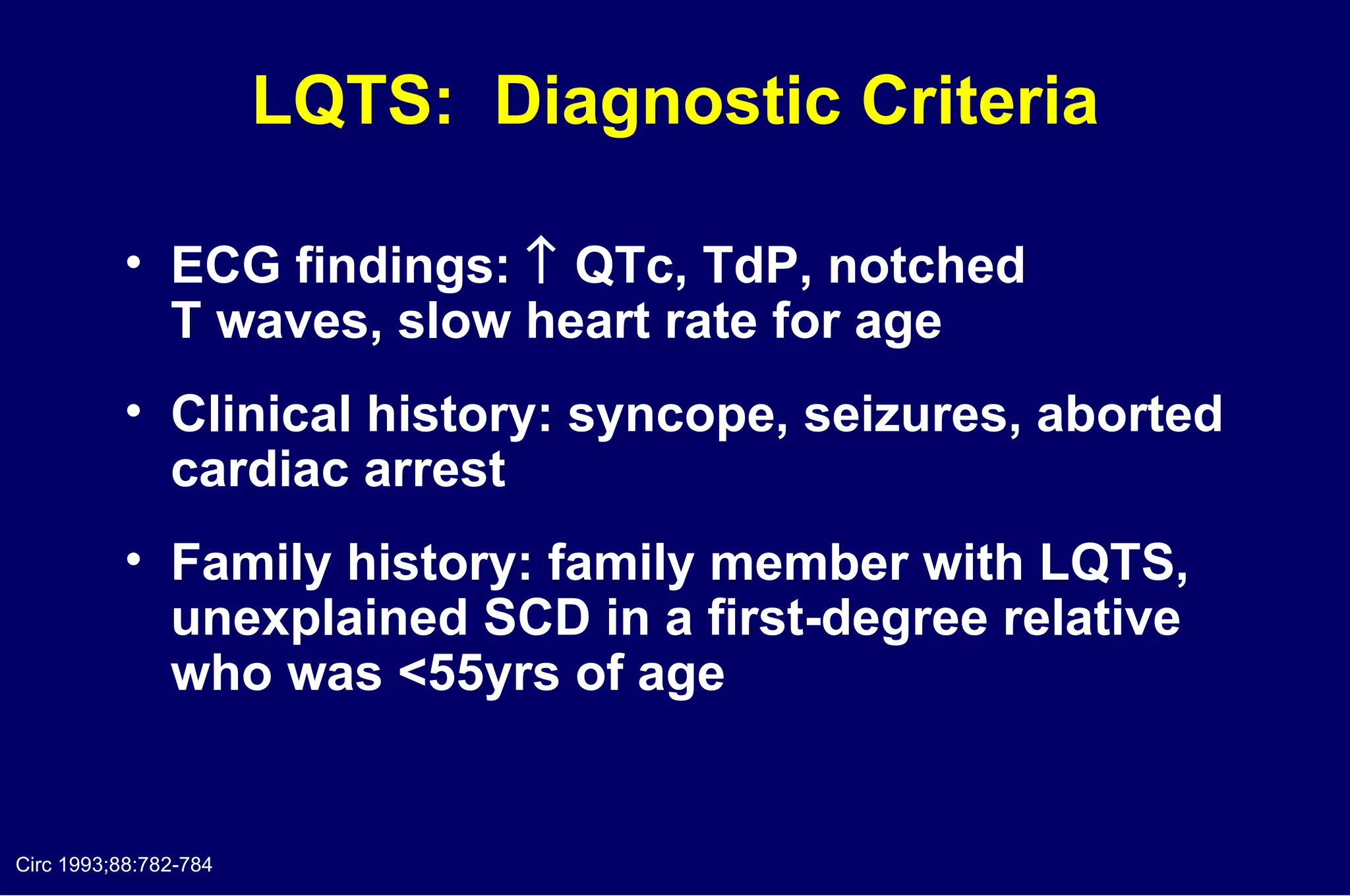
LQTS:  Diagnostic Criteria ECG findings:    QTc, TdP, notched  T waves, slow heart rate for age Clinical history: syncope, seizures, aborted cardiac arrest Family history: family member with LQTS, unexplained SCD in a first-degree relative who was <55yrs of age  Circ 1993;88:782-784
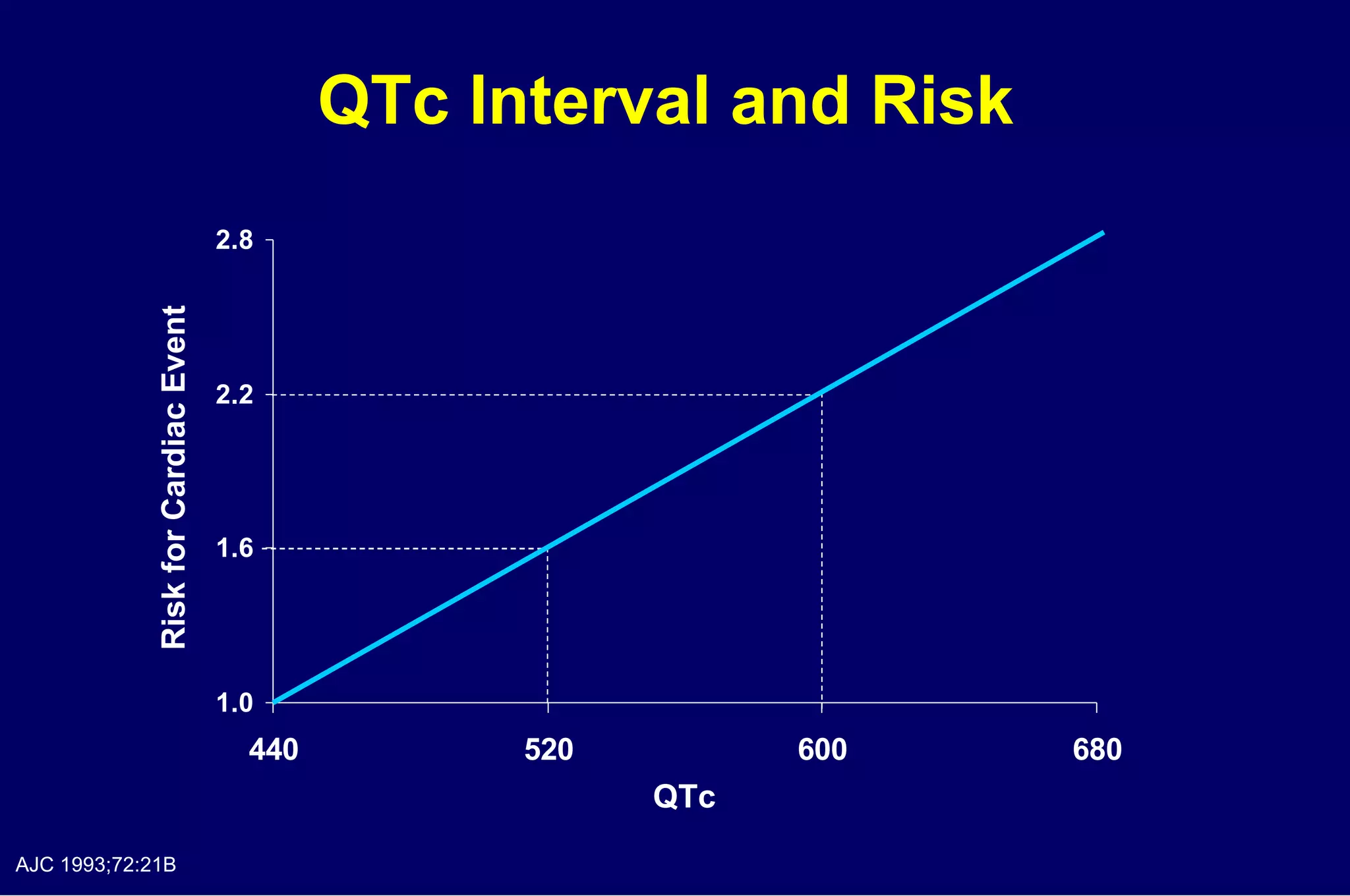
QTc Interval and Risk  AJC 1993;72:21B QTc Risk for Cardiac Event
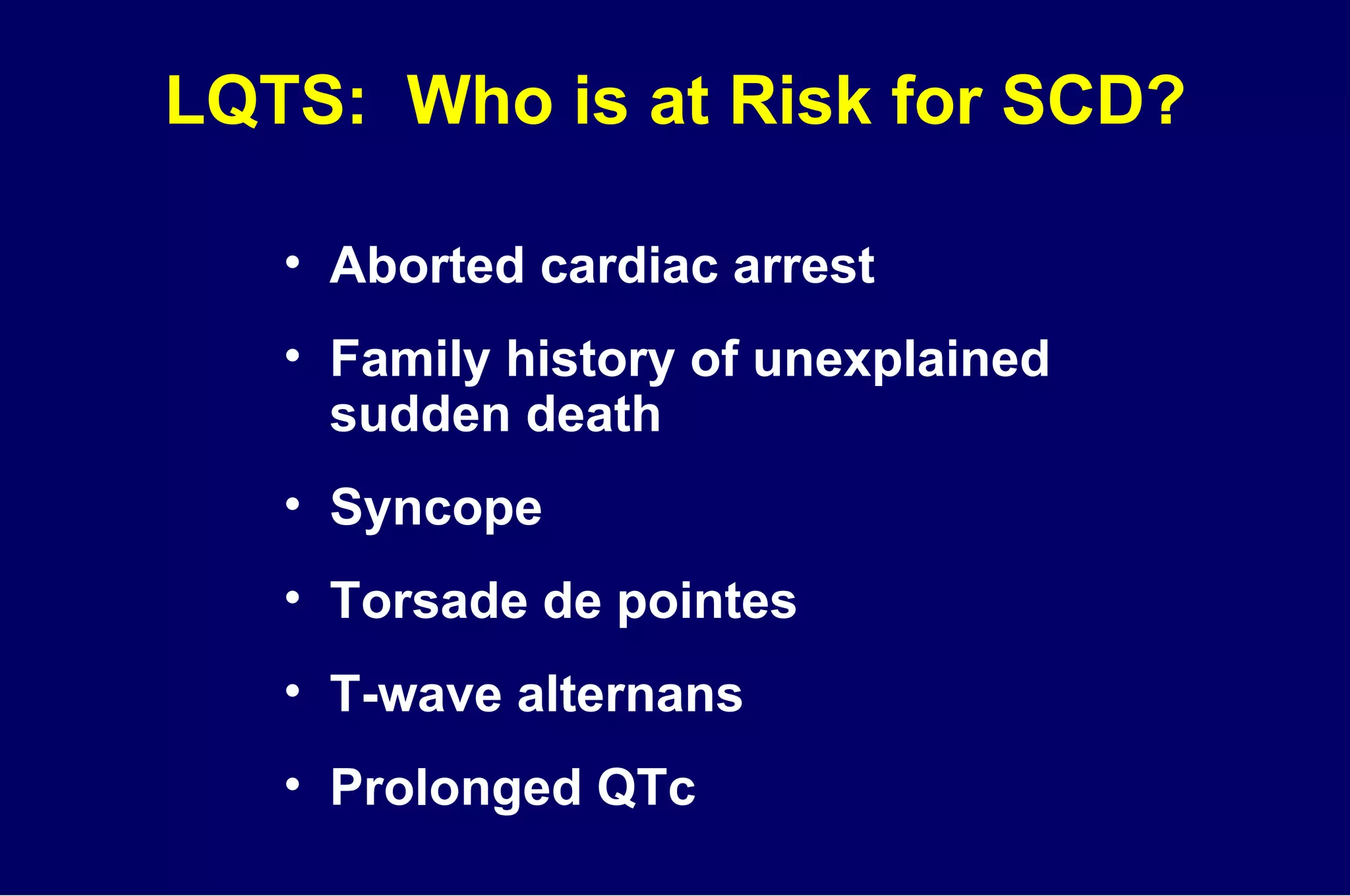
LQTS:  Who is at Risk for SCD? Aborted cardiac arrest Family history of unexplained  sudden death Syncope Torsade de pointes T-wave alternans Prolonged QTc
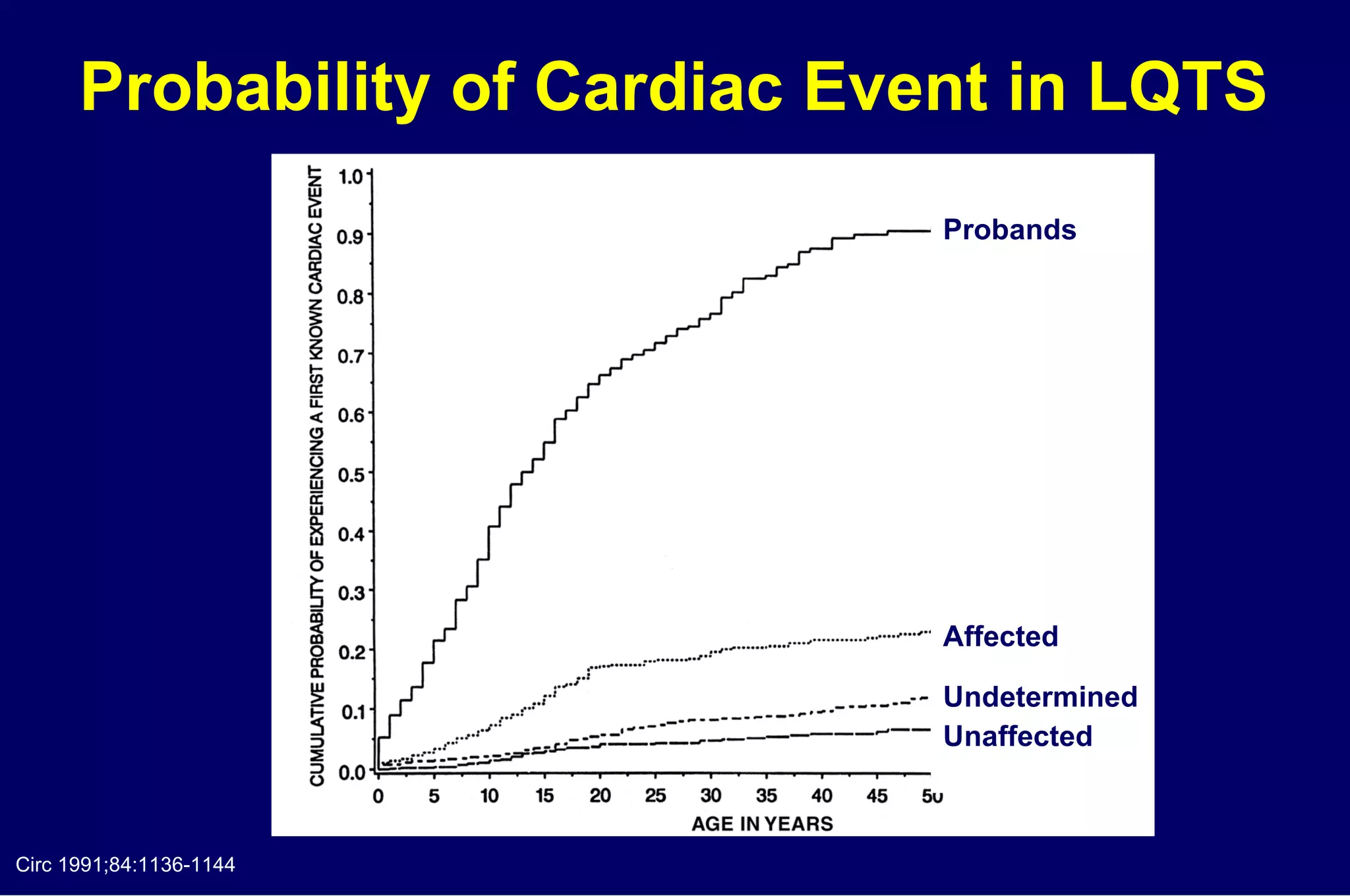
Probability of Cardiac Event in LQTS Circ 1991;84:1136-1144 Probands Affected Undetermined Unaffected
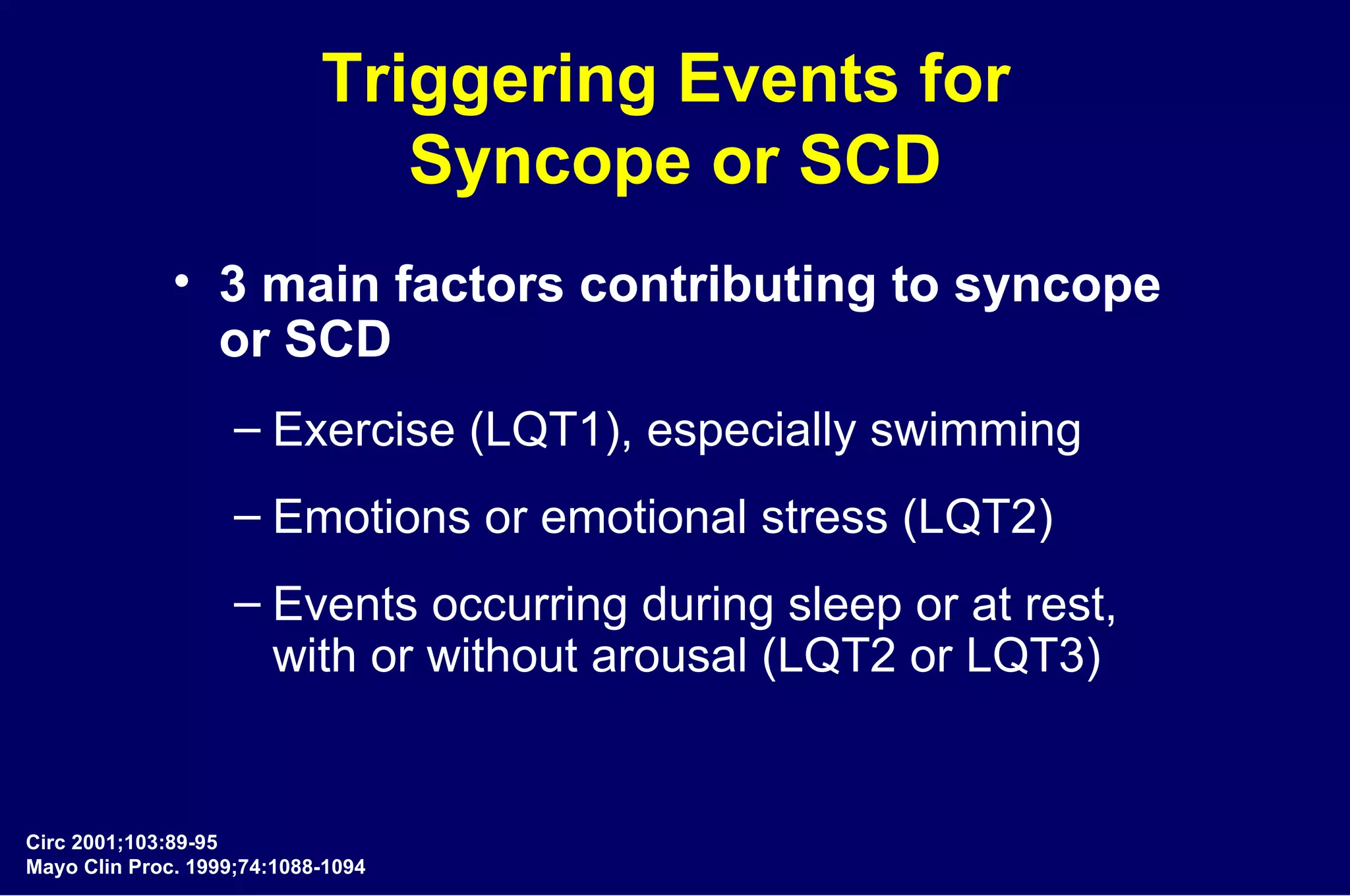
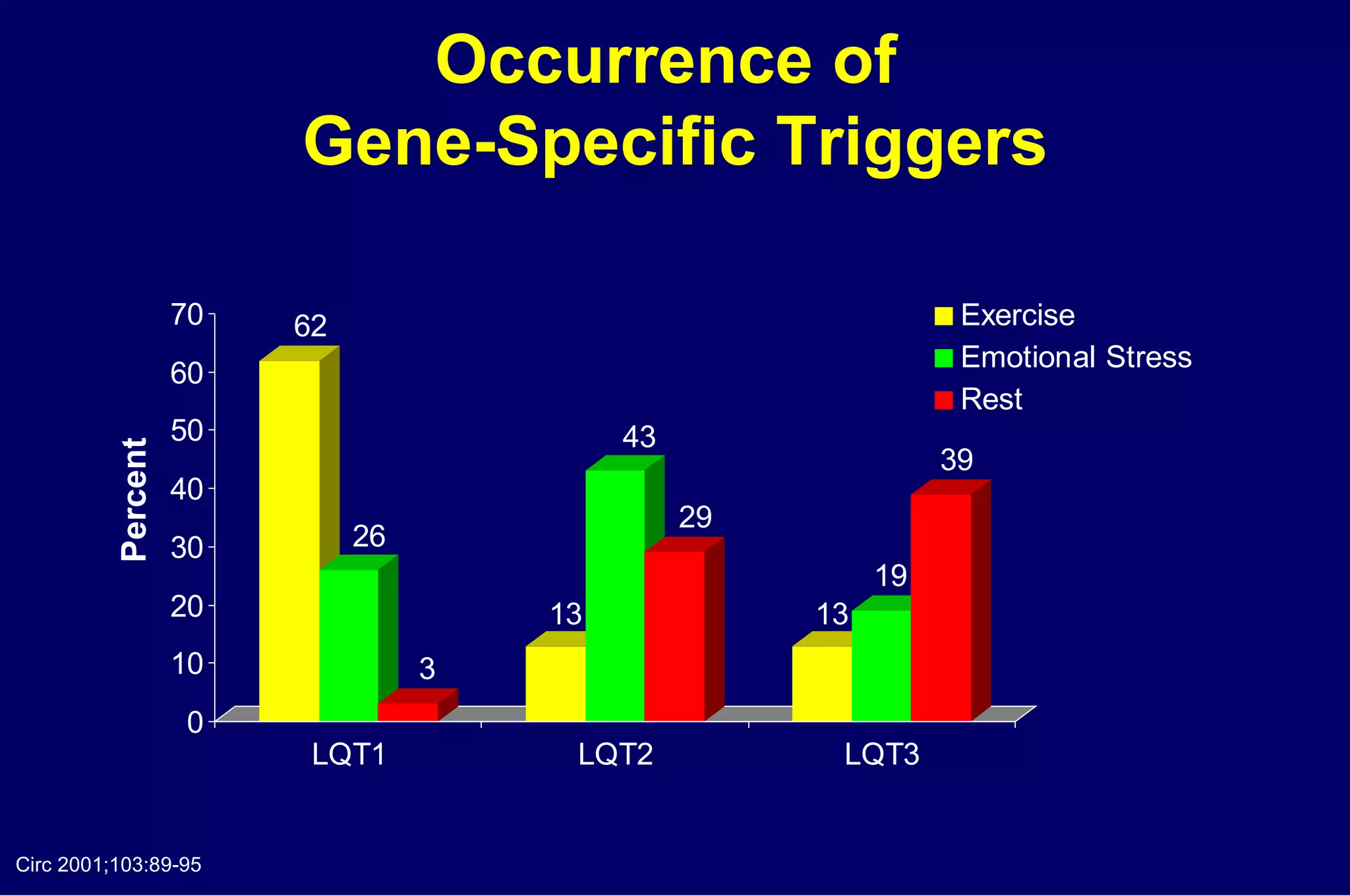
Triggering Events for  Syncope or SCD 3 main factors contributing to syncope  or SCD Exercise (LQT1), especially swimming Emotions or emotional stress (LQT2) Events occurring during sleep or at rest,  with or without arousal (LQT2 or LQT3) Circ 2001;103:89-95 Mayo Clin Proc. 1999;74:1088-1094
Occurrence of  Gene-Specific Triggers Circ 2001;103:89-95 Percent
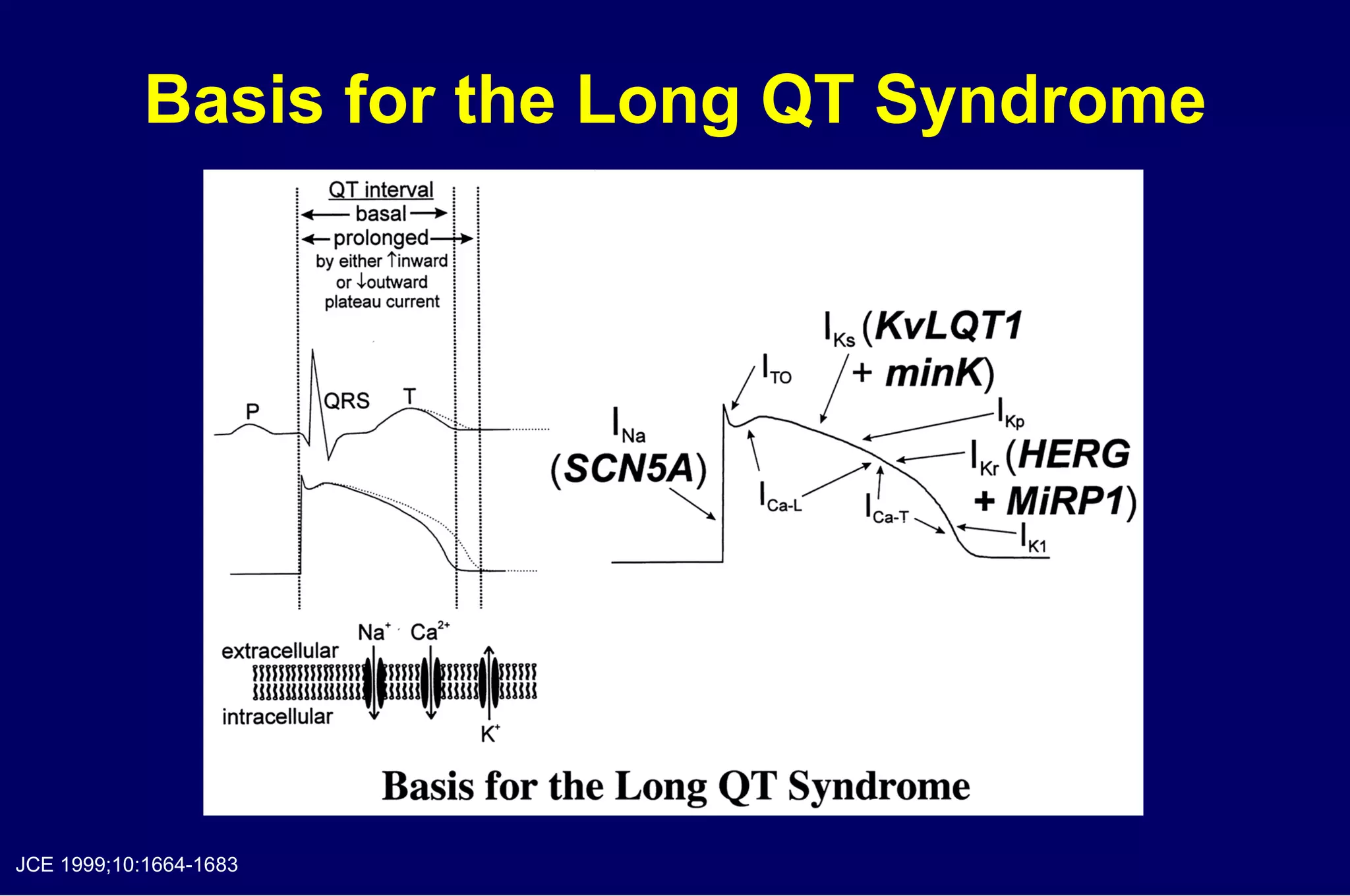
Basis for the Long QT Syndrome JCE 1999;10:1664-1683
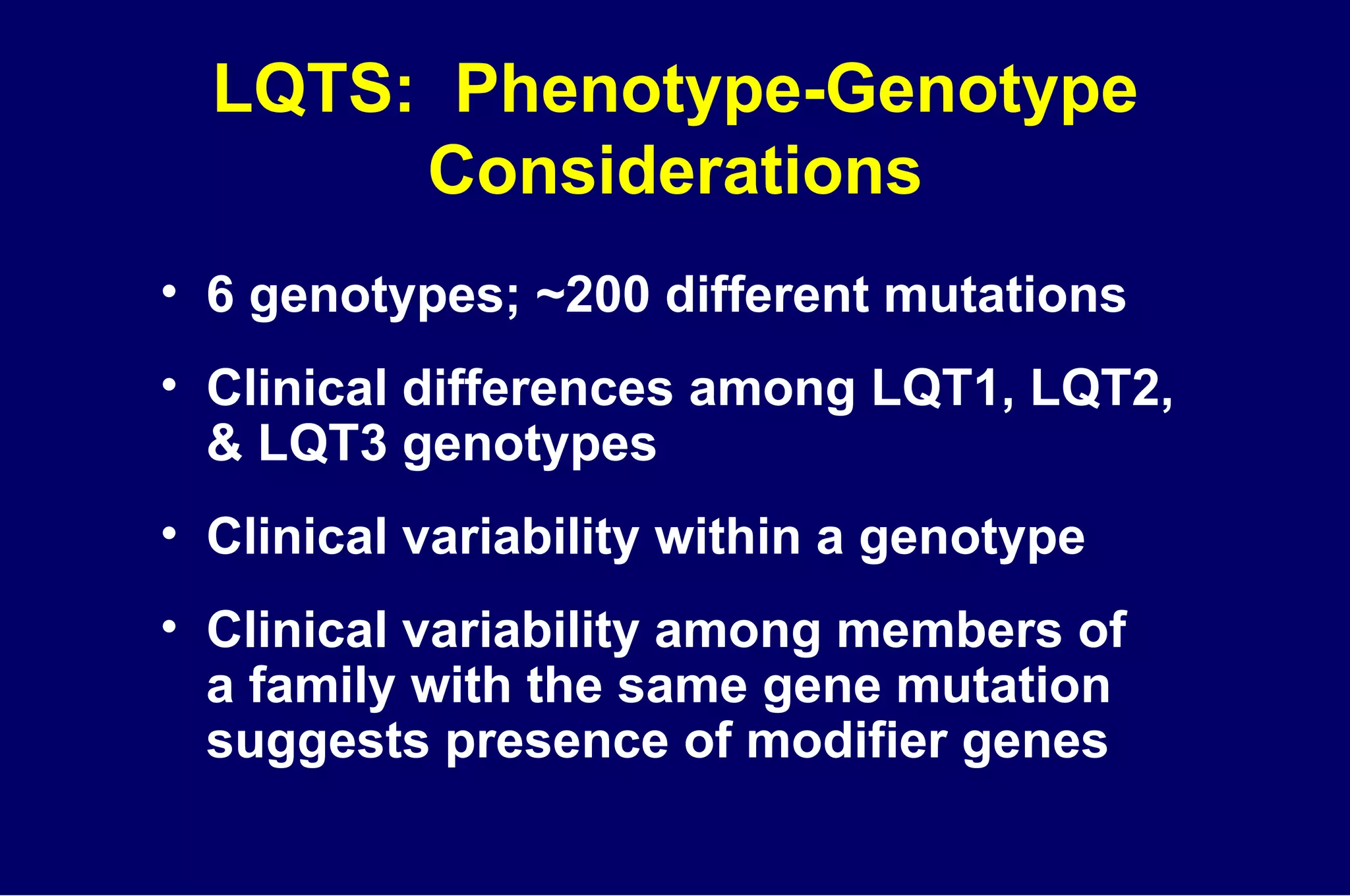
LQTS:  Phenotype-Genotype Considerations 6 genotypes; ~200 different mutations Clinical differences among LQT1, LQT2,  & LQT3 genotypes Clinical variability within a genotype Clinical variability among members of  a family with the same gene mutation suggests presence of modifier genes
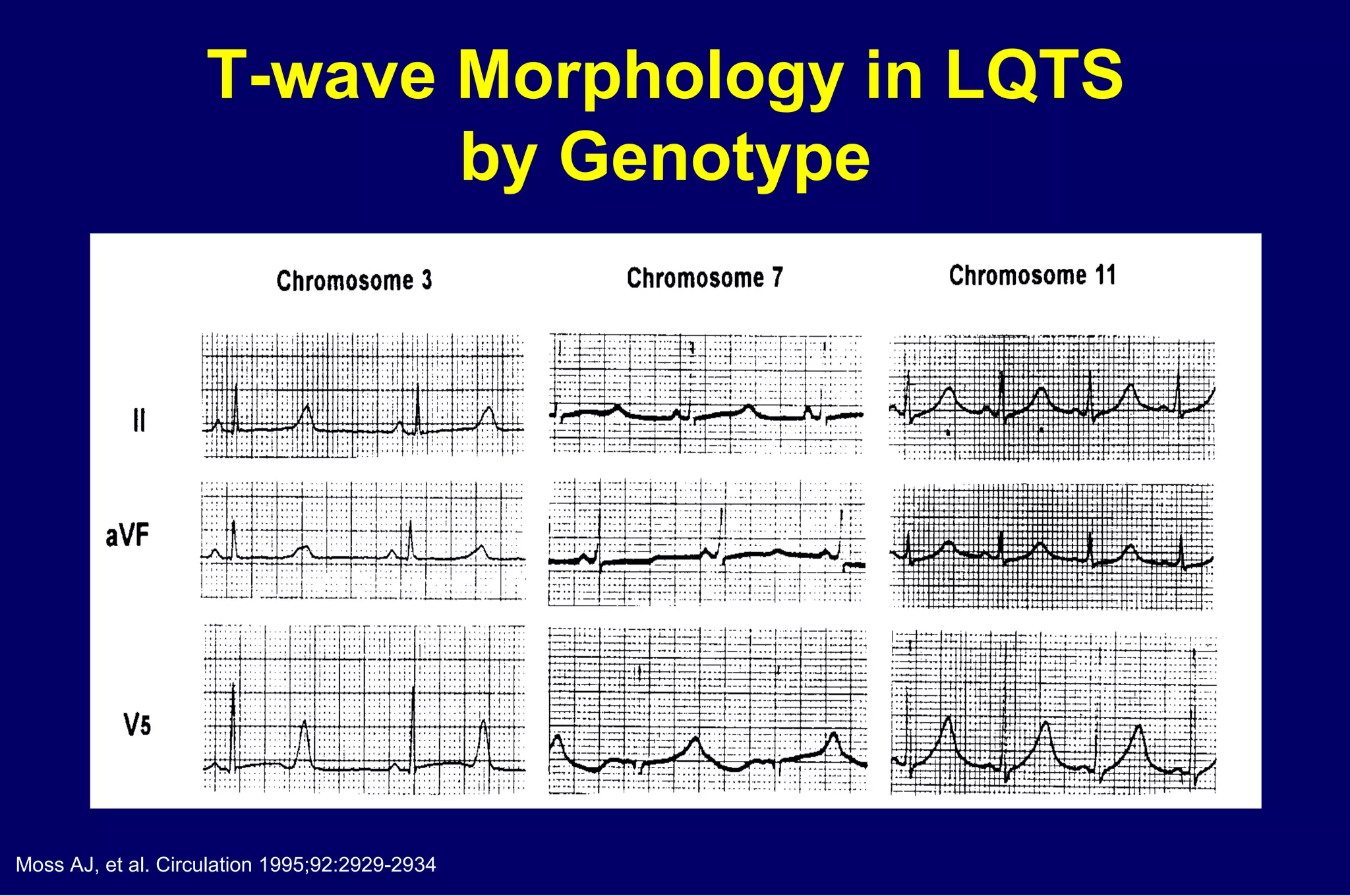
T-wave Morphology in LQTS  by Genotype  Moss AJ, et al. Circulation 1995;92:2929-2934
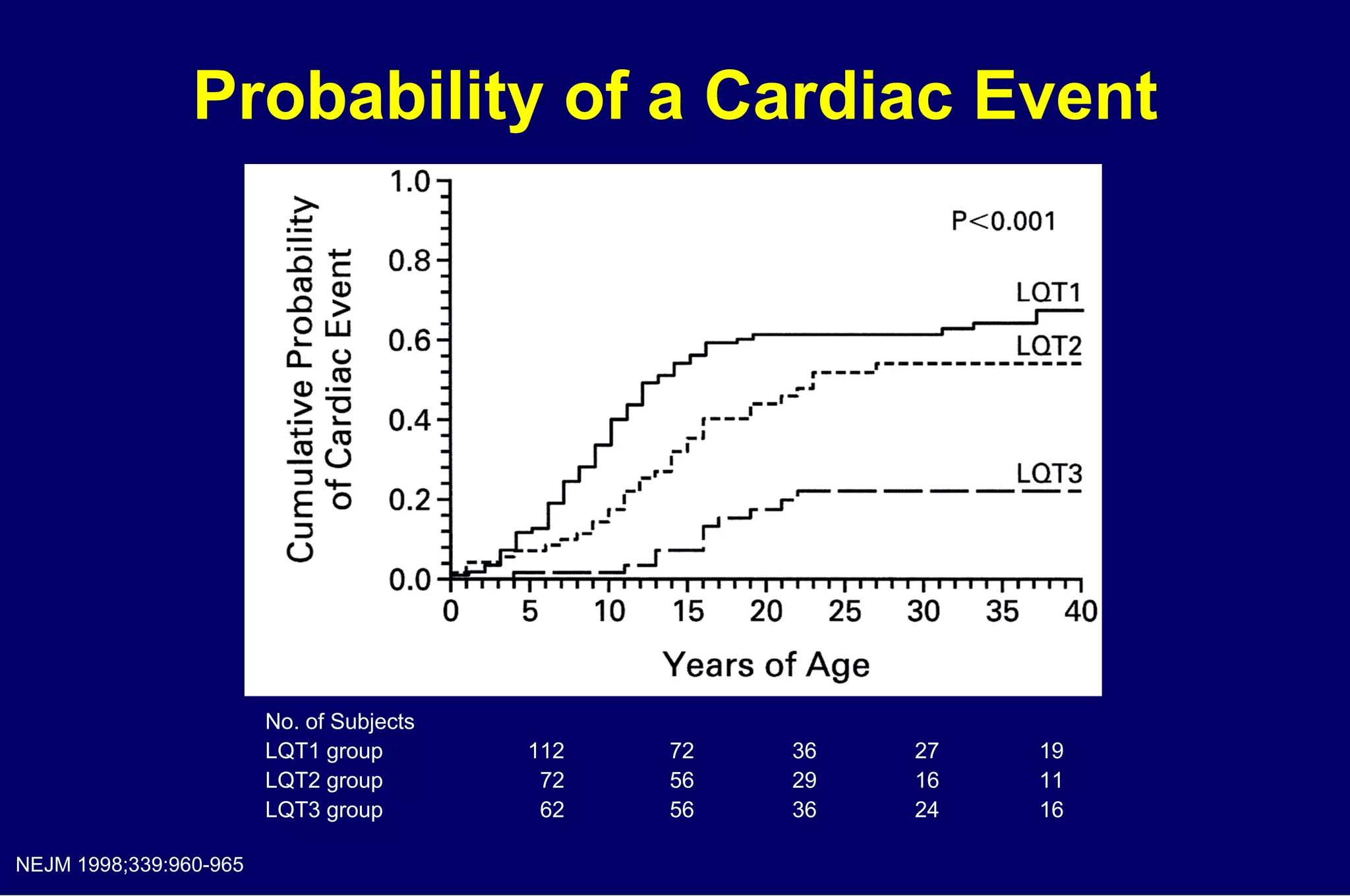
Probability of a Cardiac Event No. of Subjects LQT1 group 112 72 36 27 19 LQT2 group 72 56 29 16 11 LQT3 group 62 56 36 24 16 NEJM 1998;339:960-965
Therapies Available and  Current Management
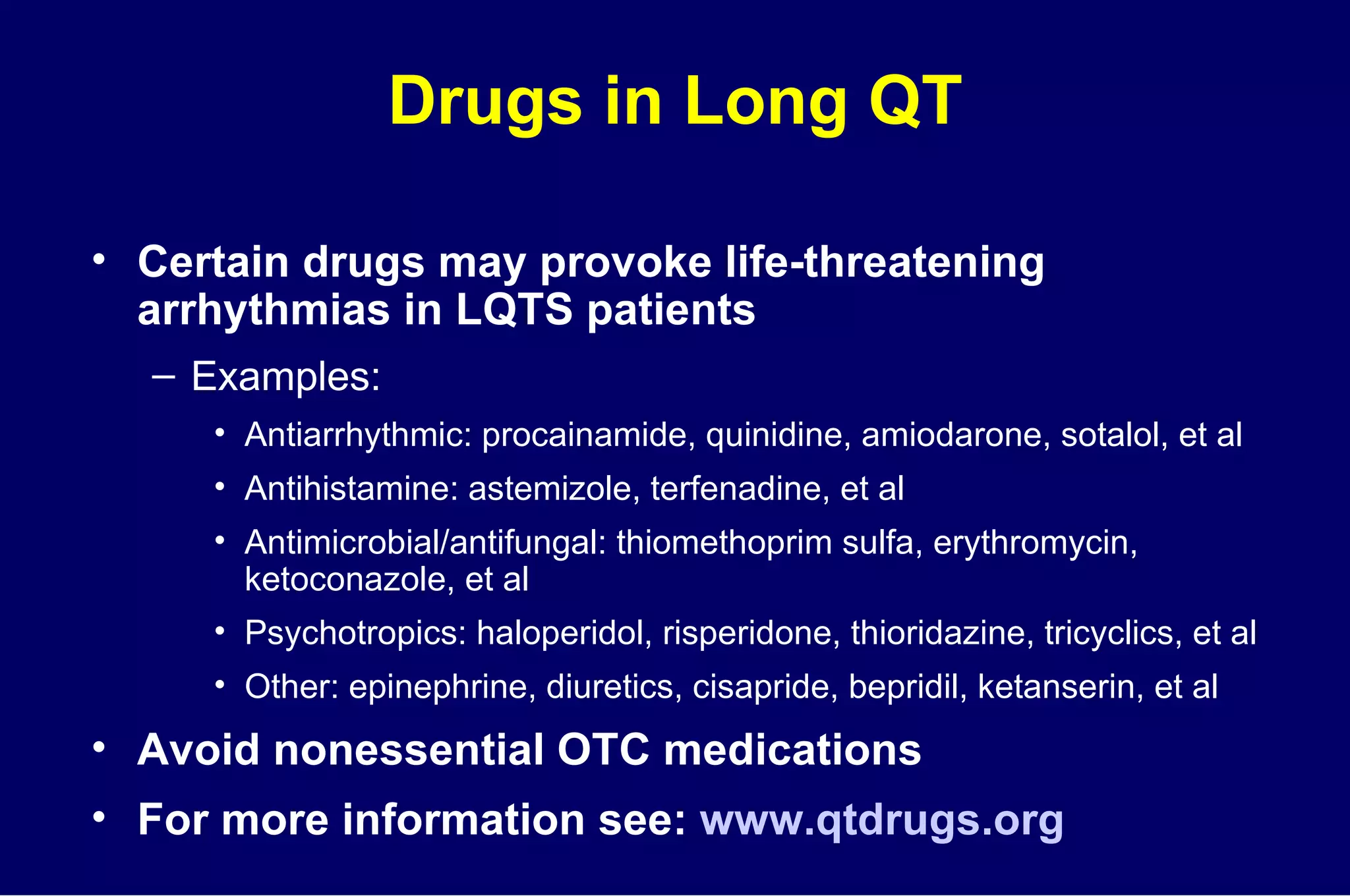
Drugs in Long QT Certain drugs may provoke life-threatening  arrhythmias in LQTS patients Examples: Antiarrhythmic: procainamide, quinidine, amiodarone, sotalol, et al Antihistamine: astemizole, terfenadine, et al  Antimicrobial/antifungal: thiomethoprim sulfa, erythromycin, ketoconazole, et al Psychotropics: haloperidol, risperidone, thioridazine, tricyclics, et al Other: epinephrine, diuretics, cisapride, bepridil, ketanserin, et al Avoid nonessential OTC medications For more information see:  www.qtdrugs.org
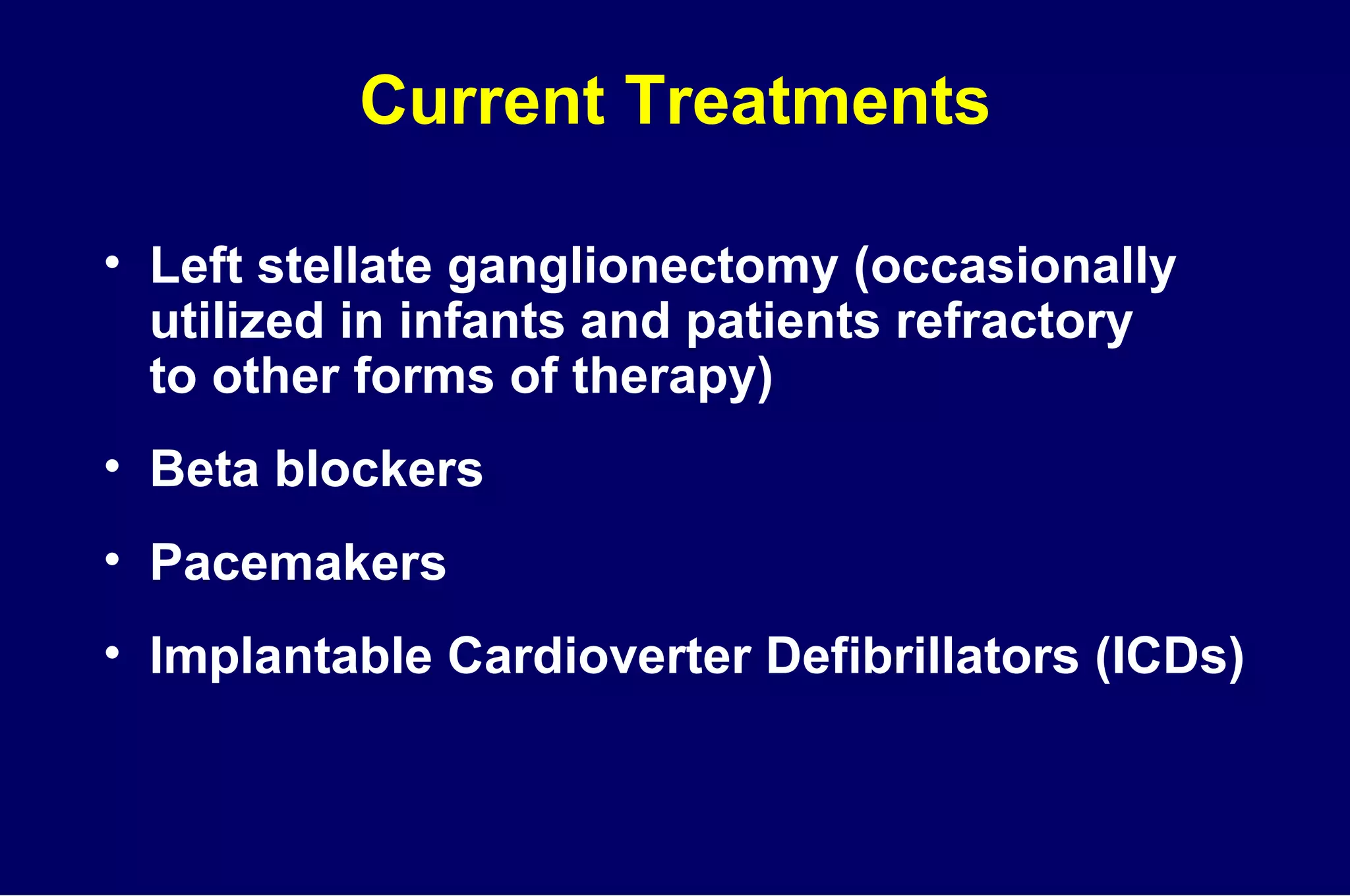
Current Treatments Left stellate ganglionectomy (occasionally utilized in infants and patients refractory  to other forms of therapy) Beta blockers Pacemakers Implantable Cardioverter Defibrillators (ICDs)
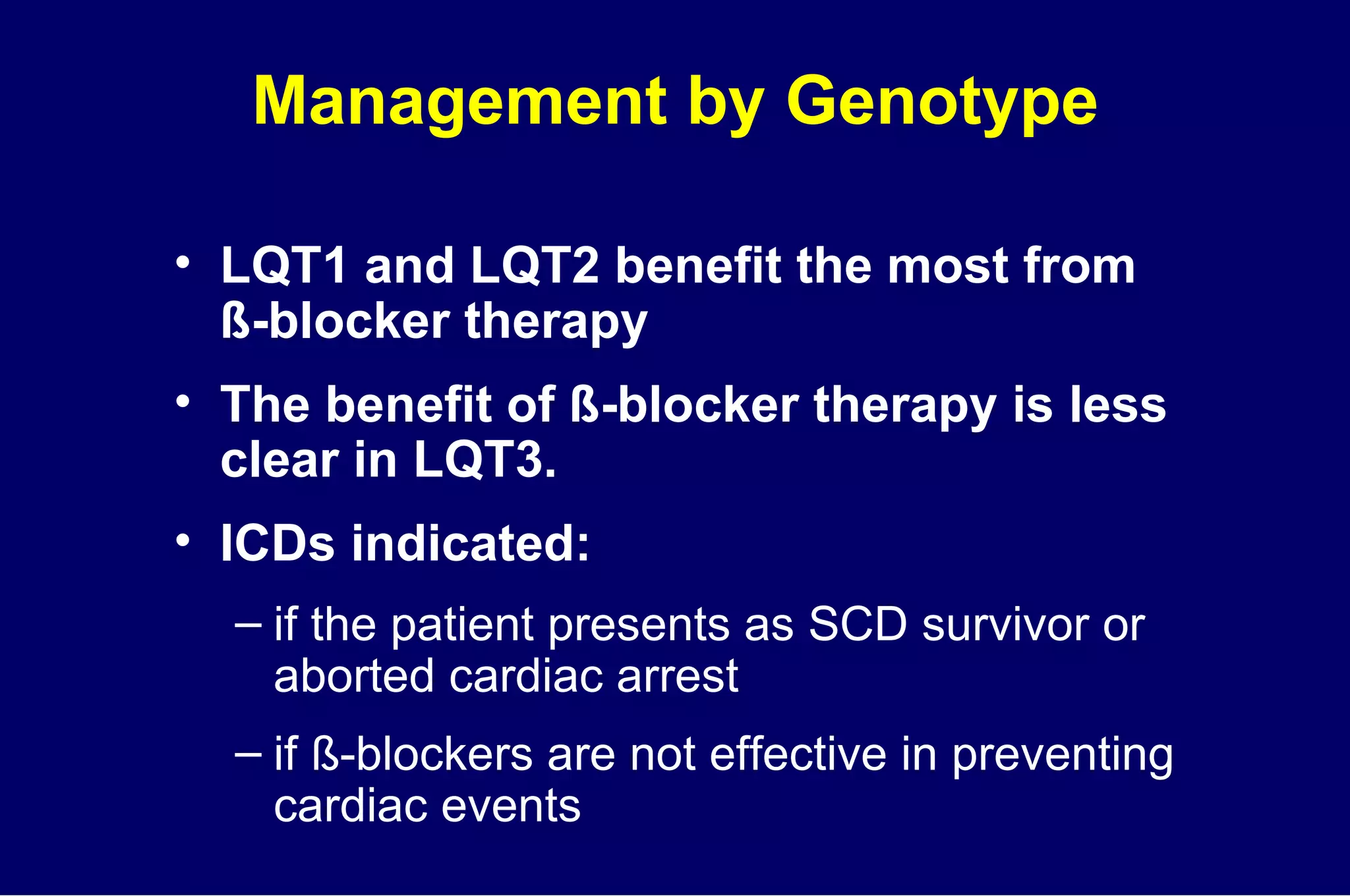
Management by Genotype LQT1 and LQT2 benefit the most from  ß-blocker therapy The benefit of ß-blocker therapy is less clear in LQT3. ICDs indicated:  if the patient presents as SCD survivor or aborted cardiac arrest if ß-blockers are not effective in preventing cardiac events
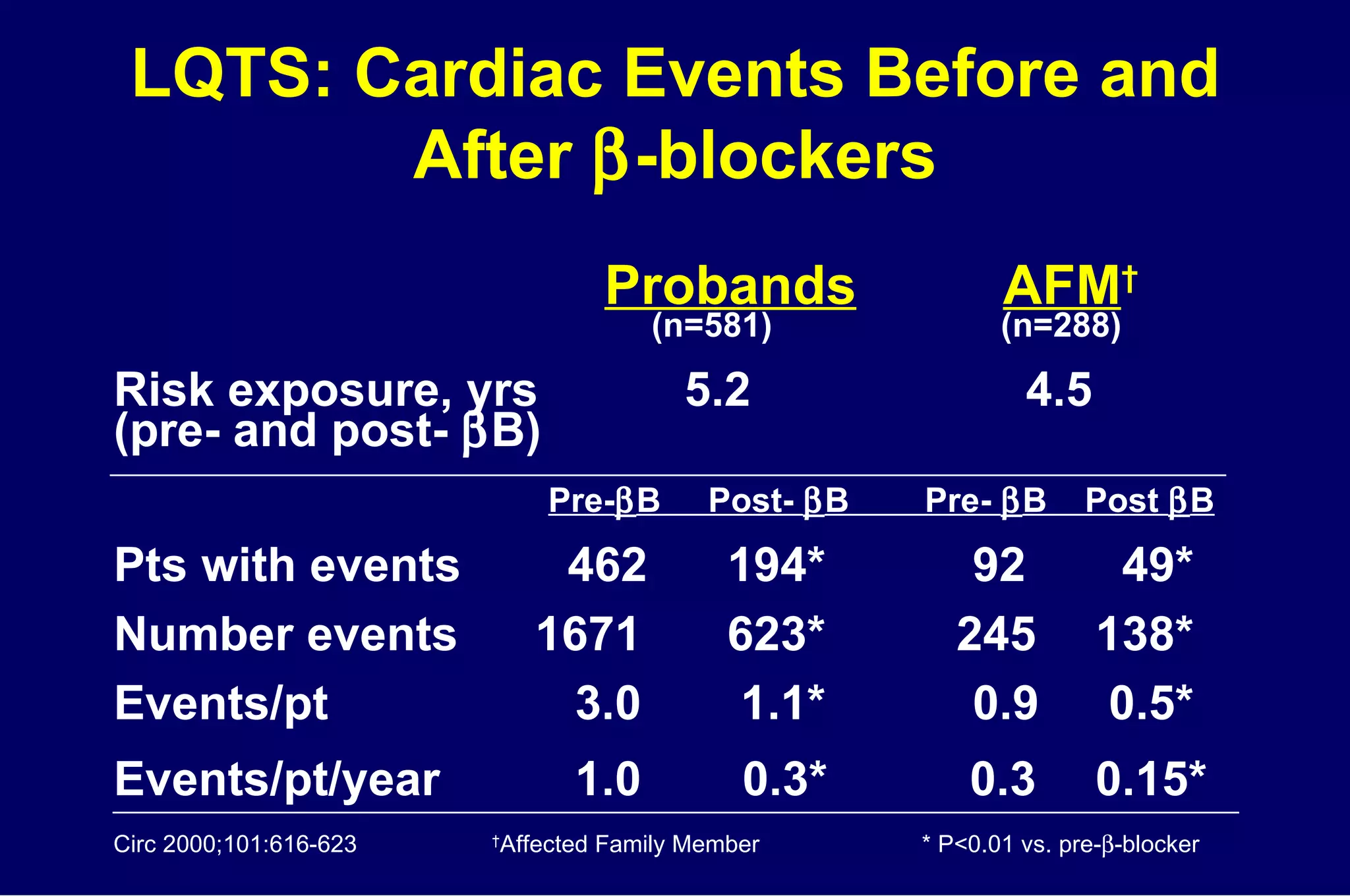
LQTS: Cardiac Events Before and After   -blockers Probands   AFM †   (n=581)   (n=288) Risk exposure, yrs   5.2   4.5 (pre- and post-   B)   Pre-  B  Post-   B  Pre-   B  Post   B Pts with events  462 194* 92    49* Number events   1671 623*   245 138* Events/pt   3.0  1.1* 0.9  0.5* Events/pt/year   1.0   0.3*   0.3 0.15* Circ 2000;101:616-623  † Affected Family Member  * P<0.01 vs. pre-  -blocker
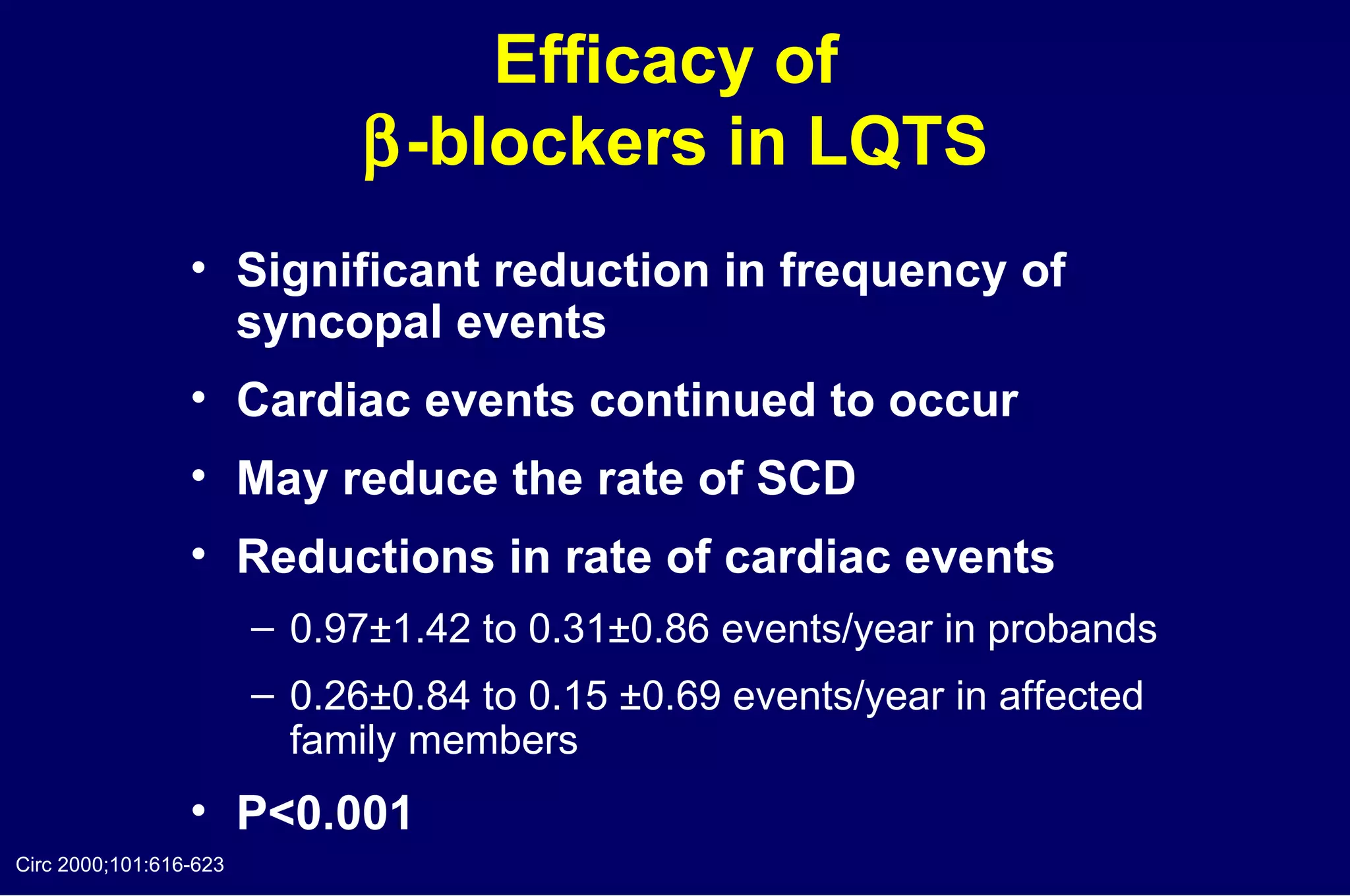
Efficacy of   -blockers in LQTS Significant reduction in frequency of  syncopal events Cardiac events continued to occur May reduce the rate of SCD Reductions in rate of cardiac events  0.97±1.42 to 0.31±0.86 events/year in probands 0.26±0.84 to 0.15 ±0.69 events/year in affected  family members P<0.001 Circ 2000;101:616-623
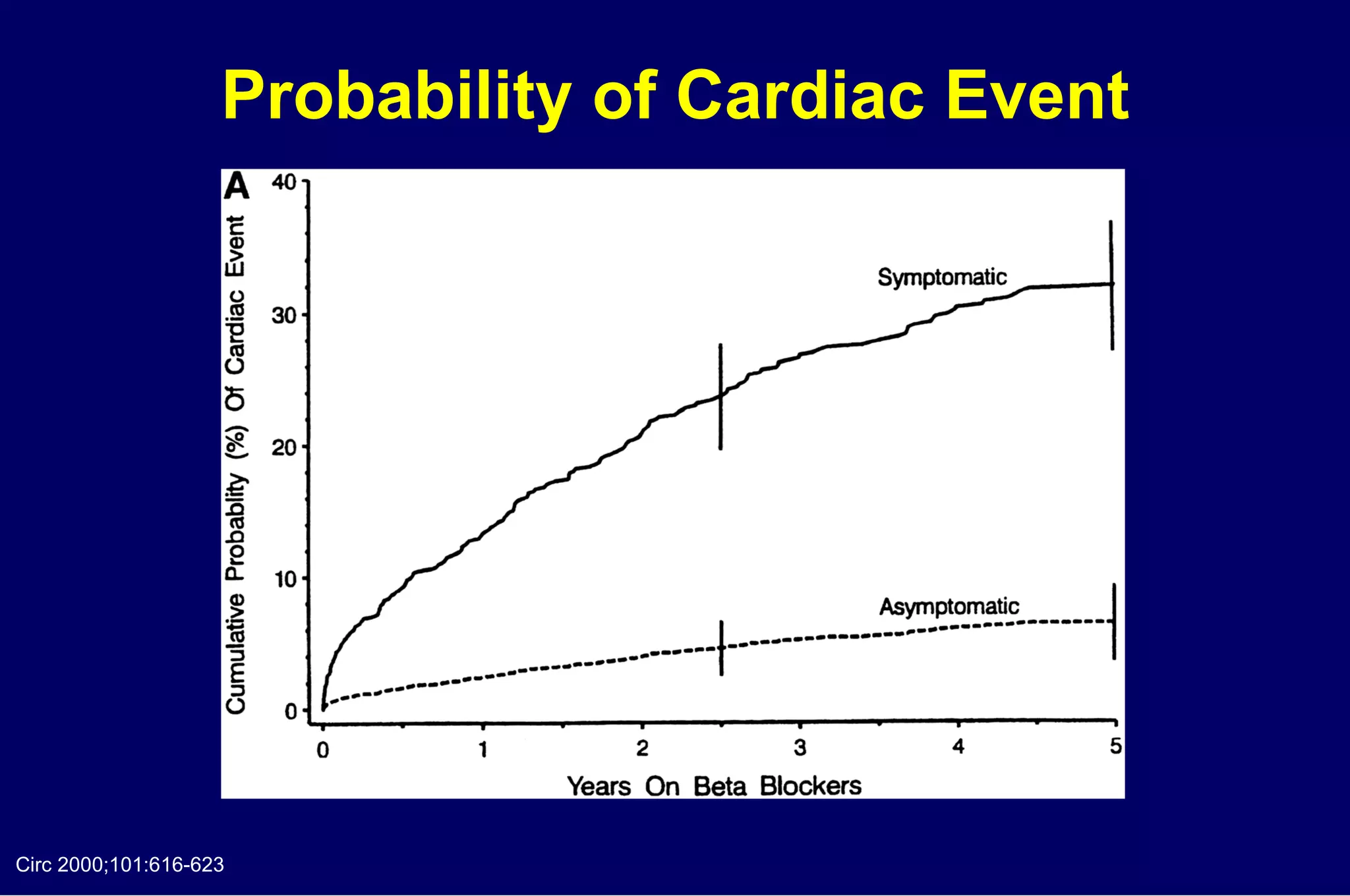
Probability of Cardiac Event Circ 2000;101:616-623
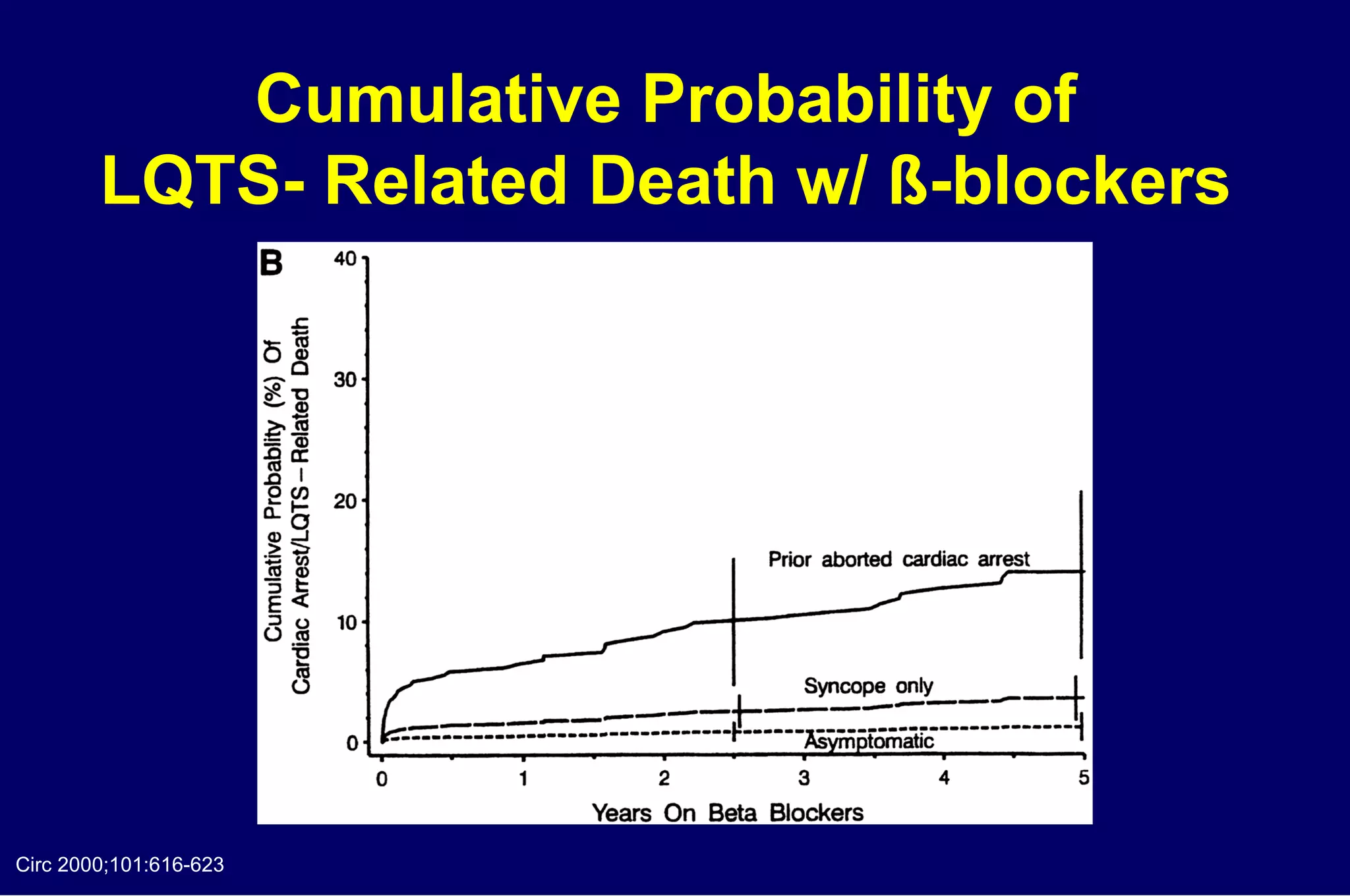
Cumulative Probability of  LQTS- Related Death w/ ß-blockers  Circ 2000;101:616-623
Limitations of   -blockers  in LQTS SCD can occur despite Rx with   -blockers Long-term compliance with daily  therapy is problematic Usual side effects of   -blockers
ICD Experience in LQTS An ICD is indicated for all patients with documented VT, VF or aborted cardiac arrest Prevents SCD in patients with prior  cardiac events Provides a back-up for patients on   -blocker therapy who continue to  be symptomatic
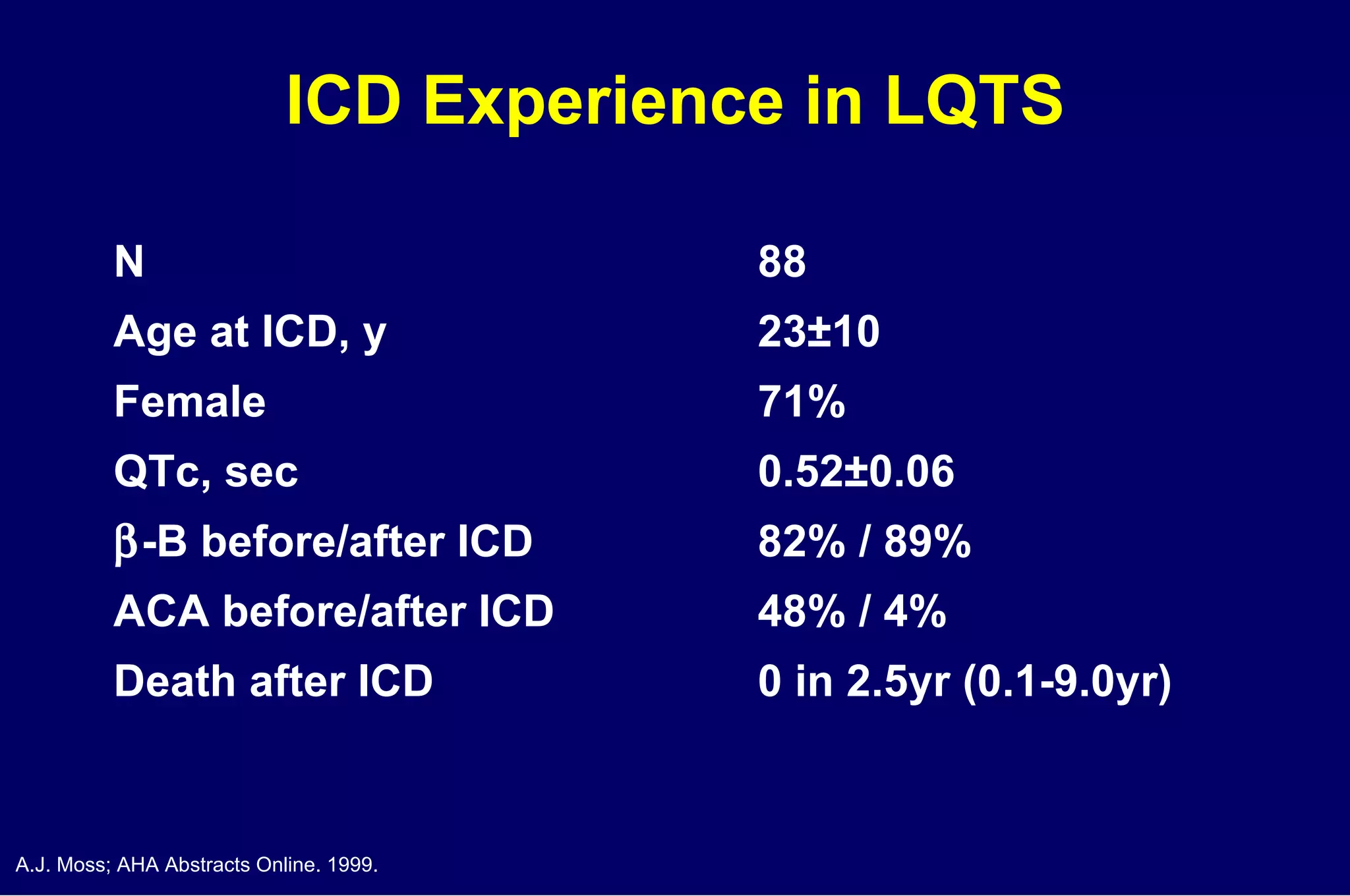
ICD Experience in LQTS N 88 Age at ICD, y 23±10 Female 71% QTc, sec 0.52±0.06  -B before/after ICD 82% / 89% ACA before/after ICD 48% / 4% Death after ICD 0 in 2.5yr (0.1-9.0yr) A.J. Moss; AHA Abstracts Online. 1999.
Pacemaker Experience  in LQTS Reduces frequency of syncope in pts.  with bradycardia-triggered events Most useful when combined with   -blocker therapy Does not prevent SCD in long-term  therapy Appears most useful in patients with  LQT3 and bradycardia  Circ. 1999;100:2431-2436
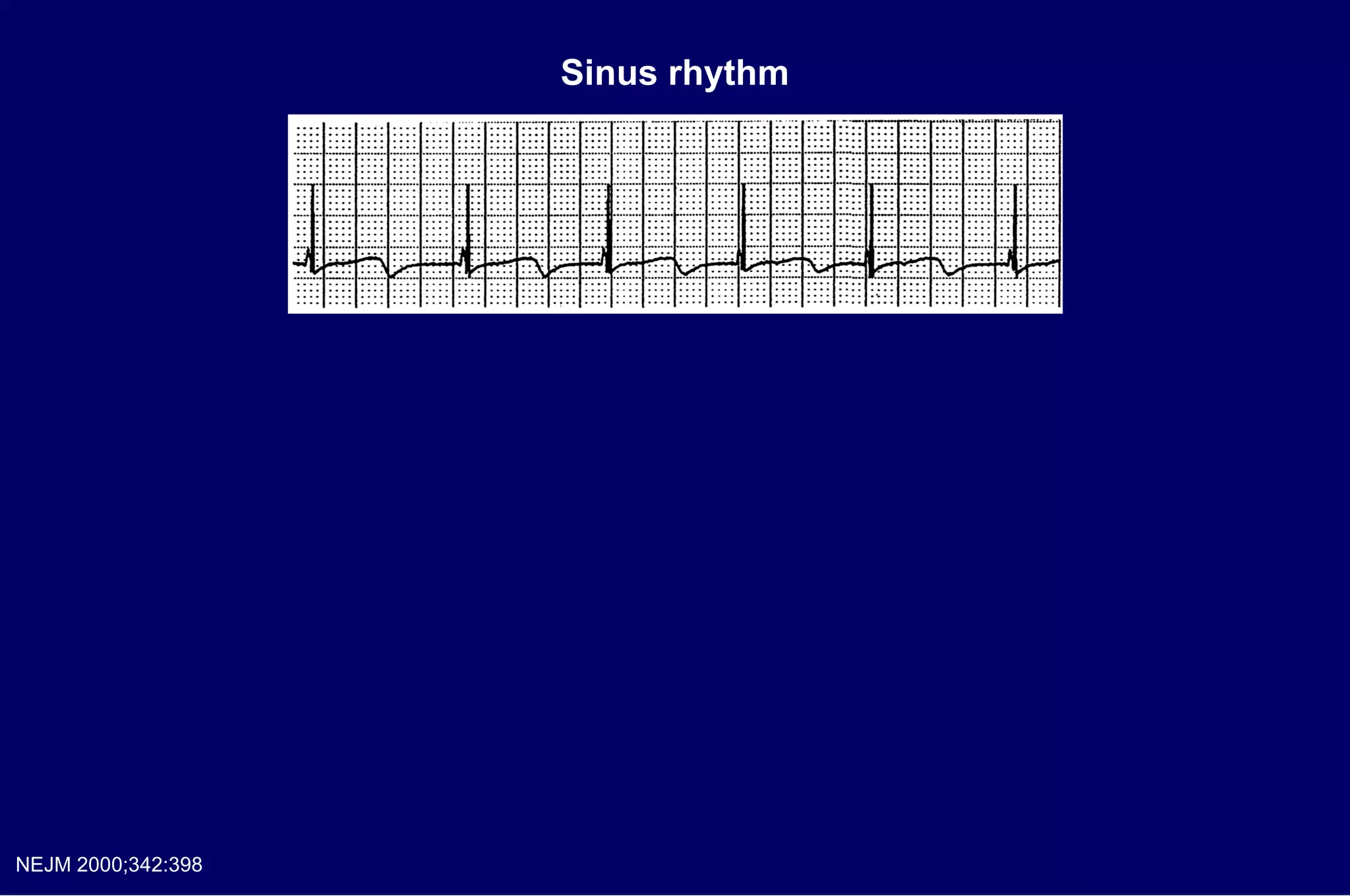
Sinus rhythm NEJM 2000;342:398
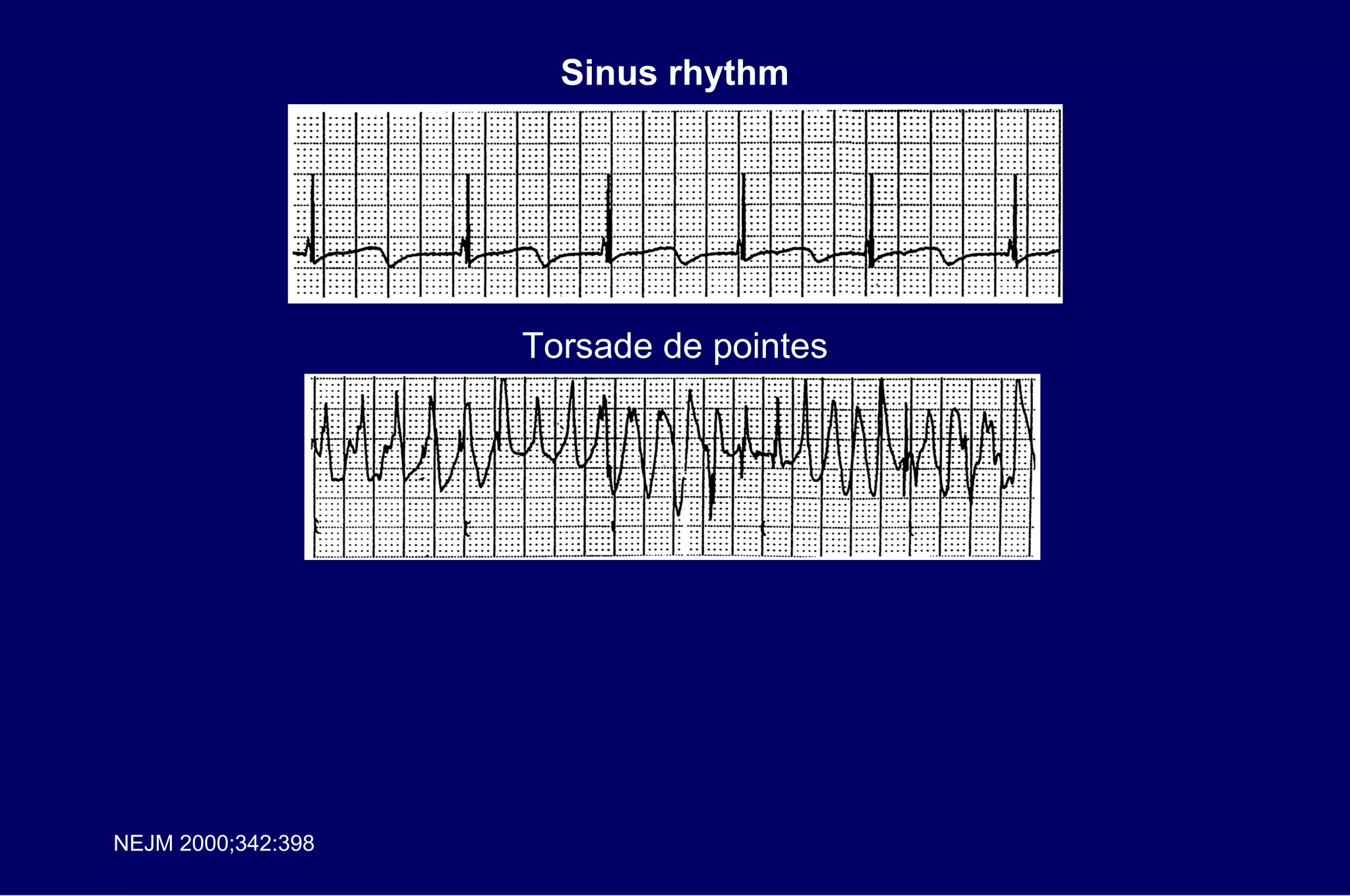
Sinus rhythm Torsade de pointes NEJM 2000;342:398
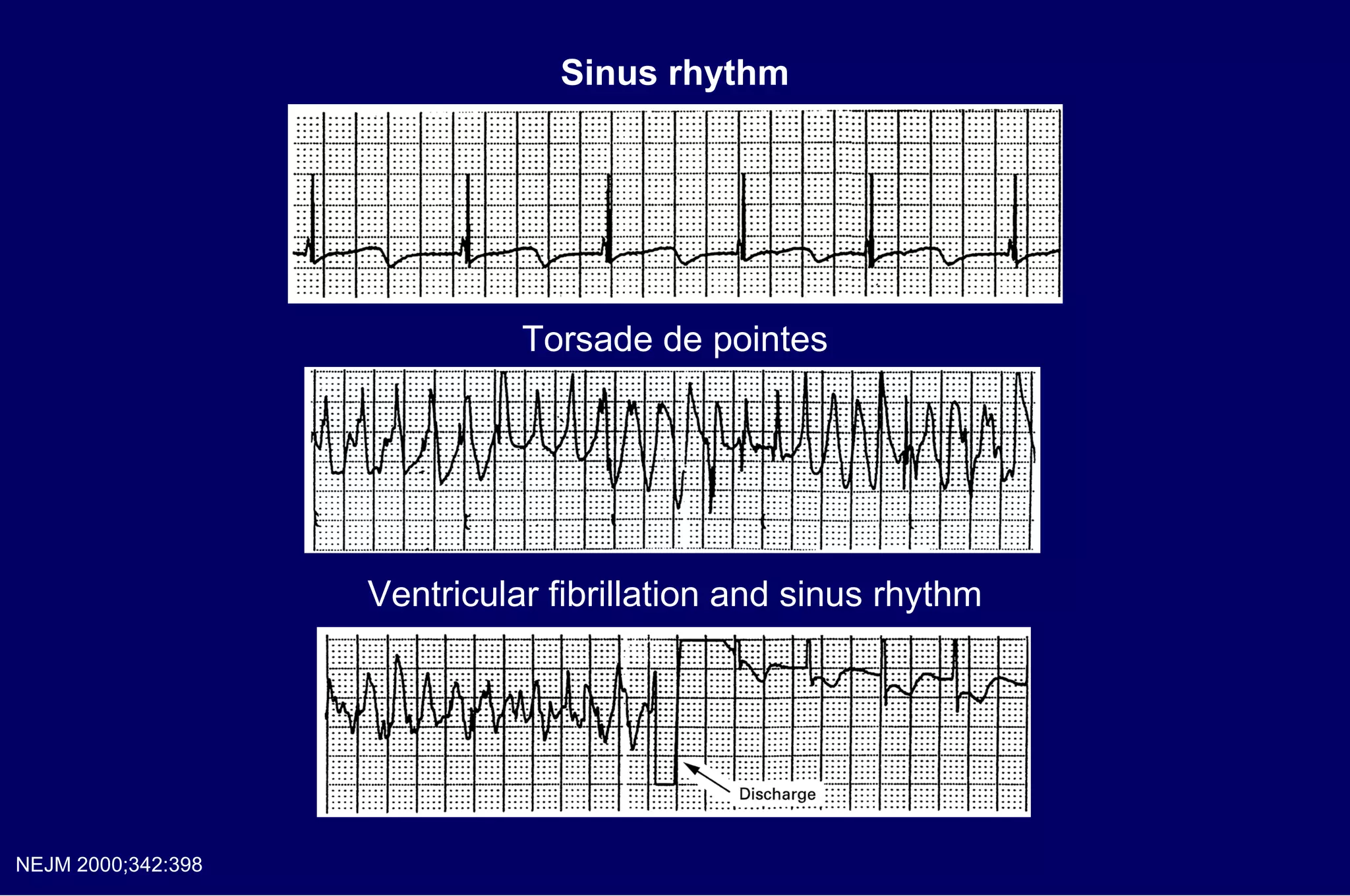
Sinus rhythm Torsade de pointes Ventricular fibrillation and sinus rhythm NEJM 2000;342:398
Ongoing Research
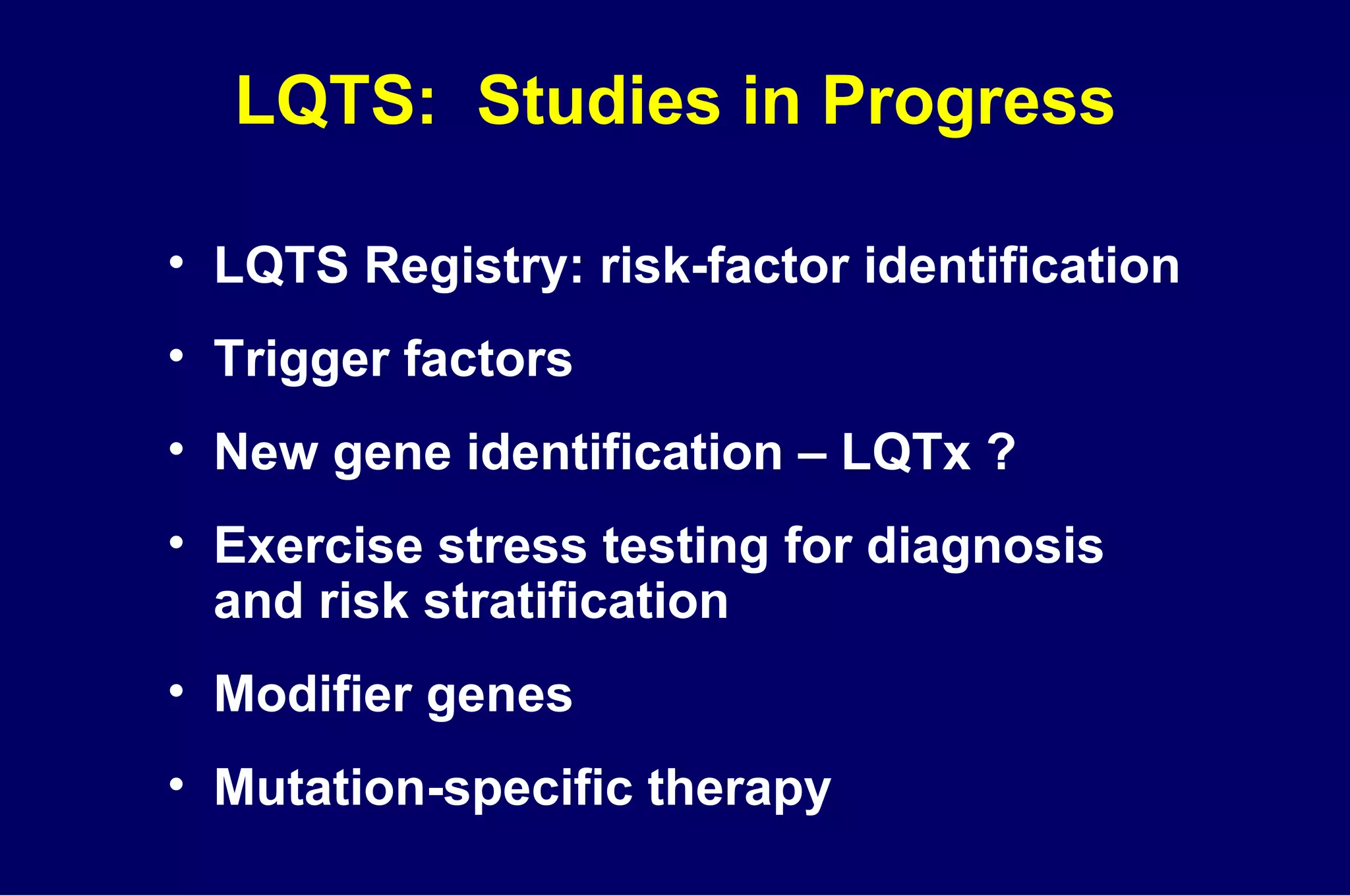
LQTS:  Studies in Progress LQTS Registry: risk-factor identification Trigger factors New gene identification – LQTx ? Exercise stress testing for diagnosis  and risk stratification Modifier genes Mutation-specific therapy
Case Studies
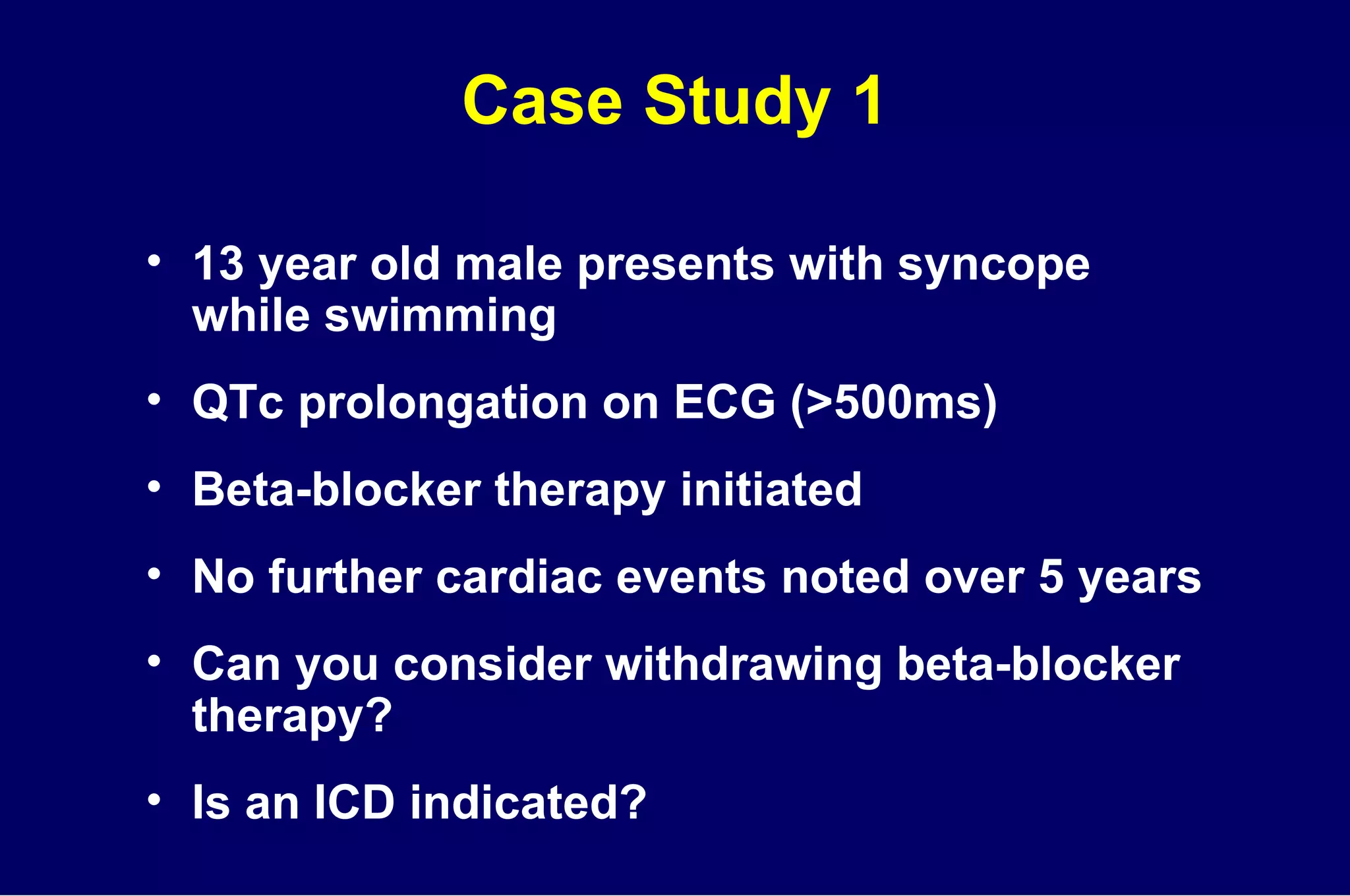
Case Study 1 13 year old male presents with syncope  while swimming QTc prolongation on ECG (>500ms) Beta-blocker therapy initiated No further cardiac events noted over 5 years Can you consider withdrawing beta-blocker therapy? Is an ICD indicated?
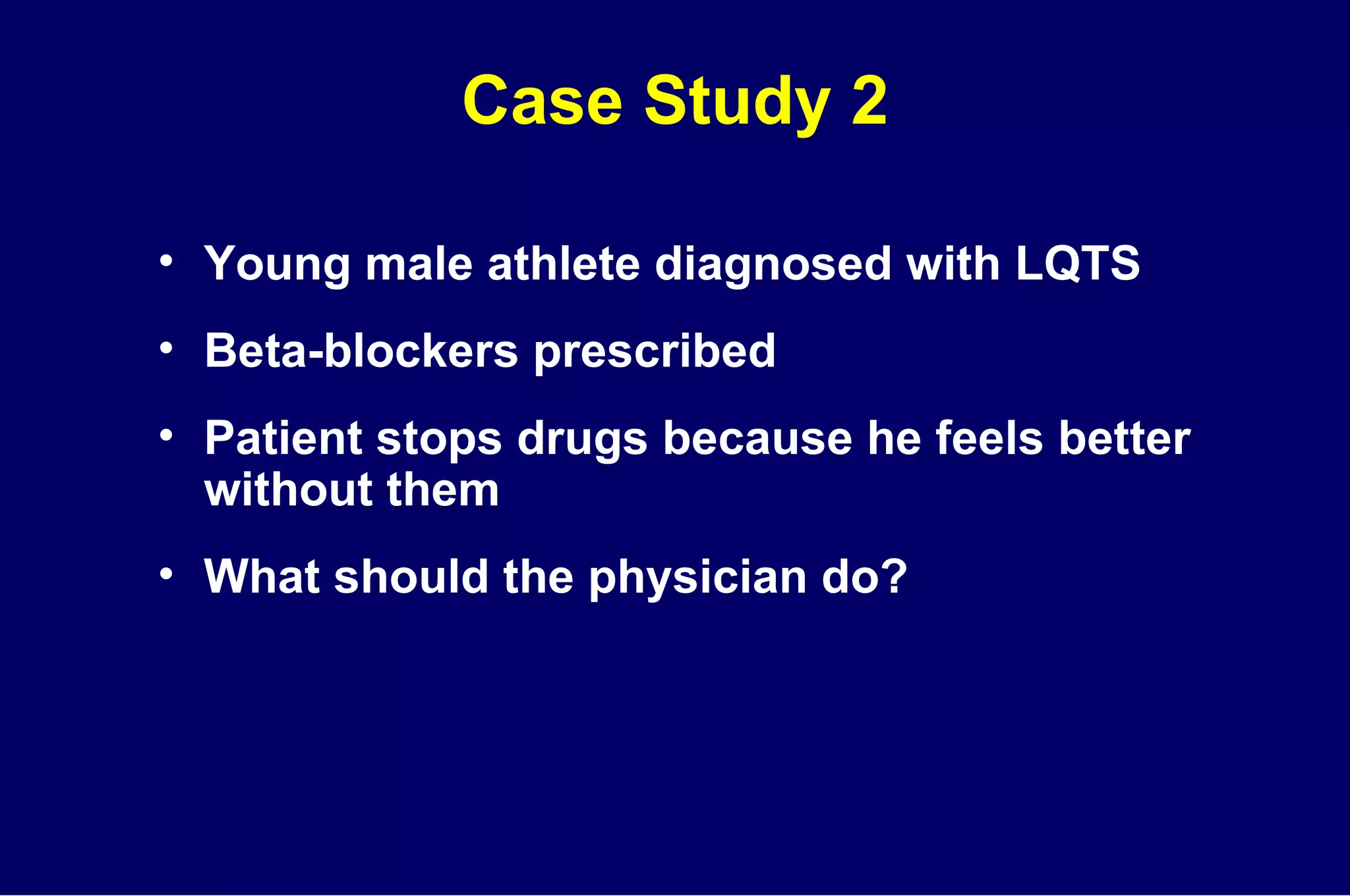
Case Study 2 Young male athlete diagnosed with LQTS Beta-blockers prescribed Patient stops drugs because he feels better without them What should the physician do?
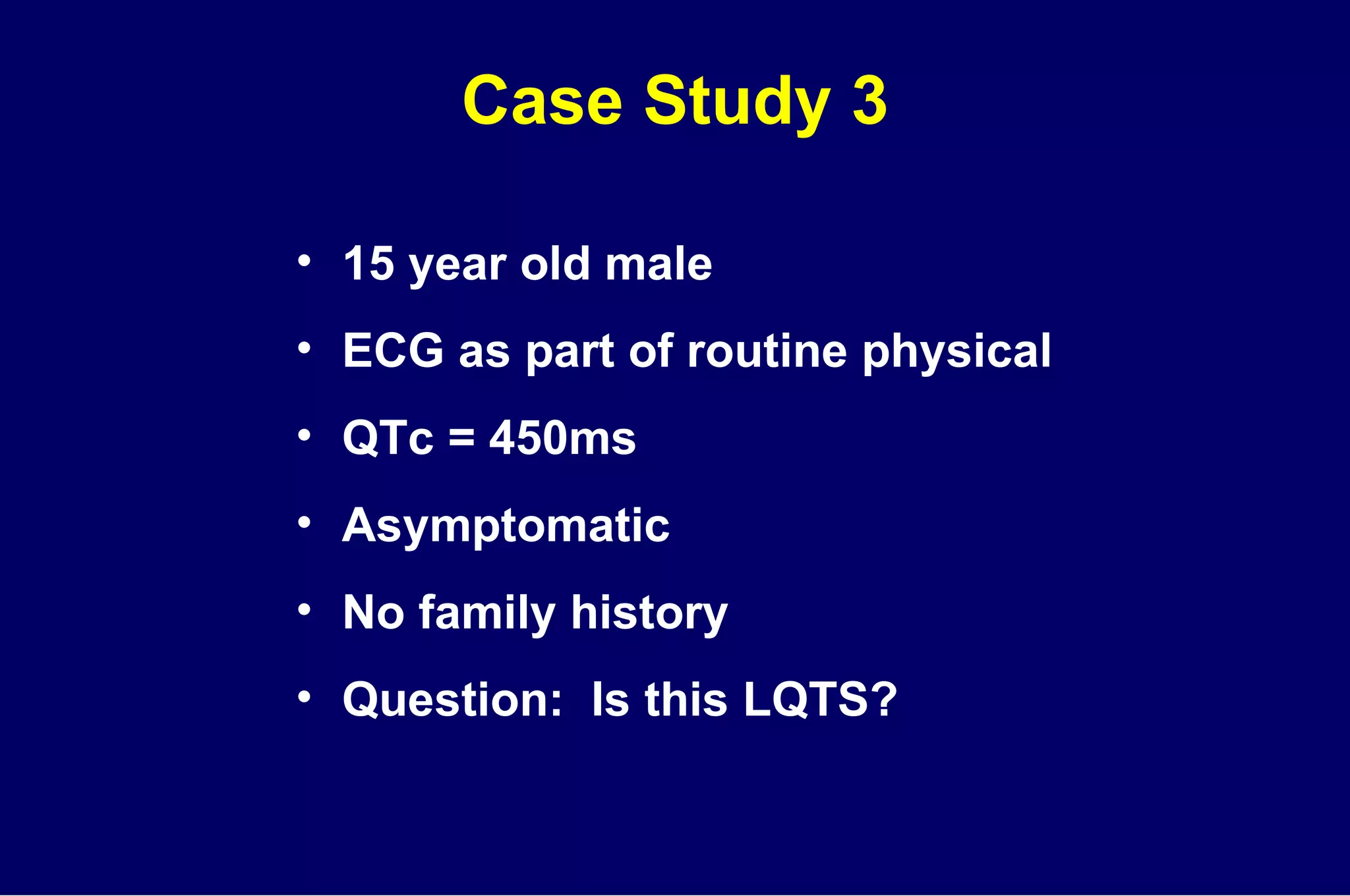
Case Study 3 15 year old male ECG as part of routine physical QTc = 450ms Asymptomatic No family history Question:  Is this LQTS?
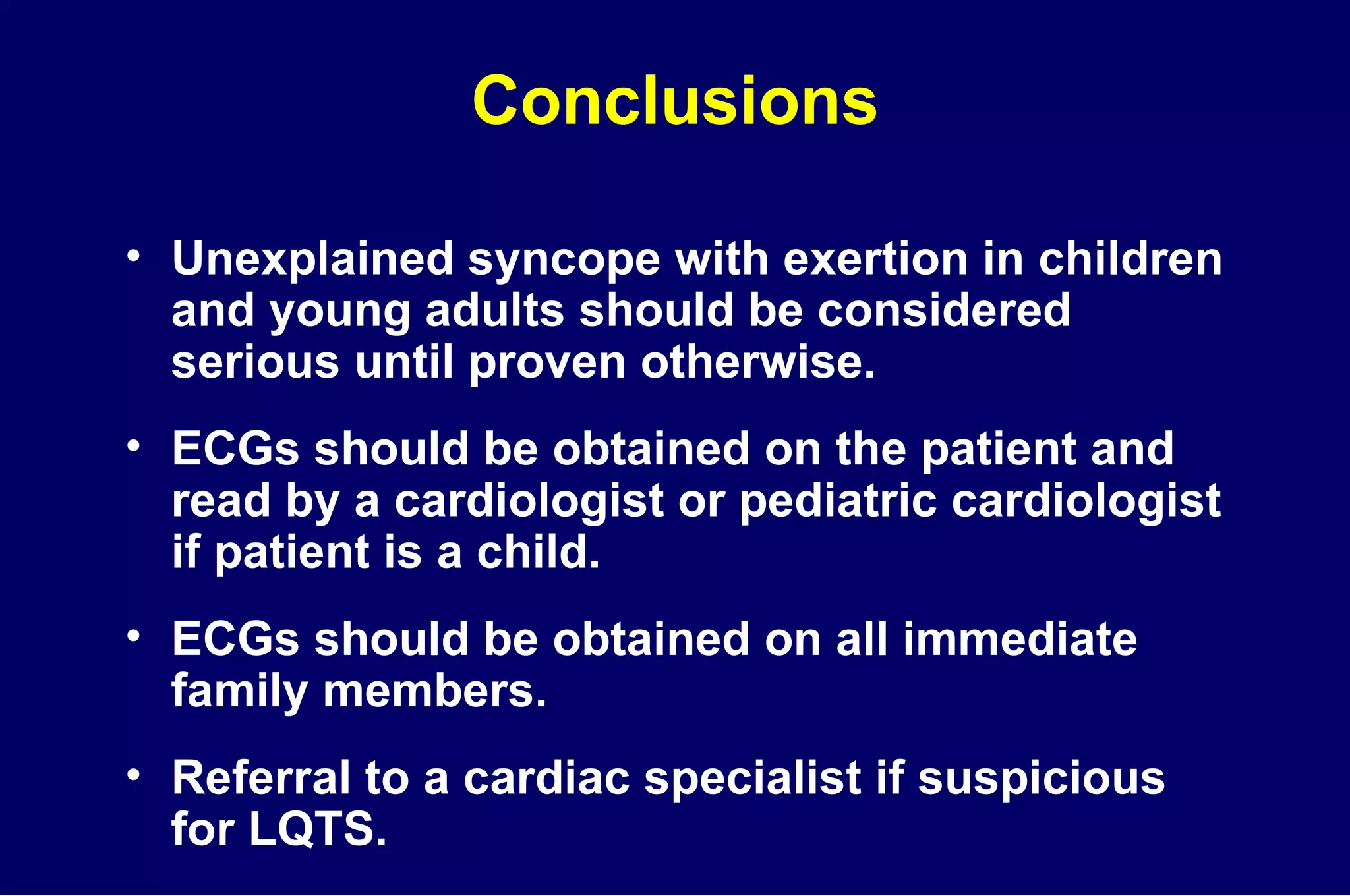
Conclusions Unexplained syncope with exertion in children and young adults should be considered serious until proven otherwise. ECGs should be obtained on the patient and read by a cardiologist or pediatric cardiologist if patient is a child. ECGs should be obtained on all immediate family members. Referral to a cardiac specialist if suspicious  for LQTS.
Long QT Resources Cardiac Arrhythmias Research and Education (CARE) Foundation:  www.longqt.org Cardiac Arrest Survivors Network (CASN):  www.casn-network.org International Registry for Drug-Induced Arrhythmias, including drugs to use with caution or avoid in Long QT patients:  www.qtdrugs.org

The Long QT Syndrome: Overview and Management The Long QT Syndrome: Overview and Management

  • 1.
    The Long QTSyndrome Overview and Management Edited by A.Kharazi M.D Cardiac electrophysiologist
  • 2.
    LQTS Outline Background Identification Therapies Available Current Management Ongoing Research Case Studies Conclusions
  • 3.
    Long QT SyndromeBackground and the Risk of Sudden Cardiac Death
  • 4.
    Sudden Cardiac Death(SCD) Affects 350,000 - 400,000 each year in the US alone Only 5% of victims survive Causes of SCD may include structural heart disease or a genetic channelopathy Recognition of risk factors can help identify those at risk of SCD
  • 5.
    Risk Factors forSCD in Young People Structural congenital heart disease - before and after corrective surgery Congenital anomalies of coronaries Myocarditis Hypertrophic and other cardiomyopathies Wolff-Parkinson-White Syndrome Long QT Syndrome
  • 6.
    LQTS: HistoricalAspects 1957: 1st LQTS family reported 1963-1964: Romano-Ward Syndrome 1958-1970: 25 LQTS cases reported 1971: 1st LQTS Rx (left stellate ganglionectomy) 1979: LQTS Registry Started 1991-2001: 6 LQTS genes identified
  • 7.
    Long QT SyndromeGenetic disorder (1:5,000-10,000) ECG evidence: QTc interval prolonged >440 ms in males >450 ms in females Hallmark arrhythmia: Torsade de pointes VT Primary presenting symptom: Syncope SCD in children or young adults
  • 8.
  • 9.
    LQTS: Identification ofRisk Most common presenting symptom: unexplained syncope. Syncope on exertion in pediatric patients should be considered malignant until proven otherwise. History & ECG: Onset and offset of syncopal episode Siblings, or family members with unexplained syncope or sudden death Family history of “seizures” or congenital deafness Prolonged QTc on ECG
  • 10.
    Syncope Slow OnsetAbrupt Onset Abrupt Onset Slow Offset Abrupt Offset Slow Offset Seizure disorder Hyperventilation Hypoglycemia Obstructive Arrhythmic Vascular Aortic Stenosis, HCM, Myxoma Brady Tachy Vasovagal, Orthostatic Hypertension
  • 11.
    Causes of ArrhythmicSyncope Very rapid VT or TdP, with hypotension Atrial fibrillation or atrial flutter with very rapid ventricular response as in WPW AV block Sinus arrest
  • 12.
    Holter ECG Recordingin LQTS Patient with Syncope ( representative strips of ECG recording, part 1 of 2)
  • 13.
    Holter ECG Recordingin LQTS Patient with Syncope (representative strips of ECG recording, part 2 of 2)
  • 14.
    LQTS: ClinicalFeatures Symptoms Syncope Seizures Sudden death Palpitations or “chest pain” ECG Signs Prolonged QTc Torsade de pointes
  • 15.
    LQTS ECG PatternsCirc 1992;85[Suppl I]:I140-I144
  • 16.
    Additional LQTS ECGPatterns Circ 1992;85[Suppl I]:I140-I144
  • 17.
    What Should Youdo with the ECG? Don’t rely on computer evaluation of ECG Obtain an independent review of the ECG Have an experienced cardiologist measure the QTc interval If the ECG is suspicious for LQTS, refer the patient for cardiac evaluation
  • 18.
    LQTS: DiagnosticCriteria ECG findings:  QTc, TdP, notched T waves, slow heart rate for age Clinical history: syncope, seizures, aborted cardiac arrest Family history: family member with LQTS, unexplained SCD in a first-degree relative who was <55yrs of age Circ 1993;88:782-784
  • 19.
    QTc Interval andRisk AJC 1993;72:21B QTc Risk for Cardiac Event
  • 20.
    LQTS: Whois at Risk for SCD? Aborted cardiac arrest Family history of unexplained sudden death Syncope Torsade de pointes T-wave alternans Prolonged QTc
  • 21.
    Probability of CardiacEvent in LQTS Circ 1991;84:1136-1144 Probands Affected Undetermined Unaffected
  • 22.
    Triggering Events for Syncope or SCD 3 main factors contributing to syncope or SCD Exercise (LQT1), especially swimming Emotions or emotional stress (LQT2) Events occurring during sleep or at rest, with or without arousal (LQT2 or LQT3) Circ 2001;103:89-95 Mayo Clin Proc. 1999;74:1088-1094
  • 23.
    Occurrence of Gene-Specific Triggers Circ 2001;103:89-95 Percent
  • 24.
    Basis for theLong QT Syndrome JCE 1999;10:1664-1683
  • 25.
    LQTS: Phenotype-GenotypeConsiderations 6 genotypes; ~200 different mutations Clinical differences among LQT1, LQT2, & LQT3 genotypes Clinical variability within a genotype Clinical variability among members of a family with the same gene mutation suggests presence of modifier genes
  • 26.
    T-wave Morphology inLQTS by Genotype Moss AJ, et al. Circulation 1995;92:2929-2934
  • 27.
    Probability of aCardiac Event No. of Subjects LQT1 group 112 72 36 27 19 LQT2 group 72 56 29 16 11 LQT3 group 62 56 36 24 16 NEJM 1998;339:960-965
  • 28.
    Therapies Available and Current Management
  • 29.
    Drugs in LongQT Certain drugs may provoke life-threatening arrhythmias in LQTS patients Examples: Antiarrhythmic: procainamide, quinidine, amiodarone, sotalol, et al Antihistamine: astemizole, terfenadine, et al Antimicrobial/antifungal: thiomethoprim sulfa, erythromycin, ketoconazole, et al Psychotropics: haloperidol, risperidone, thioridazine, tricyclics, et al Other: epinephrine, diuretics, cisapride, bepridil, ketanserin, et al Avoid nonessential OTC medications For more information see: www.qtdrugs.org
  • 30.
    Current Treatments Leftstellate ganglionectomy (occasionally utilized in infants and patients refractory to other forms of therapy) Beta blockers Pacemakers Implantable Cardioverter Defibrillators (ICDs)
  • 31.
    Management by GenotypeLQT1 and LQT2 benefit the most from ß-blocker therapy The benefit of ß-blocker therapy is less clear in LQT3. ICDs indicated: if the patient presents as SCD survivor or aborted cardiac arrest if ß-blockers are not effective in preventing cardiac events
  • 32.
    LQTS: Cardiac EventsBefore and After  -blockers Probands AFM † (n=581) (n=288) Risk exposure, yrs 5.2 4.5 (pre- and post-  B) Pre-  B Post-  B Pre-  B Post  B Pts with events 462 194* 92 49* Number events 1671 623* 245 138* Events/pt 3.0 1.1* 0.9 0.5* Events/pt/year 1.0 0.3* 0.3 0.15* Circ 2000;101:616-623 † Affected Family Member * P<0.01 vs. pre-  -blocker
  • 33.
    Efficacy of  -blockers in LQTS Significant reduction in frequency of syncopal events Cardiac events continued to occur May reduce the rate of SCD Reductions in rate of cardiac events 0.97±1.42 to 0.31±0.86 events/year in probands 0.26±0.84 to 0.15 ±0.69 events/year in affected family members P<0.001 Circ 2000;101:616-623
  • 34.
    Probability of CardiacEvent Circ 2000;101:616-623
  • 35.
    Cumulative Probability of LQTS- Related Death w/ ß-blockers Circ 2000;101:616-623
  • 36.
    Limitations of  -blockers in LQTS SCD can occur despite Rx with  -blockers Long-term compliance with daily therapy is problematic Usual side effects of  -blockers
  • 37.
    ICD Experience inLQTS An ICD is indicated for all patients with documented VT, VF or aborted cardiac arrest Prevents SCD in patients with prior cardiac events Provides a back-up for patients on  -blocker therapy who continue to be symptomatic
  • 38.
    ICD Experience inLQTS N 88 Age at ICD, y 23±10 Female 71% QTc, sec 0.52±0.06  -B before/after ICD 82% / 89% ACA before/after ICD 48% / 4% Death after ICD 0 in 2.5yr (0.1-9.0yr) A.J. Moss; AHA Abstracts Online. 1999.
  • 39.
    Pacemaker Experience in LQTS Reduces frequency of syncope in pts. with bradycardia-triggered events Most useful when combined with  -blocker therapy Does not prevent SCD in long-term therapy Appears most useful in patients with LQT3 and bradycardia Circ. 1999;100:2431-2436
  • 40.
    Sinus rhythm NEJM2000;342:398
  • 41.
    Sinus rhythm Torsadede pointes NEJM 2000;342:398
  • 42.
    Sinus rhythm Torsadede pointes Ventricular fibrillation and sinus rhythm NEJM 2000;342:398
  • 43.
  • 44.
    LQTS: Studiesin Progress LQTS Registry: risk-factor identification Trigger factors New gene identification – LQTx ? Exercise stress testing for diagnosis and risk stratification Modifier genes Mutation-specific therapy
  • 45.
  • 46.
    Case Study 113 year old male presents with syncope while swimming QTc prolongation on ECG (>500ms) Beta-blocker therapy initiated No further cardiac events noted over 5 years Can you consider withdrawing beta-blocker therapy? Is an ICD indicated?
  • 47.
    Case Study 2Young male athlete diagnosed with LQTS Beta-blockers prescribed Patient stops drugs because he feels better without them What should the physician do?
  • 48.
    Case Study 315 year old male ECG as part of routine physical QTc = 450ms Asymptomatic No family history Question: Is this LQTS?
  • 49.
    Conclusions Unexplained syncopewith exertion in children and young adults should be considered serious until proven otherwise. ECGs should be obtained on the patient and read by a cardiologist or pediatric cardiologist if patient is a child. ECGs should be obtained on all immediate family members. Referral to a cardiac specialist if suspicious for LQTS.
  • 50.
    Long QT ResourcesCardiac Arrhythmias Research and Education (CARE) Foundation: www.longqt.org Cardiac Arrest Survivors Network (CASN): www.casn-network.org International Registry for Drug-Induced Arrhythmias, including drugs to use with caution or avoid in Long QT patients: www.qtdrugs.org