

Cardiovascular Genetics
Dr. Md.Toufiqur Rahman
MBBS, FCPS, MD, FACC, FESC, FRCPE, FSCAI,
FAPSC, FAPSIC, FAHA, FCCP, FRCPG
Associate Professor of Cardiology
National Institute of Cardiovascular Diseases,
Sher-e-Bangla Nagar, Dhaka-1207
Consultant, Medinova, Malibagh branch
Honorary Consultant, Apollo Hospitals, Dhaka and
STS Life Care Centre, Dhanmondi
drtoufiq19711@yahoo.com
CRT 2014
Washington
DC, USA
Mendelian disorders
Mendelian CVDs include HCM, LQTS, Marfan syndrome, and familial DCM. These
diseases are characterized bya clear mode of inheritance and one or a few
genes causing the disease, with mutations within the genesshowing strong
association with the disease and marked phenotypic effects.
Genetic testing of the affected individual is often indicated in these Mendelian CV
genetic diseases, not ford iagnostic purposes (diagnosis is usually a clinical
diagnosis), but for facilitating genetic testing and screening in at-
risk family members.
When performing genetic testing in most Mendelian CV genetic diseases, the best
approach is usually to performa full screen of all available genetic variants in
the index case, and then perform focused testing of only that genetic variant
in atrisk family members.
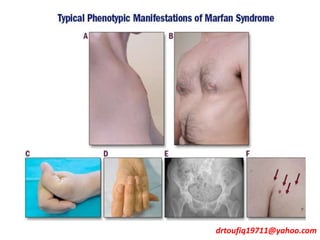
Marfan syndrome is a connective tissue disorder inherited in an autosomal
dominant fashion, with 95% of cases caused by mutations in the fibrillin-
1 extracellular matrix protein gene (FBN1), and predisposes to aortic
aneurysms and dissections.
drtoufiq19711@yahoo.com
Familial DCM and HCM
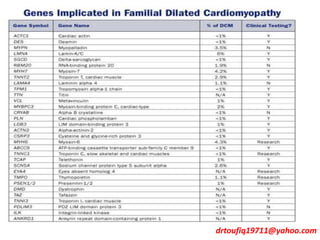
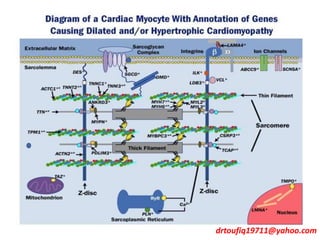
Familial DCM is a heterogeneous genetic disease, with variable prese
ntations, reduced penetrance, and differentmodes of inheritance.
It is caused by mutations in 33 known genes, but these account
for only 3035% of casesÍľthus, the role of genetic testing is unclear.
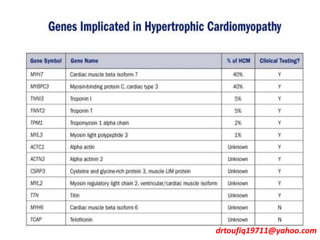
Familial HCM is a relatively common genetic disease showing an
autosomal dominant mode of inheritancecaused by mutations in
1 of 14 genes encoding components of the sarcomere, with
genetic testing identifying oneof these mutations in 50-
75% of cases. Thus, genetic testing can be useful in helping to co
nfirm a diagnosis andfor guiding screening in at-
risk family members.
Familial HCM needs to be differentiated from LV hypertrophy
resulting from other genetic disorders such as Fabrydisease, amyl-
oidosis, or other metabolic cardiomyopathies, especially in
younger individuals. drtoufiq19711@yahoo.com
drtoufiq19711@yahoo.com
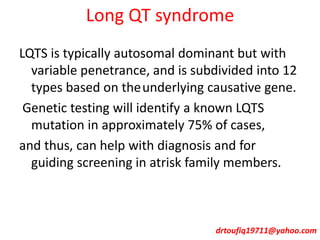
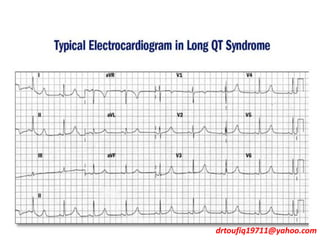
Long QT syndrome
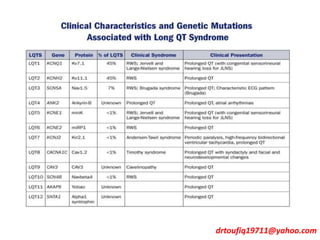
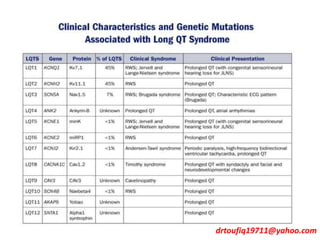
LQTS is typically autosomal dominant but with
variable penetrance, and is subdivided into 12
types based on theunderlying causative gene.
Genetic testing will identify a known LQTS
mutation in approximately 75% of cases,
and thus, can help with diagnosis and for
guiding screening in atrisk family members.
drtoufiq19711@yahoo.com
Genetics of Coagulation and bleeding
Factor V Leiden is a genetic variant that causes APC
resistance and is the most common genetic cause of
VTE,causing up to 50% of cases.
It is transmitted in an autosomal dominant fashion, a
nd genetic testing for thisgenetic variant is indicated
in certain patients with a VTE.
Warfarin metabolism is determined partially by genetic
variants in two genes, the hepatic cytochrome p450
enzyme CYP2C9 and VKORC1, which explain 30-
40% of the total variation in final warfarin dose.
Genetic testingfor these variants may help with
achieving optimal warfarin doses more quickly, and
for improving outcomes. drtoufiq19711@yahoo.com
Genetics of Clopidogrel resistance
Clopidogrel activation is mediated partially through
a hepatic cytochrome p450 enzyme coded by the
gene,CYP2C19, and variants in this gene have
been associated with reduced platelet inhibition
and worse clinicaloutcomes in patients treated
with clopidogrel.
The ACCF and AHA suggest testing for these CYP2C1
9 variantsmay be indicated for patients treated
with clopidogrel who are at moderate or high risk
for CV events.
drtoufiq19711@yahoo.com
Miscellaneous
Common CVDs such as CAD, MI, and atrial
fibrillation demonstrate a more complex
model of genetic riskÍľ thus,genetic testing is
not currently routinely indicated in these
diseases.
Novel genomic technologies including
epigenetics, copy number variation testing,
and DNA resequencing willhopefully help
refine the genetic architecture of
these common CVDs and facilitate creation of a
robust risk prediction model. drtoufiq19711@yahoo.com
Thank Youdrtoufiq19711@yahoo.com
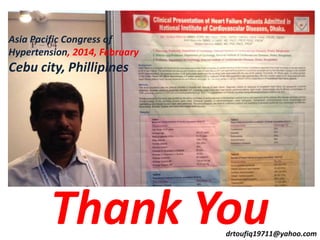
Asia Pacific Congress of
Hypertension, 2014, February
Cebu city, Phillipines

Cardiovascular genetics

  • 1.
    Cardiovascular Genetics Dr. Md.ToufiqurRahman MBBS, FCPS, MD, FACC, FESC, FRCPE, FSCAI, FAPSC, FAPSIC, FAHA, FCCP, FRCPG Associate Professor of Cardiology National Institute of Cardiovascular Diseases, Sher-e-Bangla Nagar, Dhaka-1207 Consultant, Medinova, Malibagh branch Honorary Consultant, Apollo Hospitals, Dhaka and STS Life Care Centre, Dhanmondi drtoufiq19711@yahoo.com CRT 2014 Washington DC, USA
  • 2.
    Mendelian disorders Mendelian CVDsinclude HCM, LQTS, Marfan syndrome, and familial DCM. These diseases are characterized bya clear mode of inheritance and one or a few genes causing the disease, with mutations within the genesshowing strong association with the disease and marked phenotypic effects. Genetic testing of the affected individual is often indicated in these Mendelian CV genetic diseases, not ford iagnostic purposes (diagnosis is usually a clinical diagnosis), but for facilitating genetic testing and screening in at- risk family members. When performing genetic testing in most Mendelian CV genetic diseases, the best approach is usually to performa full screen of all available genetic variants in the index case, and then perform focused testing of only that genetic variant in atrisk family members. Marfan syndrome is a connective tissue disorder inherited in an autosomal dominant fashion, with 95% of cases caused by mutations in the fibrillin- 1 extracellular matrix protein gene (FBN1), and predisposes to aortic aneurysms and dissections. drtoufiq19711@yahoo.com
  • 3.
  • 4.
    Familial DCM andHCM Familial DCM is a heterogeneous genetic disease, with variable prese ntations, reduced penetrance, and differentmodes of inheritance. It is caused by mutations in 33 known genes, but these account for only 3035% of casesÍľthus, the role of genetic testing is unclear. Familial HCM is a relatively common genetic disease showing an autosomal dominant mode of inheritancecaused by mutations in 1 of 14 genes encoding components of the sarcomere, with genetic testing identifying oneof these mutations in 50- 75% of cases. Thus, genetic testing can be useful in helping to co nfirm a diagnosis andfor guiding screening in at- risk family members. Familial HCM needs to be differentiated from LV hypertrophy resulting from other genetic disorders such as Fabrydisease, amyl- oidosis, or other metabolic cardiomyopathies, especially in younger individuals. drtoufiq19711@yahoo.com
  • 5.
  • 6.
  • 7.
  • 8.
    Long QT syndrome LQTSis typically autosomal dominant but with variable penetrance, and is subdivided into 12 types based on theunderlying causative gene. Genetic testing will identify a known LQTS mutation in approximately 75% of cases, and thus, can help with diagnosis and for guiding screening in atrisk family members. drtoufiq19711@yahoo.com
  • 9.
  • 10.
  • 11.
  • 12.
  • 13.
  • 14.
    Genetics of Coagulationand bleeding Factor V Leiden is a genetic variant that causes APC resistance and is the most common genetic cause of VTE,causing up to 50% of cases. It is transmitted in an autosomal dominant fashion, a nd genetic testing for thisgenetic variant is indicated in certain patients with a VTE. Warfarin metabolism is determined partially by genetic variants in two genes, the hepatic cytochrome p450 enzyme CYP2C9 and VKORC1, which explain 30- 40% of the total variation in final warfarin dose. Genetic testingfor these variants may help with achieving optimal warfarin doses more quickly, and for improving outcomes. drtoufiq19711@yahoo.com
  • 15.
    Genetics of Clopidogrelresistance Clopidogrel activation is mediated partially through a hepatic cytochrome p450 enzyme coded by the gene,CYP2C19, and variants in this gene have been associated with reduced platelet inhibition and worse clinicaloutcomes in patients treated with clopidogrel. The ACCF and AHA suggest testing for these CYP2C1 9 variantsmay be indicated for patients treated with clopidogrel who are at moderate or high risk for CV events. drtoufiq19711@yahoo.com
  • 16.
    Miscellaneous Common CVDs suchas CAD, MI, and atrial fibrillation demonstrate a more complex model of genetic riskÍľ thus,genetic testing is not currently routinely indicated in these diseases. Novel genomic technologies including epigenetics, copy number variation testing, and DNA resequencing willhopefully help refine the genetic architecture of these common CVDs and facilitate creation of a robust risk prediction model. drtoufiq19711@yahoo.com
  • 17.
    Thank Youdrtoufiq19711@yahoo.com Asia PacificCongress of Hypertension, 2014, February Cebu city, Phillipines