Psychology in Dentistry Alan G. Glaros, Ph.D. Associate Dean Kansas City University of Medicine and Biosciences
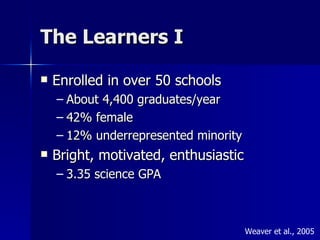
The Learners I Enrolled in over 50 schools About 4,400 graduates/year 42% female 12% underrepresented minority Bright, motivated, enthusiastic 3.35 science GPA Weaver et al., 2005
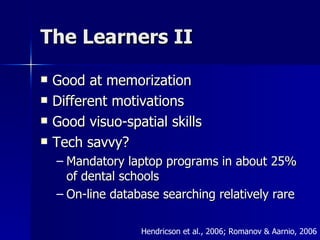
The Learners II Good at memorization Different motivations Good visuo-spatial skills Tech savvy? Mandatory laptop programs in about 25% of dental schools On-line database searching relatively rare  Hendricson et al., 2006; Romanov & Aarnio, 2006
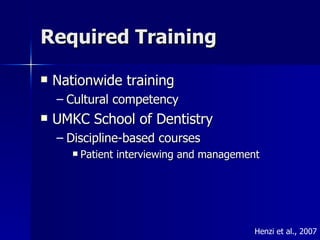
Required Training Nationwide training Cultural competency UMKC School of Dentistry Discipline-based courses Patient interviewing and management Henzi et al., 2007
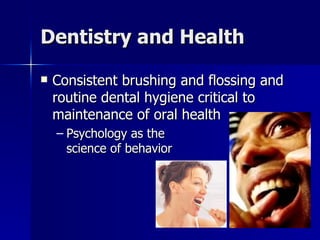
Dentistry and Health Consistent brushing and flossing and routine dental hygiene critical to maintenance of oral health Psychology as the science of behavior
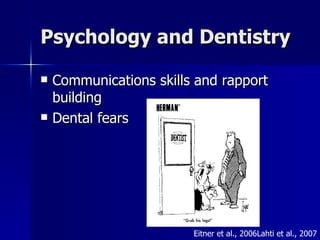
Psychology and Dentistry Communications skills and rapport building Dental fears Eitner et al., 2006Lahti et al., 2007
Psychology and Dentistry Pain Acute Chronic Temporomandibular disorders Neuralgias Oral parafunctional behaviors Clenching Grinding (“bruxism”) Drangsholt & LeResche, 1999; Glaros et al., 2005
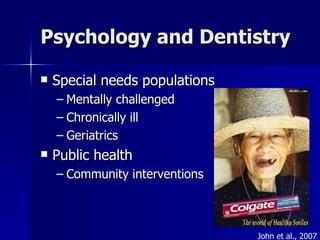
Psychology and Dentistry Special needs populations Mentally challenged Chronically ill Geriatrics Public health Community interventions John et al., 2007
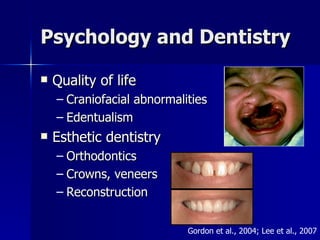
Psychology and Dentistry Quality of life Craniofacial abnormalities Edentualism Esthetic dentistry Orthodontics Crowns, veneers Reconstruction Gordon et al., 2004; Lee et al., 2007
Psychology Skills Useful for Dental Students Communication Fear/anxiety management Management of disruptive child Patient interventions to enhance self-care Motivational interviewing Pain management
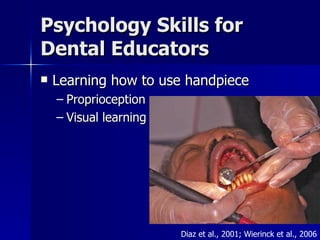
Psychology Skills for Dental Educators Learning how to use handpiece Proprioception Visual learning Diaz et al., 2001; Wierinck et al., 2006
Challenges With Dental Students Curriculum very technique-oriented Does not foster cognitive skills Psychology not seen as “scientific” or practical enough
Institutional Challenges Off-site psychologists Less attuned to issues faced by dental students Curricular time
Potential Solutions Collaborative relationships essential “Teach the Teacher” Observational modeling
Preparing for the Future Systems-based curriculum Multi-disciplinary Integrated Comprehensive Focus on the whole person Willsie, 2004
Role for APA Encourage shift to systems-based curriculum Advocate for research funding Educational research Visual learning Liaison to ADEA Remember dentistry
 

Psychology in Dentistry

  • 1.
    Psychology in DentistryAlan G. Glaros, Ph.D. Associate Dean Kansas City University of Medicine and Biosciences
  • 2.
    The Learners IEnrolled in over 50 schools About 4,400 graduates/year 42% female 12% underrepresented minority Bright, motivated, enthusiastic 3.35 science GPA Weaver et al., 2005
  • 3.
    The Learners IIGood at memorization Different motivations Good visuo-spatial skills Tech savvy? Mandatory laptop programs in about 25% of dental schools On-line database searching relatively rare Hendricson et al., 2006; Romanov & Aarnio, 2006
  • 4.
    Required Training Nationwidetraining Cultural competency UMKC School of Dentistry Discipline-based courses Patient interviewing and management Henzi et al., 2007
  • 5.
    Dentistry and HealthConsistent brushing and flossing and routine dental hygiene critical to maintenance of oral health Psychology as the science of behavior
  • 6.
    Psychology and DentistryCommunications skills and rapport building Dental fears Eitner et al., 2006Lahti et al., 2007
  • 7.
    Psychology and DentistryPain Acute Chronic Temporomandibular disorders Neuralgias Oral parafunctional behaviors Clenching Grinding (“bruxism”) Drangsholt & LeResche, 1999; Glaros et al., 2005
  • 8.
    Psychology and DentistrySpecial needs populations Mentally challenged Chronically ill Geriatrics Public health Community interventions John et al., 2007
  • 9.
    Psychology and DentistryQuality of life Craniofacial abnormalities Edentualism Esthetic dentistry Orthodontics Crowns, veneers Reconstruction Gordon et al., 2004; Lee et al., 2007
  • 10.
    Psychology Skills Usefulfor Dental Students Communication Fear/anxiety management Management of disruptive child Patient interventions to enhance self-care Motivational interviewing Pain management
  • 11.
    Psychology Skills forDental Educators Learning how to use handpiece Proprioception Visual learning Diaz et al., 2001; Wierinck et al., 2006
  • 12.
    Challenges With DentalStudents Curriculum very technique-oriented Does not foster cognitive skills Psychology not seen as “scientific” or practical enough
  • 13.
    Institutional Challenges Off-sitepsychologists Less attuned to issues faced by dental students Curricular time
  • 14.
    Potential Solutions Collaborativerelationships essential “Teach the Teacher” Observational modeling
  • 15.
    Preparing for theFuture Systems-based curriculum Multi-disciplinary Integrated Comprehensive Focus on the whole person Willsie, 2004
  • 16.
    Role for APAEncourage shift to systems-based curriculum Advocate for research funding Educational research Visual learning Liaison to ADEA Remember dentistry
  • 17.

Editor's Notes

  • #2 Good morning. I’m Alan Glaros, and I’m the Associate Dean for Basic Medical Sciences at Kansas City University of Medicine and Biosciences. Today, I’d like to share with you some lessons learned from my 16 years experience as a faculty member in a school of dentistry. Let’s begin by talking a bit about the students.