
The laws of exponents
Operations on exponents
By singwane NP, 201436252
Required to know the following:
 Operations which includes multiplying, addition,
subtraction as well as division.
 How to solve fractions.
The learning process will include the ff:
 What is an exponent
 How to perform operations using the laws of
exponents.
exponent
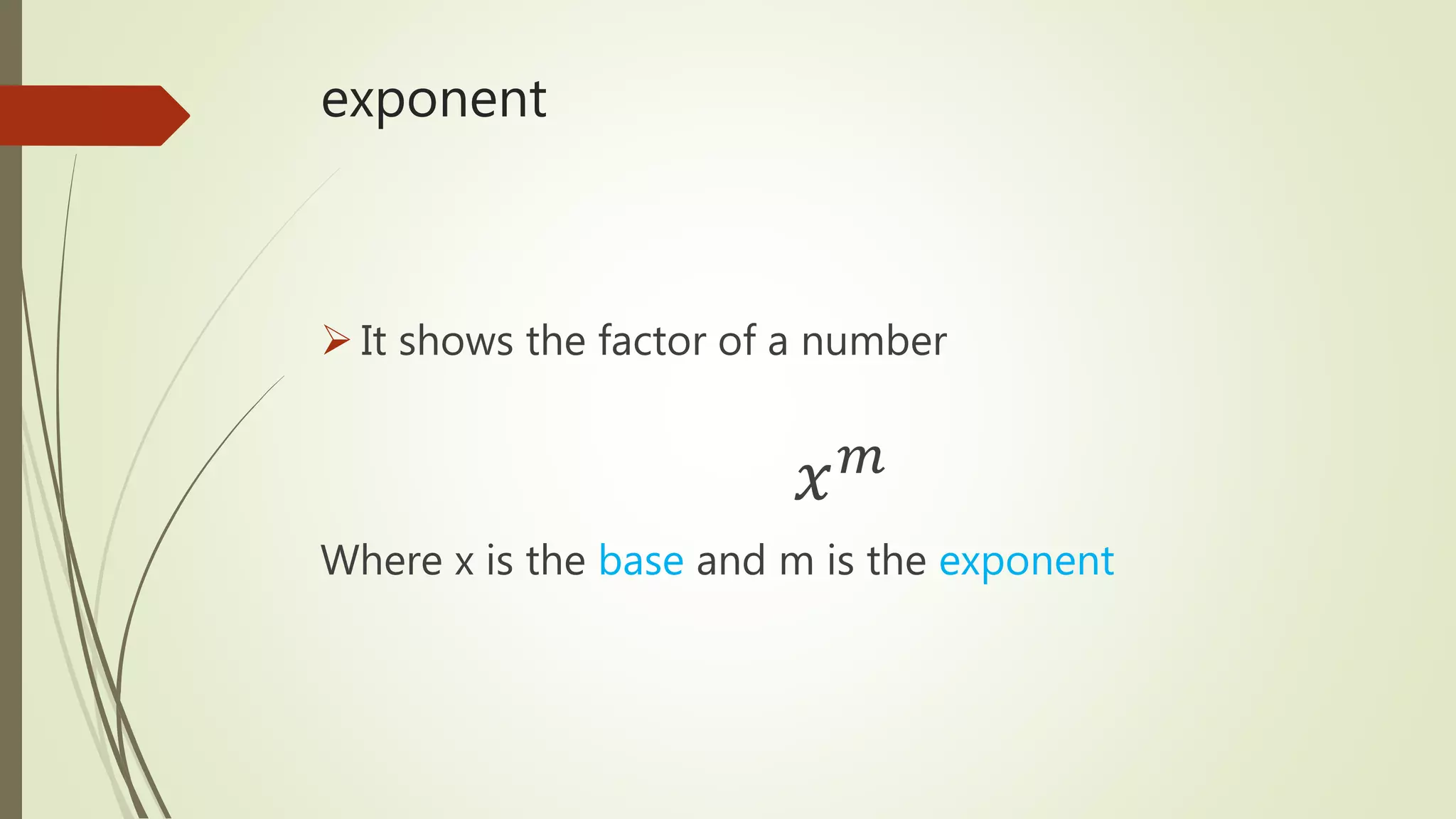
 It shows the factor of a number
𝑥 𝑚
Where x is the base and m is the exponent
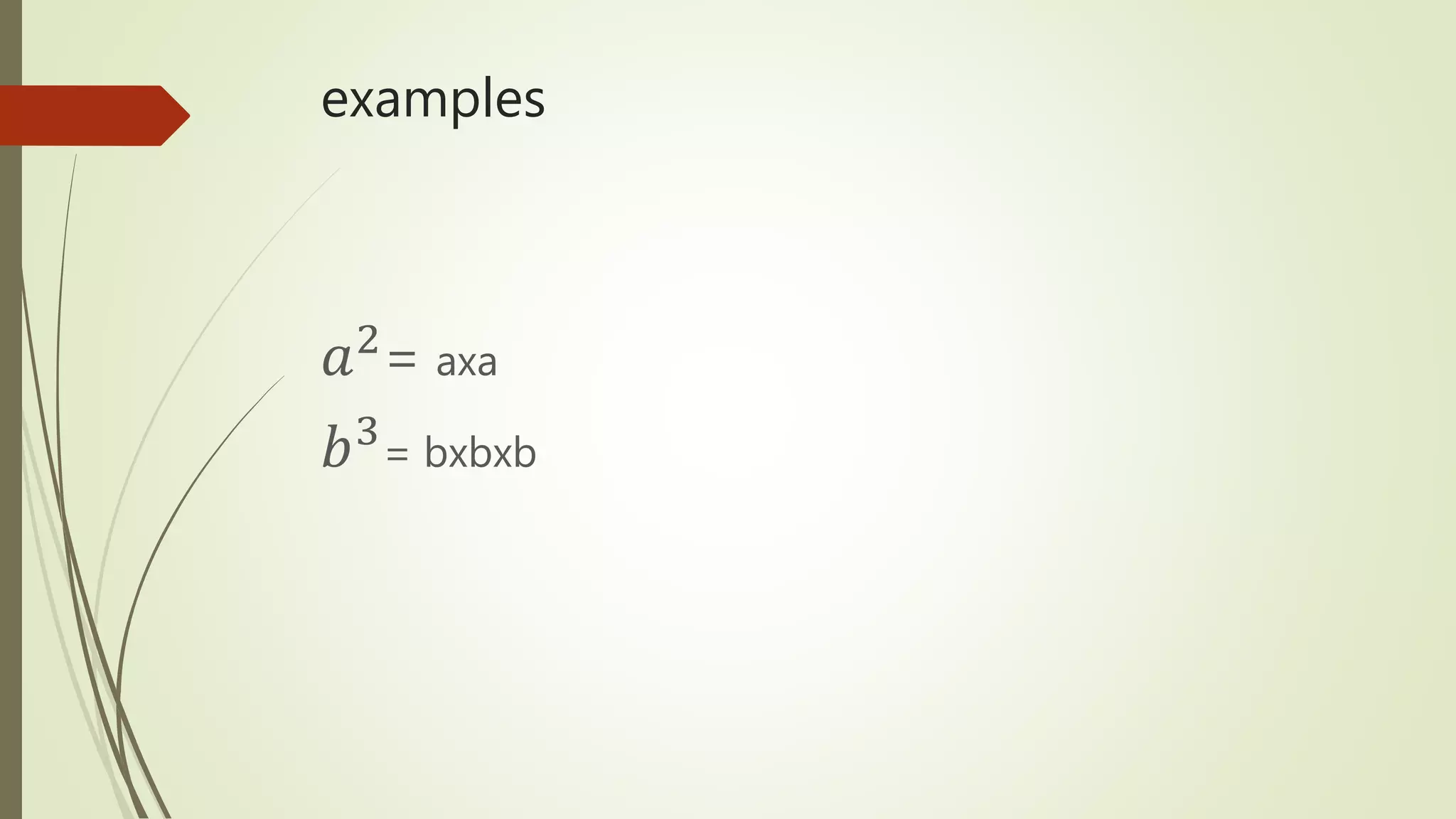
examples
𝑎2
= axa
𝑏3
= bxbxb
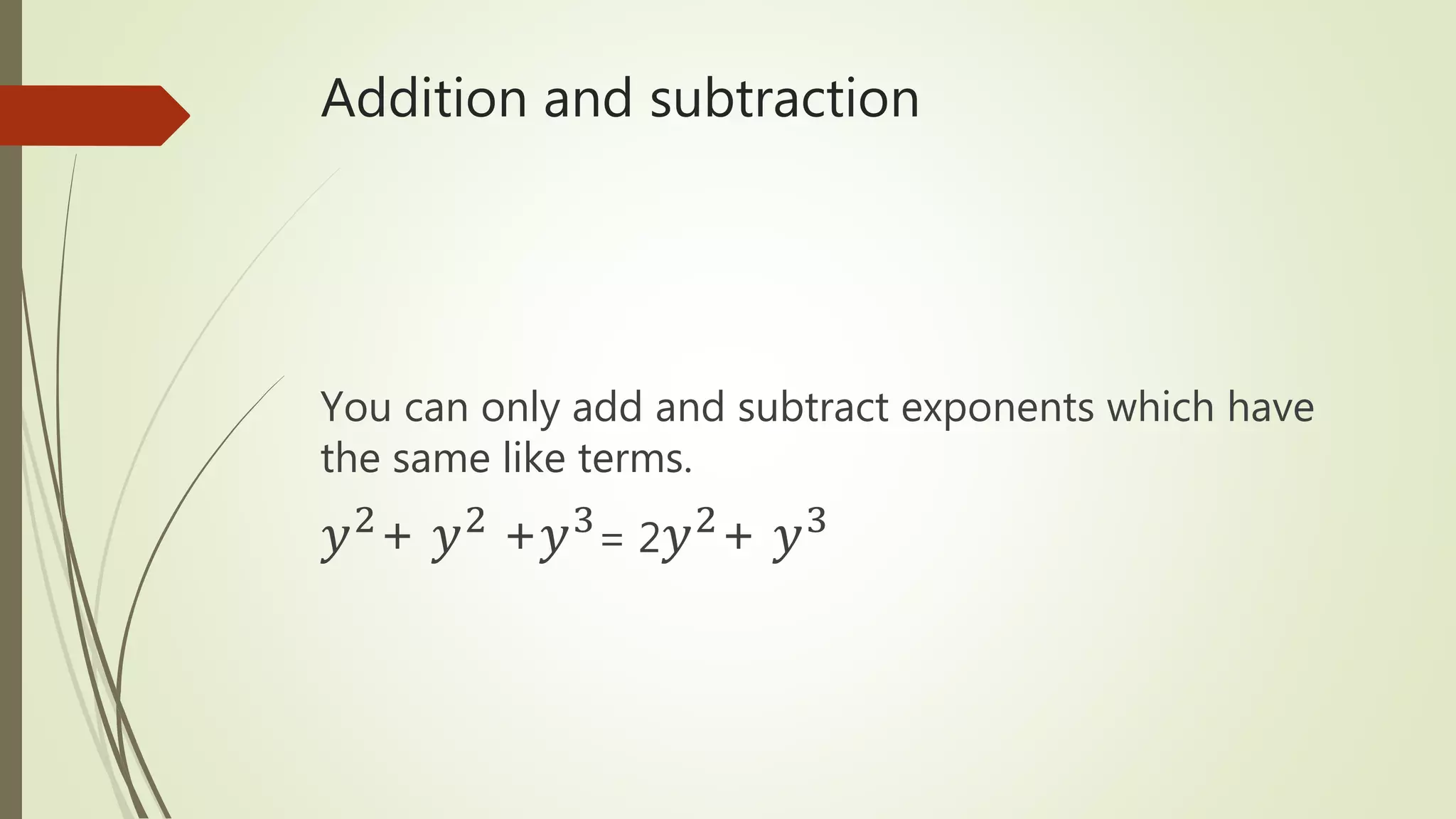
Addition and subtraction
You can only add and subtract exponents which have
the same like terms.
𝑦2
+ 𝑦2
+𝑦3
= 2 𝑦2
+ 𝑦3
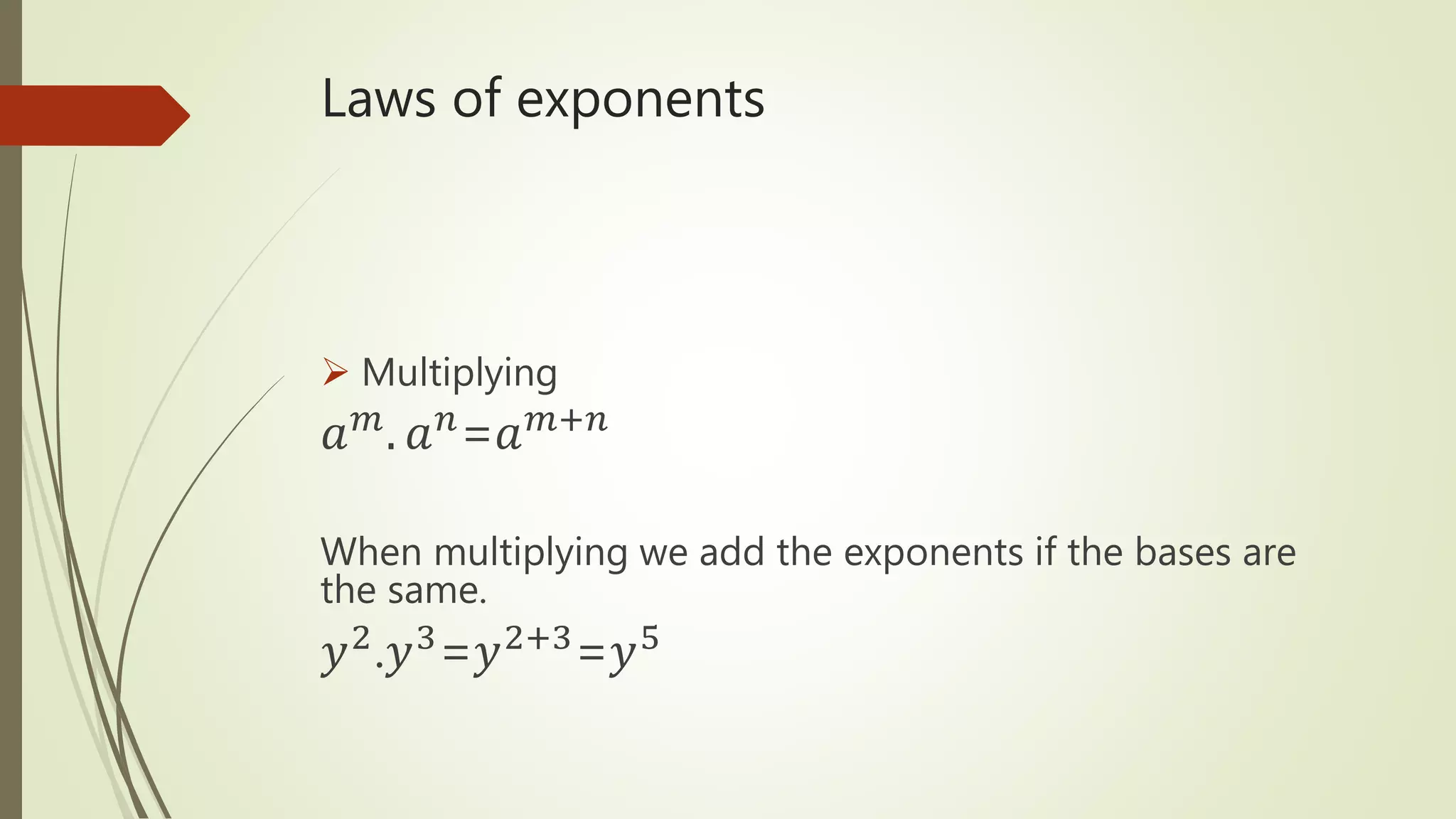
Laws of exponents
 Multiplying
𝑎 𝑚
. 𝑎 𝑛
=𝑎 𝑚+𝑛
When multiplying we add the exponents if the bases are
the same.
𝑦2
.𝑦3
=𝑦2+3
=𝑦5
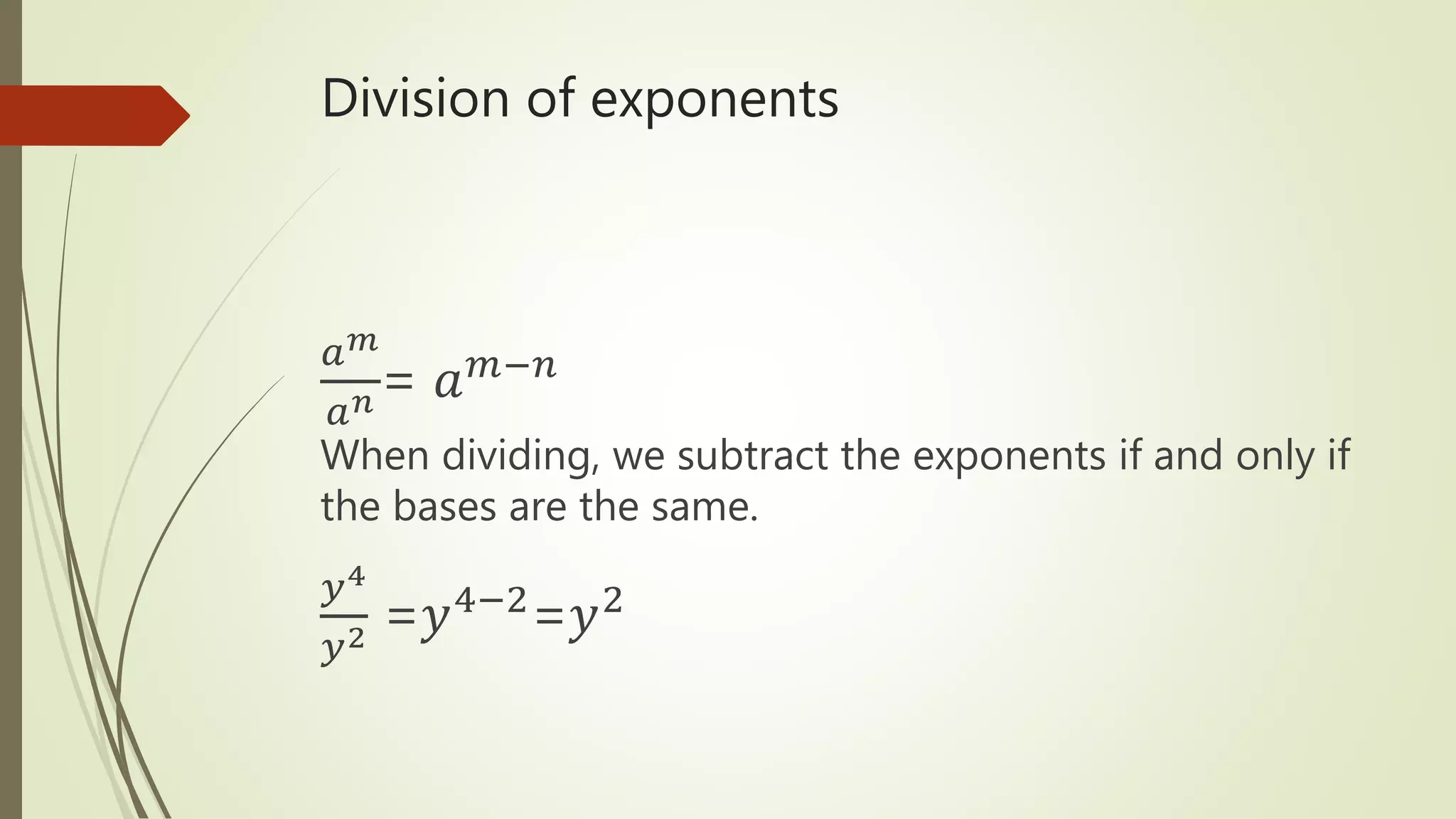
Division of exponents
𝑎 𝑚
𝑎 𝑛 = 𝑎 𝑚−𝑛
When dividing, we subtract the exponents if and only if
the bases are the same.
𝑦4
𝑦2 =𝑦4−2
=𝑦2
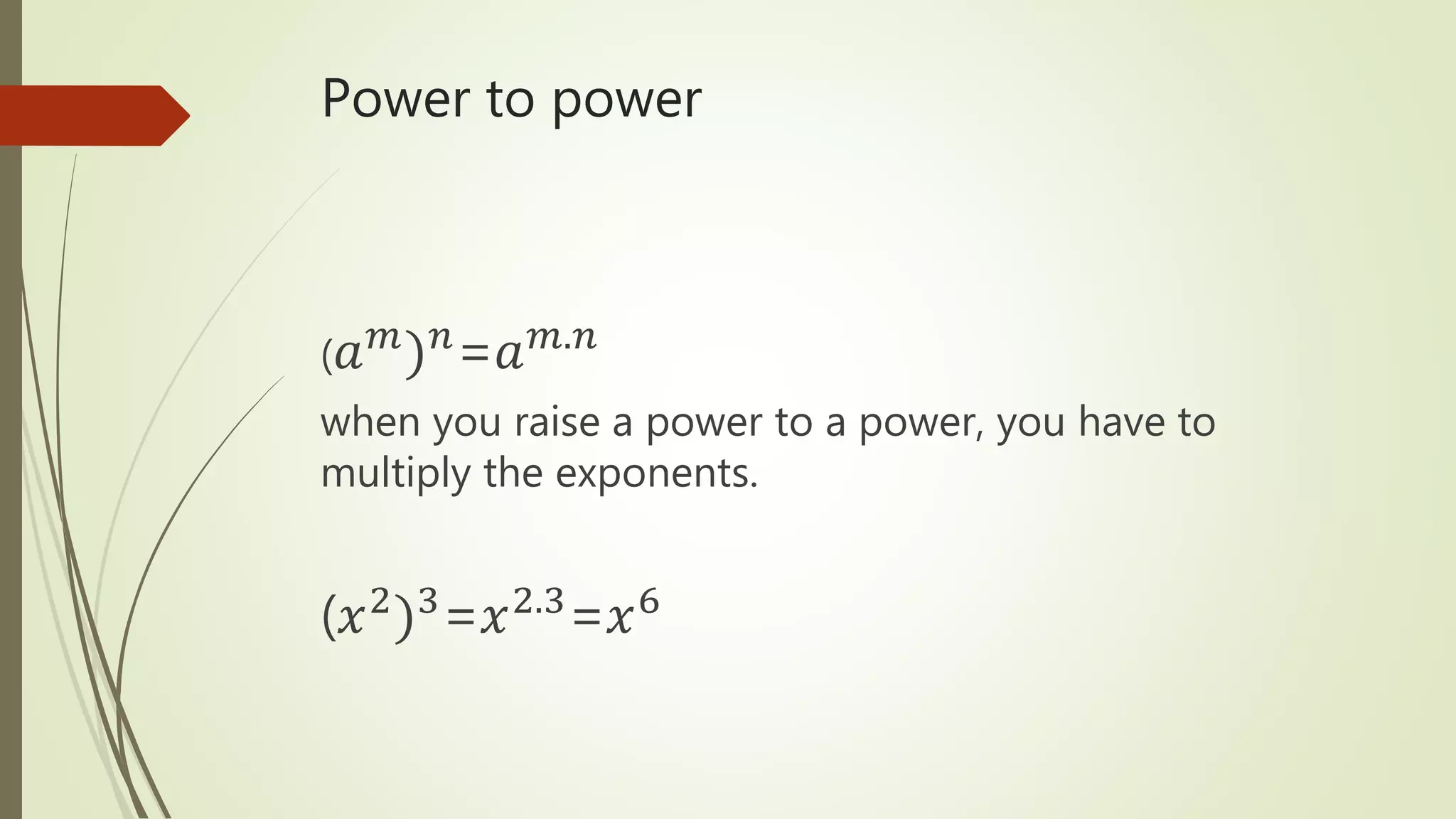
Power to power
( 𝑎 𝑚
) 𝑛
=𝑎 𝑚.𝑛
when you raise a power to a power, you have to
multiply the exponents.
(𝑥2
)3
=𝑥2.3
=𝑥6
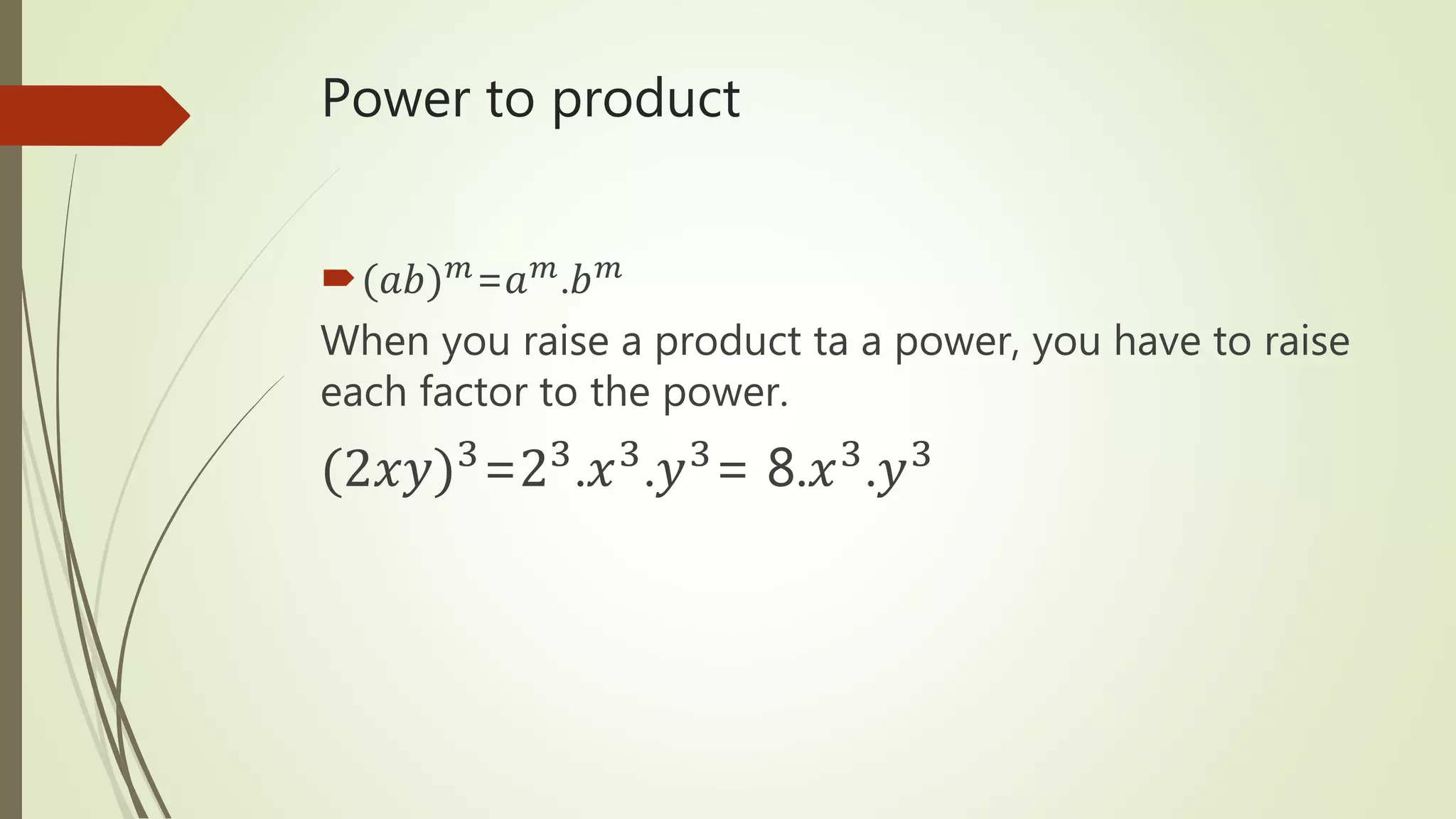
Power to product
(𝑎𝑏) 𝑚=𝑎 𝑚.𝑏 𝑚
When you raise a product ta a power, you have to raise
each factor to the power.
(2𝑥𝑦)3
=23
.𝑥3
.𝑦3
= 8.𝑥3
.𝑦3
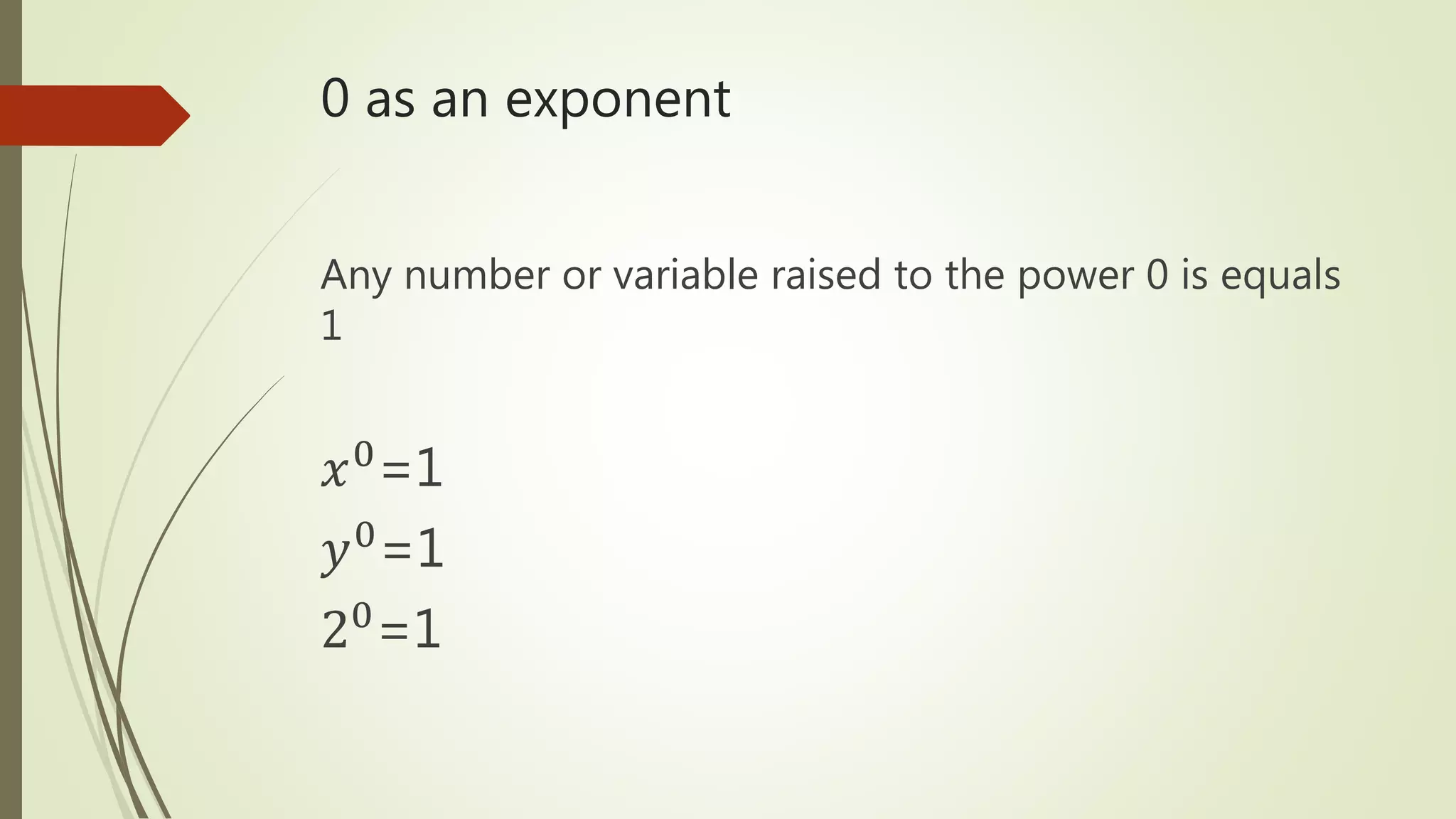
0 as an exponent
Any number or variable raised to the power 0 is equals
1
𝑥0
=1
𝑦0
=1
20
=1
Refferences
https://www.youtube.com/watch?v=A1wKTiBTsfk

The laws of exponents

  • 1.
    The laws ofexponents Operations on exponents By singwane NP, 201436252
  • 2.
    Required to knowthe following:  Operations which includes multiplying, addition, subtraction as well as division.  How to solve fractions.
  • 3.
    The learning processwill include the ff:  What is an exponent  How to perform operations using the laws of exponents.
  • 4.
    exponent  It showsthe factor of a number 𝑥 𝑚 Where x is the base and m is the exponent
  • 5.
  • 6.
    Addition and subtraction Youcan only add and subtract exponents which have the same like terms. 𝑦2 + 𝑦2 +𝑦3 = 2 𝑦2 + 𝑦3
  • 7.
    Laws of exponents Multiplying 𝑎 𝑚 . 𝑎 𝑛 =𝑎 𝑚+𝑛 When multiplying we add the exponents if the bases are the same. 𝑦2 .𝑦3 =𝑦2+3 =𝑦5
  • 8.
    Division of exponents 𝑎𝑚 𝑎 𝑛 = 𝑎 𝑚−𝑛 When dividing, we subtract the exponents if and only if the bases are the same. 𝑦4 𝑦2 =𝑦4−2 =𝑦2
  • 9.
    Power to power (𝑎 𝑚 ) 𝑛 =𝑎 𝑚.𝑛 when you raise a power to a power, you have to multiply the exponents. (𝑥2 )3 =𝑥2.3 =𝑥6
  • 10.
    Power to product (𝑎𝑏)𝑚=𝑎 𝑚.𝑏 𝑚 When you raise a product ta a power, you have to raise each factor to the power. (2𝑥𝑦)3 =23 .𝑥3 .𝑦3 = 8.𝑥3 .𝑦3
  • 11.
    0 as anexponent Any number or variable raised to the power 0 is equals 1 𝑥0 =1 𝑦0 =1 20 =1
  • 12.