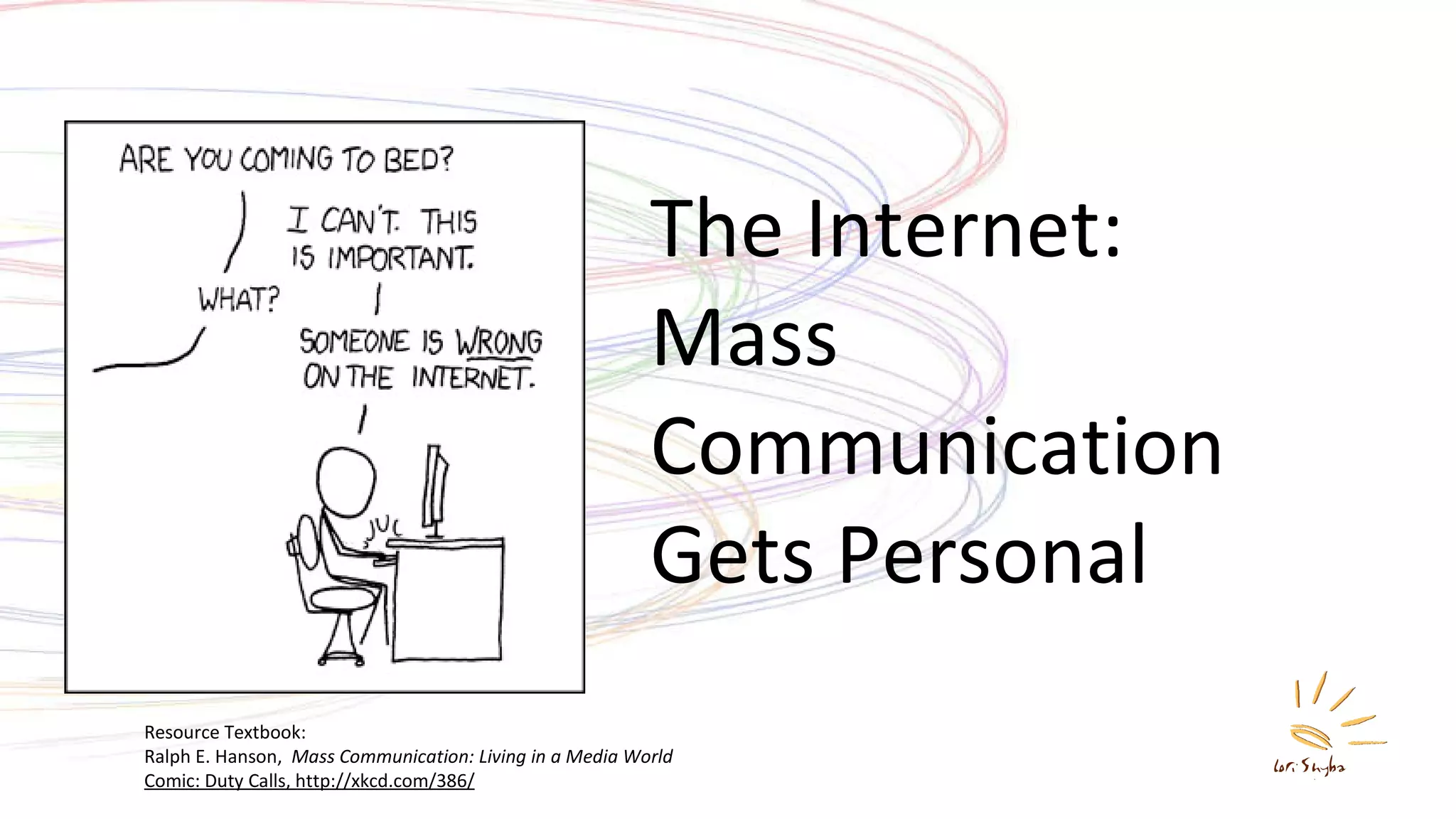
The Internet: Mass Communication  Gets Personal Resource Textbook: Ralph E. Hanson,  Mass Communication: Living in a Media World Comic: Duty Calls, http://xkcd.com/386/
In this lecture: Development of the Internet. Birth of the World Wide Web. The Media and Online Entertainment Internet and Society
What is the Internet? “ A diverse set of independent networks, interlinked to provide its users with the appearance of a single, uniform network.” A mass medium incorporating elements of interpersonal, group, and mass communications.
Development of the Internet How do we make incompatible computers talk with each other? How do we share information? Can we maintain military communication after nuclear war? (But this system was never built!)
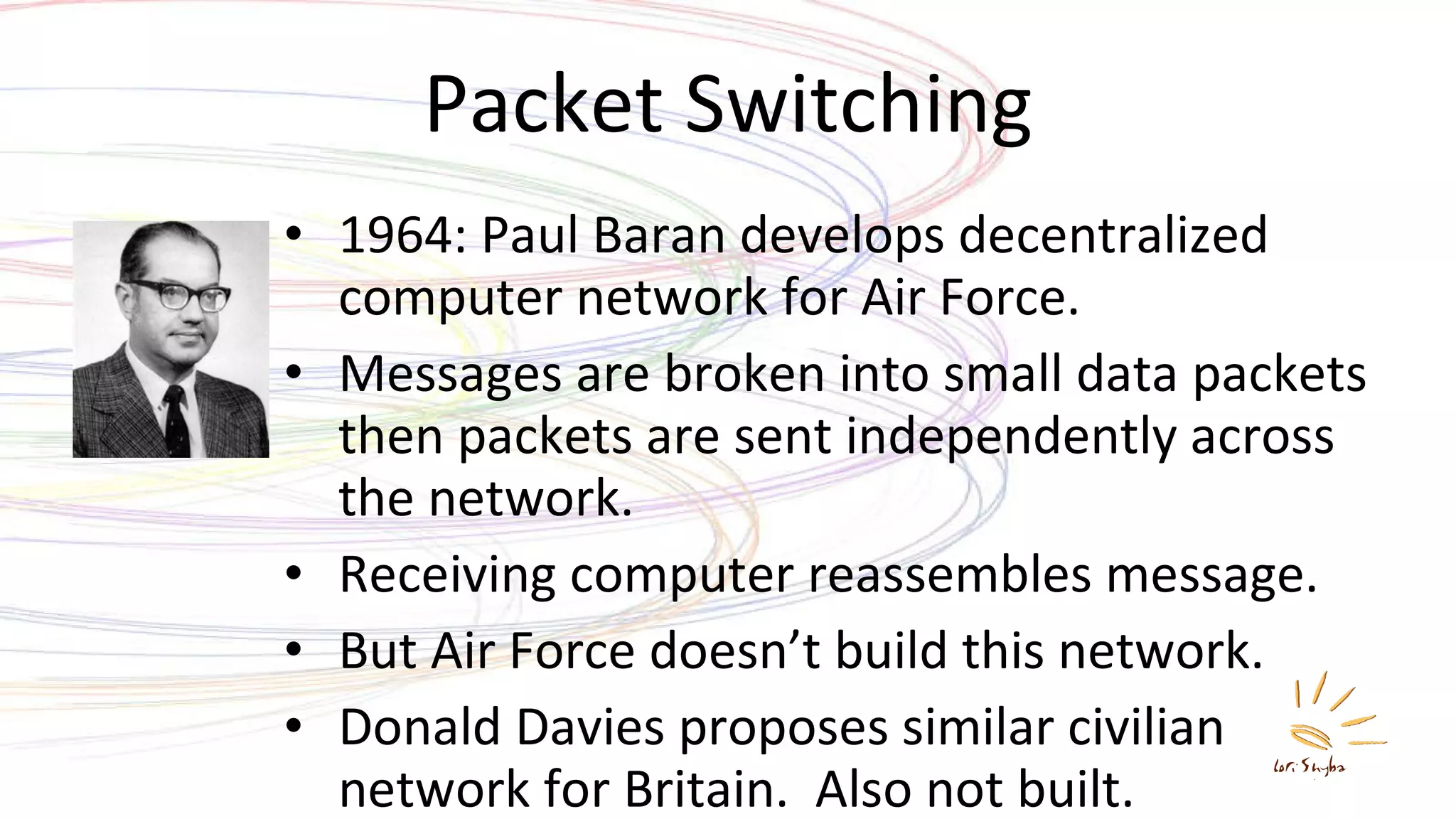
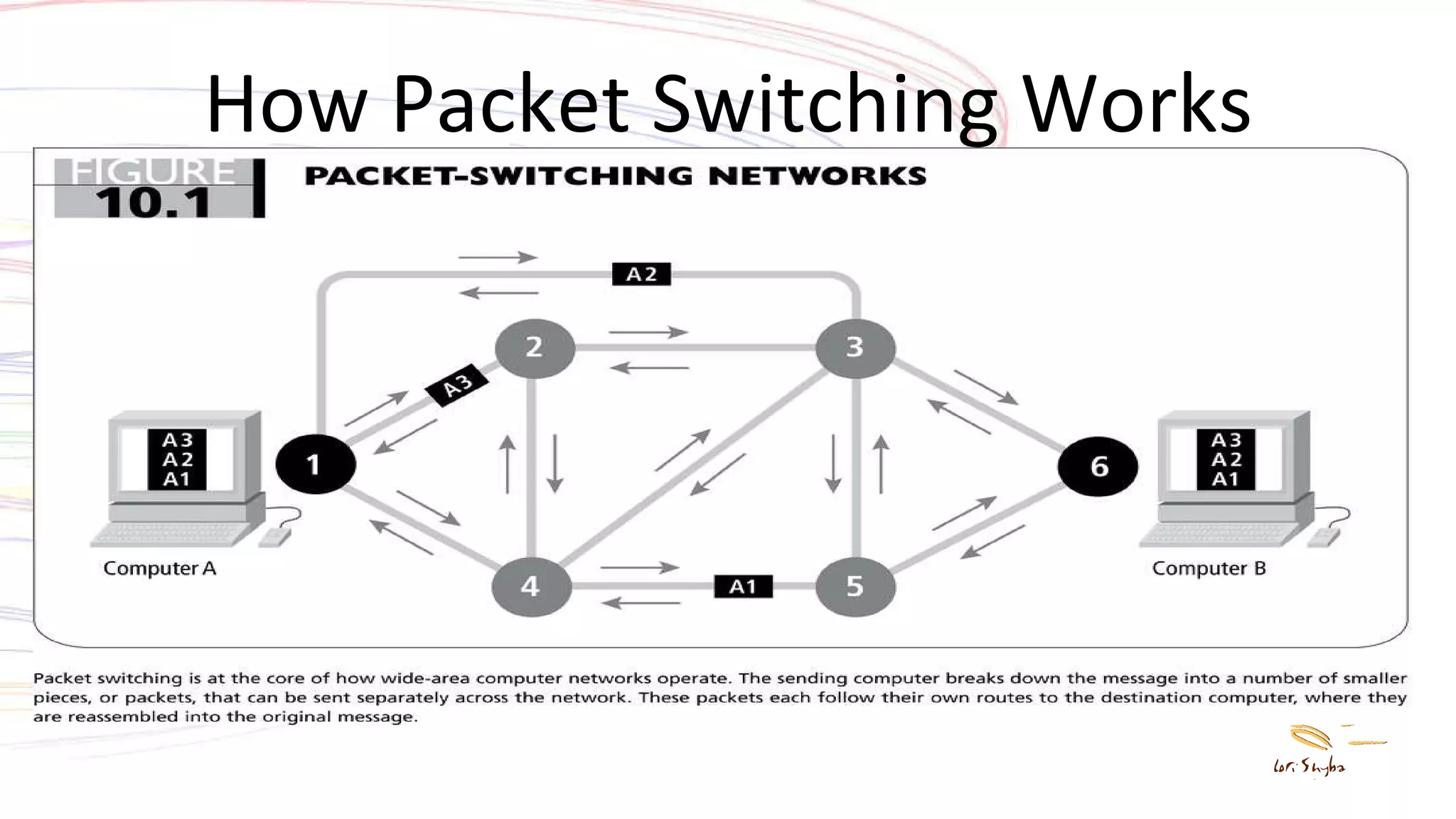
Packet Switching 1964: Paul Baran develops decentralized computer network for Air Force. Messages are broken into small data packets then packets are sent independently across the network. Receiving computer reassembles message. But Air Force doesn’t build this network. Donald Davies proposes similar civilian network for Britain.  Also not built.
How Packet Switching Works
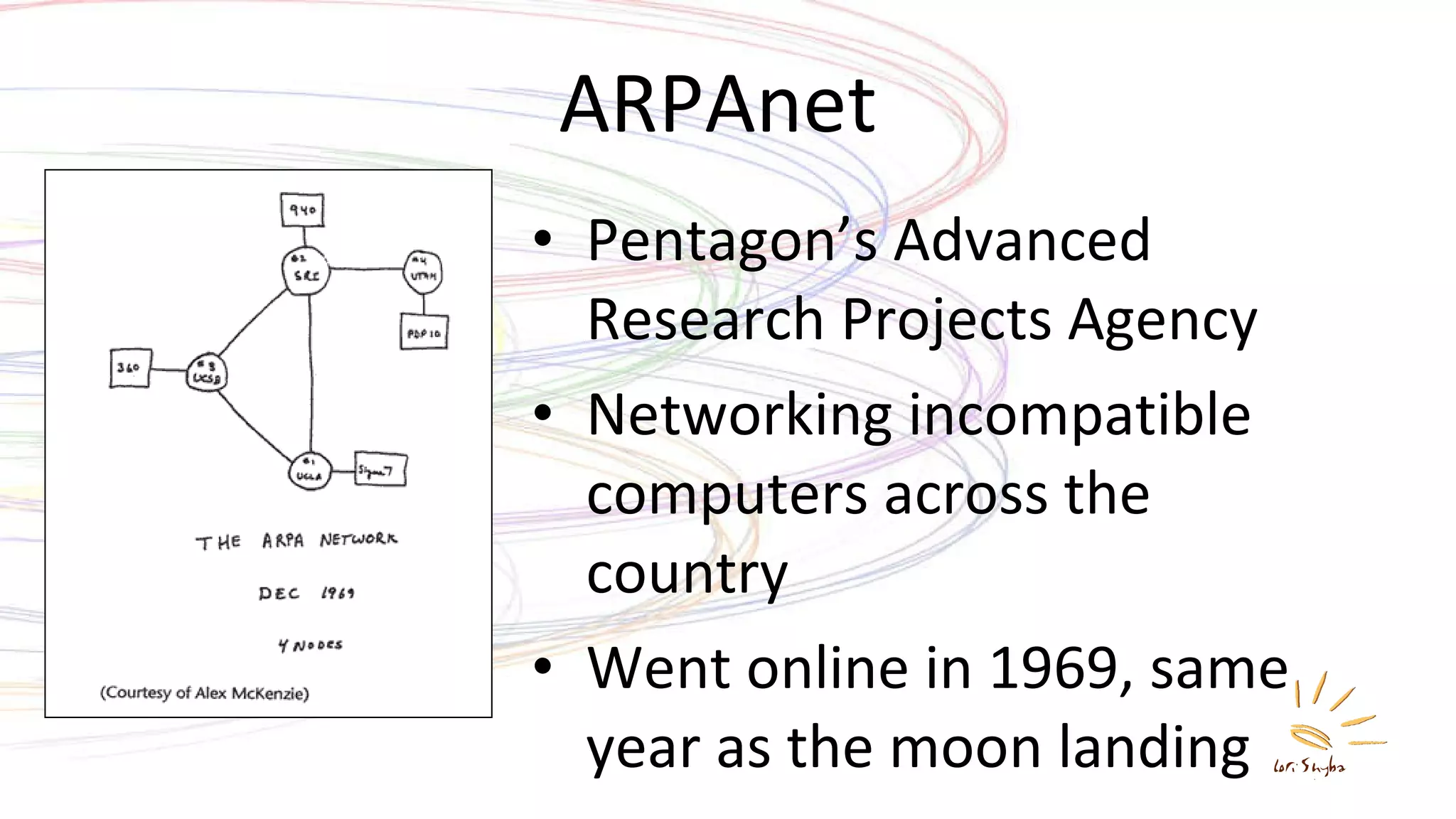
ARPAnet  Pentagon ’s Advanced Research Projects Agency Networking incompatible computers across the country Went online in 1969, same year as the moon landing
The Internet TCP/IP—Transmission Control Protocol/Internet Protocol   How data are transmitted and how computers can locate each other. Internet Internetworking of networks.
Interpersonal  Communication on the Internet Electronic mail (e-mail) A message sent from one computer user to another across a network. Instant message (IM) An e-mail system that allows two or more users to chat with one another in real time.
Group  Communication on the Internet Listservs An Internet discussion group made up of subscribers that use e-mail to exchange messages between members of the group. Usenet The original Internet discussion forum that covers thousands of specialized topics.
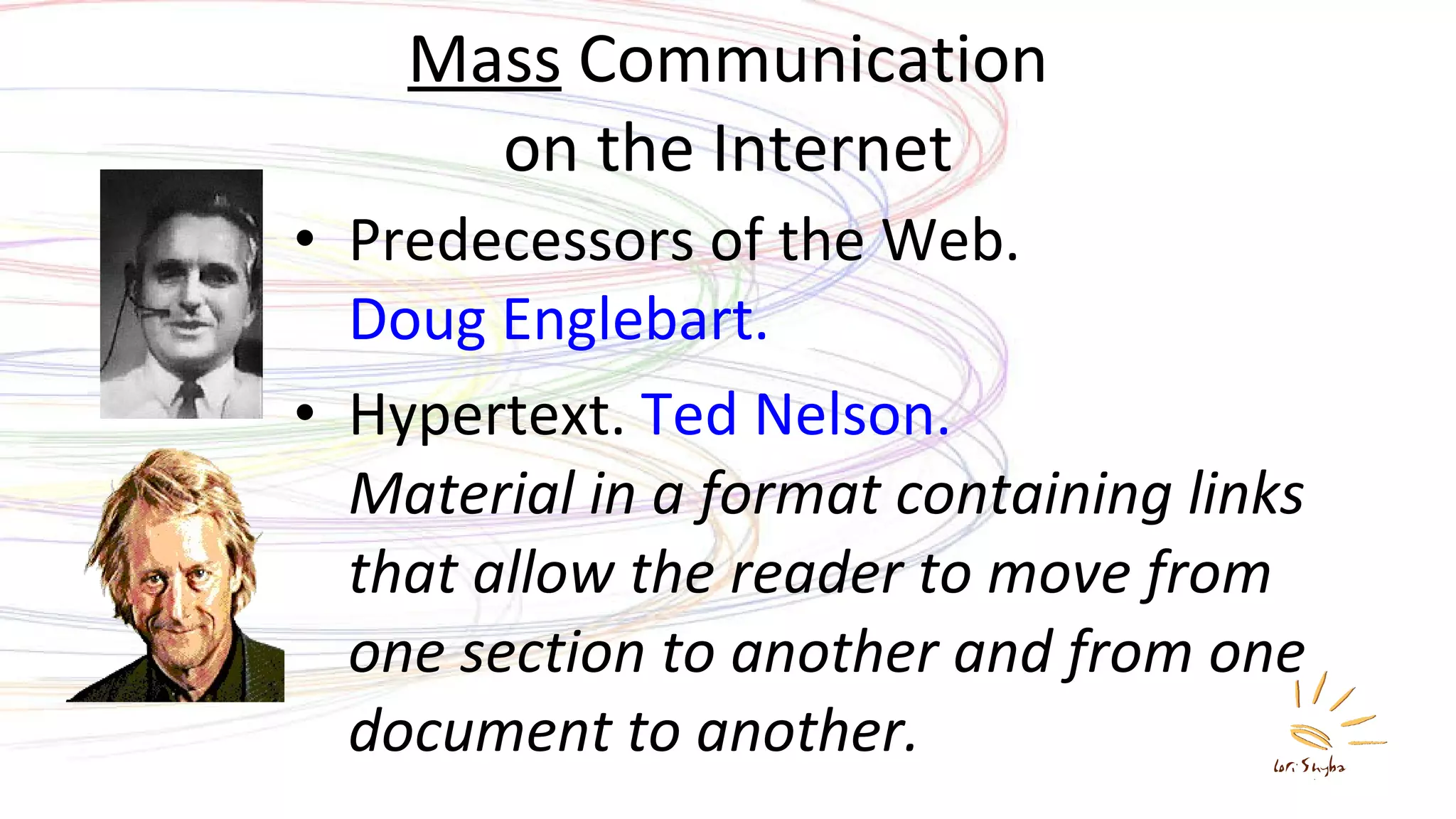
Mass  Communication on the Internet Predecessors of the Web.  Doug Englebart. Hypertext.  Ted Nelson. Material in a format containing links that allow the reader to move from one section to another and from one document to another.
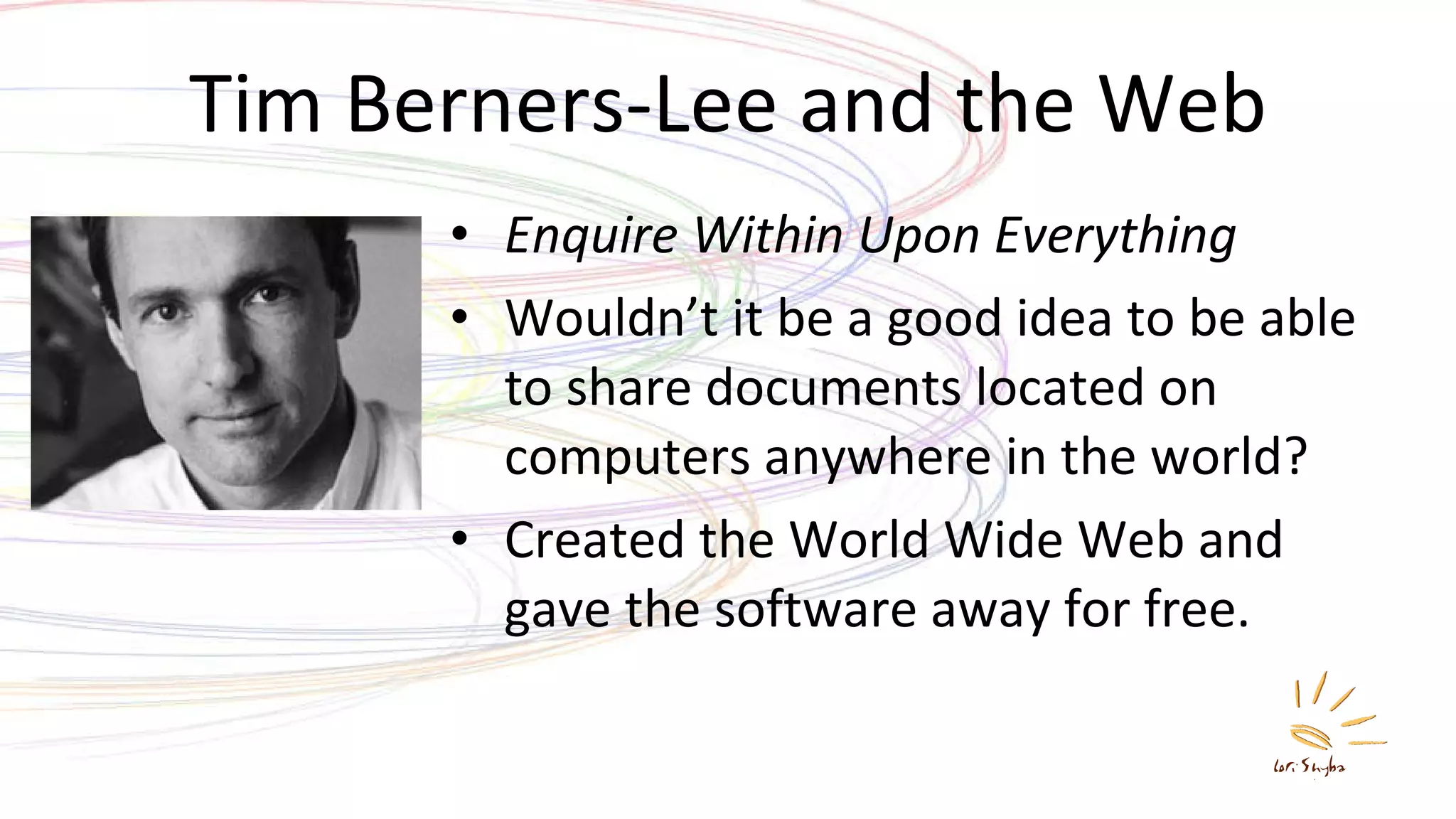
Tim Berners-Lee and the Web Enquire Within Upon Everything Wouldn ’t it be a good idea to be able to share documents located on computers anywhere in the world? Created the World Wide Web and gave the software away for free.
Major Components of the Web Uniform resource locator (URL) The address of the content placed on the Web. Hypertext transfer protocol (http) The standard set of rules for sending Web content over the Internet. Hypertext markup language (HTML) The programming language used to describe the content on Web pages.
Key Web Principles One address to take users to a document. Everything should be accessible/linkable. Any type of data should be available on any type of computer. The Web should be a tool for interaction, not just publication. No central control.
Who is on the Web? Traditional news media: CNN,  USA Today , NPR Movies and television:  Hulu,  Netflix, YouTube movie Trailers and Youtube stations. New media:  Slate,  Huffington Post , Daily Beast Aggregator sites: Google, Yahoo, AOL
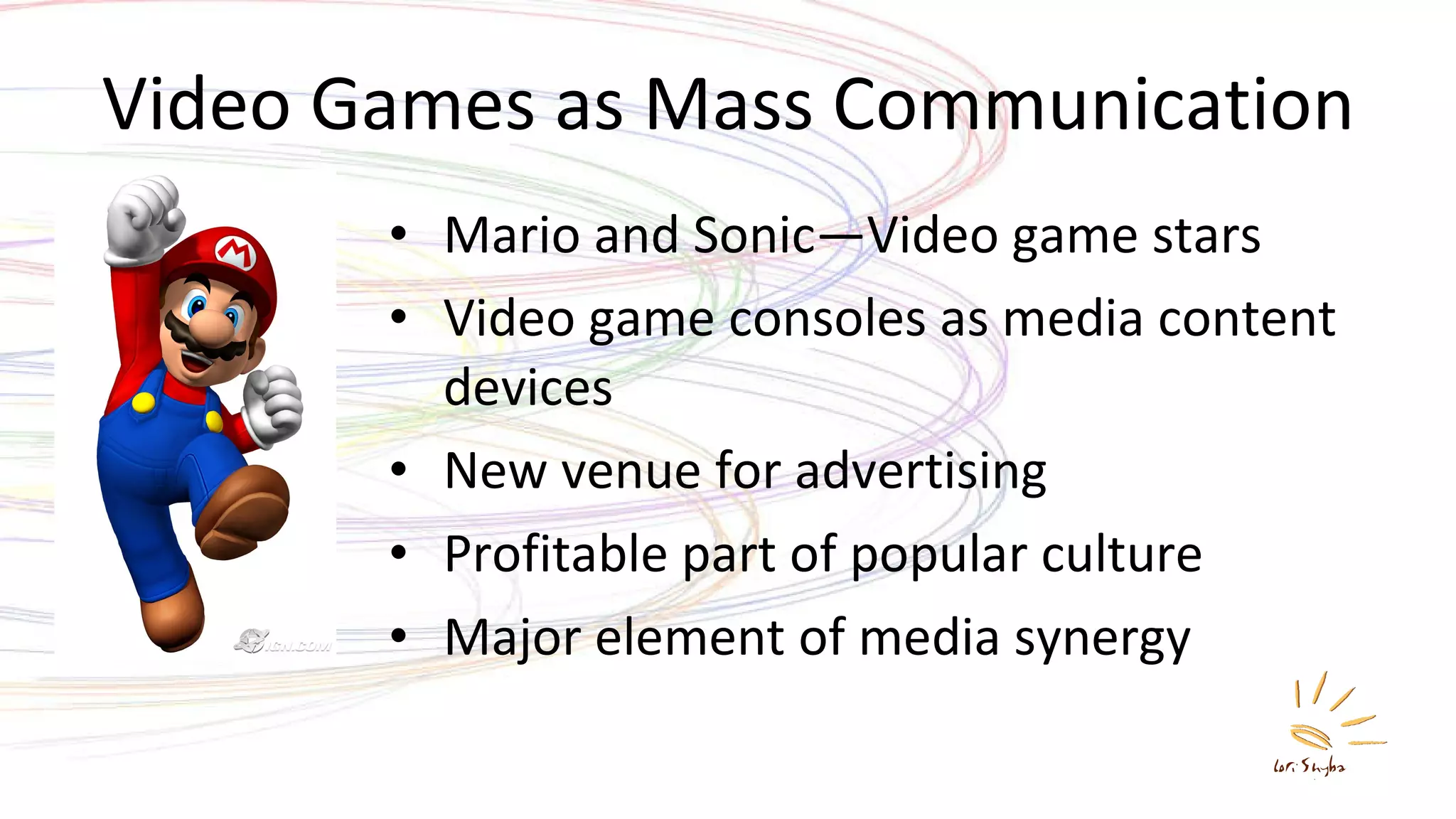
Video Games as Mass Communication Mario and Sonic—Video game stars Video game consoles as media content devices New venue for advertising Profitable part of popular culture Major element of media synergy
Giving Individuals a Voice Online media makes everyone a publisher. Wikipedia A crowd-sourced encyclopedia. Weblogs (blogs) A collection of links and commentary in hypertext form. Is search a medium?
Long-Tail Online News Citizen journalism Sharing news through social media Mobile phone video Death of Neda Agha-Sotan
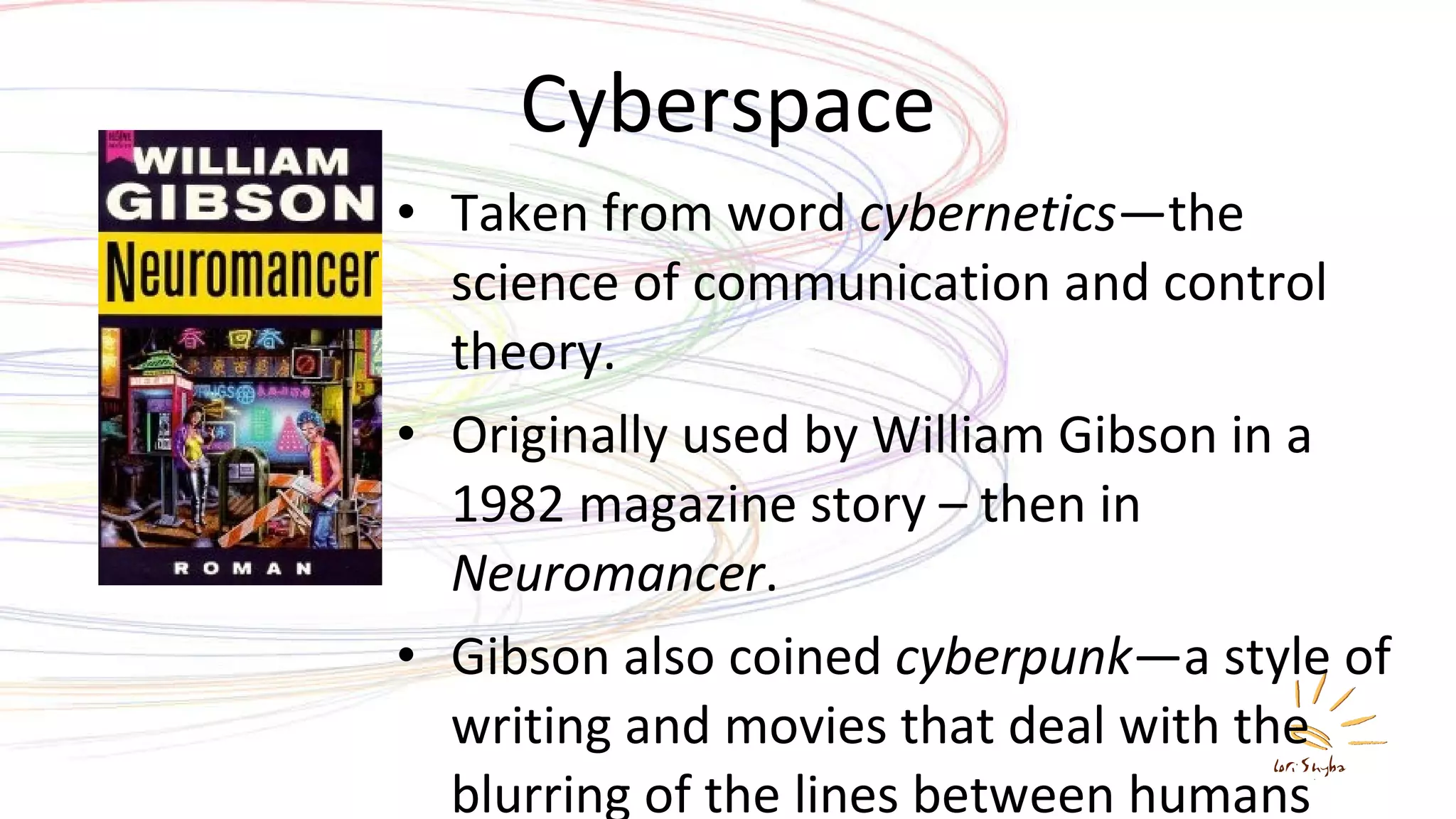
Cyberspace Taken from word  cybernetics —the science of communication and control theory. Originally used by William Gibson in a 1982 magazine story – then in  Neuromancer . Gibson also coined  cyberpunk —a style of writing and movies that deal with the blurring of the lines between humans and computers.
Community on the Net Less than 25 percent of world has Internet access. Digital divide: Affluent communities have more access to Internet than do poorer and rural communities. Mobile media starting to bridge gap
Digital Media – Ethical Issues Social Justice • Privacy Intellectual Property (Fair Use) E-Commerce (Online Gambling) Free Speech Computer Abuse The Environment
Media Convergence Bringing together traditional legacy media with online media Reverse synergy: When you get the worst of both by combining old and new media Moving from media outlets to brands: Is the  New York Times  a newspaper or a brand of news?

The Internet: Mass Communication Gets Personal

  • 1.
    The Internet: MassCommunication Gets Personal Resource Textbook: Ralph E. Hanson, Mass Communication: Living in a Media World Comic: Duty Calls, http://xkcd.com/386/
  • 2.
    In this lecture:Development of the Internet. Birth of the World Wide Web. The Media and Online Entertainment Internet and Society
  • 3.
    What is theInternet? “ A diverse set of independent networks, interlinked to provide its users with the appearance of a single, uniform network.” A mass medium incorporating elements of interpersonal, group, and mass communications.
  • 4.
    Development of theInternet How do we make incompatible computers talk with each other? How do we share information? Can we maintain military communication after nuclear war? (But this system was never built!)
  • 5.
    Packet Switching 1964:Paul Baran develops decentralized computer network for Air Force. Messages are broken into small data packets then packets are sent independently across the network. Receiving computer reassembles message. But Air Force doesn’t build this network. Donald Davies proposes similar civilian network for Britain. Also not built.
  • 6.
  • 7.
    ARPAnet Pentagon’s Advanced Research Projects Agency Networking incompatible computers across the country Went online in 1969, same year as the moon landing
  • 8.
    The Internet TCP/IP—TransmissionControl Protocol/Internet Protocol How data are transmitted and how computers can locate each other. Internet Internetworking of networks.
  • 9.
    Interpersonal Communicationon the Internet Electronic mail (e-mail) A message sent from one computer user to another across a network. Instant message (IM) An e-mail system that allows two or more users to chat with one another in real time.
  • 10.
    Group Communicationon the Internet Listservs An Internet discussion group made up of subscribers that use e-mail to exchange messages between members of the group. Usenet The original Internet discussion forum that covers thousands of specialized topics.
  • 11.
    Mass Communicationon the Internet Predecessors of the Web. Doug Englebart. Hypertext. Ted Nelson. Material in a format containing links that allow the reader to move from one section to another and from one document to another.
  • 12.
    Tim Berners-Lee andthe Web Enquire Within Upon Everything Wouldn ’t it be a good idea to be able to share documents located on computers anywhere in the world? Created the World Wide Web and gave the software away for free.
  • 13.
    Major Components ofthe Web Uniform resource locator (URL) The address of the content placed on the Web. Hypertext transfer protocol (http) The standard set of rules for sending Web content over the Internet. Hypertext markup language (HTML) The programming language used to describe the content on Web pages.
  • 14.
    Key Web PrinciplesOne address to take users to a document. Everything should be accessible/linkable. Any type of data should be available on any type of computer. The Web should be a tool for interaction, not just publication. No central control.
  • 15.
    Who is onthe Web? Traditional news media: CNN, USA Today , NPR Movies and television: Hulu, Netflix, YouTube movie Trailers and Youtube stations. New media: Slate, Huffington Post , Daily Beast Aggregator sites: Google, Yahoo, AOL
  • 16.
    Video Games asMass Communication Mario and Sonic—Video game stars Video game consoles as media content devices New venue for advertising Profitable part of popular culture Major element of media synergy
  • 17.
    Giving Individuals aVoice Online media makes everyone a publisher. Wikipedia A crowd-sourced encyclopedia. Weblogs (blogs) A collection of links and commentary in hypertext form. Is search a medium?
  • 18.
    Long-Tail Online NewsCitizen journalism Sharing news through social media Mobile phone video Death of Neda Agha-Sotan
  • 19.
    Cyberspace Taken fromword cybernetics —the science of communication and control theory. Originally used by William Gibson in a 1982 magazine story – then in Neuromancer . Gibson also coined cyberpunk —a style of writing and movies that deal with the blurring of the lines between humans and computers.
  • 20.
    Community on theNet Less than 25 percent of world has Internet access. Digital divide: Affluent communities have more access to Internet than do poorer and rural communities. Mobile media starting to bridge gap
  • 21.
    Digital Media –Ethical Issues Social Justice • Privacy Intellectual Property (Fair Use) E-Commerce (Online Gambling) Free Speech Computer Abuse The Environment
  • 22.
    Media Convergence Bringingtogether traditional legacy media with online media Reverse synergy: When you get the worst of both by combining old and new media Moving from media outlets to brands: Is the New York Times a newspaper or a brand of news?