INTERNET


   Oscar Bermejo and Sergi Sin
HISTORY

• Was created in 1969, during the Cold War.
• To be have access to information anywhere in
  the country.
• They called this net ARPANET.
• ARPANET grew at universities and in the world
  of research.
• The NSF created its own net.
• All the nets together formed Internet.
Internet in society
Internet and society
• Internet has a profound
  impact on the world of
  work, leisure and
  knowledge worldwide.
• Thanks to the
  website, millions of
  people have easy and
  immediate access to a
  vast and diverse amount
  of information online.
• Internet became a tool of
  globalization.
Leisure
•   Many use the Internet to download
    music, movies and other types of
    work. There are sites that charge
    money for their use and others are
    free, using centralized servers and
    distributed P2P technologies .
    Others use the Internet to learn
    about news and weather.
•   Instant messaging or chat , and
    email services are among the most
    widely used tools.
•   In more recent times sites like
    YouTube or Facebook , where users
    can access a variety of videos on
    virtually any topic have taken off.
•   The multiplayer system is also
    widely used on the Internet.
Internet and its evolution
• Initially, the Internet had a
  clear objective: surfing the
  Internet for something very
  specific.
• With the growth of so many
  people on the network, what
  at first was a small town called
  Internet, became a planet
  attached to technology.
• The fact that the Internet has
  grown so much involves a
  greater number of virtual
  relationships between people.
Prevalence and source of information

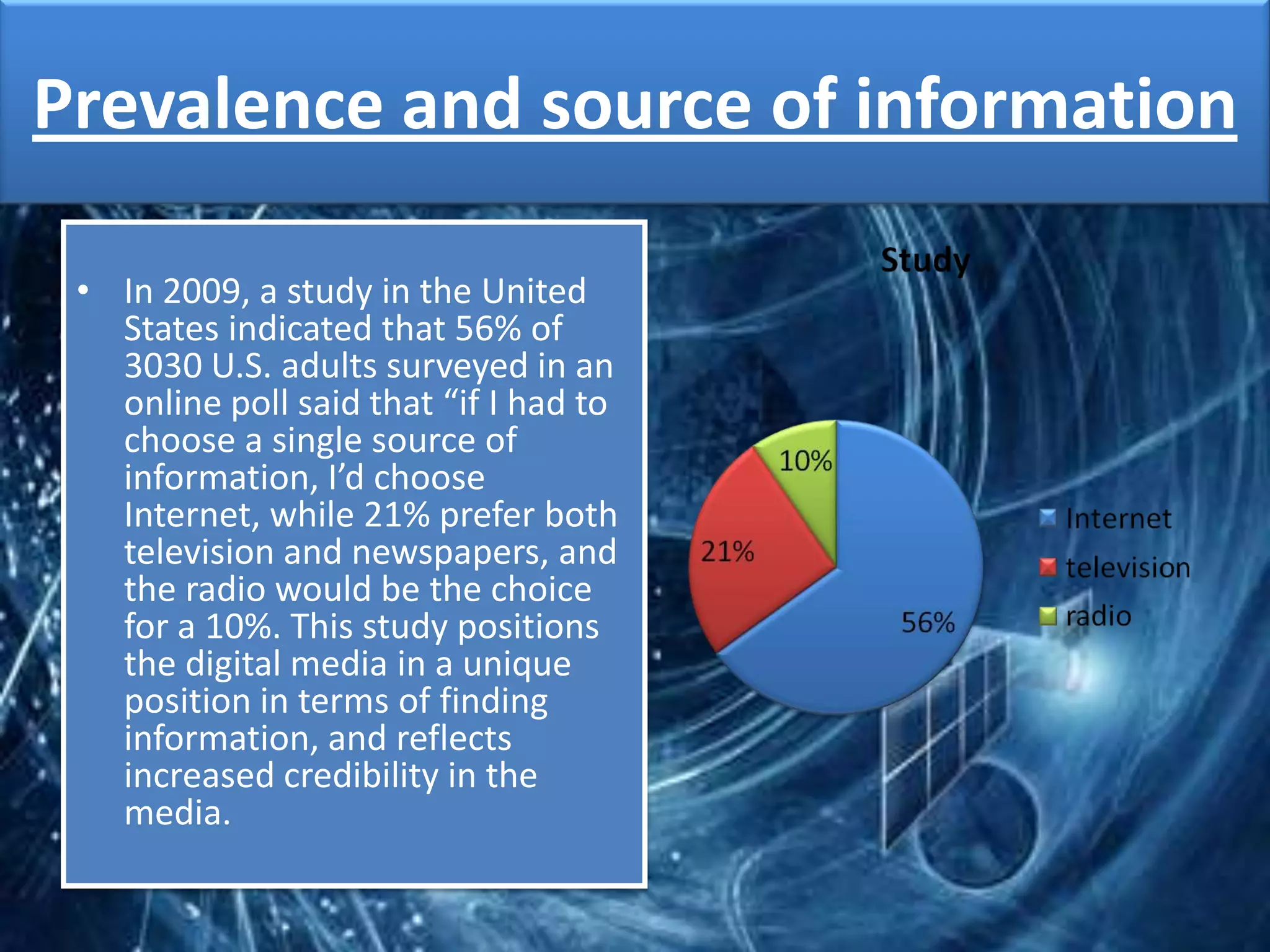
 • In 2009, a study in the United
   States indicated that 56% of
   3030 U.S. adults surveyed in an
   online poll said that “if I had to
   choose a single source of
   information, I’d choose
   Internet, while 21% prefer both
   television and newspapers, and
   the radio would be the choice
   for a 10%. This study positions
   the digital media in a unique
   position in terms of finding
   information, and reflects
   increased credibility in the
   media.
A VIDEO
• http://www.youtube.co   • Min. 4:20
  m/watch?v=9hIQjrMHT
  v4

Internet

  • 1.
    INTERNET Oscar Bermejo and Sergi Sin
  • 2.
    HISTORY • Was createdin 1969, during the Cold War. • To be have access to information anywhere in the country. • They called this net ARPANET. • ARPANET grew at universities and in the world of research. • The NSF created its own net. • All the nets together formed Internet.
  • 3.
  • 4.
    Internet and society •Internet has a profound impact on the world of work, leisure and knowledge worldwide. • Thanks to the website, millions of people have easy and immediate access to a vast and diverse amount of information online. • Internet became a tool of globalization.
  • 5.
    Leisure • Many use the Internet to download music, movies and other types of work. There are sites that charge money for their use and others are free, using centralized servers and distributed P2P technologies . Others use the Internet to learn about news and weather. • Instant messaging or chat , and email services are among the most widely used tools. • In more recent times sites like YouTube or Facebook , where users can access a variety of videos on virtually any topic have taken off. • The multiplayer system is also widely used on the Internet.
  • 6.
    Internet and itsevolution • Initially, the Internet had a clear objective: surfing the Internet for something very specific. • With the growth of so many people on the network, what at first was a small town called Internet, became a planet attached to technology. • The fact that the Internet has grown so much involves a greater number of virtual relationships between people.
  • 7.
    Prevalence and sourceof information • In 2009, a study in the United States indicated that 56% of 3030 U.S. adults surveyed in an online poll said that “if I had to choose a single source of information, I’d choose Internet, while 21% prefer both television and newspapers, and the radio would be the choice for a 10%. This study positions the digital media in a unique position in terms of finding information, and reflects increased credibility in the media.
  • 8.
    A VIDEO • http://www.youtube.co • Min. 4:20 m/watch?v=9hIQjrMHT v4