PRESENTATION ON
INTERNET
BY
MUHAMMED SHALOOF
CONTENTS
 HISTORY
 WORKING OF INTERNET
 SERVICES OF INTERNET
 BENEFITS
 WEB
 INTERNET USES
 WORLD WIDE WEB
 SEARCH ENGINES
Internet Mean’s Network Of Network’s. The Internet is a
massive network , or a networking infrastructure
which connects millions of computers together
globally, and forming a network in which any
computer can communicate with any other computer
as long as they are both inter connected .
?
Introduction
• The word internet comes from combination between
“interconnection” and “Network”
• The popular term for the Internet is the “information
highway”.
• It has no formal management organization.
• The Internet is the largest computer network in the
world that connects billions of computer users.
• Generally nobody own internet.
HISTORY
 Internet was born in 1969 - called ARPANET
 ARPA – Advanced Research Project Agency.
 In 1982 the word internet started.
 1991: US government allowed only business agencies to
connect to internet.
 Now all peoples can connect to internet and improve their life
and work quality.
 There Is No Owner For Internet
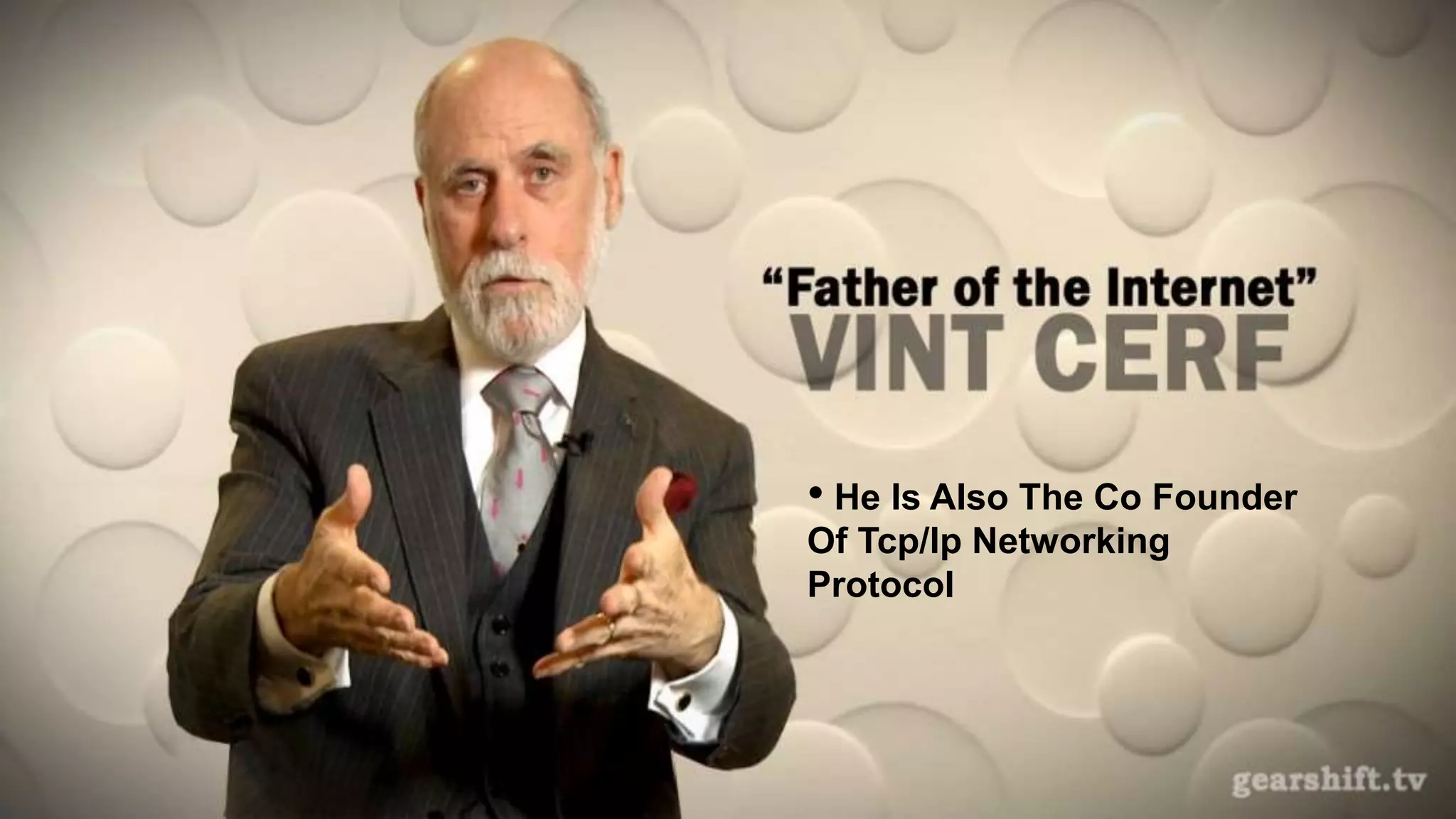
• He Is Also The Co Founder
Of Tcp/Ip Networking
Protocol
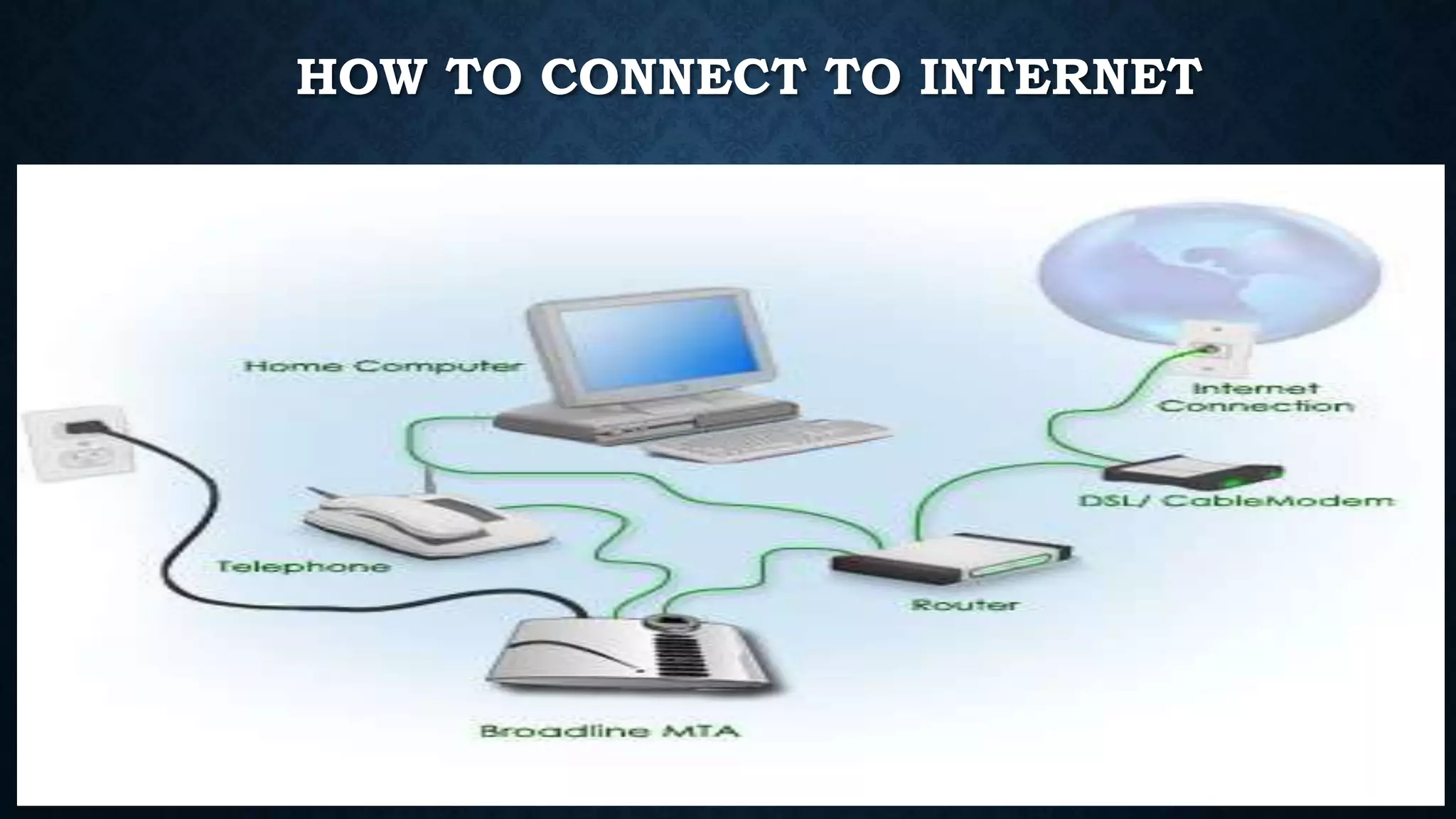
HOW TO CONNECT TO INTERNET
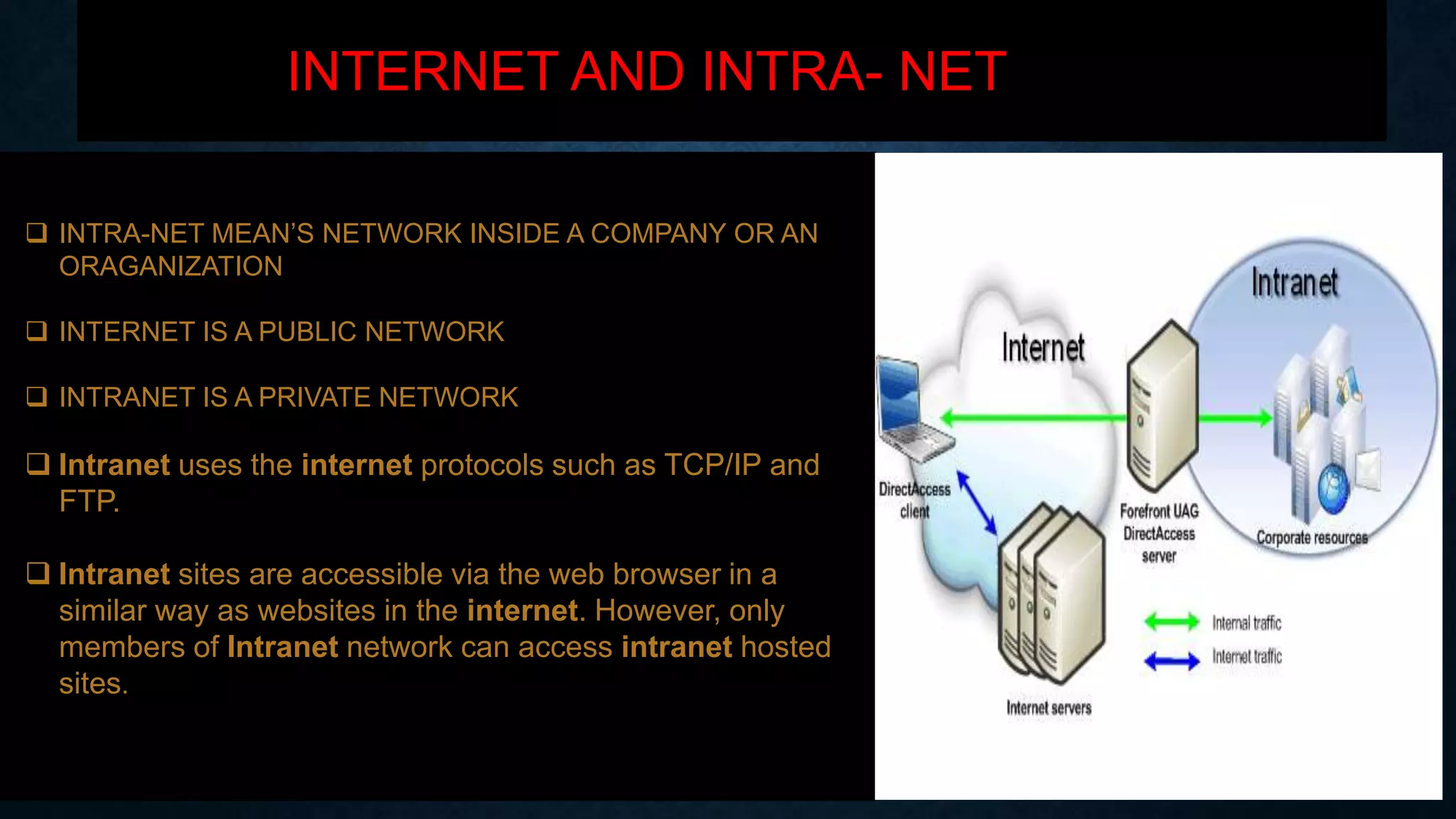
INTERNET AND INTRA- NET
 INTRA-NET MEAN’S NETWORK INSIDE A COMPANY OR AN
ORAGANIZATION
 INTERNET IS A PUBLIC NETWORK
 INTRANET IS A PRIVATE NETWORK
 Intranet uses the internet protocols such as TCP/IP and
FTP.
 Intranet sites are accessible via the web browser in a
similar way as websites in the internet. However, only
members of Intranet network can access intranet hosted
sites.
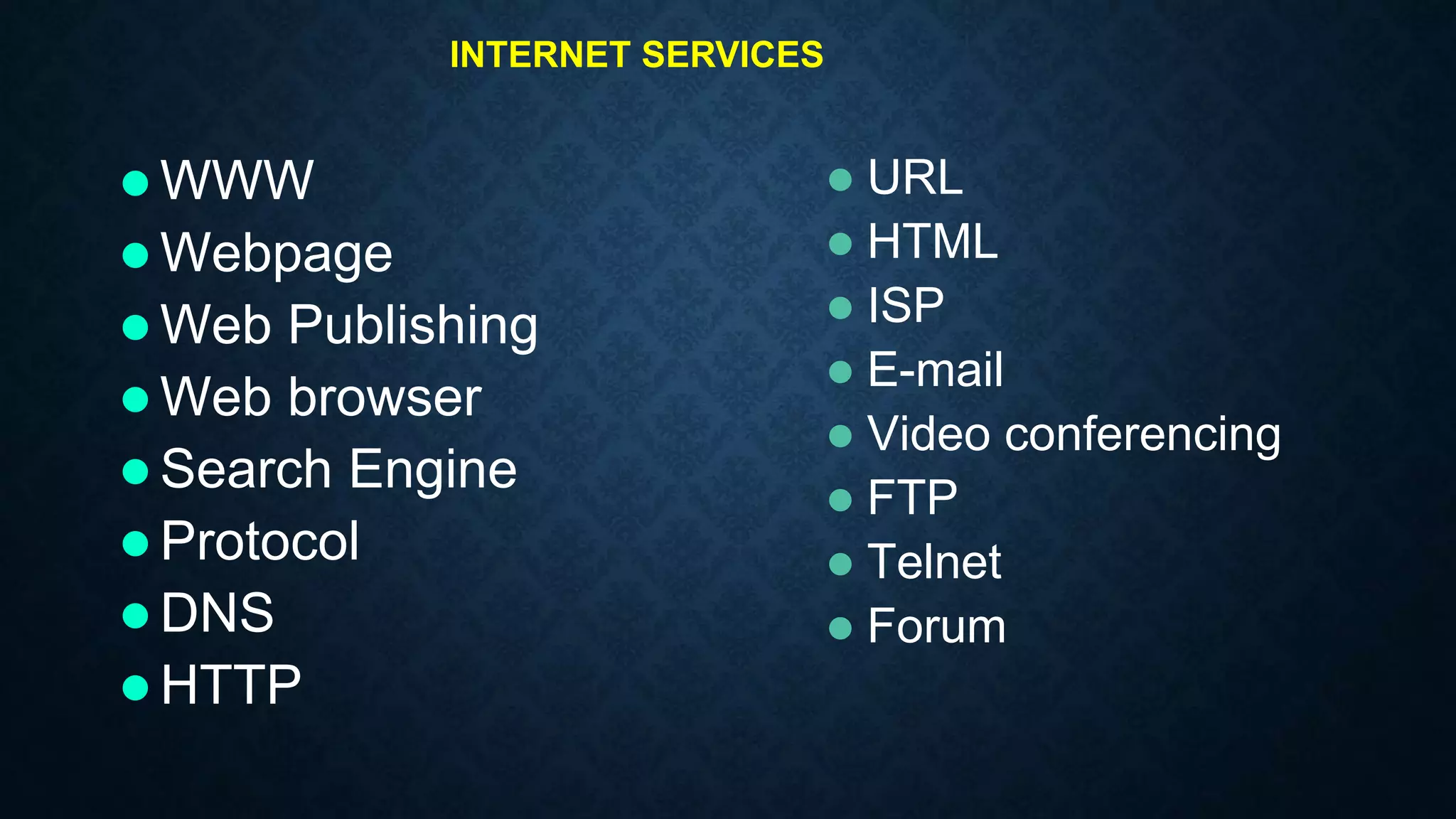
INTERNET SERVICES
 URL
 HTML
 ISP
 E-mail
 Video conferencing
 FTP
 Telnet
 Forum
 WWW
 Webpage
 Web Publishing
 Web browser
 Search Engine
 Protocol
 DNS
 HTTP
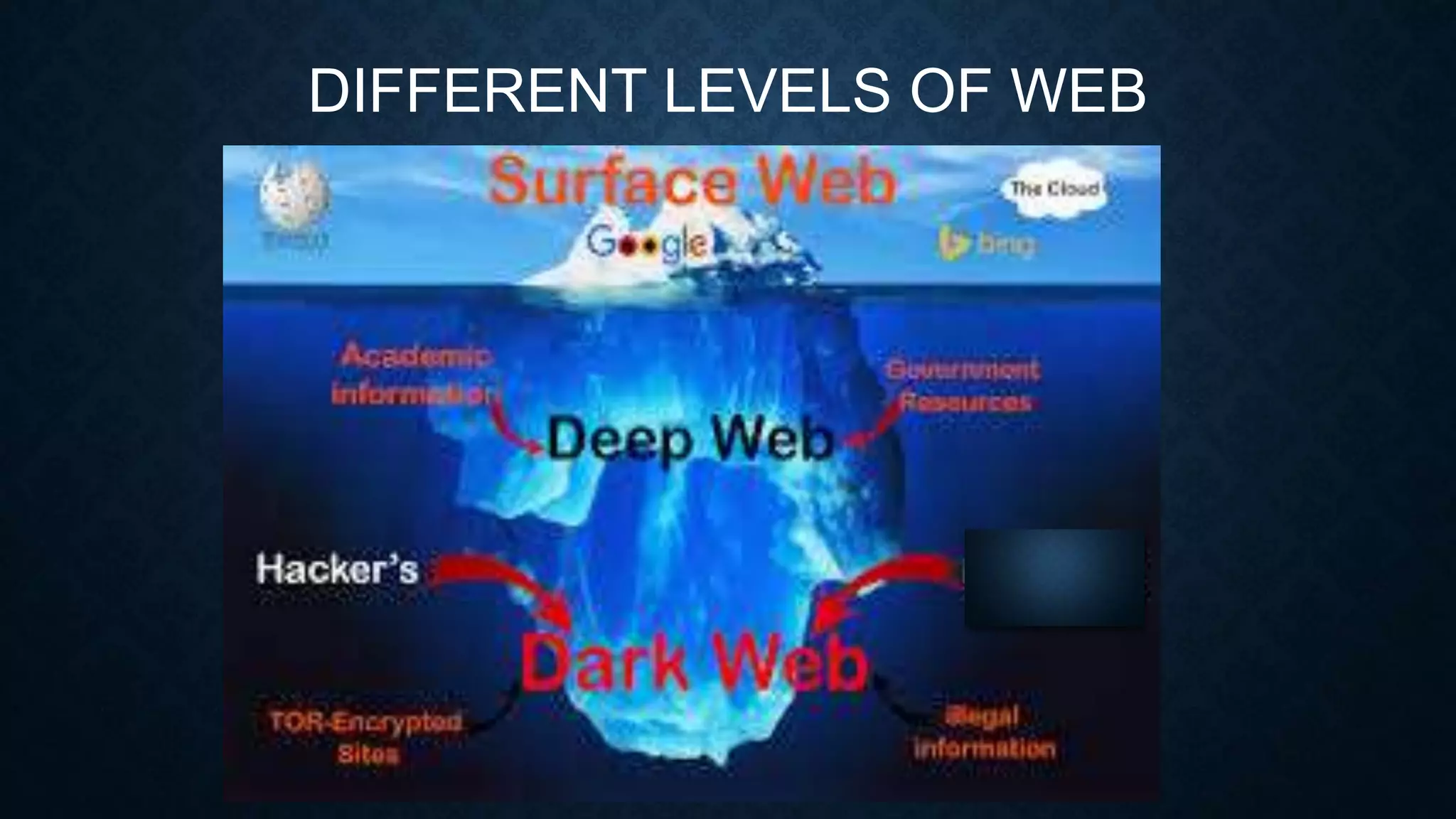
DIFFERENT LEVELS OF WEB
WORLD WIDE WEB (WWW.)
• The World Wide Web, or simply Web, is a way of
accessing information over the medium of the Internet.
It is an information-sharing model that is built on top
of the Internet.
•The Web (World Wide Web) consists of information
organized into Web pages containing text and graphic
images
•It contains hypertext links, or highlighted keywords
and images that lead to related information
•A collection of linked Web pages that has a common
theme or focus is called a Web site
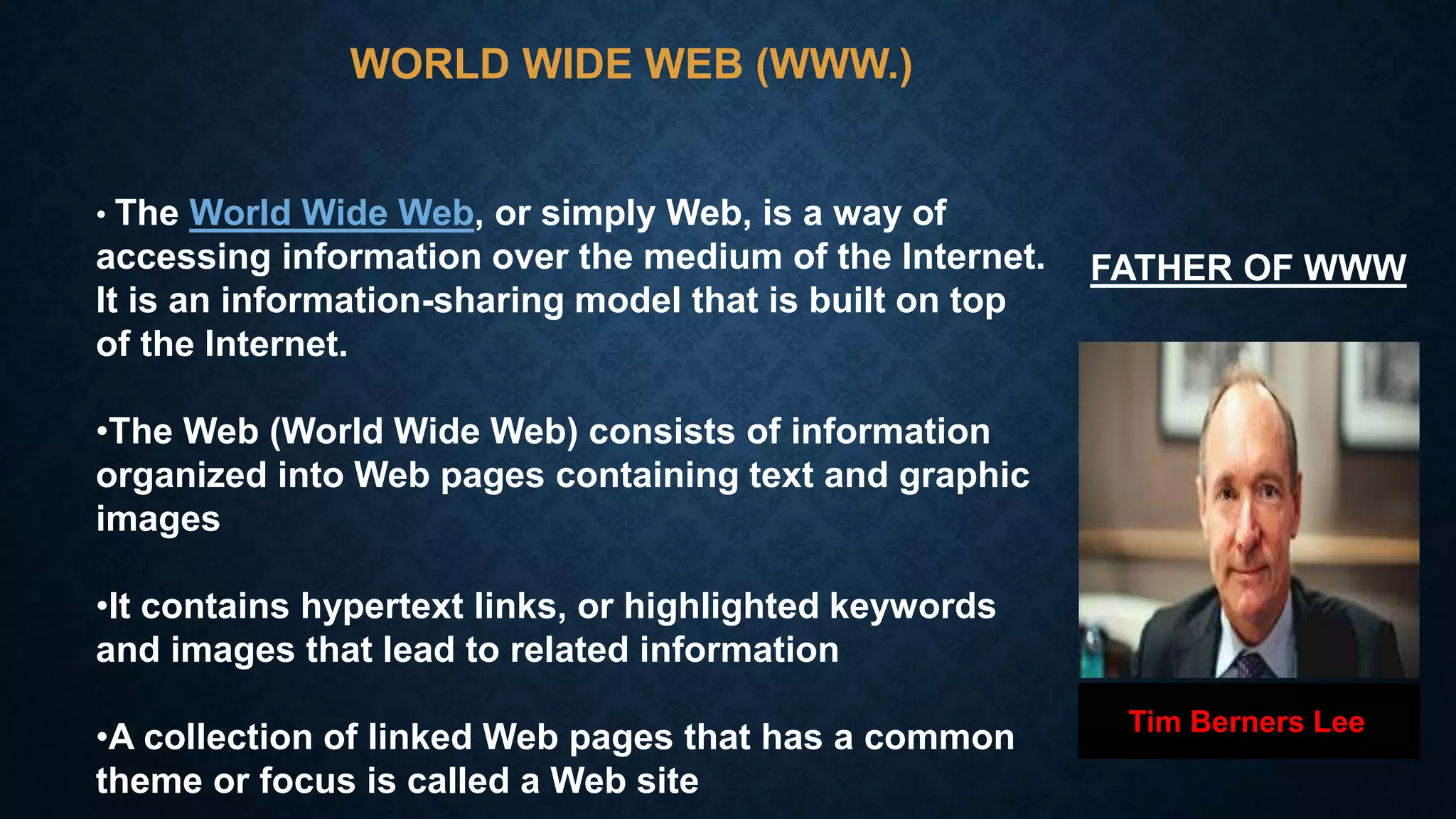
Tim Berners Lee
FATHER OF WWW
IS INTERNET AND WORLD WIDE WEB SAME
•MANY PEOPLE USE THE TERMS INTERNET AND WORLD WIDE WEB INTERCHANGEABLY, BUT IN FACT THE
TWO TERMS ARE NOT SYNONYMOUS. THE INTERNET AND THE WEB ARE TWO SEPARATE BUT RELATED
THINGS.
•THE WEB IS ONLY A PORTION OF THE INTERNET
•INTERNET = COLLECTION OF NETWORKS THAT CONNECT MILLIONS OF BUSINESSES, GOVERNMENT
AGENCIES, EDUCATIONAL INSTITUTIONS, AND INDIVIDUALS
WWW = THE MEANS WE USE TO ACCESS INFORMATION OVER THE INTERNET
DIFFERENT COMMUNICATION PROTOCOLS
SPECIAL LINK (HYPERLINK) THAT ENABLE USERS TO JUMP FROM ONE PLACE TO ANOTHER ON THE
WEB.
 A software application for retrieving, presenting,
and presenting, information resources on the World
Wide Web.
 It allows to locate, view, and navigate the web.
 It can have a Graphical User Interface, meaning
they can display pictures (graphics) in addition to
text and other forms of multimedia such as sound
and video
 First web browser was develop in 1991: Mosaic
develop by Marc Andreessen.
WEB
BROWSER
GOOGLE
CHROME
MOZILLA
FIREFOX
INTERNET
EXPLORER
SAFARI
EXAMPLES
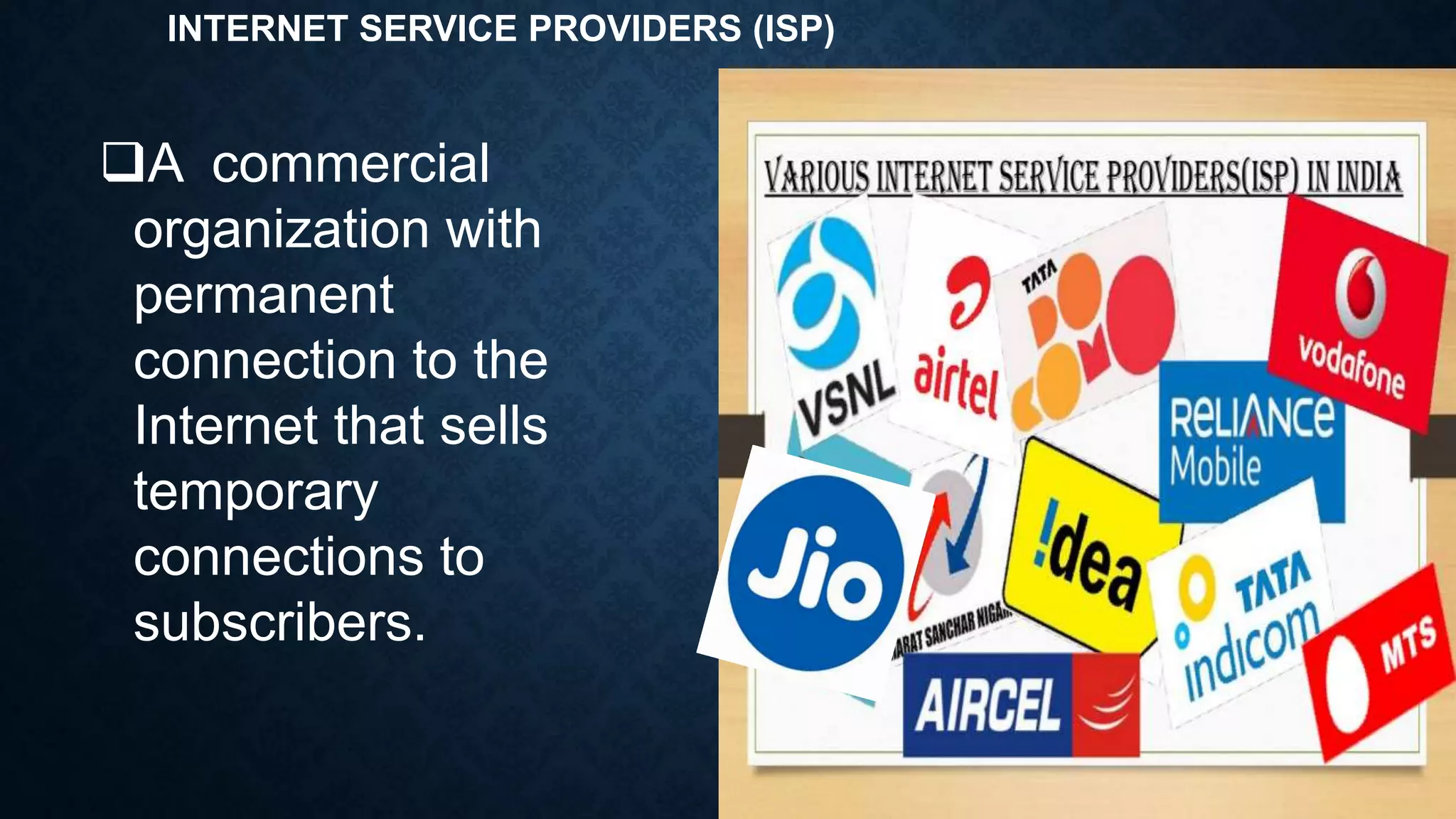
INTERNET SERVICE PROVIDERS (ISP)
A commercial
organization with
permanent
connection to the
Internet that sells
temporary
connections to
subscribers.
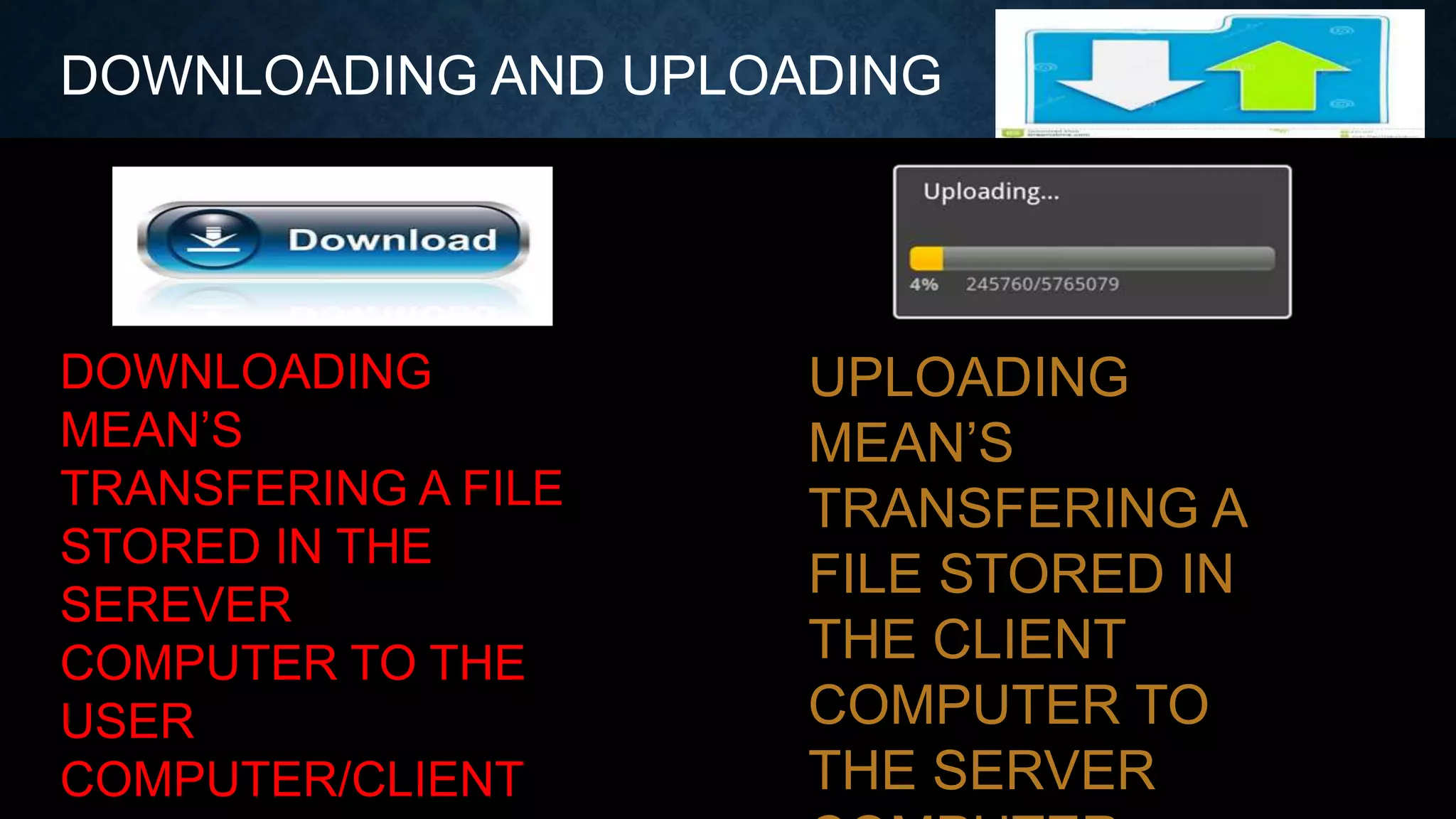
DOWNLOADING AND UPLOADING
DOWNLOADING
MEAN’S
TRANSFERING A FILE
STORED IN THE
SEREVER
COMPUTER TO THE
USER
COMPUTER/CLIENT
UPLOADING
MEAN’S
TRANSFERING A
FILE STORED IN
THE CLIENT
COMPUTER TO
THE SERVER
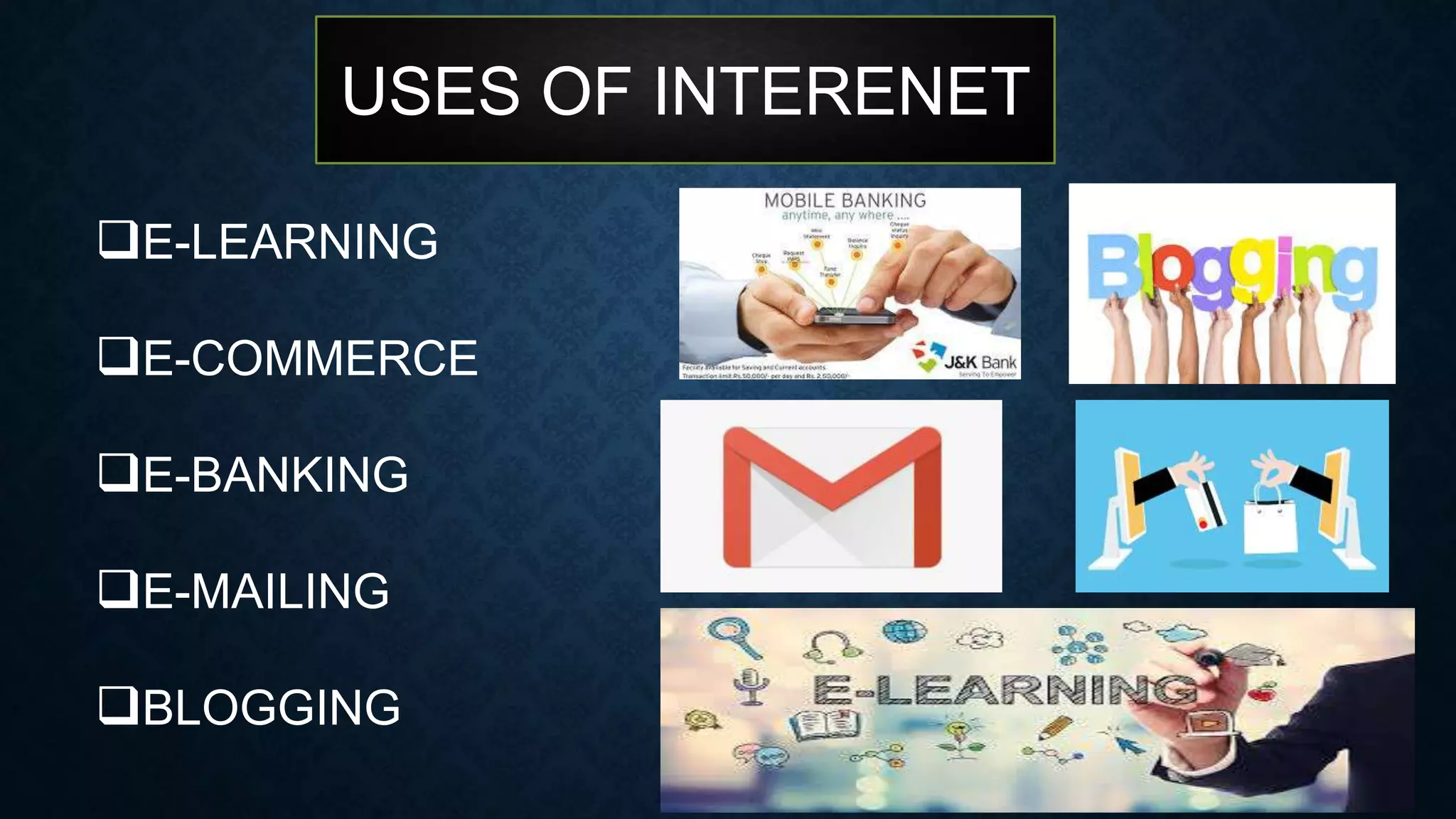
USES OF INTERENET
E-LEARNING
E-COMMERCE
E-BANKING
E-MAILING
BLOGGING
Advantages Of Internet
 FASTER COMMUNICATION
 RESEARCH
 EDUCATION
 FINANCIAL TRANSACTION
 UPDATES
 FILE TRANSFERS
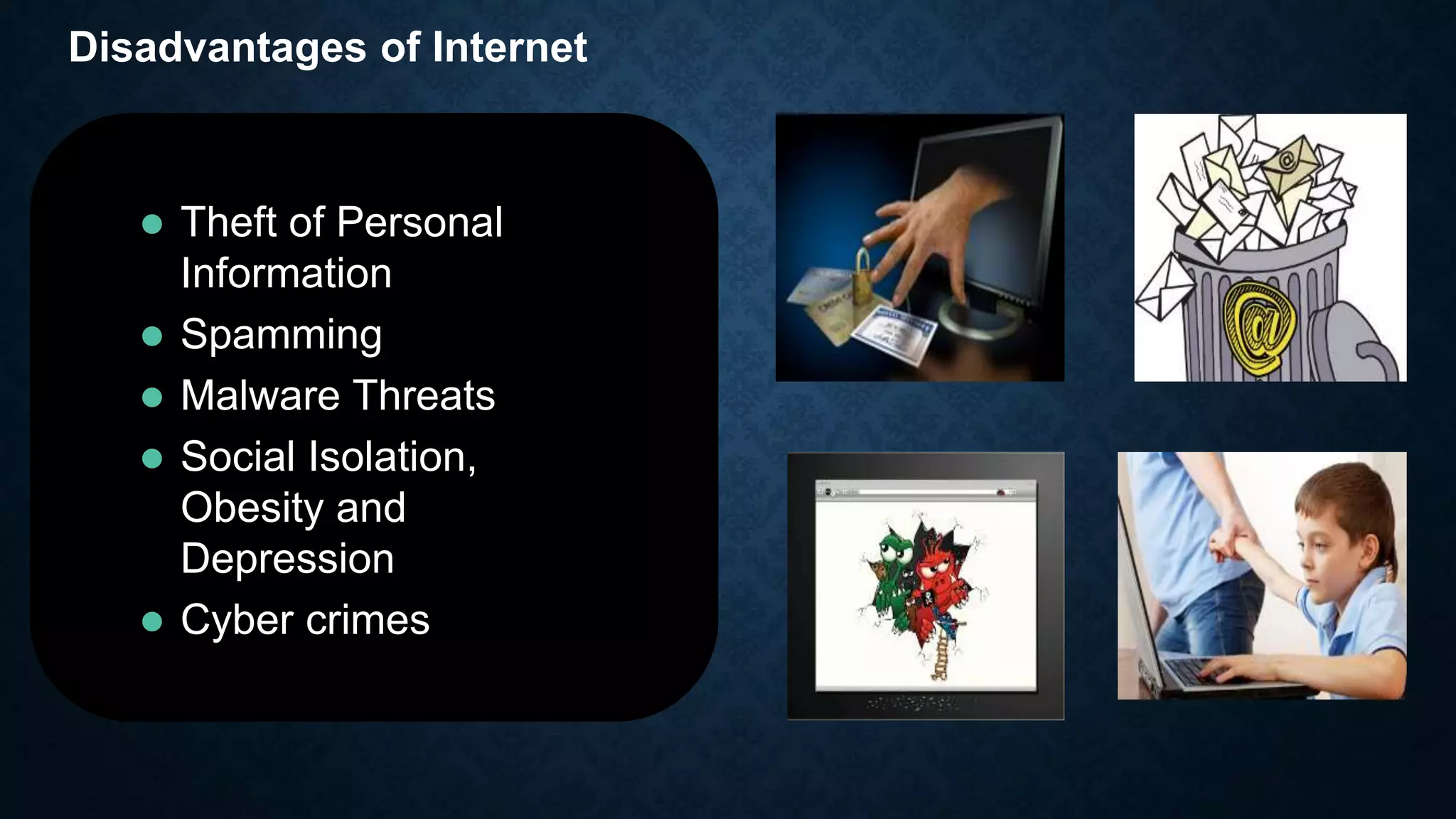
Disadvantages of Internet
 Theft of Personal
Information
 Spamming
 Malware Threats
 Social Isolation,
Obesity and
Depression
 Cyber crimes
THANK YOU

presentation on internet (power point presentation)

  • 1.
  • 2.
    CONTENTS  HISTORY  WORKINGOF INTERNET  SERVICES OF INTERNET  BENEFITS  WEB  INTERNET USES  WORLD WIDE WEB  SEARCH ENGINES
  • 3.
    Internet Mean’s NetworkOf Network’s. The Internet is a massive network , or a networking infrastructure which connects millions of computers together globally, and forming a network in which any computer can communicate with any other computer as long as they are both inter connected . ? Introduction
  • 4.
    • The wordinternet comes from combination between “interconnection” and “Network” • The popular term for the Internet is the “information highway”. • It has no formal management organization. • The Internet is the largest computer network in the world that connects billions of computer users. • Generally nobody own internet.
  • 5.
    HISTORY  Internet wasborn in 1969 - called ARPANET  ARPA – Advanced Research Project Agency.  In 1982 the word internet started.  1991: US government allowed only business agencies to connect to internet.  Now all peoples can connect to internet and improve their life and work quality.  There Is No Owner For Internet
  • 6.
    • He IsAlso The Co Founder Of Tcp/Ip Networking Protocol
  • 7.
    HOW TO CONNECTTO INTERNET
  • 8.
    INTERNET AND INTRA-NET  INTRA-NET MEAN’S NETWORK INSIDE A COMPANY OR AN ORAGANIZATION  INTERNET IS A PUBLIC NETWORK  INTRANET IS A PRIVATE NETWORK  Intranet uses the internet protocols such as TCP/IP and FTP.  Intranet sites are accessible via the web browser in a similar way as websites in the internet. However, only members of Intranet network can access intranet hosted sites.
  • 9.
    INTERNET SERVICES  URL HTML  ISP  E-mail  Video conferencing  FTP  Telnet  Forum  WWW  Webpage  Web Publishing  Web browser  Search Engine  Protocol  DNS  HTTP
  • 10.
  • 11.
    WORLD WIDE WEB(WWW.) • The World Wide Web, or simply Web, is a way of accessing information over the medium of the Internet. It is an information-sharing model that is built on top of the Internet. •The Web (World Wide Web) consists of information organized into Web pages containing text and graphic images •It contains hypertext links, or highlighted keywords and images that lead to related information •A collection of linked Web pages that has a common theme or focus is called a Web site Tim Berners Lee FATHER OF WWW
  • 12.
    IS INTERNET ANDWORLD WIDE WEB SAME •MANY PEOPLE USE THE TERMS INTERNET AND WORLD WIDE WEB INTERCHANGEABLY, BUT IN FACT THE TWO TERMS ARE NOT SYNONYMOUS. THE INTERNET AND THE WEB ARE TWO SEPARATE BUT RELATED THINGS. •THE WEB IS ONLY A PORTION OF THE INTERNET •INTERNET = COLLECTION OF NETWORKS THAT CONNECT MILLIONS OF BUSINESSES, GOVERNMENT AGENCIES, EDUCATIONAL INSTITUTIONS, AND INDIVIDUALS WWW = THE MEANS WE USE TO ACCESS INFORMATION OVER THE INTERNET DIFFERENT COMMUNICATION PROTOCOLS SPECIAL LINK (HYPERLINK) THAT ENABLE USERS TO JUMP FROM ONE PLACE TO ANOTHER ON THE WEB.
  • 13.
     A softwareapplication for retrieving, presenting, and presenting, information resources on the World Wide Web.  It allows to locate, view, and navigate the web.  It can have a Graphical User Interface, meaning they can display pictures (graphics) in addition to text and other forms of multimedia such as sound and video  First web browser was develop in 1991: Mosaic develop by Marc Andreessen. WEB BROWSER GOOGLE CHROME MOZILLA FIREFOX INTERNET EXPLORER SAFARI EXAMPLES
  • 14.
    INTERNET SERVICE PROVIDERS(ISP) A commercial organization with permanent connection to the Internet that sells temporary connections to subscribers.
  • 15.
    DOWNLOADING AND UPLOADING DOWNLOADING MEAN’S TRANSFERINGA FILE STORED IN THE SEREVER COMPUTER TO THE USER COMPUTER/CLIENT UPLOADING MEAN’S TRANSFERING A FILE STORED IN THE CLIENT COMPUTER TO THE SERVER
  • 17.
  • 18.
    Advantages Of Internet FASTER COMMUNICATION  RESEARCH  EDUCATION  FINANCIAL TRANSACTION  UPDATES  FILE TRANSFERS
  • 19.
    Disadvantages of Internet Theft of Personal Information  Spamming  Malware Threats  Social Isolation, Obesity and Depression  Cyber crimes
  • 20.