Face
Features
The face extends
• Superiorly from the adolescent position of
hairline,
• Inferiorly to the chin and the base of the
mandible, and
• Each side to the auricle.
Skin
1. The facial skin is very vascular.
2. The facial skin is rich in sebaceous and sweat glands.
3. Boils in the nose and ear are acutely painful due to the
fixity of the skin to the underlying cartilages.
4. Facial skin is very elastic and thick because the facial
muscles are inserted into it. The wounds of the face,
therefore, tend to gape.
SUPERFICIAL FASCIA
It contains:
• The facial muscles
• The vessels and nerves
• The deep fascia is absent from the face,
except over the parotid gland.
FACIAL MUSCLES
• Embryologically
Develop from the mesoderm of the 2nd branchial arch,
(facial nerve)
• Morphologically
Represent the remnants of the panniculus carnosus
• Topographically
The muscles are grouped under six heads
I. Muscle of the Scalp
Occipitofrontalis
II. Muscles of the Auricle—Vestigeal
1. Auricularis anterior
2. Auricularis superior
3. Auricularis posterior
III. Muscles of the Eyelids/Orbital Openings
1. Orbicularis oculi
2. Corrugator supercilii
3. Levator palpebrae superioris
IV. Muscles of the Nose
1. Procerus
2. Compressor naris
3. Dilator naris
4. Depressor septi
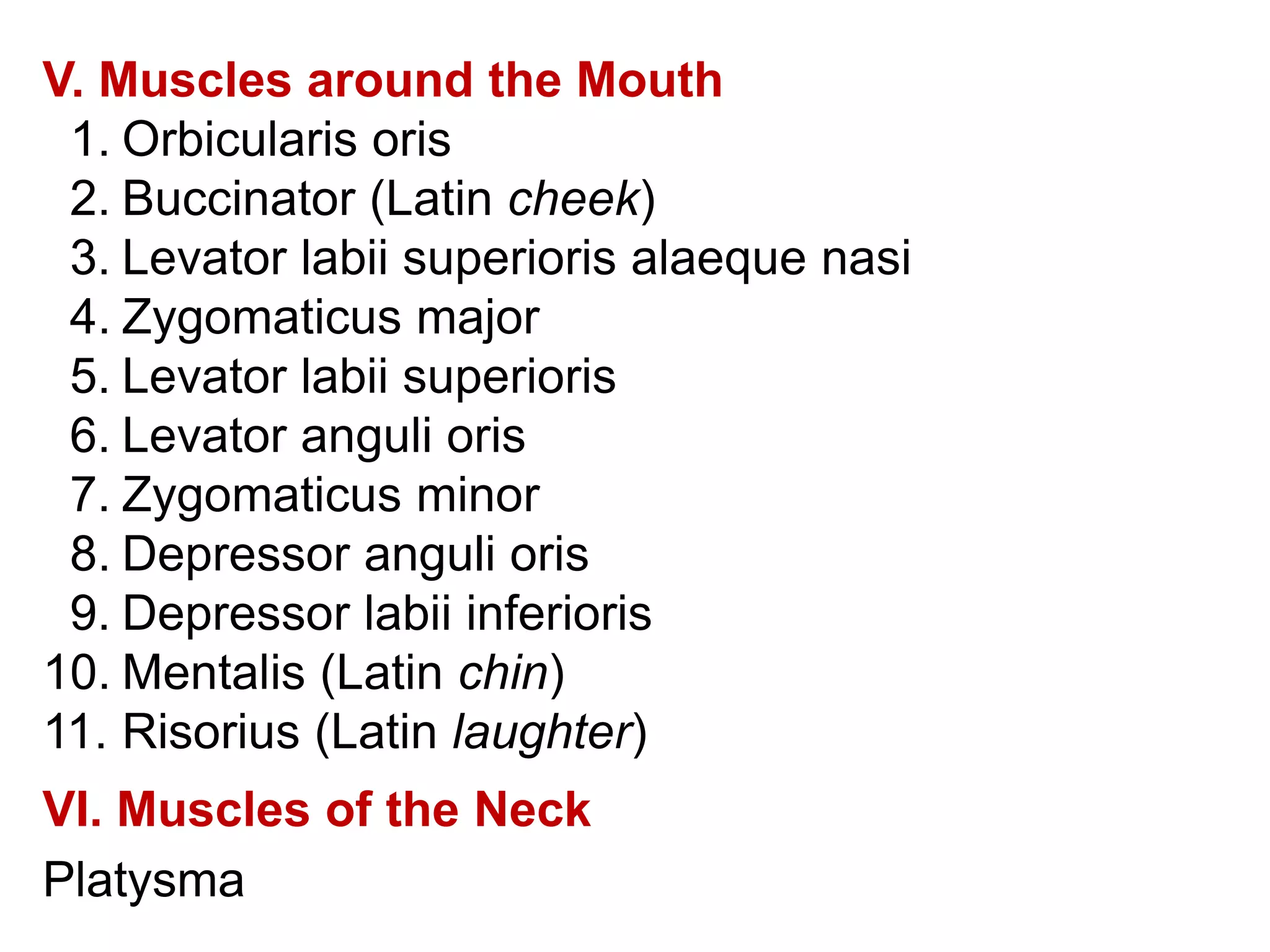
V. Muscles around the Mouth
1. Orbicularis oris
2. Buccinator (Latin cheek)
3. Levator labii superioris alaeque nasi
4. Zygomaticus major
5. Levator labii superioris
6. Levator anguli oris
7. Zygomaticus minor
8. Depressor anguli oris
9. Depressor labii inferioris
10. Mentalis (Latin chin)
11. Risorius (Latin laughter)
VI. Muscles of the Neck
Platysma
The facial muscles
Contd
Contd
Some of the facial muscles
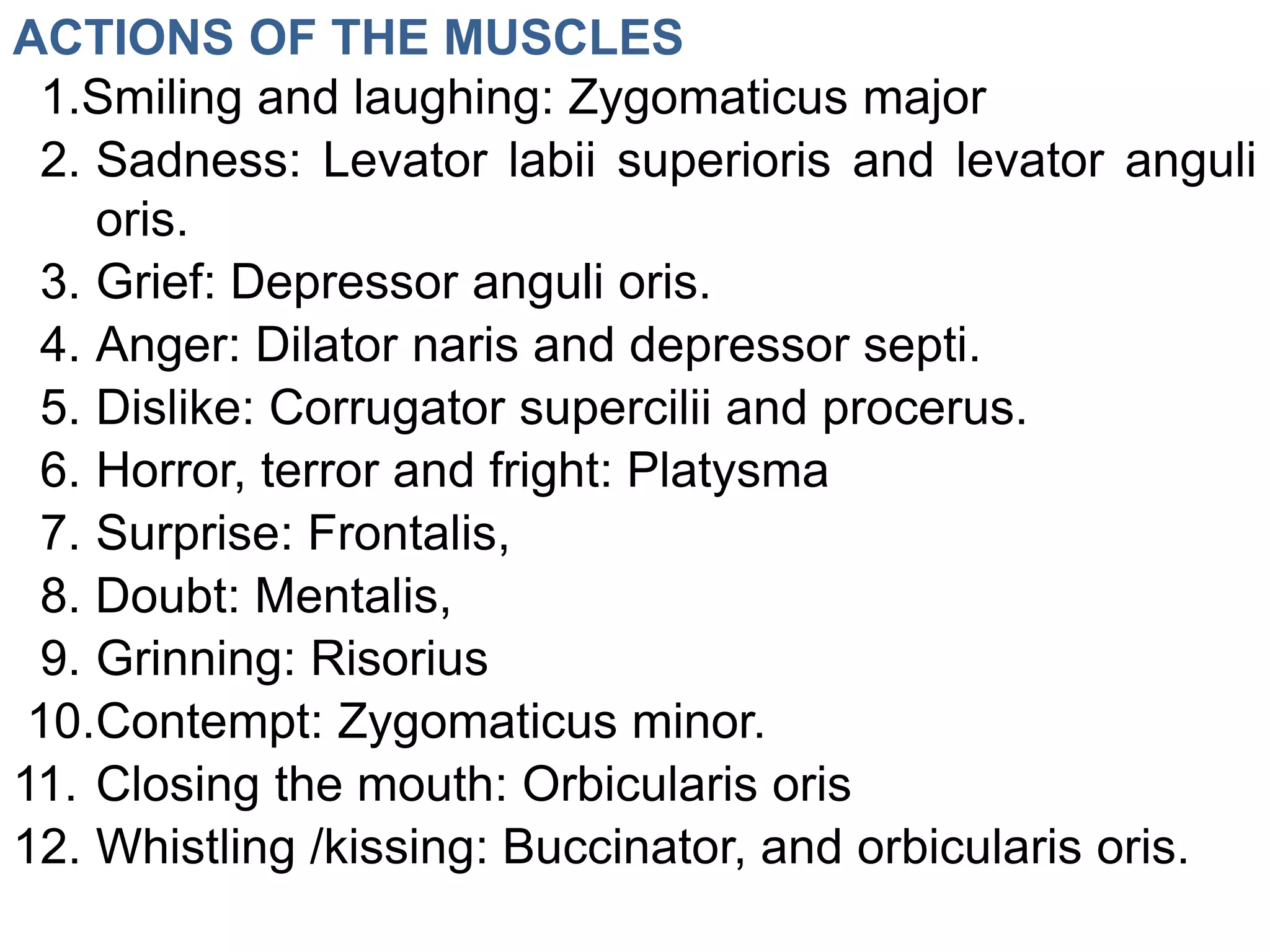
ACTIONS OF THE MUSCLES
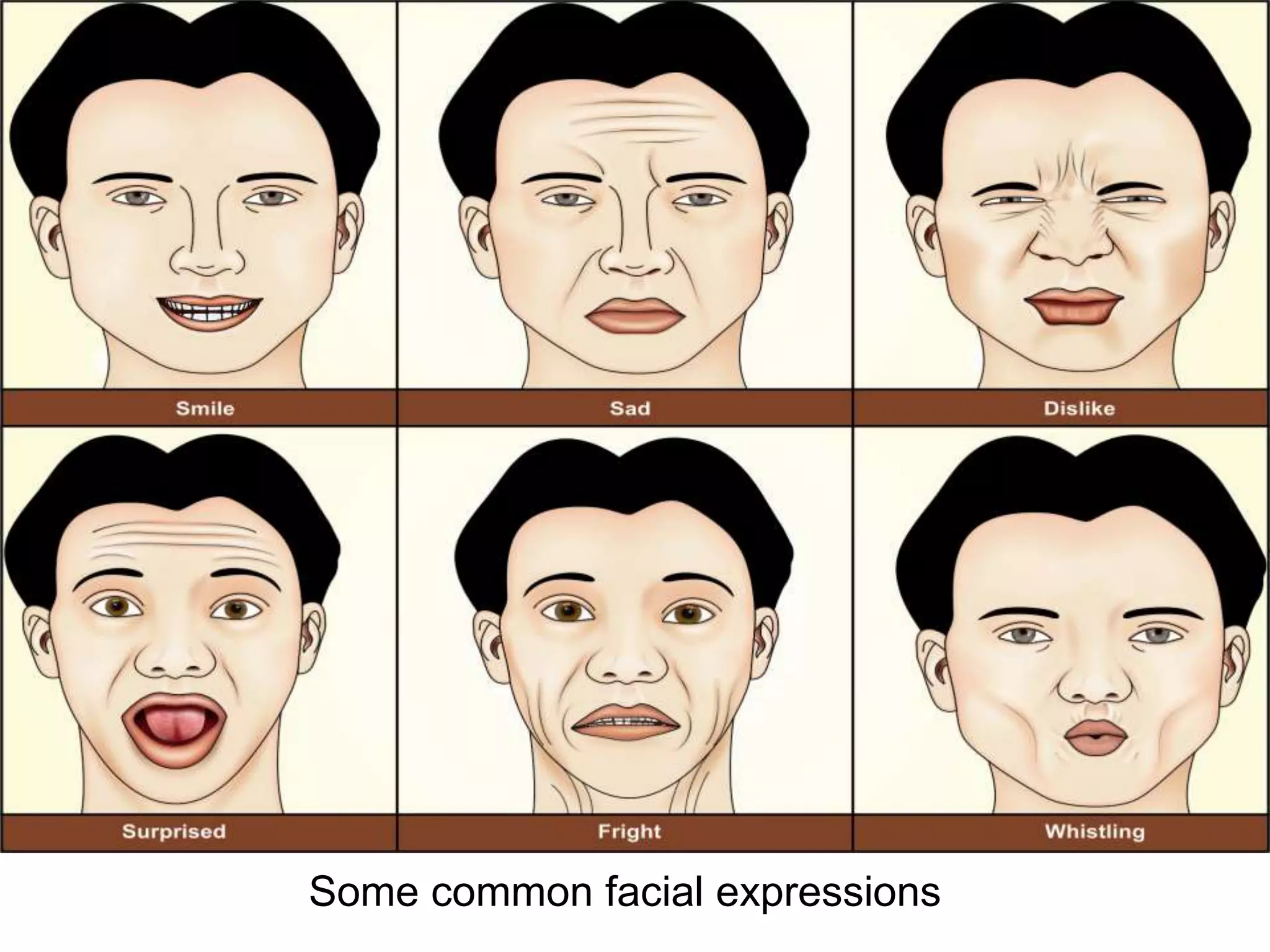
1.Smiling and laughing: Zygomaticus major
2. Sadness: Levator labii superioris and levator anguli
oris.
3. Grief: Depressor anguli oris.
4. Anger: Dilator naris and depressor septi.
5. Dislike: Corrugator supercilii and procerus.
6. Horror, terror and fright: Platysma
7. Surprise: Frontalis,
8. Doubt: Mentalis,
9. Grinning: Risorius
10.Contempt: Zygomaticus minor.
11. Closing the mouth: Orbicularis oris
12. Whistling /kissing: Buccinator, and orbicularis oris.
Some common facial expressions
NERVE SUPPLY OF FACE
Motor Nerve Supply
The facial nerve is the motor nerve of the face. Its five
terminal branches emerge from the parotid gland
• Temporal—frontalis, auricular muscles, orbicularis
oculi.
• Zygomatic—orbicularis oculi (lower eyelid part).
• Buccal—muscles of the cheek and upper lip.
• Marginal mandibular—muscles of lower lip.
• Cervical—platysma.
Terminal branches of the facial nerve
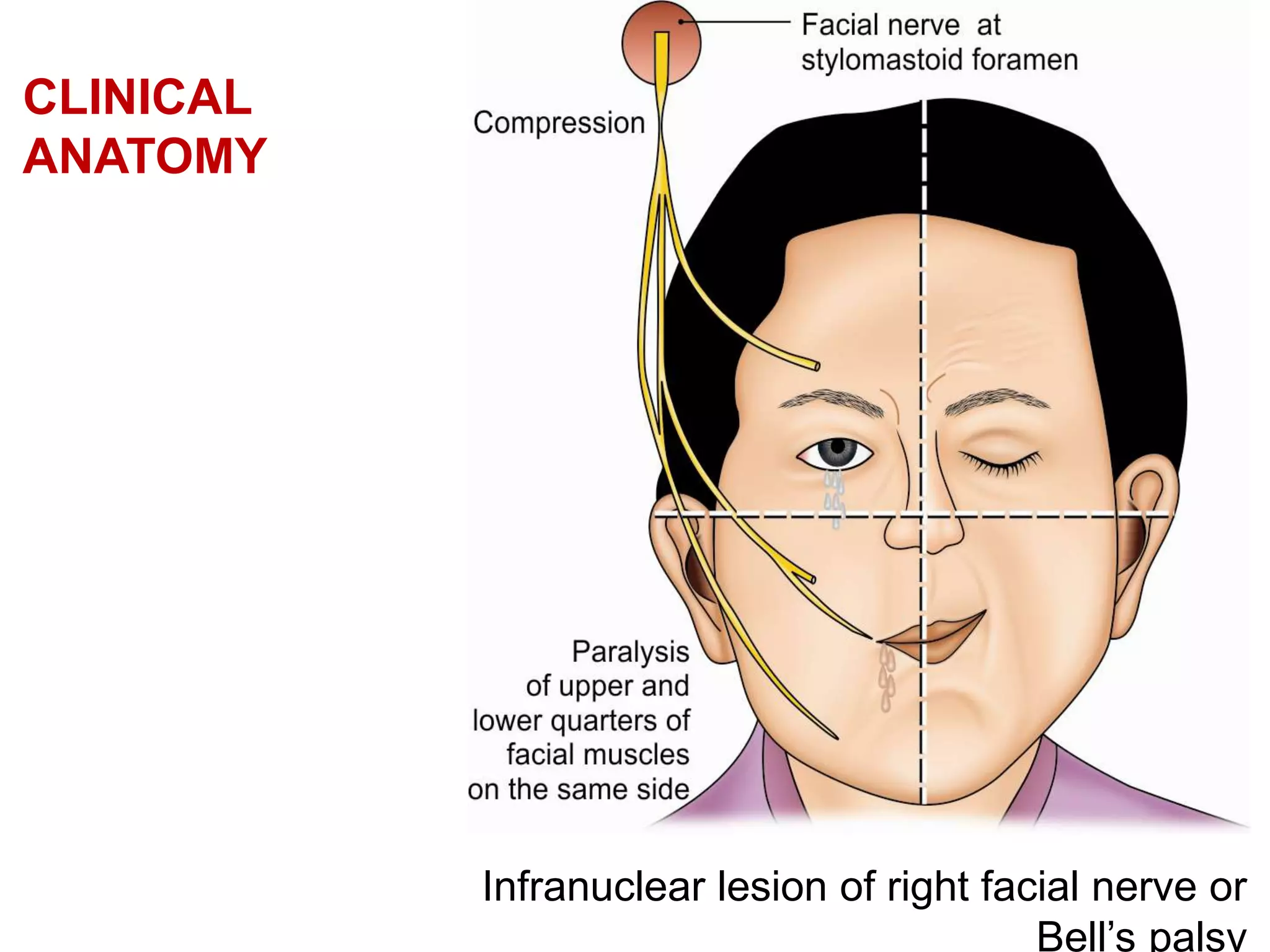
CLINICAL
ANATOMY
Infranuclear lesion of right facial nerve or
Bell’s palsy
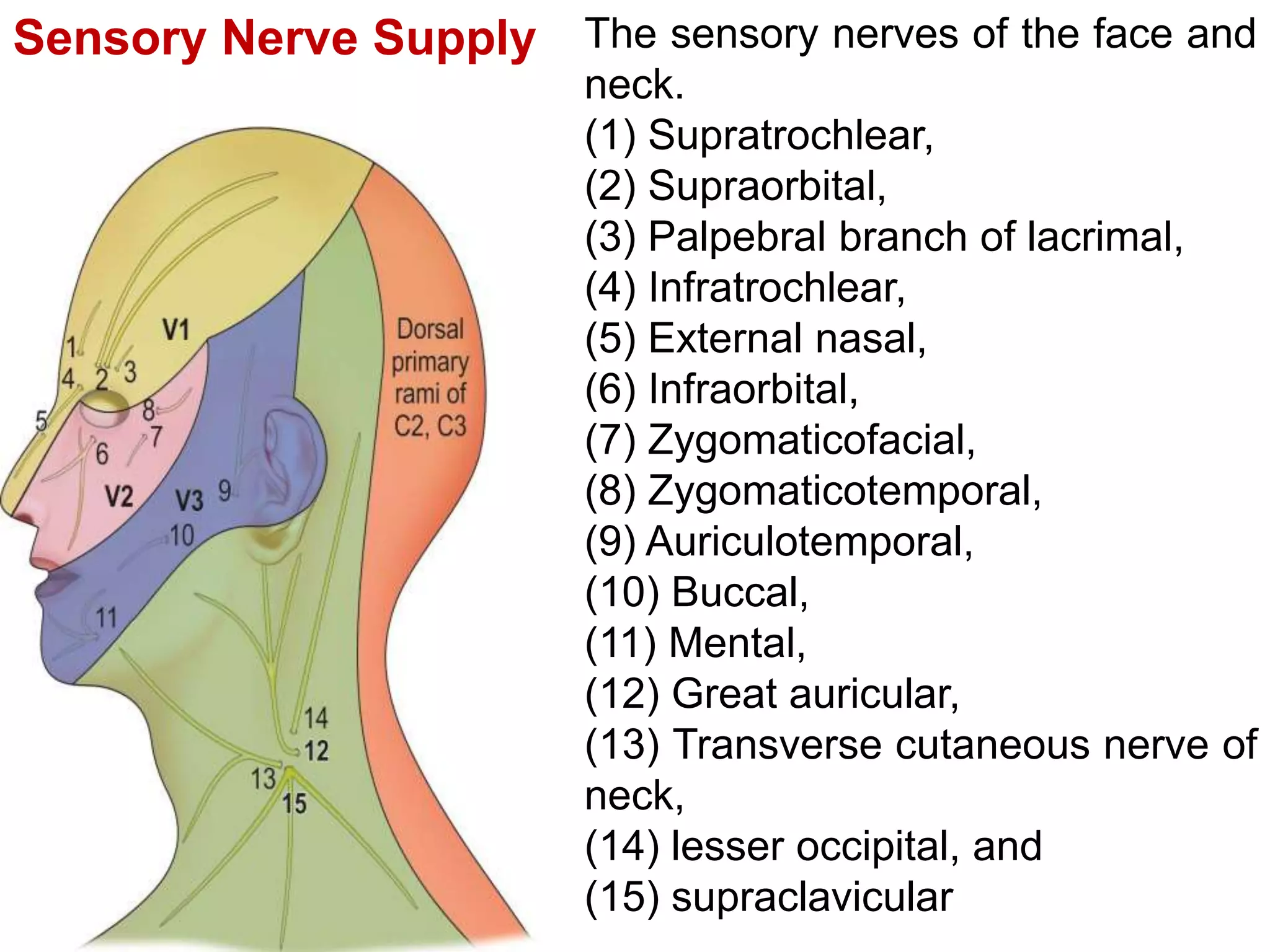
Sensory Nerve Supply The sensory nerves of the face and
neck.
(1) Supratrochlear,
(2) Supraorbital,
(3) Palpebral branch of lacrimal,
(4) Infratrochlear,
(5) External nasal,
(6) Infraorbital,
(7) Zygomaticofacial,
(8) Zygomaticotemporal,
(9) Auriculotemporal,
(10) Buccal,
(11) Mental,
(12) Great auricular,
(13) Transverse cutaneous nerve of
neck,
(14) lesser occipital, and
(15) supraclavicular
ARTERIES OF THE FACE
Features
The face is richly vascular. It is supplied by:
1. The facial artery,
2. The transverse facial artery, and
3. Arteries that accompany the cutaneous nerves.
Branches
They are:
• Inferior labial
• Superior labial
• Lateral nasal
• The posterior branches are small and unnamed.
Arteries of the face
VEINS OF THE FACE: These accompany the
arteries
Deep Connections:
A communication between the supraorbital and
superior ophthalmic veins.
Another connection with the pterygoid plexus in.
VENOUS DRAINAGE
The veins of the scalp, face and their deep connections with the
cavernous sinus and the pterygoid plexus of veins
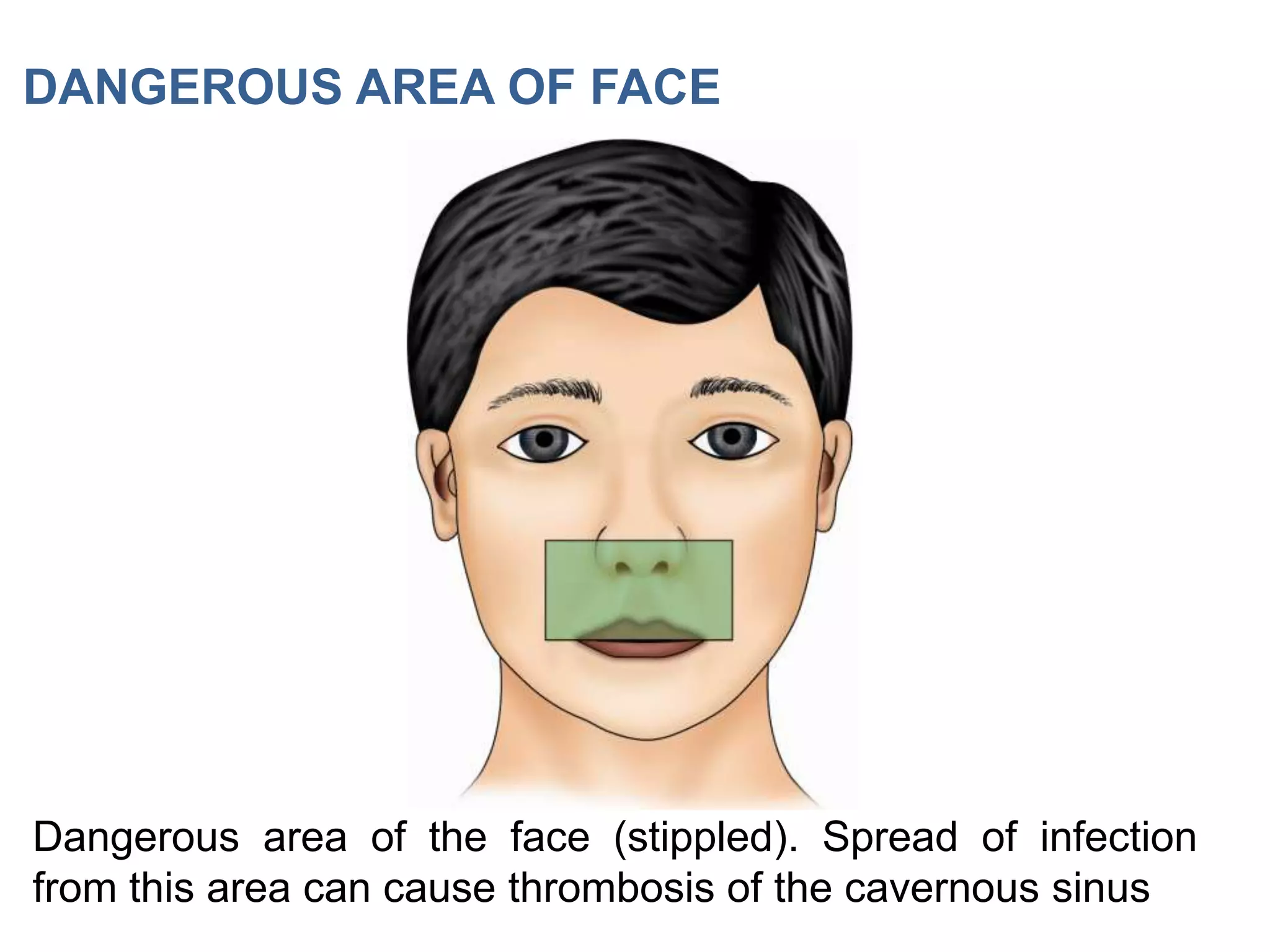
DANGEROUS AREA OF FACE
Dangerous area of the face (stippled). Spread of infection
from this area can cause thrombosis of the cavernous sinus
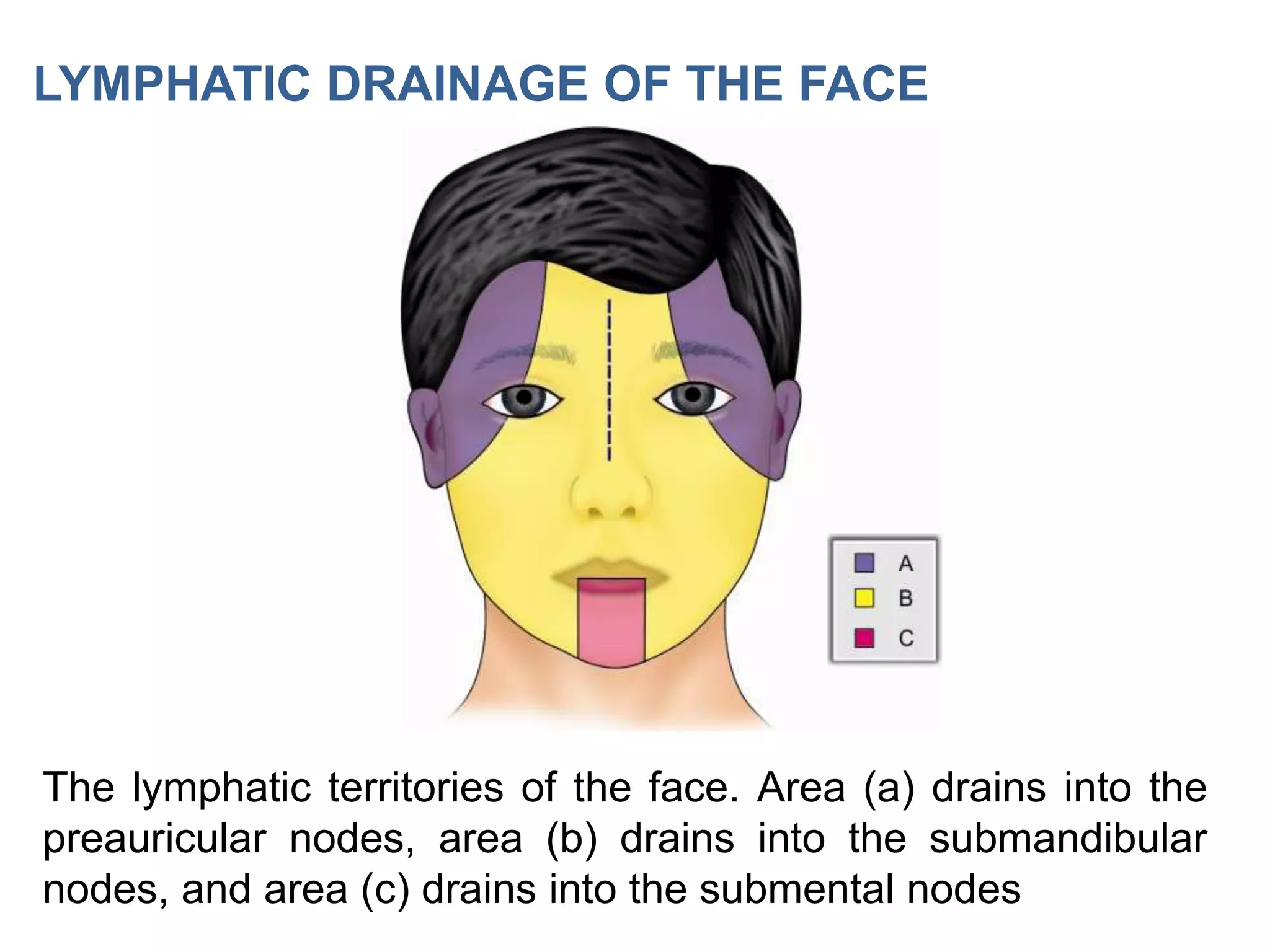
LYMPHATIC DRAINAGE OF THE FACE
The lymphatic territories of the face. Area (a) drains into the
preauricular nodes, area (b) drains into the submandibular
nodes, and area (c) drains into the submental nodes
I. Muscle of the Scalp
Occipitofrontalis
ACTION:
SURPRISE
FRIGHT
HORROR
III. Muscles of the
Eyelids/Orbital Openings
1. Orbicularis oculi
2. Corrugator supercilii
3. Levator palpebrae
superioris
ACTION:
DRAGS EYE BROW
MEDIALLY &
DOWNWARDS
VERTICAL WRINKLES OF
FOREHEAD - ANNOYANCE
Smiling and
laughing:
Zygomaticus major
The face anatomy

The face anatomy

  • 1.
  • 2.
    Features The face extends •Superiorly from the adolescent position of hairline, • Inferiorly to the chin and the base of the mandible, and • Each side to the auricle.
  • 3.
    Skin 1. The facialskin is very vascular. 2. The facial skin is rich in sebaceous and sweat glands. 3. Boils in the nose and ear are acutely painful due to the fixity of the skin to the underlying cartilages. 4. Facial skin is very elastic and thick because the facial muscles are inserted into it. The wounds of the face, therefore, tend to gape.
  • 4.
    SUPERFICIAL FASCIA It contains: •The facial muscles • The vessels and nerves • The deep fascia is absent from the face, except over the parotid gland.
  • 5.
    FACIAL MUSCLES • Embryologically Developfrom the mesoderm of the 2nd branchial arch, (facial nerve) • Morphologically Represent the remnants of the panniculus carnosus • Topographically The muscles are grouped under six heads
  • 7.
    I. Muscle ofthe Scalp Occipitofrontalis II. Muscles of the Auricle—Vestigeal 1. Auricularis anterior 2. Auricularis superior 3. Auricularis posterior III. Muscles of the Eyelids/Orbital Openings 1. Orbicularis oculi 2. Corrugator supercilii 3. Levator palpebrae superioris IV. Muscles of the Nose 1. Procerus 2. Compressor naris 3. Dilator naris 4. Depressor septi
  • 8.
    V. Muscles aroundthe Mouth 1. Orbicularis oris 2. Buccinator (Latin cheek) 3. Levator labii superioris alaeque nasi 4. Zygomaticus major 5. Levator labii superioris 6. Levator anguli oris 7. Zygomaticus minor 8. Depressor anguli oris 9. Depressor labii inferioris 10. Mentalis (Latin chin) 11. Risorius (Latin laughter) VI. Muscles of the Neck Platysma
  • 9.
  • 10.
  • 11.
  • 13.
    Some of thefacial muscles
  • 14.
    ACTIONS OF THEMUSCLES 1.Smiling and laughing: Zygomaticus major 2. Sadness: Levator labii superioris and levator anguli oris. 3. Grief: Depressor anguli oris. 4. Anger: Dilator naris and depressor septi. 5. Dislike: Corrugator supercilii and procerus. 6. Horror, terror and fright: Platysma 7. Surprise: Frontalis, 8. Doubt: Mentalis, 9. Grinning: Risorius 10.Contempt: Zygomaticus minor. 11. Closing the mouth: Orbicularis oris 12. Whistling /kissing: Buccinator, and orbicularis oris.
  • 15.
    Some common facialexpressions
  • 16.
    NERVE SUPPLY OFFACE Motor Nerve Supply The facial nerve is the motor nerve of the face. Its five terminal branches emerge from the parotid gland • Temporal—frontalis, auricular muscles, orbicularis oculi. • Zygomatic—orbicularis oculi (lower eyelid part). • Buccal—muscles of the cheek and upper lip. • Marginal mandibular—muscles of lower lip. • Cervical—platysma.
  • 17.
    Terminal branches ofthe facial nerve
  • 18.
    CLINICAL ANATOMY Infranuclear lesion ofright facial nerve or Bell’s palsy
  • 19.
    Sensory Nerve SupplyThe sensory nerves of the face and neck. (1) Supratrochlear, (2) Supraorbital, (3) Palpebral branch of lacrimal, (4) Infratrochlear, (5) External nasal, (6) Infraorbital, (7) Zygomaticofacial, (8) Zygomaticotemporal, (9) Auriculotemporal, (10) Buccal, (11) Mental, (12) Great auricular, (13) Transverse cutaneous nerve of neck, (14) lesser occipital, and (15) supraclavicular
  • 21.
    ARTERIES OF THEFACE Features The face is richly vascular. It is supplied by: 1. The facial artery, 2. The transverse facial artery, and 3. Arteries that accompany the cutaneous nerves.
  • 22.
    Branches They are: • Inferiorlabial • Superior labial • Lateral nasal • The posterior branches are small and unnamed.
  • 23.
  • 24.
    VEINS OF THEFACE: These accompany the arteries Deep Connections: A communication between the supraorbital and superior ophthalmic veins. Another connection with the pterygoid plexus in.
  • 25.
    VENOUS DRAINAGE The veinsof the scalp, face and their deep connections with the cavernous sinus and the pterygoid plexus of veins
  • 26.
    DANGEROUS AREA OFFACE Dangerous area of the face (stippled). Spread of infection from this area can cause thrombosis of the cavernous sinus
  • 27.
    LYMPHATIC DRAINAGE OFTHE FACE The lymphatic territories of the face. Area (a) drains into the preauricular nodes, area (b) drains into the submandibular nodes, and area (c) drains into the submental nodes
  • 28.
    I. Muscle ofthe Scalp Occipitofrontalis ACTION: SURPRISE FRIGHT HORROR
  • 29.
    III. Muscles ofthe Eyelids/Orbital Openings 1. Orbicularis oculi 2. Corrugator supercilii 3. Levator palpebrae superioris ACTION: DRAGS EYE BROW MEDIALLY & DOWNWARDS VERTICAL WRINKLES OF FOREHEAD - ANNOYANCE
  • 30.