ROLES AND FUNCTIONS
OF EDUCATIONAL
TECHNOLOGY IN THE 21ST
CENTURY EDUCATION
The Role of Education
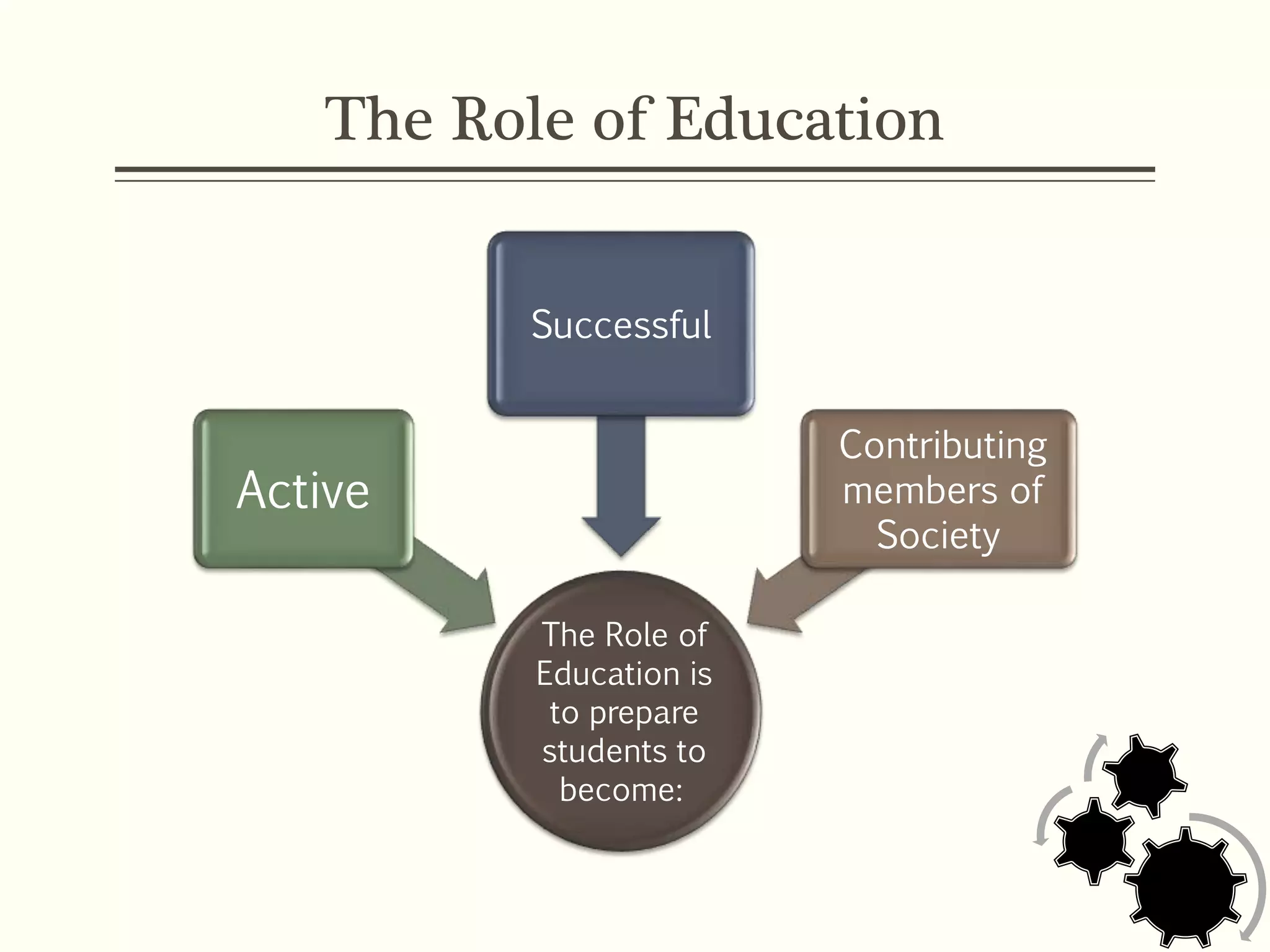
The Role of
Education is
to prepare
students to
become:
Active
Successful
Contributing
members of
Society
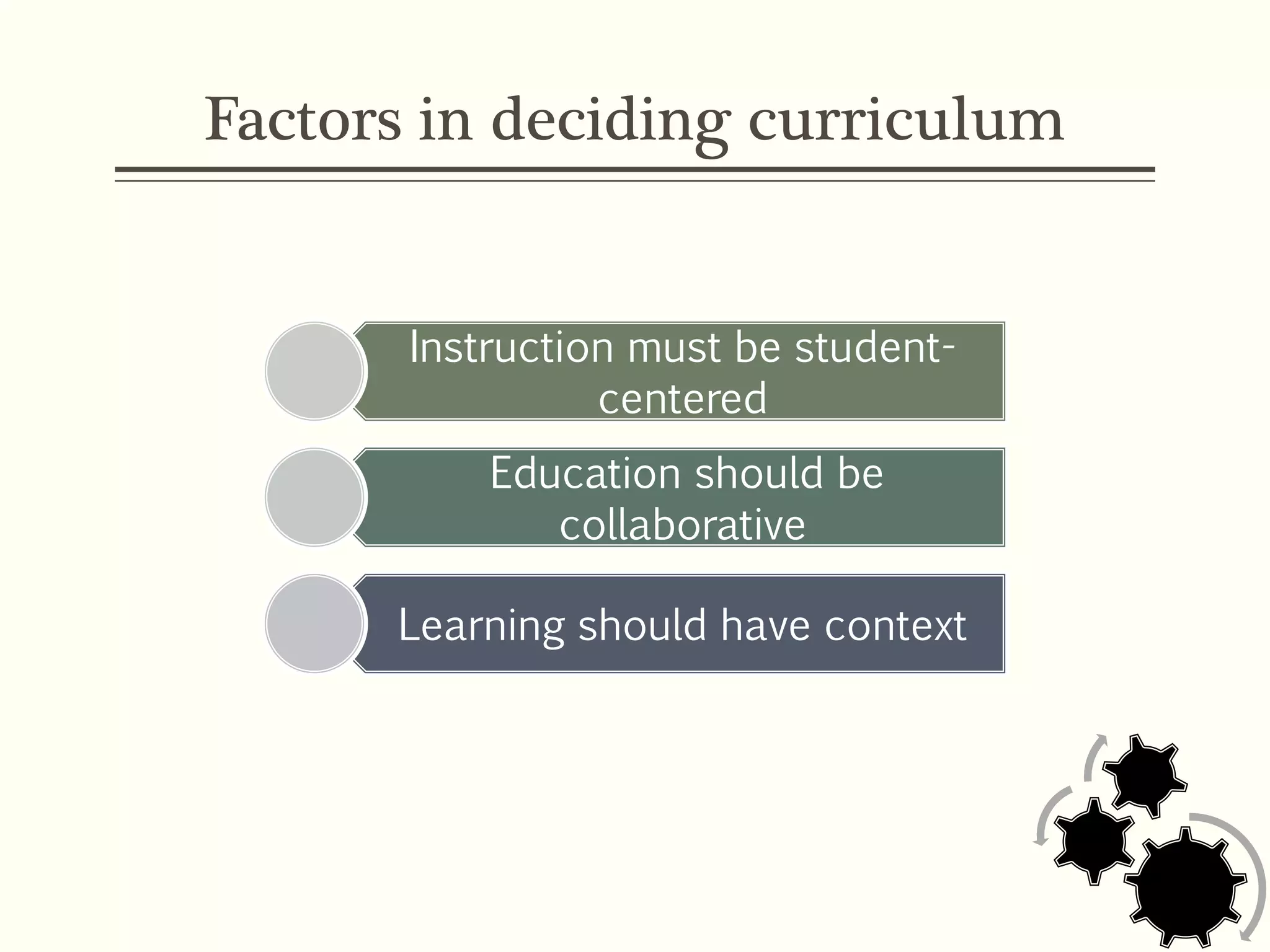
Factors in deciding curriculum
Instruction must be student-
centered
Education should be
collaborative
Learning should have context
Instruction should be student
centered
Student-centered instruction is encouraged in the
21st century.
Students acquire new information by themselves and
with the guidance of their teacher.
They’ve “learned how to learn” on their own.
They are encourage to use different learning styles.
Teacher acts as the facilitator for the students.
“Learning is about discovery, not the memorization
of facts.”
Education should be collaborative
Students are encouraged to work together to
discover new information.
Schools collaborate with other educational
institutions to share information and learn about
different methods that have ben developed.
Schools are willing to alter their institutional
methods in the light of new advancements.
Learning should have context
The teacher still provides the guidance in a student-
centered classroom.
They help their students to understand how the skills
can be applied in their lives.
Students are motivated to learn something if they
find value on it.
Students learn skills which can be used in any
situation.
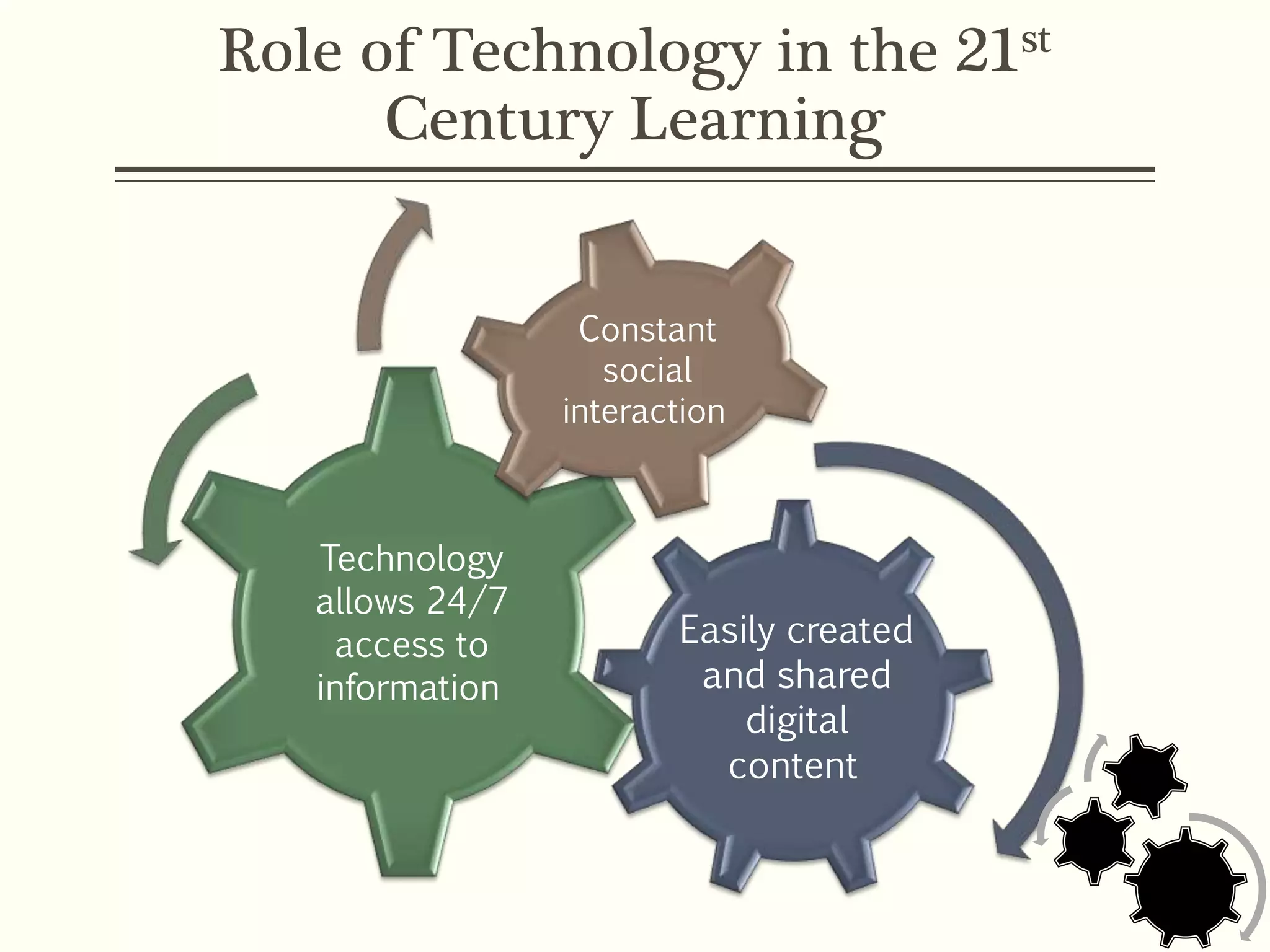
Role of Technology in the 21st
Century Learning
Easily created
and shared
digital
content
Technology
allows 24/7
access to
information
Constant
social
interaction
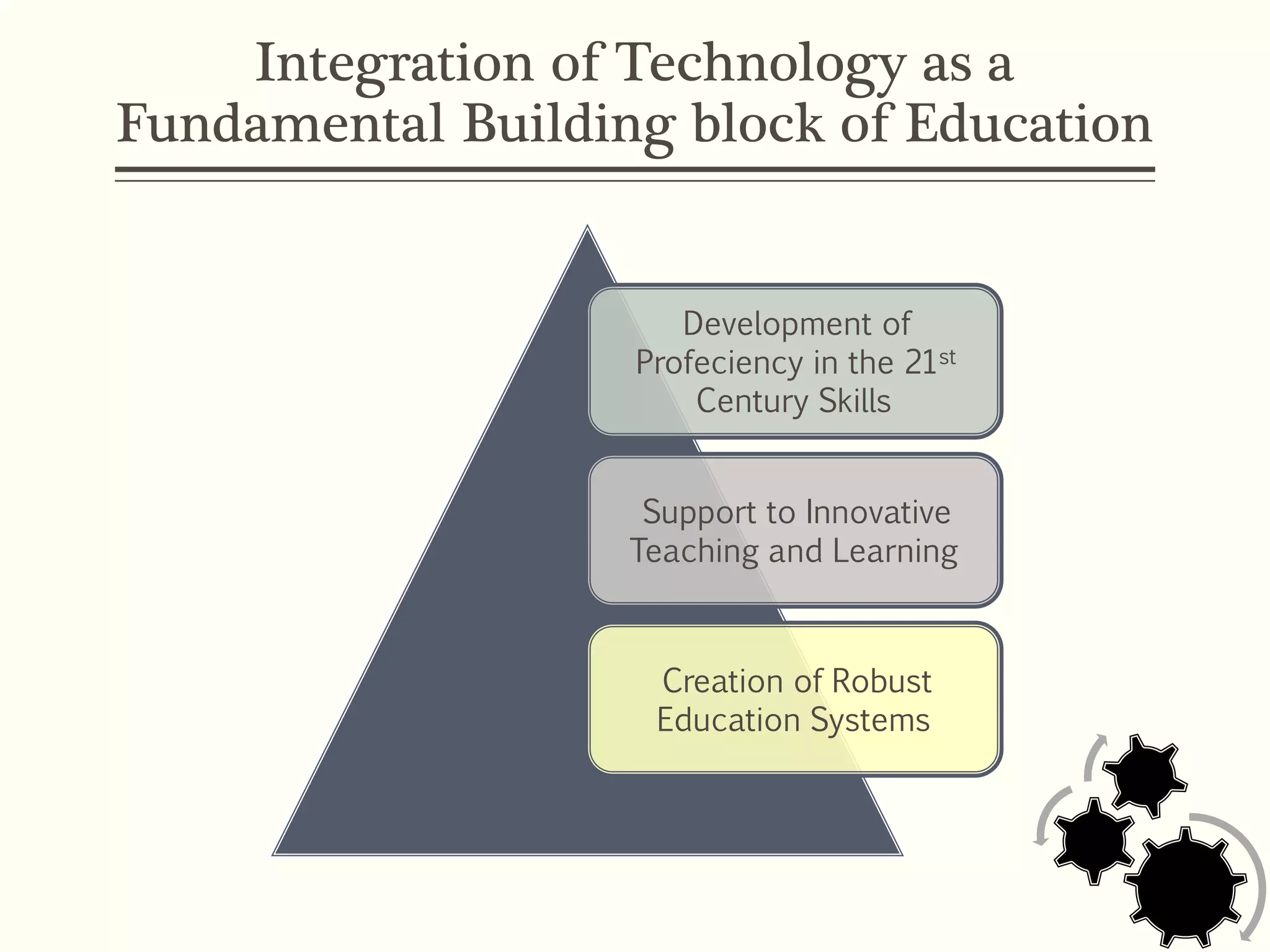
Integration of Technology as a
Fundamental Building block of Education
Development of
Profeciency in the 21st
Century Skills
Support to Innovative
Teaching and Learning
Creation of Robust
Education Systems
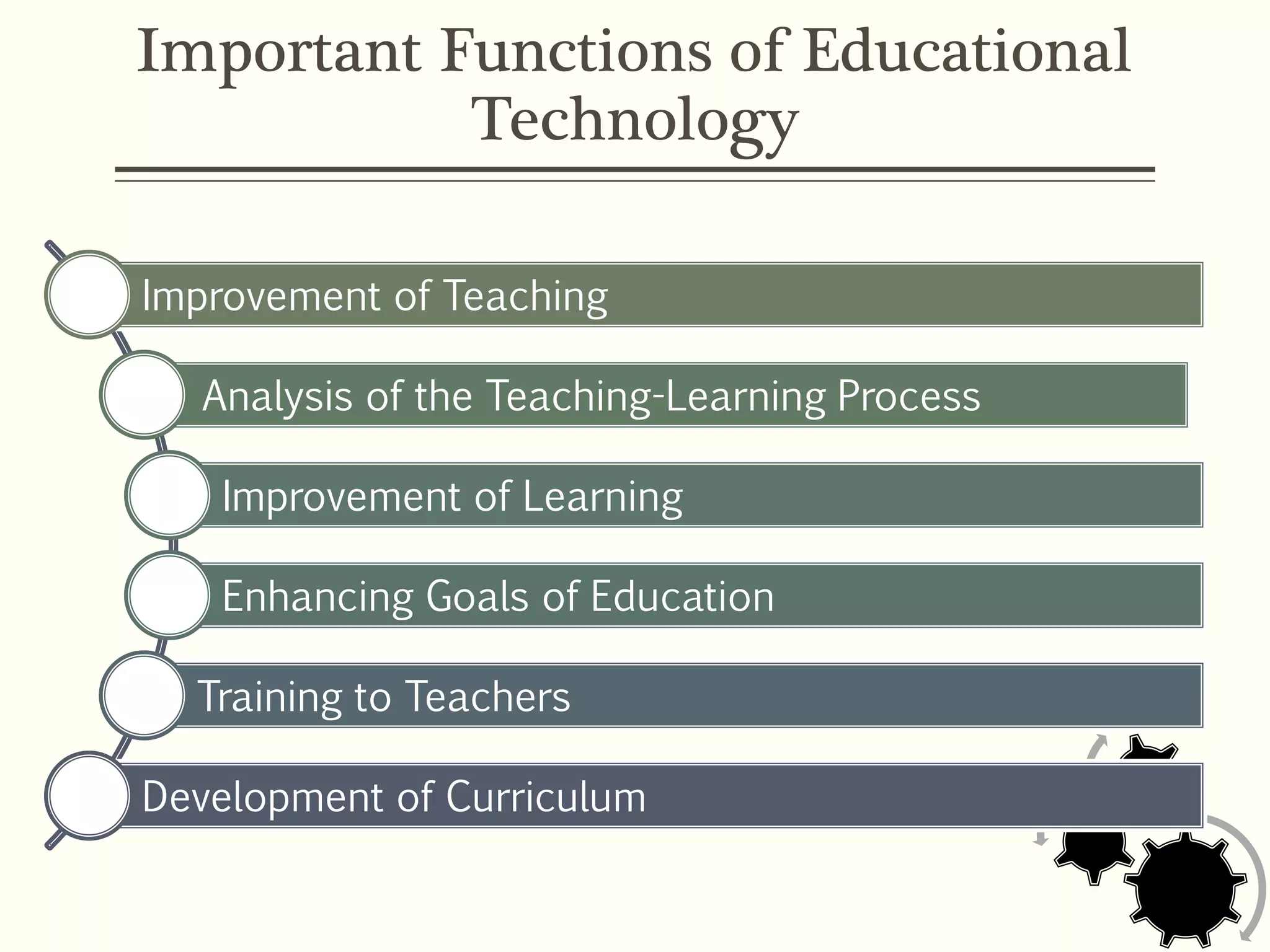
Important Functions of Educational
Technology
Improvement of Teaching
Analysis of the Teaching-Learning Process
Improvement of Learning
Enhancing Goals of Education
Training to Teachers
Development of Curriculum
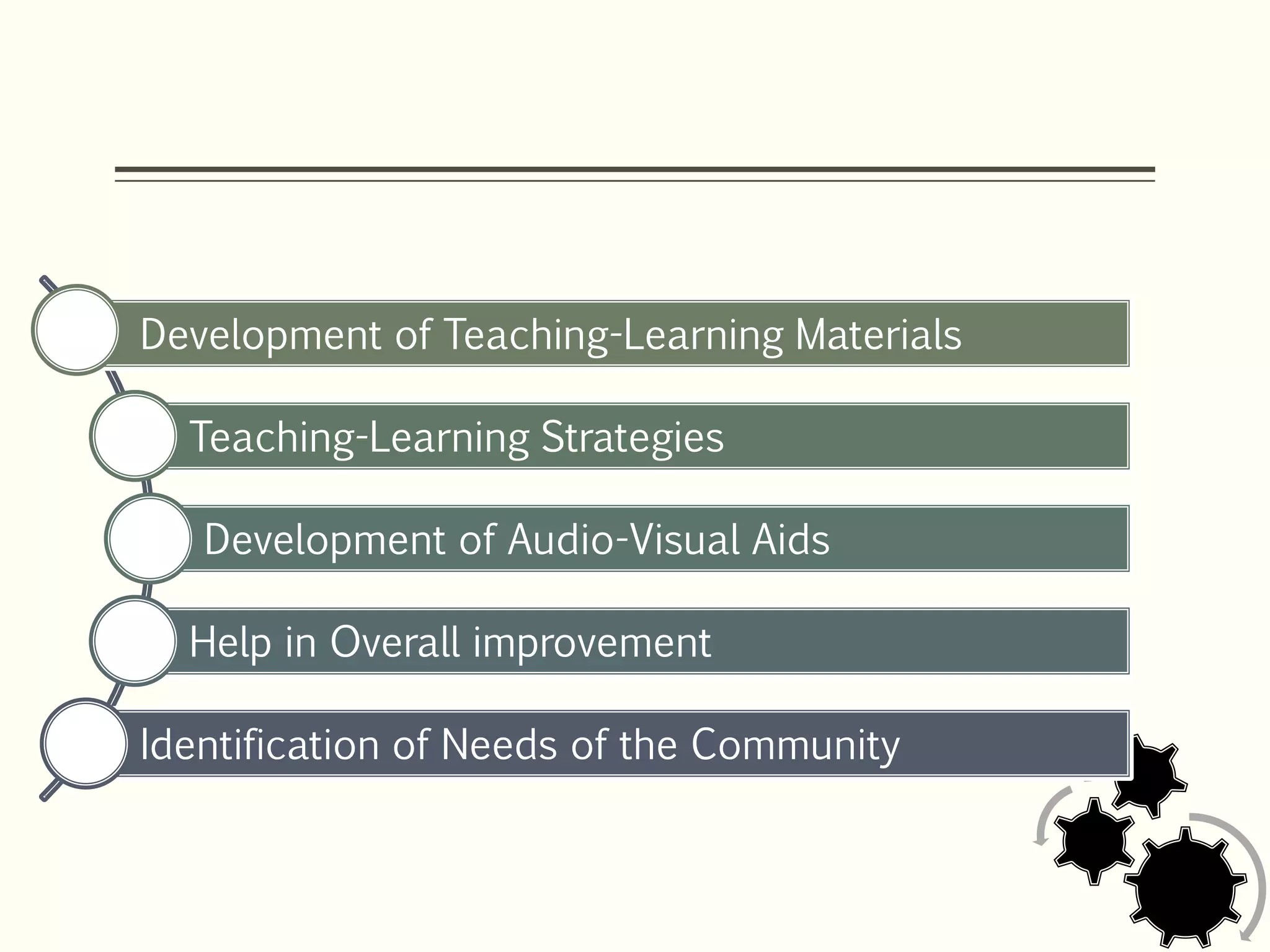
Development of Teaching-Learning Materials
Teaching-Learning Strategies
Development of Audio-Visual Aids
Help in Overall improvement
Identification of Needs of the Community
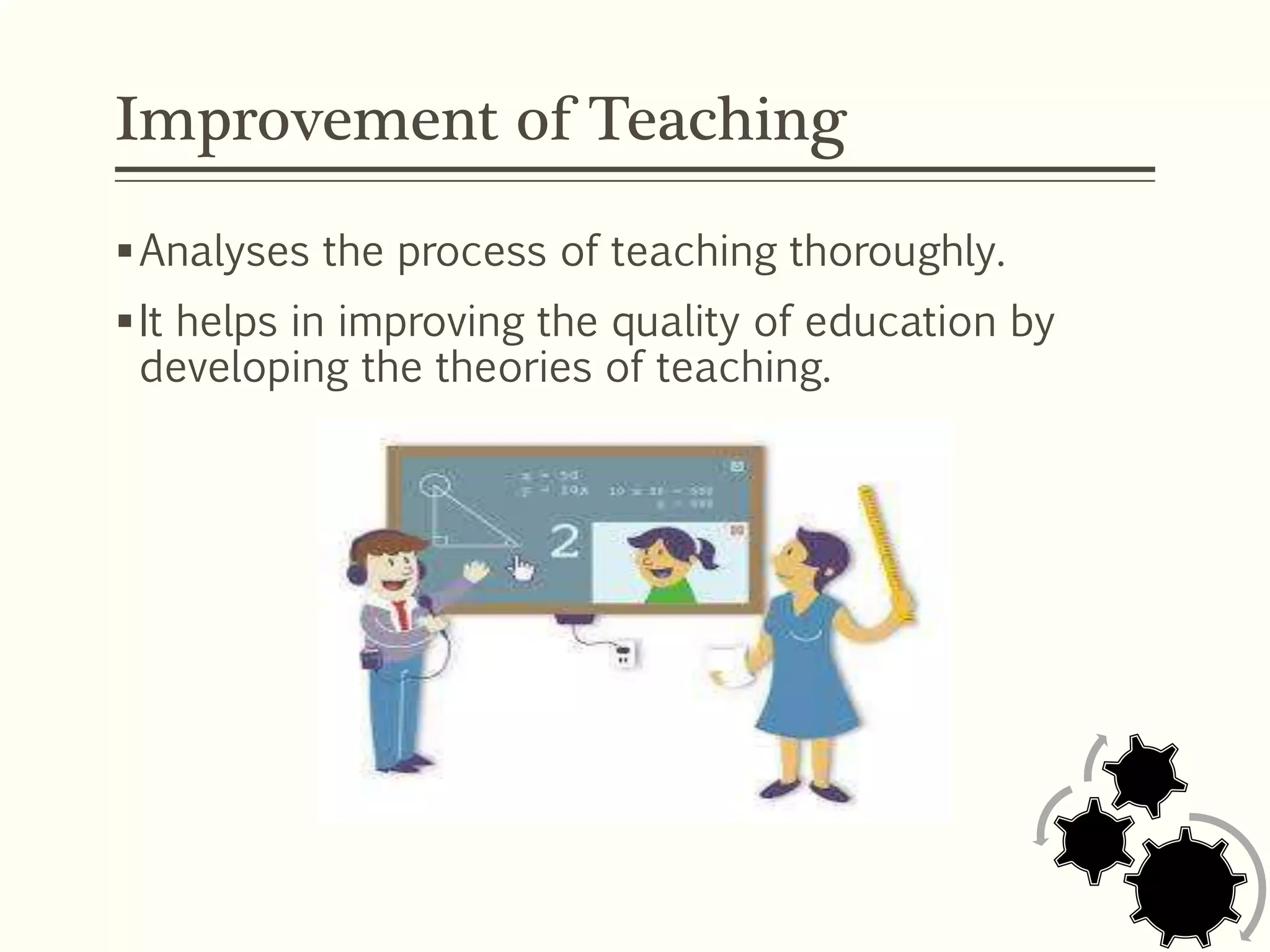
Improvement of Teaching
Analyses the process of teaching thoroughly.
It helps in improving the quality of education by
developing the theories of teaching.
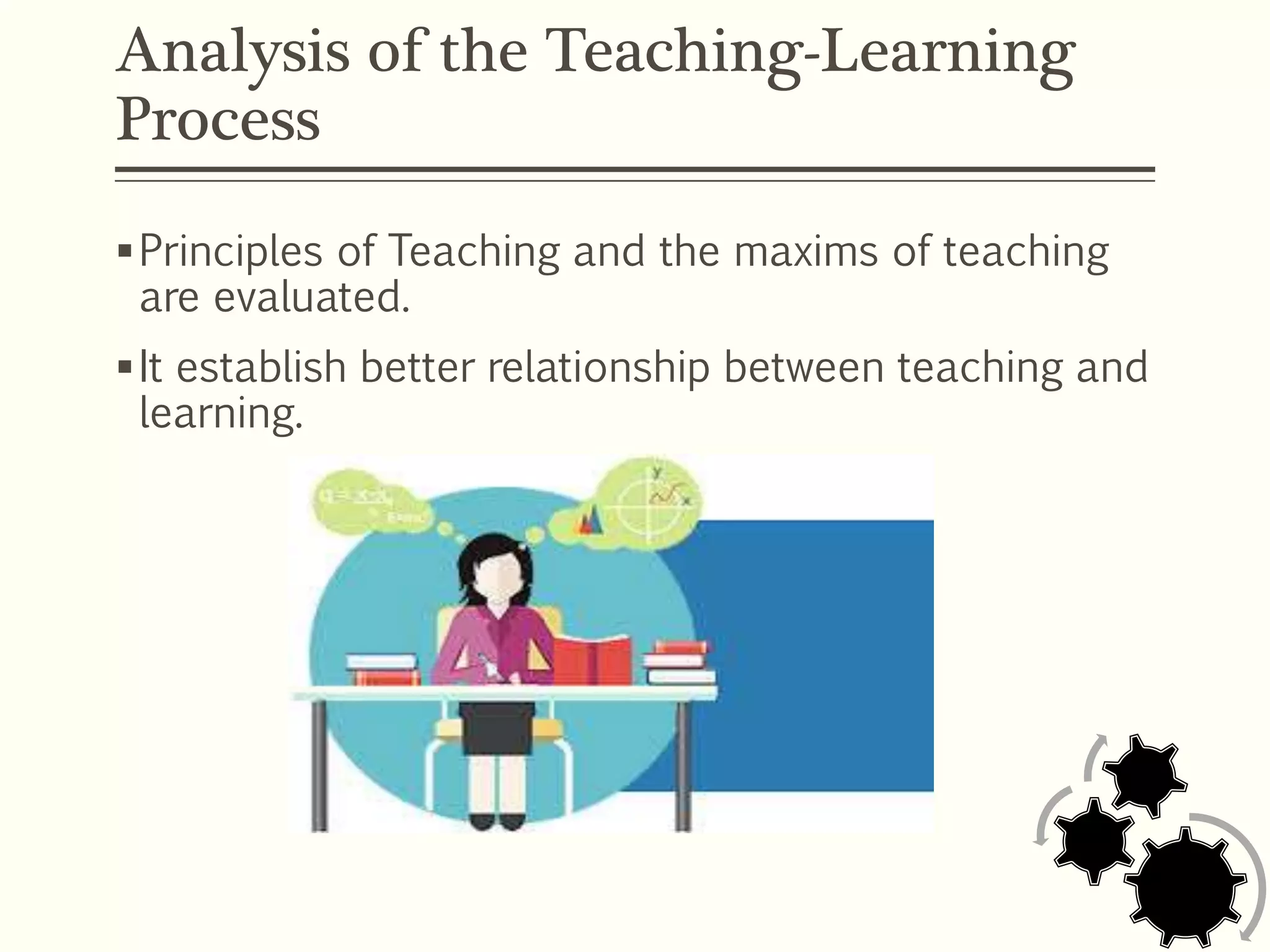
Analysis of the Teaching-Learning
Process
Principles of Teaching and the maxims of teaching
are evaluated.
It establish better relationship between teaching and
learning.
Improvement of Learning
Facilitates more and more of learning in less time,
It takes the help of various empirically established
generalizations, from psychology, sociology, physical
sciences, engineering, etc.
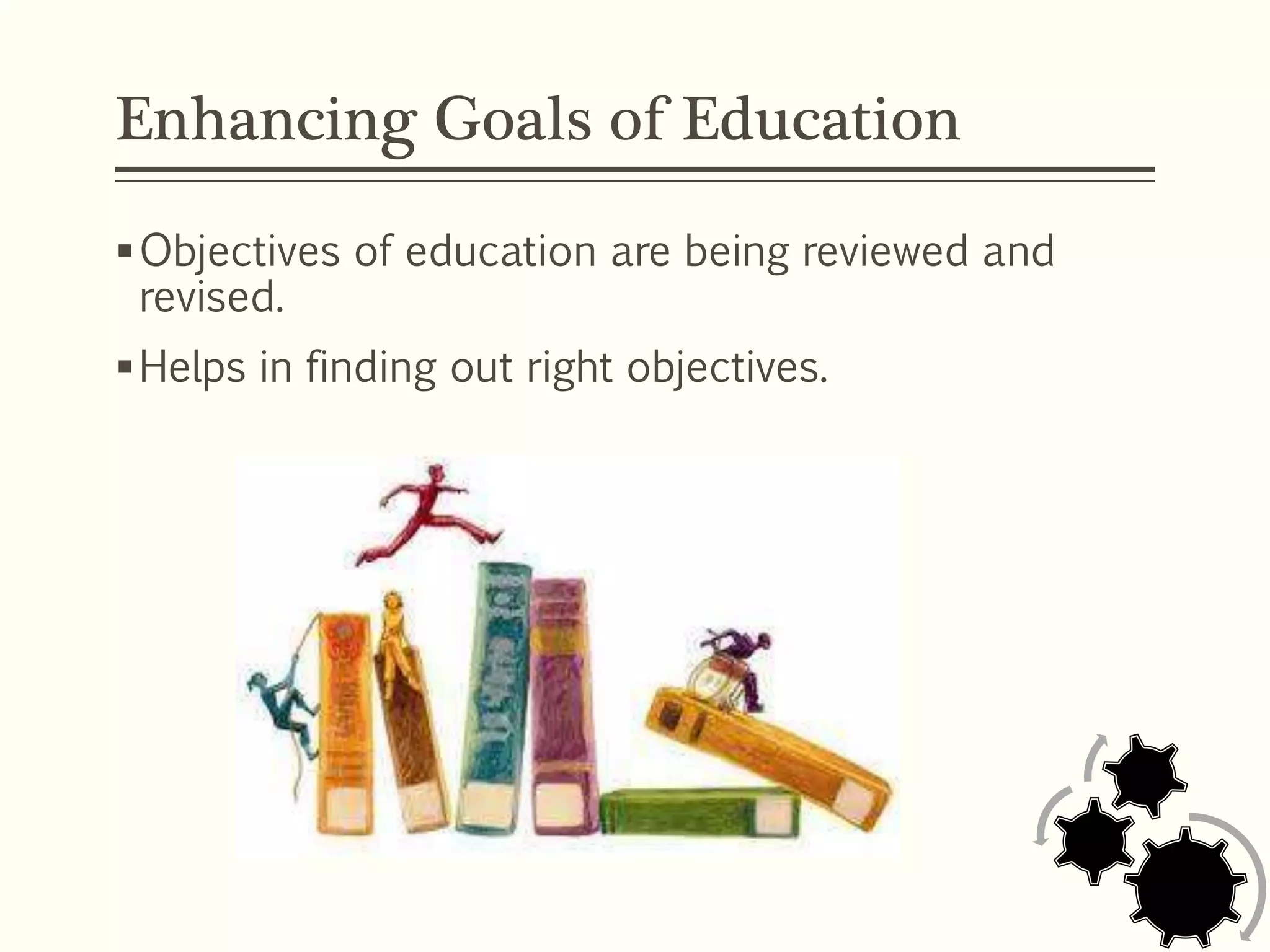
Enhancing Goals of Education
Objectives of education are being reviewed and
revised.
Helps in finding out right objectives.
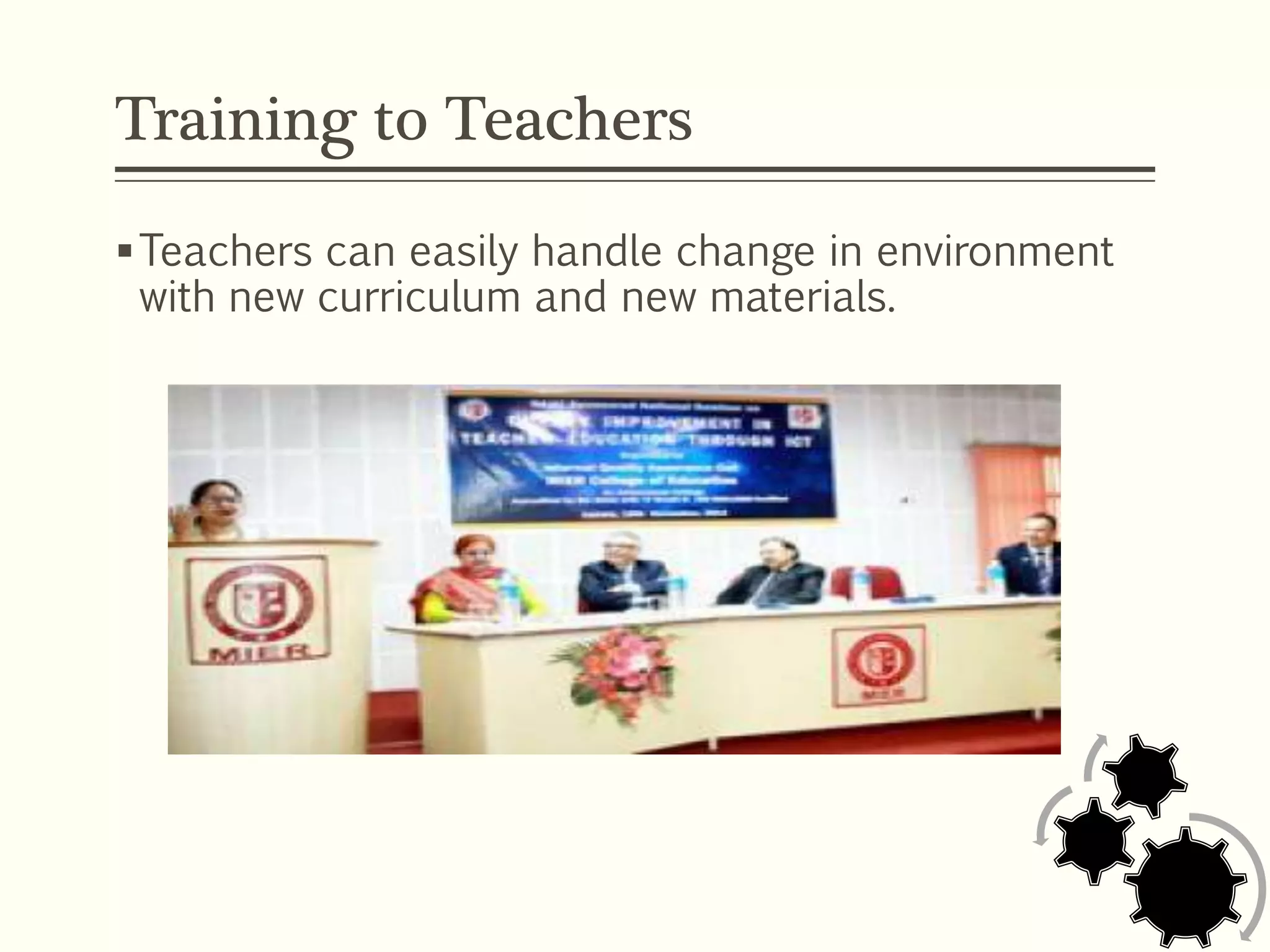
Training to Teachers
Teachers can easily handle change in environment
with new curriculum and new materials.
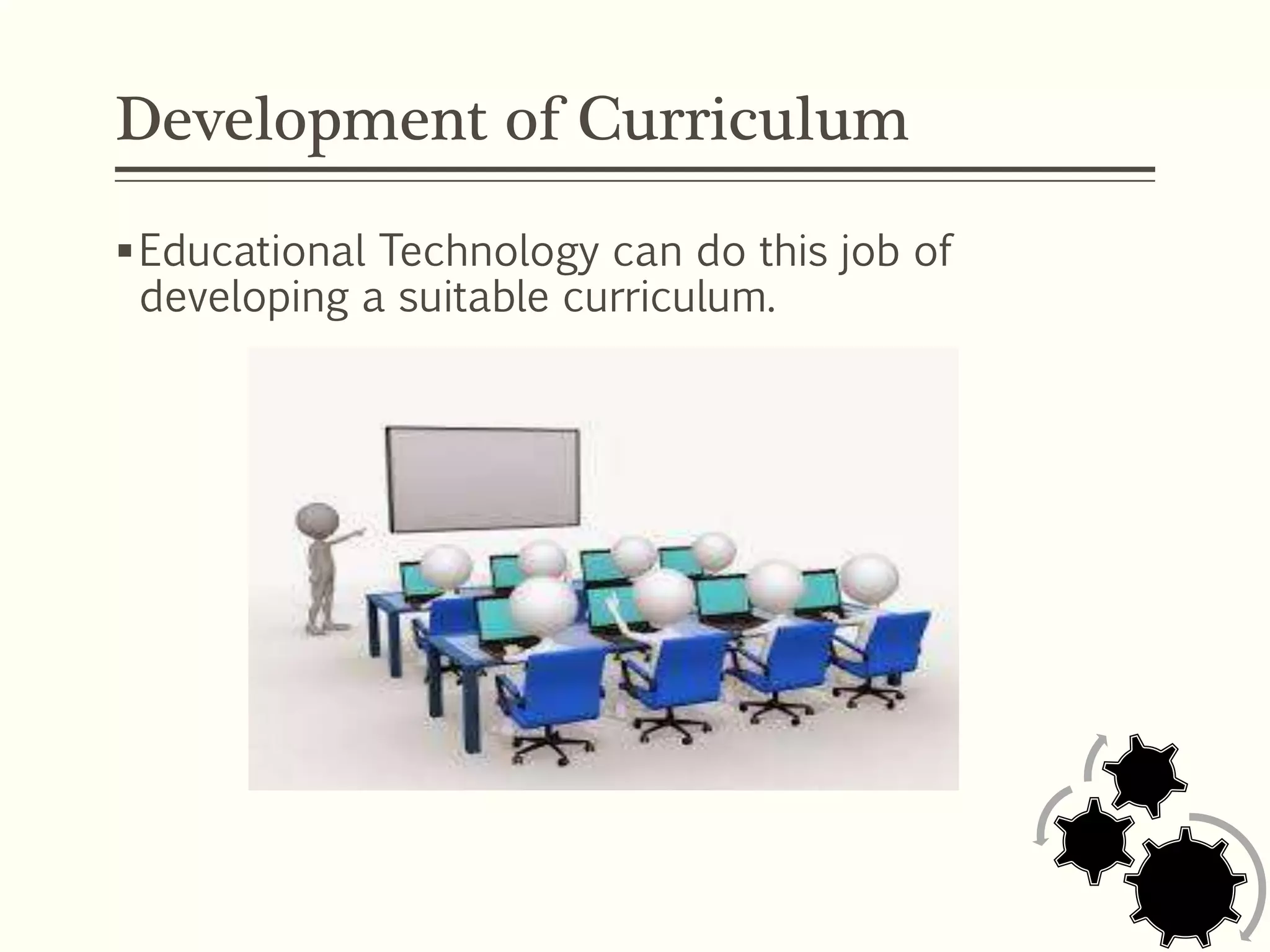
Development of Curriculum
Educational Technology can do this job of
developing a suitable curriculum.
Development of Teaching-Learning
Materials
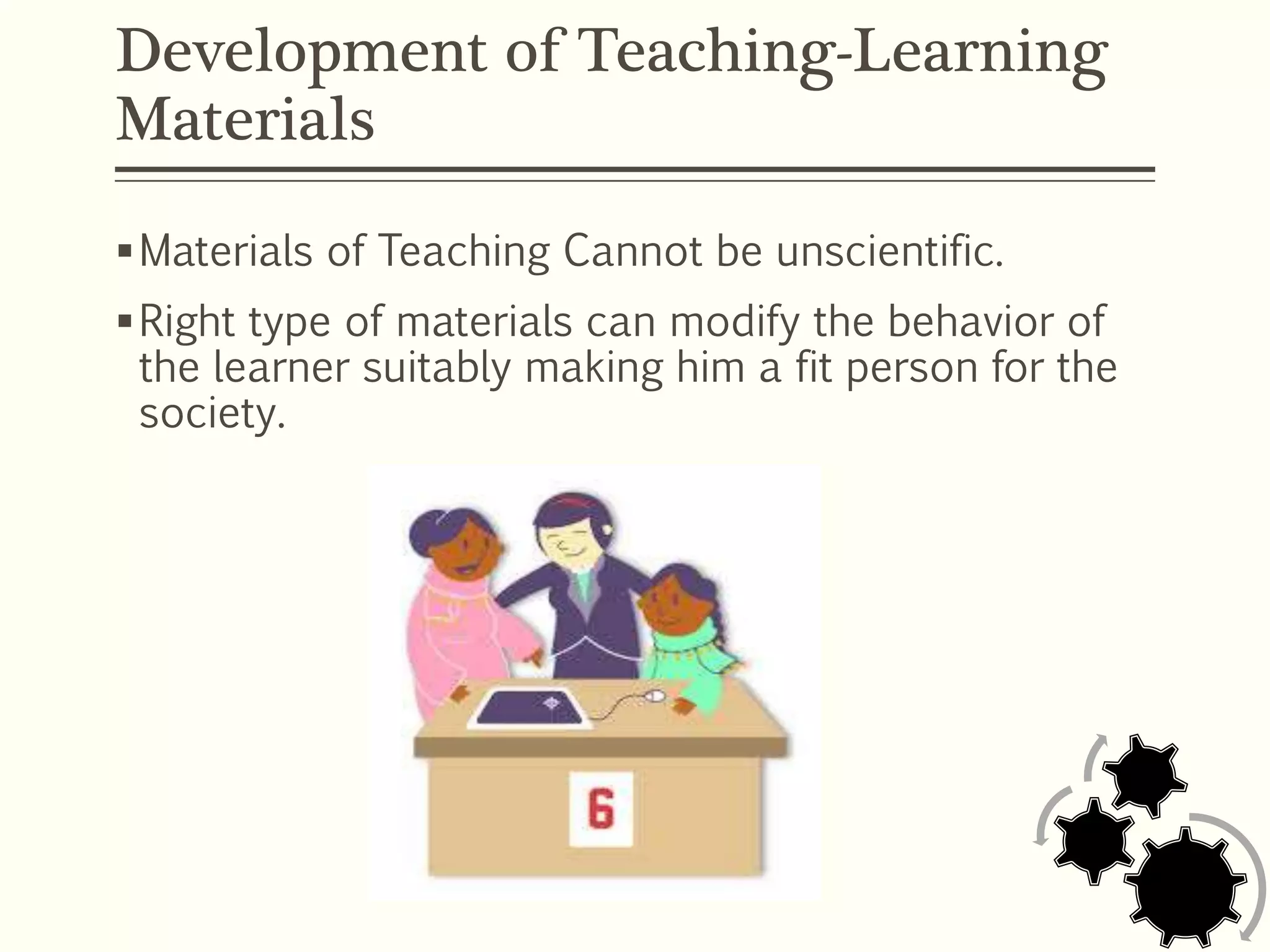
Materials of Teaching Cannot be unscientific.
Right type of materials can modify the behavior of
the learner suitably making him a fit person for the
society.
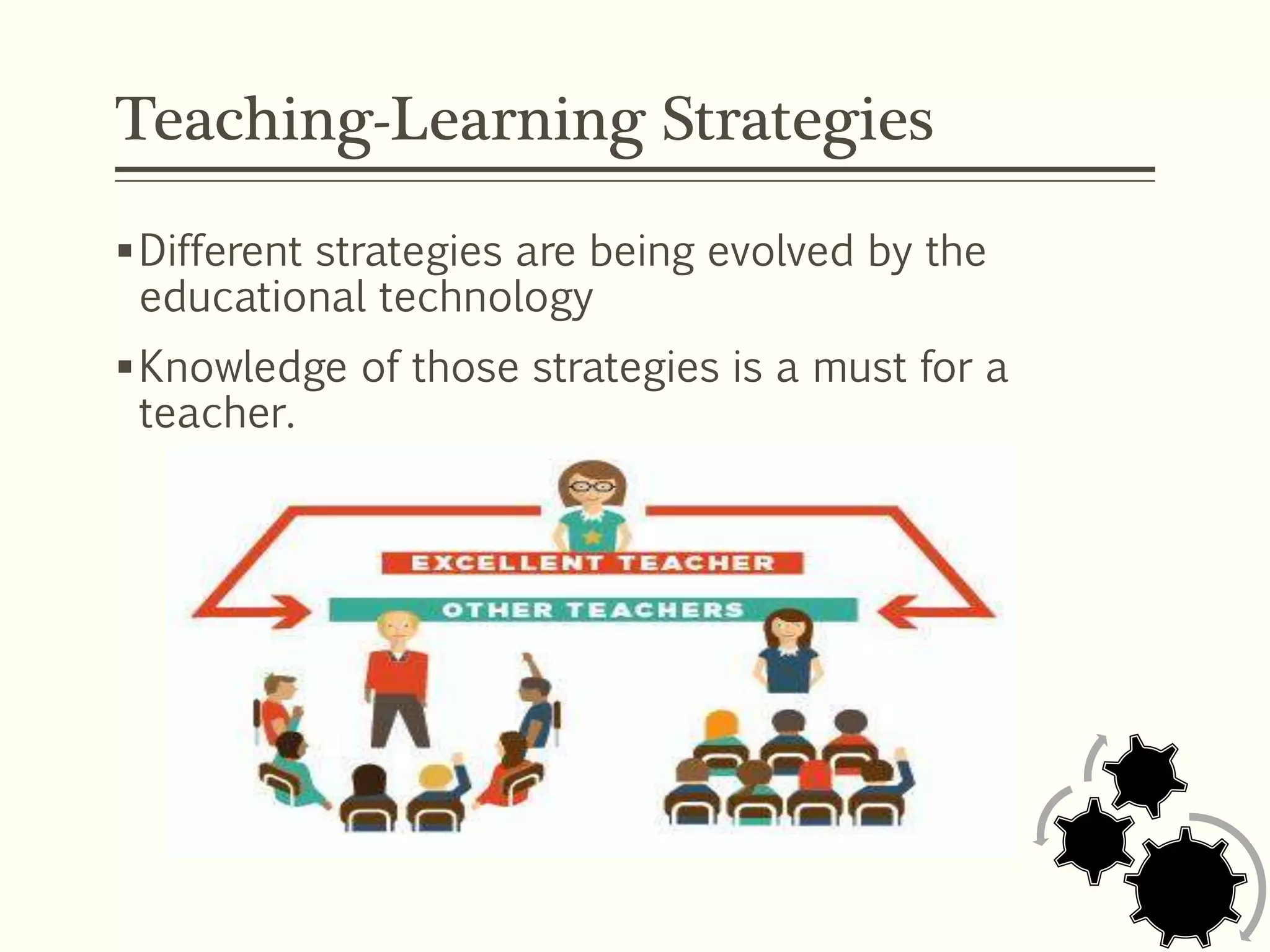
Teaching-Learning Strategies
Different strategies are being evolved by the
educational technology
Knowledge of those strategies is a must for a
teacher.
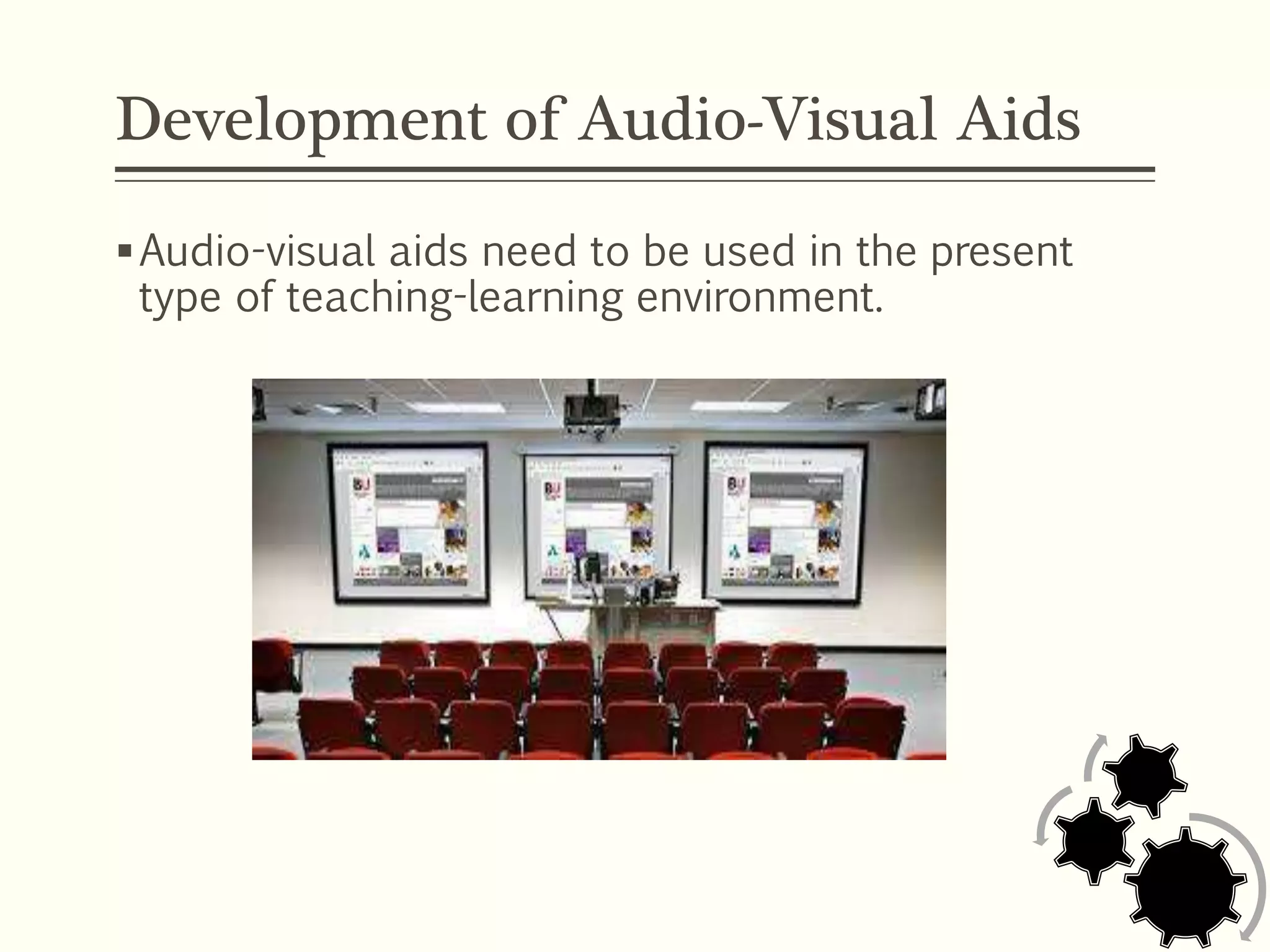
Development of Audio-Visual Aids
Audio-visual aids need to be used in the present
type of teaching-learning environment.
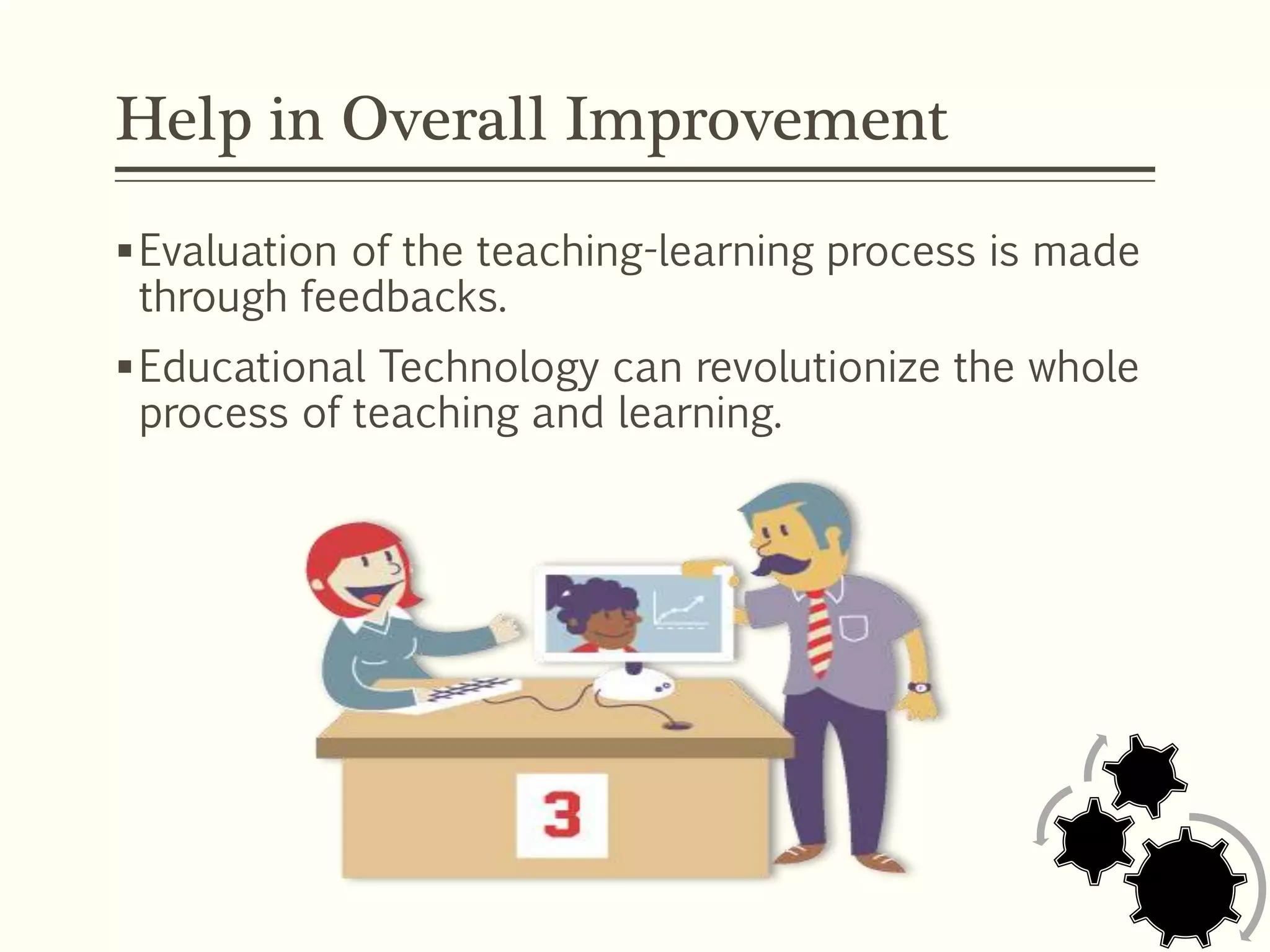
Help in Overall Improvement
Evaluation of the teaching-learning process is made
through feedbacks.
Educational Technology can revolutionize the whole
process of teaching and learning.
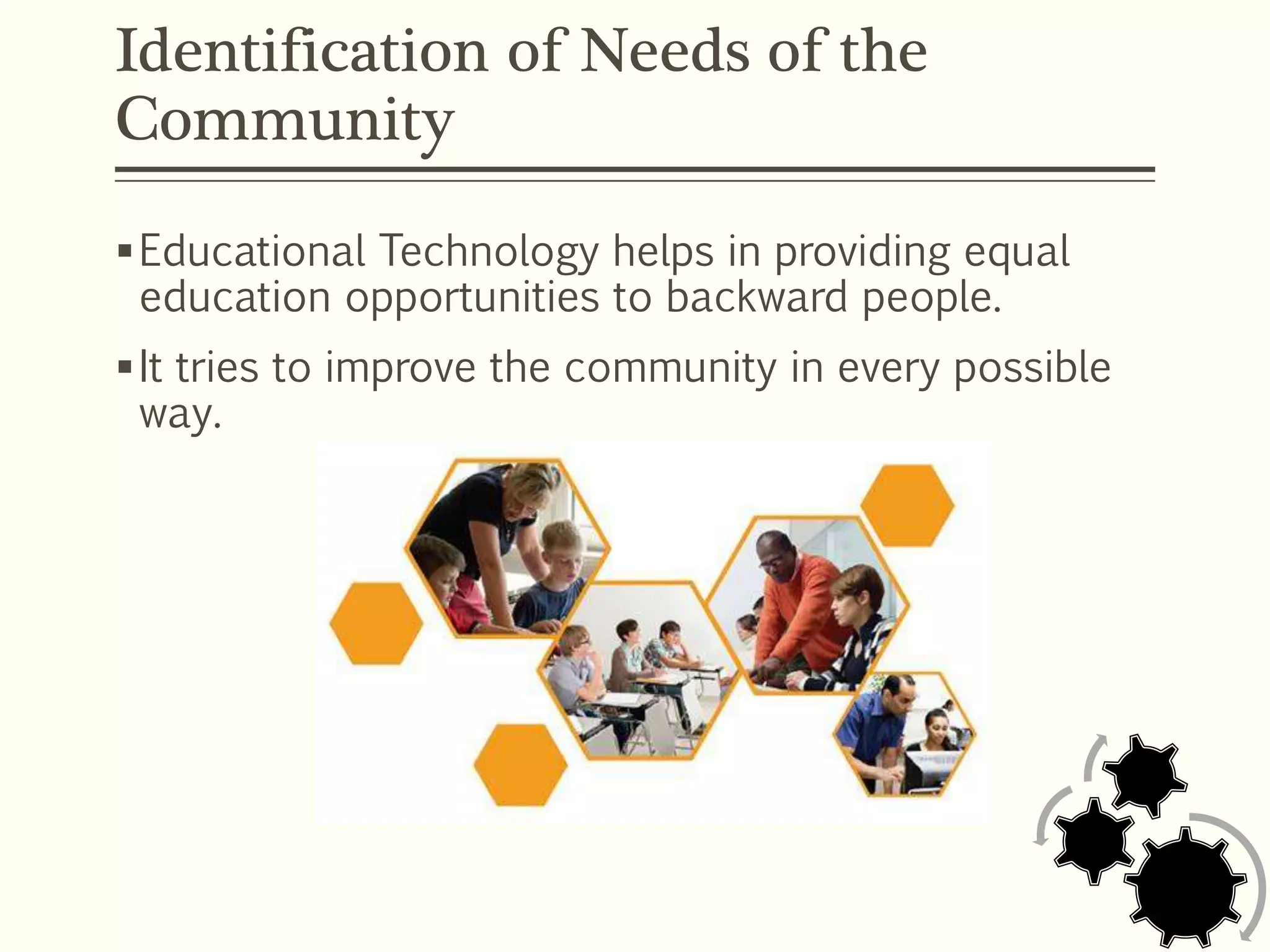
Identification of Needs of the
Community
Educational Technology helps in providing equal
education opportunities to backward people.
It tries to improve the community in every possible
way.
Thank You!!!


Roles and functions of educational technology in the

  • 1.
    ROLES AND FUNCTIONS OFEDUCATIONAL TECHNOLOGY IN THE 21ST CENTURY EDUCATION
  • 2.
    The Role ofEducation The Role of Education is to prepare students to become: Active Successful Contributing members of Society
  • 3.
    Factors in decidingcurriculum Instruction must be student- centered Education should be collaborative Learning should have context
  • 4.
    Instruction should bestudent centered Student-centered instruction is encouraged in the 21st century. Students acquire new information by themselves and with the guidance of their teacher. They’ve “learned how to learn” on their own. They are encourage to use different learning styles. Teacher acts as the facilitator for the students. “Learning is about discovery, not the memorization of facts.”
  • 5.
    Education should becollaborative Students are encouraged to work together to discover new information. Schools collaborate with other educational institutions to share information and learn about different methods that have ben developed. Schools are willing to alter their institutional methods in the light of new advancements.
  • 6.
    Learning should havecontext The teacher still provides the guidance in a student- centered classroom. They help their students to understand how the skills can be applied in their lives. Students are motivated to learn something if they find value on it. Students learn skills which can be used in any situation.
  • 7.
    Role of Technologyin the 21st Century Learning Easily created and shared digital content Technology allows 24/7 access to information Constant social interaction
  • 8.
    Integration of Technologyas a Fundamental Building block of Education Development of Profeciency in the 21st Century Skills Support to Innovative Teaching and Learning Creation of Robust Education Systems
  • 9.
    Important Functions ofEducational Technology Improvement of Teaching Analysis of the Teaching-Learning Process Improvement of Learning Enhancing Goals of Education Training to Teachers Development of Curriculum
  • 10.
    Development of Teaching-LearningMaterials Teaching-Learning Strategies Development of Audio-Visual Aids Help in Overall improvement Identification of Needs of the Community
  • 11.
    Improvement of Teaching Analysesthe process of teaching thoroughly. It helps in improving the quality of education by developing the theories of teaching.
  • 12.
    Analysis of theTeaching-Learning Process Principles of Teaching and the maxims of teaching are evaluated. It establish better relationship between teaching and learning.
  • 13.
    Improvement of Learning Facilitatesmore and more of learning in less time, It takes the help of various empirically established generalizations, from psychology, sociology, physical sciences, engineering, etc.
  • 14.
    Enhancing Goals ofEducation Objectives of education are being reviewed and revised. Helps in finding out right objectives.
  • 15.
    Training to Teachers Teacherscan easily handle change in environment with new curriculum and new materials.
  • 16.
    Development of Curriculum EducationalTechnology can do this job of developing a suitable curriculum.
  • 17.
    Development of Teaching-Learning Materials Materialsof Teaching Cannot be unscientific. Right type of materials can modify the behavior of the learner suitably making him a fit person for the society.
  • 18.
    Teaching-Learning Strategies Different strategiesare being evolved by the educational technology Knowledge of those strategies is a must for a teacher.
  • 19.
    Development of Audio-VisualAids Audio-visual aids need to be used in the present type of teaching-learning environment.
  • 20.
    Help in OverallImprovement Evaluation of the teaching-learning process is made through feedbacks. Educational Technology can revolutionize the whole process of teaching and learning.
  • 21.
    Identification of Needsof the Community Educational Technology helps in providing equal education opportunities to backward people. It tries to improve the community in every possible way.
  • 22.