Instructional
  Planning
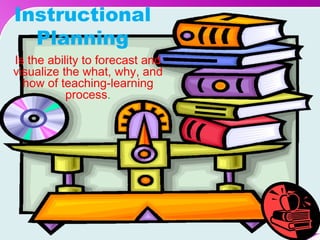
Is the ability to forecast and
visualize the what, why, and
  how of teaching-learning
           process.


                     Powerpoint Templates   Page 1
Selection
     of
inStructional
  materialS
    Powerpoint Templates   Page 2
Selection  
• The act or an instance of
  selecting or the fact of having
  been selected.
• One that is selected


            Powerpoint Templates   Page 3
Non-Projected
      Visual
 These are visual aids that do
     not require the use of
electricity to project images on
           the screen.
           Powerpoint Templates   Page 4
Chalkboard
the most versatile and useful visual aid that is available
Multipurpose boards
they have a smooth plastic surface and use special
marking pens rather than chalk.
Display boards
bulletin board is the common type of display boards
commonly used for decorative, motivational, or
instructional purposes.
Graphic Materials
non-projected , two dimensional materials designed
specifically to communicate a message to a viewer.


                      Powerpoint Templates           Page 5
Still Pictures
photographic representation of people, places, and things.

Maps and globes
provide information about surface features, places, scientific
data, social and cultural data, political data, historical changes,
and economic data.

Realia
real things; they give real life meaning to otherwise abstract
words.

Models and Mock-ups
allow learners to examine things often not easily seen in the real
things.

Dioramas
they are designed to reproduce the reality of the past and
                          Powerpoint Templates                    Page 6
present or depict future events.
Projected Visual
  these refer to media formats in
which still images are enlarged and
      displayed on a screen.


            Powerpoint Templates   Page 7
Overhead Projector
transparencies are large shades for use with
an overhead projector by a presenter
positioned at the front of a lighted room.
Filmstrip
a roll 35mm transparent film containing a
series of related still printers intended
for showing one at the time.
Slides
small formats photographic transpiring
indivually mounted for one at a time
projection.     Powerpoint Templates        Page 8
Audio media

they include formats that
   convey information.


        Powerpoint Templates   Page 9
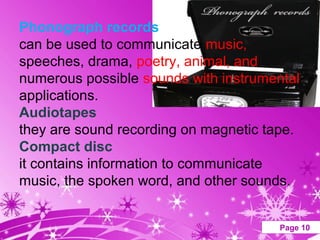
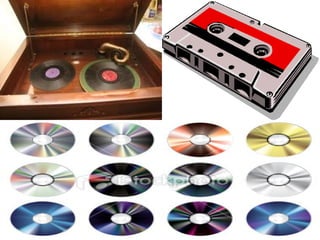
Phonograph records
can be used to communicate music,
speeches, drama, poetry, animal, and
numerous possible sounds with instrumental
applications.
Audiotapes
they are sound recording on magnetic tape.
Compact disc
it contains information to communicate
music, the spoken word, and other sounds.

               Powerpoint Templates    Page 10
Powerpoint Templates   Page 11
They involve integrating each medium and
media format into a structural, systematic
presentation


               Powerpoint Templates   Page 12
1.MULTIMEDIA KITS –collection of
teaching/learning materials involving more than one
type of medium and organized around a simple
topic. Kits may include audiotapes, records, still
pictures, study prints, filmstrips, slides overhead,
transparencies, maps, worksheets, charts, booklets,
real objects and model.


2.MODULES –referred to as a learning
activity package, an individualized learning
package

                  Powerpoint Templates         Page 13
3.LEARNING CENTER –an individualized
environment designed to encourage the student to
use a variety of instructional media, to engage in
diversified learning activities and to assure major
responsibility for his or her own learning.

4. INTERACTIVE VIDEO - an instructional delivery
system in which recorded video material is
presented under computer control to viewers who
not only see or hear the pictures and sounds, but
active responses, with those responses affecting the
pace and sequence of the presentation.

                  Powerpoint Templates          Page 14
Powerpoint Templates   Page 15
FILM refers to a celluloid material on which a series of
still images are imprinted.
VIDEO is a display of pictures on a television- type
screen.
ELECTRONIC DISTRIBUTION SYSTEM. Transmits
sounds and pictured over distances. These include
radio, television, teleconference systems and
text/videotext.
COMPUTER-BASED INSTRUCTIONAL MATERIALS.
Microcomputers in the classroom have the potential for a
variety of uses that could enhance learning and simplify
some of the tasks of the teacher.


                    Powerpoint Templates         Page 16
Powerpoint Templates   Page 17
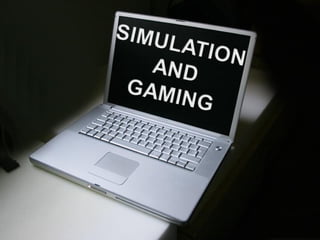
Instructional Games are activities in
which participants follow prescribed rules
that are different from those of reality as
they strive to attain a challenging goal.


Instructional Simulation recreates
or represents an actual event or situation
that causes the learner to act, react and
make decisions.
                Powerpoint Templates   Page 18
Powerpoint Templates   Page 19
1. textbooks- should be viewed as teaching aids and
   should not be considered as the only source of printed
   information to be used during instruction.
2. Resource materials – supplementary books,
   newspaper, journals, pamphlets, and brochures,
   encyclopedias, world almanac and atlases can be
   used to enrich curriculum and enhance classroom
   instructional activities.
3. Workbooks – commonly used as a supplement to
   textbook and include a spare of students to write in
   their answers to questions.
4. Duplicated Materials – teachers often use duplicated
   materials to supplement other printed materials in the
   textbook or resource books.

                   Powerpoint Templates              Page 20
Powerpoint Templates   Page 21
PRODUCTION – is the act of making things; in
particular the act of making products that will be
trade or sold commercially.
MEDIA - refers to all modes of communication,
including print and audio- visual forms and there
accompanying technology.
MEDIA PRODUCTION - instructional materials
utilizing traditional and electronic “new” media
elements.
PRODUCING GRAPHICS - graphics must be plan
with consideration for the size and dimension of
visual material, design and lay out features,
background, materials and facilities that can be
employed.             Powerpoint Templates        Page 22
WAYS OF
PRODUCING
 GRAPHICS


  Powerpoint Templates   Page 23
USING READY - made pictures- a file of
clipped pictures on various subject for the
production of suitable graphic materials when
needed
COLOR SHADING - produce three-
dimensional effects in design.
DRY-TRANSFER LETTERS AND LETTERING
GUIDE – For teachers who may feel lack of
artistic skills, ready made transfer letter are
available in art supply.
OVERHEAD TRANSPARENCIES - can
usually present concepts, outline and
summaries to average-size classes and to a
larger groups.
                Powerpoint Templates        Page 24
SLIDE SERIES – the production clarification of
your concept, statement of objectives,
consideration of the audience, preparation of the
content outline, writing a treatment and finally the
stretching or photographing a story board.
VIDEO RECORDING - the production of videotape
recording is follows the methods of producing a
slide series.
DISPLAYS MATERIALS – there are types of
displayed materials, this are easels, flannel(felt)
boards, hook and loop magnetic chalkboard and
flip board.

                   Powerpoint Templates          Page 25

Instructional Planning

  • 1.
    Instructional Planning Isthe ability to forecast and visualize the what, why, and how of teaching-learning process. Powerpoint Templates Page 1
  • 2.
    Selection of inStructional materialS Powerpoint Templates Page 2
  • 3.
    Selection   • The actor an instance of selecting or the fact of having been selected. • One that is selected Powerpoint Templates Page 3
  • 4.
    Non-Projected Visual These are visual aids that do not require the use of electricity to project images on the screen. Powerpoint Templates Page 4
  • 5.
    Chalkboard the most versatileand useful visual aid that is available Multipurpose boards they have a smooth plastic surface and use special marking pens rather than chalk. Display boards bulletin board is the common type of display boards commonly used for decorative, motivational, or instructional purposes. Graphic Materials non-projected , two dimensional materials designed specifically to communicate a message to a viewer. Powerpoint Templates Page 5
  • 6.
    Still Pictures photographic representationof people, places, and things. Maps and globes provide information about surface features, places, scientific data, social and cultural data, political data, historical changes, and economic data. Realia real things; they give real life meaning to otherwise abstract words. Models and Mock-ups allow learners to examine things often not easily seen in the real things. Dioramas they are designed to reproduce the reality of the past and Powerpoint Templates Page 6 present or depict future events.
  • 7.
    Projected Visual these refer to media formats in which still images are enlarged and displayed on a screen. Powerpoint Templates Page 7
  • 8.
    Overhead Projector transparencies arelarge shades for use with an overhead projector by a presenter positioned at the front of a lighted room. Filmstrip a roll 35mm transparent film containing a series of related still printers intended for showing one at the time. Slides small formats photographic transpiring indivually mounted for one at a time projection. Powerpoint Templates Page 8
  • 9.
    Audio media they includeformats that convey information. Powerpoint Templates Page 9
  • 10.
    Phonograph records can beused to communicate music, speeches, drama, poetry, animal, and numerous possible sounds with instrumental applications. Audiotapes they are sound recording on magnetic tape. Compact disc it contains information to communicate music, the spoken word, and other sounds. Powerpoint Templates Page 10
  • 11.
  • 12.
    They involve integratingeach medium and media format into a structural, systematic presentation Powerpoint Templates Page 12
  • 13.
    1.MULTIMEDIA KITS –collectionof teaching/learning materials involving more than one type of medium and organized around a simple topic. Kits may include audiotapes, records, still pictures, study prints, filmstrips, slides overhead, transparencies, maps, worksheets, charts, booklets, real objects and model. 2.MODULES –referred to as a learning activity package, an individualized learning package Powerpoint Templates Page 13
  • 14.
    3.LEARNING CENTER –anindividualized environment designed to encourage the student to use a variety of instructional media, to engage in diversified learning activities and to assure major responsibility for his or her own learning. 4. INTERACTIVE VIDEO - an instructional delivery system in which recorded video material is presented under computer control to viewers who not only see or hear the pictures and sounds, but active responses, with those responses affecting the pace and sequence of the presentation. Powerpoint Templates Page 14
  • 15.
  • 16.
    FILM refers toa celluloid material on which a series of still images are imprinted. VIDEO is a display of pictures on a television- type screen. ELECTRONIC DISTRIBUTION SYSTEM. Transmits sounds and pictured over distances. These include radio, television, teleconference systems and text/videotext. COMPUTER-BASED INSTRUCTIONAL MATERIALS. Microcomputers in the classroom have the potential for a variety of uses that could enhance learning and simplify some of the tasks of the teacher. Powerpoint Templates Page 16
  • 17.
  • 18.
    Instructional Games areactivities in which participants follow prescribed rules that are different from those of reality as they strive to attain a challenging goal. Instructional Simulation recreates or represents an actual event or situation that causes the learner to act, react and make decisions. Powerpoint Templates Page 18
  • 19.
  • 20.
    1. textbooks- shouldbe viewed as teaching aids and should not be considered as the only source of printed information to be used during instruction. 2. Resource materials – supplementary books, newspaper, journals, pamphlets, and brochures, encyclopedias, world almanac and atlases can be used to enrich curriculum and enhance classroom instructional activities. 3. Workbooks – commonly used as a supplement to textbook and include a spare of students to write in their answers to questions. 4. Duplicated Materials – teachers often use duplicated materials to supplement other printed materials in the textbook or resource books. Powerpoint Templates Page 20
  • 21.
  • 22.
    PRODUCTION – isthe act of making things; in particular the act of making products that will be trade or sold commercially. MEDIA - refers to all modes of communication, including print and audio- visual forms and there accompanying technology. MEDIA PRODUCTION - instructional materials utilizing traditional and electronic “new” media elements. PRODUCING GRAPHICS - graphics must be plan with consideration for the size and dimension of visual material, design and lay out features, background, materials and facilities that can be employed. Powerpoint Templates Page 22
  • 23.
    WAYS OF PRODUCING GRAPHICS Powerpoint Templates Page 23
  • 24.
    USING READY -made pictures- a file of clipped pictures on various subject for the production of suitable graphic materials when needed COLOR SHADING - produce three- dimensional effects in design. DRY-TRANSFER LETTERS AND LETTERING GUIDE – For teachers who may feel lack of artistic skills, ready made transfer letter are available in art supply. OVERHEAD TRANSPARENCIES - can usually present concepts, outline and summaries to average-size classes and to a larger groups. Powerpoint Templates Page 24
  • 25.
    SLIDE SERIES –the production clarification of your concept, statement of objectives, consideration of the audience, preparation of the content outline, writing a treatment and finally the stretching or photographing a story board. VIDEO RECORDING - the production of videotape recording is follows the methods of producing a slide series. DISPLAYS MATERIALS – there are types of displayed materials, this are easels, flannel(felt) boards, hook and loop magnetic chalkboard and flip board. Powerpoint Templates Page 25

Editor's Notes