GROUP MEMBERS
 NAYAB TARIQ
 HINA ASIF
 BIBI LAIBA
 MUHAMMAD KHAN
 YASIR ABBAS
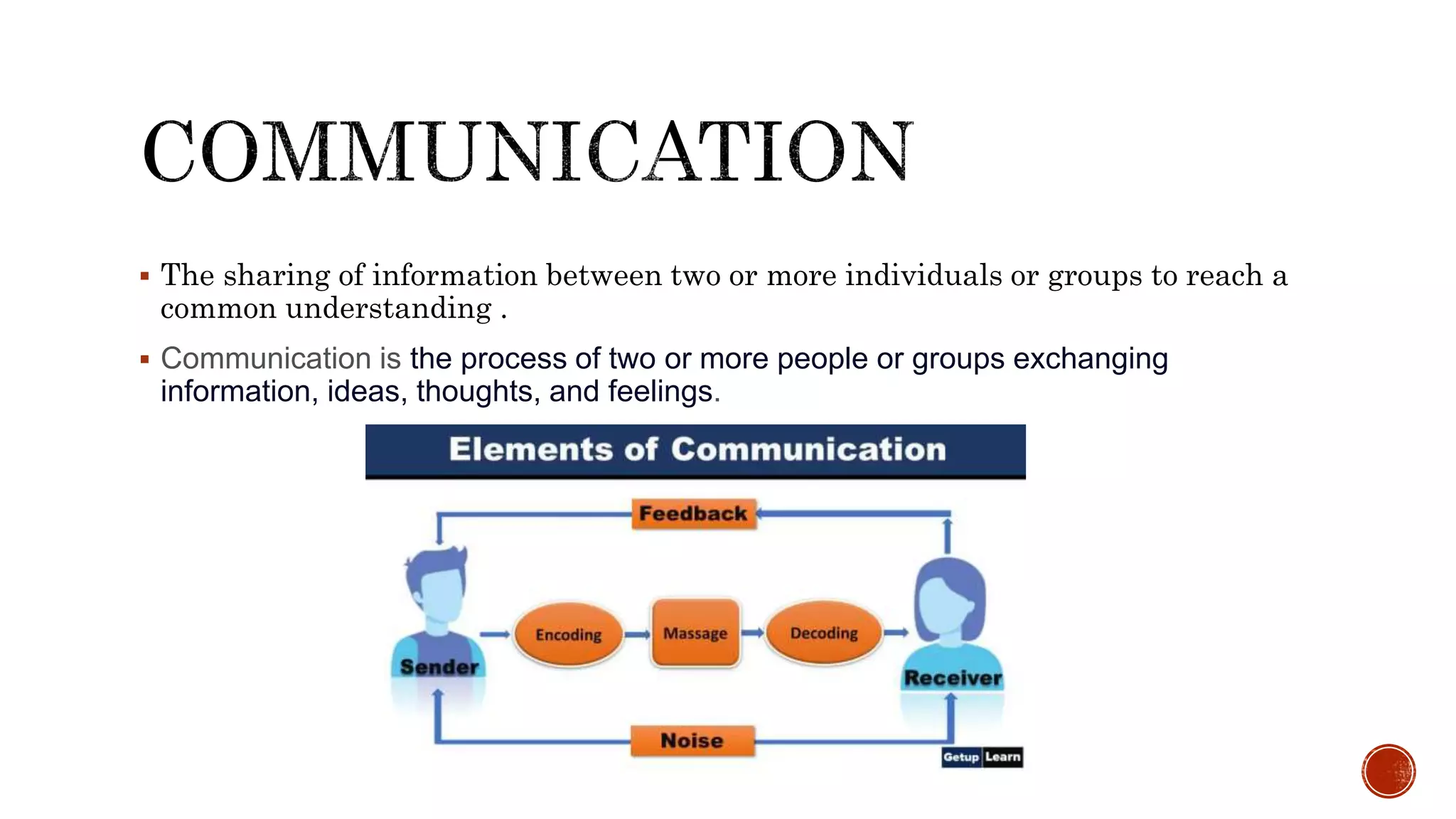
 The sharing of information between two or more individuals or groups to reach a
common understanding .
 Communication is the process of two or more people or groups exchanging
information, ideas, thoughts, and feelings.
Different ways in which people approach the process of
communication, i.e., the process of conveying and taking in
ideas and opinions, are called communication styles.
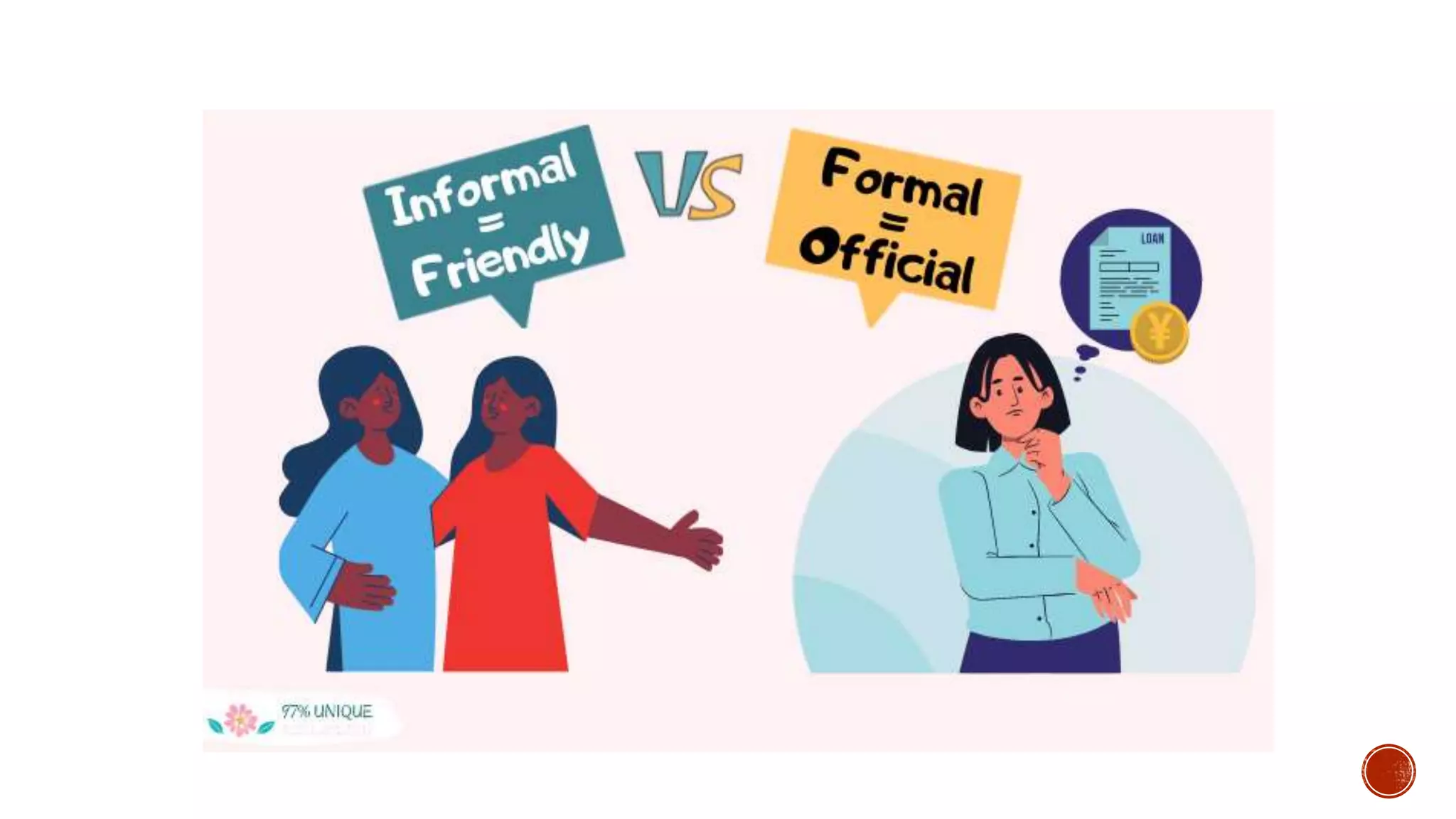
INFORMAL AND FORMAL
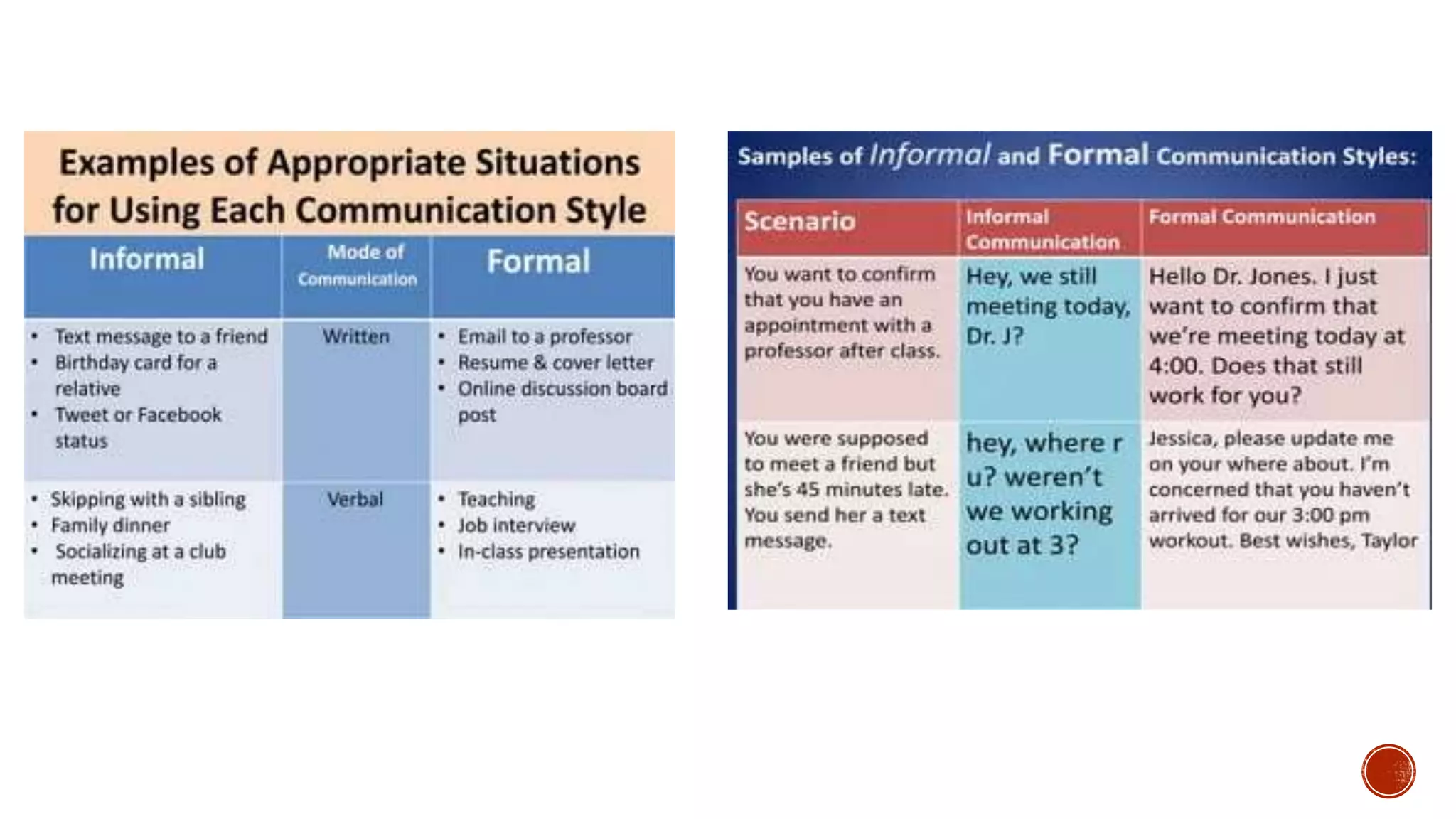
Can apply to any mode of communication .
Both styles are necessary .
Appropriate style depends on the situation or setting and the
people involved .
 A formal communication is the process of exchanging information on the
prescribed or official rules .
 The characteristics of formal communication
 To be formal, communication should satisfy three conditions — it should be:
• Rational,
• Structured, and
• Goal-oriented.
 Let’s consider all these characteristics in a bit more detail.
Formal communication is rational
 This means that formal communication is based on rules and routines that promote efficiency and reduce
personal biases.
 As such, it is:
• Impersonal, for it focuses on roles in an organization rather than personal attributes.
• Simple, designed to be efficient by establishing the flow of communication across functions rather than
individuals, and is based on the organization’s hierarchy
 Formal communication is structured
 Secondly, formal communication should be structured.
 But, what does that actually mean? What makes formal communication structured?
• It is explicit, prescriptive, and involves information that concerns all the members of the organization.
• A structured path is followed by the established chain of command.
• It follows well-defined rules and regulations.
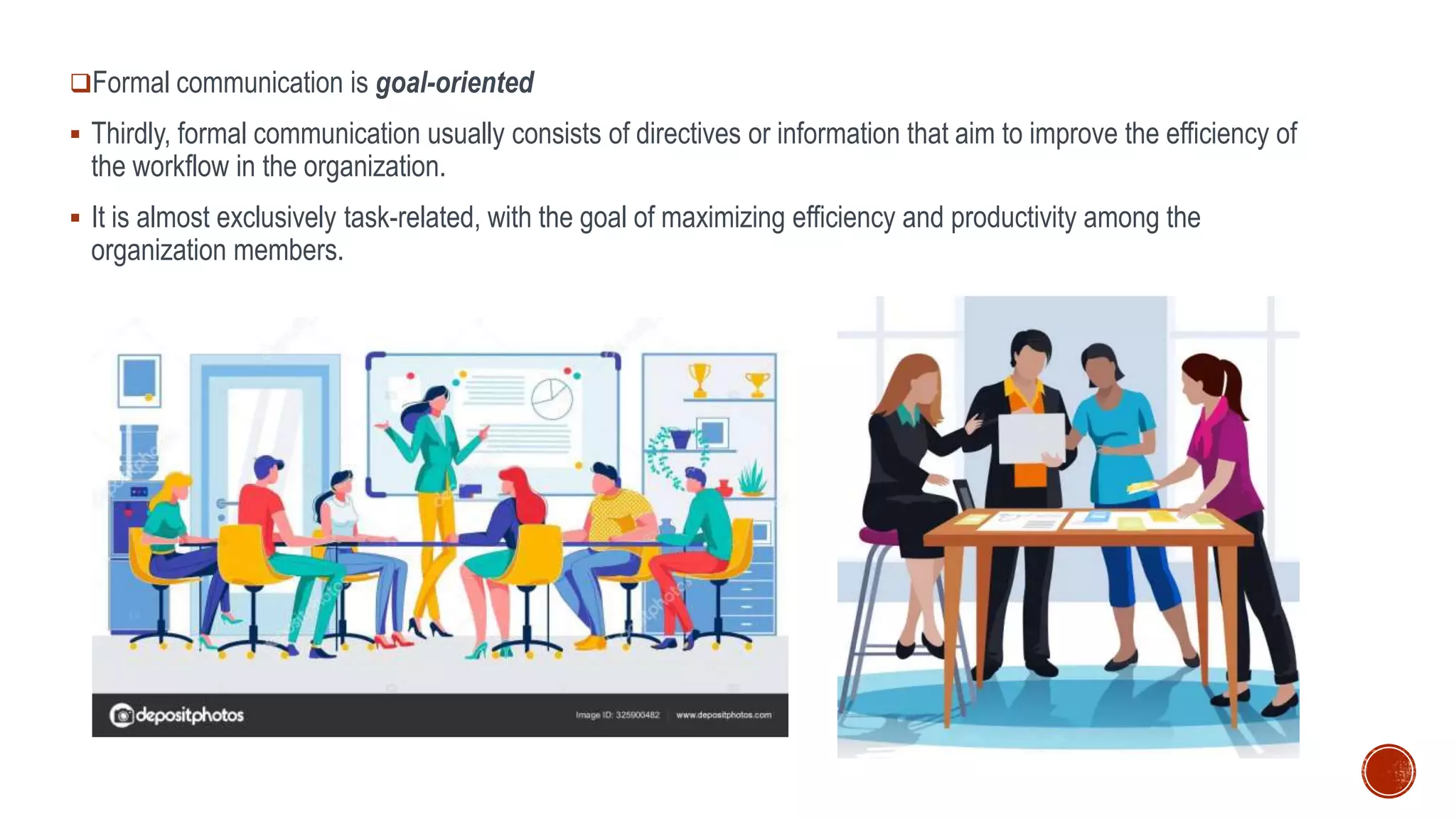
Formal communication is goal-oriented
 Thirdly, formal communication usually consists of directives or information that aim to improve the efficiency of
the workflow in the organization.
 It is almost exclusively task-related, with the goal of maximizing efficiency and productivity among the
organization members.
 An Informal communication is the process of spontaneous exchange of information
among various people of different status in the workplace or outside the workplace.
 The exchange of information is typically unplanned .
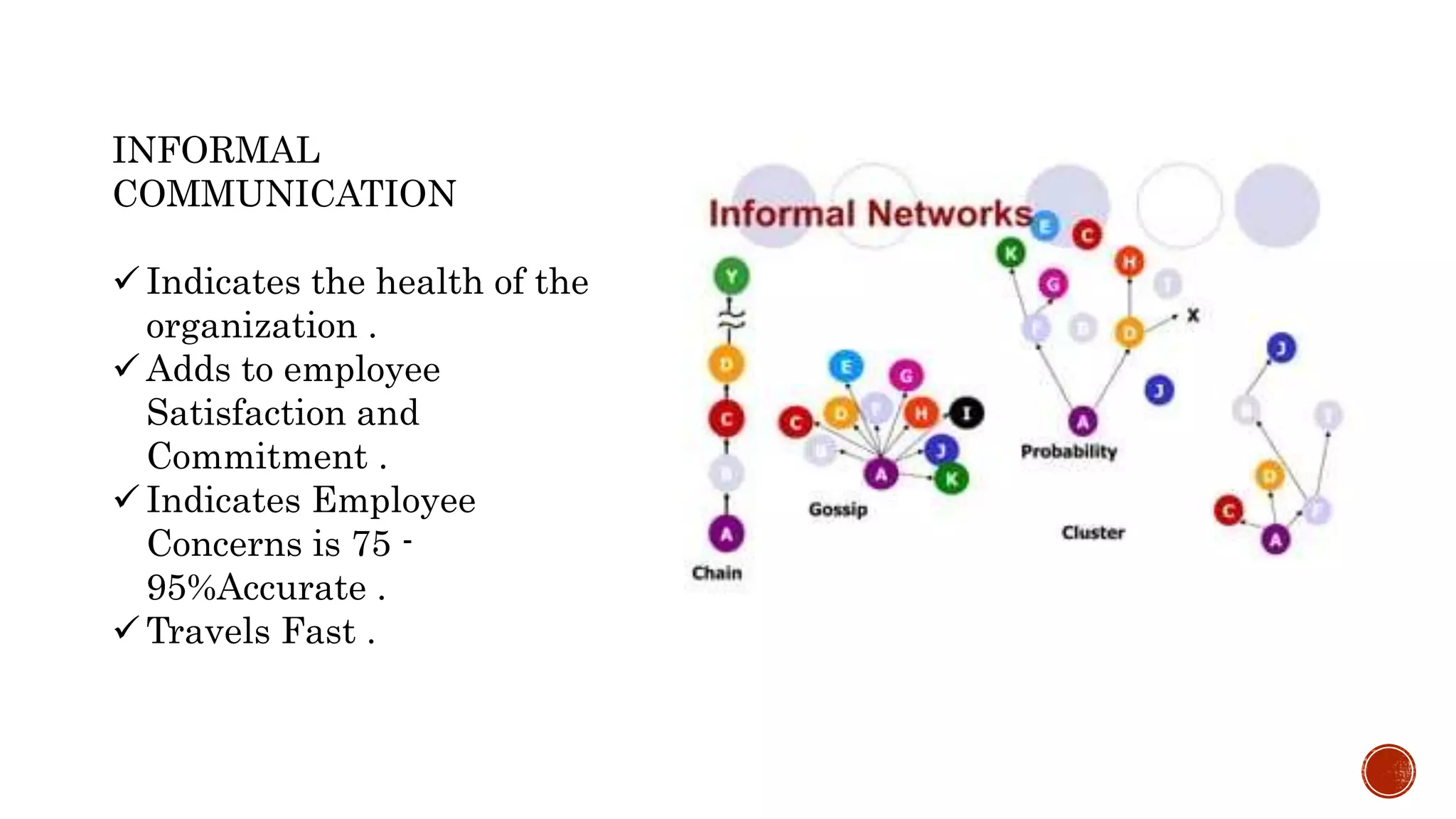
 There are four different types of informal communication:
1.Single Strand: One person communicates with one person and then they go and
communicate with another one person. Communication is traveling from one person to
another one person.
2.Gossip Chain: Group conversation where everyone is talking to each other informally.
3.Probability Chain: Each individual randomly tells another individual the same message.
4.Cluster Chain: One person shares information with a group of selected individuals and in
turn each of those individuals shares that information with others.
 All of these different types of informal communication are all about how information flows
between employees outside of a professional and formal meeting scenario.
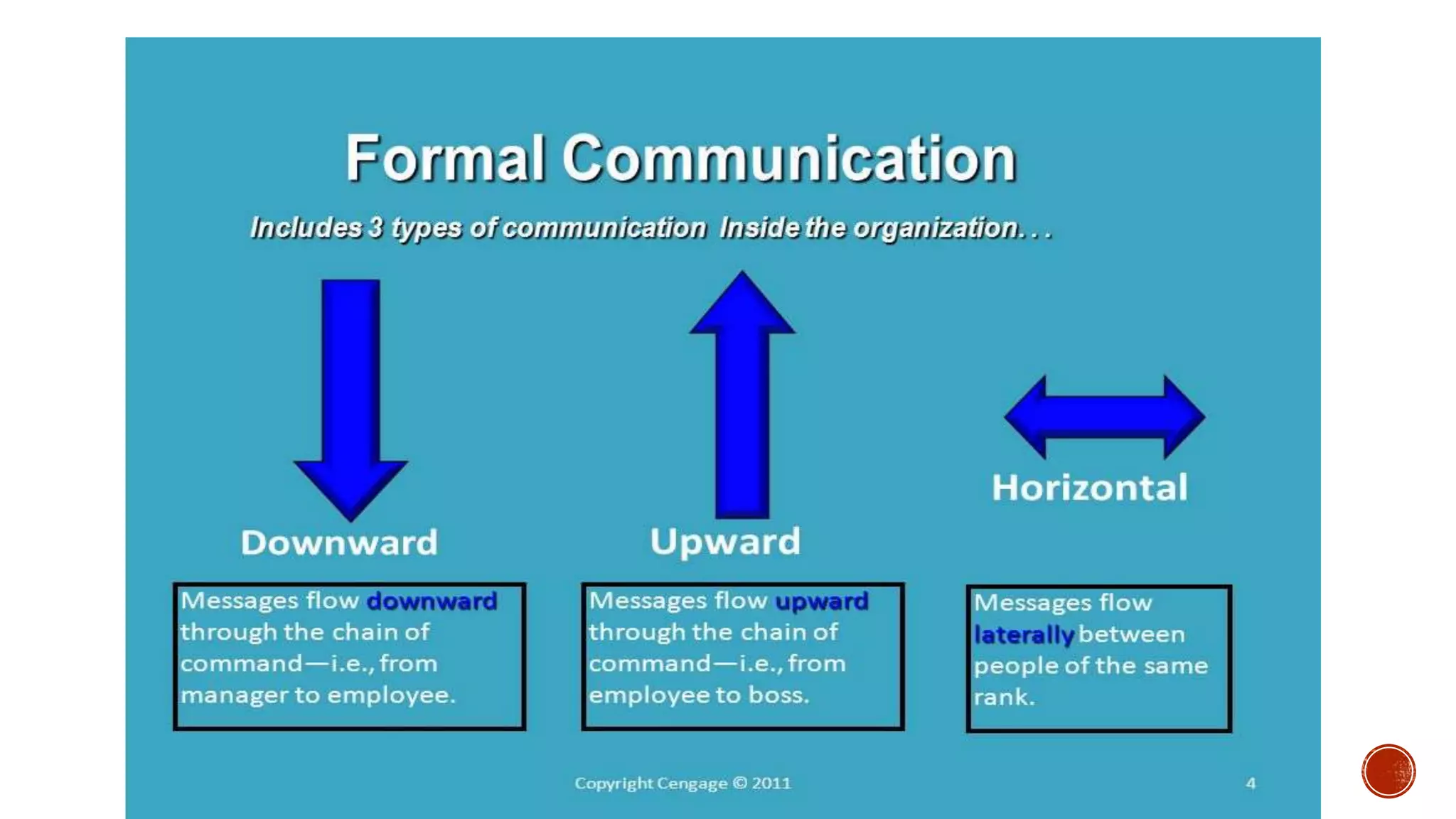
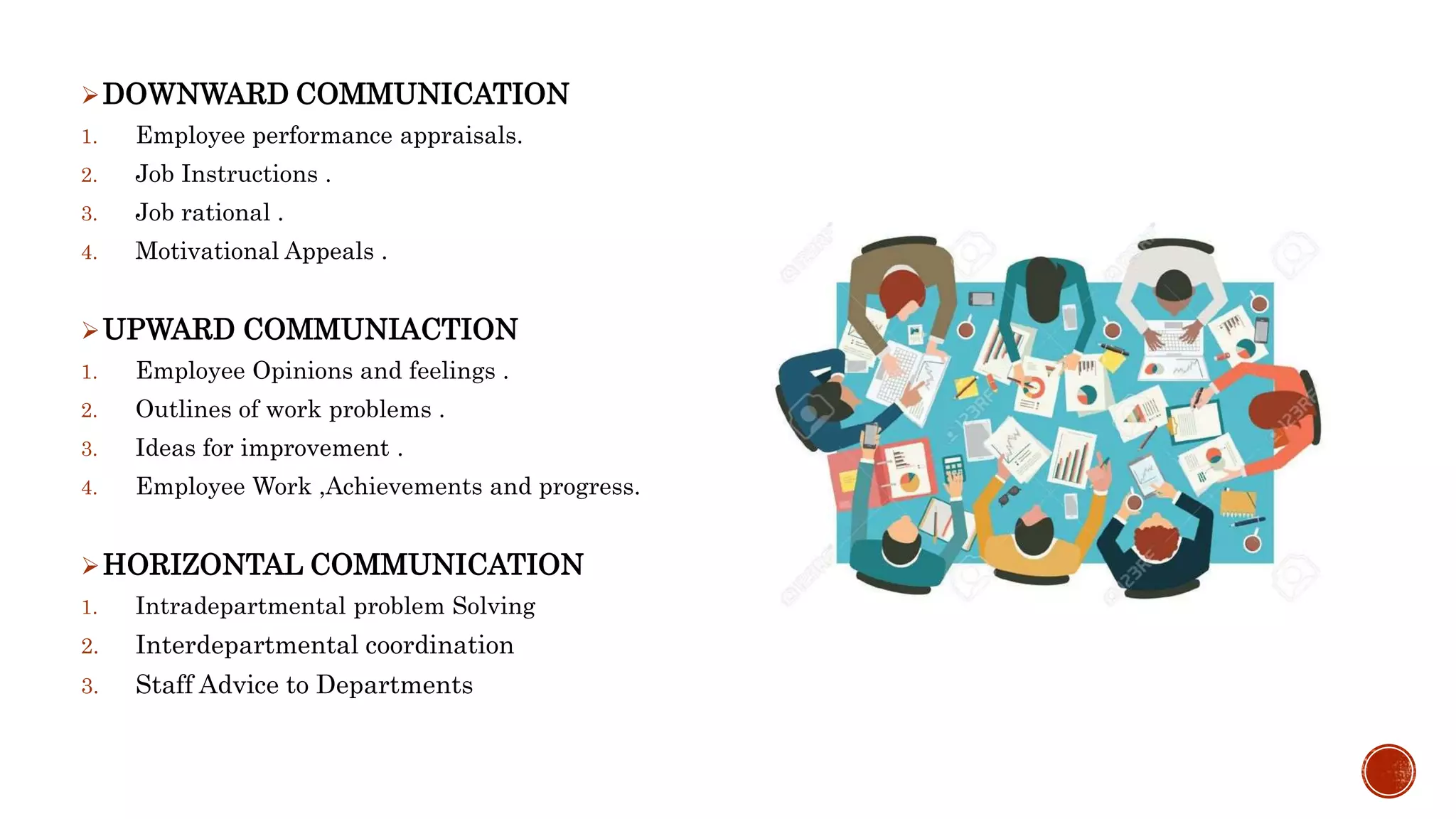
DOWNWARD COMMUNICATION
1. Employee performance appraisals.
2. Job Instructions .
3. Job rational .
4. Motivational Appeals .
UPWARD COMMUNIACTION
1. Employee Opinions and feelings .
2. Outlines of work problems .
3. Ideas for improvement .
4. Employee Work ,Achievements and progress.
HORIZONTAL COMMUNICATION
1. Intradepartmental problem Solving
2. Interdepartmental coordination
3. Staff Advice to Departments
INFORMAL
COMMUNICATION
 Indicates the health of the
organization .
 Adds to employee
Satisfaction and
Commitment .
 Indicates Employee
Concerns is 75 -
95%Accurate .
 Travels Fast .
1.What is formal communication? A) It is casual and spontaneous. B) It follows
established rules and procedures. C) It is used primarily among friends and family.
D) It is non-verbal communication.
2.Which of the following is an example of informal communication? A) Sending an
email to your supervisor about a project update. B) Discussing weekend plans with
coworkers during a lunch break. C) Conducting a formal presentation in a board
meeting. D) Writing a letter to a client requesting information.
3.In formal communication, the language used is typically: A) Colloquial and slang-
based. B) Relaxed and casual. C) Technical and precise. D) Emotional and
expressive.
4.Which of the following is a characteristic of informal communication? A) Structured
and documented. B) Hierarchical and top-down. C) Fast and spontaneous. D)
Reserved for external stakeholders.
5. What type of communication is more likely to be used for official announcements
within an organization? A) Formal communication. B) Informal communication. C)
Non-verbal communication. D) Grapevine communication.
6. Which communication channel is most commonly associated with informal
communication? A) Memos and reports. B) Face-to-face conversations. C) Official
meetings. D) Newsletters and brochures.
7. Which one of the following is a disadvantage of informal communication? A) It helps
build strong social bonds within a team. B) It can spread rumors and misinformation.
C) It is typically more efficient than formal communication. D) It is well-documented
and traceable.
8. What is the primary purpose of formal communication in an organization? A)
Building personal relationships among employees. B) Sharing casual updates and
news. C) Transmitting official information and directives. D) Facilitating informal
discussions.
9. Which type of communication is more likely to rely on written documents and
reports? A) Informal communication. B) Formal communication. C) Verbal
communication. D) Non-verbal communication.
10. The grapevine is an example of: A) Formal communication. B) Informal
1.B) It follows established rules and procedures.
2.B) Discussing weekend plans with coworkers during a lunch break.
3.C) Technical and precise.
4.C) Fast and spontaneous.
5.A) Formal communication.
6.B) Face-to-face conversations.
7.B) It can spread rumors and misinformation.
8.C) Transmitting official information and directives.
9.B) Formal communication.
10.B) Informal communication.
THANK YOU FOR
LISTENING.
ANY
QUESTION
S

FORMAL AND INFORMAL COMMUNICATION.pptx

  • 1.
    GROUP MEMBERS  NAYABTARIQ  HINA ASIF  BIBI LAIBA  MUHAMMAD KHAN  YASIR ABBAS
  • 2.
     The sharingof information between two or more individuals or groups to reach a common understanding .  Communication is the process of two or more people or groups exchanging information, ideas, thoughts, and feelings.
  • 3.
    Different ways inwhich people approach the process of communication, i.e., the process of conveying and taking in ideas and opinions, are called communication styles. INFORMAL AND FORMAL Can apply to any mode of communication . Both styles are necessary . Appropriate style depends on the situation or setting and the people involved .
  • 5.
     A formalcommunication is the process of exchanging information on the prescribed or official rules .  The characteristics of formal communication  To be formal, communication should satisfy three conditions — it should be: • Rational, • Structured, and • Goal-oriented.  Let’s consider all these characteristics in a bit more detail.
  • 6.
    Formal communication isrational  This means that formal communication is based on rules and routines that promote efficiency and reduce personal biases.  As such, it is: • Impersonal, for it focuses on roles in an organization rather than personal attributes. • Simple, designed to be efficient by establishing the flow of communication across functions rather than individuals, and is based on the organization’s hierarchy  Formal communication is structured  Secondly, formal communication should be structured.  But, what does that actually mean? What makes formal communication structured? • It is explicit, prescriptive, and involves information that concerns all the members of the organization. • A structured path is followed by the established chain of command. • It follows well-defined rules and regulations.
  • 7.
    Formal communication isgoal-oriented  Thirdly, formal communication usually consists of directives or information that aim to improve the efficiency of the workflow in the organization.  It is almost exclusively task-related, with the goal of maximizing efficiency and productivity among the organization members.
  • 8.
     An Informalcommunication is the process of spontaneous exchange of information among various people of different status in the workplace or outside the workplace.  The exchange of information is typically unplanned .  There are four different types of informal communication: 1.Single Strand: One person communicates with one person and then they go and communicate with another one person. Communication is traveling from one person to another one person. 2.Gossip Chain: Group conversation where everyone is talking to each other informally. 3.Probability Chain: Each individual randomly tells another individual the same message. 4.Cluster Chain: One person shares information with a group of selected individuals and in turn each of those individuals shares that information with others.  All of these different types of informal communication are all about how information flows between employees outside of a professional and formal meeting scenario.
  • 10.
    DOWNWARD COMMUNICATION 1. Employeeperformance appraisals. 2. Job Instructions . 3. Job rational . 4. Motivational Appeals . UPWARD COMMUNIACTION 1. Employee Opinions and feelings . 2. Outlines of work problems . 3. Ideas for improvement . 4. Employee Work ,Achievements and progress. HORIZONTAL COMMUNICATION 1. Intradepartmental problem Solving 2. Interdepartmental coordination 3. Staff Advice to Departments
  • 11.
    INFORMAL COMMUNICATION  Indicates thehealth of the organization .  Adds to employee Satisfaction and Commitment .  Indicates Employee Concerns is 75 - 95%Accurate .  Travels Fast .
  • 13.
    1.What is formalcommunication? A) It is casual and spontaneous. B) It follows established rules and procedures. C) It is used primarily among friends and family. D) It is non-verbal communication. 2.Which of the following is an example of informal communication? A) Sending an email to your supervisor about a project update. B) Discussing weekend plans with coworkers during a lunch break. C) Conducting a formal presentation in a board meeting. D) Writing a letter to a client requesting information. 3.In formal communication, the language used is typically: A) Colloquial and slang- based. B) Relaxed and casual. C) Technical and precise. D) Emotional and expressive. 4.Which of the following is a characteristic of informal communication? A) Structured and documented. B) Hierarchical and top-down. C) Fast and spontaneous. D) Reserved for external stakeholders.
  • 14.
    5. What typeof communication is more likely to be used for official announcements within an organization? A) Formal communication. B) Informal communication. C) Non-verbal communication. D) Grapevine communication. 6. Which communication channel is most commonly associated with informal communication? A) Memos and reports. B) Face-to-face conversations. C) Official meetings. D) Newsletters and brochures. 7. Which one of the following is a disadvantage of informal communication? A) It helps build strong social bonds within a team. B) It can spread rumors and misinformation. C) It is typically more efficient than formal communication. D) It is well-documented and traceable. 8. What is the primary purpose of formal communication in an organization? A) Building personal relationships among employees. B) Sharing casual updates and news. C) Transmitting official information and directives. D) Facilitating informal discussions. 9. Which type of communication is more likely to rely on written documents and reports? A) Informal communication. B) Formal communication. C) Verbal communication. D) Non-verbal communication. 10. The grapevine is an example of: A) Formal communication. B) Informal
  • 15.
    1.B) It followsestablished rules and procedures. 2.B) Discussing weekend plans with coworkers during a lunch break. 3.C) Technical and precise. 4.C) Fast and spontaneous. 5.A) Formal communication. 6.B) Face-to-face conversations. 7.B) It can spread rumors and misinformation. 8.C) Transmitting official information and directives. 9.B) Formal communication. 10.B) Informal communication.
  • 16.