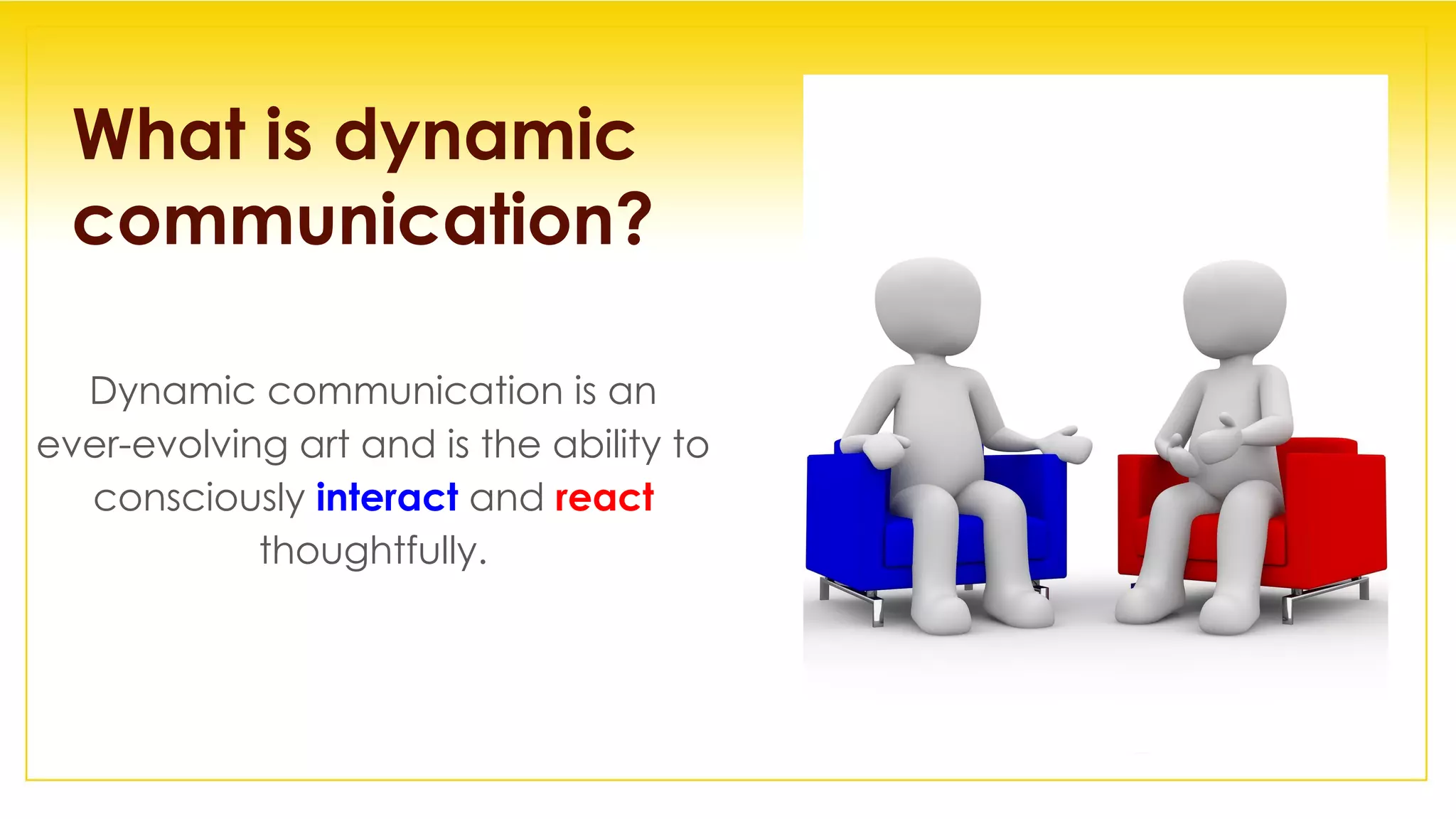
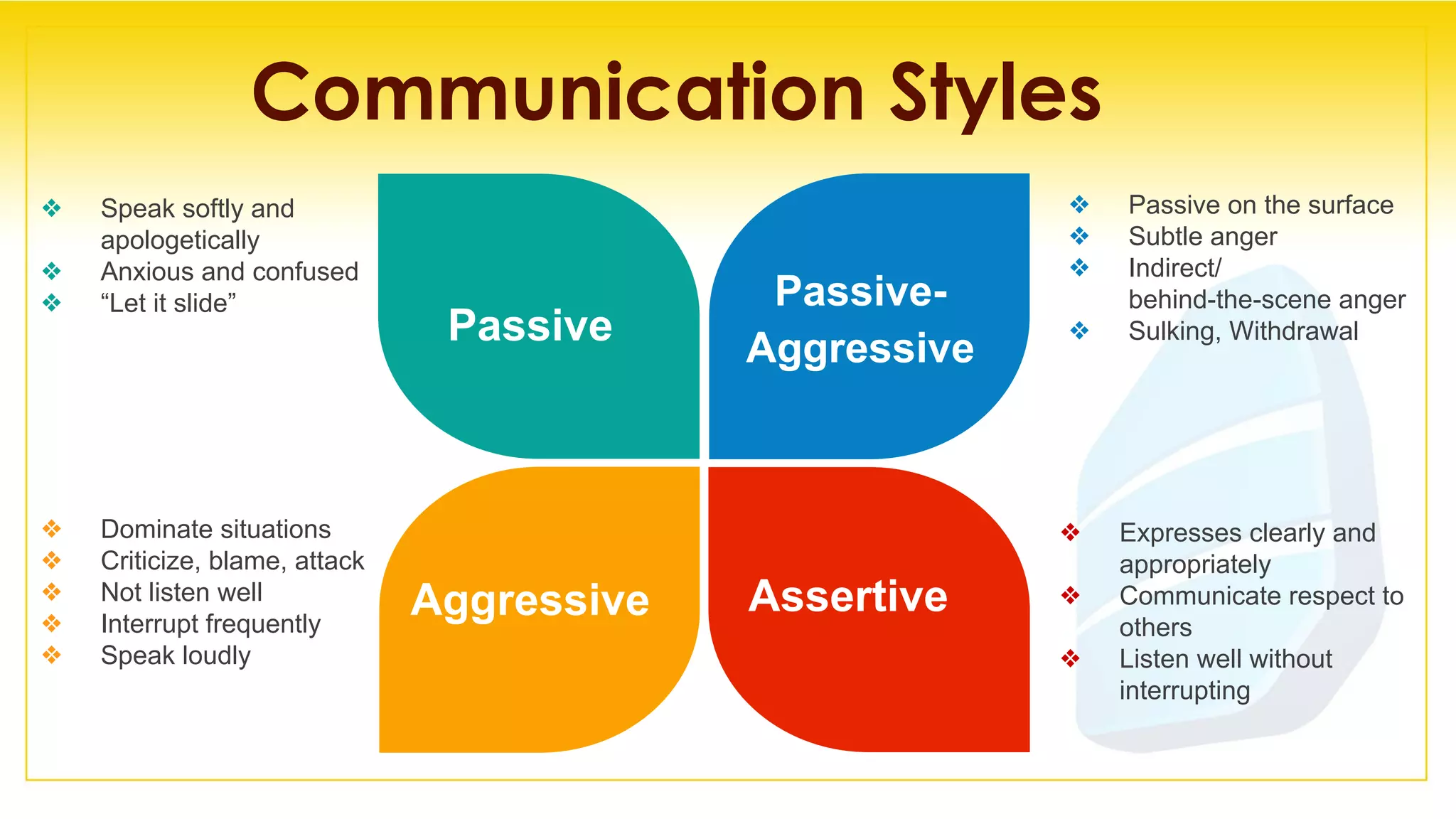
This document discusses dynamic communication and its importance for teachers. It defines dynamic communication as an ever-evolving art that involves thoughtfully interacting and reacting. Dynamic communication is important for teachers because it not only conveys information, but also encourages effort, modifies attitudes, and stimulates thinking. The document contrasts dynamic communication with static communication and discusses the role of communication in classroom dynamics. It also outlines different communication styles like passive, aggressive, passive-aggressive and assertive. The document provides guidance on when each communication style is appropriate and discusses how to counteract different styles of communication with students.






![Communication%20 climate[1]](https://cdn.slidesharecdn.com/ss_thumbnails/communication20climate1-110503213046-phpapp01-thumbnail.jpg?width=640&height=640&fit=bounds)


