CELL
Learning Outcome
To Introduce cell type
To discuss in detail about cell structure
To differentiate plant and animal cell
Learning Objective
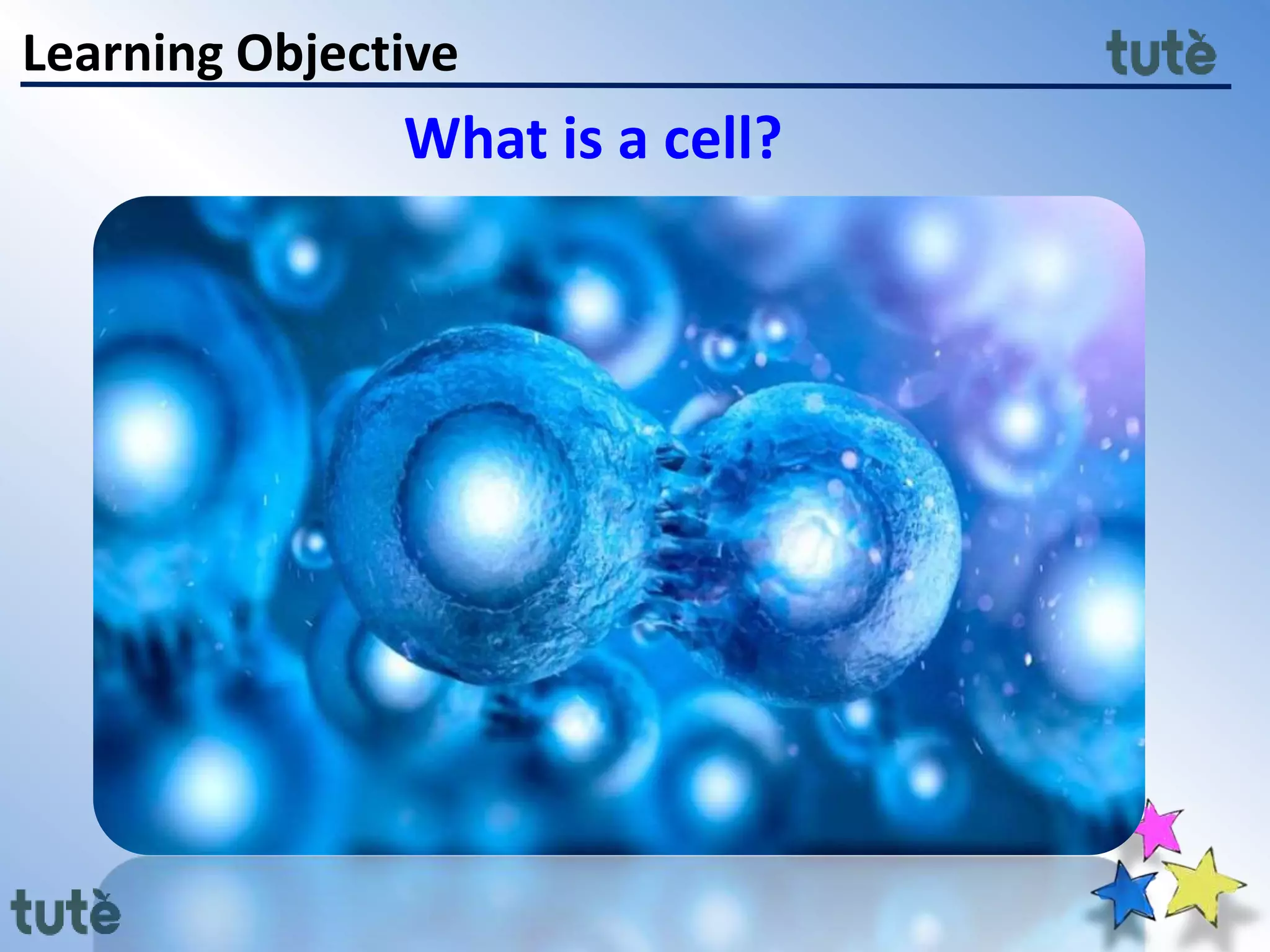
What is a cell?
Introduction
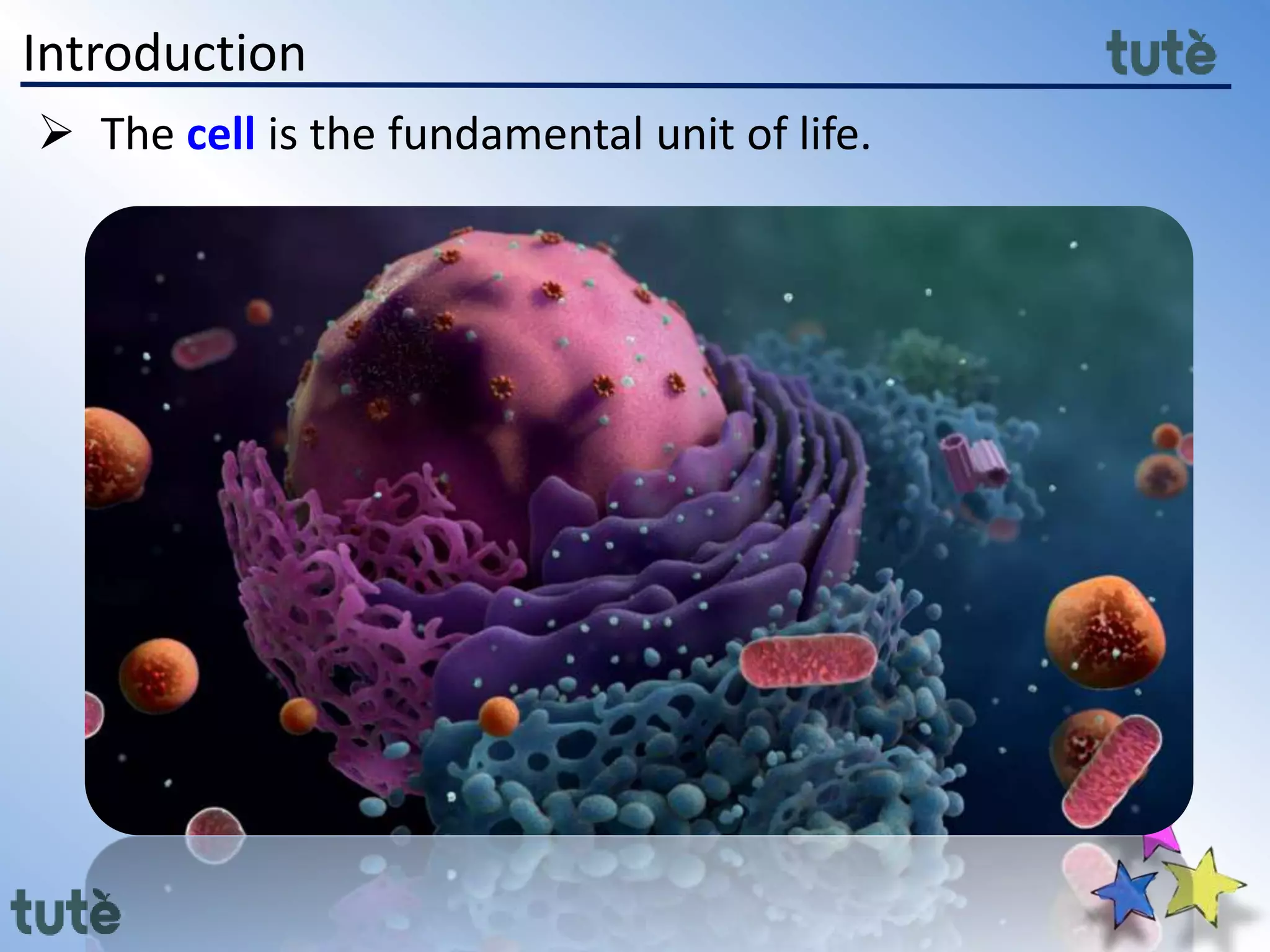
 The cell is the fundamental unit of life.
Introduction
• Functions –
• They provide structure for the body,
• Take in nutrients from food,
• Convert those nutrients into energy and
carry out special functions.
• Carry out specialized functions.
Introduction
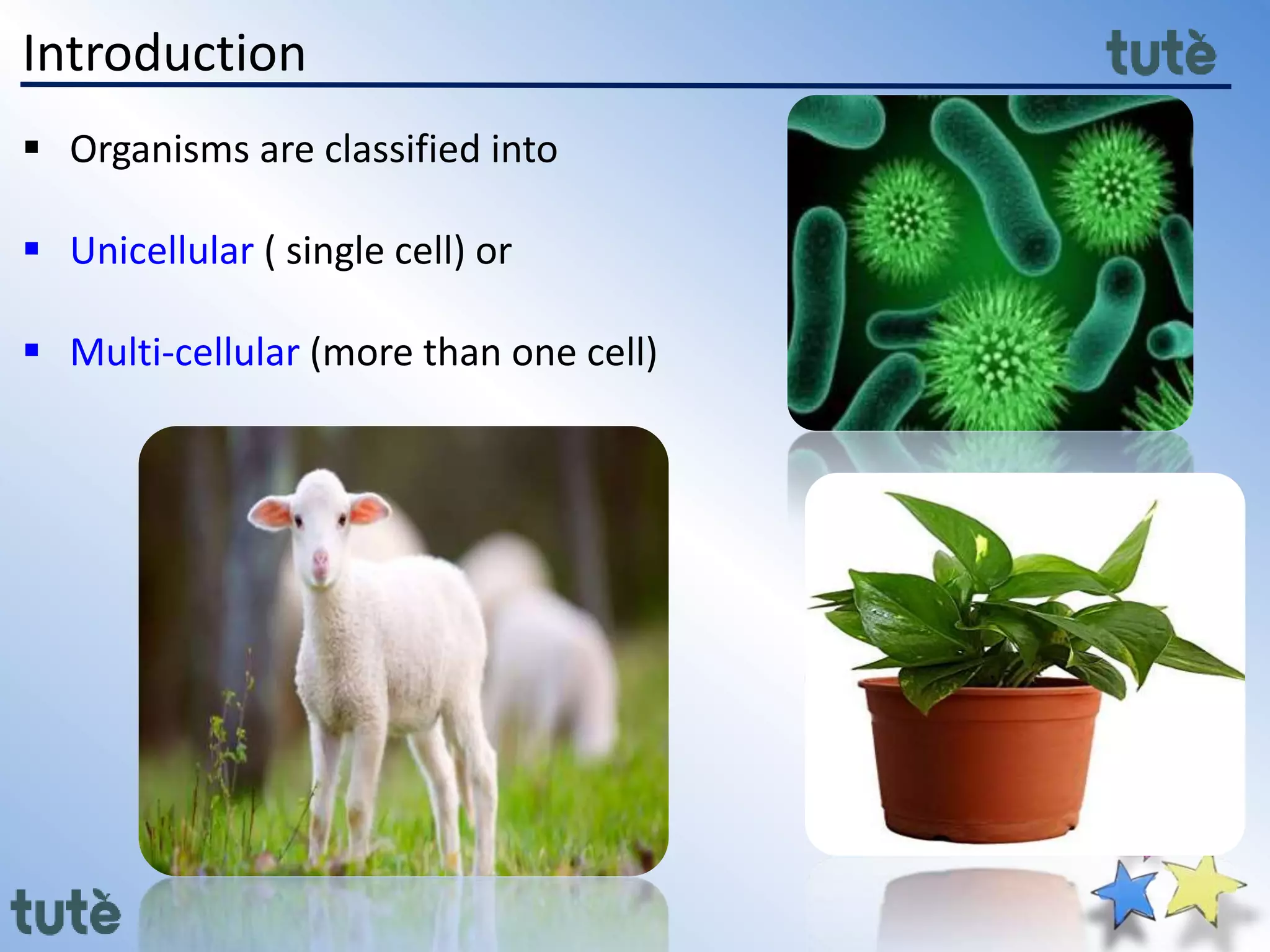
 Organisms are classified into
 Unicellular ( single cell) or
 Multi-cellular (more than one cell)
CELL
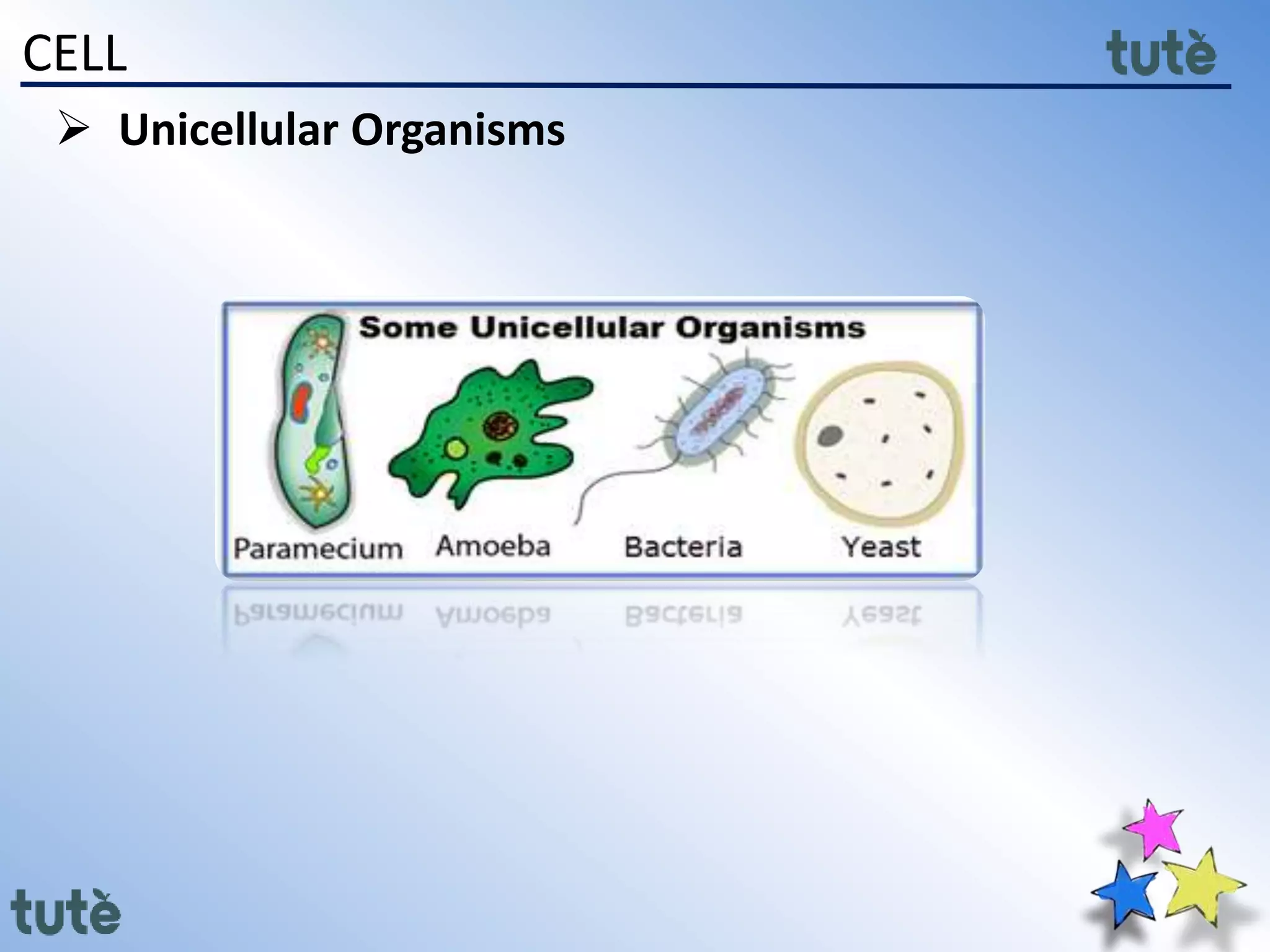
 Unicellular Organisms
CELL
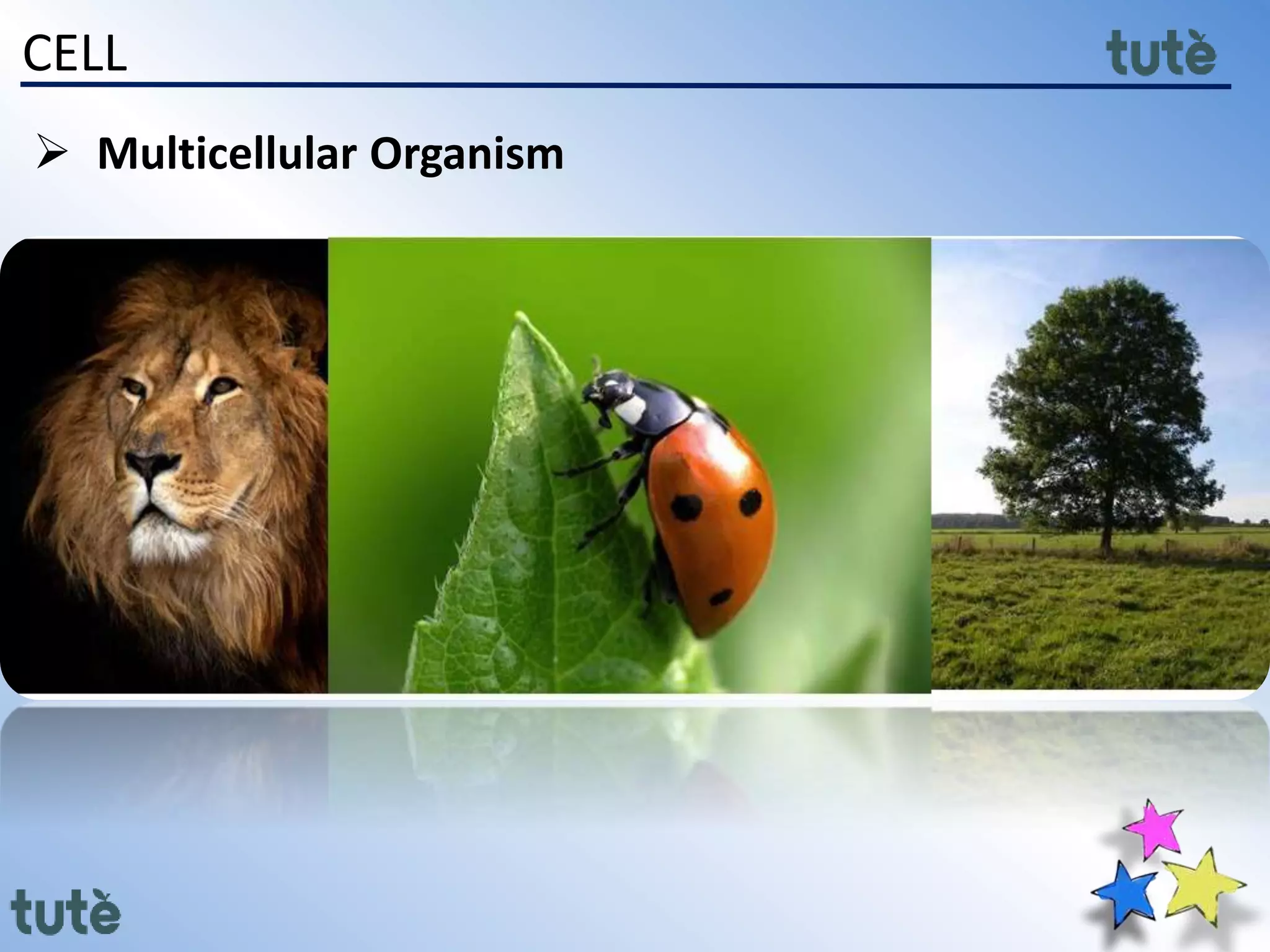
 Multicellular Organism
CELL
CELL
CELL
Introduction
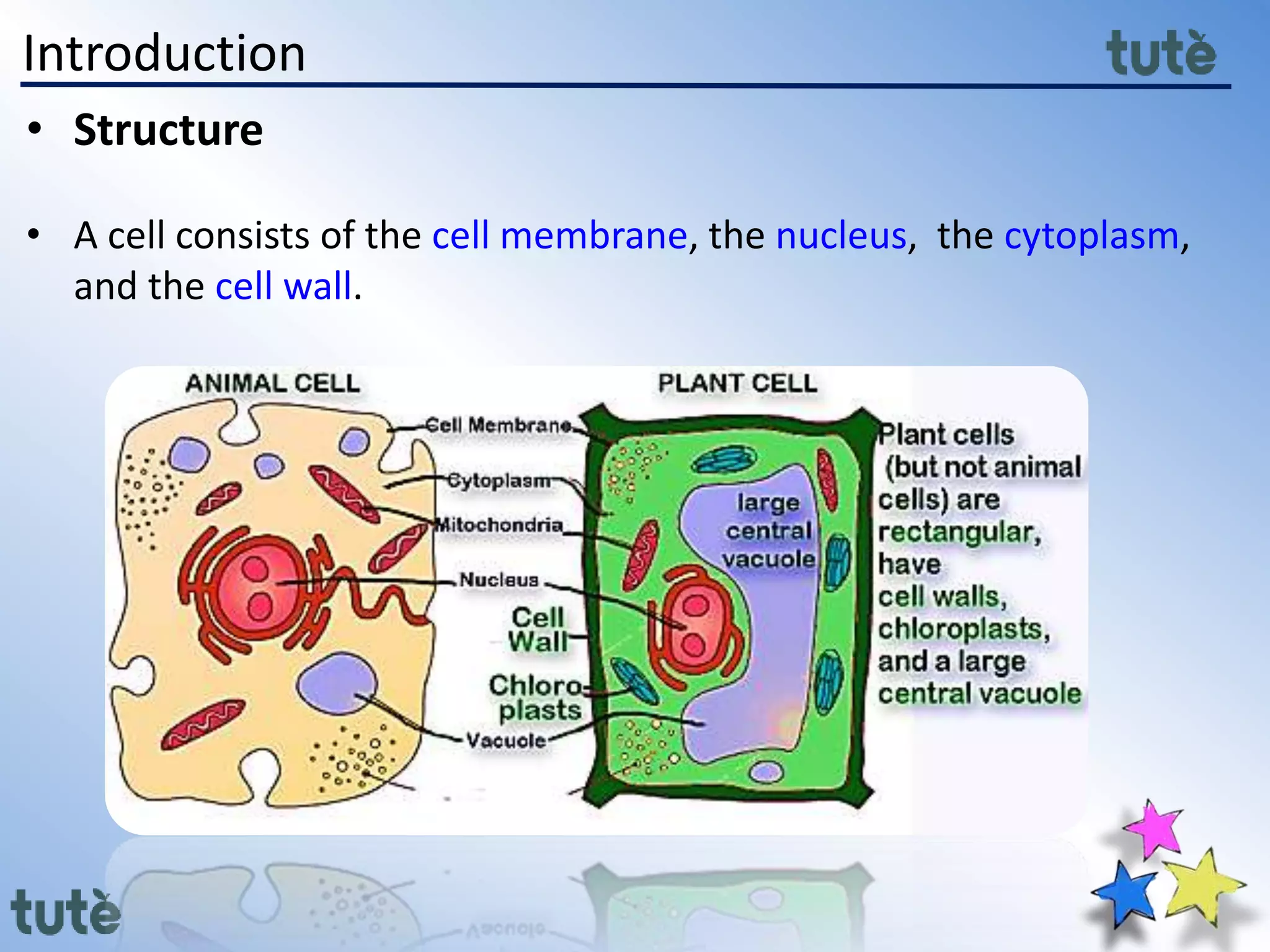
• Structure
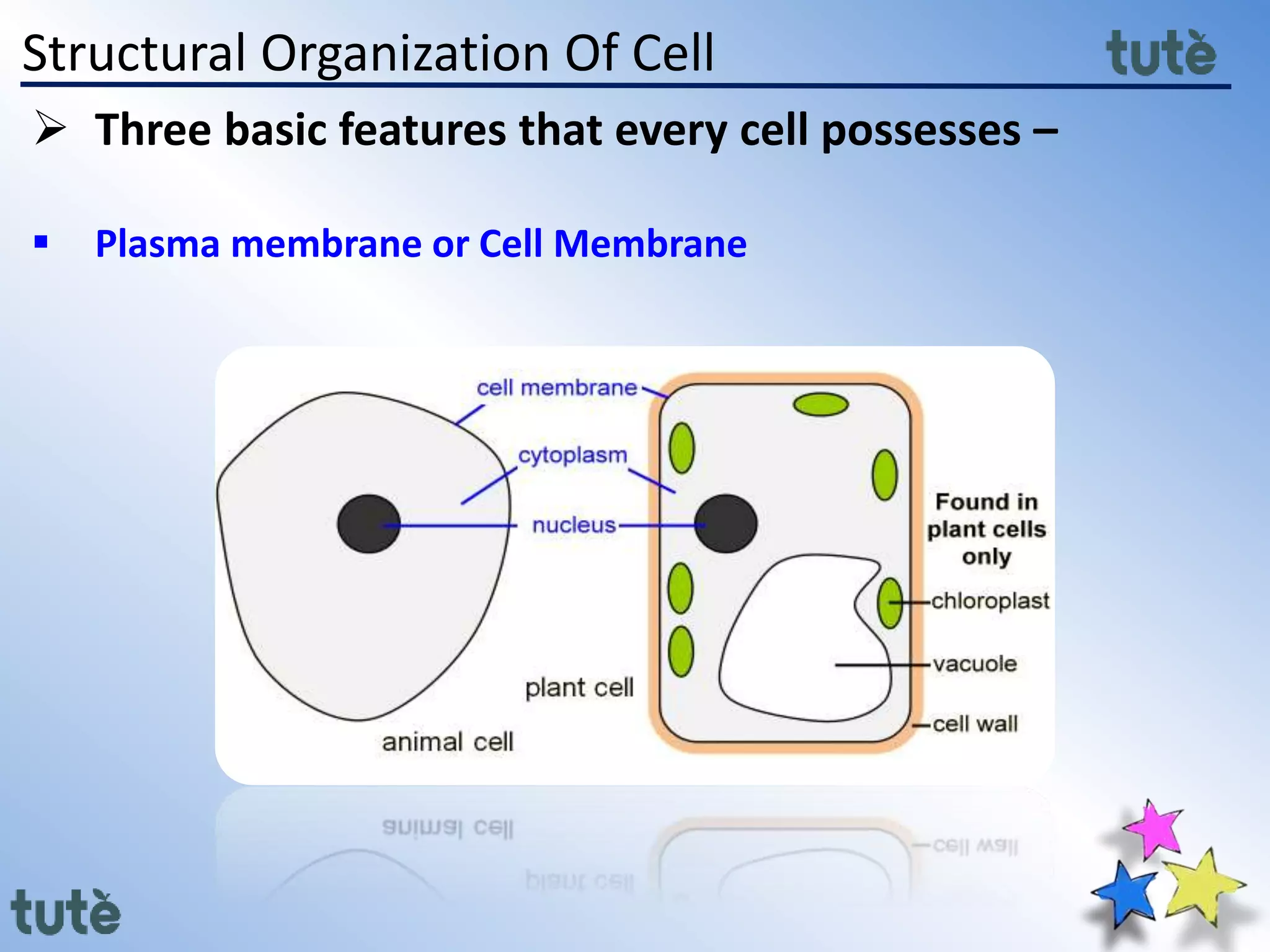
• A cell consists of the cell membrane, the nucleus, the cytoplasm,
and the cell wall.
CELL
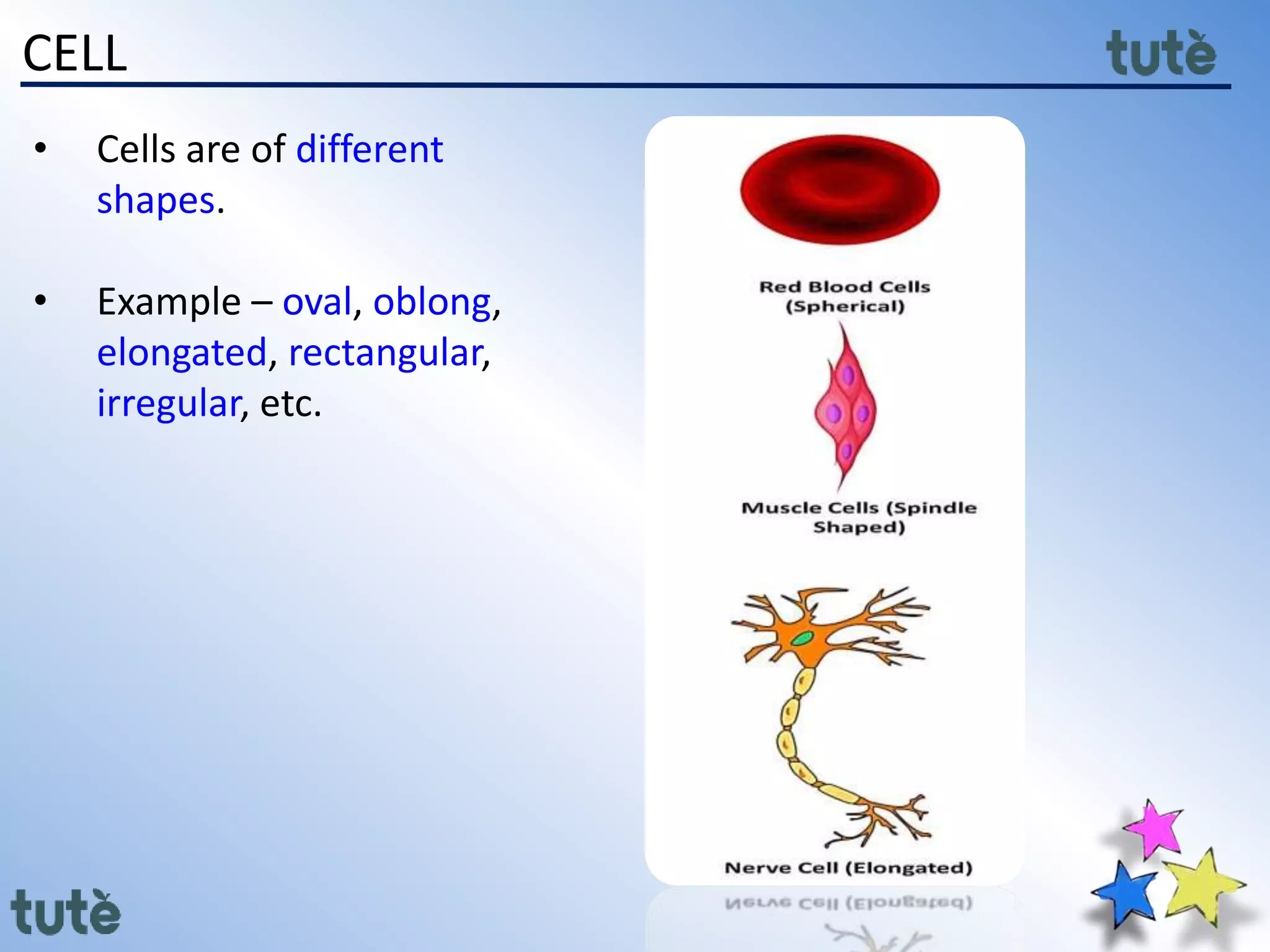
• Cells are of different
shapes.
• Example – oval, oblong,
elongated, rectangular,
irregular, etc.
Introduction
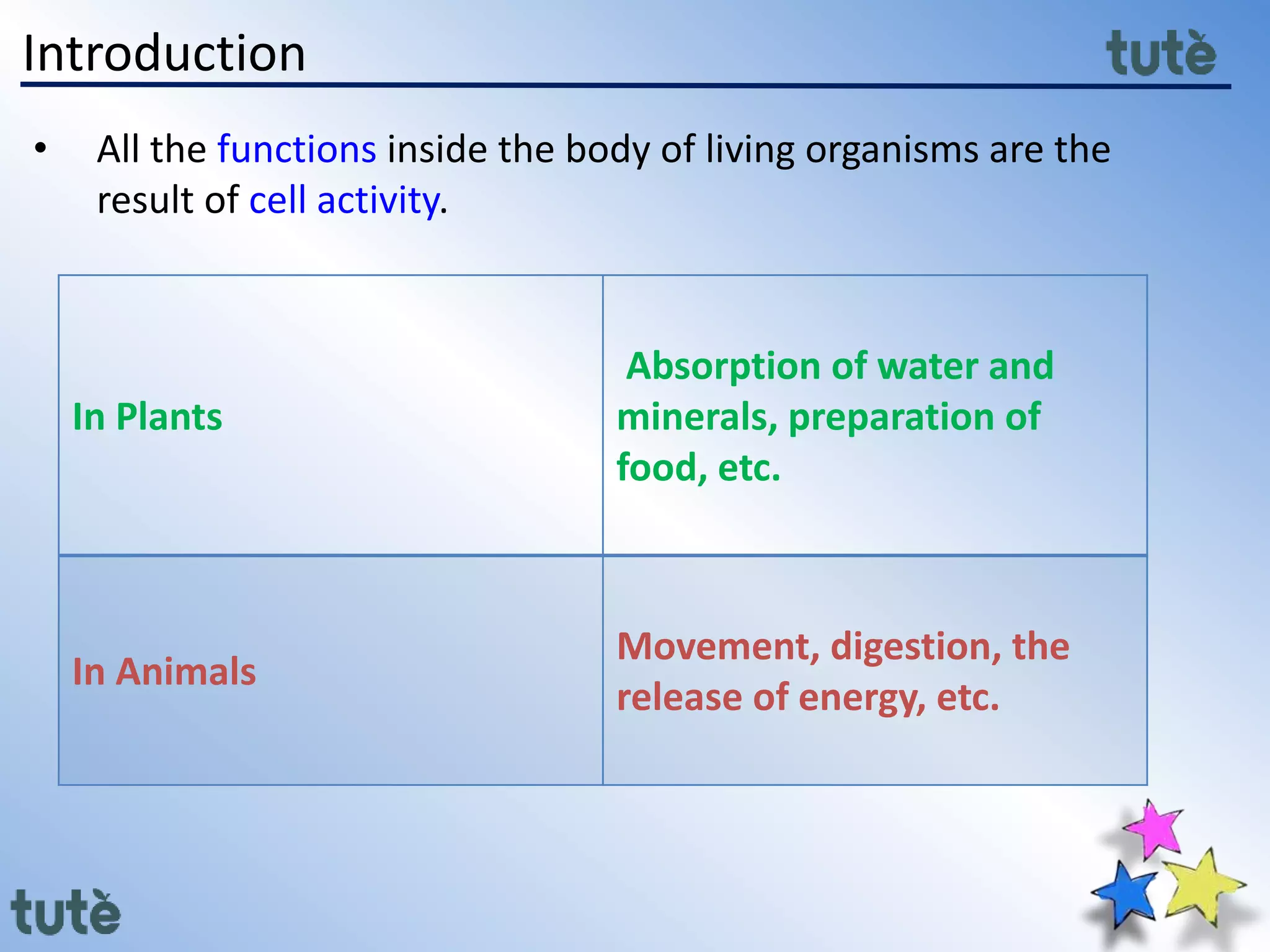
• All the functions inside the body of living organisms are the
result of cell activity.
In Plants
Absorption of water and
minerals, preparation of
food, etc.
In Animals
Movement, digestion, the
release of energy, etc.
Learning Outcome
To Introduce cell type
To discuss in detail about cell structure
To differentiate plant and animal cell
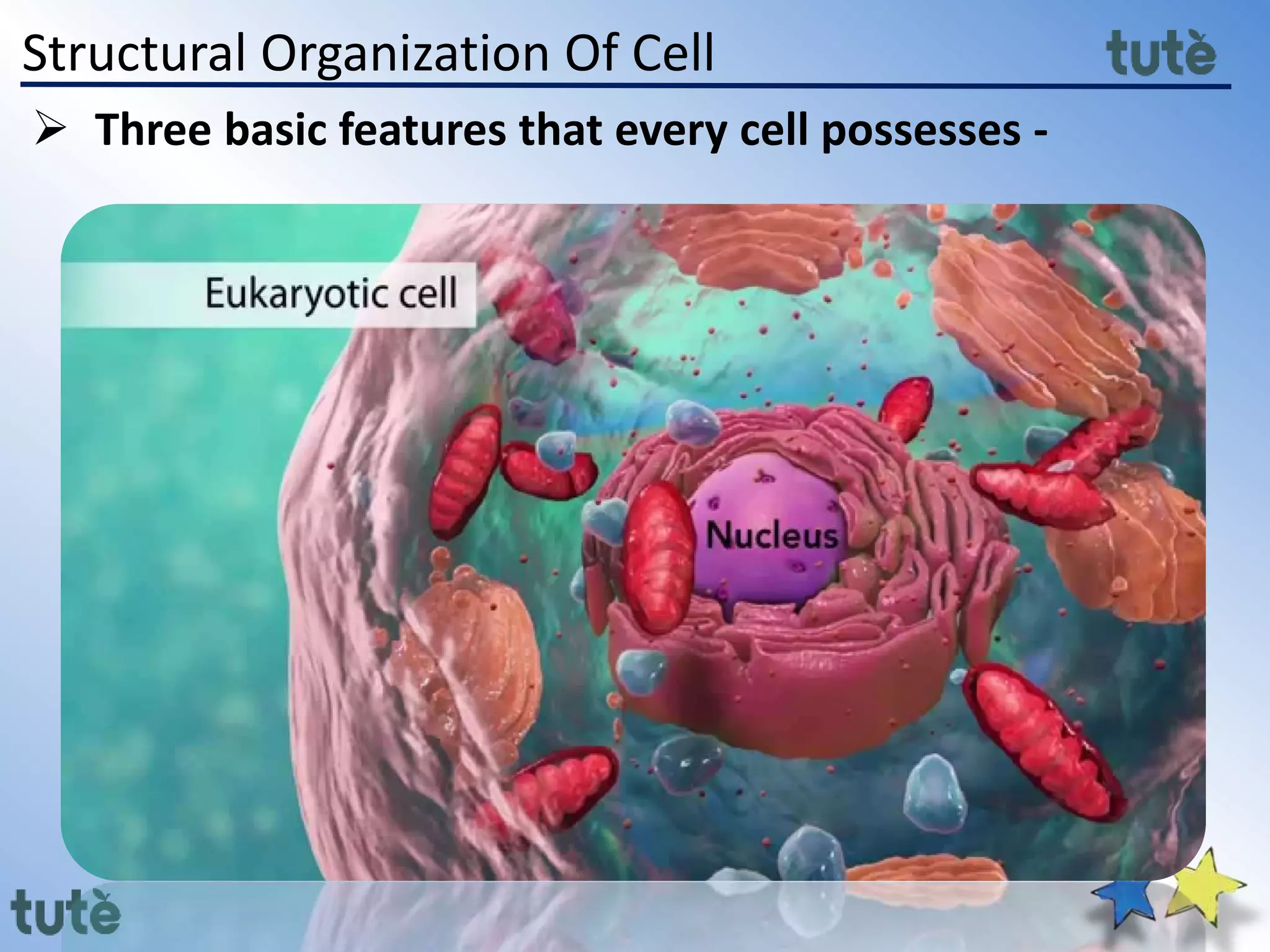
Structural Organization Of Cell
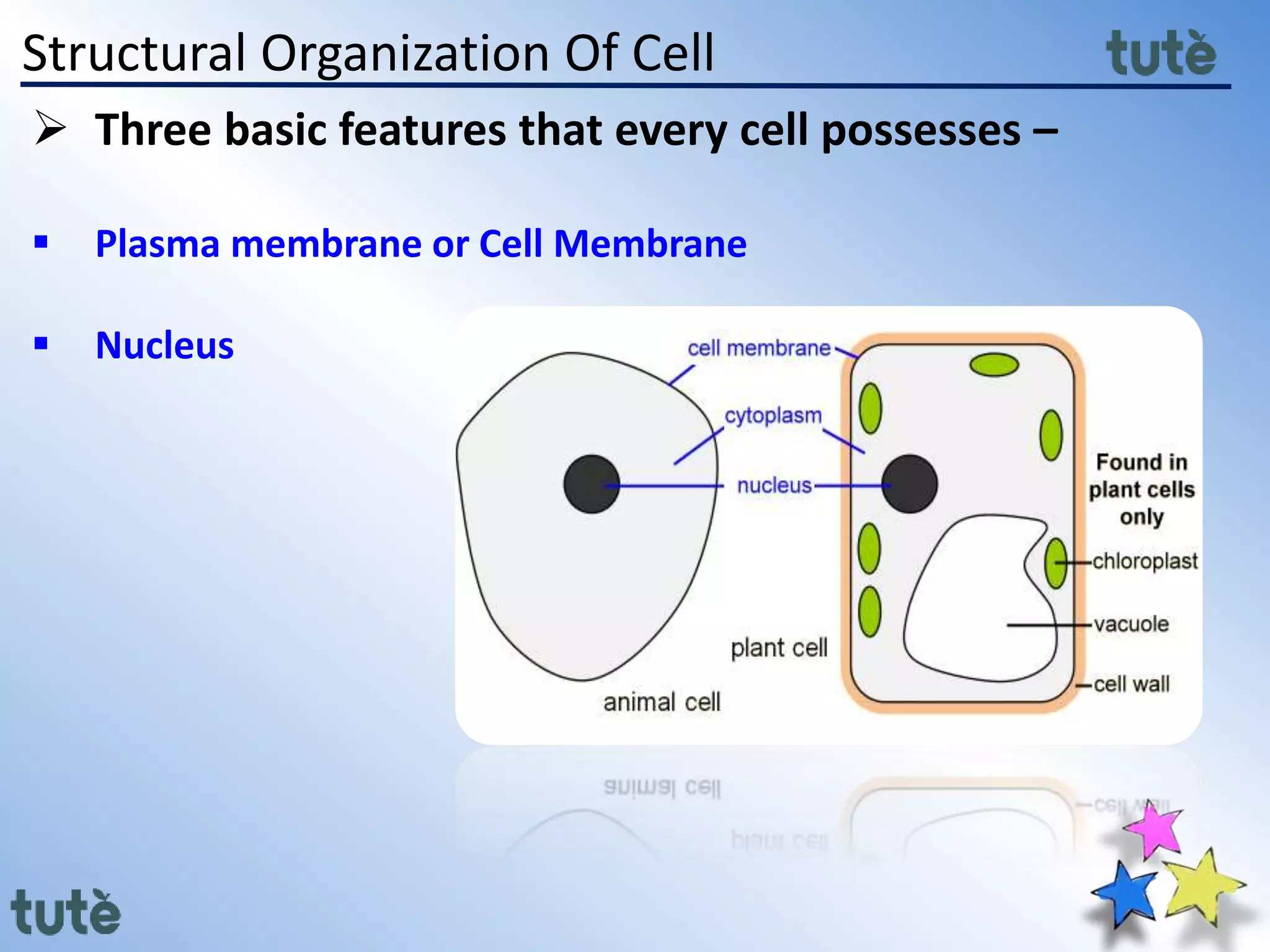
 Three basic features that every cell possesses -
Structural Organization Of Cell
 Three basic features that every cell possesses –
 Plasma membrane or Cell Membrane
Structural Organization Of Cell
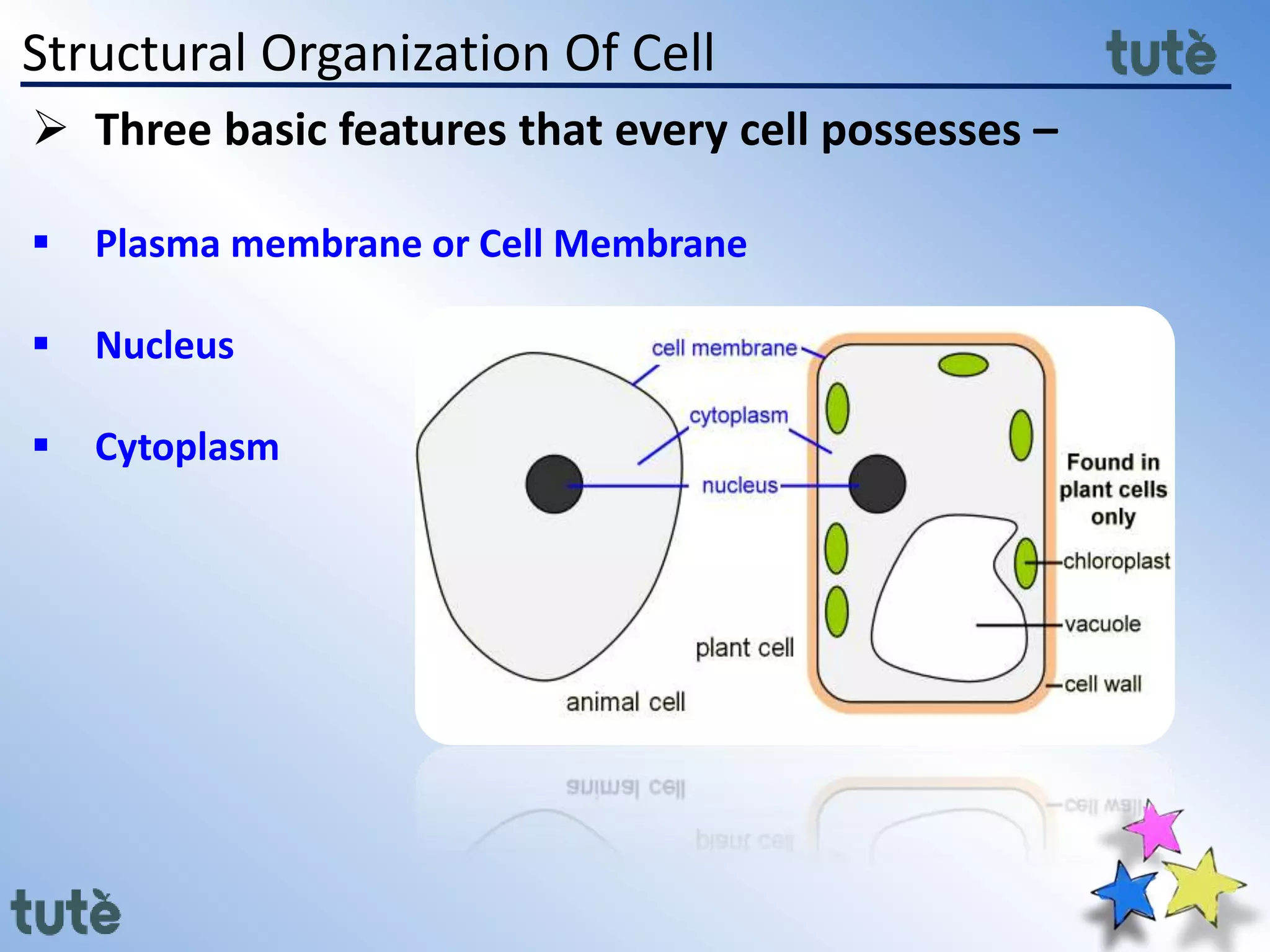
 Three basic features that every cell possesses –
 Plasma membrane or Cell Membrane
 Nucleus
Structural Organization Of Cell
 Three basic features that every cell possesses –
 Plasma membrane or Cell Membrane
 Nucleus
 Cytoplasm
Structural Organization Of Cell
 Typical cell structure
Structural Organization Of Cell
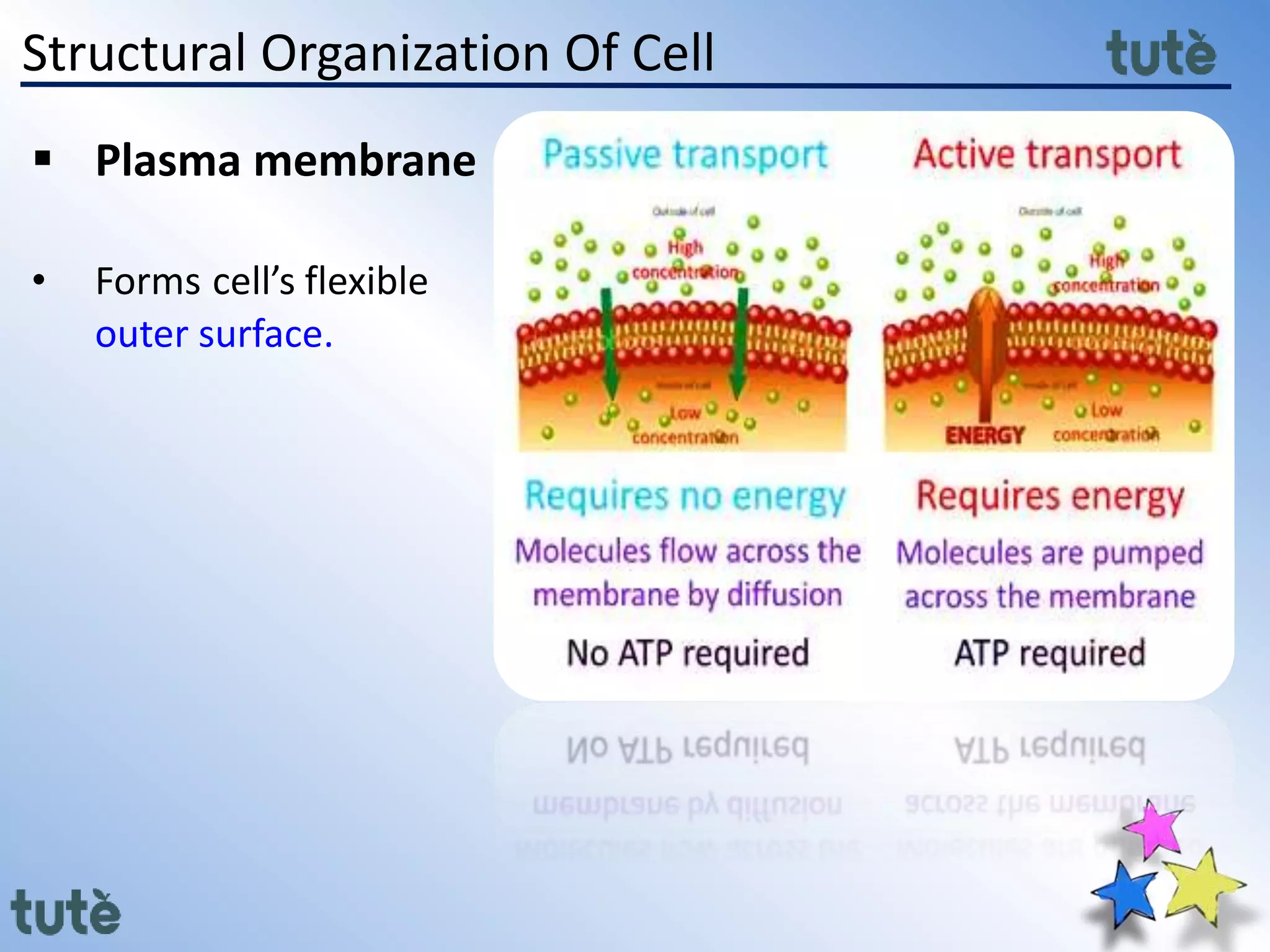
 Plasma membrane
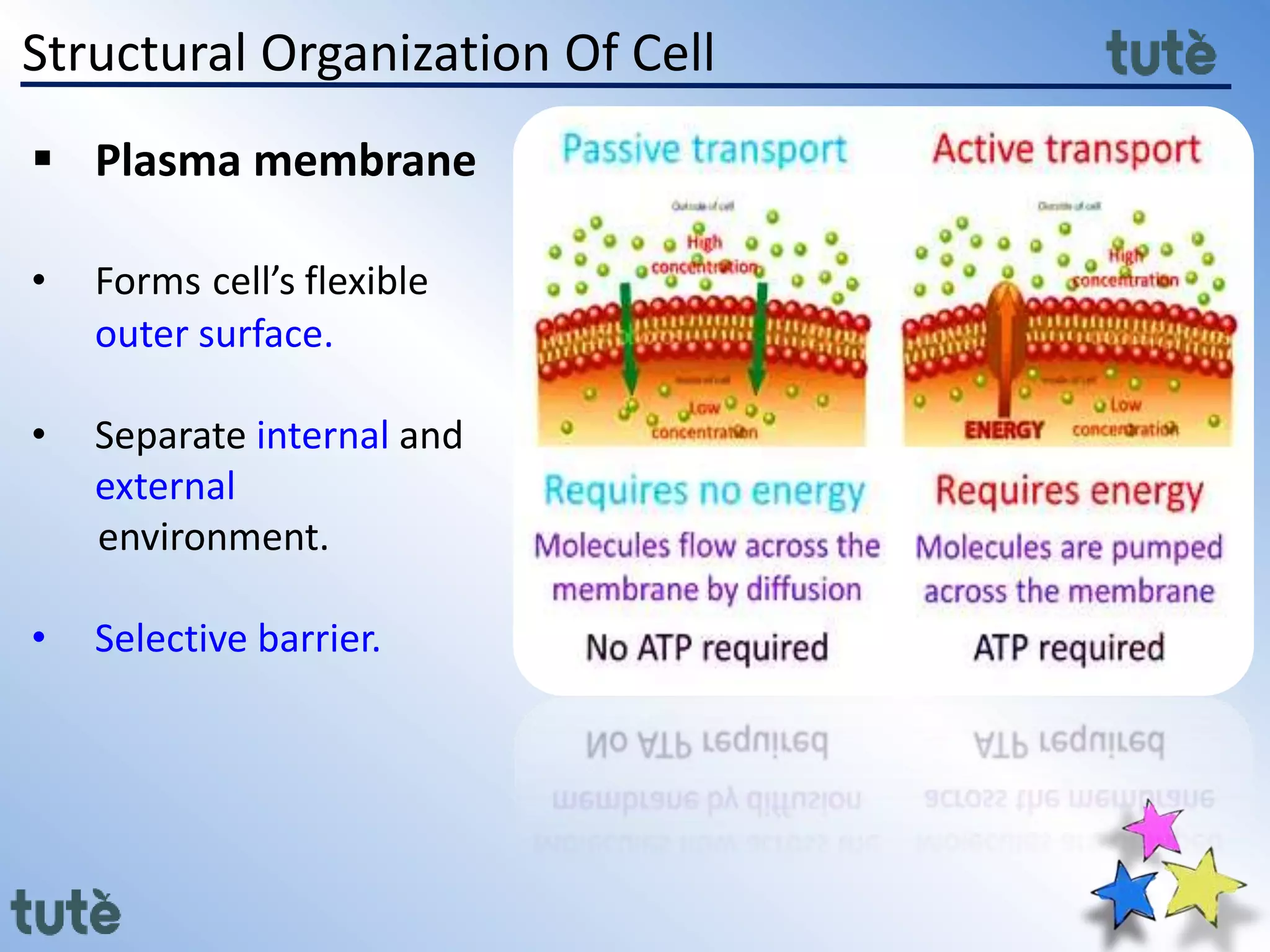
• Forms cell’s flexible
outer surface.
Structural Organization Of Cell
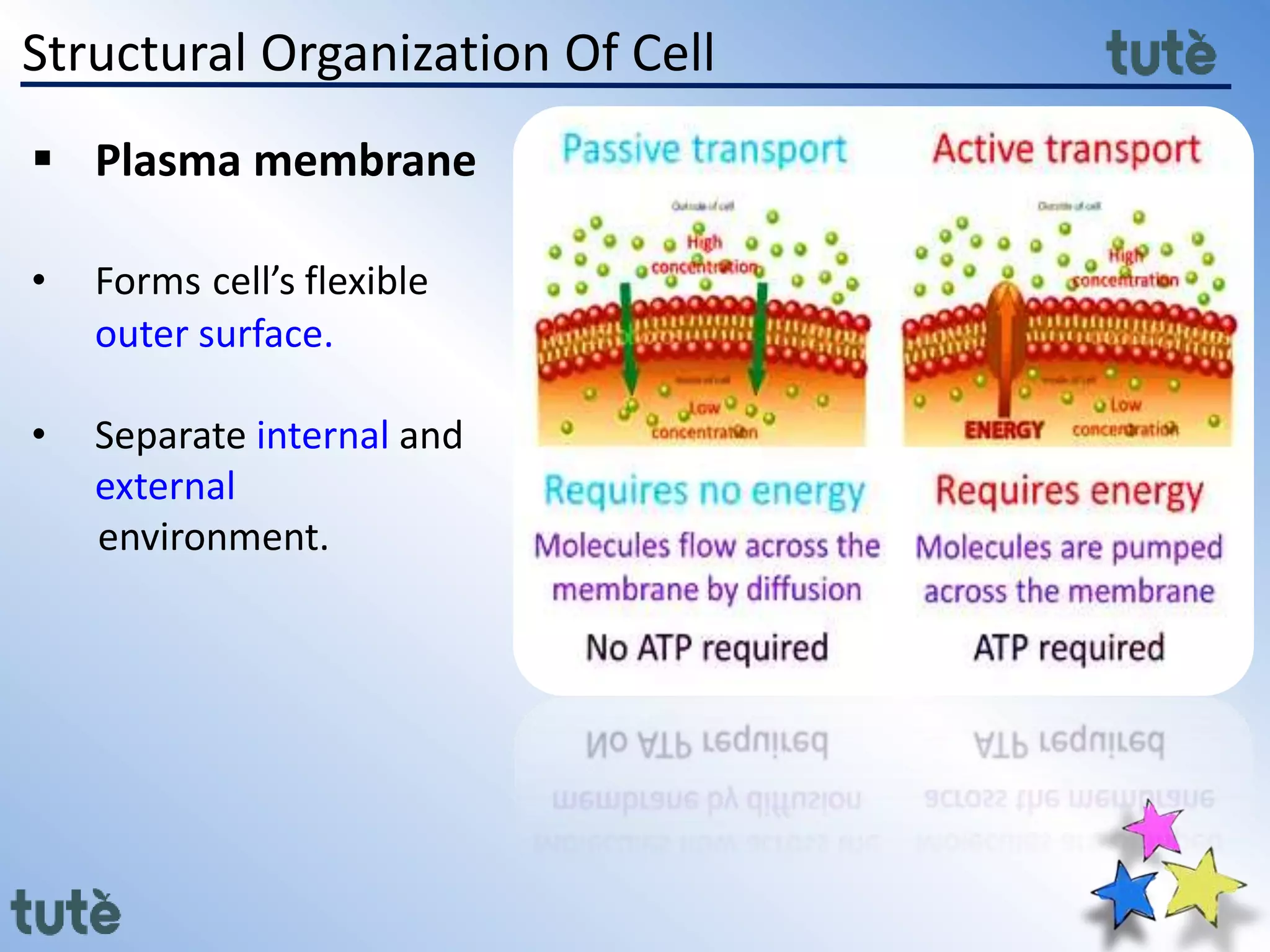
 Plasma membrane
• Forms cell’s flexible
outer surface.
• Separate internal and
external
environment.
Structural Organization Of Cell
 Plasma membrane
• Forms cell’s flexible
outer surface.
• Separate internal and
external
environment.
• Selective barrier.
Structural Organization Of Cell
 Plasma membrane
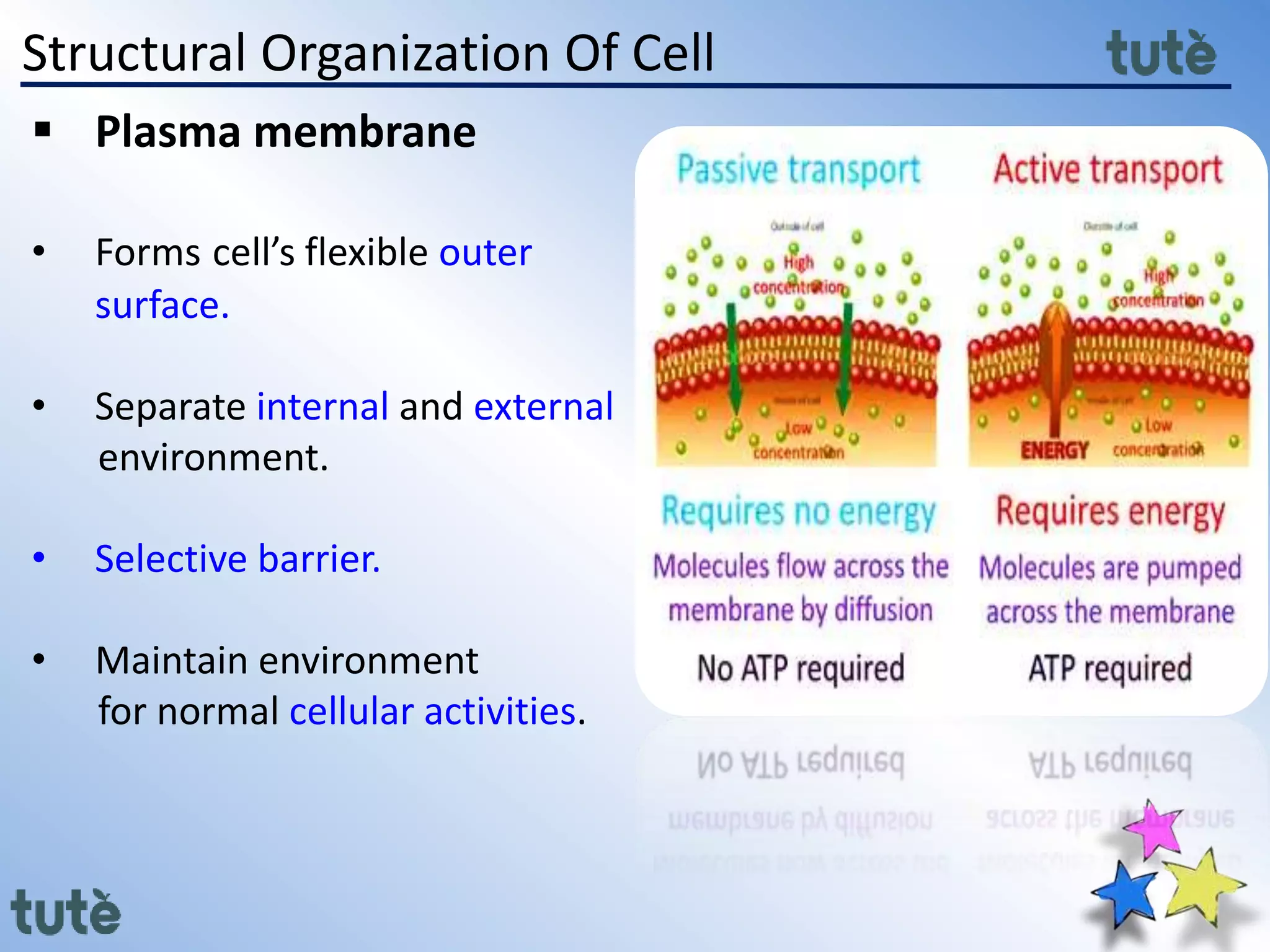
• Forms cell’s flexible outer
surface.
• Separate internal and external
environment.
• Selective barrier.
• Maintain environment
for normal cellular activities.
Structural Organization Of Cell
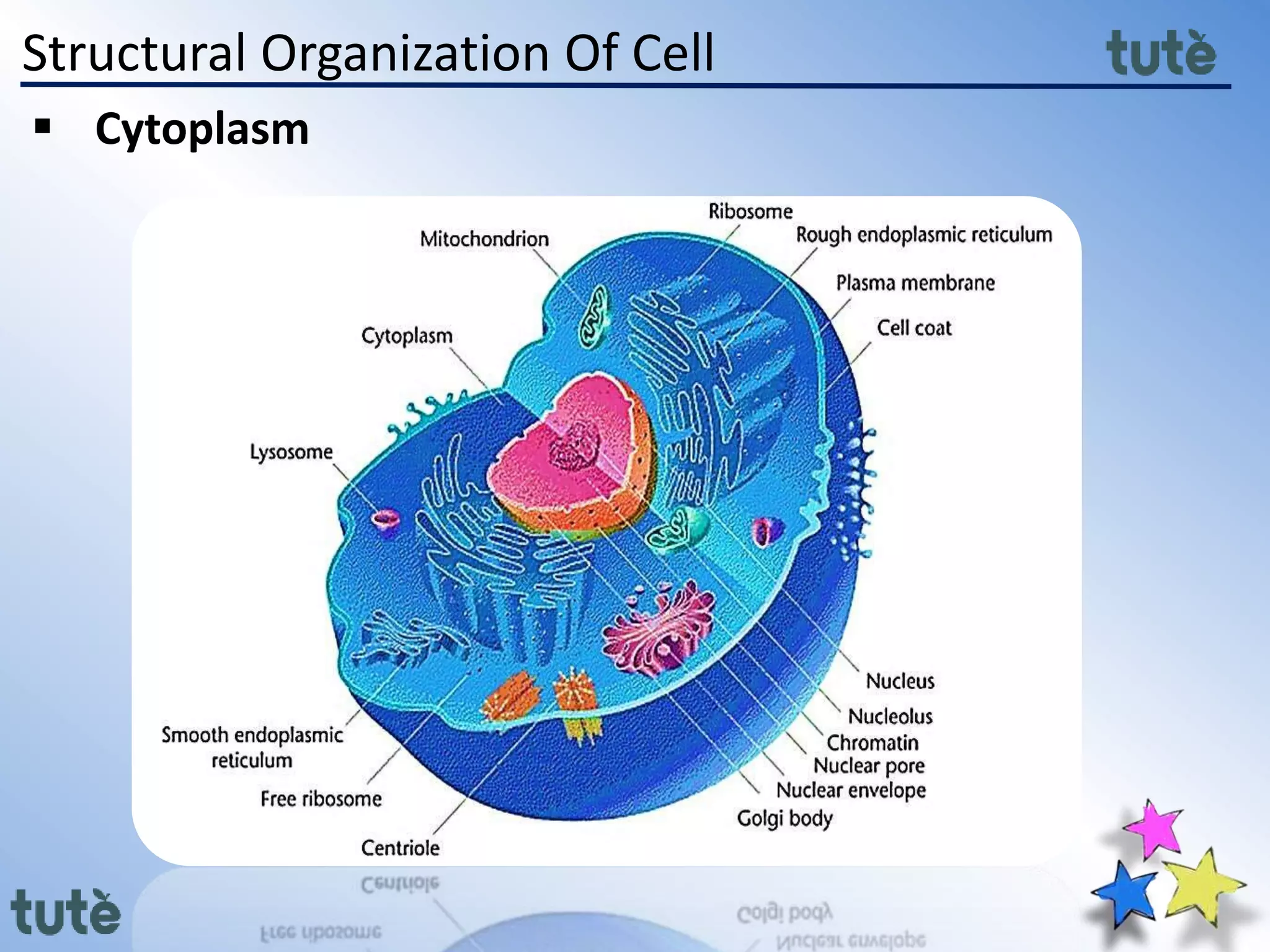
 Cytoplasm
Structural Organization Of Cell
 Plasma membrane
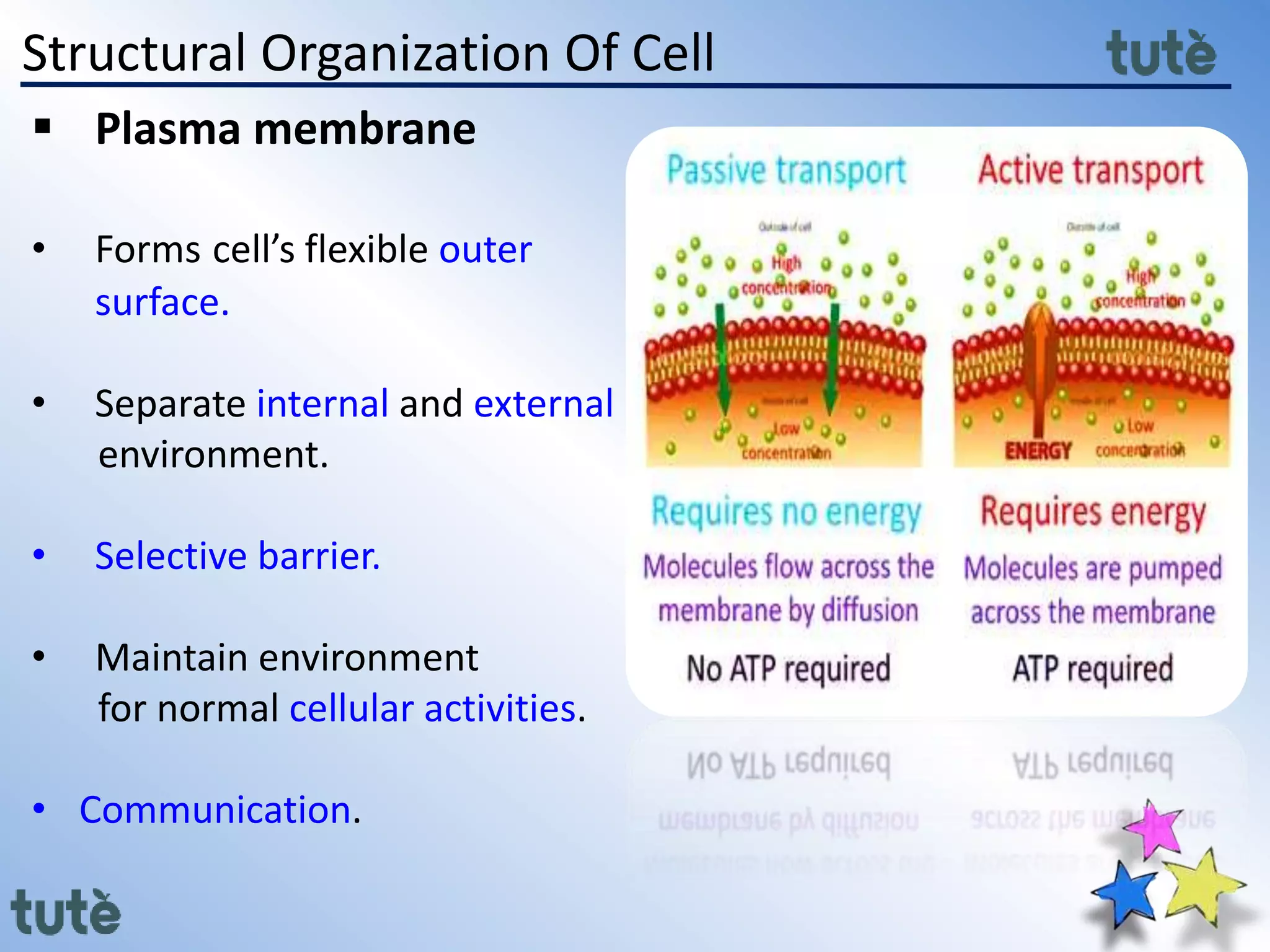
• Forms cell’s flexible outer
surface.
• Separate internal and external
environment.
• Selective barrier.
• Maintain environment
for normal cellular activities.
• Communication.
Structural Organization Of Cell
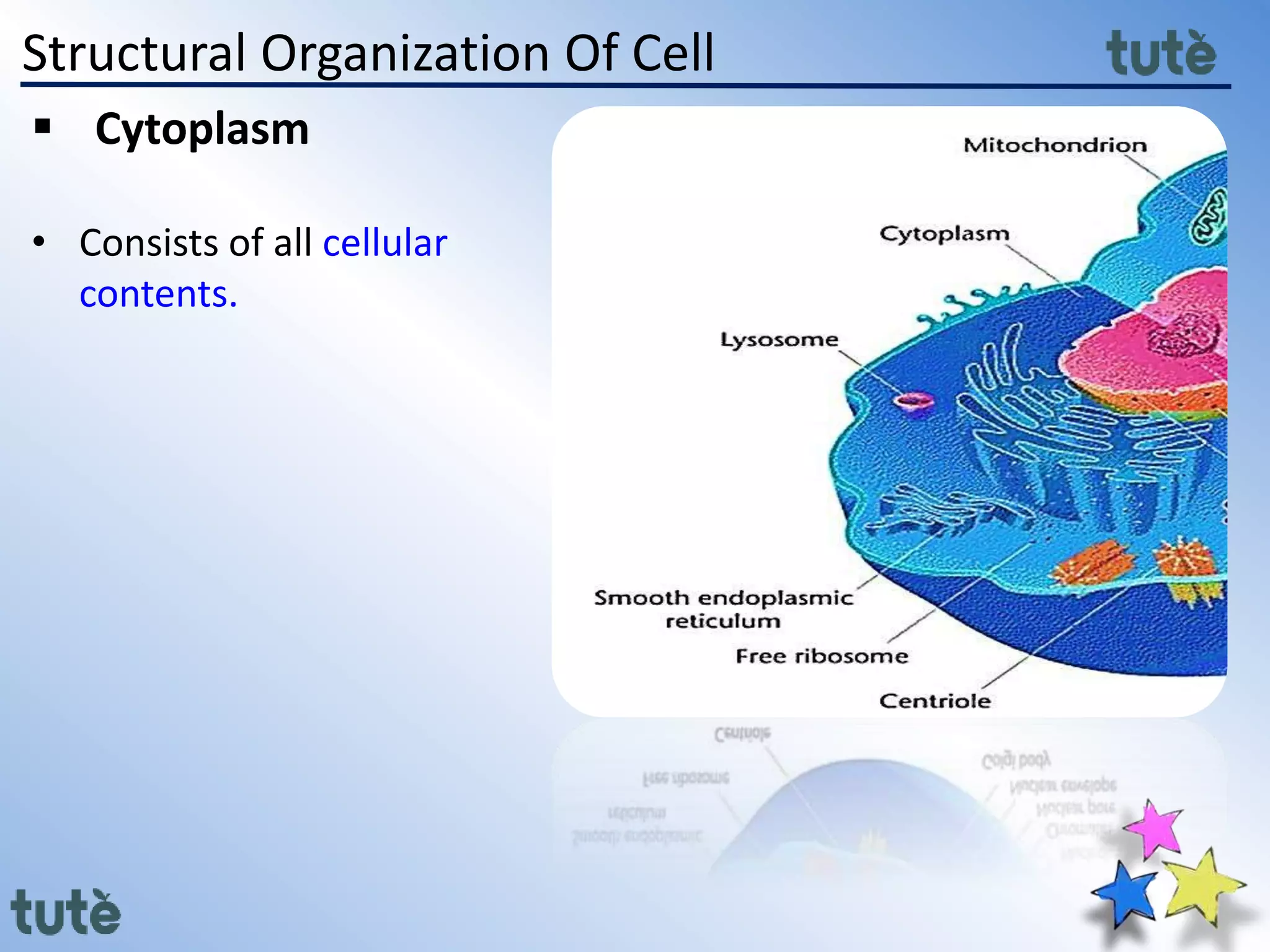
 Cytoplasm
• Consists of all cellular
contents.
Structural Organization Of Cell
 Cytoplasm
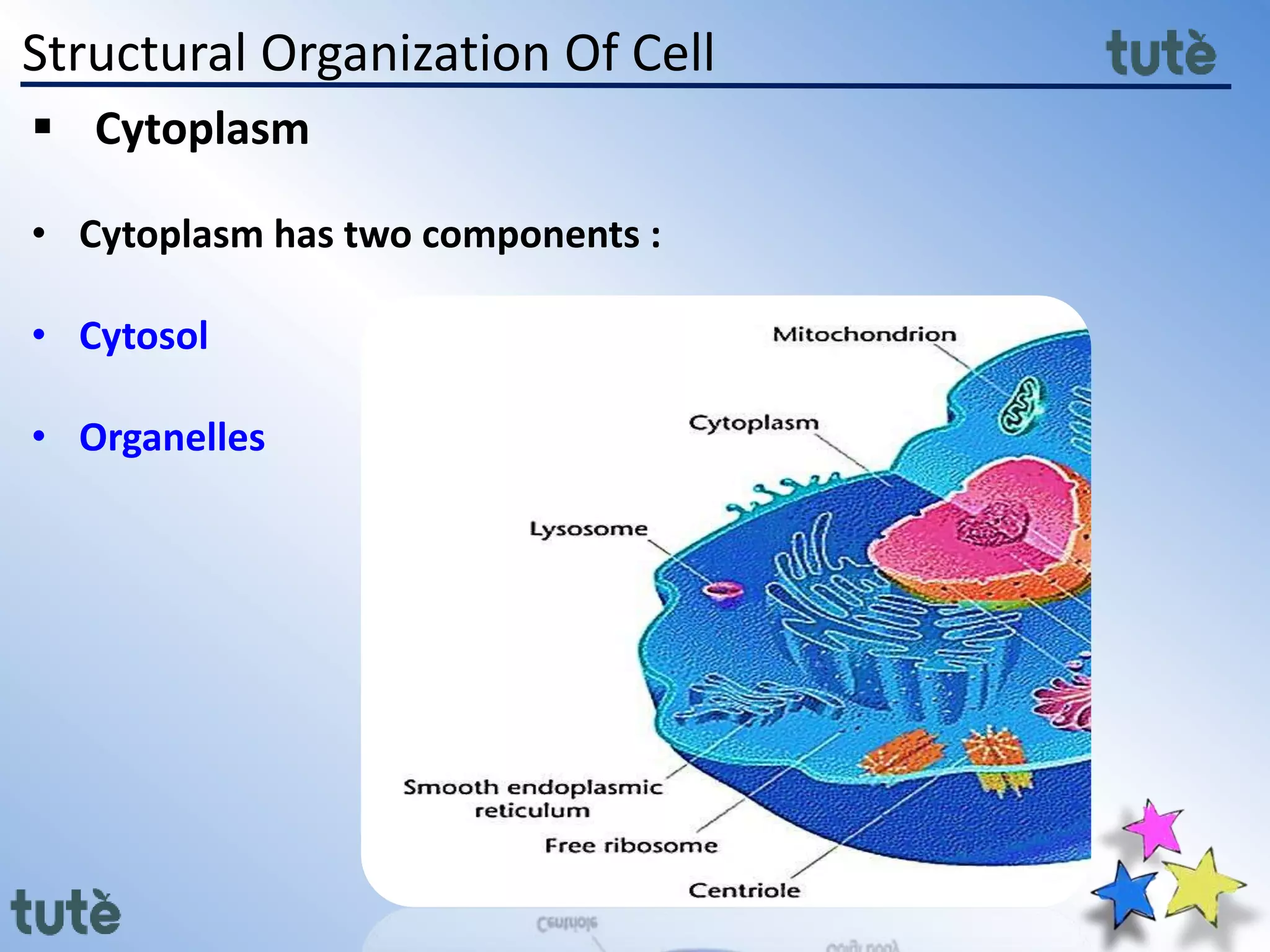
• Cytoplasm has two components :
• Cytosol
• Organelles
Structural Organization Of Cell
 Cytoplasm
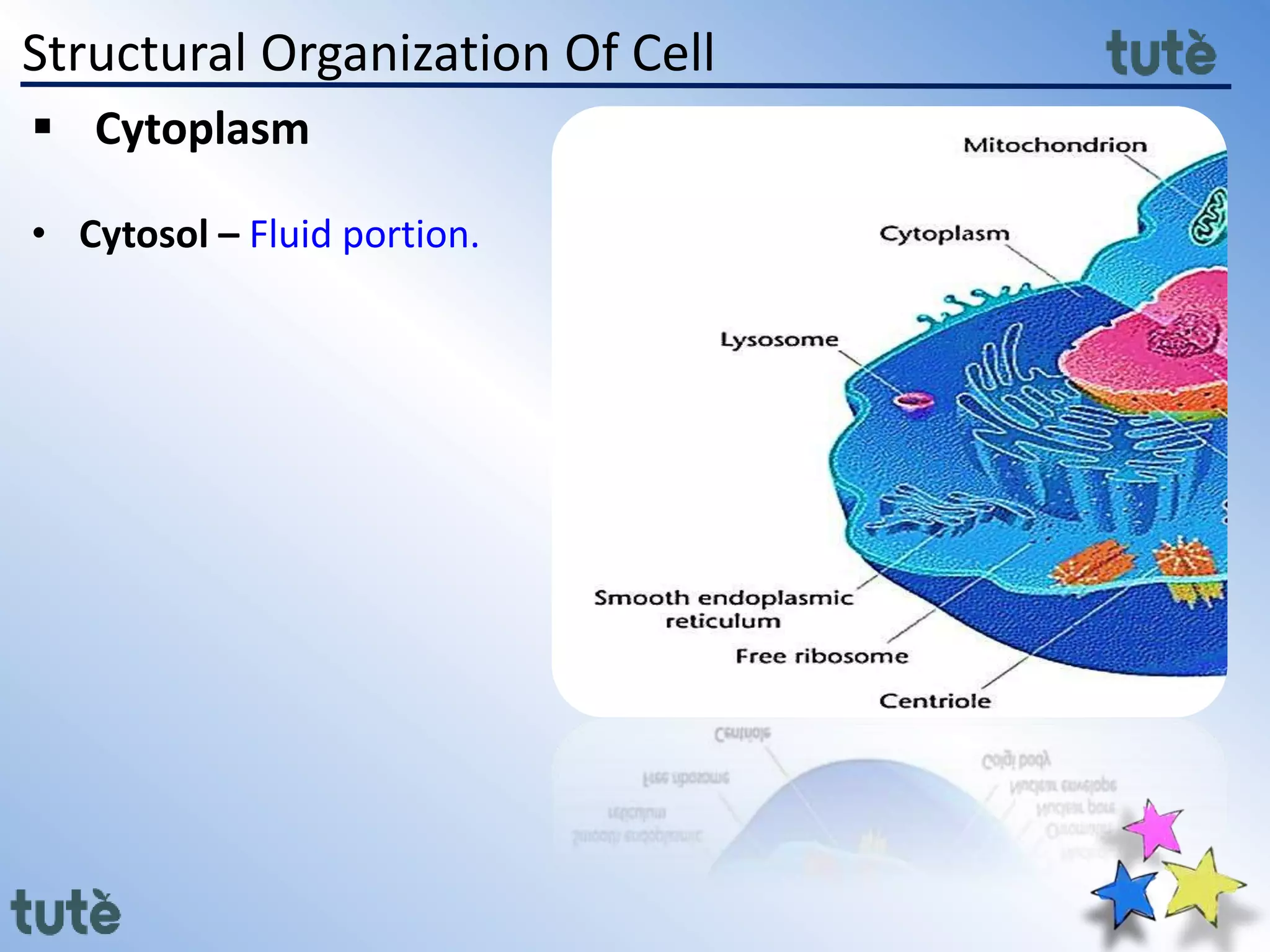
• Cytosol – Fluid portion.
Structural Organization Of Cell
 Cytoplasm
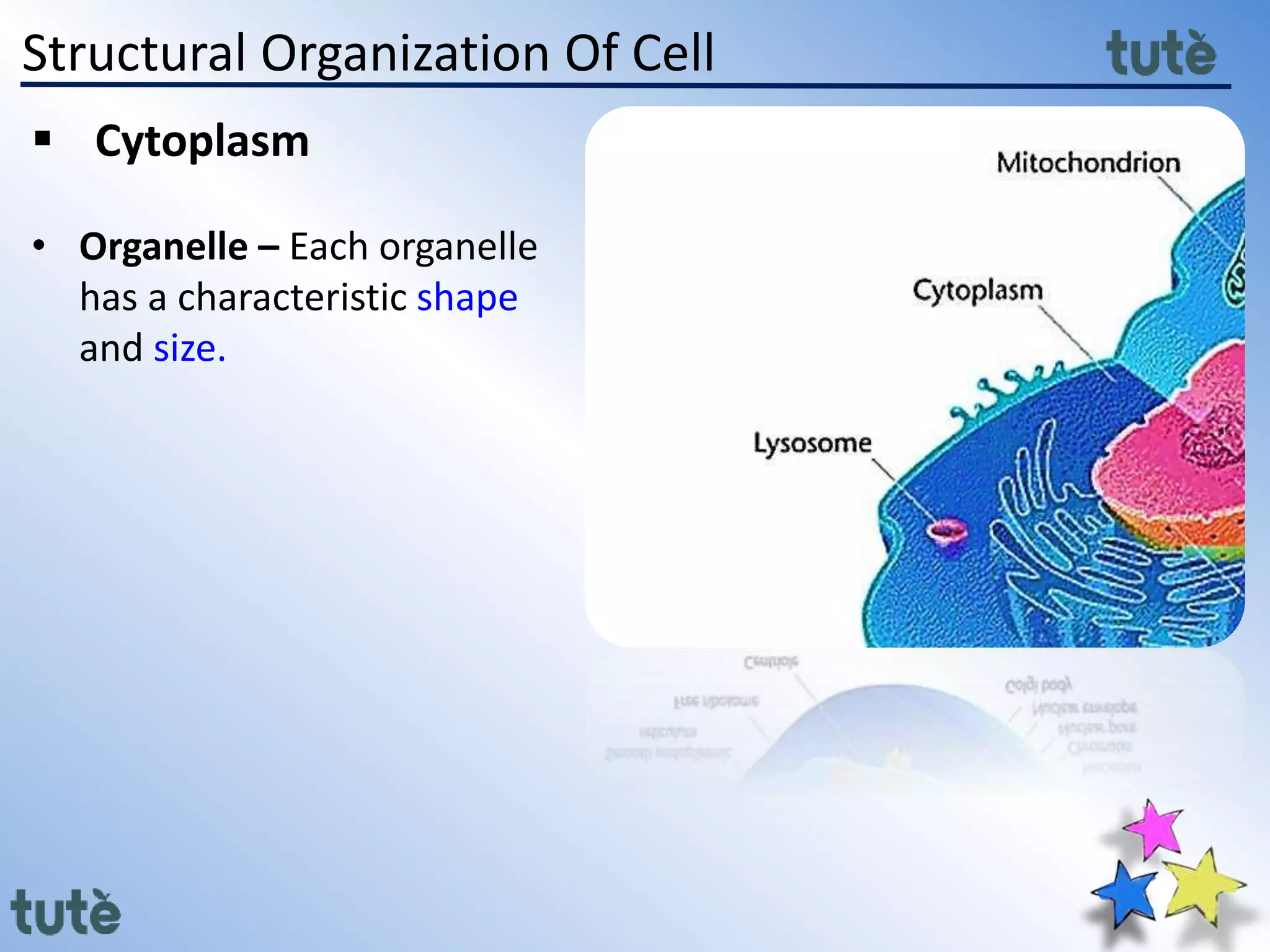
• Organelle – Each organelle
has a characteristic shape
and size.
Structural Organization Of Cell
 Cytoplasm
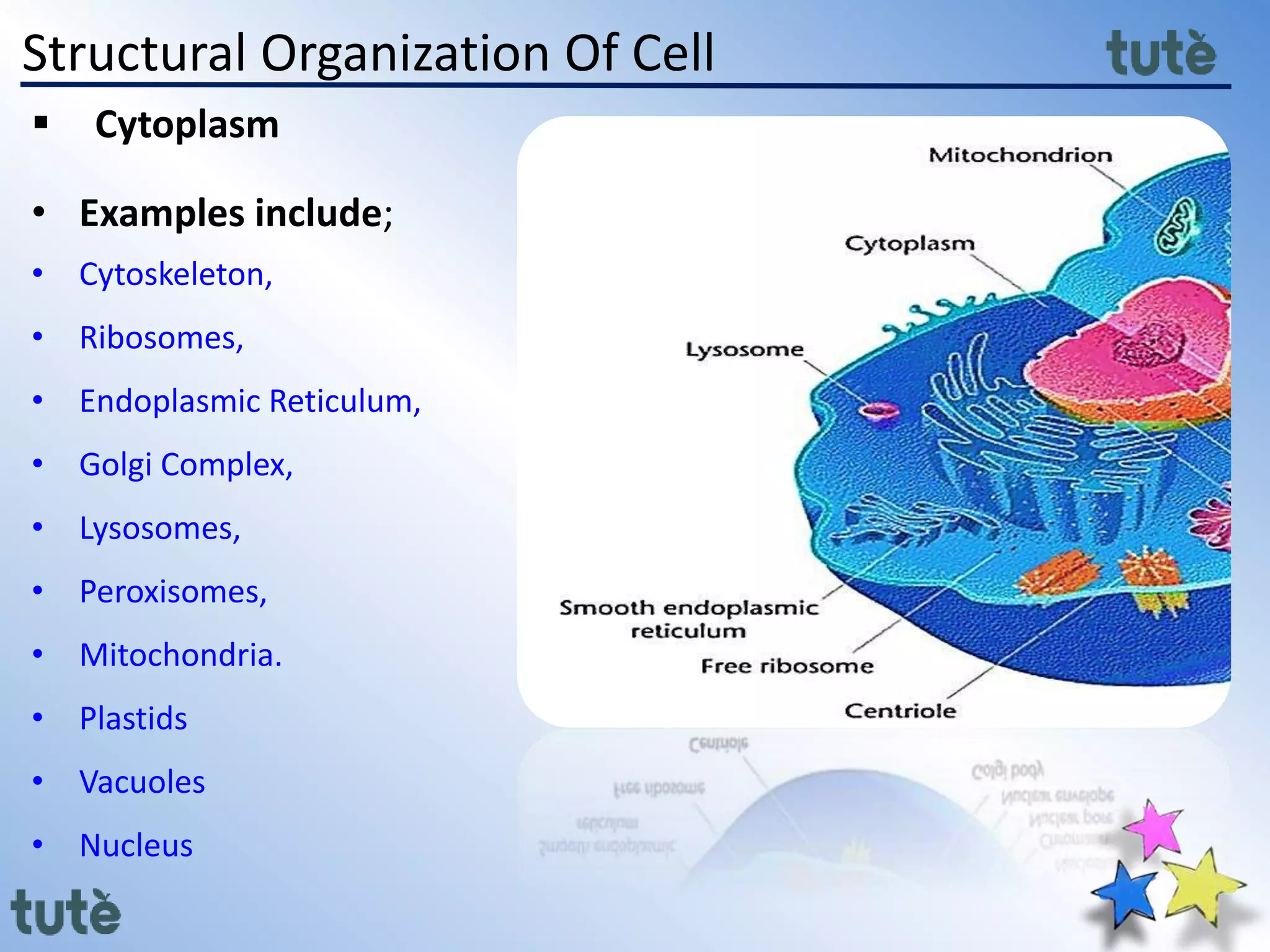
• Examples include;
• Cytoskeleton,
• Ribosomes,
• Endoplasmic Reticulum,
• Golgi Complex,
• Lysosomes,
• Peroxisomes,
• Mitochondria.
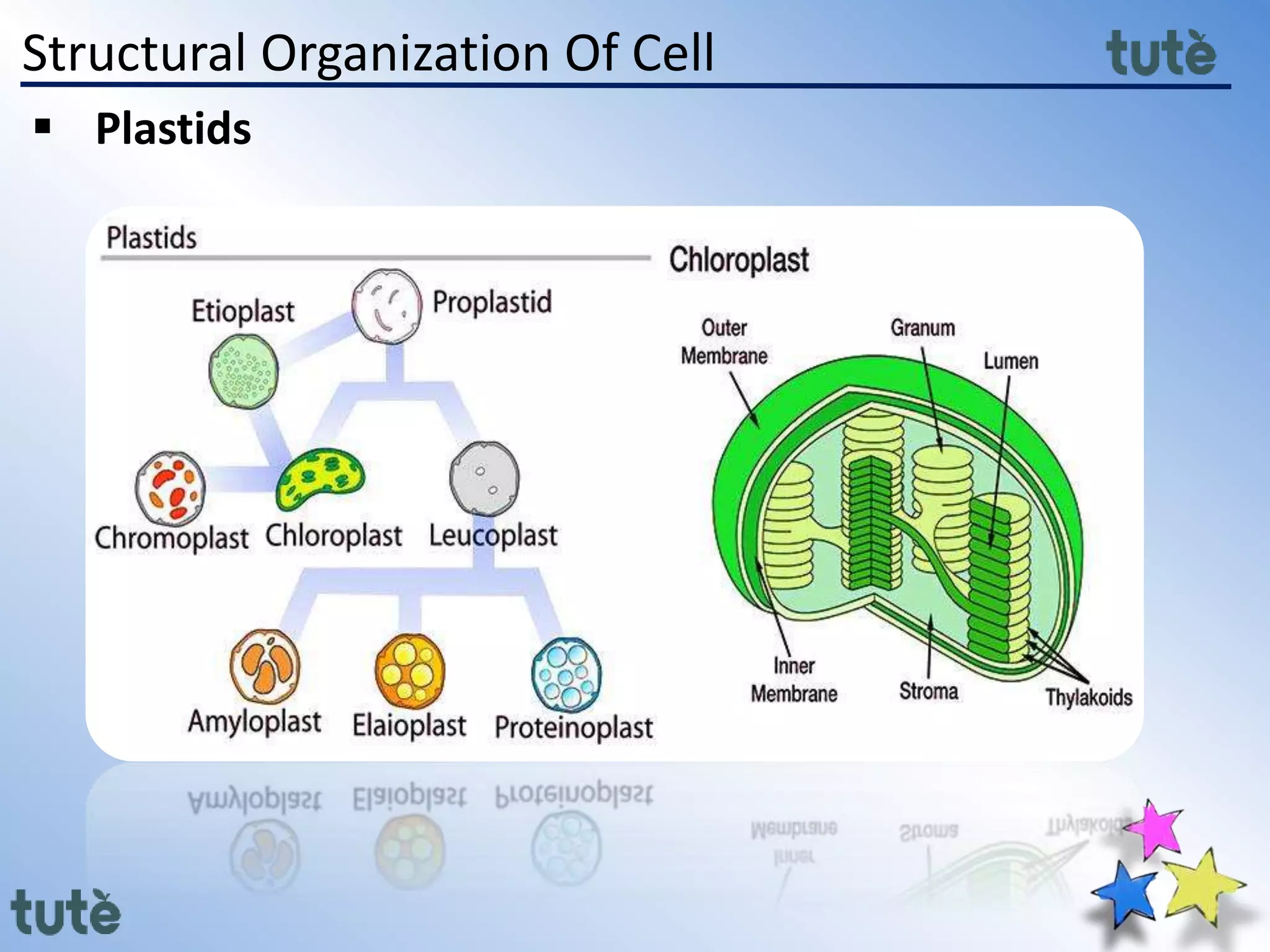
• Plastids
• Vacuoles
• Nucleus
Structural Organization Of Cell
 Nucleus
Structural Organization Of Cell
 Nucleus
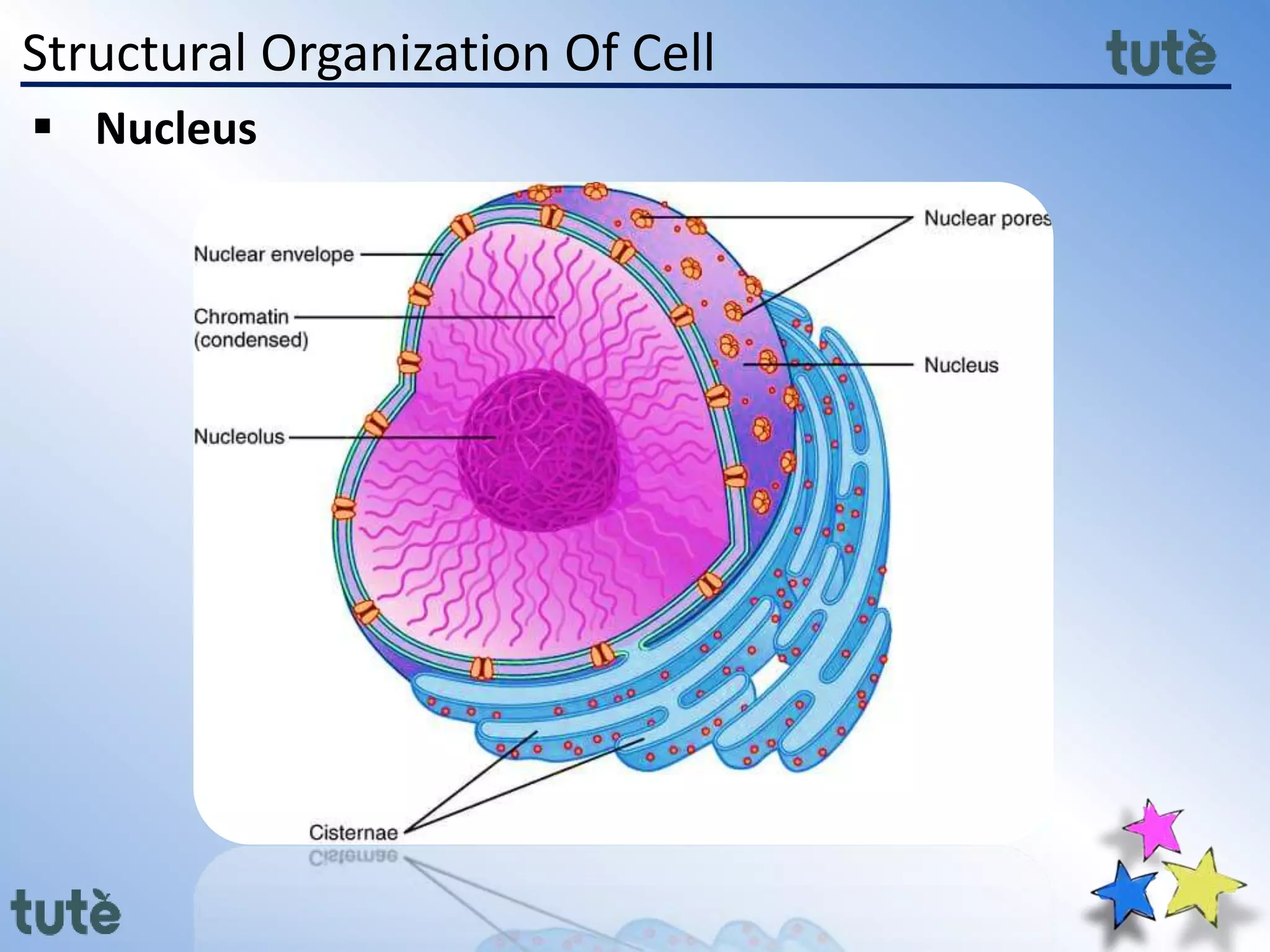
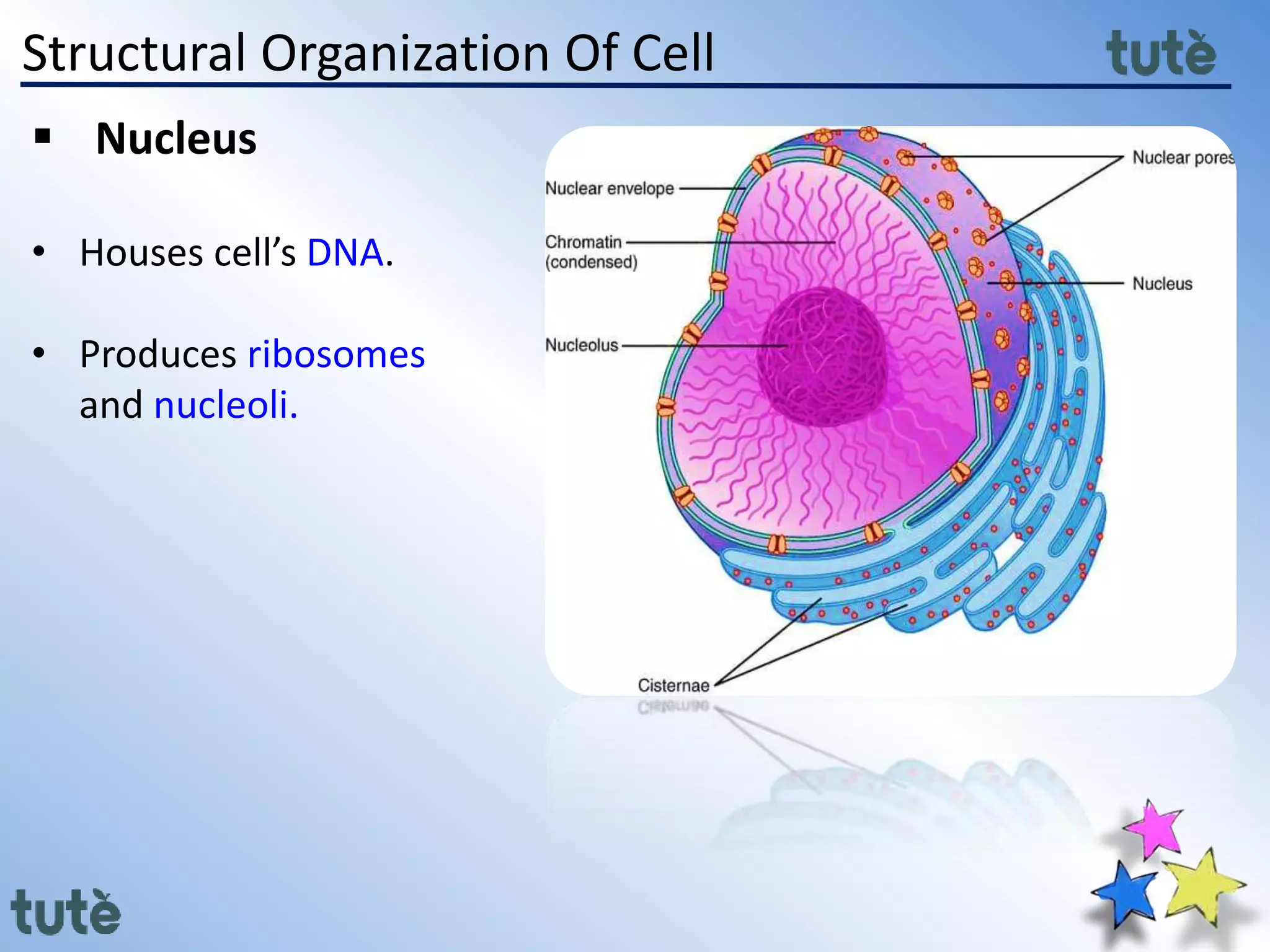
• Houses cell’s DNA.
• Produces ribosomes
and nucleoli.
Structural Organization Of Cell
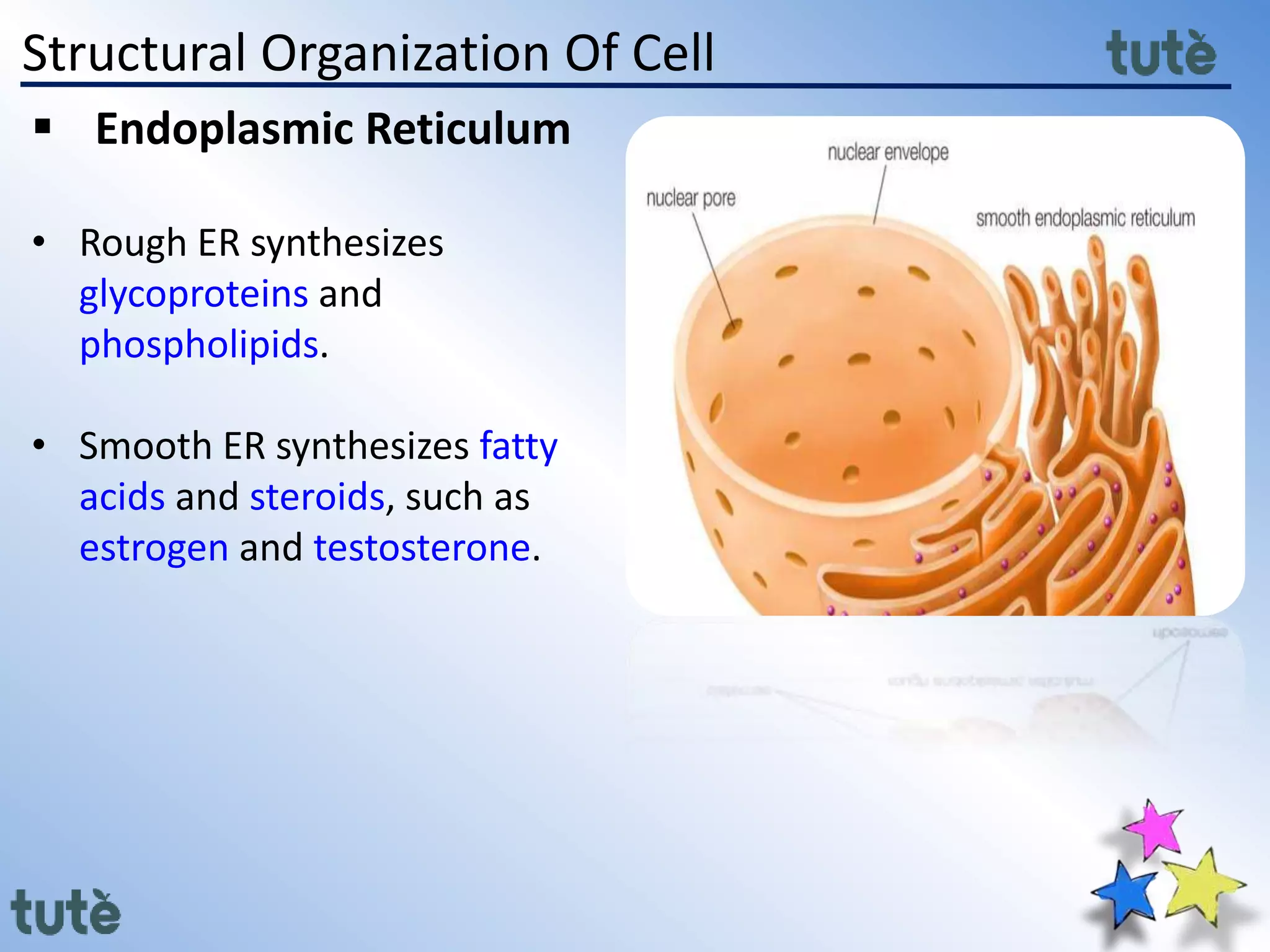
 Endoplasmic Reticulum
Structural Organization Of Cell
 Endoplasmic Reticulum
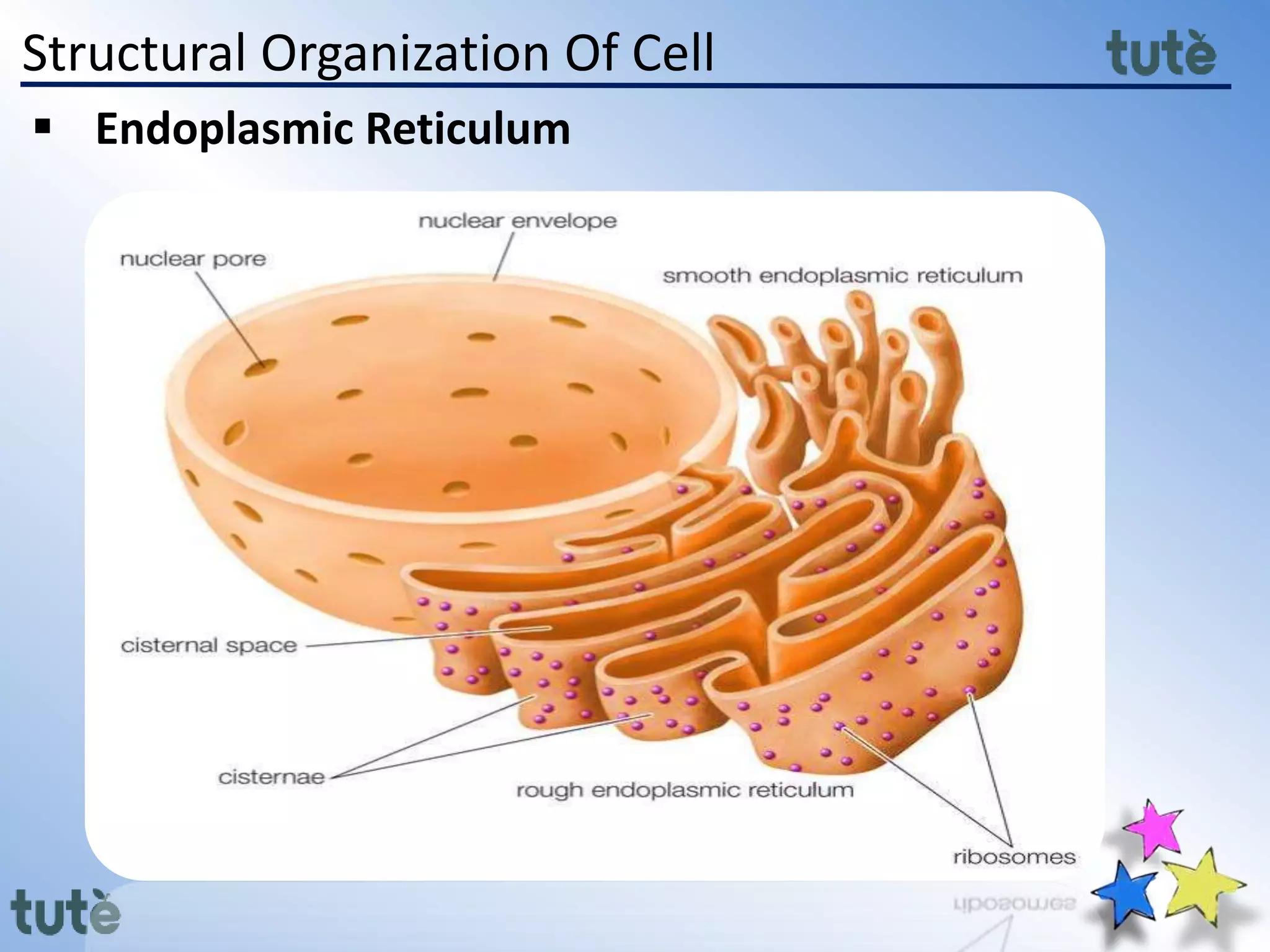
• Rough ER synthesizes
glycoproteins and
phospholipids.
• Smooth ER synthesizes fatty
acids and steroids, such as
estrogen and testosterone.
Structural Organization Of Cell
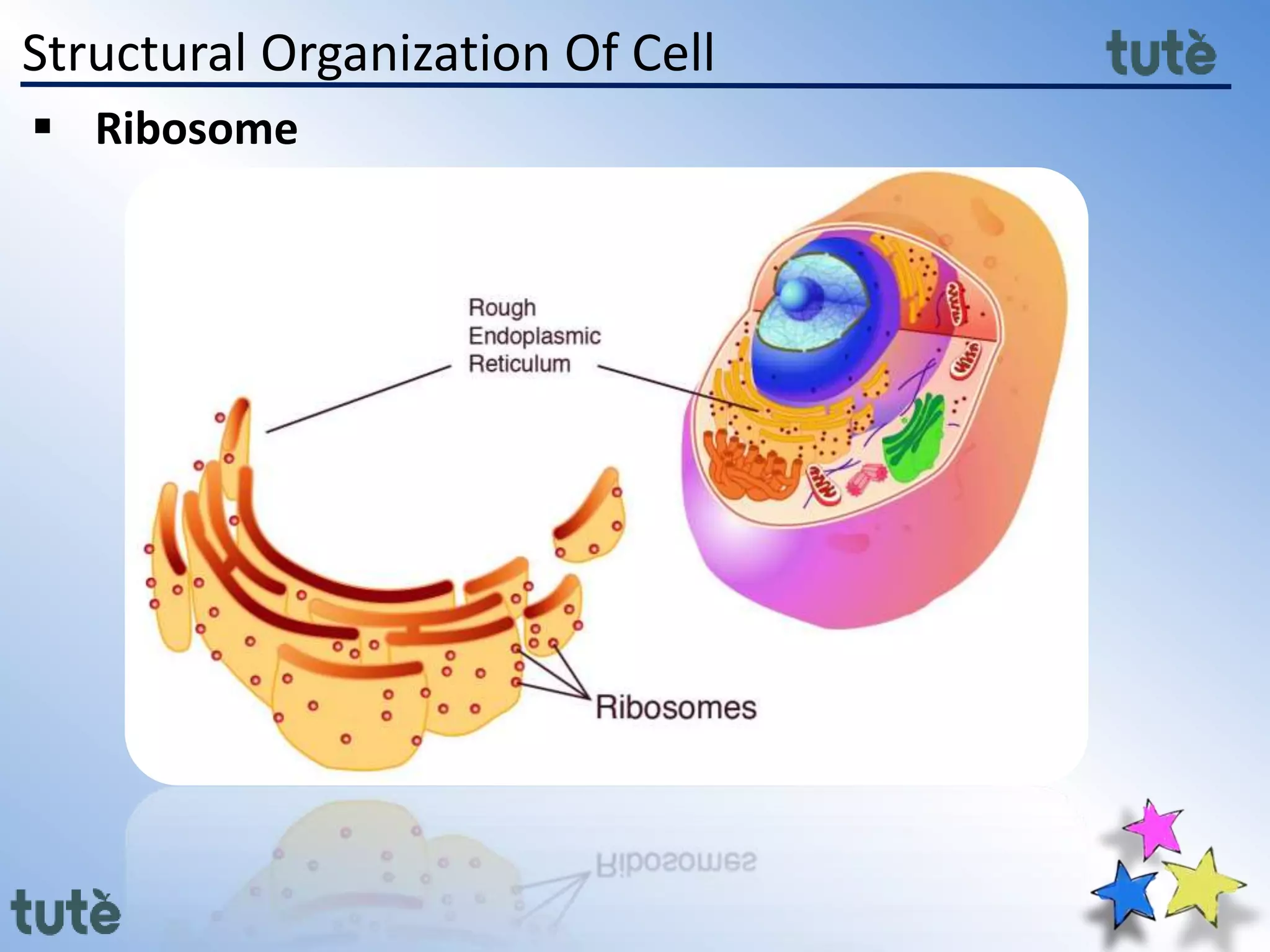
 Ribosome
Structural Organization Of Cell
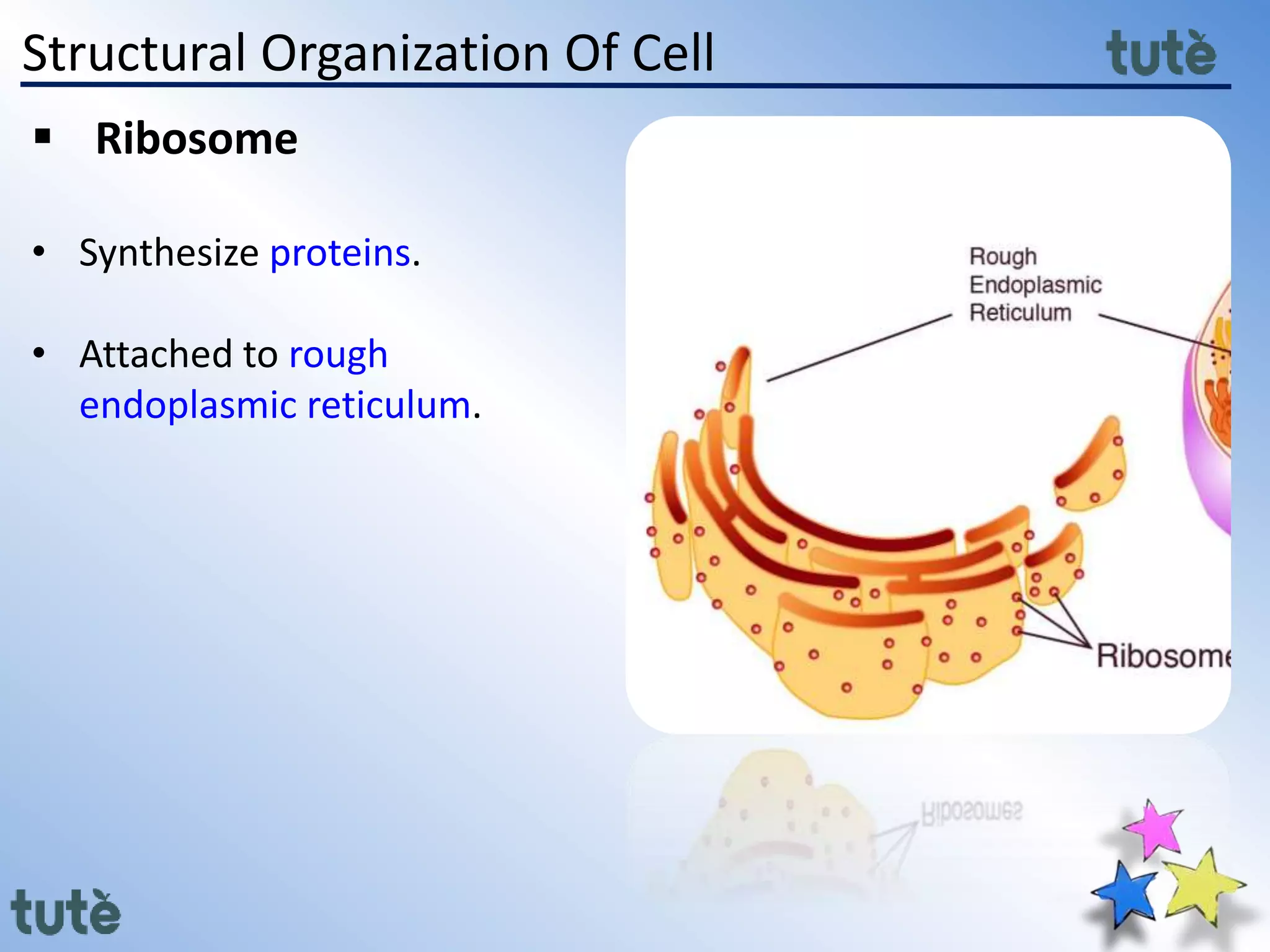
 Ribosome
• Synthesize proteins.
• Attached to rough
endoplasmic reticulum.
Structural Organization Of Cell
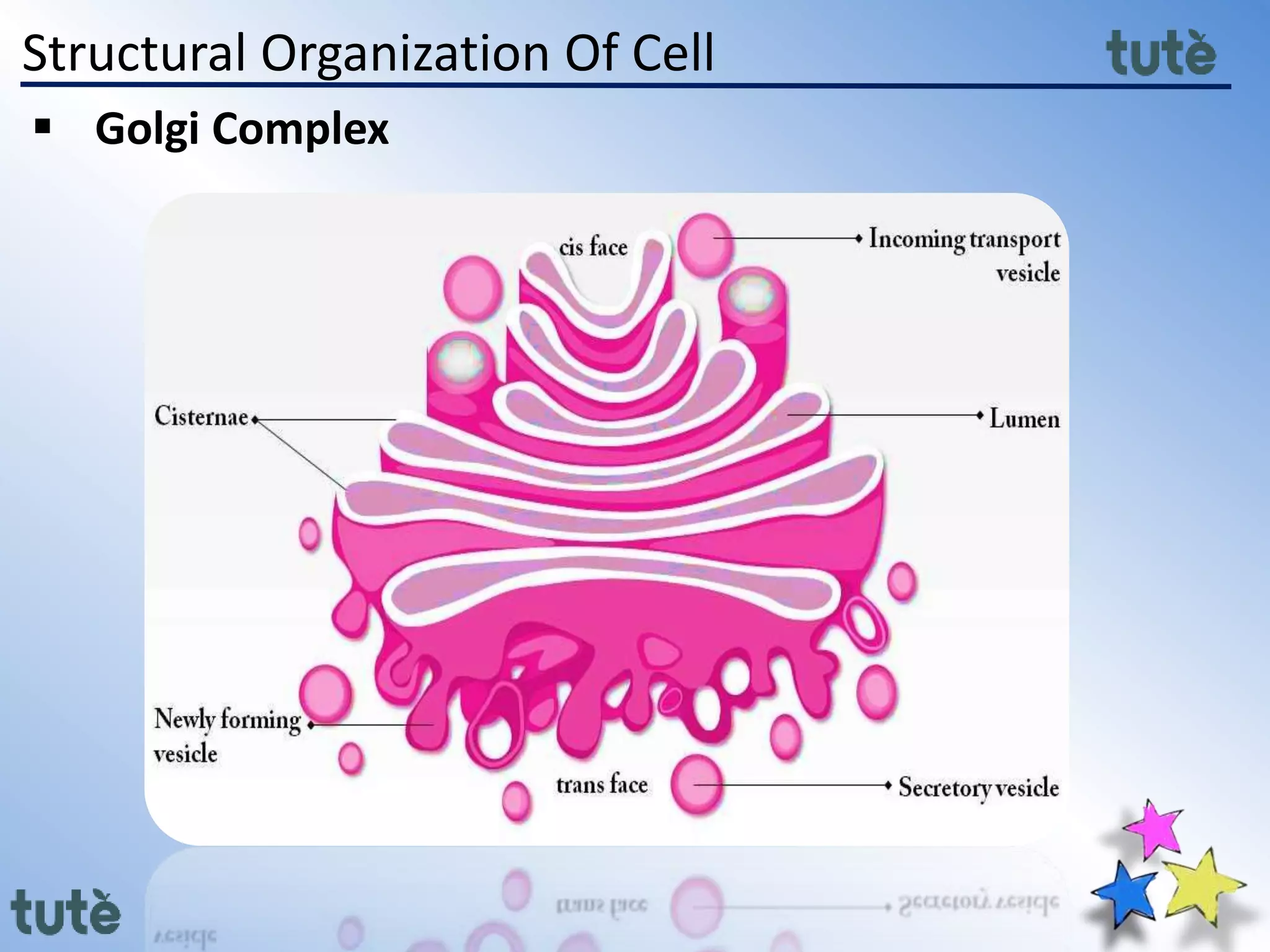
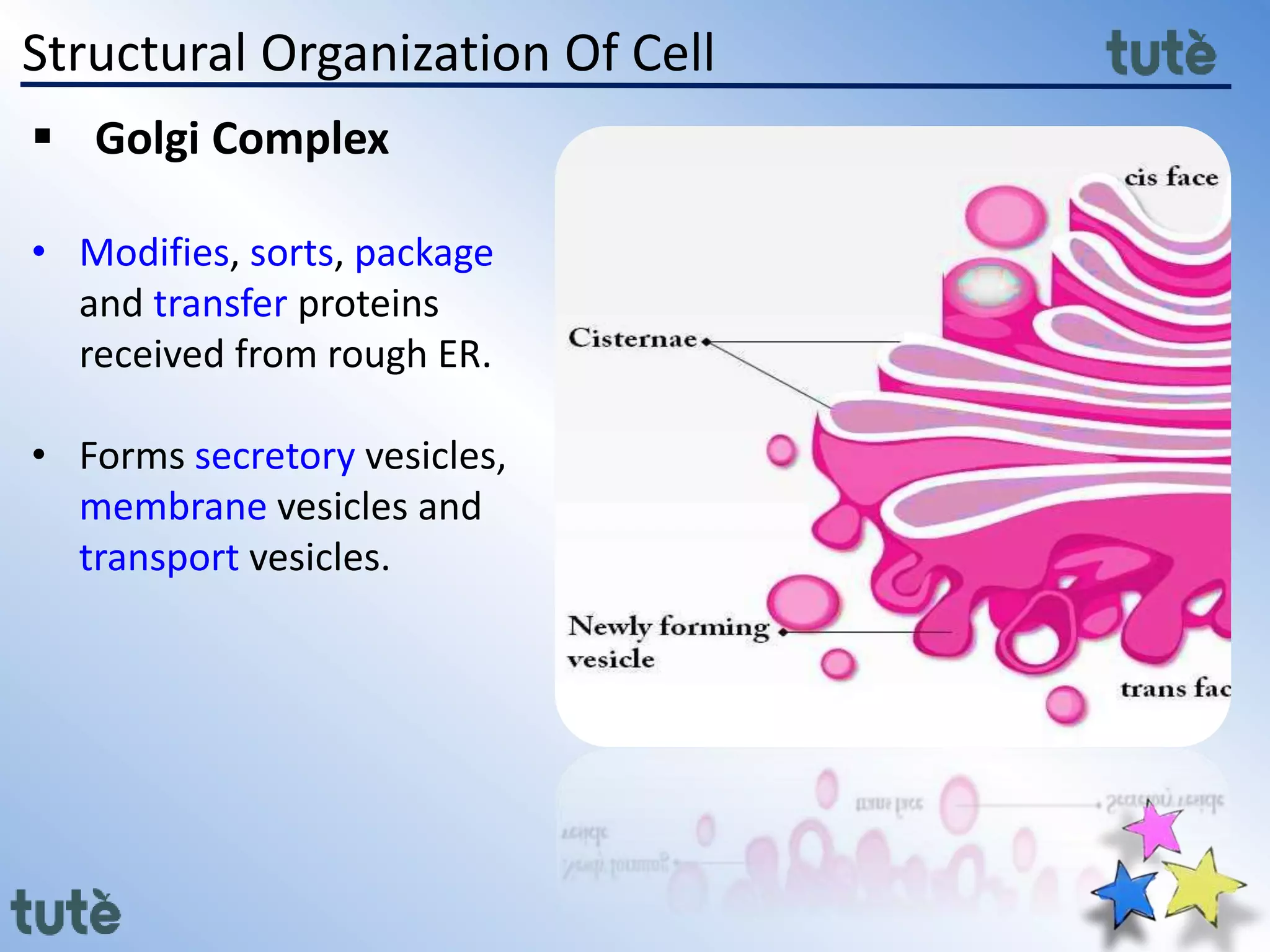
 Golgi Complex
Structural Organization Of Cell
 Golgi Complex
• Modifies, sorts, package
and transfer proteins
received from rough ER.
• Forms secretory vesicles,
membrane vesicles and
transport vesicles.
Structural Organization Of Cell
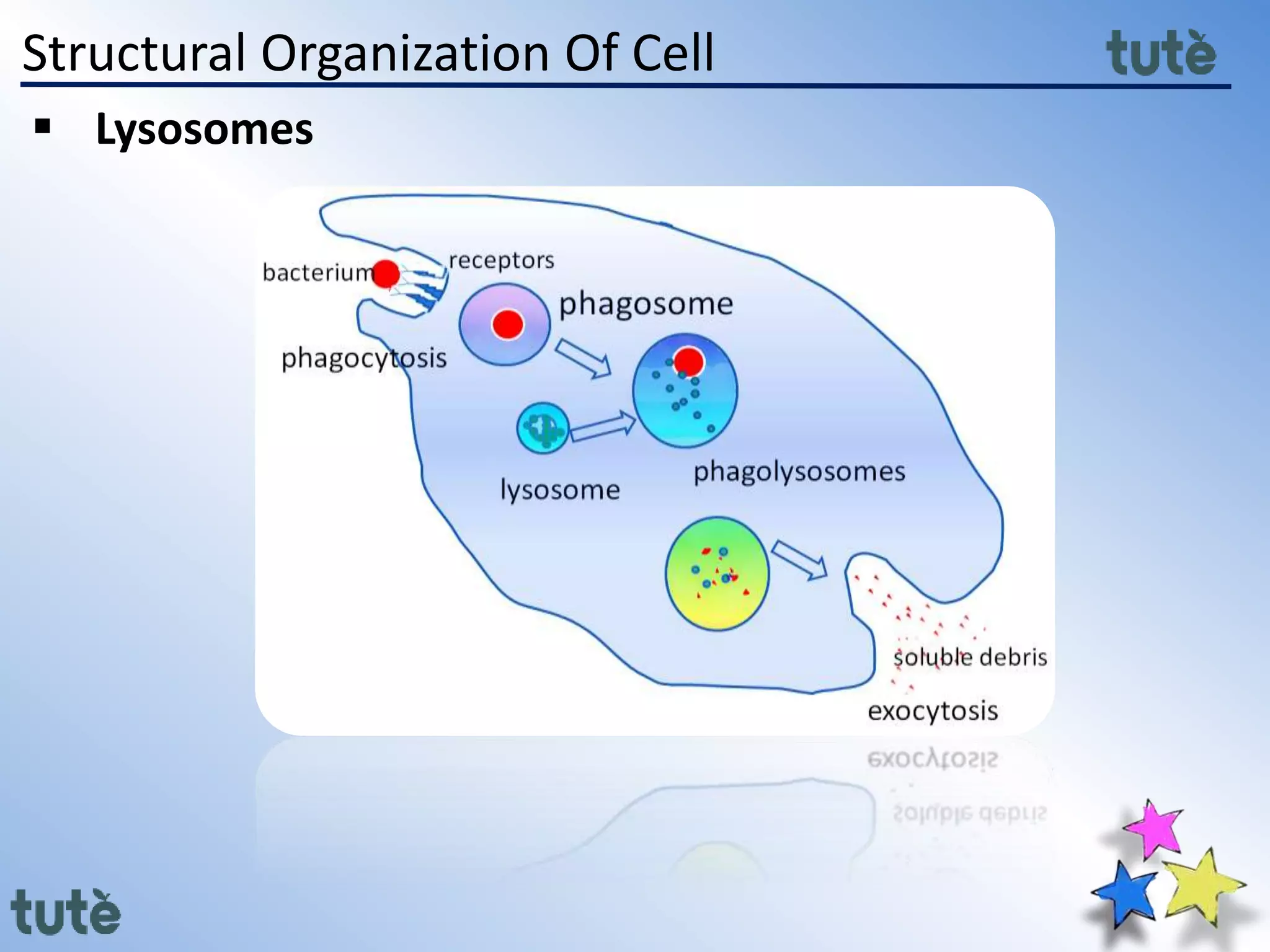
 Lysosomes
Structural Organization Of Cell
 Lysosomes
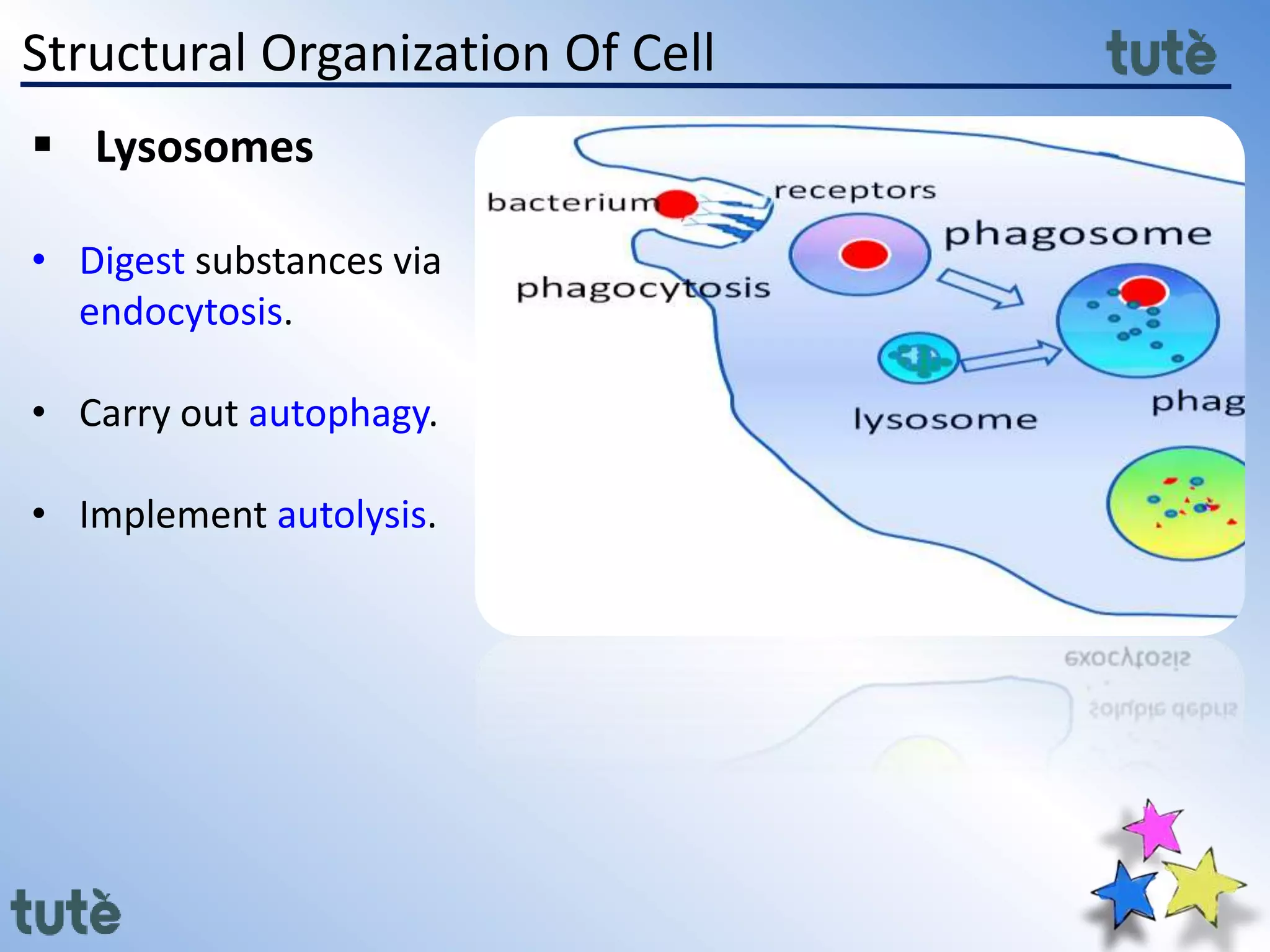
• Digest substances via
endocytosis.
• Carry out autophagy.
• Implement autolysis.
Structural Organization Of Cell
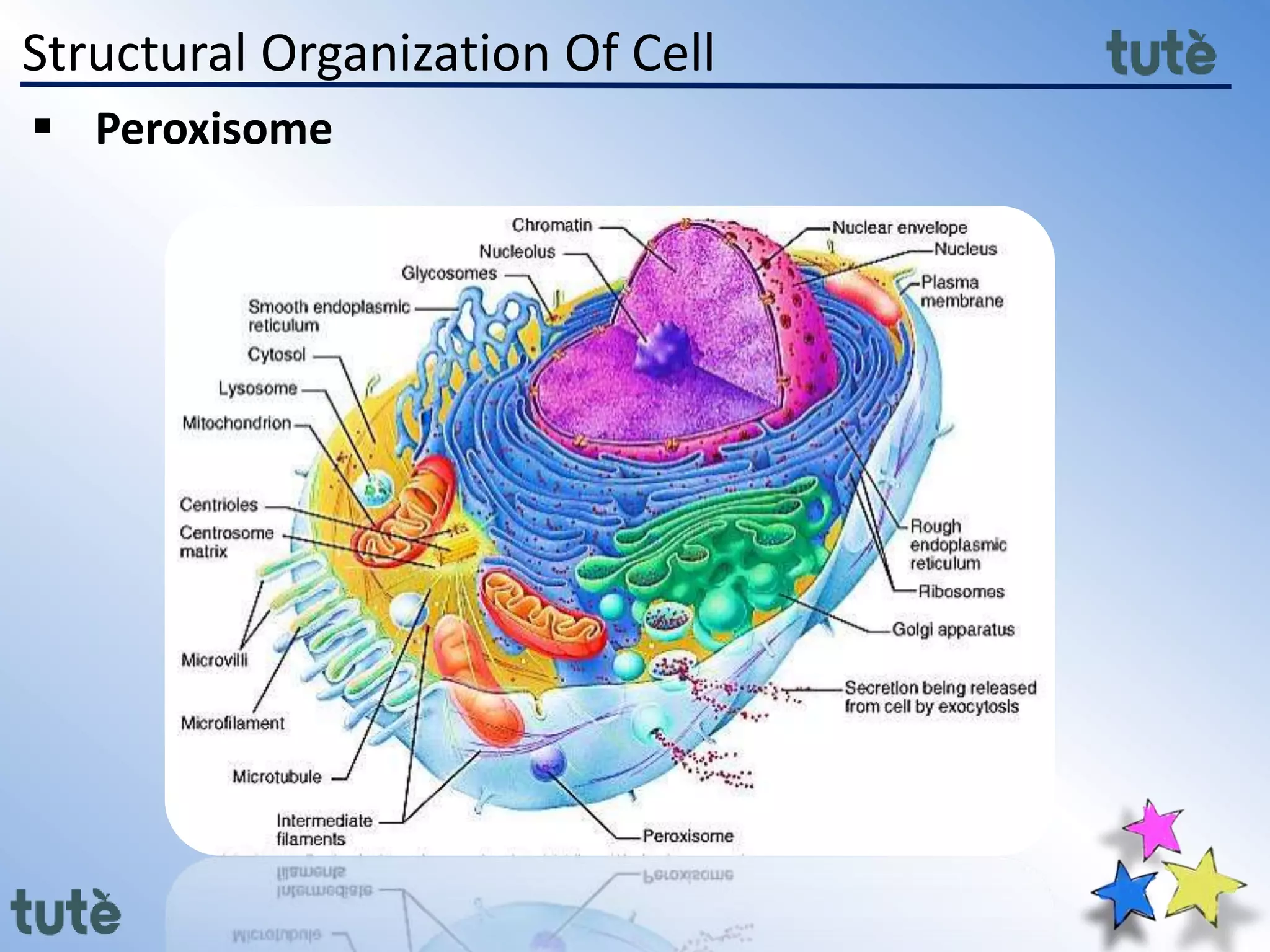
 Peroxisome
Structural Organization Of Cell
 Peroxisome
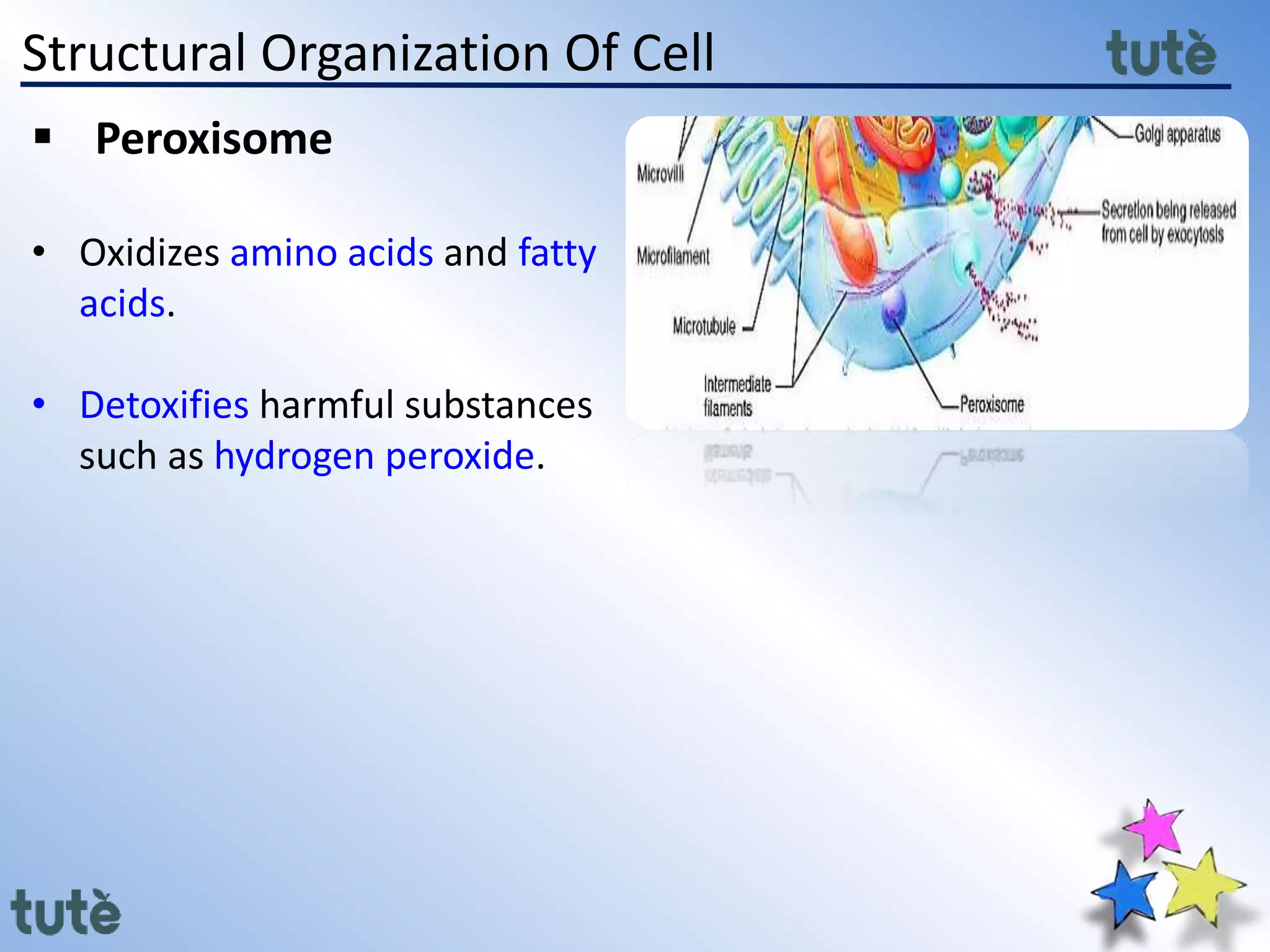
• Oxidizes amino acids and fatty
acids.
• Detoxifies harmful substances
such as hydrogen peroxide.
Structural Organization Of Cell
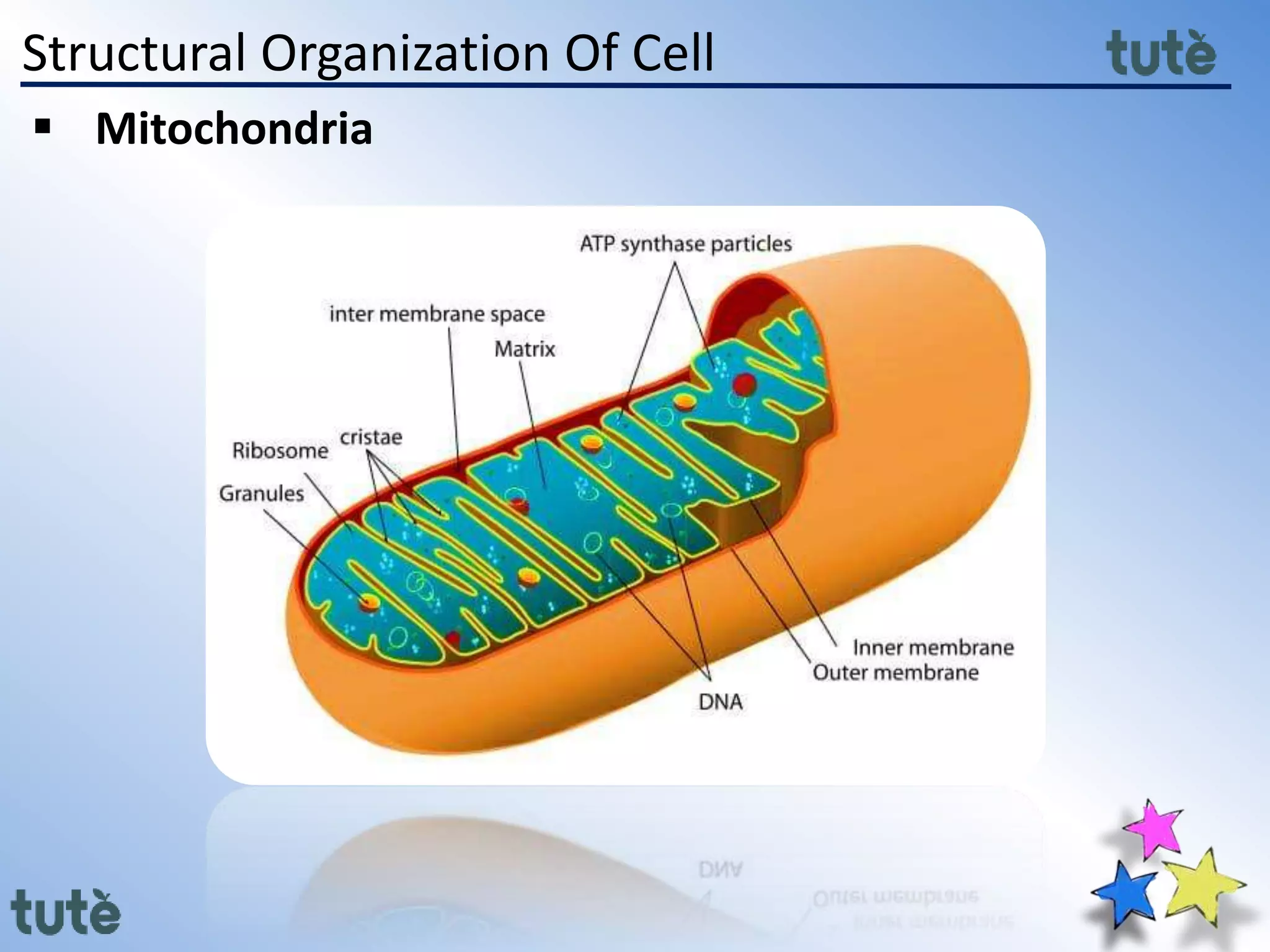
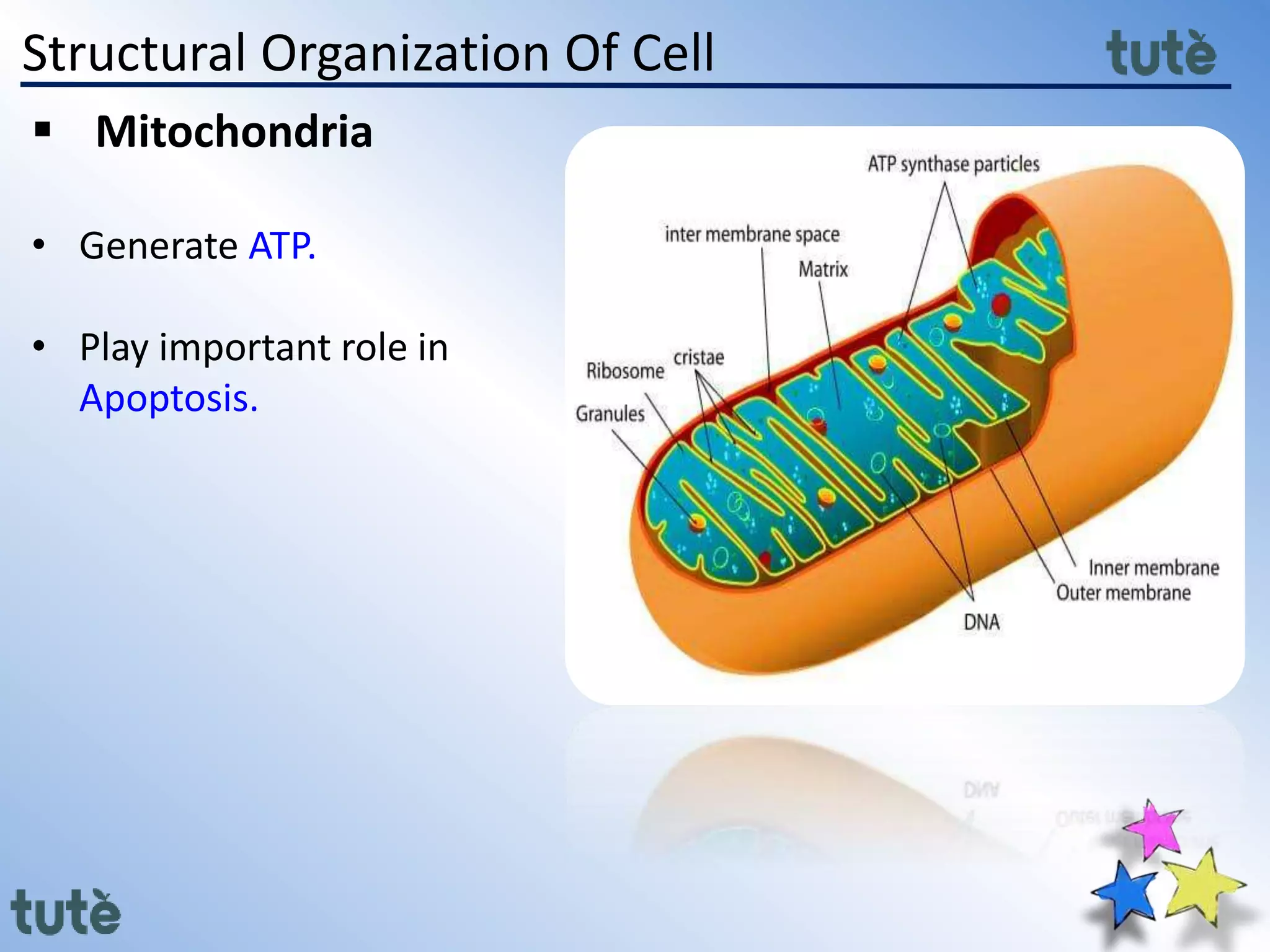
 Mitochondria
Structural Organization Of Cell
 Mitochondria
• Generate ATP.
• Play important role in
Apoptosis.
Structural Organization Of Cell
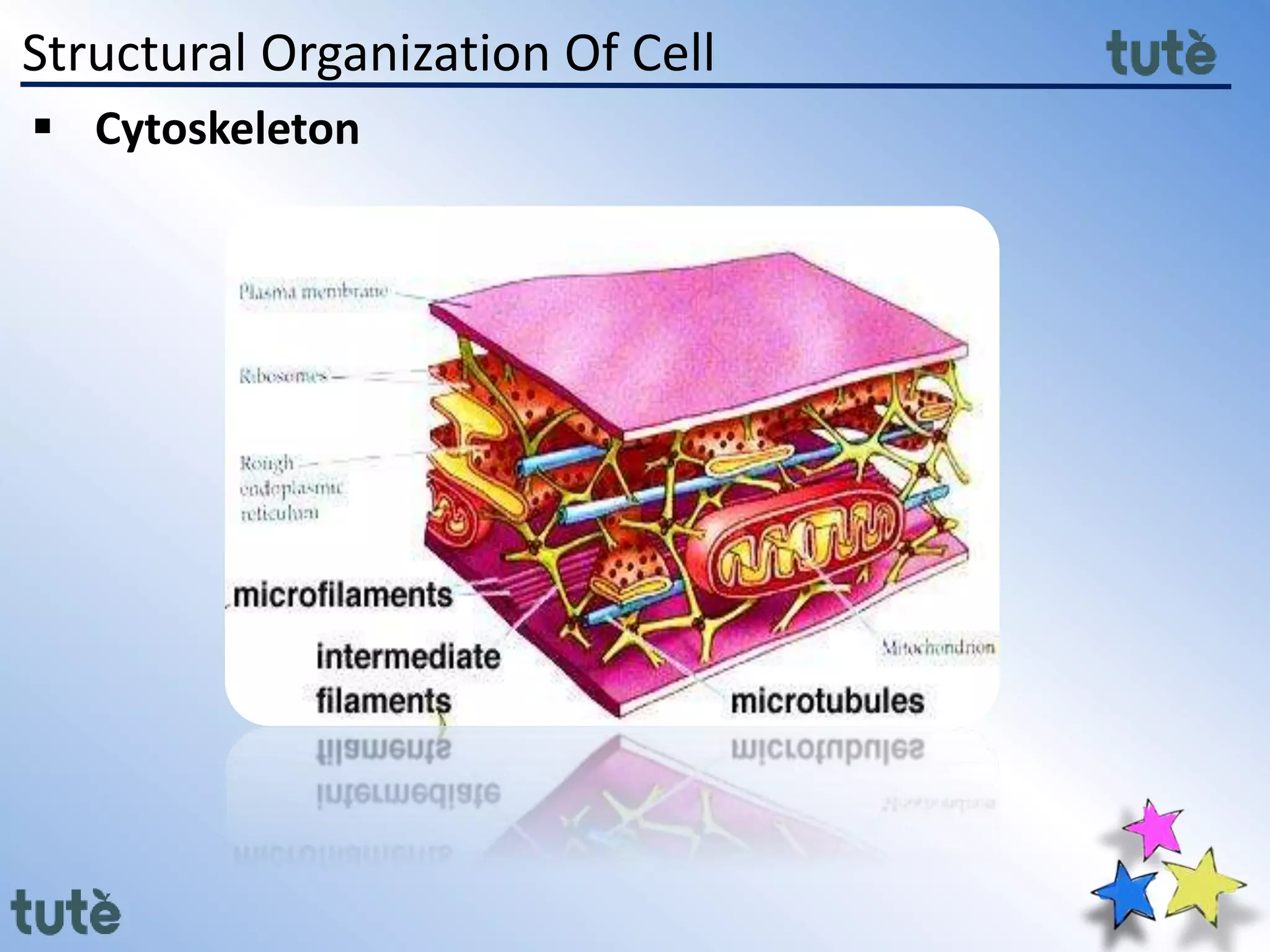
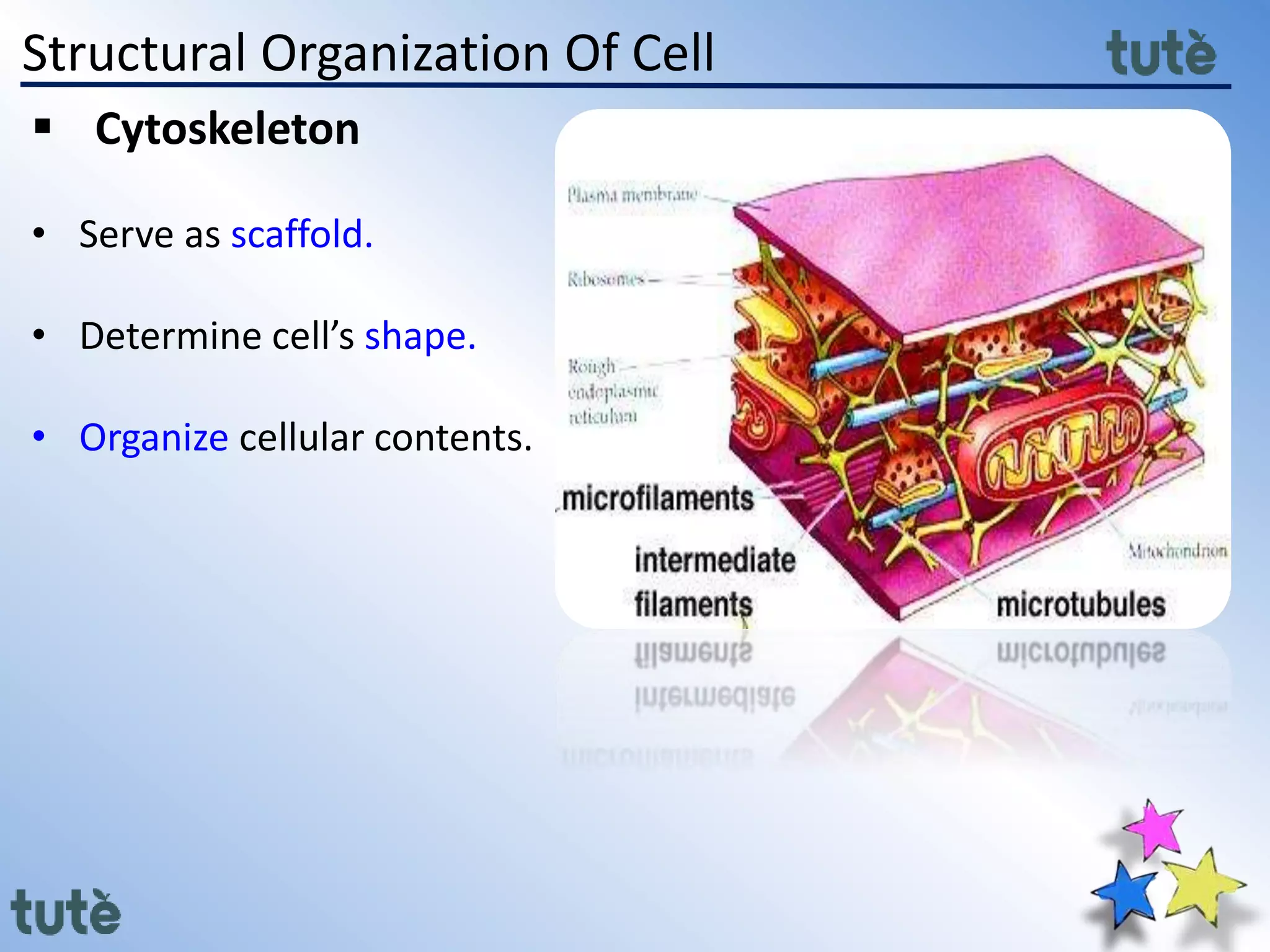
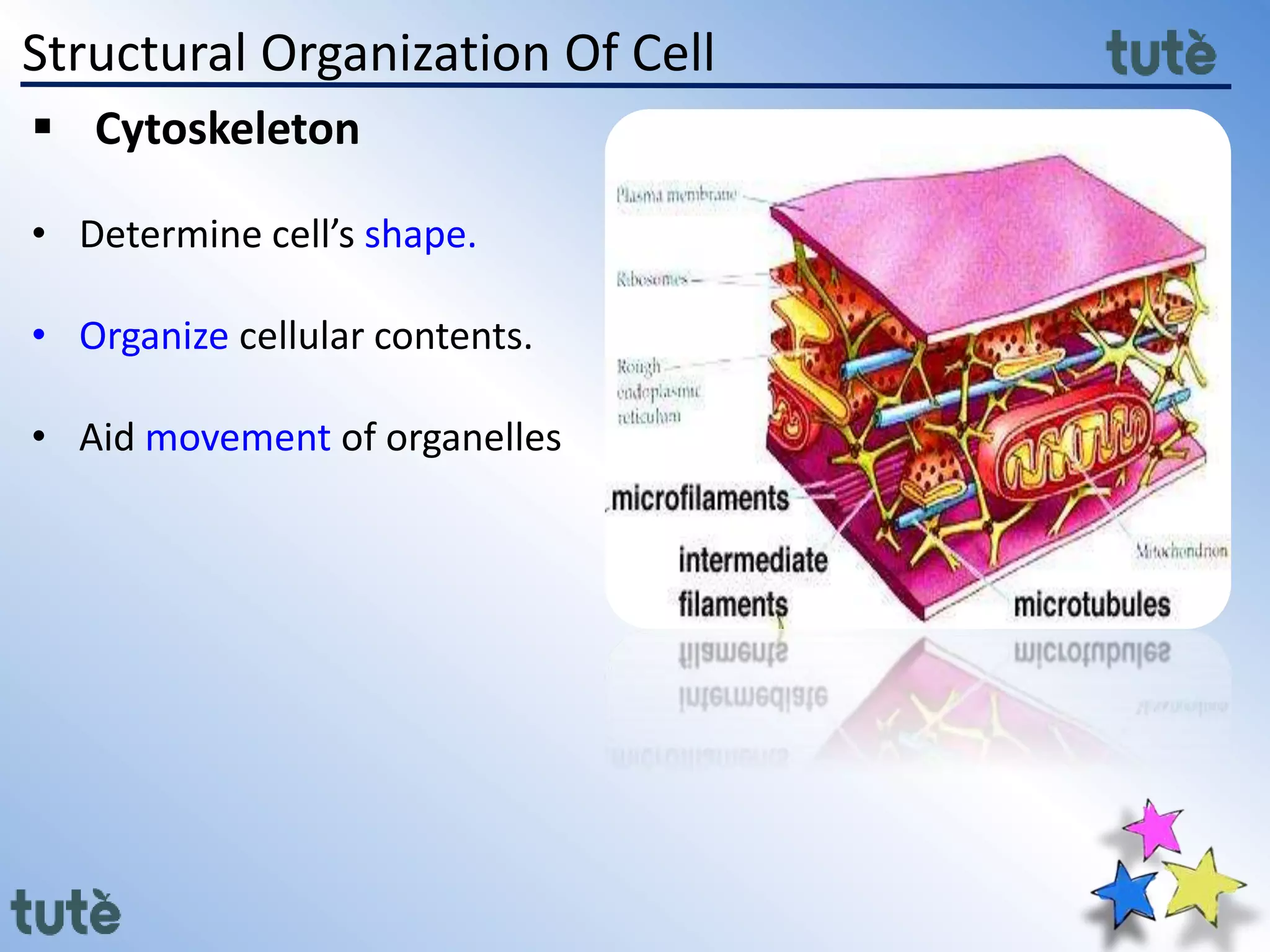
 Cytoskeleton
Structural Organization Of Cell
 Cytoskeleton
• Serve as scaffold.
• Determine cell’s shape.
• Organize cellular contents.
Structural Organization Of Cell
 Cytoskeleton
• Determine cell’s shape.
• Organize cellular contents.
• Aid movement of organelles
Structural Organization Of Cell
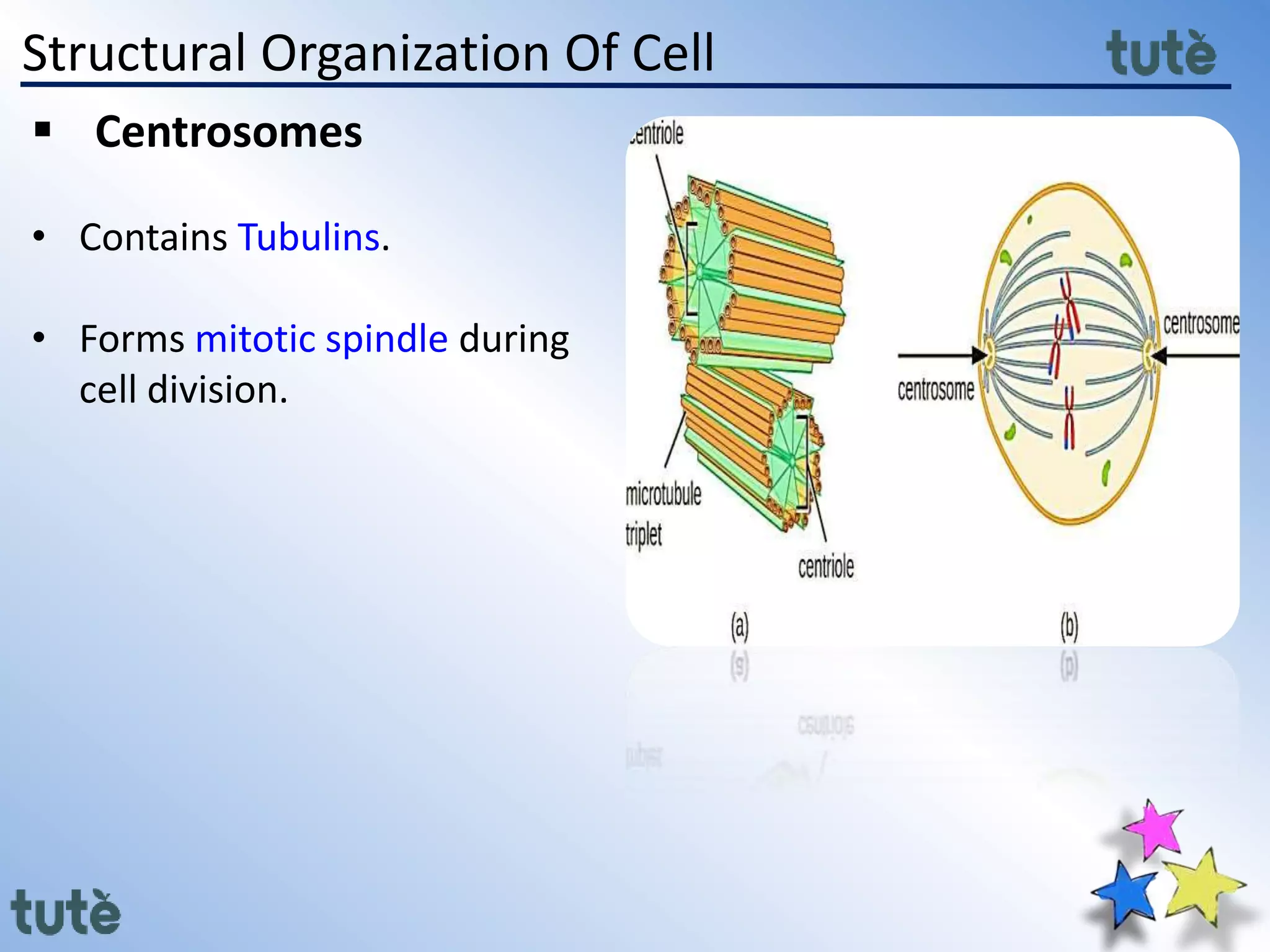
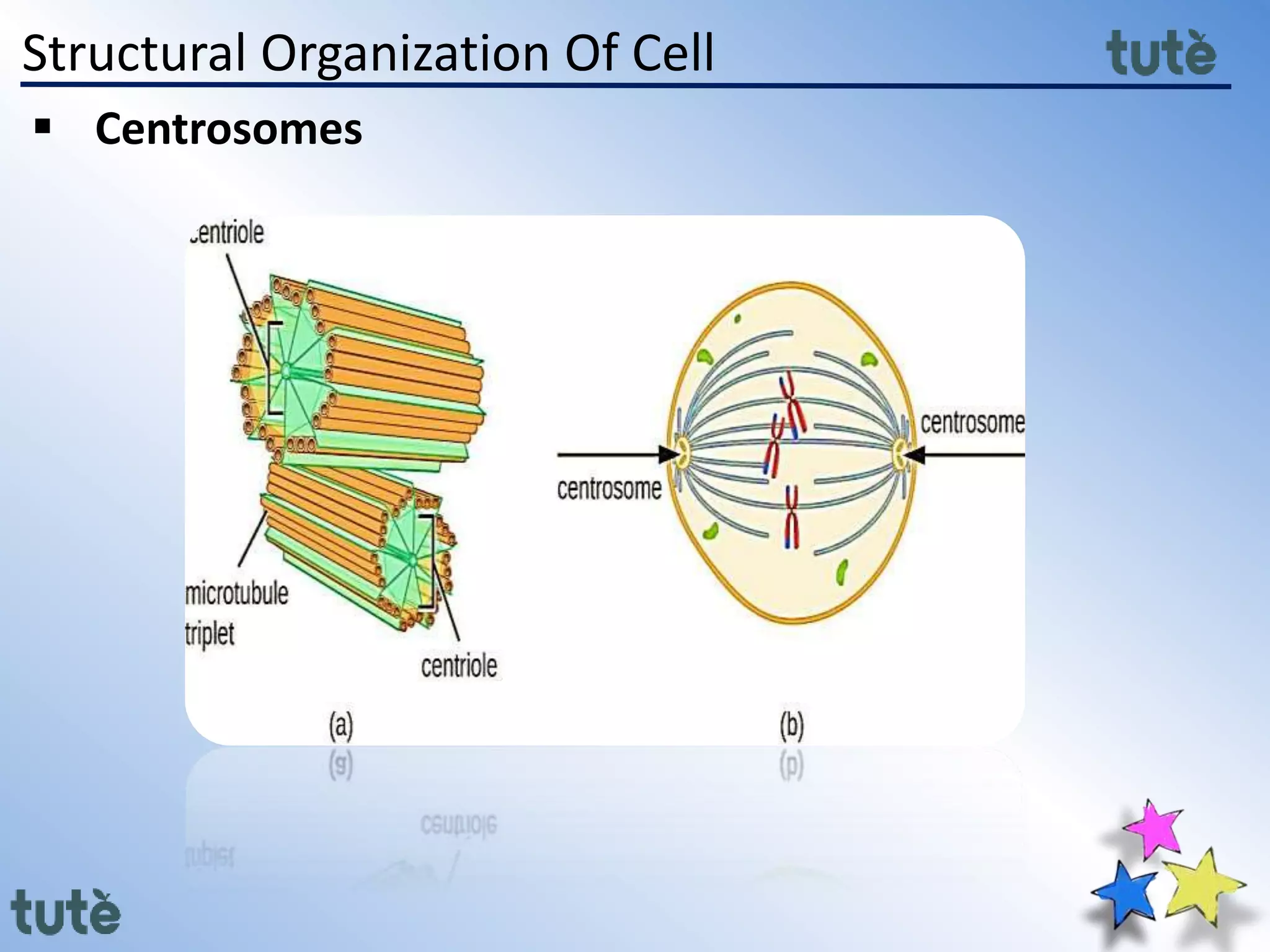
 Centrosomes
• Contains Tubulins.
• Forms mitotic spindle during
cell division.
Structural Organization Of Cell
 Centrosomes
Structural Organization Of Cell
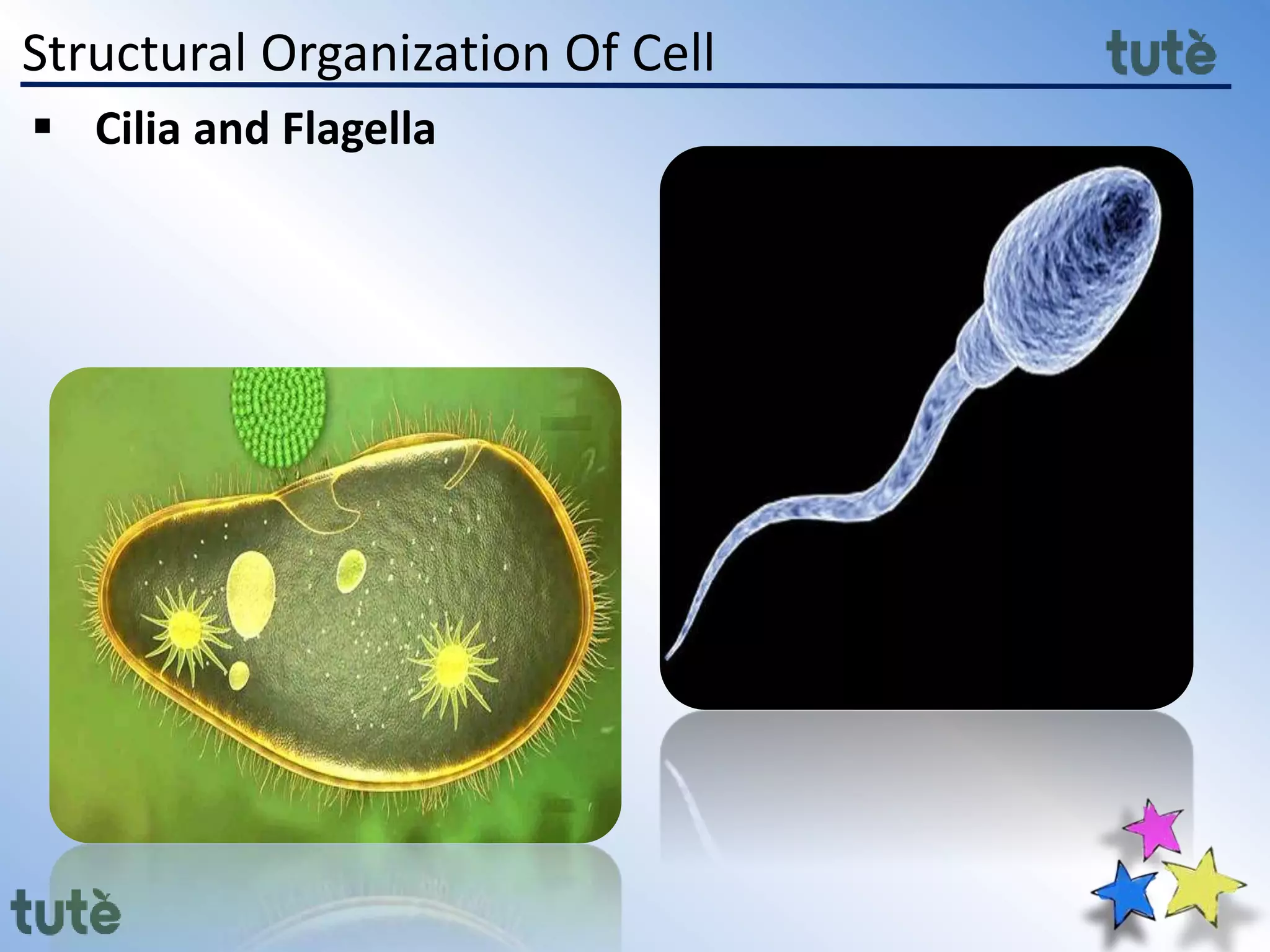
 Cilia and Flagella
Structural Organization Of Cell
 Cilia and Flagella
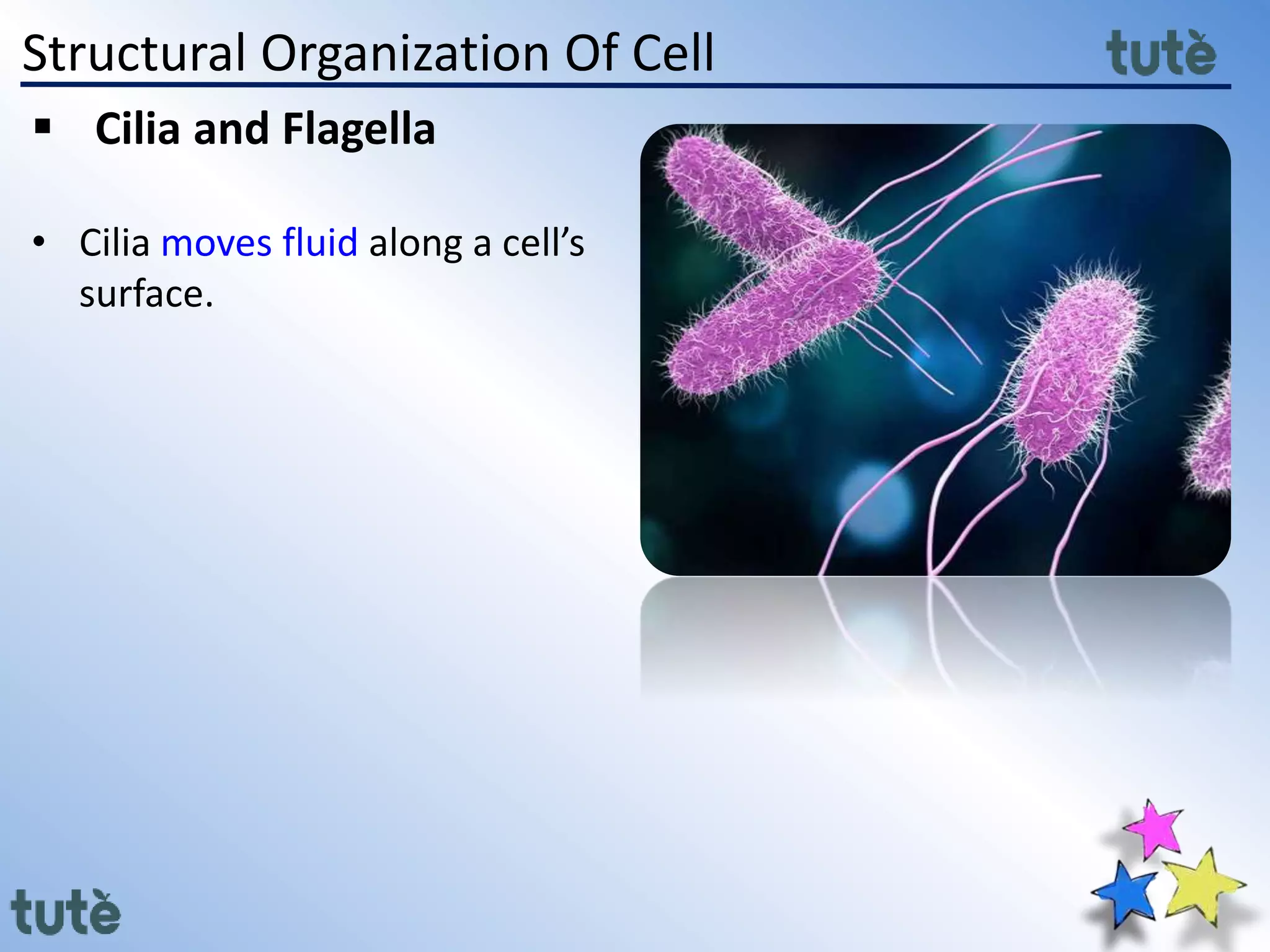
• Cilia moves fluid along a cell’s
surface.
Structural Organization Of Cell
 Cilia and Flagella
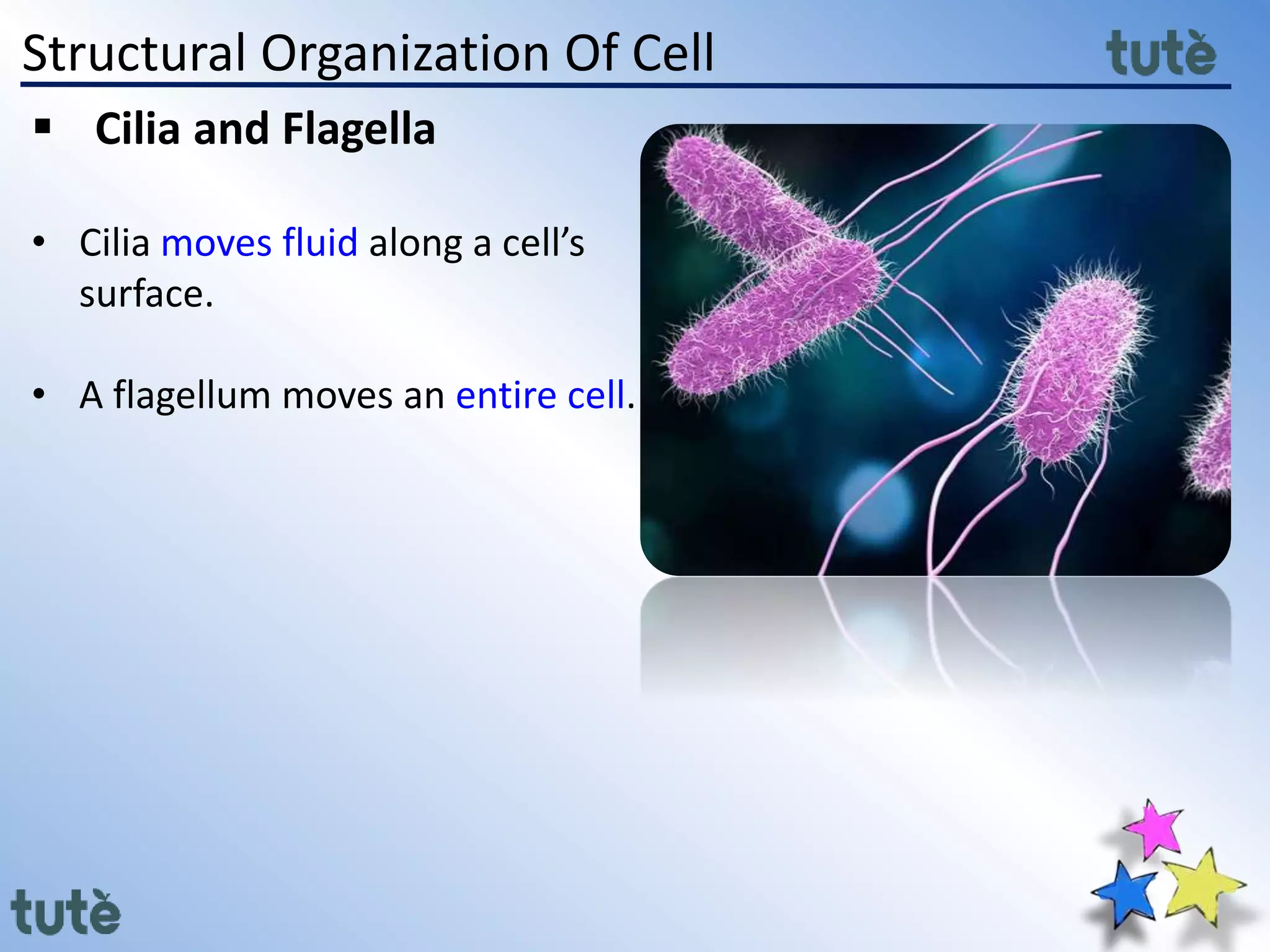
• Cilia moves fluid along a cell’s
surface.
• A flagellum moves an entire cell.
Structural Organization Of Cell
 Plastids
Structural Organization Of Cell
 Plastids
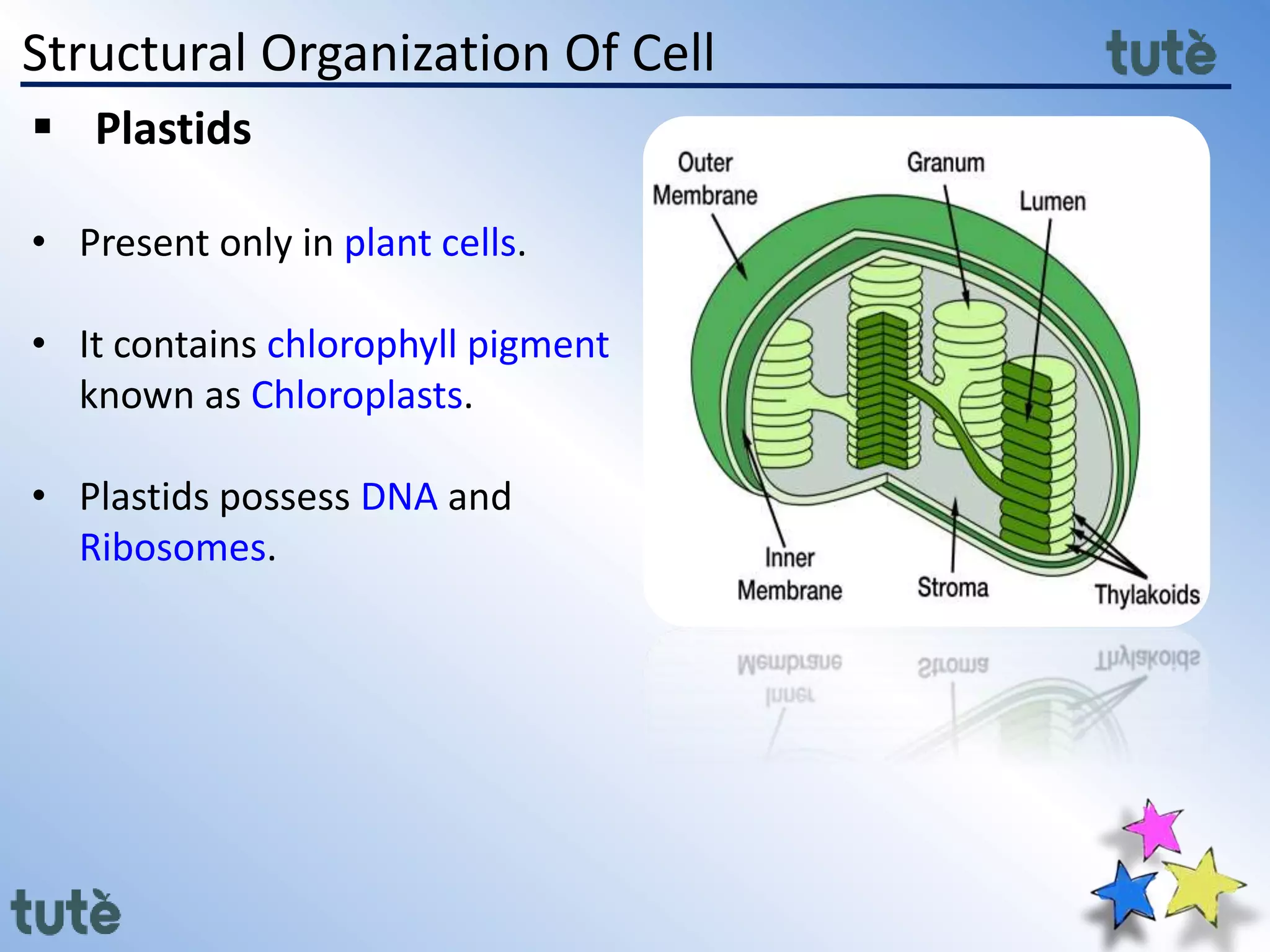
• Present only in plant cells.
• It contains chlorophyll pigment
known as Chloroplasts.
• Plastids possess DNA and
Ribosomes.
Structural Organization Of Cell
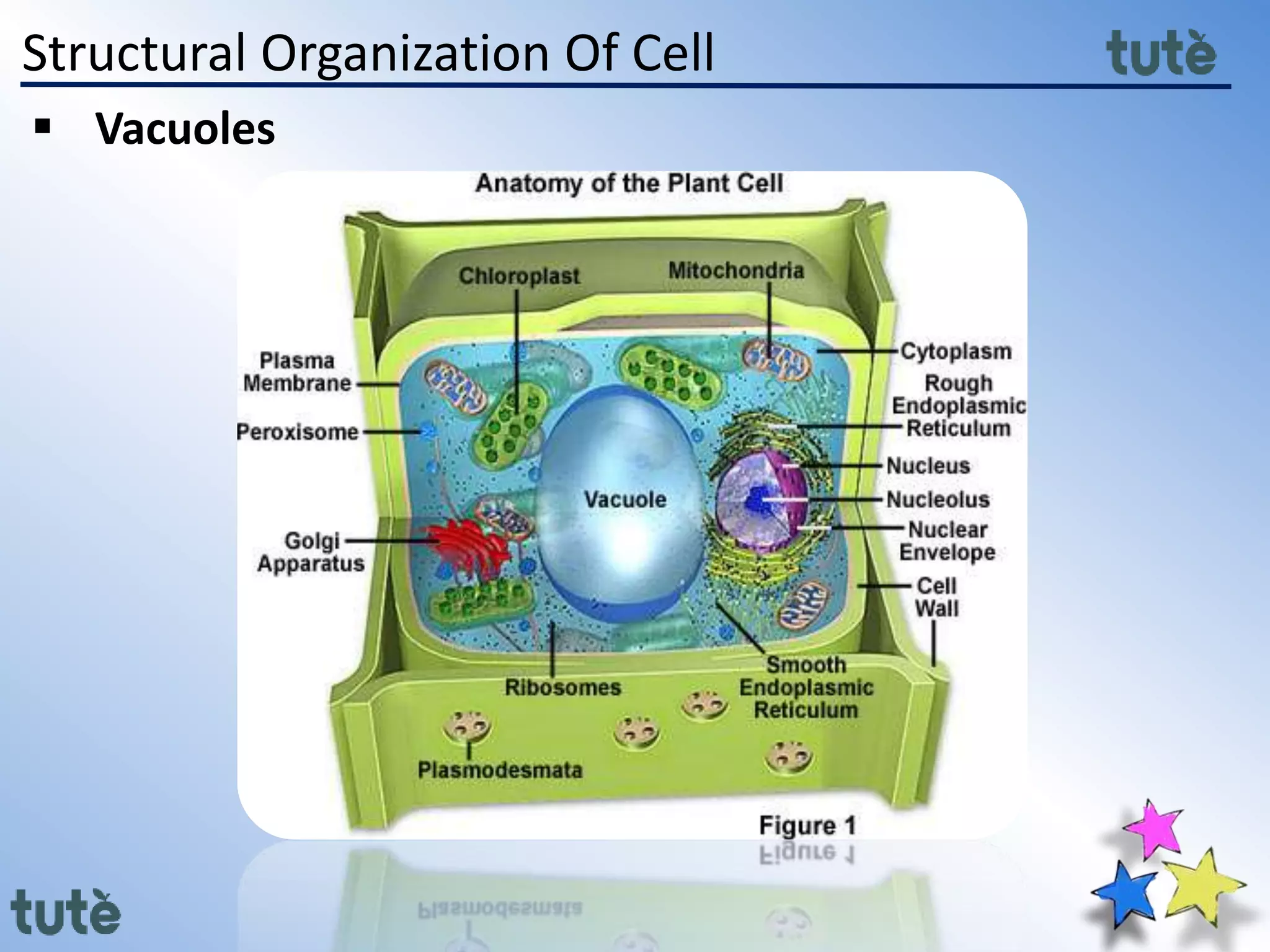
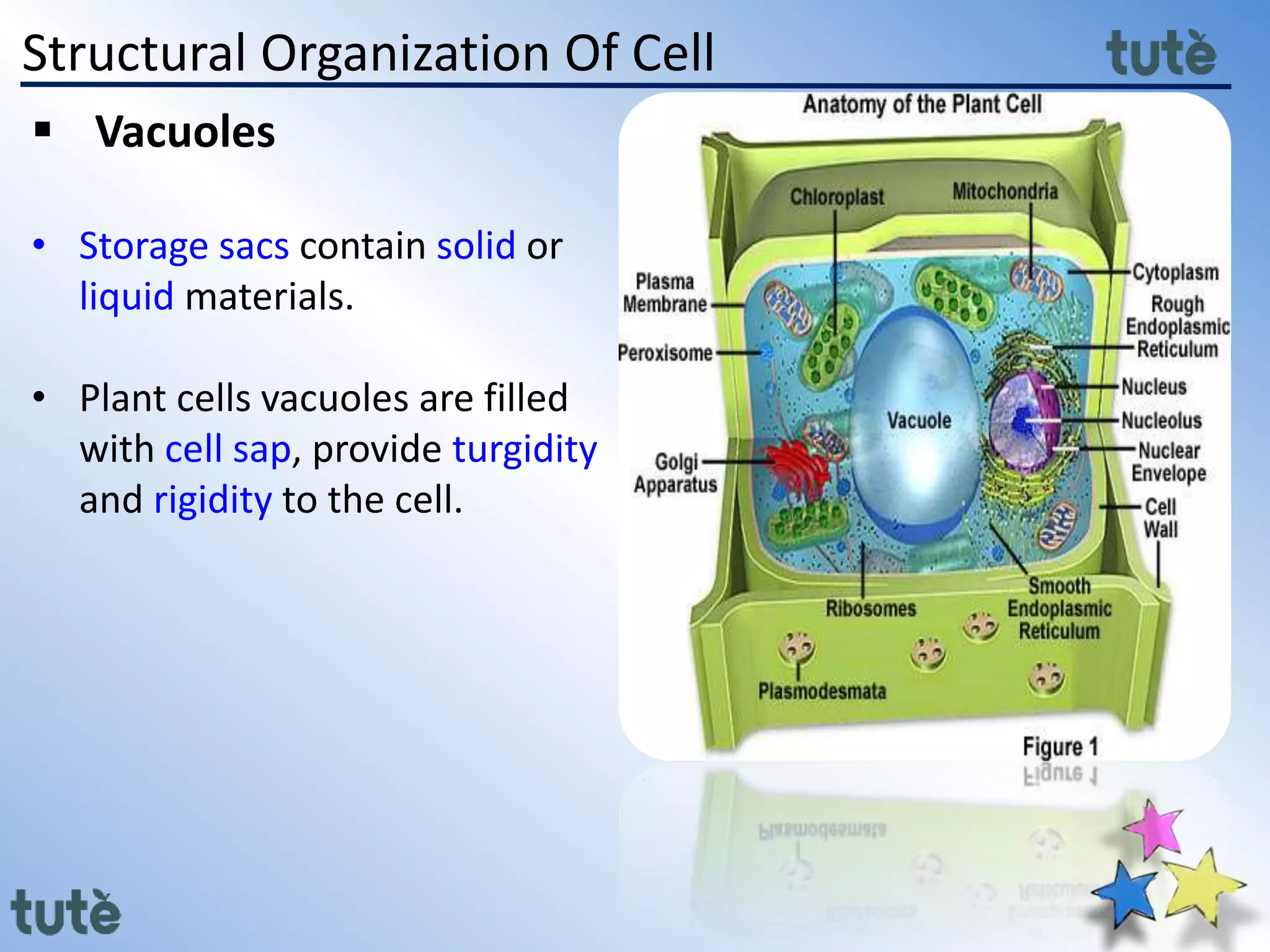
 Vacuoles
Structural Organization Of Cell
 Vacuoles
• Storage sacs contain solid or
liquid materials.
• Plant cells vacuoles are filled
with cell sap, provide turgidity
and rigidity to the cell.
Learning Outcome
To Introduce cell type
To discuss in detail about cell structure
To differentiate plant and animal cell
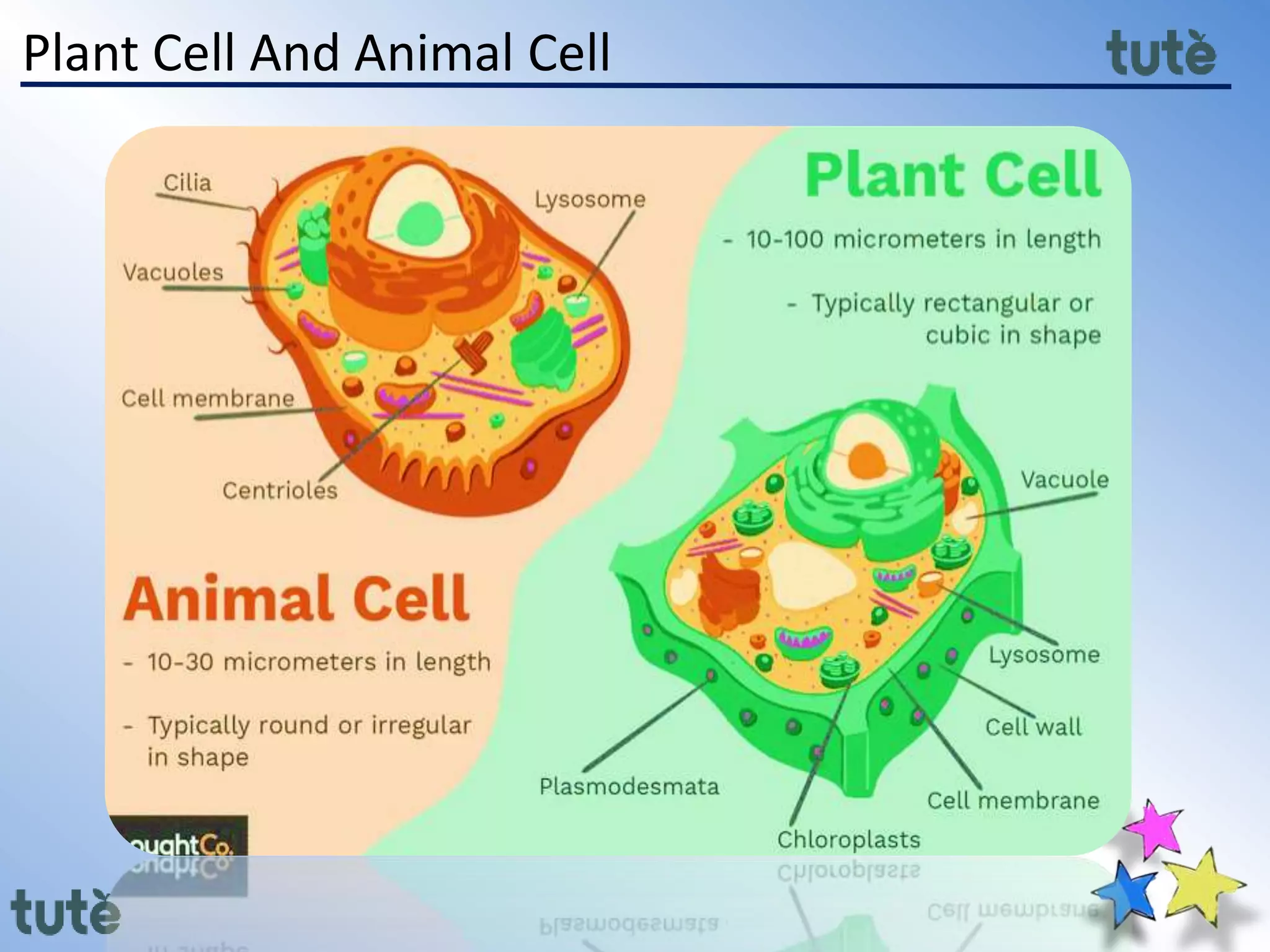
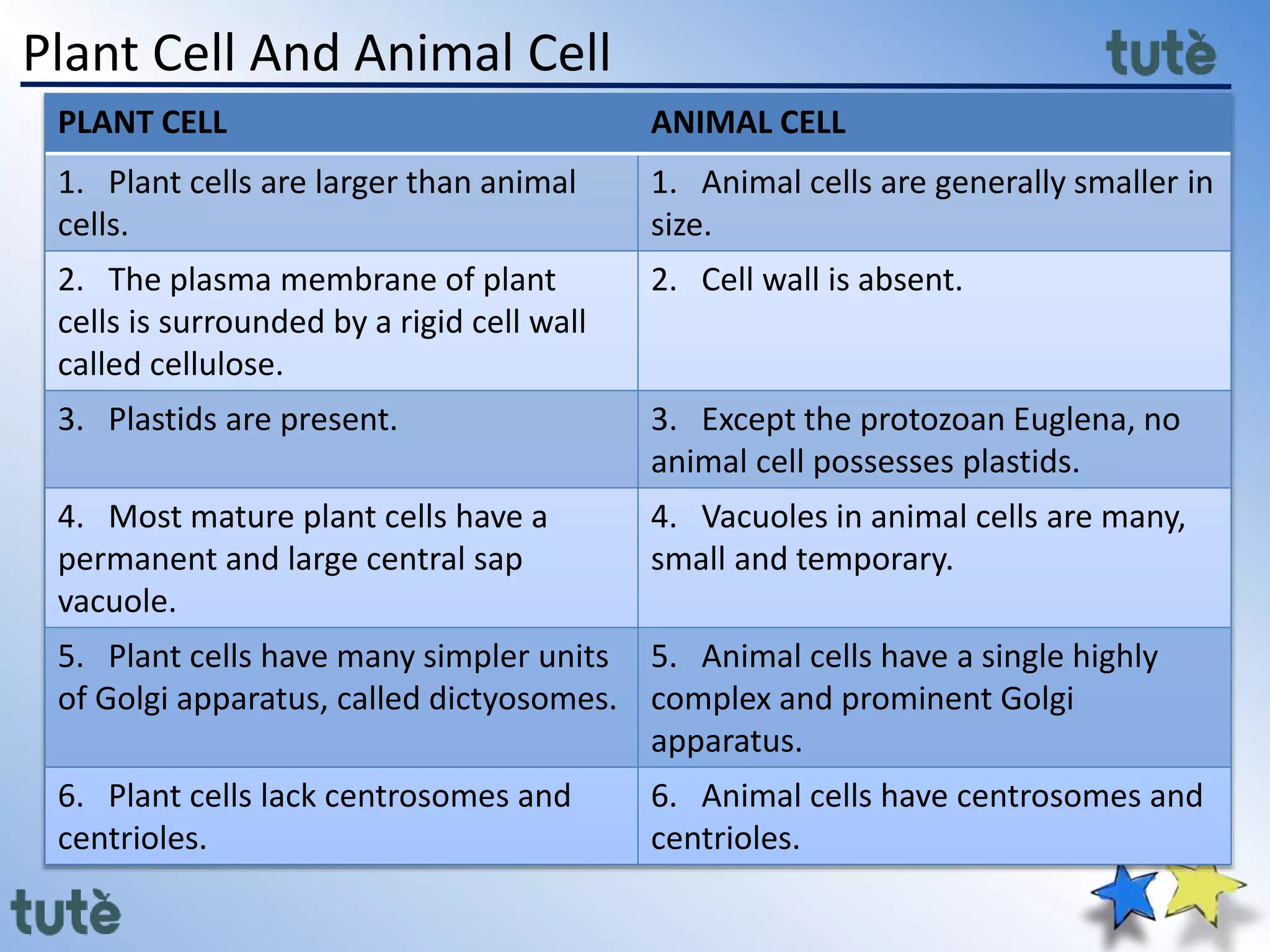
Plant Cell And Animal Cell
PLANT CELL ANIMAL CELL
1. Plant cells are larger than animal
cells.
1. Animal cells are generally smaller in
size.
2. The plasma membrane of plant
cells is surrounded by a rigid cell wall
called cellulose.
2. Cell wall is absent.
3. Plastids are present. 3. Except the protozoan Euglena, no
animal cell possesses plastids.
4. Most mature plant cells have a
permanent and large central sap
vacuole.
4. Vacuoles in animal cells are many,
small and temporary.
5. Plant cells have many simpler units
of Golgi apparatus, called dictyosomes.
5. Animal cells have a single highly
complex and prominent Golgi
apparatus.
6. Plant cells lack centrosomes and
centrioles.
6. Animal cells have centrosomes and
centrioles.
Learning Outcome
To Introduce cell type
To discuss in detail about cell structure
To differentiate plant and animal cell
Learning Activity
Distinguish Between Prokaryotic And Eukaryotic Cell?
Whiteboard
11th - cell structure and function - biology

11th - cell structure and function - biology

Editor's Notes

  • #2 An overview of the content of the lesson Must be in the form of a question where appropriate Students should be able to answer the question at the end - either fully, partly or in a way that demonstrates they understand what gaps in their knowledge they need to address Verbs such as to understand / to know / to gain confidence / to learn Ask students to give the question a go and point out that, at the end of the lesson, they should be able to answer fully
  • #3 An overview of the content of the lesson Must be in the form of a question where appropriate Students should be able to answer the question at the end - either fully, partly or in a way that demonstrates they understand what gaps in their knowledge they need to address Verbs such as to understand / to know / to gain confidence / to learn Ask students to give the question a go and point out that, at the end of the lesson, they should be able to answer fully
  • #4 An overview of the content of the lesson Must be in the form of a question where appropriate Students should be able to answer the question at the end - either fully, partly or in a way that demonstrates they understand what gaps in their knowledge they need to address Verbs such as to understand / to know / to gain confidence / to learn Ask students to give the question a go and point out that, at the end of the lesson, they should be able to answer fully
  • #5 An overview of the content of the lesson Must be in the form of a question where appropriate Students should be able to answer the question at the end - either fully, partly or in a way that demonstrates they understand what gaps in their knowledge they need to address Verbs such as to understand / to know / to gain confidence / to learn Ask students to give the question a go and point out that, at the end of the lesson, they should be able to answer fully
  • #6 An overview of the content of the lesson Must be in the form of a question where appropriate Students should be able to answer the question at the end - either fully, partly or in a way that demonstrates they understand what gaps in their knowledge they need to address Verbs such as to understand / to know / to gain confidence / to learn Ask students to give the question a go and point out that, at the end of the lesson, they should be able to answer fully
  • #7 An overview of the content of the lesson Must be in the form of a question where appropriate Students should be able to answer the question at the end - either fully, partly or in a way that demonstrates they understand what gaps in their knowledge they need to address Verbs such as to understand / to know / to gain confidence / to learn Ask students to give the question a go and point out that, at the end of the lesson, they should be able to answer fully
  • #8 An overview of the content of the lesson Must be in the form of a question where appropriate Students should be able to answer the question at the end - either fully, partly or in a way that demonstrates they understand what gaps in their knowledge they need to address Verbs such as to understand / to know / to gain confidence / to learn Ask students to give the question a go and point out that, at the end of the lesson, they should be able to answer fully
  • #9 An overview of the content of the lesson Must be in the form of a question where appropriate Students should be able to answer the question at the end - either fully, partly or in a way that demonstrates they understand what gaps in their knowledge they need to address Verbs such as to understand / to know / to gain confidence / to learn Ask students to give the question a go and point out that, at the end of the lesson, they should be able to answer fully
  • #10 An overview of the content of the lesson Must be in the form of a question where appropriate Students should be able to answer the question at the end - either fully, partly or in a way that demonstrates they understand what gaps in their knowledge they need to address Verbs such as to understand / to know / to gain confidence / to learn Ask students to give the question a go and point out that, at the end of the lesson, they should be able to answer fully
  • #11 An overview of the content of the lesson Must be in the form of a question where appropriate Students should be able to answer the question at the end - either fully, partly or in a way that demonstrates they understand what gaps in their knowledge they need to address Verbs such as to understand / to know / to gain confidence / to learn Ask students to give the question a go and point out that, at the end of the lesson, they should be able to answer fully
  • #12 An overview of the content of the lesson Must be in the form of a question where appropriate Students should be able to answer the question at the end - either fully, partly or in a way that demonstrates they understand what gaps in their knowledge they need to address Verbs such as to understand / to know / to gain confidence / to learn Ask students to give the question a go and point out that, at the end of the lesson, they should be able to answer fully
  • #13 An overview of the content of the lesson Must be in the form of a question where appropriate Students should be able to answer the question at the end - either fully, partly or in a way that demonstrates they understand what gaps in their knowledge they need to address Verbs such as to understand / to know / to gain confidence / to learn Ask students to give the question a go and point out that, at the end of the lesson, they should be able to answer fully
  • #14 An overview of the content of the lesson Must be in the form of a question where appropriate Students should be able to answer the question at the end - either fully, partly or in a way that demonstrates they understand what gaps in their knowledge they need to address Verbs such as to understand / to know / to gain confidence / to learn Ask students to give the question a go and point out that, at the end of the lesson, they should be able to answer fully
  • #15 An overview of the content of the lesson Must be in the form of a question where appropriate Students should be able to answer the question at the end - either fully, partly or in a way that demonstrates they understand what gaps in their knowledge they need to address Verbs such as to understand / to know / to gain confidence / to learn Ask students to give the question a go and point out that, at the end of the lesson, they should be able to answer fully
  • #16 An overview of the content of the lesson Must be in the form of a question where appropriate Students should be able to answer the question at the end - either fully, partly or in a way that demonstrates they understand what gaps in their knowledge they need to address Verbs such as to understand / to know / to gain confidence / to learn Ask students to give the question a go and point out that, at the end of the lesson, they should be able to answer fully
  • #17 An overview of the content of the lesson Must be in the form of a question where appropriate Students should be able to answer the question at the end - either fully, partly or in a way that demonstrates they understand what gaps in their knowledge they need to address Verbs such as to understand / to know / to gain confidence / to learn Ask students to give the question a go and point out that, at the end of the lesson, they should be able to answer fully
  • #18 An overview of the content of the lesson Must be in the form of a question where appropriate Students should be able to answer the question at the end - either fully, partly or in a way that demonstrates they understand what gaps in their knowledge they need to address Verbs such as to understand / to know / to gain confidence / to learn Ask students to give the question a go and point out that, at the end of the lesson, they should be able to answer fully
  • #19 An overview of the content of the lesson Must be in the form of a question where appropriate Students should be able to answer the question at the end - either fully, partly or in a way that demonstrates they understand what gaps in their knowledge they need to address Verbs such as to understand / to know / to gain confidence / to learn Ask students to give the question a go and point out that, at the end of the lesson, they should be able to answer fully
  • #20 An overview of the content of the lesson Must be in the form of a question where appropriate Students should be able to answer the question at the end - either fully, partly or in a way that demonstrates they understand what gaps in their knowledge they need to address Verbs such as to understand / to know / to gain confidence / to learn Ask students to give the question a go and point out that, at the end of the lesson, they should be able to answer fully
  • #21 An overview of the content of the lesson Must be in the form of a question where appropriate Students should be able to answer the question at the end - either fully, partly or in a way that demonstrates they understand what gaps in their knowledge they need to address Verbs such as to understand / to know / to gain confidence / to learn Ask students to give the question a go and point out that, at the end of the lesson, they should be able to answer fully
  • #22 An overview of the content of the lesson Must be in the form of a question where appropriate Students should be able to answer the question at the end - either fully, partly or in a way that demonstrates they understand what gaps in their knowledge they need to address Verbs such as to understand / to know / to gain confidence / to learn Ask students to give the question a go and point out that, at the end of the lesson, they should be able to answer fully
  • #23 An overview of the content of the lesson Must be in the form of a question where appropriate Students should be able to answer the question at the end - either fully, partly or in a way that demonstrates they understand what gaps in their knowledge they need to address Verbs such as to understand / to know / to gain confidence / to learn Ask students to give the question a go and point out that, at the end of the lesson, they should be able to answer fully
  • #24 An overview of the content of the lesson Must be in the form of a question where appropriate Students should be able to answer the question at the end - either fully, partly or in a way that demonstrates they understand what gaps in their knowledge they need to address Verbs such as to understand / to know / to gain confidence / to learn Ask students to give the question a go and point out that, at the end of the lesson, they should be able to answer fully
  • #25 An overview of the content of the lesson Must be in the form of a question where appropriate Students should be able to answer the question at the end - either fully, partly or in a way that demonstrates they understand what gaps in their knowledge they need to address Verbs such as to understand / to know / to gain confidence / to learn Ask students to give the question a go and point out that, at the end of the lesson, they should be able to answer fully
  • #26 An overview of the content of the lesson Must be in the form of a question where appropriate Students should be able to answer the question at the end - either fully, partly or in a way that demonstrates they understand what gaps in their knowledge they need to address Verbs such as to understand / to know / to gain confidence / to learn Ask students to give the question a go and point out that, at the end of the lesson, they should be able to answer fully
  • #27 An overview of the content of the lesson Must be in the form of a question where appropriate Students should be able to answer the question at the end - either fully, partly or in a way that demonstrates they understand what gaps in their knowledge they need to address Verbs such as to understand / to know / to gain confidence / to learn Ask students to give the question a go and point out that, at the end of the lesson, they should be able to answer fully
  • #28 An overview of the content of the lesson Must be in the form of a question where appropriate Students should be able to answer the question at the end - either fully, partly or in a way that demonstrates they understand what gaps in their knowledge they need to address Verbs such as to understand / to know / to gain confidence / to learn Ask students to give the question a go and point out that, at the end of the lesson, they should be able to answer fully
  • #29 An overview of the content of the lesson Must be in the form of a question where appropriate Students should be able to answer the question at the end - either fully, partly or in a way that demonstrates they understand what gaps in their knowledge they need to address Verbs such as to understand / to know / to gain confidence / to learn Ask students to give the question a go and point out that, at the end of the lesson, they should be able to answer fully
  • #30 An overview of the content of the lesson Must be in the form of a question where appropriate Students should be able to answer the question at the end - either fully, partly or in a way that demonstrates they understand what gaps in their knowledge they need to address Verbs such as to understand / to know / to gain confidence / to learn Ask students to give the question a go and point out that, at the end of the lesson, they should be able to answer fully
  • #31 An overview of the content of the lesson Must be in the form of a question where appropriate Students should be able to answer the question at the end - either fully, partly or in a way that demonstrates they understand what gaps in their knowledge they need to address Verbs such as to understand / to know / to gain confidence / to learn Ask students to give the question a go and point out that, at the end of the lesson, they should be able to answer fully
  • #32 An overview of the content of the lesson Must be in the form of a question where appropriate Students should be able to answer the question at the end - either fully, partly or in a way that demonstrates they understand what gaps in their knowledge they need to address Verbs such as to understand / to know / to gain confidence / to learn Ask students to give the question a go and point out that, at the end of the lesson, they should be able to answer fully
  • #33 An overview of the content of the lesson Must be in the form of a question where appropriate Students should be able to answer the question at the end - either fully, partly or in a way that demonstrates they understand what gaps in their knowledge they need to address Verbs such as to understand / to know / to gain confidence / to learn Ask students to give the question a go and point out that, at the end of the lesson, they should be able to answer fully
  • #34 An overview of the content of the lesson Must be in the form of a question where appropriate Students should be able to answer the question at the end - either fully, partly or in a way that demonstrates they understand what gaps in their knowledge they need to address Verbs such as to understand / to know / to gain confidence / to learn Ask students to give the question a go and point out that, at the end of the lesson, they should be able to answer fully
  • #35 An overview of the content of the lesson Must be in the form of a question where appropriate Students should be able to answer the question at the end - either fully, partly or in a way that demonstrates they understand what gaps in their knowledge they need to address Verbs such as to understand / to know / to gain confidence / to learn Ask students to give the question a go and point out that, at the end of the lesson, they should be able to answer fully
  • #36 An overview of the content of the lesson Must be in the form of a question where appropriate Students should be able to answer the question at the end - either fully, partly or in a way that demonstrates they understand what gaps in their knowledge they need to address Verbs such as to understand / to know / to gain confidence / to learn Ask students to give the question a go and point out that, at the end of the lesson, they should be able to answer fully
  • #37 An overview of the content of the lesson Must be in the form of a question where appropriate Students should be able to answer the question at the end - either fully, partly or in a way that demonstrates they understand what gaps in their knowledge they need to address Verbs such as to understand / to know / to gain confidence / to learn Ask students to give the question a go and point out that, at the end of the lesson, they should be able to answer fully
  • #38 An overview of the content of the lesson Must be in the form of a question where appropriate Students should be able to answer the question at the end - either fully, partly or in a way that demonstrates they understand what gaps in their knowledge they need to address Verbs such as to understand / to know / to gain confidence / to learn Ask students to give the question a go and point out that, at the end of the lesson, they should be able to answer fully
  • #39 An overview of the content of the lesson Must be in the form of a question where appropriate Students should be able to answer the question at the end - either fully, partly or in a way that demonstrates they understand what gaps in their knowledge they need to address Verbs such as to understand / to know / to gain confidence / to learn Ask students to give the question a go and point out that, at the end of the lesson, they should be able to answer fully
  • #40 An overview of the content of the lesson Must be in the form of a question where appropriate Students should be able to answer the question at the end - either fully, partly or in a way that demonstrates they understand what gaps in their knowledge they need to address Verbs such as to understand / to know / to gain confidence / to learn Ask students to give the question a go and point out that, at the end of the lesson, they should be able to answer fully
  • #41 An overview of the content of the lesson Must be in the form of a question where appropriate Students should be able to answer the question at the end - either fully, partly or in a way that demonstrates they understand what gaps in their knowledge they need to address Verbs such as to understand / to know / to gain confidence / to learn Ask students to give the question a go and point out that, at the end of the lesson, they should be able to answer fully
  • #42 An overview of the content of the lesson Must be in the form of a question where appropriate Students should be able to answer the question at the end - either fully, partly or in a way that demonstrates they understand what gaps in their knowledge they need to address Verbs such as to understand / to know / to gain confidence / to learn Ask students to give the question a go and point out that, at the end of the lesson, they should be able to answer fully
  • #43 An overview of the content of the lesson Must be in the form of a question where appropriate Students should be able to answer the question at the end - either fully, partly or in a way that demonstrates they understand what gaps in their knowledge they need to address Verbs such as to understand / to know / to gain confidence / to learn Ask students to give the question a go and point out that, at the end of the lesson, they should be able to answer fully
  • #44 An overview of the content of the lesson Must be in the form of a question where appropriate Students should be able to answer the question at the end - either fully, partly or in a way that demonstrates they understand what gaps in their knowledge they need to address Verbs such as to understand / to know / to gain confidence / to learn Ask students to give the question a go and point out that, at the end of the lesson, they should be able to answer fully
  • #45 An overview of the content of the lesson Must be in the form of a question where appropriate Students should be able to answer the question at the end - either fully, partly or in a way that demonstrates they understand what gaps in their knowledge they need to address Verbs such as to understand / to know / to gain confidence / to learn Ask students to give the question a go and point out that, at the end of the lesson, they should be able to answer fully
  • #46 An overview of the content of the lesson Must be in the form of a question where appropriate Students should be able to answer the question at the end - either fully, partly or in a way that demonstrates they understand what gaps in their knowledge they need to address Verbs such as to understand / to know / to gain confidence / to learn Ask students to give the question a go and point out that, at the end of the lesson, they should be able to answer fully
  • #47 An overview of the content of the lesson Must be in the form of a question where appropriate Students should be able to answer the question at the end - either fully, partly or in a way that demonstrates they understand what gaps in their knowledge they need to address Verbs such as to understand / to know / to gain confidence / to learn Ask students to give the question a go and point out that, at the end of the lesson, they should be able to answer fully
  • #48 An overview of the content of the lesson Must be in the form of a question where appropriate Students should be able to answer the question at the end - either fully, partly or in a way that demonstrates they understand what gaps in their knowledge they need to address Verbs such as to understand / to know / to gain confidence / to learn Ask students to give the question a go and point out that, at the end of the lesson, they should be able to answer fully
  • #49 An overview of the content of the lesson Must be in the form of a question where appropriate Students should be able to answer the question at the end - either fully, partly or in a way that demonstrates they understand what gaps in their knowledge they need to address Verbs such as to understand / to know / to gain confidence / to learn Ask students to give the question a go and point out that, at the end of the lesson, they should be able to answer fully
  • #50 An overview of the content of the lesson Must be in the form of a question where appropriate Students should be able to answer the question at the end - either fully, partly or in a way that demonstrates they understand what gaps in their knowledge they need to address Verbs such as to understand / to know / to gain confidence / to learn Ask students to give the question a go and point out that, at the end of the lesson, they should be able to answer fully
  • #51 An overview of the content of the lesson Must be in the form of a question where appropriate Students should be able to answer the question at the end - either fully, partly or in a way that demonstrates they understand what gaps in their knowledge they need to address Verbs such as to understand / to know / to gain confidence / to learn Ask students to give the question a go and point out that, at the end of the lesson, they should be able to answer fully
  • #52 An overview of the content of the lesson Must be in the form of a question where appropriate Students should be able to answer the question at the end - either fully, partly or in a way that demonstrates they understand what gaps in their knowledge they need to address Verbs such as to understand / to know / to gain confidence / to learn Ask students to give the question a go and point out that, at the end of the lesson, they should be able to answer fully
  • #53 An overview of the content of the lesson Must be in the form of a question where appropriate Students should be able to answer the question at the end - either fully, partly or in a way that demonstrates they understand what gaps in their knowledge they need to address Verbs such as to understand / to know / to gain confidence / to learn Ask students to give the question a go and point out that, at the end of the lesson, they should be able to answer fully
  • #54 An overview of the content of the lesson Must be in the form of a question where appropriate Students should be able to answer the question at the end - either fully, partly or in a way that demonstrates they understand what gaps in their knowledge they need to address Verbs such as to understand / to know / to gain confidence / to learn Ask students to give the question a go and point out that, at the end of the lesson, they should be able to answer fully
  • #55 An overview of the content of the lesson Must be in the form of a question where appropriate Students should be able to answer the question at the end - either fully, partly or in a way that demonstrates they understand what gaps in their knowledge they need to address Verbs such as to understand / to know / to gain confidence / to learn Ask students to give the question a go and point out that, at the end of the lesson, they should be able to answer fully
  • #56 An overview of the content of the lesson Must be in the form of a question where appropriate Students should be able to answer the question at the end - either fully, partly or in a way that demonstrates they understand what gaps in their knowledge they need to address Verbs such as to understand / to know / to gain confidence / to learn Ask students to give the question a go and point out that, at the end of the lesson, they should be able to answer fully
  • #57 An overview of the content of the lesson Must be in the form of a question where appropriate Students should be able to answer the question at the end - either fully, partly or in a way that demonstrates they understand what gaps in their knowledge they need to address Verbs such as to understand / to know / to gain confidence / to learn Ask students to give the question a go and point out that, at the end of the lesson, they should be able to answer fully
  • #58 An overview of the content of the lesson Must be in the form of a question where appropriate Students should be able to answer the question at the end - either fully, partly or in a way that demonstrates they understand what gaps in their knowledge they need to address Verbs such as to understand / to know / to gain confidence / to learn Ask students to give the question a go and point out that, at the end of the lesson, they should be able to answer fully
  • #59 An overview of the content of the lesson Must be in the form of a question where appropriate Students should be able to answer the question at the end - either fully, partly or in a way that demonstrates they understand what gaps in their knowledge they need to address Verbs such as to understand / to know / to gain confidence / to learn Ask students to give the question a go and point out that, at the end of the lesson, they should be able to answer fully
  • #60 An overview of the content of the lesson Must be in the form of a question where appropriate Students should be able to answer the question at the end - either fully, partly or in a way that demonstrates they understand what gaps in their knowledge they need to address Verbs such as to understand / to know / to gain confidence / to learn Ask students to give the question a go and point out that, at the end of the lesson, they should be able to answer fully
  • #61 An overview of the content of the lesson Must be in the form of a question where appropriate Students should be able to answer the question at the end - either fully, partly or in a way that demonstrates they understand what gaps in their knowledge they need to address Verbs such as to understand / to know / to gain confidence / to learn Ask students to give the question a go and point out that, at the end of the lesson, they should be able to answer fully
  • #62 An overview of the content of the lesson Must be in the form of a question where appropriate Students should be able to answer the question at the end - either fully, partly or in a way that demonstrates they understand what gaps in their knowledge they need to address Verbs such as to understand / to know / to gain confidence / to learn Ask students to give the question a go and point out that, at the end of the lesson, they should be able to answer fully
  • #63 As previously.
  • #64 As previously.