 Cell is the structural and functional unit of an organism.
 Cell was discovered by Robert Hooke.
 There are mainly two type of cells are present
Plant cell
Animal cell
• M J Schleiden discovered that plant body is made up of cell.
Cell theory was formulated by M J Schleiden and Schwan.
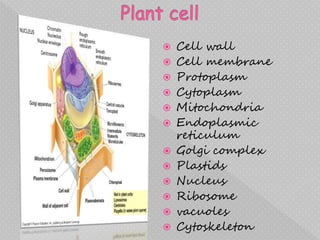
 Cell wall
 Cell membrane
 Protoplasm
 Cytoplasm
 Mitochondria
 Endoplasmic
reticulum
 Golgi complex
 Plastids
 Nucleus
 Ribosome
 vacuoles
 Cytoskeleton
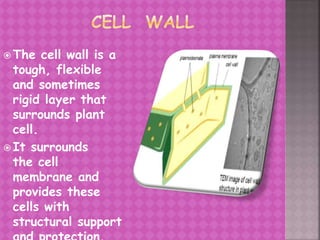
 The cell wall is a
tough, flexible
and sometimes
rigid layer that
surrounds plant
cell.
 It surrounds
the cell
membrane and
provides these
cells with
structural support
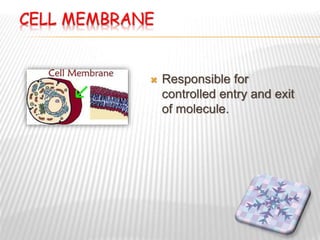
CELL MEMBRANE
 Responsible for
controlled entry and exit
of molecule.
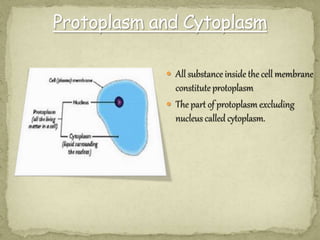
 All substance inside the cell membrane
constitute protoplasm
 The part of protoplasm excluding
nucleus called cytoplasm.
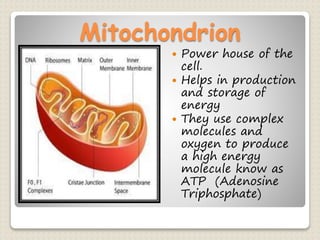
Mitochondrion
 Power house of the
cell.
 Helps in production
and storage of
energy
 They use complex
molecules and
oxygen to produce
a high energy
molecule know as
ATP (Adenosine
Triphosphate)
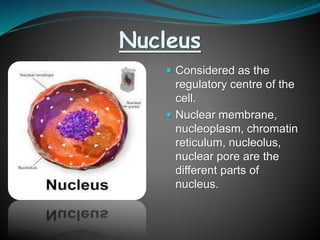
Nucleus
 Considered as the
regulatory centre of the
cell.
 Nuclear membrane,
nucleoplasm, chromatin
reticulum, nucleolus,
nuclear pore are the
different parts of
nucleus.
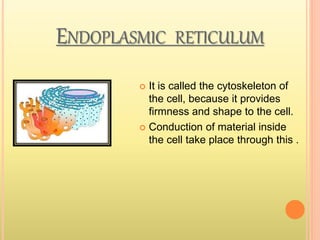
ENDOPLASMIC RETICULUM
 It is called the cytoskeleton of
the cell, because it provides
firmness and shape to the cell.
 Conduction of material inside
the cell take place through this .
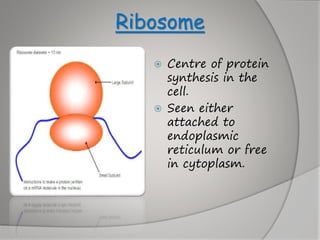
Ribosome
 Centre of protein
synthesis in the
cell.
 Seen either
attached to
endoplasmic
reticulum or free
in cytoplasm.
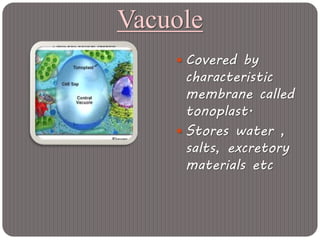
Vacuole
 Covered by
characteristic
membrane called
tonoplast.
 Stores water ,
salts, excretory
materials etc
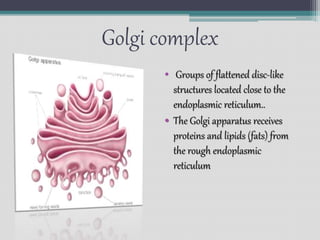
Golgi complex
• Groups of flattened disc-like
structures located close to the
endoplasmic reticulum..
• The Golgi apparatus receives
proteins and lipids (fats) from
the rough endoplasmic
reticulum
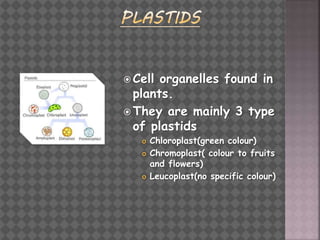
 Cell organelles found in
plants.
 They are mainly 3 type
of plastids
 Chloroplast(green colour)
 Chromoplast( colour to fruits
and flowers)
 Leucoplast(no specific colour)
CONCLUSION
 Cell is the basic unit of our life.
 Plant cell was discovered by MJ Schleiden.
 Plant cell contains many cell organelles such
as Nucleus, Mitochondria, Golgi complex,
Endoplasmic reticulum, Plastids etc.
Plant Cell

Plant Cell

  • 2.
     Cell isthe structural and functional unit of an organism.  Cell was discovered by Robert Hooke.  There are mainly two type of cells are present Plant cell Animal cell • M J Schleiden discovered that plant body is made up of cell. Cell theory was formulated by M J Schleiden and Schwan.
  • 3.
     Cell wall Cell membrane  Protoplasm  Cytoplasm  Mitochondria  Endoplasmic reticulum  Golgi complex  Plastids  Nucleus  Ribosome  vacuoles  Cytoskeleton
  • 4.
     The cellwall is a tough, flexible and sometimes rigid layer that surrounds plant cell.  It surrounds the cell membrane and provides these cells with structural support
  • 5.
    CELL MEMBRANE  Responsiblefor controlled entry and exit of molecule.
  • 6.
     All substanceinside the cell membrane constitute protoplasm  The part of protoplasm excluding nucleus called cytoplasm.
  • 7.
    Mitochondrion  Power houseof the cell.  Helps in production and storage of energy  They use complex molecules and oxygen to produce a high energy molecule know as ATP (Adenosine Triphosphate)
  • 8.
    Nucleus  Considered asthe regulatory centre of the cell.  Nuclear membrane, nucleoplasm, chromatin reticulum, nucleolus, nuclear pore are the different parts of nucleus.
  • 9.
    ENDOPLASMIC RETICULUM  Itis called the cytoskeleton of the cell, because it provides firmness and shape to the cell.  Conduction of material inside the cell take place through this .
  • 10.
    Ribosome  Centre ofprotein synthesis in the cell.  Seen either attached to endoplasmic reticulum or free in cytoplasm.
  • 11.
    Vacuole  Covered by characteristic membranecalled tonoplast.  Stores water , salts, excretory materials etc
  • 12.
    Golgi complex • Groupsof flattened disc-like structures located close to the endoplasmic reticulum.. • The Golgi apparatus receives proteins and lipids (fats) from the rough endoplasmic reticulum
  • 13.
     Cell organellesfound in plants.  They are mainly 3 type of plastids  Chloroplast(green colour)  Chromoplast( colour to fruits and flowers)  Leucoplast(no specific colour)
  • 14.
    CONCLUSION  Cell isthe basic unit of our life.  Plant cell was discovered by MJ Schleiden.  Plant cell contains many cell organelles such as Nucleus, Mitochondria, Golgi complex, Endoplasmic reticulum, Plastids etc.