SUBMITTED TO :-
AR. SONALI R
CHANDRA
AR .JENSIL JOHN
SUBMITTED BY
:-
CHANDAN
KUMAR
CASE STUDY
THE BRITISH SCHOOL, CHANAKYAPURI
NEW DELHII
CASE STUDY
THE BRITISH SCHOOL,
CHANAKYAPURI NEW DELHII
NAME:- THE BRITISH SCHOOL
LOCATION:- NEW DELHI, INDIA
COMPLETION DATE:- PHASE I IN 2014; PHASE 2 IN 2017
SITE AREA:- 21521 SQM
BUILT-UP AREA:- 19625 SQM
AIR-CONDITIONED AREA:- 9990.25 SQM
NON-AIR-CONDITIONED AREA:- 8917.51 SQM
CLIMATE:- COMPOSITE
CLIENT:- THE BRITISH SCHOOL SOCIETY
ARCHITECT:- MANIT RASTOGI & SONALI FROM MORPHOGENESIS
ENERGY CONSUMPTION REDUCTION : 73% REDUCTION IN ENERGY CONSUMPTION
COMPARED TO GRIHA BENCHMARK
ENERGY PERFORMANCE INDEX (EPI) : 37.44 KWH/SQM/YEAR
RENEWABLE ENERGY : RATED CAPACITY OF SOLAR PV INSTALLED IS 40 KWP
GRIHA PROVISIONAL RATING : 5 STARS
The design is inspired by the school’s tagline: ‘An international education with
an Indian soul.’
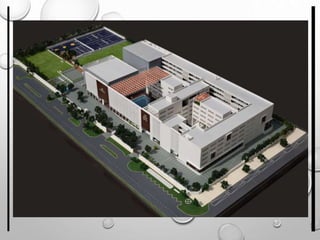
The project brief was to increase the school’s intake from 650 to 1,300 pupils. The new
school had to be built, however, without interrupting the ongoing school year
SITE
PLAN
GROUND FLOOR PLAN
FIRST FLOOR PLAN
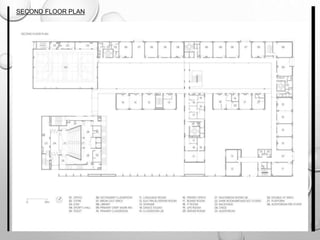
SECOND FLOOR PLAN
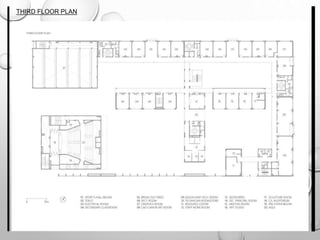
THIRD FLOOR PLAN
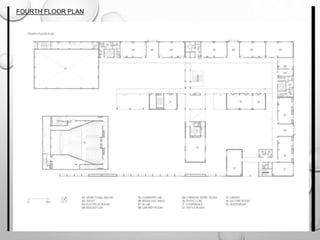
FOURTH FLOOR PLAN
FIFTH FLOOR PLAN
DESIGN CONSTRAINT
o The first step was to build a perimeter block on an unencumbered
area of the plot. Once built, this new construction became the
center of ongoing school activities. The now vacated old school
was then rebuilt to provide more classrooms, laboratories, gyms
and performing arts spaces.
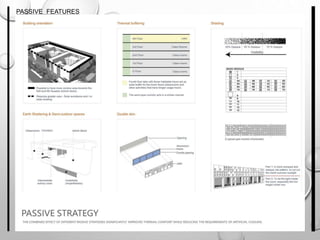
o The design strategies focus on minimum reliance on mechanical
systems through planning. The building has reduced energy
consumption by 50% by using traditional passive methods to
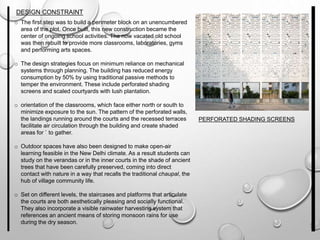
temper the environment. These include perforated shading
screens and scaled courtyards with lush plantation.
o orientation of the classrooms, which face either north or south to
minimize exposure to the sun. The pattern of the perforated walls,
the landings running around the courts and the recessed terraces
facilitate air circulation through the building and create shaded
areas for ` to gather.
o Outdoor spaces have also been designed to make open-air
learning feasible in the New Delhi climate. As a result students can
study on the verandas or in the inner courts in the shade of ancient
trees that have been carefully preserved, coming into direct
contact with nature in a way that recalls the traditional chaupal, the
hub of village community life.
o Set on different levels, the staircases and platforms that articulate
the courts are both aesthetically pleasing and socially functional.
They also incorporate a visible rainwater harvesting system that
references an ancient means of storing monsoon rains for use
during the dry season.
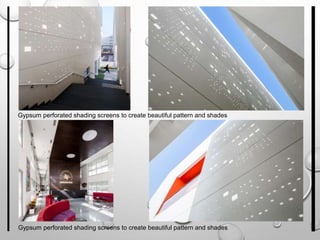
PERFORATED SHADING SCREENS
PASSIVE FEATURES
PASSIVE FEATURES
Open sitting & reading space provide to connection with nature.
Gypsum perforated shading screens to create beautiful pattern and shades
Shading device provide above swimming pool. And also this pool create evaporative cooling effect.
Wooden flooring provide sport complex because this flooring create cushioning effect
Inside activity
room
Outside sitting space and different color coding of
different floors they easy to identify their floors.
Primary room outside space
Auditorium
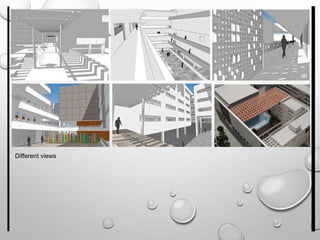
Different views
THE FOLLOWING STRATEGIES WERE ADOPTED TO REDUCE THE BUILDING IMPACT
ON THE NATURAL ENVIRONMENT:
Sustainable Site Planning:
• 5 trees existed on site and all were preserved. In addition, the project planted 292 native trees to enhance
microclimate of the area.
• Air pollution control measures such as site barricading, coverage of dusty material, wheel washing and water
sprinkling were implemented during construction.
Water management:
• Reduction of more than 56.05% from the GRIHA base case has been demonstrated in landscape water demand
by use of sprinklers.
• Reduction of 65.3% from the GRIHA base case has been demonstrated in building water use by installing water
efficient flush and flow fixtures.
• Construction water requirement was minimized to large extent by adopting curing through gunny bags.
Energy Optimization:
• EPI reduction of 73% from GRIHA benchmark has been demonstrated.
• 62% of the habitable spaces are day lit and meet the daylight factors prescribed by the National Building
Code of India.
• 12.54% is the window to wall ratio of the project.
Renewable Energy Technology installed on site:
• 40 kWp rated capacity solar PV panels have been installed on site.
• Rated capacity of solar PV meets more than 30% of internal lighting and HVAC load of the project.
• Solar water heaters have been installed to meet hot water requirement.
Sustainable Building Materials:
• 92% of ceiling materials used in the project which include Gypsum, Bison Board, and Perforated
Gypsum Board are low-energy materials.
• Kota stone and terrazzo flooring have been used for more than 70% of flooring in the school.
REFRENCES:-
www.archdaily.com
www.grihaindia.org
www.morphogrnesis.org
Wikipedia.org
THANK
YOU

The british school design case study

  • 1.
    SUBMITTED TO :- AR.SONALI R CHANDRA AR .JENSIL JOHN SUBMITTED BY :- CHANDAN KUMAR CASE STUDY THE BRITISH SCHOOL, CHANAKYAPURI NEW DELHII
  • 2.
    CASE STUDY THE BRITISHSCHOOL, CHANAKYAPURI NEW DELHII
  • 3.
    NAME:- THE BRITISHSCHOOL LOCATION:- NEW DELHI, INDIA COMPLETION DATE:- PHASE I IN 2014; PHASE 2 IN 2017 SITE AREA:- 21521 SQM BUILT-UP AREA:- 19625 SQM AIR-CONDITIONED AREA:- 9990.25 SQM NON-AIR-CONDITIONED AREA:- 8917.51 SQM CLIMATE:- COMPOSITE CLIENT:- THE BRITISH SCHOOL SOCIETY ARCHITECT:- MANIT RASTOGI & SONALI FROM MORPHOGENESIS ENERGY CONSUMPTION REDUCTION : 73% REDUCTION IN ENERGY CONSUMPTION COMPARED TO GRIHA BENCHMARK ENERGY PERFORMANCE INDEX (EPI) : 37.44 KWH/SQM/YEAR RENEWABLE ENERGY : RATED CAPACITY OF SOLAR PV INSTALLED IS 40 KWP GRIHA PROVISIONAL RATING : 5 STARS The design is inspired by the school’s tagline: ‘An international education with an Indian soul.’
  • 4.
    The project briefwas to increase the school’s intake from 650 to 1,300 pupils. The new school had to be built, however, without interrupting the ongoing school year
  • 5.
  • 6.
  • 7.
  • 8.
  • 9.
  • 10.
  • 11.
  • 12.
    DESIGN CONSTRAINT o Thefirst step was to build a perimeter block on an unencumbered area of the plot. Once built, this new construction became the center of ongoing school activities. The now vacated old school was then rebuilt to provide more classrooms, laboratories, gyms and performing arts spaces. o The design strategies focus on minimum reliance on mechanical systems through planning. The building has reduced energy consumption by 50% by using traditional passive methods to temper the environment. These include perforated shading screens and scaled courtyards with lush plantation. o orientation of the classrooms, which face either north or south to minimize exposure to the sun. The pattern of the perforated walls, the landings running around the courts and the recessed terraces facilitate air circulation through the building and create shaded areas for ` to gather. o Outdoor spaces have also been designed to make open-air learning feasible in the New Delhi climate. As a result students can study on the verandas or in the inner courts in the shade of ancient trees that have been carefully preserved, coming into direct contact with nature in a way that recalls the traditional chaupal, the hub of village community life. o Set on different levels, the staircases and platforms that articulate the courts are both aesthetically pleasing and socially functional. They also incorporate a visible rainwater harvesting system that references an ancient means of storing monsoon rains for use during the dry season. PERFORATED SHADING SCREENS
  • 13.
  • 14.
  • 15.
    Open sitting &reading space provide to connection with nature. Open sitting & reading space provide to connection with nature.
  • 16.
    Gypsum perforated shadingscreens to create beautiful pattern and shades Gypsum perforated shading screens to create beautiful pattern and shades
  • 17.
    Shading device provideabove swimming pool. And also this pool create evaporative cooling effect. Wooden flooring provide sport complex because this flooring create cushioning effect
  • 18.
    Inside activity room Outside sittingspace and different color coding of different floors they easy to identify their floors. Primary room outside space Auditorium
  • 19.
  • 21.
    THE FOLLOWING STRATEGIESWERE ADOPTED TO REDUCE THE BUILDING IMPACT ON THE NATURAL ENVIRONMENT: Sustainable Site Planning: • 5 trees existed on site and all were preserved. In addition, the project planted 292 native trees to enhance microclimate of the area. • Air pollution control measures such as site barricading, coverage of dusty material, wheel washing and water sprinkling were implemented during construction. Water management: • Reduction of more than 56.05% from the GRIHA base case has been demonstrated in landscape water demand by use of sprinklers. • Reduction of 65.3% from the GRIHA base case has been demonstrated in building water use by installing water efficient flush and flow fixtures. • Construction water requirement was minimized to large extent by adopting curing through gunny bags. Energy Optimization: • EPI reduction of 73% from GRIHA benchmark has been demonstrated. • 62% of the habitable spaces are day lit and meet the daylight factors prescribed by the National Building Code of India. • 12.54% is the window to wall ratio of the project. Renewable Energy Technology installed on site: • 40 kWp rated capacity solar PV panels have been installed on site. • Rated capacity of solar PV meets more than 30% of internal lighting and HVAC load of the project. • Solar water heaters have been installed to meet hot water requirement. Sustainable Building Materials: • 92% of ceiling materials used in the project which include Gypsum, Bison Board, and Perforated Gypsum Board are low-energy materials. • Kota stone and terrazzo flooring have been used for more than 70% of flooring in the school.
  • 22.