Beginning a Blended
Learning Math Model

Presented by:
Zack Blois
Ice-breaker Poll Question
What is your biggest blended learning
challenge?
a)  Finding the time to review resources and tools for online learning
b)  Lack of electronic/digital devices for students
c) 

Too many different resources (online and offline) to learn and use within
given class time

d)  Other (please list in Questions section)
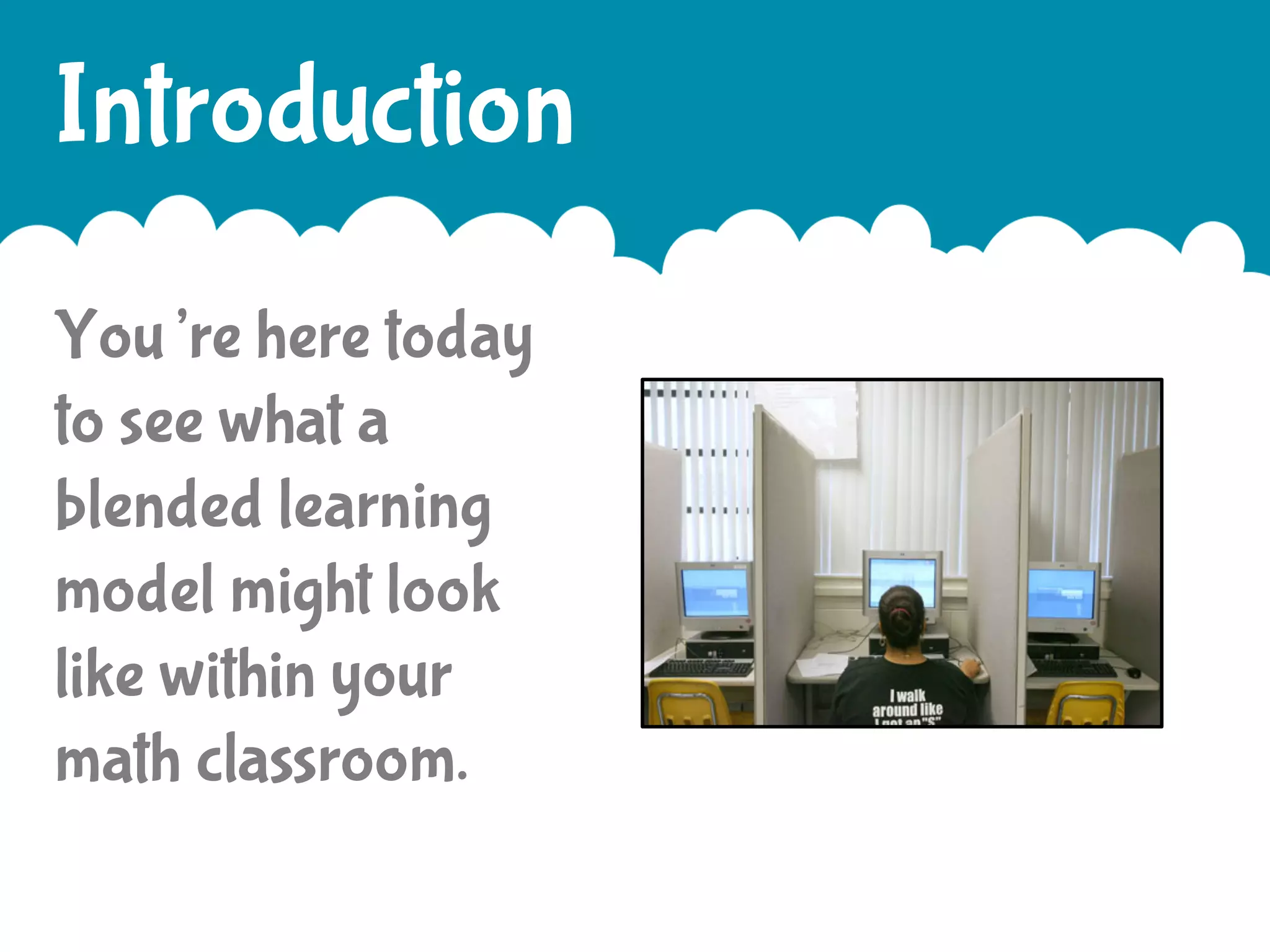
Introduction
You’re here today
to see what a
blended learning
model might look
like within your
math classroom.
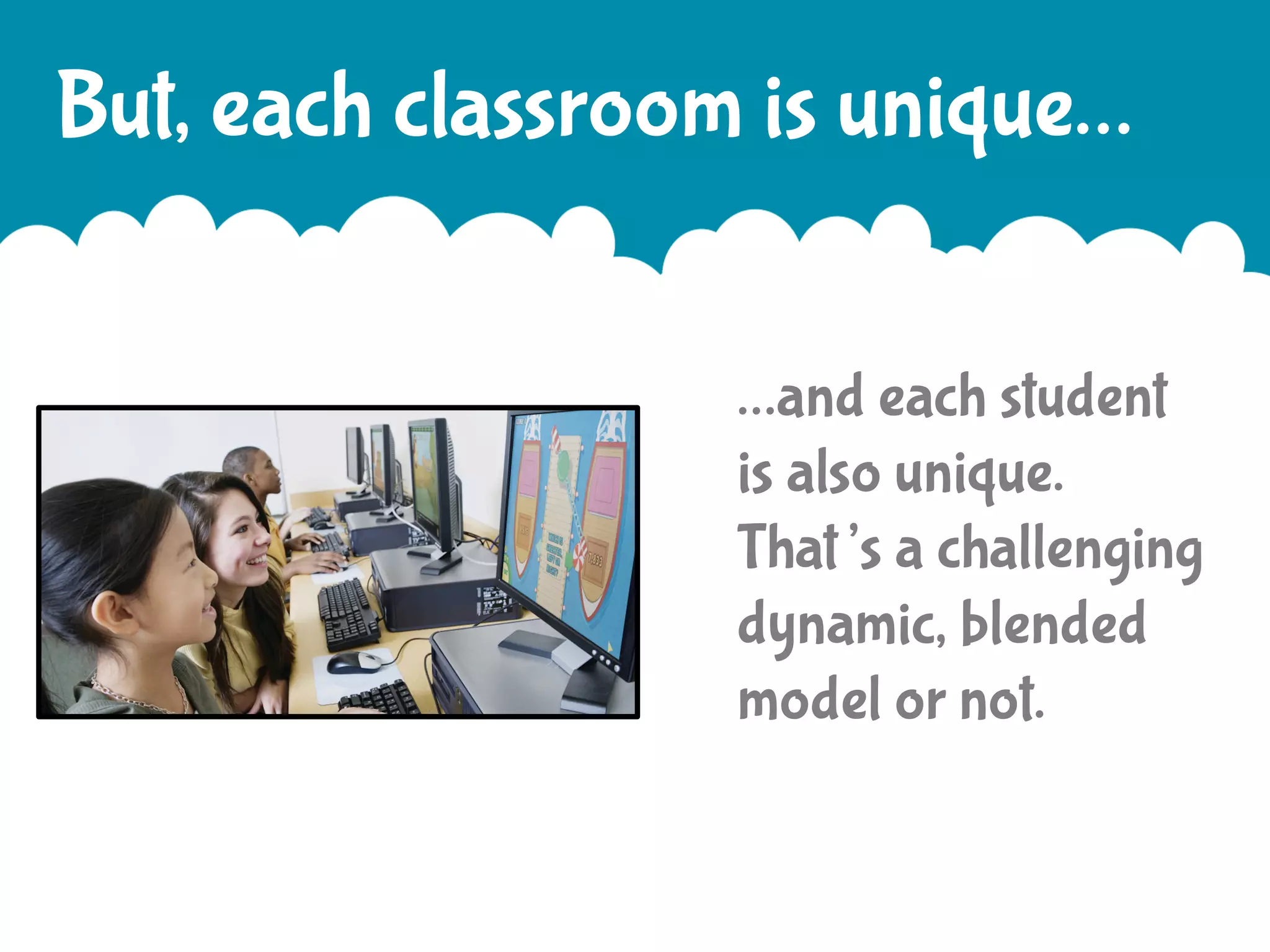
But, each classroom is unique…
…and each student
is also unique.
That’s a challenging
dynamic, blended
model or not.
Break it down into 3 steps
Take a three-pronged approach to developing
your model and instruction strategy:
A.  Establish goals for your students and your instruction
B.  Choose your model’s makeup
C.  Evaluate progress and achievement
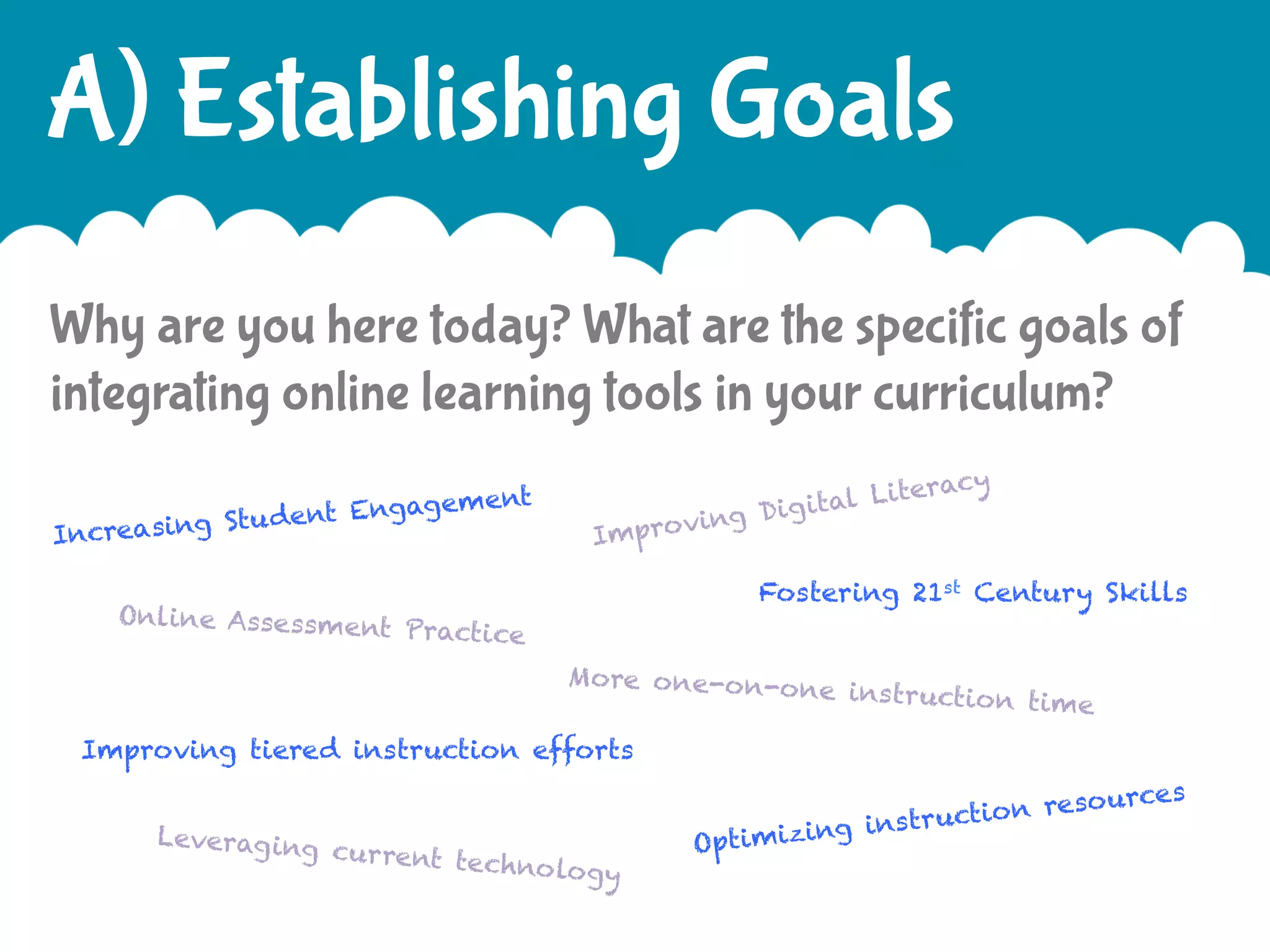
A) Establishing Goals
Why are you here today? What are the specific goals of
integrating online learning tools in your curriculum?
agement
tu dent Eng
S
Increasing

teracy
ital Li
ing Dig
mpro v
I

Fostering 21st Century Skills

Online Assessment
Practice

More one-on-on
e instruction tim
e

Improving tiered instruction efforts
Leverag ing

cur rent tec
hno logy

o urces
ction res
g ins tru
Optimizin
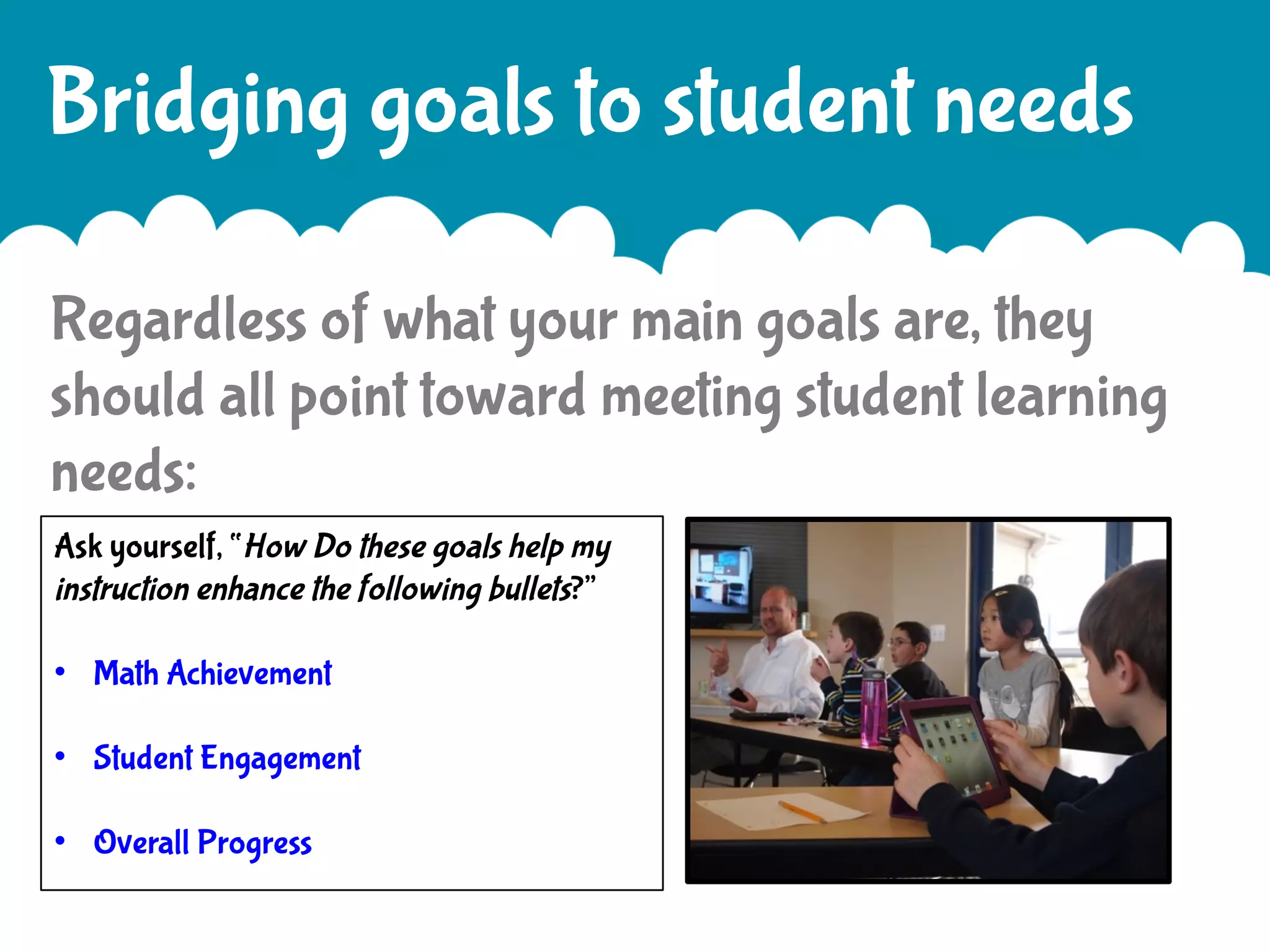
Bridging goals to student needs
Regardless of what your main goals are, they
should all point toward meeting student learning
needs:
Ask yourself, “How Do these goals help my
instruction enhance the following bullets?”
•  Math Achievement
•  Student Engagement
•  Overall Progress
Poll Question #2
What is your classroom or schools student-to-device
ratio?
A.  20 : 1 or greater
B.  In the range of 10 : 1 to 19 : 1
C.  In the range of 2 : 1 to 9 : 1
D.  1 : 1
B) Developing Your Model
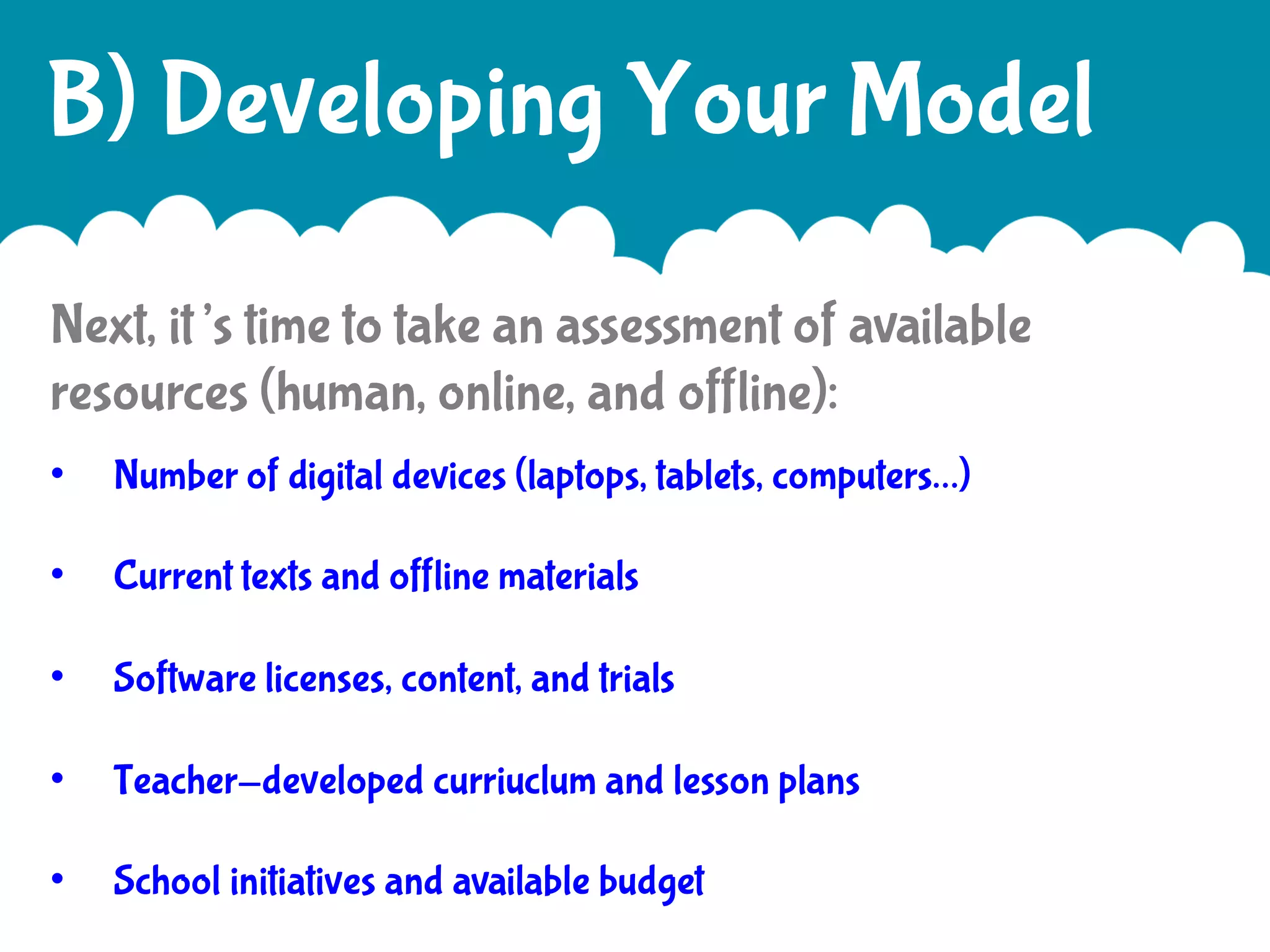
Next, it’s time to take an assessment of available
resources (human, online, and offline):
• 

Number of digital devices (laptops, tablets, computers…)

• 

Current texts and offline materials

• 

Software licenses, content, and trials

• 

Teacher-developed curriuclum and lesson plans

• 

School initiatives and available budget
Turning resources into instruction
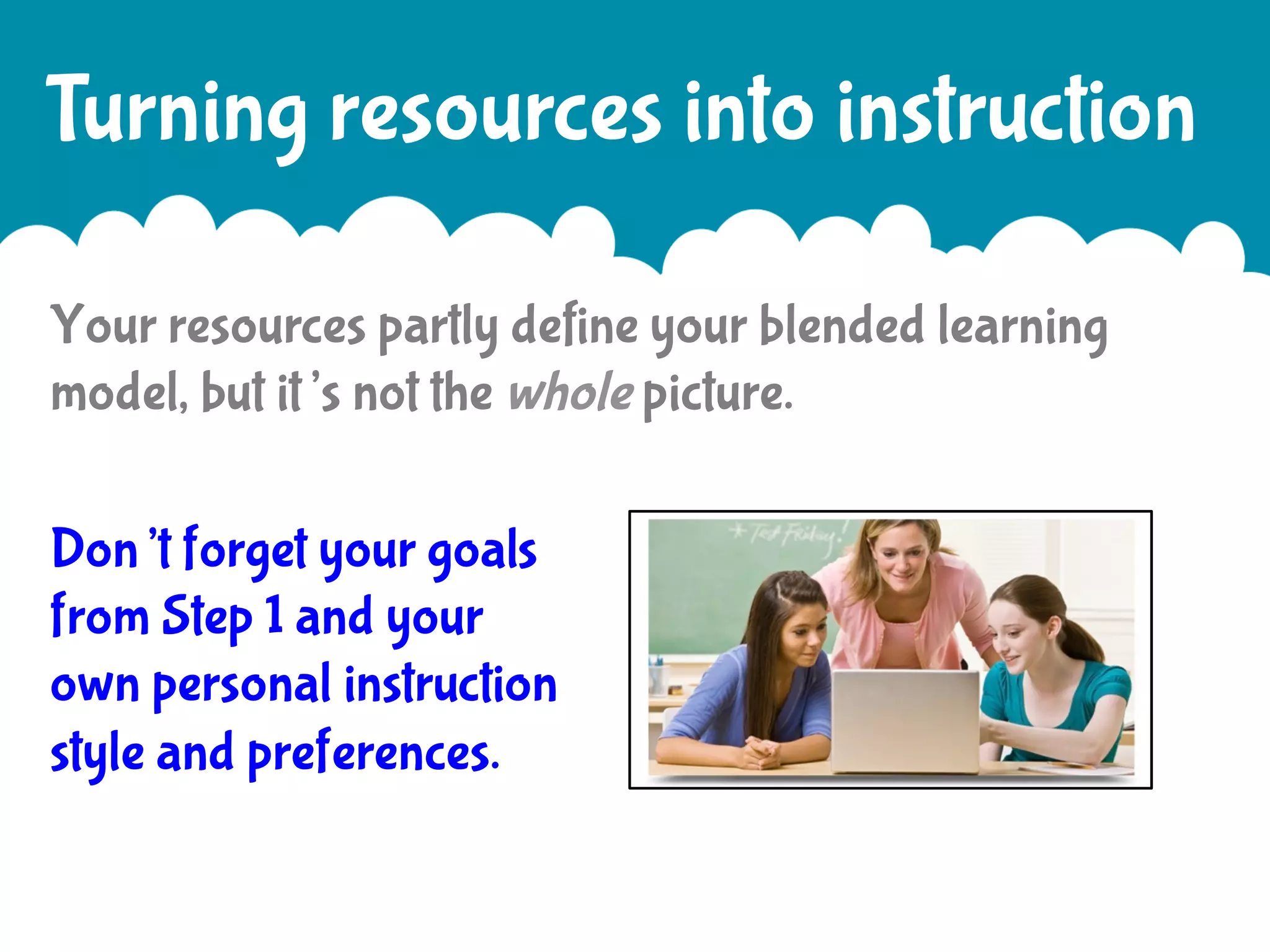
Your resources partly define your blended learning
model, but it’s not the whole picture.
Don’t forget your goals
from Step 1 and your
own personal instruction
style and preferences.
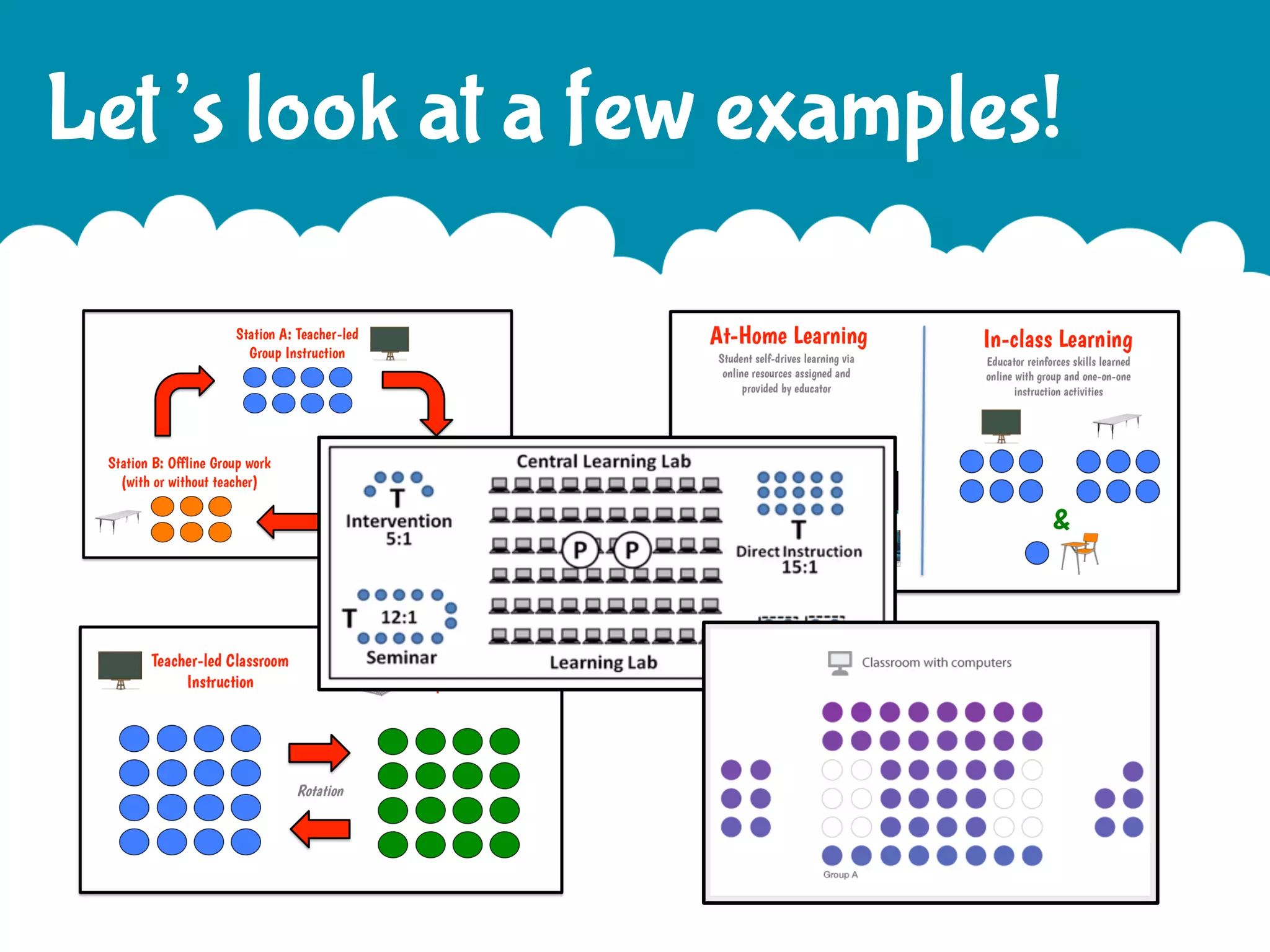
Let’s look at a few examples!
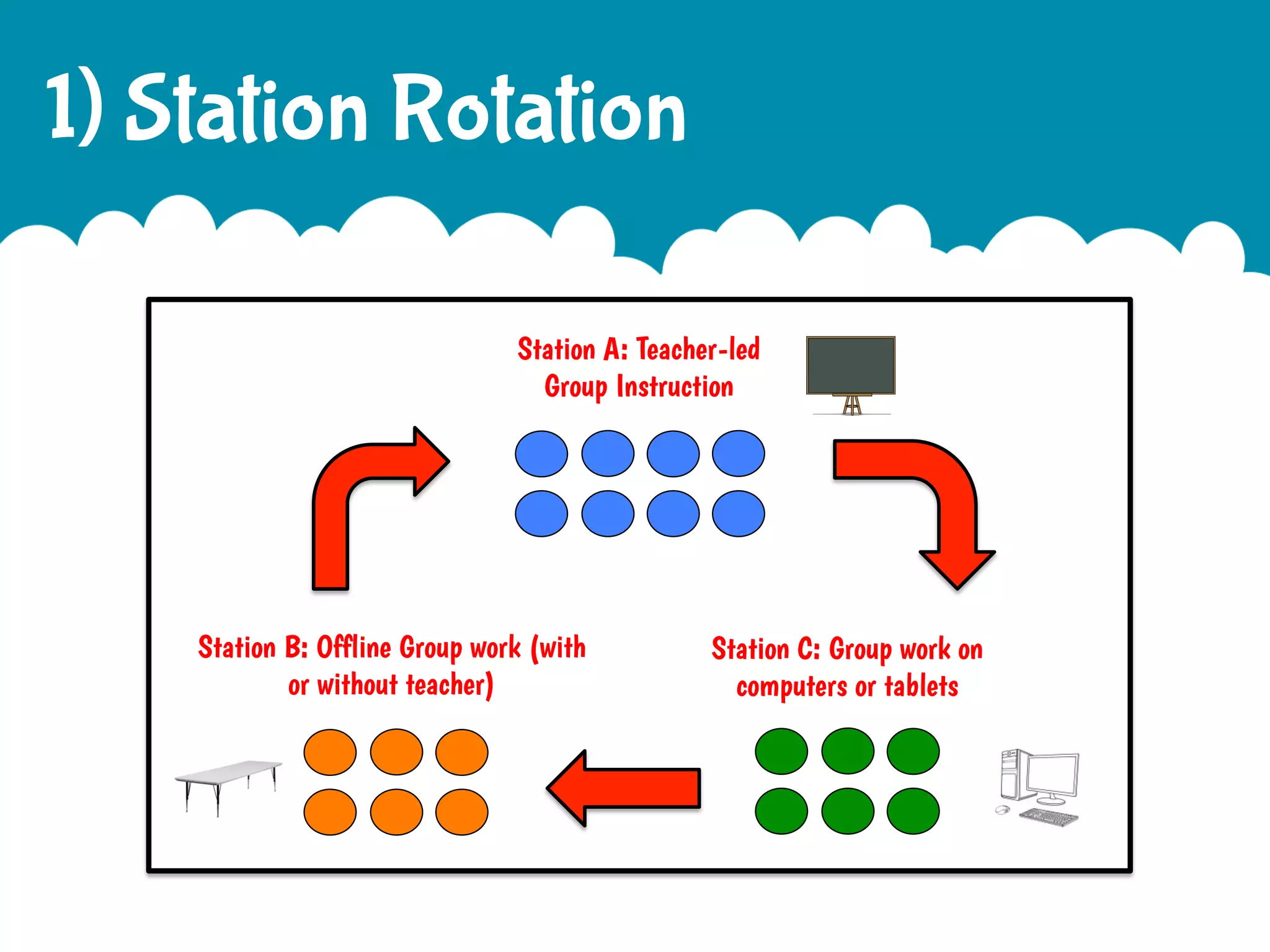
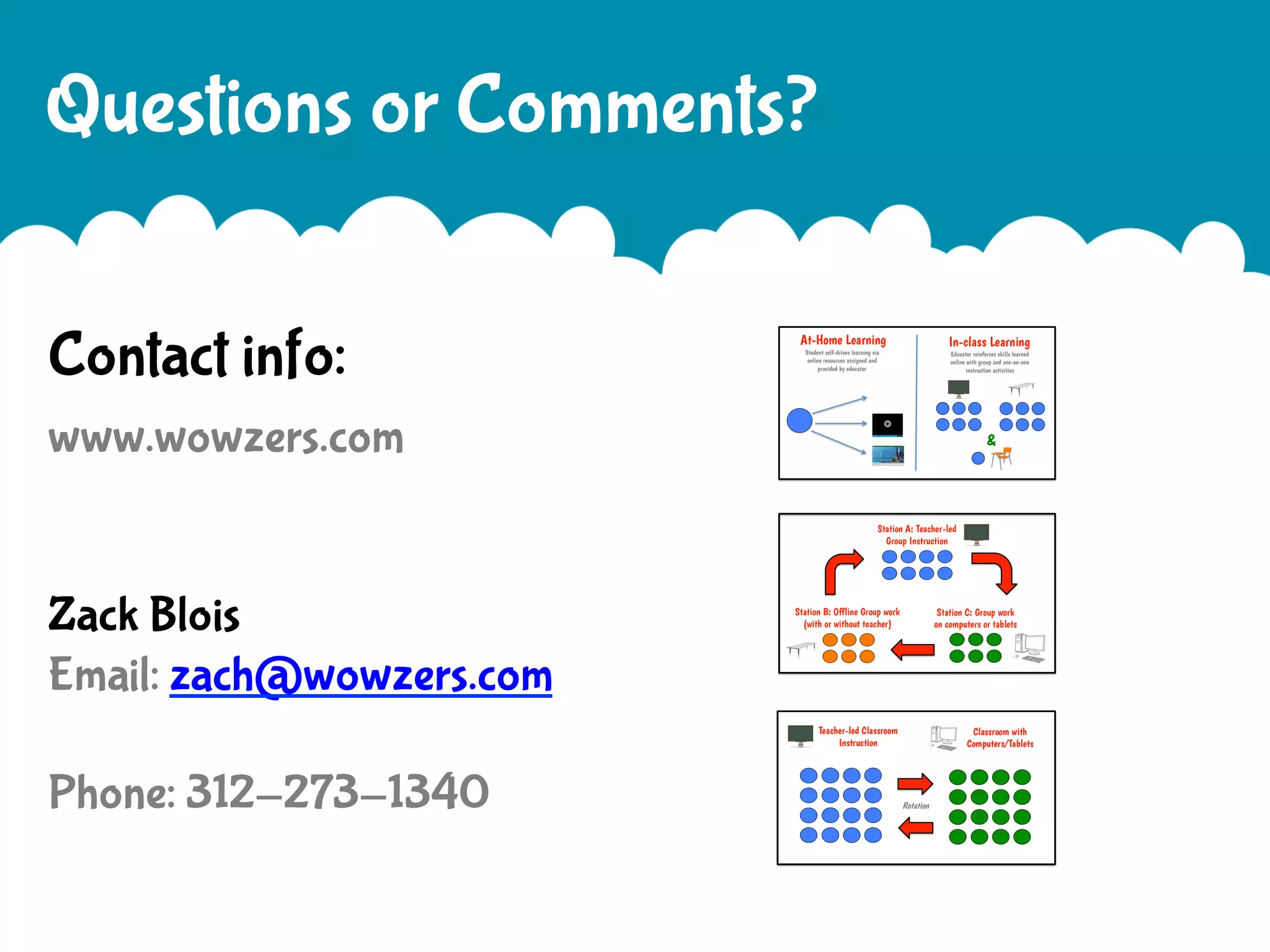
1) Station Rotation
Station A: Teacher-led
Group Instruction

Station B: Offline Group work (with
or without teacher)

Station C: Group work on
computers or tablets
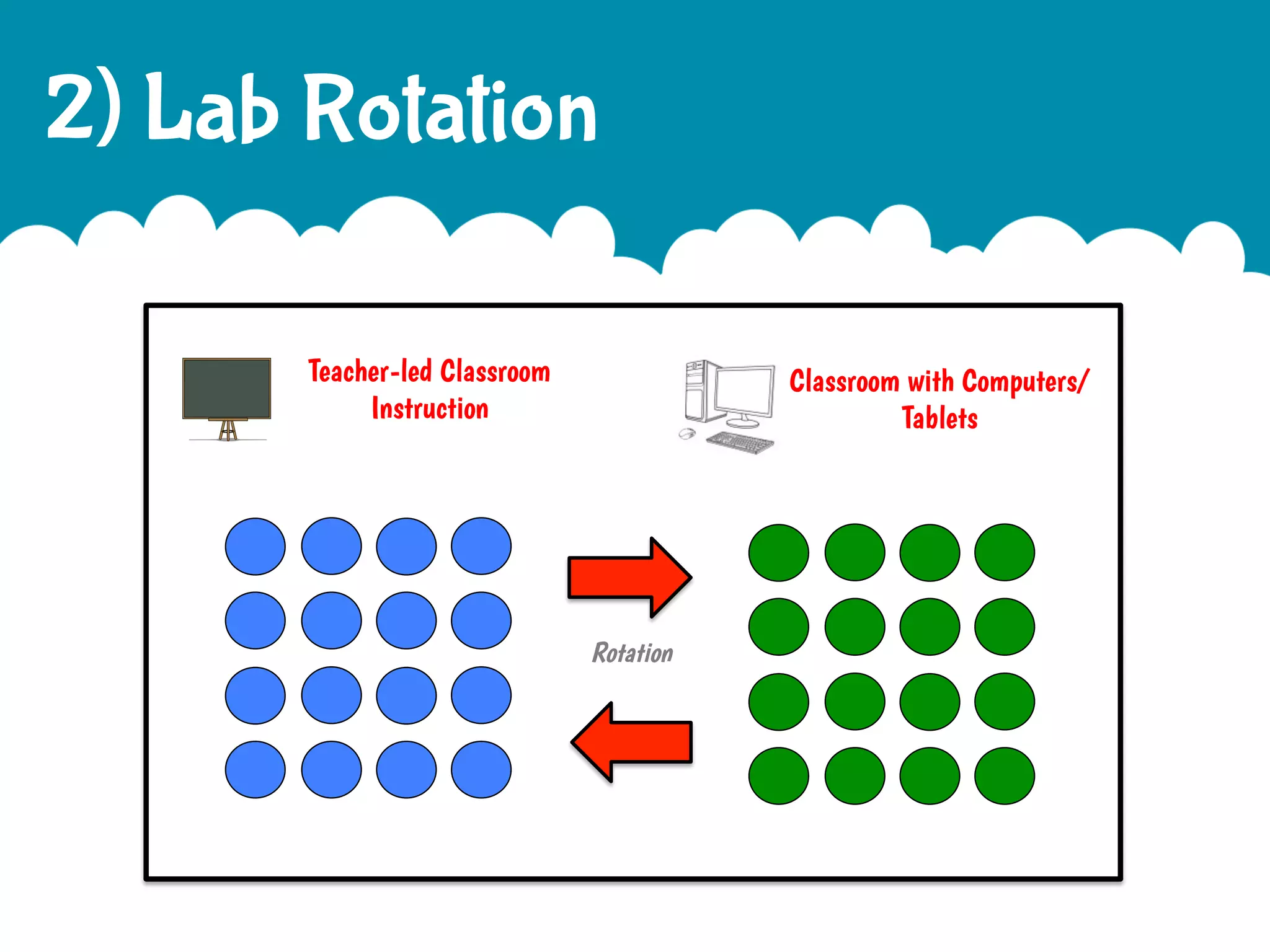
2) Lab Rotation
Teacher-led Classroom
Instruction

Classroom with Computers/
Tablets

Rotation
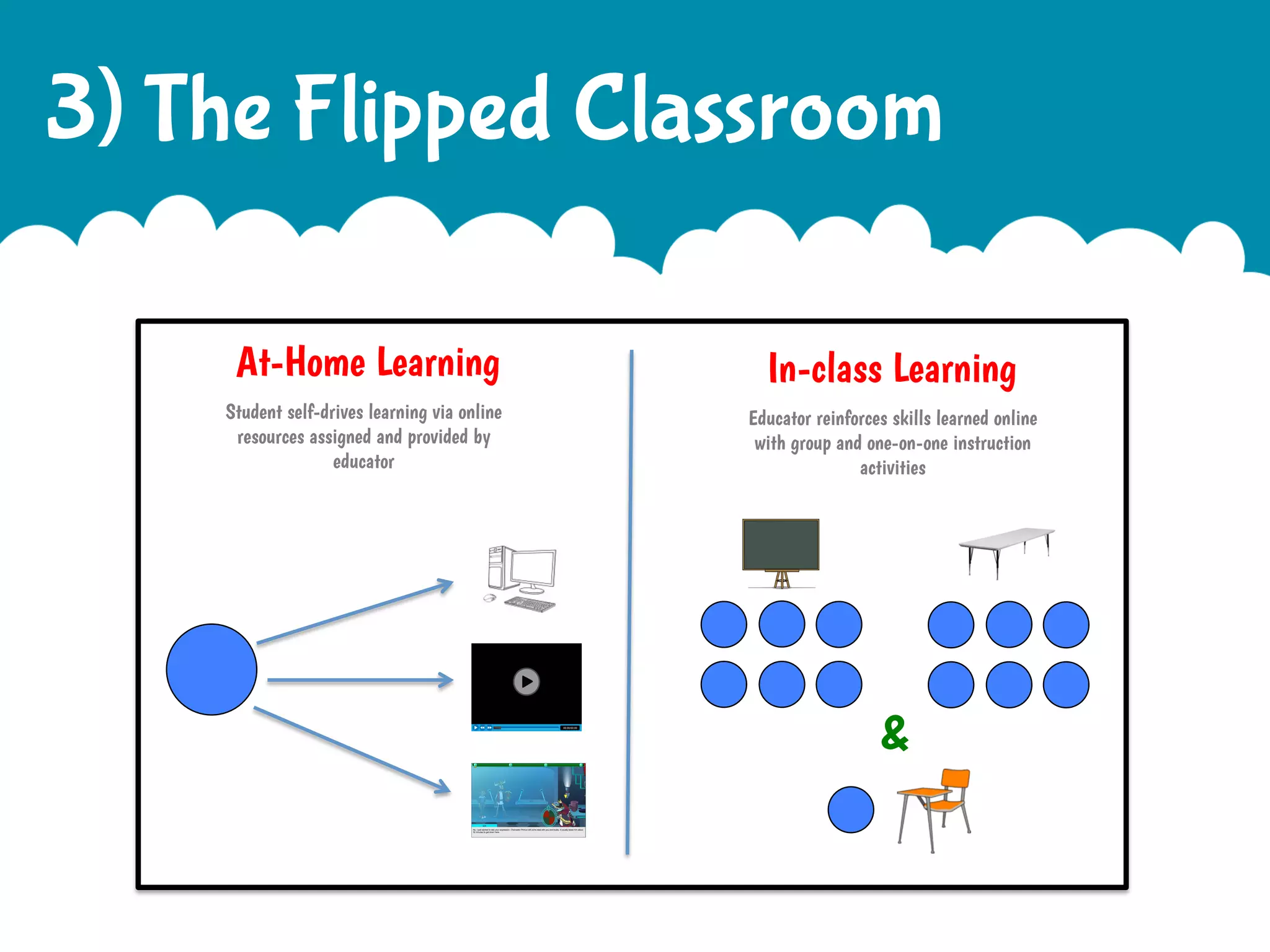
3) The Flipped Classroom
At-Home Learning

In-class Learning

Student self-drives learning via online
resources assigned and provided by
educator

Educator reinforces skills learned online
with group and one-on-one instruction
activities

&	
  
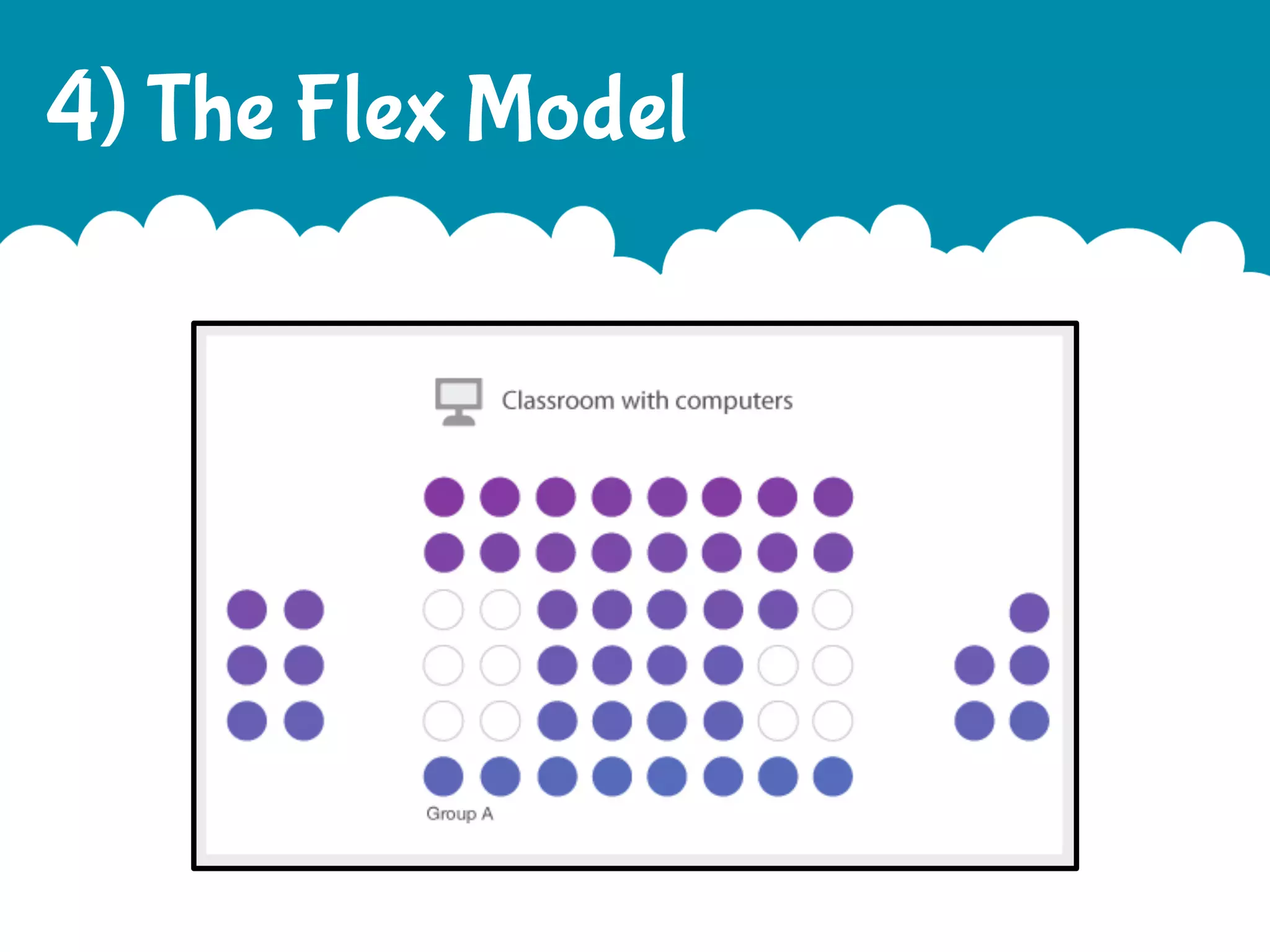
4) The Flex Model
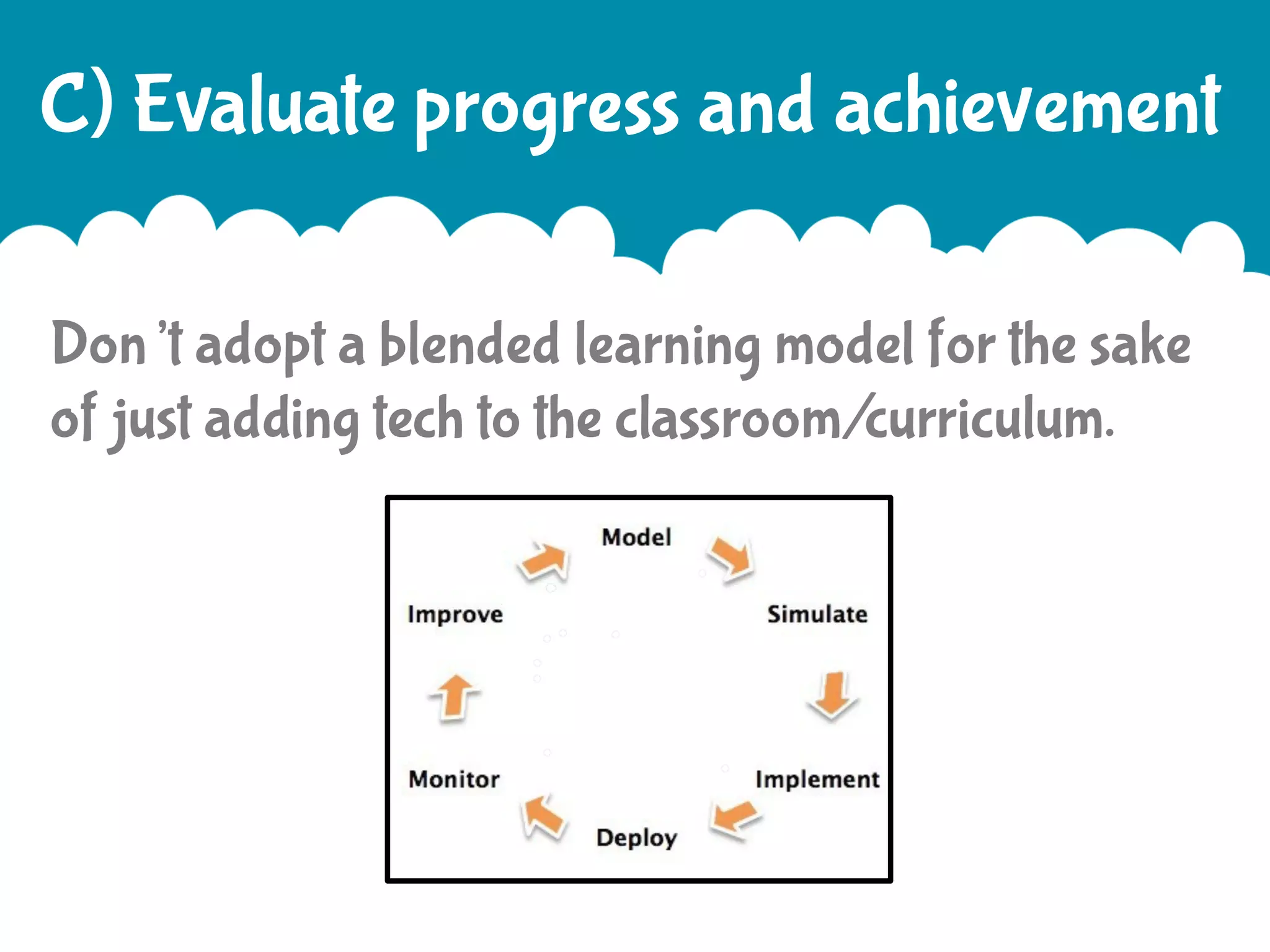
C) Evaluate progress and achievement
Don’t adopt a blended learning model for the sake
of just adding tech to the classroom/curriculum.
Blended learning is a constant effort
Important questions to consider:
- Did you accomplish the goals you initially outlined?
- Were all of your students’ needs met?
- Did you get the most of your resources and devices?
- Did you choose the most productive Blended Learning Model for your classroom?
- What variables will you change for your next lesson or unit?
Quick Recap
Take a three-pronged approach to developing
your model and instruction strategy:
A.  Establish goals for your students and your instruction
B.  Choose your model’s makeup
C.  Evaluate progress and achievement
Questions or Comments?
Contact info:
www.wowzers.com
Zack Blois
Email: zach@wowzers.com
Phone: 312-273-1340
Final Poll Question
Would you like us to contact you with more
information about Wowzers online math content
and blended learning resources?
A.  Yes
B.  No

The "Beginning a Blended Learning Math Model" webinar slide deck

  • 1.
    Beginning a Blended LearningMath Model Presented by: Zack Blois
  • 2.
    Ice-breaker Poll Question Whatis your biggest blended learning challenge? a)  Finding the time to review resources and tools for online learning b)  Lack of electronic/digital devices for students c)  Too many different resources (online and offline) to learn and use within given class time d)  Other (please list in Questions section)
  • 3.
    Introduction You’re here today tosee what a blended learning model might look like within your math classroom.
  • 4.
    But, each classroomis unique… …and each student is also unique. That’s a challenging dynamic, blended model or not.
  • 5.
    Break it downinto 3 steps Take a three-pronged approach to developing your model and instruction strategy: A.  Establish goals for your students and your instruction B.  Choose your model’s makeup C.  Evaluate progress and achievement
  • 6.
    A) Establishing Goals Whyare you here today? What are the specific goals of integrating online learning tools in your curriculum? agement tu dent Eng S Increasing teracy ital Li ing Dig mpro v I Fostering 21st Century Skills Online Assessment Practice More one-on-on e instruction tim e Improving tiered instruction efforts Leverag ing cur rent tec hno logy o urces ction res g ins tru Optimizin
  • 7.
    Bridging goals tostudent needs Regardless of what your main goals are, they should all point toward meeting student learning needs: Ask yourself, “How Do these goals help my instruction enhance the following bullets?” •  Math Achievement •  Student Engagement •  Overall Progress
  • 8.
    Poll Question #2 Whatis your classroom or schools student-to-device ratio? A.  20 : 1 or greater B.  In the range of 10 : 1 to 19 : 1 C.  In the range of 2 : 1 to 9 : 1 D.  1 : 1
  • 9.
    B) Developing YourModel Next, it’s time to take an assessment of available resources (human, online, and offline): •  Number of digital devices (laptops, tablets, computers…) •  Current texts and offline materials •  Software licenses, content, and trials •  Teacher-developed curriuclum and lesson plans •  School initiatives and available budget
  • 10.
    Turning resources intoinstruction Your resources partly define your blended learning model, but it’s not the whole picture. Don’t forget your goals from Step 1 and your own personal instruction style and preferences.
  • 11.
    Let’s look ata few examples!
  • 12.
    1) Station Rotation StationA: Teacher-led Group Instruction Station B: Offline Group work (with or without teacher) Station C: Group work on computers or tablets
  • 13.
    2) Lab Rotation Teacher-ledClassroom Instruction Classroom with Computers/ Tablets Rotation
  • 14.
    3) The FlippedClassroom At-Home Learning In-class Learning Student self-drives learning via online resources assigned and provided by educator Educator reinforces skills learned online with group and one-on-one instruction activities &  
  • 15.
  • 16.
    C) Evaluate progressand achievement Don’t adopt a blended learning model for the sake of just adding tech to the classroom/curriculum.
  • 17.
    Blended learning isa constant effort Important questions to consider: - Did you accomplish the goals you initially outlined? - Were all of your students’ needs met? - Did you get the most of your resources and devices? - Did you choose the most productive Blended Learning Model for your classroom? - What variables will you change for your next lesson or unit?
  • 18.
    Quick Recap Take athree-pronged approach to developing your model and instruction strategy: A.  Establish goals for your students and your instruction B.  Choose your model’s makeup C.  Evaluate progress and achievement
  • 19.
    Questions or Comments? Contactinfo: www.wowzers.com Zack Blois Email: zach@wowzers.com Phone: 312-273-1340
  • 20.
    Final Poll Question Wouldyou like us to contact you with more information about Wowzers online math content and blended learning resources? A.  Yes B.  No