Blended Learning
Model Solution
Craig Jordan
cjordan@esi-intl.com
+971 50 694 1678

www.esi-intl.ae
Agenda









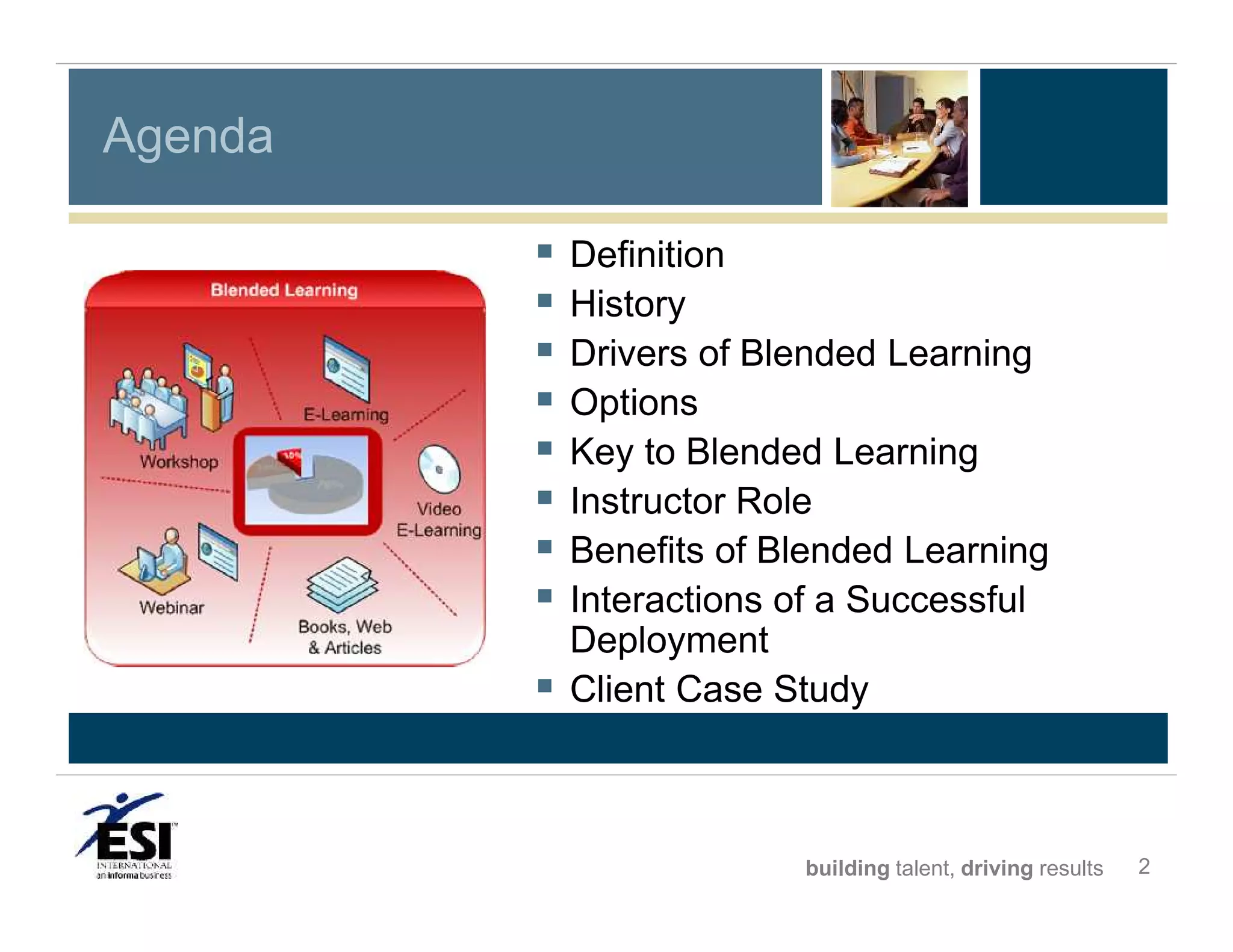
Definition
History
Drivers of Blended Learning
Options
Key to Blended Learning
Instructor Role
Benefits of Blended Learning
Interactions of a Successful
Deployment
 Client Case Study

building talent, driving results

2
Definition
 Blended learning is a formal education program in which a student learns at
least in part through online delivery of content and instruction with some
element of student control over time, place, path or pace. [Wikipedia]

 Blended Learning is an approach to learning and teaching which combines and
aligns learning undertaken in face-to-face sessions with learning opportunities
created online [LearnNC]

 Blended learning is a mix of delivery methods that have been selected and
fashioned to accommodate the various learning needs of a diverse audience in a
variety of subjects. [McSporran M & King C 2005]

 A method of learning which uses a combination of different resources,
especially a mixture of classroom sessions and online learning materials

 Use of two or more distinct learning modalities

building talent, driving results

3
History
 1840 the first correspondence school
established in Europe
 1883 correspondence institute founded
in New York
 1880 onwards manufacturing
organisation combine classroom
learning with on the job coaching
 1980’s start of online learning
 Late 1990’s the term “blended
learning” is coined

building talent, driving results

4
Drivers of Blended Learning
 Improve ability to personalize content
 Improve student engagement and motivation
through enriched content delivery
 Provide synchronous and asynchronous (self
paced) learning opportunities
 Need to extend reach of scarce resources
(teachers)
 Multi sitemulti national organisations
 Manage training costs
 Provide a more comprehensive learning
experience giving real world experience (e.g.
flight simulators)
 New and faster technologies

building talent, driving results

5
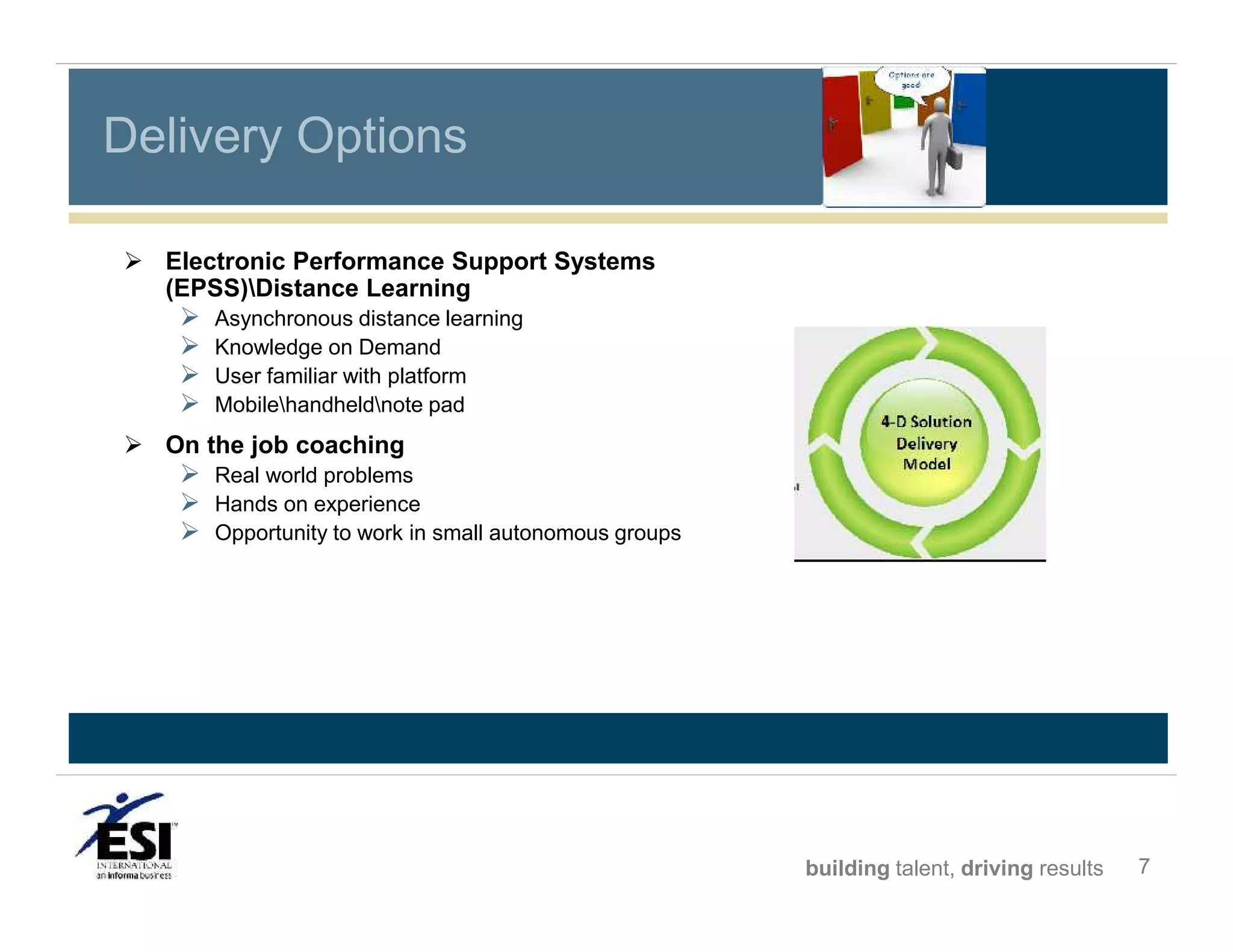
Delivery Options
 Instructor Led Training







Role based instruction
Ability to discuss complex issues
Group interaction and problem solving
Individual coaching and mentoring
Real time feedback

 Web Based Training

 Asynchronous
 Introduction of basic and specific skills to create





baseline
May be instructor facilitated for more complex
deliveries (virtual classroom)
Knowledge on demand
Easy access
Integrated with other systems

building talent, driving results

6
Delivery Options
 Electronic Performance Support Systems
(EPSS)Distance Learning






Asynchronous distance learning
Knowledge on Demand
User familiar with platform
Mobilehandheldnote pad

 On the job coaching

 Real world problems
 Hands on experience
 Opportunity to work in small autonomous groups

building talent, driving results

7
Key to Blended Learning
 Flexibility

 Time
 Location
 Instructor
 Creative use of:

 Content
 Technology
 Audio visual tools
 More geared towards an individual’s needs
 More active engagement expected from the learner
 Adopting recognised standards

building talent, driving results

8
Changing Role of the Instructor
 Less face-to-face
 More IT informed
 Broader repertoire of learning skills
 Community managers
 Moderator
 Facilitator

building talent, driving results

9
Benefits of Blended Learning
 Greater opportunity for
collaboration
 Reduced cost
 Enriched learning
experience
 Great reach of subject
matter experts
 Individual learning plan
 Asynchronous elements

 Develop peer-to-peer
relationships across
different locations
 Lessons learnt quickly
shared globally
 Just-in-time learning
(Knowledge on Demand)
 Consistent message
 Content delivered using the
most suitable platform

building talent, driving results

10
Interactions of a Robust
Blended Learning Solution
 Student-to-teacher
 Student-to-student
 Student-to-materials
 Student-to-community
 Student-to-technology

building talent, driving results

11
Client Case Study

building talent, driving results

12
Client Challenges
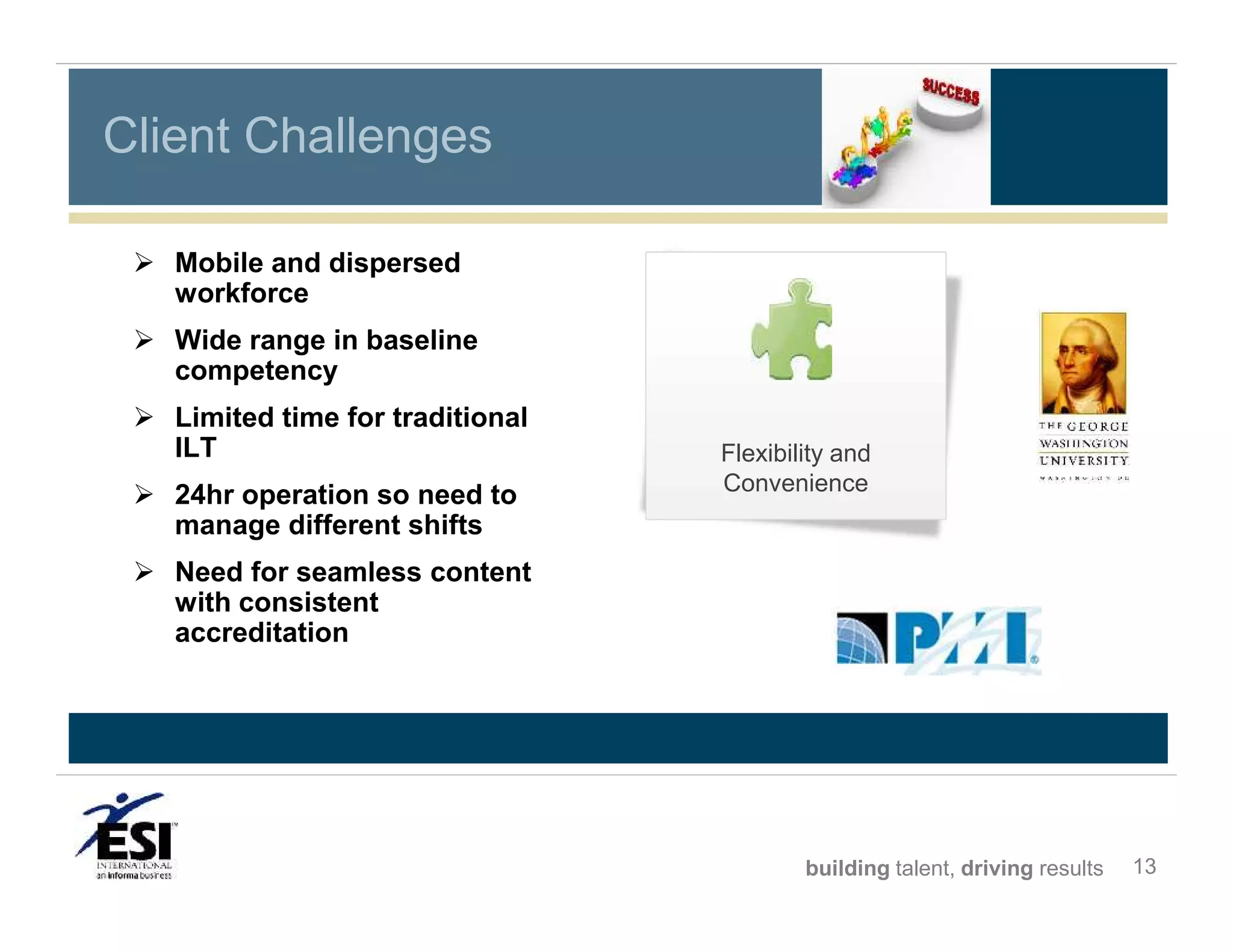
 Mobile and dispersed
workforce
 Wide range in baseline
competency
 Limited time for traditional
ILT
 24hr operation so need to
manage different shifts

Flexibility and
Convenience

 Need for seamless content
with consistent
accreditation

building talent, driving results

13
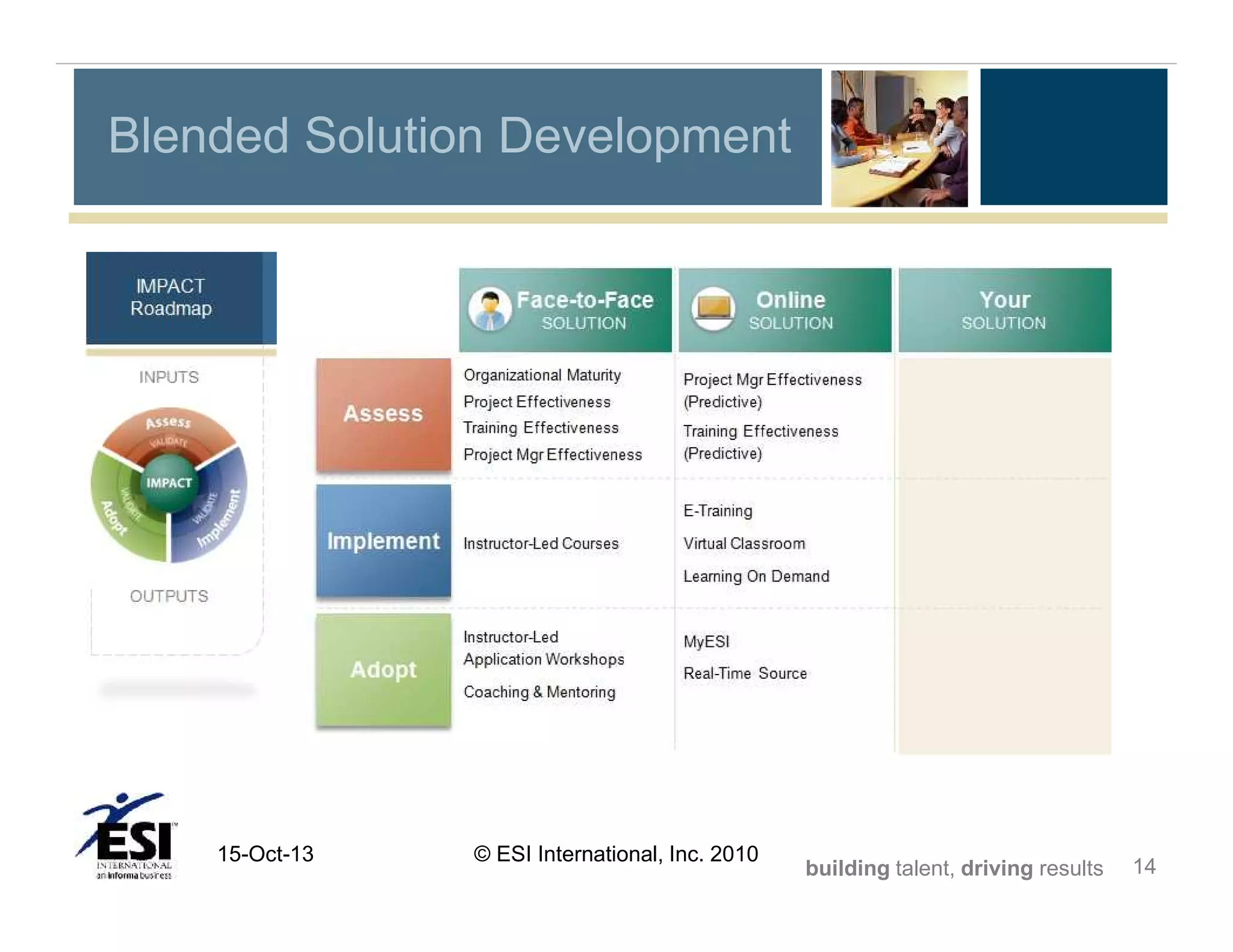
Blended Solution Development

15-Oct-13

© ESI International, Inc. 2010

building talent, driving results

14
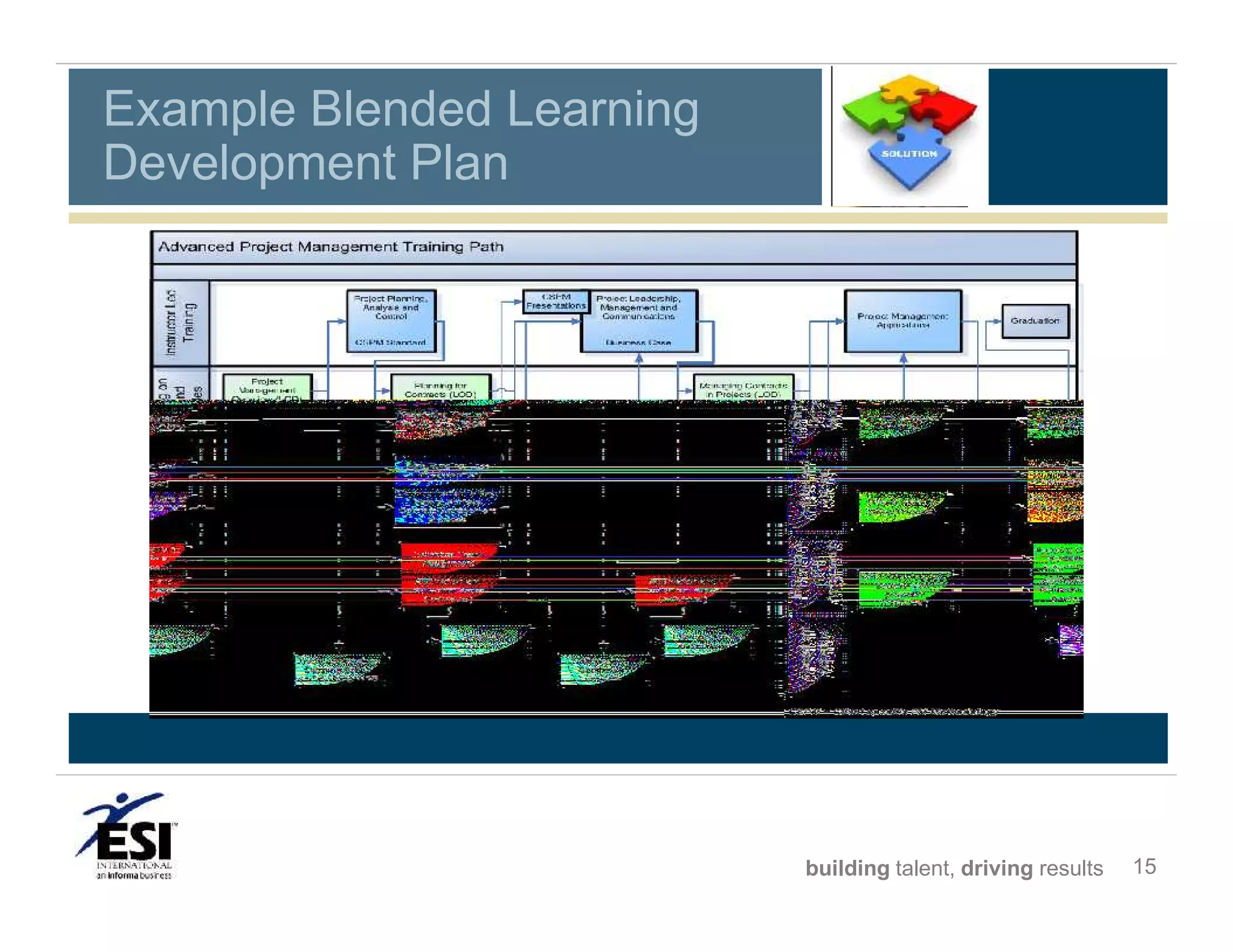
Example Blended Learning
Development Plan

building talent, driving results

15
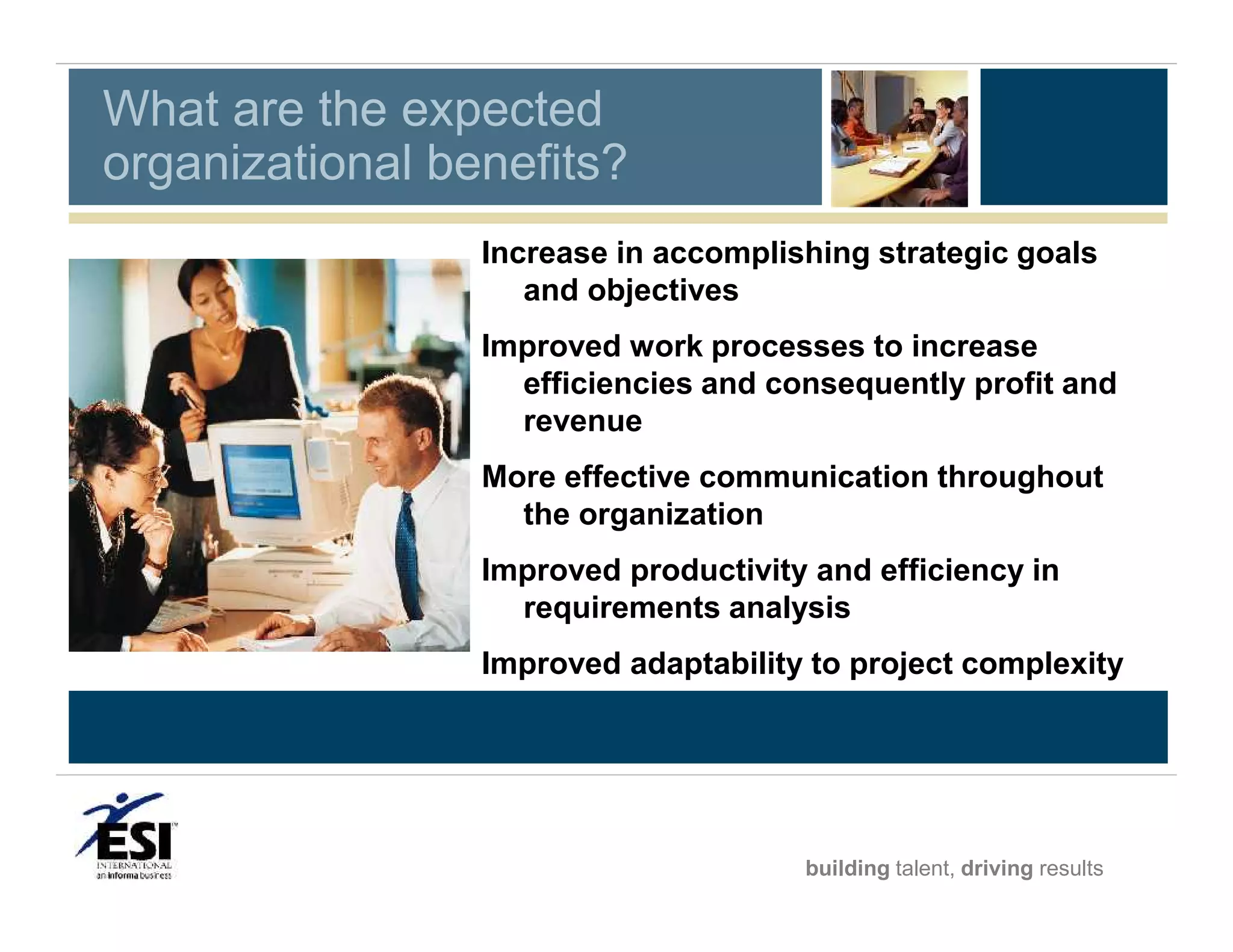
What are the expected
organizational benefits?
Increase in accomplishing strategic goals
and objectives
Improved work processes to increase
efficiencies and consequently profit and
revenue
More effective communication throughout
the organization
Improved productivity and efficiency in
requirements analysis
Improved adaptability to project complexity
Better decision making at all levels

building talent, driving results
Thank You

Craig Jordan
cjordan@esi-intl.com
+971 50 694 1678

www.esi-intl.ae

Blended Learning – A Total Training Solution, Craig Jordan

  • 1.
    Blended Learning Model Solution CraigJordan cjordan@esi-intl.com +971 50 694 1678 www.esi-intl.ae
  • 2.
    Agenda         Definition History Drivers of BlendedLearning Options Key to Blended Learning Instructor Role Benefits of Blended Learning Interactions of a Successful Deployment  Client Case Study building talent, driving results 2
  • 3.
    Definition  Blended learningis a formal education program in which a student learns at least in part through online delivery of content and instruction with some element of student control over time, place, path or pace. [Wikipedia]  Blended Learning is an approach to learning and teaching which combines and aligns learning undertaken in face-to-face sessions with learning opportunities created online [LearnNC]  Blended learning is a mix of delivery methods that have been selected and fashioned to accommodate the various learning needs of a diverse audience in a variety of subjects. [McSporran M & King C 2005]  A method of learning which uses a combination of different resources, especially a mixture of classroom sessions and online learning materials  Use of two or more distinct learning modalities building talent, driving results 3
  • 4.
    History  1840 thefirst correspondence school established in Europe  1883 correspondence institute founded in New York  1880 onwards manufacturing organisation combine classroom learning with on the job coaching  1980’s start of online learning  Late 1990’s the term “blended learning” is coined building talent, driving results 4
  • 5.
    Drivers of BlendedLearning  Improve ability to personalize content  Improve student engagement and motivation through enriched content delivery  Provide synchronous and asynchronous (self paced) learning opportunities  Need to extend reach of scarce resources (teachers)  Multi sitemulti national organisations  Manage training costs  Provide a more comprehensive learning experience giving real world experience (e.g. flight simulators)  New and faster technologies building talent, driving results 5
  • 6.
    Delivery Options  InstructorLed Training      Role based instruction Ability to discuss complex issues Group interaction and problem solving Individual coaching and mentoring Real time feedback  Web Based Training  Asynchronous  Introduction of basic and specific skills to create     baseline May be instructor facilitated for more complex deliveries (virtual classroom) Knowledge on demand Easy access Integrated with other systems building talent, driving results 6
  • 7.
    Delivery Options  ElectronicPerformance Support Systems (EPSS)Distance Learning     Asynchronous distance learning Knowledge on Demand User familiar with platform Mobilehandheldnote pad  On the job coaching  Real world problems  Hands on experience  Opportunity to work in small autonomous groups building talent, driving results 7
  • 8.
    Key to BlendedLearning  Flexibility  Time  Location  Instructor  Creative use of:  Content  Technology  Audio visual tools  More geared towards an individual’s needs  More active engagement expected from the learner  Adopting recognised standards building talent, driving results 8
  • 9.
    Changing Role ofthe Instructor  Less face-to-face  More IT informed  Broader repertoire of learning skills  Community managers  Moderator  Facilitator building talent, driving results 9
  • 10.
    Benefits of BlendedLearning  Greater opportunity for collaboration  Reduced cost  Enriched learning experience  Great reach of subject matter experts  Individual learning plan  Asynchronous elements  Develop peer-to-peer relationships across different locations  Lessons learnt quickly shared globally  Just-in-time learning (Knowledge on Demand)  Consistent message  Content delivered using the most suitable platform building talent, driving results 10
  • 11.
    Interactions of aRobust Blended Learning Solution  Student-to-teacher  Student-to-student  Student-to-materials  Student-to-community  Student-to-technology building talent, driving results 11
  • 12.
    Client Case Study buildingtalent, driving results 12
  • 13.
    Client Challenges  Mobileand dispersed workforce  Wide range in baseline competency  Limited time for traditional ILT  24hr operation so need to manage different shifts Flexibility and Convenience  Need for seamless content with consistent accreditation building talent, driving results 13
  • 14.
    Blended Solution Development 15-Oct-13 ©ESI International, Inc. 2010 building talent, driving results 14
  • 15.
    Example Blended Learning DevelopmentPlan building talent, driving results 15
  • 16.
    What are theexpected organizational benefits? Increase in accomplishing strategic goals and objectives Improved work processes to increase efficiencies and consequently profit and revenue More effective communication throughout the organization Improved productivity and efficiency in requirements analysis Improved adaptability to project complexity Better decision making at all levels building talent, driving results
  • 17.