Blended Learning
Meaning and Considerations
Work
Sample
Blended Learning: What and Why
Blended learning is the integration of electronic
technologies in a classroom teaching or training.
Benefits of Blended Learning
1. Reduces trainer costs
2. Encourages continuous and self-paced learning
3. Supports gamification
4. Makes the training program effective and highly
flexible
Work
Sample
Terms Related to Blended
Learning
Web-Enhanced: Minimum reliance on online material.
Sharing syllabus, course announcements or posting notes
is done through an online source.
Blended: The use of technology is prominent along with
the in class sessions. However, technology utilization is
less than 45%.
Hybrid: The usage of technology is at a prominent level
between 45% to 80%
Fully Online: More than 80% of the learning material is
conducted online Work
Sample
Considerations in Blended Learning
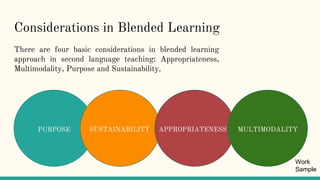
There are four basic considerations in blended learning
approach in second language teaching: Appropriateness,
Multimodality, Purpose and Sustainability.
PURPOSE SUSTAINABILITY APPROPRIATENESS MULTIMODALITY
Work
Sample
Appropriate Blended Learning:
Related Concepts
Accessible: Technologies match up to the global standards for accessibility (physical
or linguistic challenges)
Aligned: The use of technology is connected and aligned to curriculum goals and
institutional syllabus
Authentic: The context provided through activities and pedagogical techniques is
relevant in a setting beyond the classroom
Sensitive: Social factors are taken into account while designing the use of technology
in the curriculum
Configurable: Content and technology as flexible enough to meet fit individual needs
Work
Sample
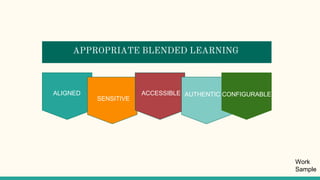
APPROPRIATE BLENDED LEARNING
ALIGNED
SENSITIVE
CONFIGURABLEACCESSIBLE AUTHENTIC
Work
Sample
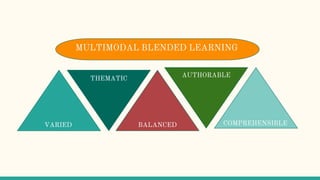
Multimodal Blended Learning:
Related Concepts
Varied: Technologies take into account range of learner abilities, time schedules,
locations and learning styles
Balanced: A balance between in classroom sessions and technological interface is
maintained
Thematic: Each modality is curated to focus on a specific learning outcome(s)
Authorable: Syllabus can be mutable as required according to learner proficiency,
learning style and dynamic thematic trends
Comprehensible: The presentation of modalities are not such that they lead to
overburdening the learner when they attempt to seek meaning from them
Work
Sample
VARIED
THEMATIC
BALANCED
AUTHORABLE
COMPREHENSIBLE
MULTIMODAL BLENDED LEARNING
Purposeful Blended Learning:
Related Concepts
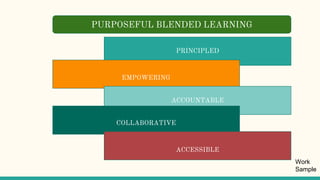
Principled: Pedagogical philosophy integrates the technology to the overall program
or course of study
Empowering: Learners are confident in having the control on the use of technologies
integrated
Accessible: Language proficiency of learners is demonstrated through their use of
pedagogical activities and course material
Accountable: Results from integration are visible to stakeholders and provide a
tangible benefit to the learners
Collaborative: Learners share and build upon each others work for peer learning
Work
Sample
PRINCIPLED
EMPOWERING
ACCOUNTABLE
COLLABORATIVE
ACCESSIBLE
PURPOSEFUL BLENDED LEARNING
Work
Sample
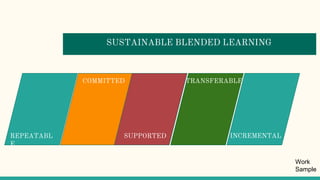
Sustainable Blended Learning:
Related Concepts
Repeatable: The blended approach can reoccur within the same program every time
the program commences
Transferable: Blended approaches can be applied to different institutes and
organizations with the same educational set up
Committed: The trainer/teachers have a long terms commitment towards the
institute or the program
Supported: Institute values blended learning approach
Incremental: Integration is constructed in a way that stakeholders can adapt
Work
Sample
SUSTAINABLE BLENDED LEARNING
REPEATABL
E
COMMITTED
SUPPORTED
TRANSFERABLE
INCREMENTAL
Work
Sample

Blended learning (Work sample)

  • 1.
    Blended Learning Meaning andConsiderations Work Sample
  • 2.
    Blended Learning: Whatand Why Blended learning is the integration of electronic technologies in a classroom teaching or training. Benefits of Blended Learning 1. Reduces trainer costs 2. Encourages continuous and self-paced learning 3. Supports gamification 4. Makes the training program effective and highly flexible Work Sample
  • 3.
    Terms Related toBlended Learning Web-Enhanced: Minimum reliance on online material. Sharing syllabus, course announcements or posting notes is done through an online source. Blended: The use of technology is prominent along with the in class sessions. However, technology utilization is less than 45%. Hybrid: The usage of technology is at a prominent level between 45% to 80% Fully Online: More than 80% of the learning material is conducted online Work Sample
  • 4.
    Considerations in BlendedLearning There are four basic considerations in blended learning approach in second language teaching: Appropriateness, Multimodality, Purpose and Sustainability. PURPOSE SUSTAINABILITY APPROPRIATENESS MULTIMODALITY Work Sample
  • 5.
    Appropriate Blended Learning: RelatedConcepts Accessible: Technologies match up to the global standards for accessibility (physical or linguistic challenges) Aligned: The use of technology is connected and aligned to curriculum goals and institutional syllabus Authentic: The context provided through activities and pedagogical techniques is relevant in a setting beyond the classroom Sensitive: Social factors are taken into account while designing the use of technology in the curriculum Configurable: Content and technology as flexible enough to meet fit individual needs Work Sample
  • 6.
  • 7.
    Multimodal Blended Learning: RelatedConcepts Varied: Technologies take into account range of learner abilities, time schedules, locations and learning styles Balanced: A balance between in classroom sessions and technological interface is maintained Thematic: Each modality is curated to focus on a specific learning outcome(s) Authorable: Syllabus can be mutable as required according to learner proficiency, learning style and dynamic thematic trends Comprehensible: The presentation of modalities are not such that they lead to overburdening the learner when they attempt to seek meaning from them Work Sample
  • 8.
  • 9.
    Purposeful Blended Learning: RelatedConcepts Principled: Pedagogical philosophy integrates the technology to the overall program or course of study Empowering: Learners are confident in having the control on the use of technologies integrated Accessible: Language proficiency of learners is demonstrated through their use of pedagogical activities and course material Accountable: Results from integration are visible to stakeholders and provide a tangible benefit to the learners Collaborative: Learners share and build upon each others work for peer learning Work Sample
  • 10.
  • 11.
    Sustainable Blended Learning: RelatedConcepts Repeatable: The blended approach can reoccur within the same program every time the program commences Transferable: Blended approaches can be applied to different institutes and organizations with the same educational set up Committed: The trainer/teachers have a long terms commitment towards the institute or the program Supported: Institute values blended learning approach Incremental: Integration is constructed in a way that stakeholders can adapt Work Sample
  • 12.