1
Control of the reproductive cycle in
Azolla filiculoides
2015-2016 Internship
Thursday 08/09/2016
Georgos Zangos
2
Azolla filiculoides Lam
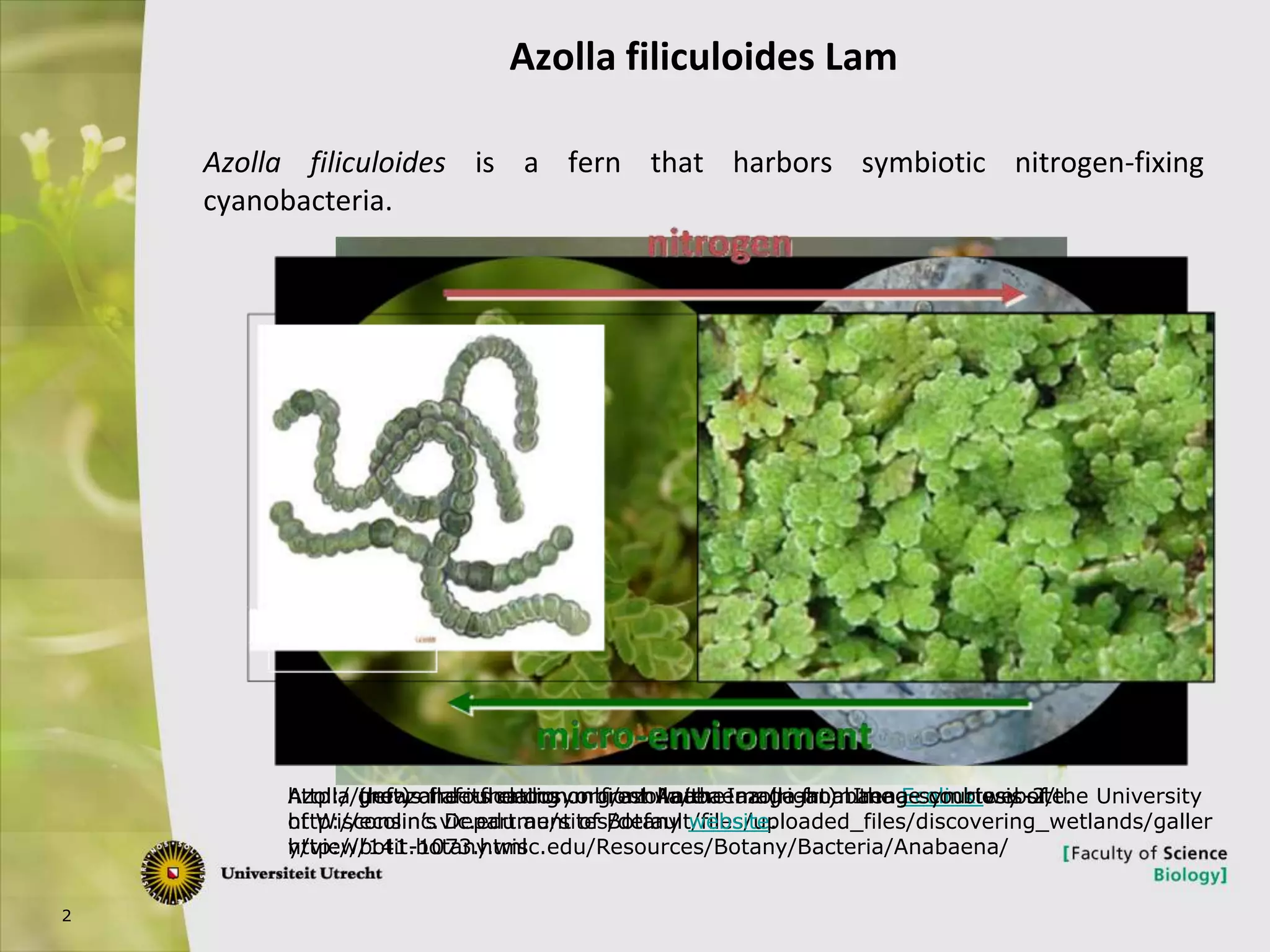
Azolla filiculoides is a fern that harbors symbiotic nitrogen-fixing
cyanobacteria.
Azolla grows free-floating on freshwater. Image from the Ecolink website.
http://ecolinc.vic.edu.au/sites/default/files/uploaded_files/discovering_wetlands/galler
y/view/141-1073.html
Azolla (left) and its endosymbiont Anabaena (right). Image courtesy of the University
of Wisconsin’s Department of Botany website.
http://botit.botany.wisc.edu/Resources/Botany/Bacteria/Anabaena/
http://theazollafoundation.org/azolla/the-azolla-anabaena-symbiosis-2/
3
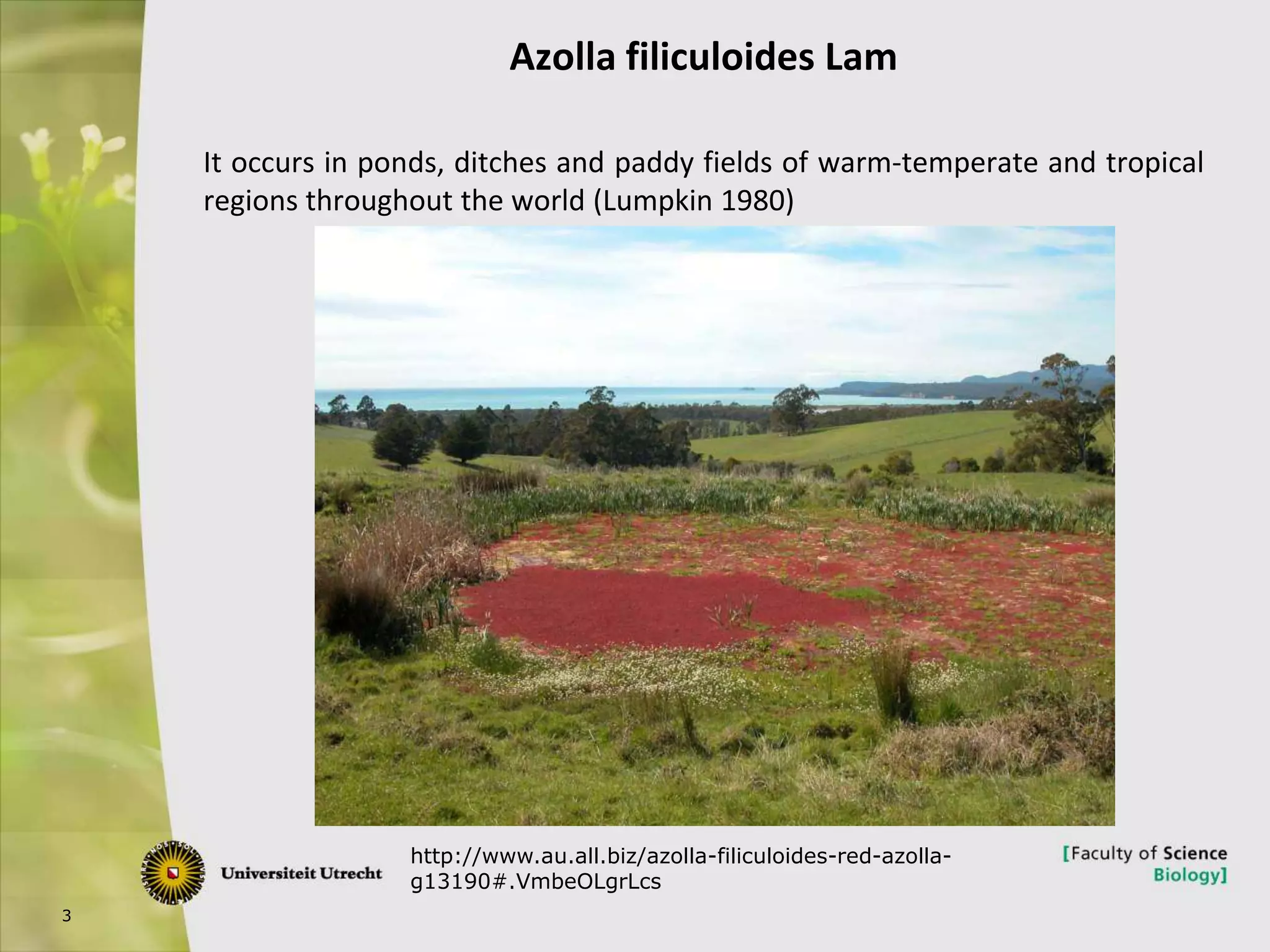
It occurs in ponds, ditches and paddy fields of warm-temperate and tropical
regions throughout the world (Lumpkin 1980)
http://www.au.all.biz/azolla-filiculoides-red-azolla-
g13190#.VmbeOLgrLcs
Azolla filiculoides Lam
4
Azolla filiculoides Lam
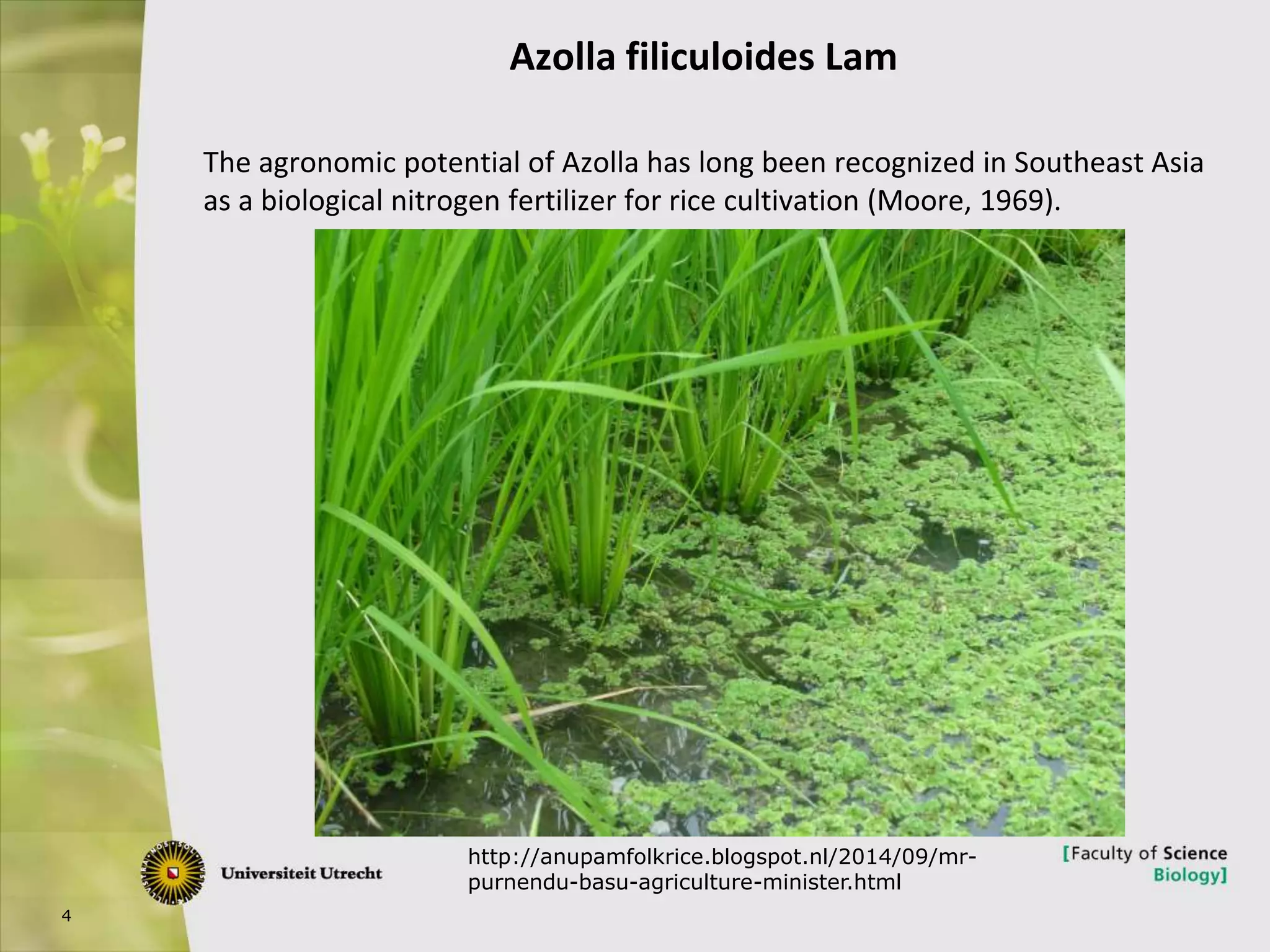
The agronomic potential of Azolla has long been recognized in Southeast Asia
as a biological nitrogen fertilizer for rice cultivation (Moore, 1969).
http://anupamfolkrice.blogspot.nl/2014/09/mr-
purnendu-basu-agriculture-minister.html
5
Azolla filiculoides Lam
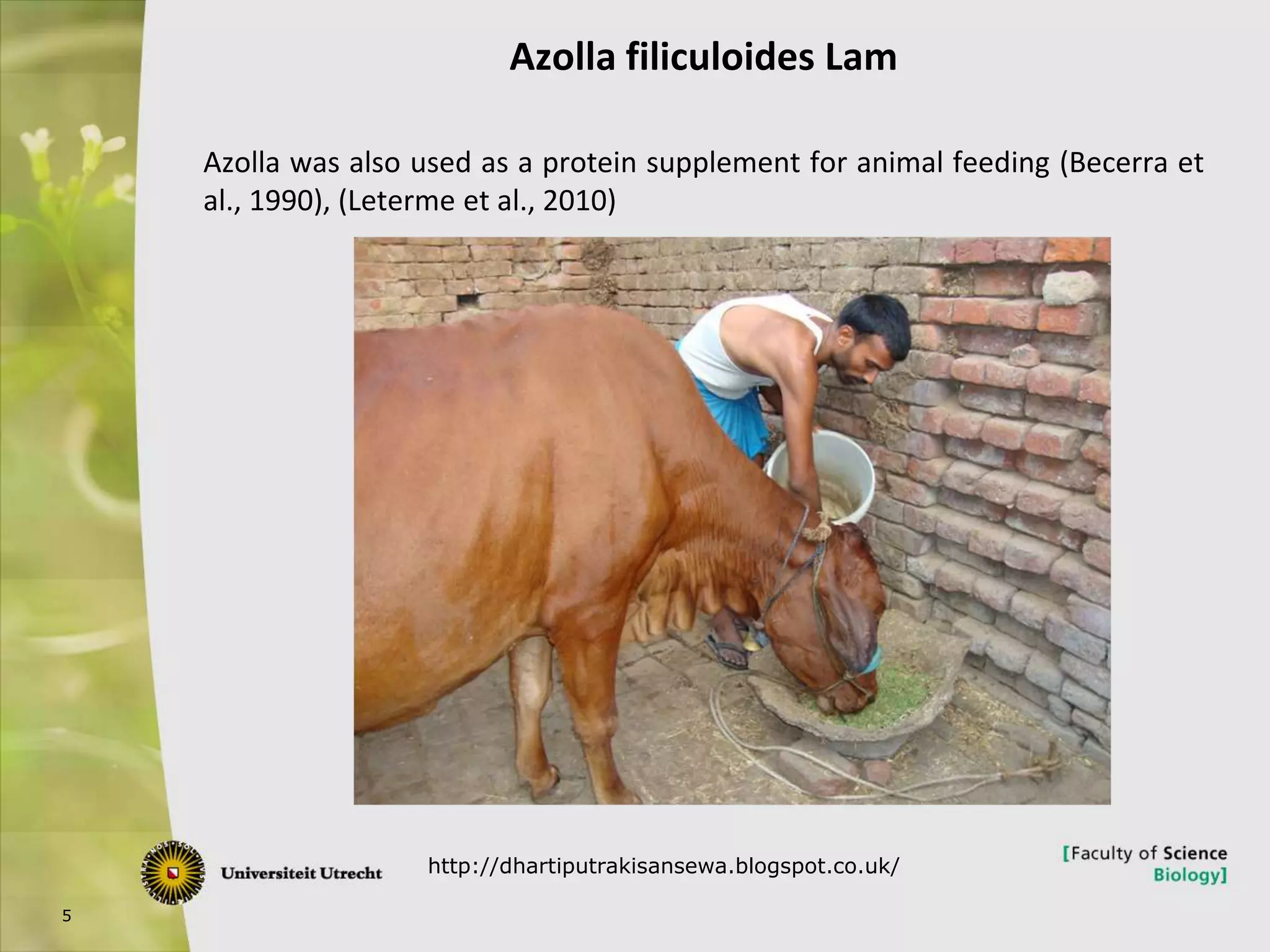
Azolla was also used as a protein supplement for animal feeding (Becerra et
al., 1990), (Leterme et al., 2010)
http://dhartiputrakisansewa.blogspot.co.uk/
6
Azolla filiculoides Lam
or as biomass for biofuel, partially replacing soybean in tropical and
temperate countries with sufficient water (Hossain et al., 2011).
https://kenaseka.wordpress.com/
8
Control over Azolla sexual reproduction will be of paramount importance for
disseminating existing varieties or breed new varieties.
The Azolla genome has been sequenced and a 37649 unigene database covers
metabolism, cellular processes and regulatory networks.
165 unigenes were similar to Arabidopsis thaliana genes involved in flowering.
Brouwer et al. 2013
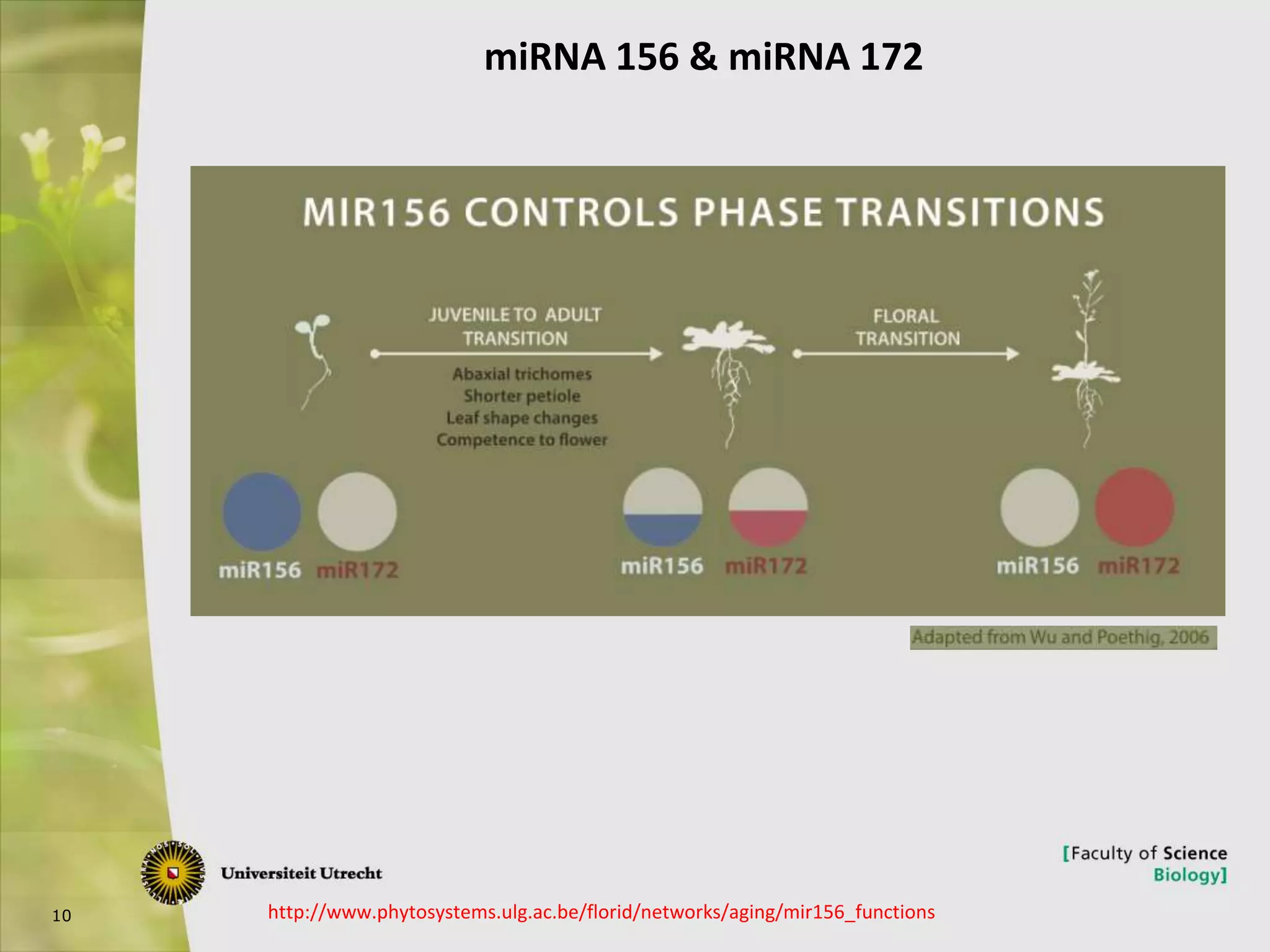
miRNA 156 and 172 that control the transition to sexual development in seed
plants have been reported in ferns but their role in the induction of sporulation
remains unknown.
The repertoire of fern miRNA is also entirely unknown.
Domestication of Azolla
9
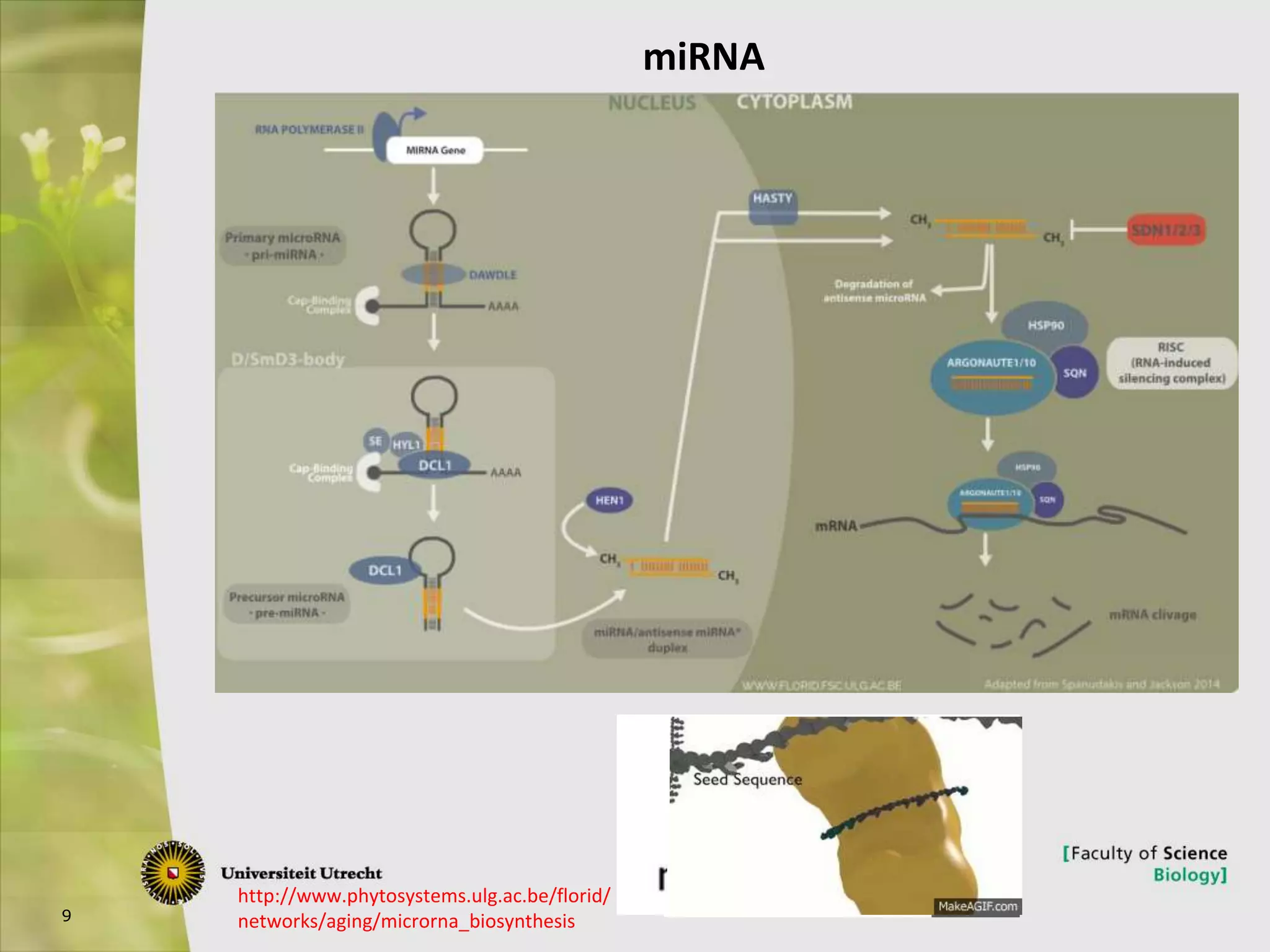
http://www.phytosystems.ulg.ac.be/florid/
networks/aging/microrna_biosynthesis
miRNA
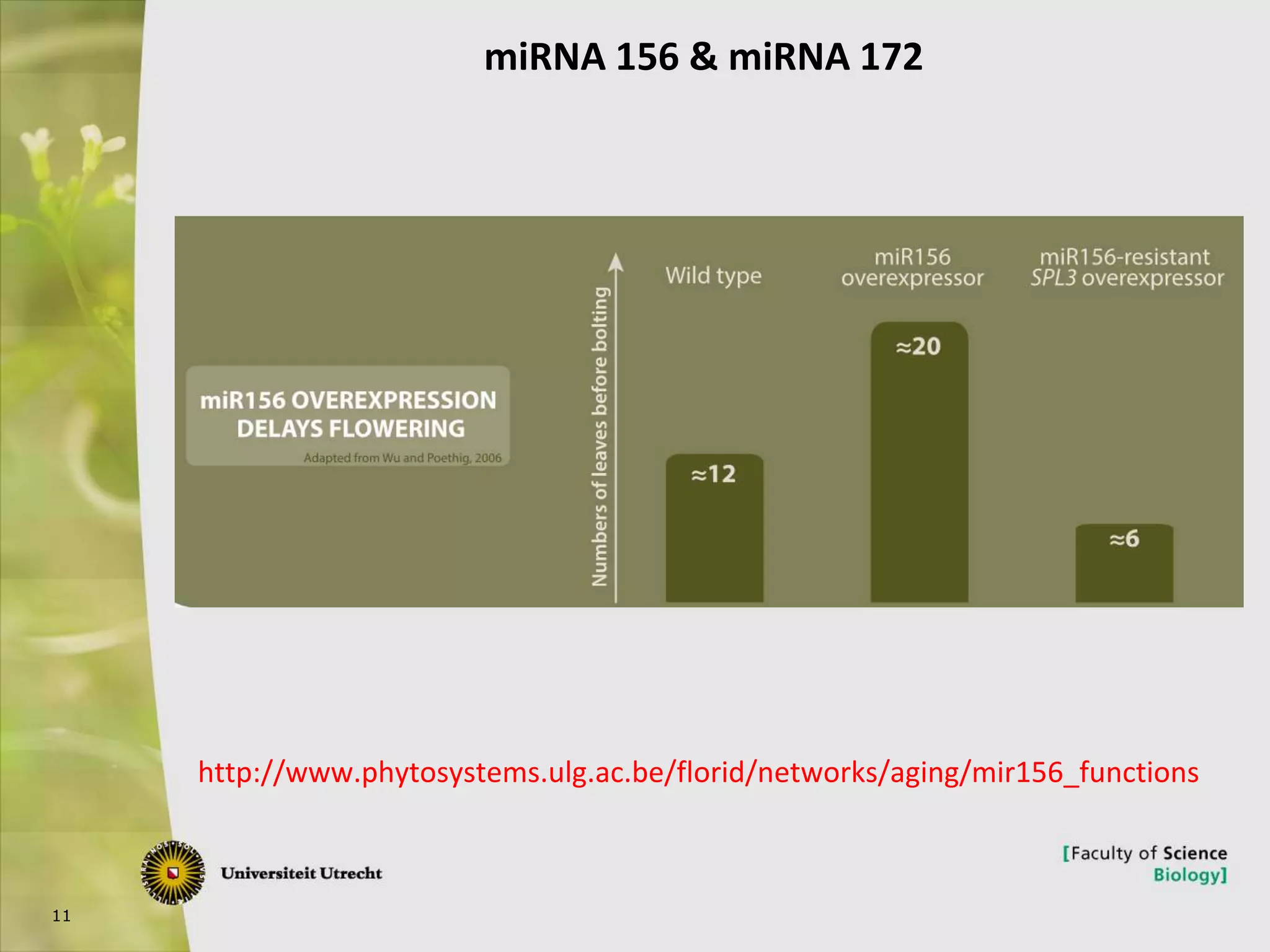
10 http://www.phytosystems.ulg.ac.be/florid/networks/aging/mir156_functions
miRNA 156 & miRNA 172
11
http://www.phytosystems.ulg.ac.be/florid/networks/aging/mir156_functions
miRNA 156 & miRNA 172
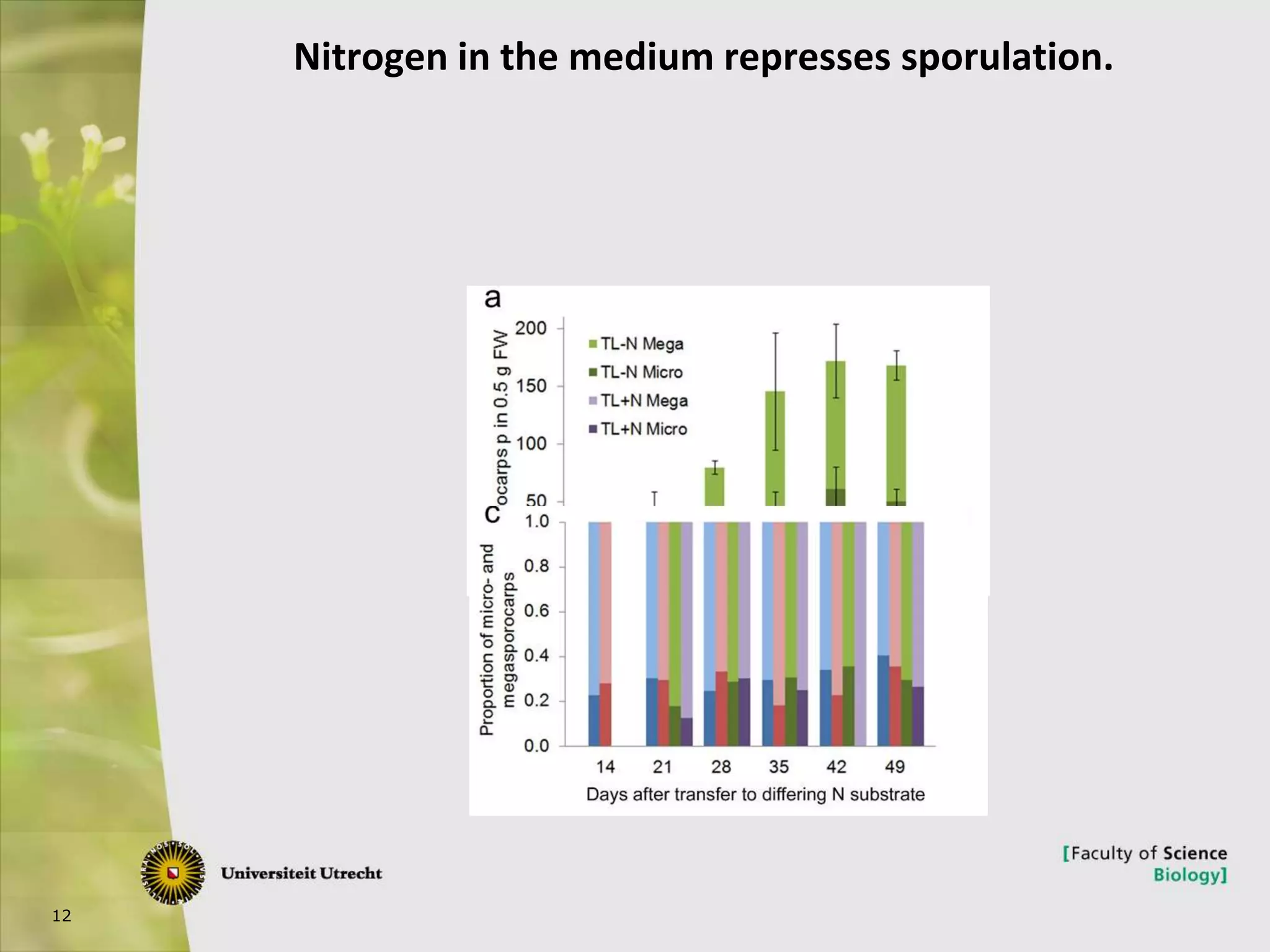
12
Nitrogen in the medium represses sporulation.
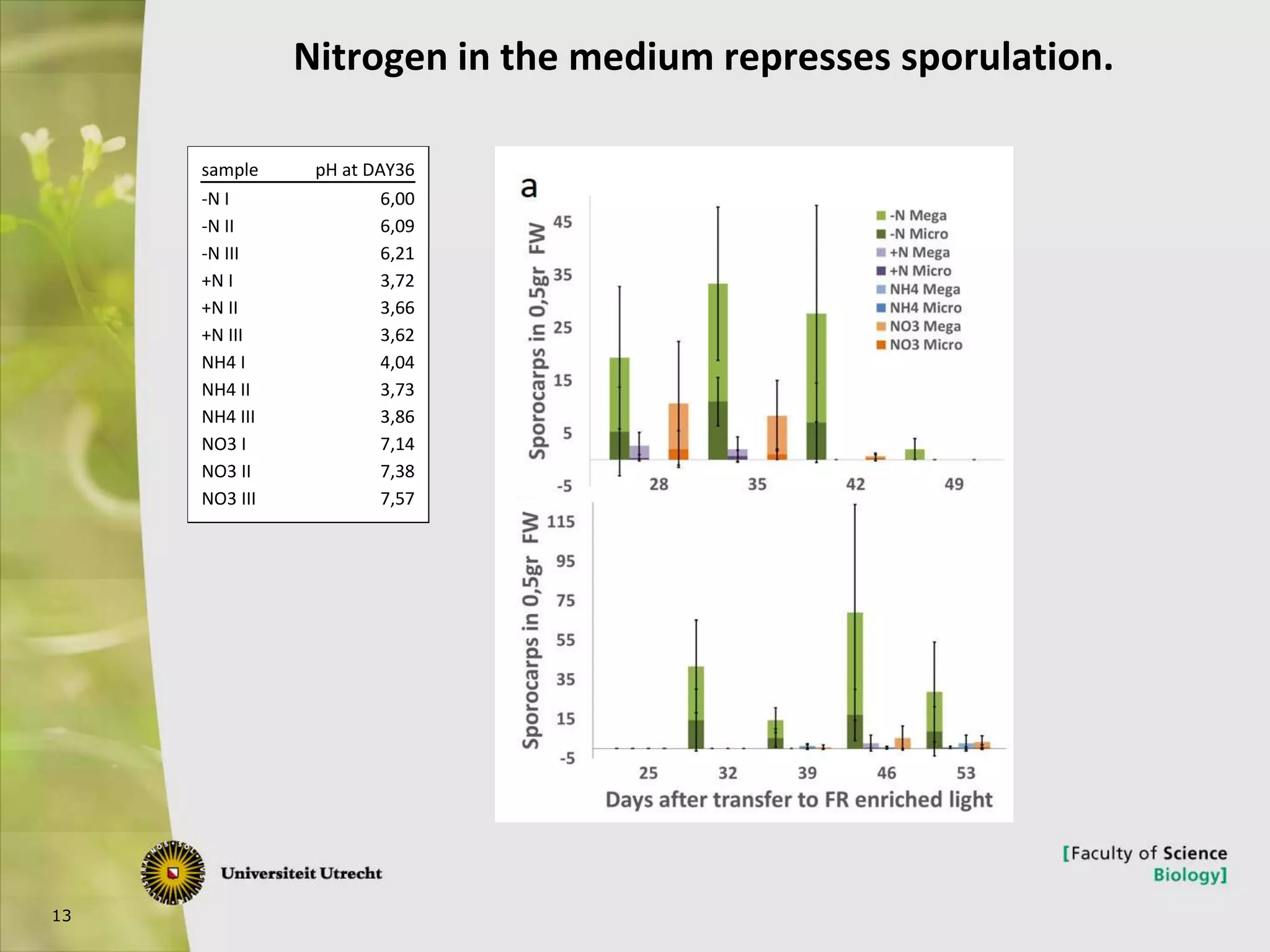
13
Nitrogen in the medium represses sporulation.
sample pH at DAY36
-N I 6,00
-N II 6,09
-N III 6,21
+N I 3,72
+N II 3,66
+N III 3,62
NH4 I 4,04
NH4 II 3,73
NH4 III 3,86
NO3 I 7,14
NO3 II 7,38
NO3 III 7,57
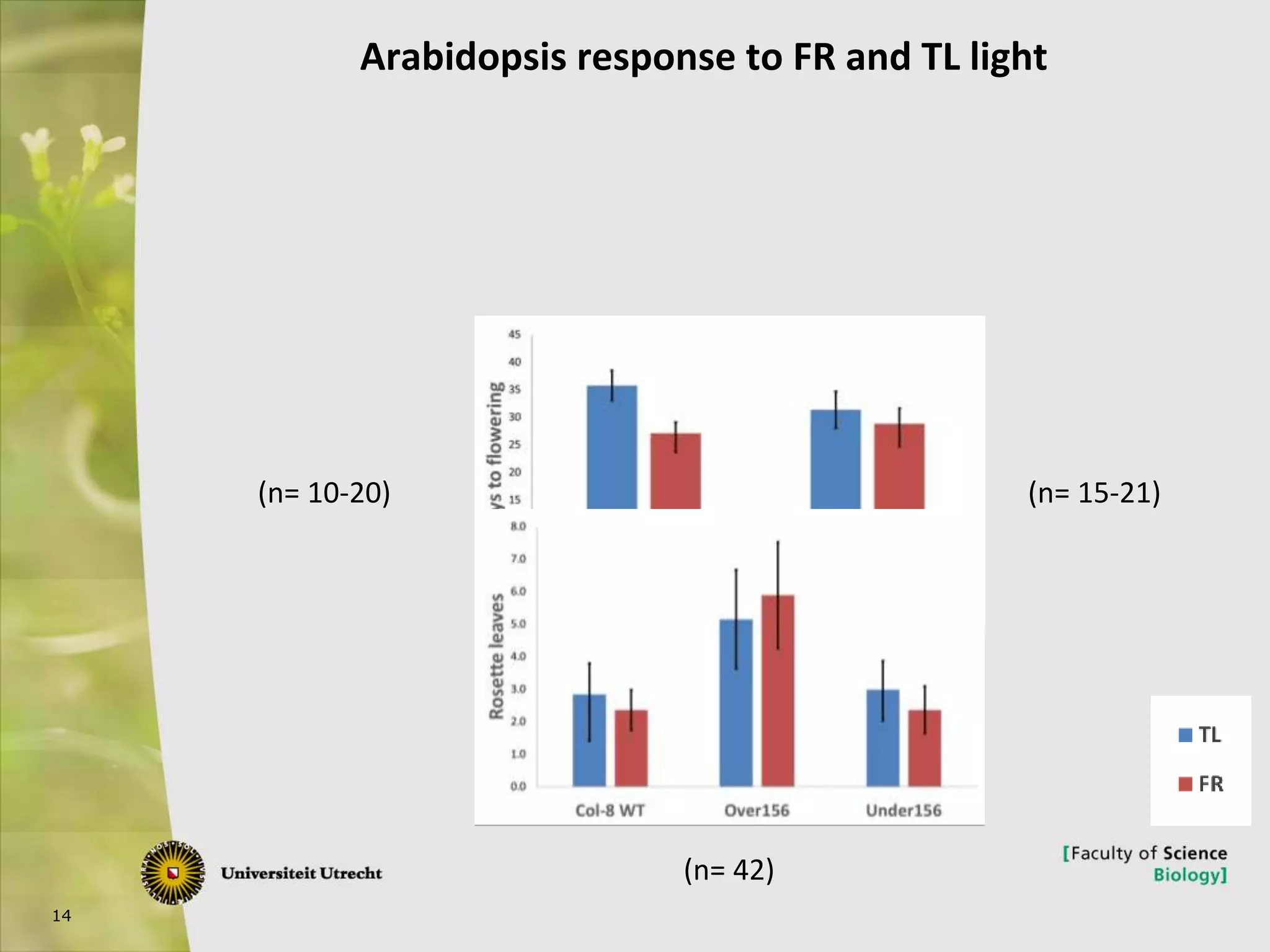
14
Arabidopsis response to FR and TL light
(n= 10-20) (n= 15-21)
(n= 42)
15
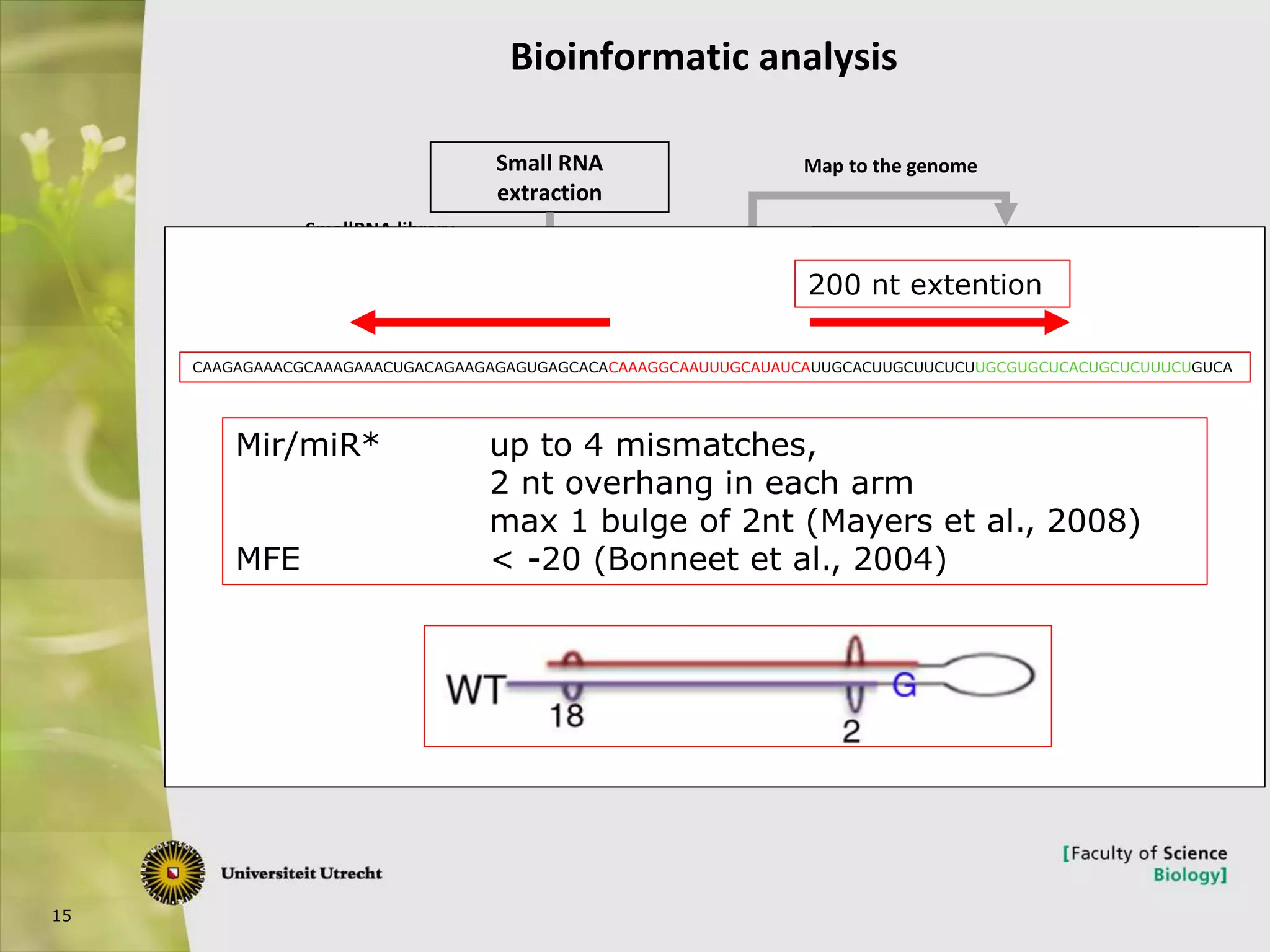
Bioinformatic analysis
mirna folding and
prediction
Small RNA
extraction
Small RNA Raw reads
SmallRNA library
preparation and
sequencing
Removal of low quality
reads, sequences without
primer and barcode
Trimmed Sequences
Mapped Reads
Map to the genome
miRNA candidates
identify homologous
miRNAs
Conserved miRNA
Novel miRNA
Exclude false candidates,
Introns, exons, other non-coding-RNA
CAAGAGAAACGCAAAGAAACUGACAGAAGAGAGUGAGCACACAAAGGCAAUUUGCAUAUCAUUGCACUUGCUUCUCUUGCGUGCUCACUGCUCUUUCUGUCA
200 nt extention
Mir/miR* up to 4 mismatches,
2 nt overhang in each arm
max 1 bulge of 2nt (Mayers et al., 2008)
MFE < -20 (Bonneet et al., 2004)
17
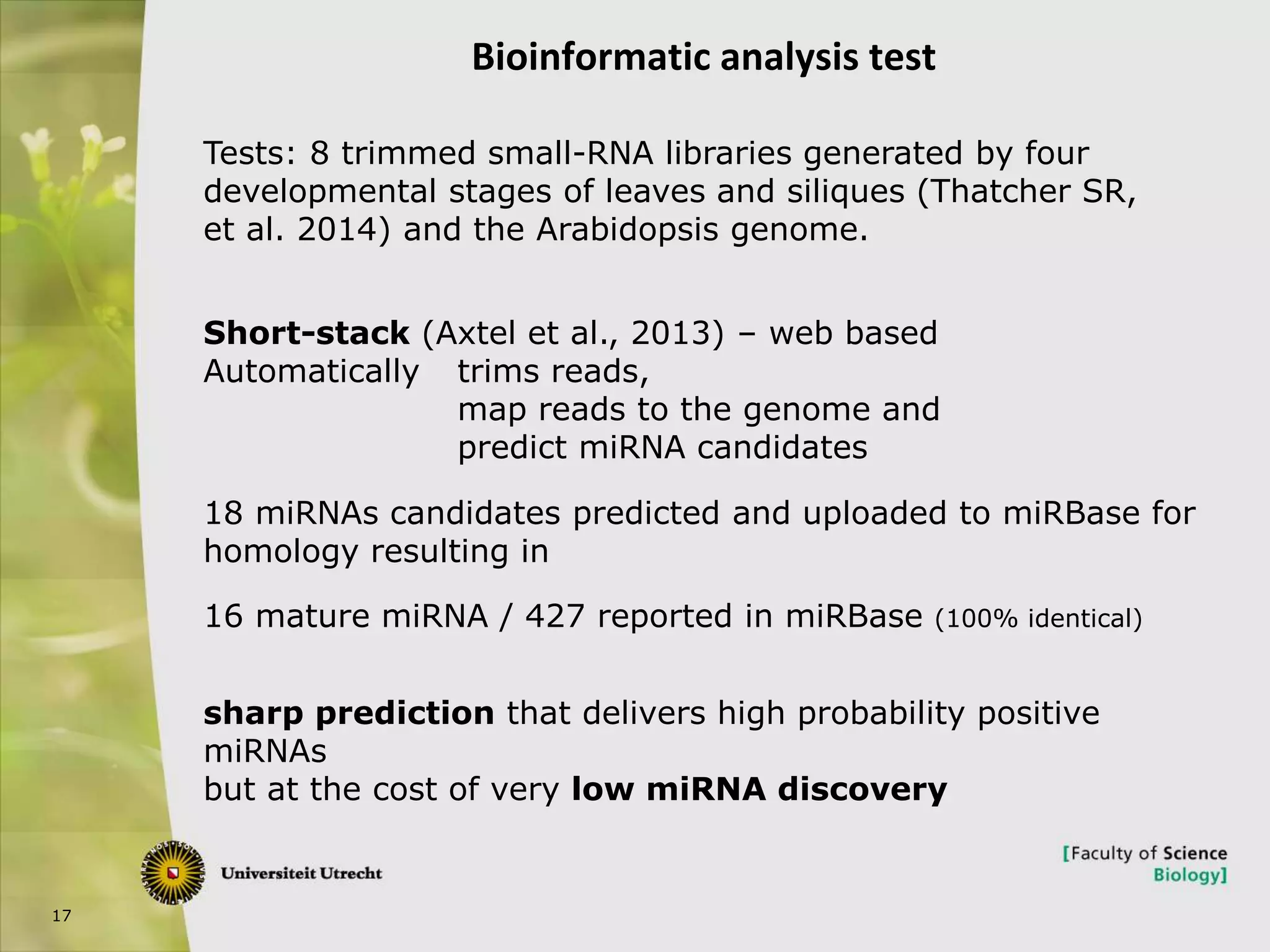
Bioinformatic analysis test
Tests: 8 trimmed small-RNA libraries generated by four
developmental stages of leaves and siliques (Thatcher SR,
et al. 2014) and the Arabidopsis genome.
Short-stack (Axtel et al., 2013) – web based
Automatically trims reads,
map reads to the genome and
predict miRNA candidates
18 miRNAs candidates predicted and uploaded to miRBase for
homology resulting in
16 mature miRNA / 427 reported in miRBase (100% identical)
sharp prediction that delivers high probability positive
miRNAs
but at the cost of very low miRNA discovery
18
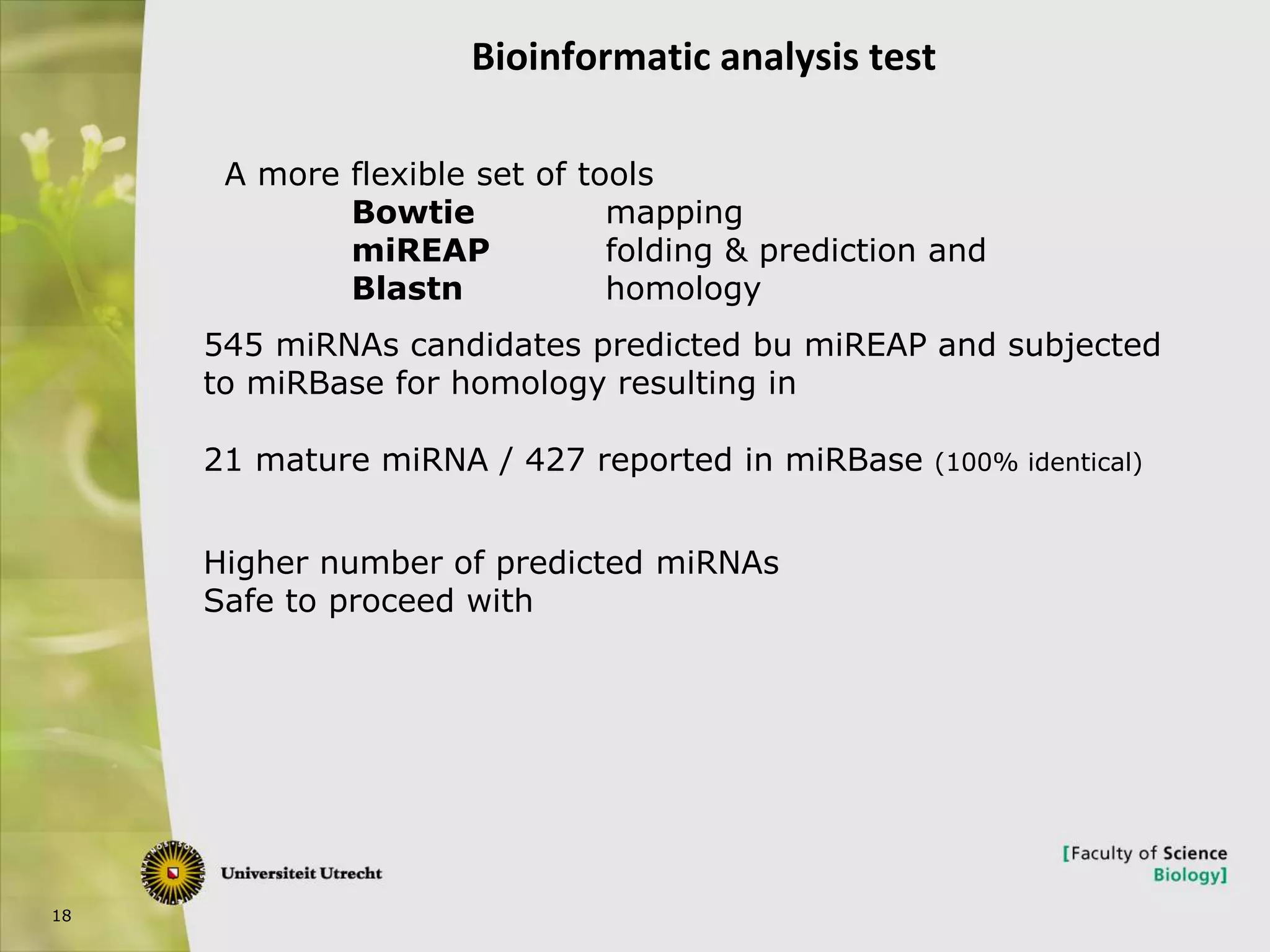
Bioinformatic analysis test
545 miRNAs candidates predicted bu miREAP and subjected
to miRBase for homology resulting in
21 mature miRNA / 427 reported in miRBase (100% identical)
A more flexible set of tools
Bowtie mapping
miREAP folding & prediction and
Blastn homology
Higher number of predicted miRNAs
Safe to proceed with
19
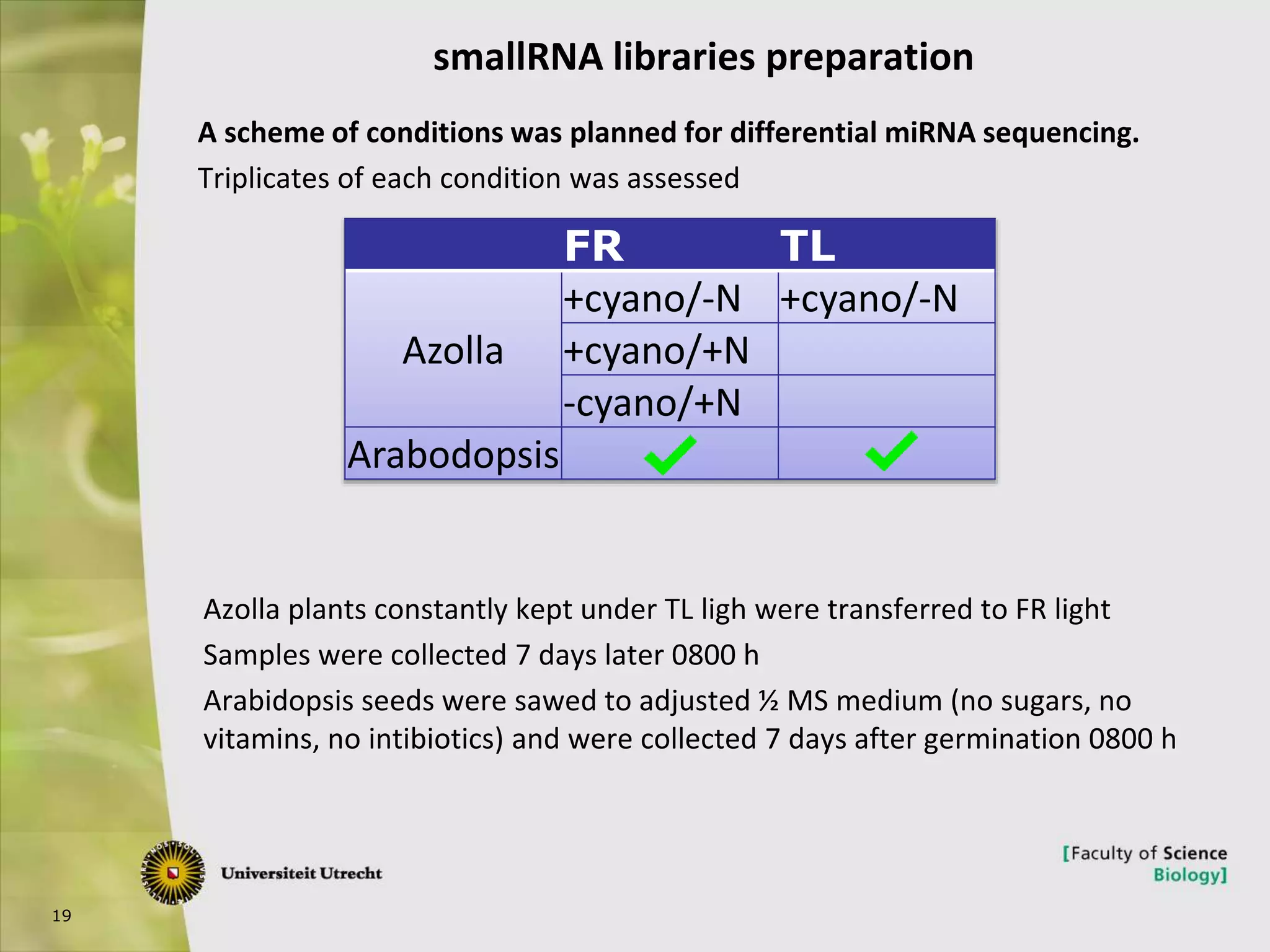
A scheme of conditions was planned for differential miRNA sequencing.
Triplicates of each condition was assessed
smallRNA libraries preparation
FR TL
Azolla
+cyano/-N +cyano/-N
+cyano/+N
-cyano/+N
Arabodopsis
Azolla plants constantly kept under TL ligh were transferred to FR light
Samples were collected 7 days later 0800 h
Arabidopsis seeds were sawed to adjusted ½ MS medium (no sugars, no
vitamins, no intibiotics) and were collected 7 days after germination 0800 h
20
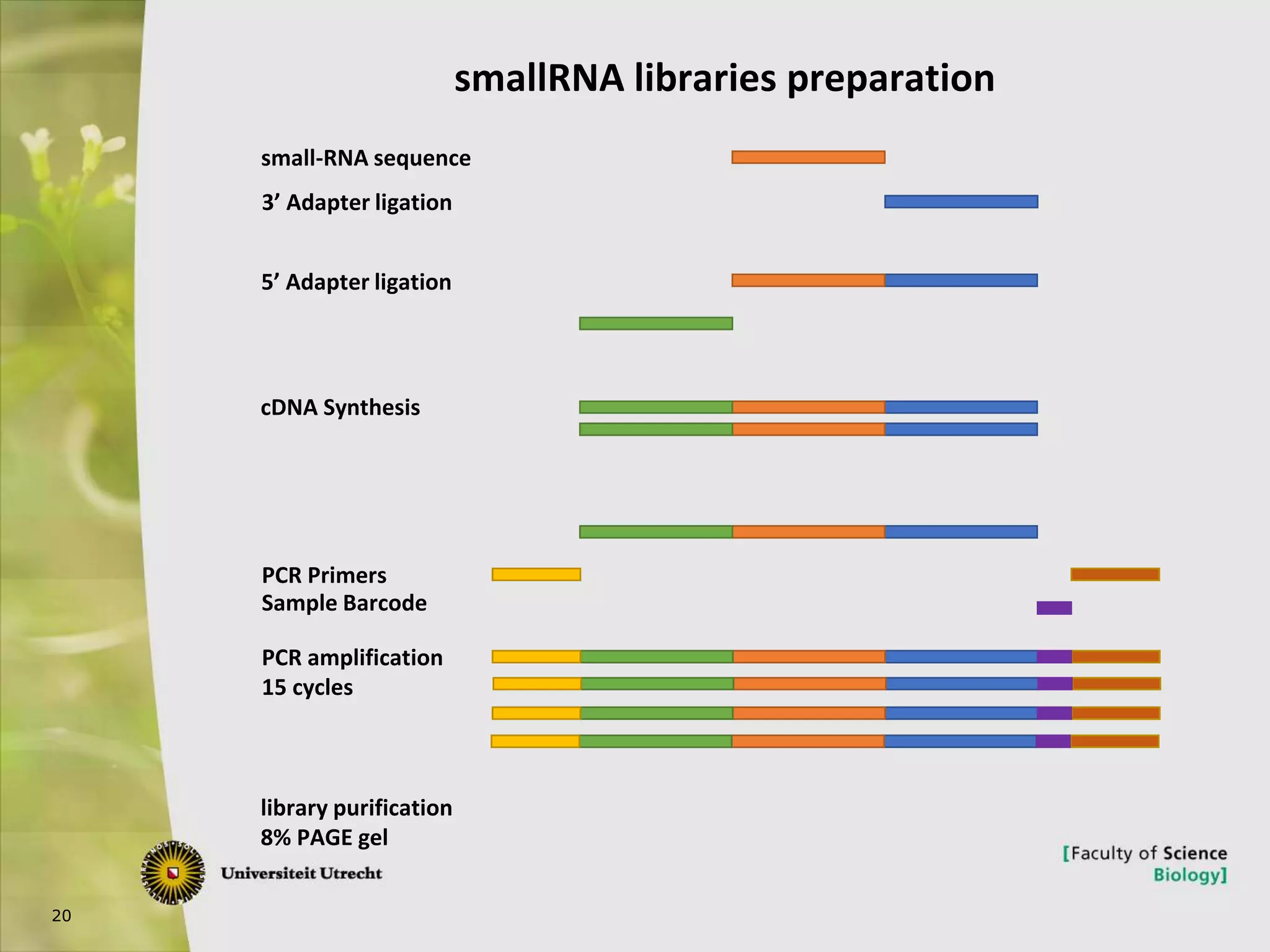
small-RNA sequence
5’ Adapter ligation
cDNA Synthesis
PCR amplification
15 cycles
PCR Primers
Sample Barcode
3’ Adapter ligation
library purification
8% PAGE gel
smallRNA libraries preparation
21
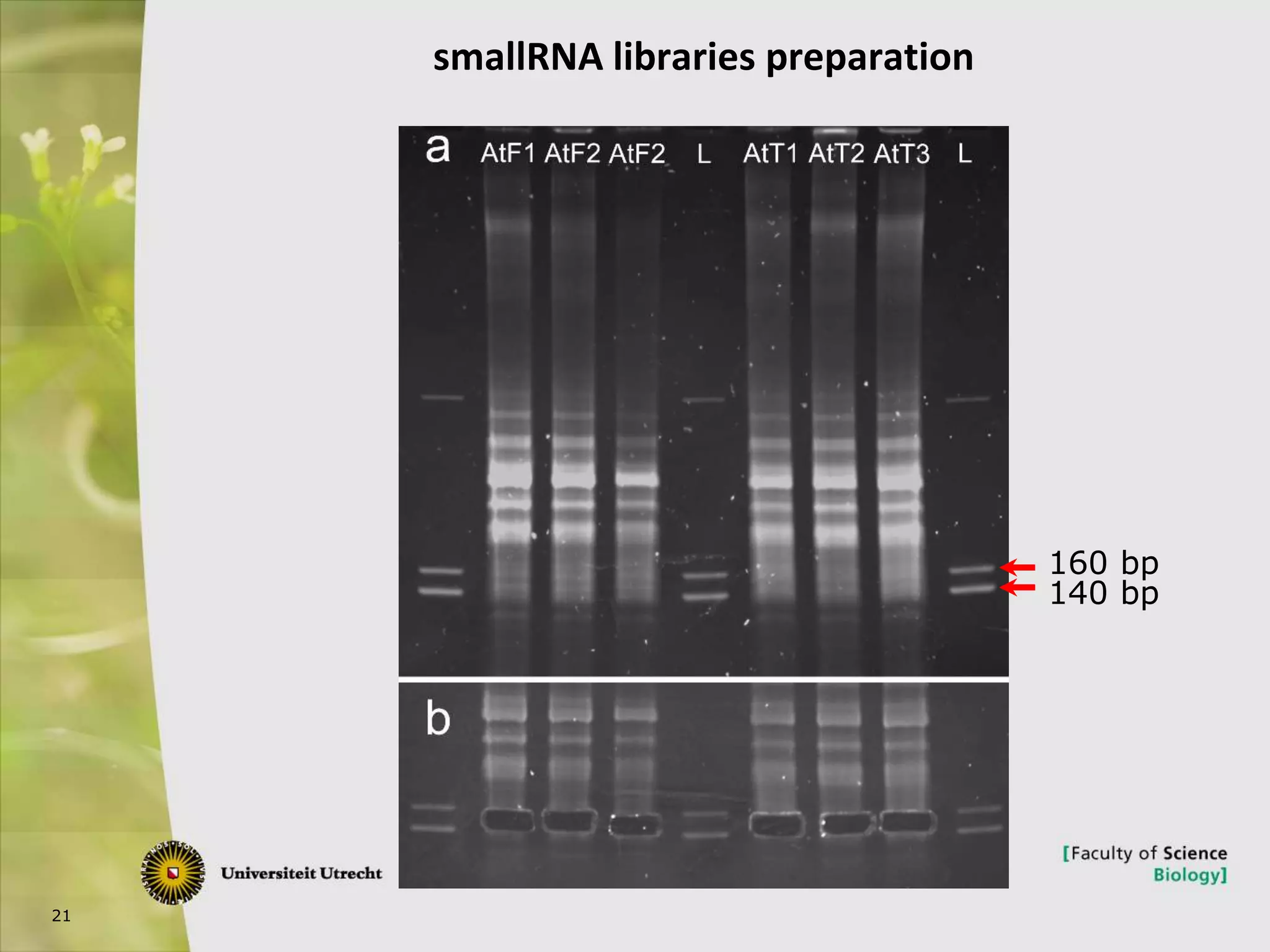
160 bp
140 bp
smallRNA libraries preparation
22
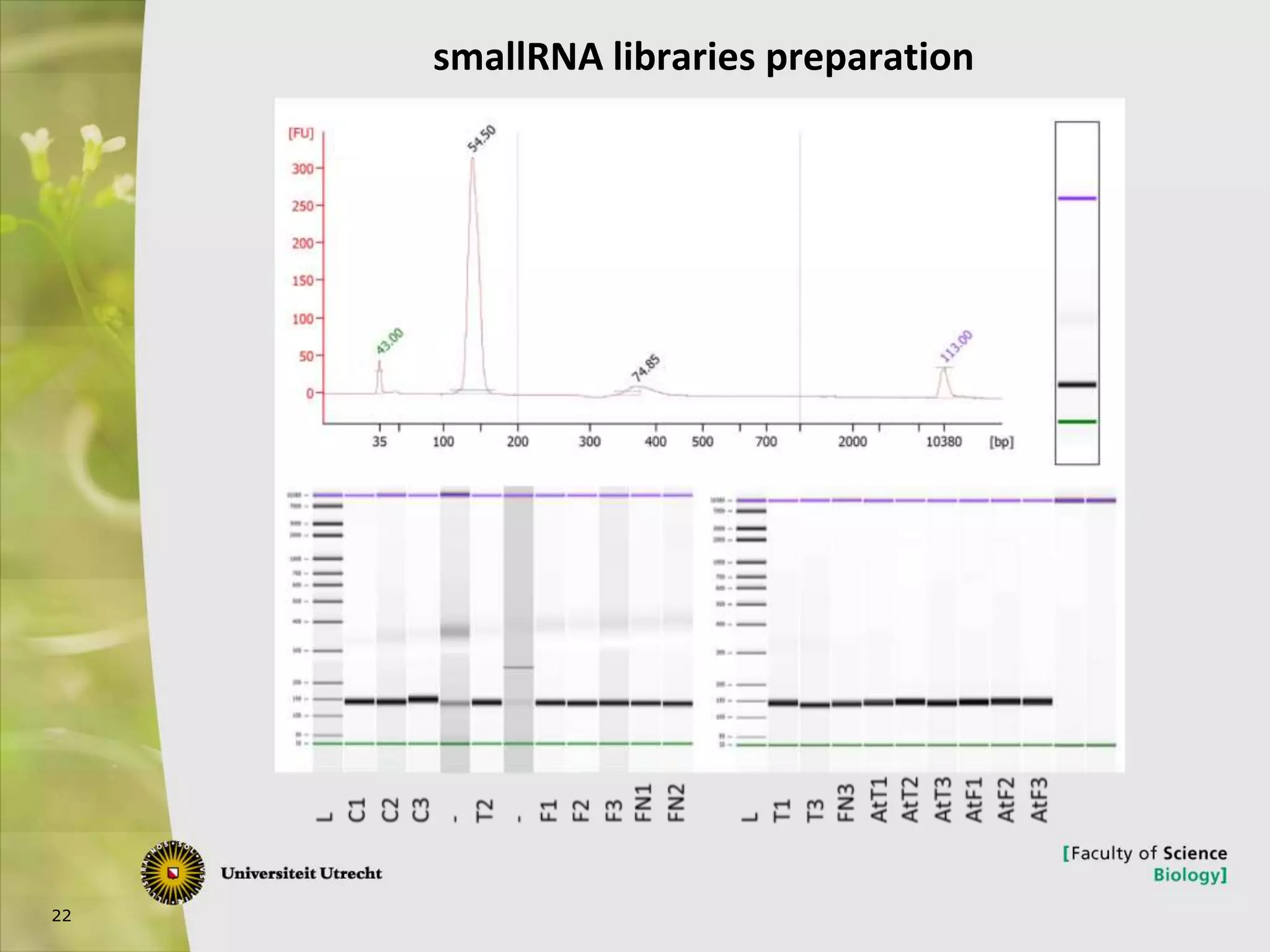
smallRNA libraries preparation
23
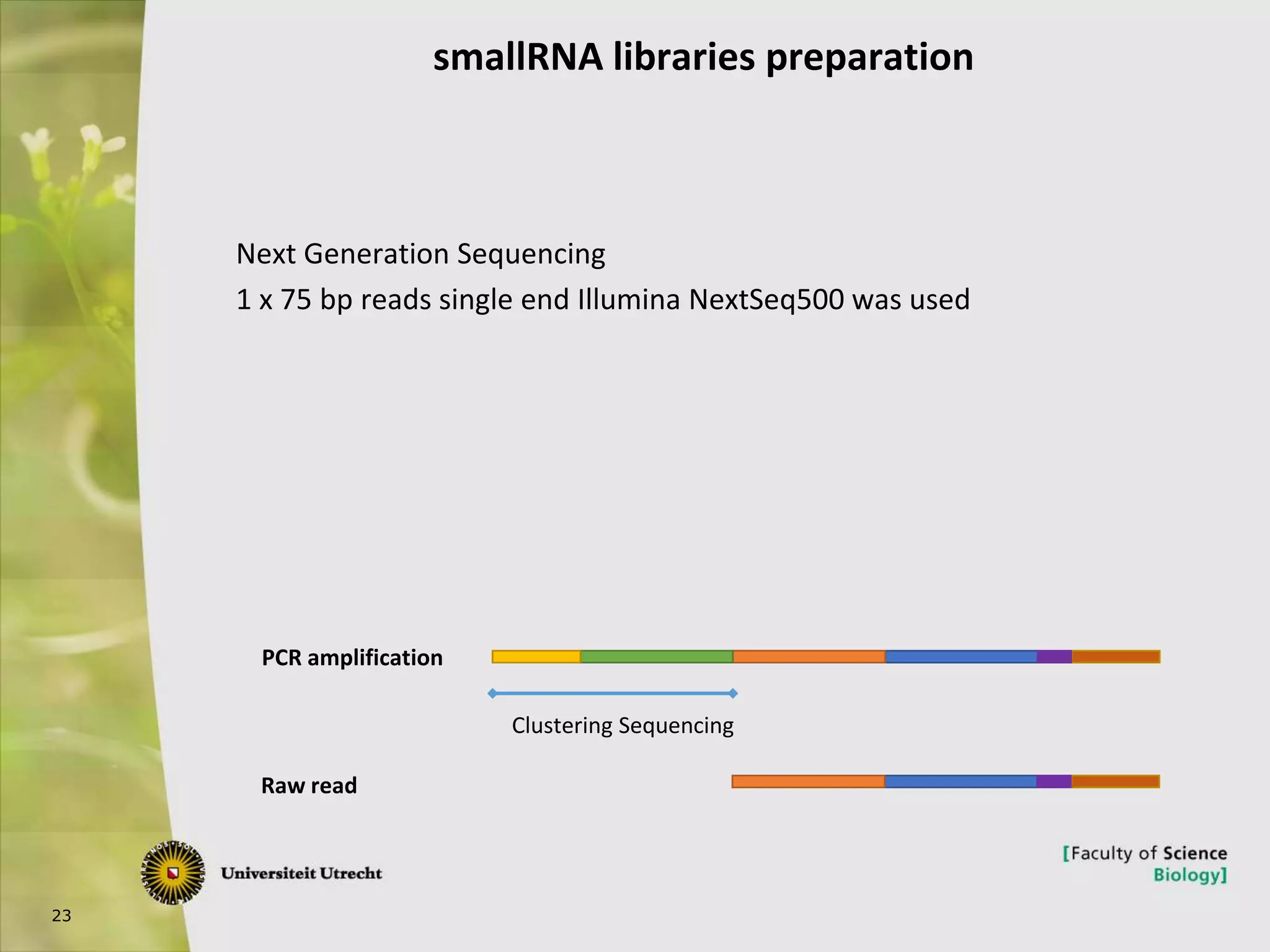
PCR amplification
Raw read
Clustering Sequencing
Next Generation Sequencing
1 x 75 bp reads single end Illumina NextSeq500 was used
smallRNA libraries preparation
24
Bioinformatic analysis
Small RNA extraction
Small RNA libraries
285,219,714 raw reads
SmallRNA library preparation
and sequencing
Removal of low quality reads,
sequences without primer and
barcode using Trimomatic
Trimmed Sequences
276,904,904 reads
165,891,928 total reads
21,935,456 unique reads
Discart sequences longer that
26 nt and shorter than 18nt
93,867,190 (83.69%) Azolla
52,285,210 (97.30%) Arabidopsis
mapped reads
Map to the genomes
using topHat
11,304 Azolla and
2,202 Arabidopsis
miRNA candidates
mirna prediction using
miRa
Blast against miRBase to
identify homologous
miRNAs
76,111 Azolla and
9,654 Arabidopsis miRNA
candidates
13 conserved miRNAs in Azolla and
35 in Arabidopsis
Exclude false candidates
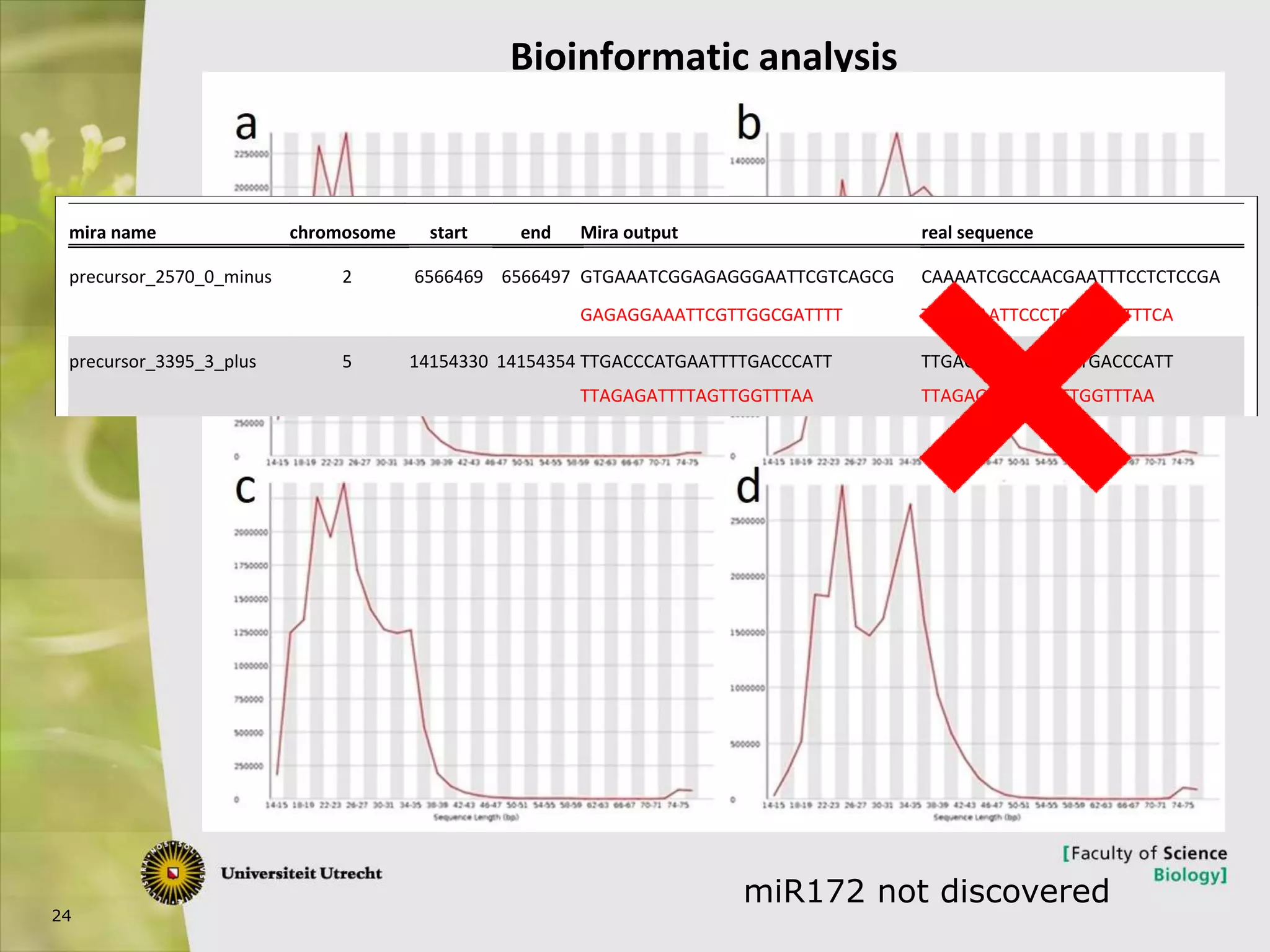
mira name chromosome start end Mira output real sequence
precursor_2570_0_minus 2 6566469 6566497 GTGAAATCGGAGAGGGAATTCGTCAGCG CAAAATCGCCAACGAATTTCCTCTCCGA
GAGAGGAAATTCGTTGGCGATTTT TGACGAATTCCCTCTCCGATTTCA
precursor_135_8_minus 3 1924211 1924236 AAGTGTACGAATCAAACCGTGAAAA AGTGTACGAATCAAACAGTGAAAAA
TTCACTGTTTGATTCGTACACTTA TCACGGTTTGATTCGTACACTTGG
precursor_5410_2_minus 1 29244151 29244170 GCAGCCACTGTAAATAAGT ACATTTTTGCAGCCACTTT
ATTTCACAAAGTGGCTGCAAA AGTTGAGACTTATTTACAGTG
precursor_3395_3_plus 5 14154330 14154354 TTGACCCATGAATTTTGACCCATT TTGACCCATGAATTTTGACCCATT
TTAGAGATTTTAGTTGGTTTAA TTAGAGATTTTAGTTGGTTTAA
precursor_2621_0_plus 2 6612085 6612110 AGAGCCGGTTGTTGGAGAGTTGGTC AGAGCCGGTTGTTGGAGAGTTGGTC
TCAACTCTCCAACAACCGGCTCTAC TCAACTCTCCAACAACCGGCTCTAC
mira name chromosome start end Mira output real sequence
precursor_2570_0_minus 2 6566469 6566497 GTGAAATCGGAGAGGGAATTCGTCAGCG CAAAATCGCCAACGAATTTCCTCTCCGA
GAGAGGAAATTCGTTGGCGATTTT TGACGAATTCCCTCTCCGATTTCA
precursor_135_8_minus 3 1924211 1924236 AAGTGTACGAATCAAACCGTGAAAA AGTGTACGAATCAAACAGTGAAAAA
TTCACTGTTTGATTCGTACACTTA TCACGGTTTGATTCGTACACTTGG
precursor_5410_2_minus 1 29244151 29244170 GCAGCCACTGTAAATAAGT ACATTTTTGCAGCCACTTT
ATTTCACAAAGTGGCTGCAAA AGTTGAGACTTATTTACAGTG
precursor_3395_3_plus 5 14154330 14154354 TTGACCCATGAATTTTGACCCATT TTGACCCATGAATTTTGACCCATT
TTAGAGATTTTAGTTGGTTTAA TTAGAGATTTTAGTTGGTTTAA
precursor_2621_0_plus 2 6612085 6612110 AGAGCCGGTTGTTGGAGAGTTGGTC AGAGCCGGTTGTTGGAGAGTTGGTC
TCAACTCTCCAACAACCGGCTCTAC TCAACTCTCCAACAACCGGCTCTAC
mira name chromosome start end Mira output real sequence
precursor_2570_0_minus 2 6566469 6566497 GTGAAATCGGAGAGGGAATTCGTCAGCG CAAAATCGCCAACGAATTTCCTCTCCGA
GAGAGGAAATTCGTTGGCGATTTT TGACGAATTCCCTCTCCGATTTCA
precursor_135_8_minus 3 1924211 1924236 AAGTGTACGAATCAAACCGTGAAAA AGTGTACGAATCAAACAGTGAAAAA
TTCACTGTTTGATTCGTACACTTA TCACGGTTTGATTCGTACACTTGG
precursor_5410_2_minus 1 29244151 29244170 GCAGCCACTGTAAATAAGT ACATTTTTGCAGCCACTTT
ATTTCACAAAGTGGCTGCAAA AGTTGAGACTTATTTACAGTG
precursor_3395_3_plus 5 14154330 14154354 TTGACCCATGAATTTTGACCCATT TTGACCCATGAATTTTGACCCATT
TTAGAGATTTTAGTTGGTTTAA TTAGAGATTTTAGTTGGTTTAA
precursor_2621_0_plus 2 6612085 6612110 AGAGCCGGTTGTTGGAGAGTTGGTC AGAGCCGGTTGTTGGAGAGTTGGTC
TCAACTCTCCAACAACCGGCTCTAC TCAACTCTCCAACAACCGGCTCTAC
miR172 not discovered
25
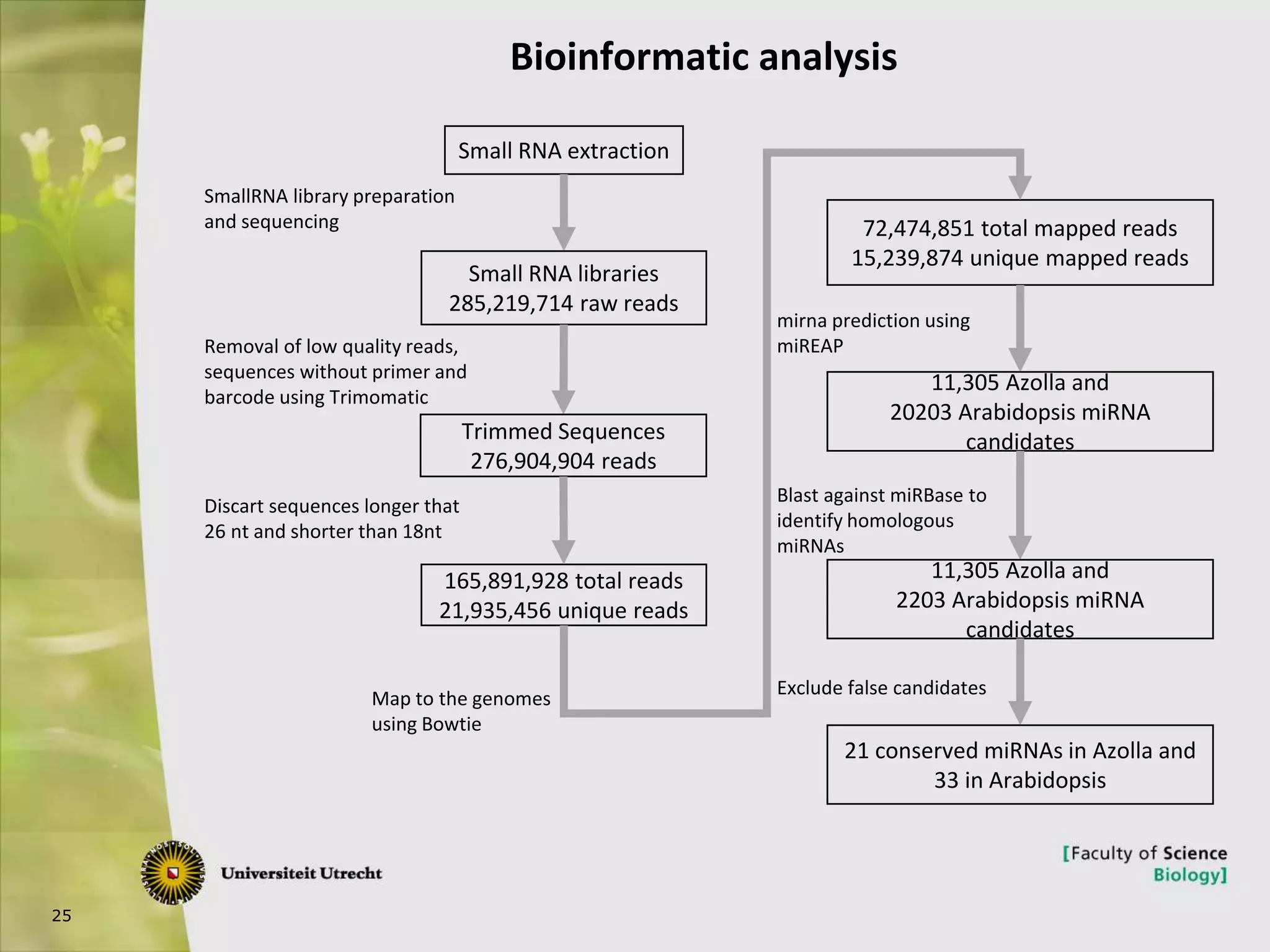
Bioinformatic analysis
Small RNA extraction
Small RNA libraries
285,219,714 raw reads
SmallRNA library preparation
and sequencing
Removal of low quality reads,
sequences without primer and
barcode using Trimomatic
Trimmed Sequences
276,904,904 reads
165,891,928 total reads
21,935,456 unique reads
Discart sequences longer that
26 nt and shorter than 18nt
72,474,851 total mapped reads
15,239,874 unique mapped reads
Map to the genomes
using Bowtie
11,305 Azolla and
20203 Arabidopsis miRNA
candidates
mirna prediction using
miREAP
Blast against miRBase to
identify homologous
miRNAs
11,305 Azolla and
2203 Arabidopsis miRNA
candidates
21 conserved miRNAs in Azolla and
33 in Arabidopsis
Exclude false candidates
26
Bioinformatic analysis
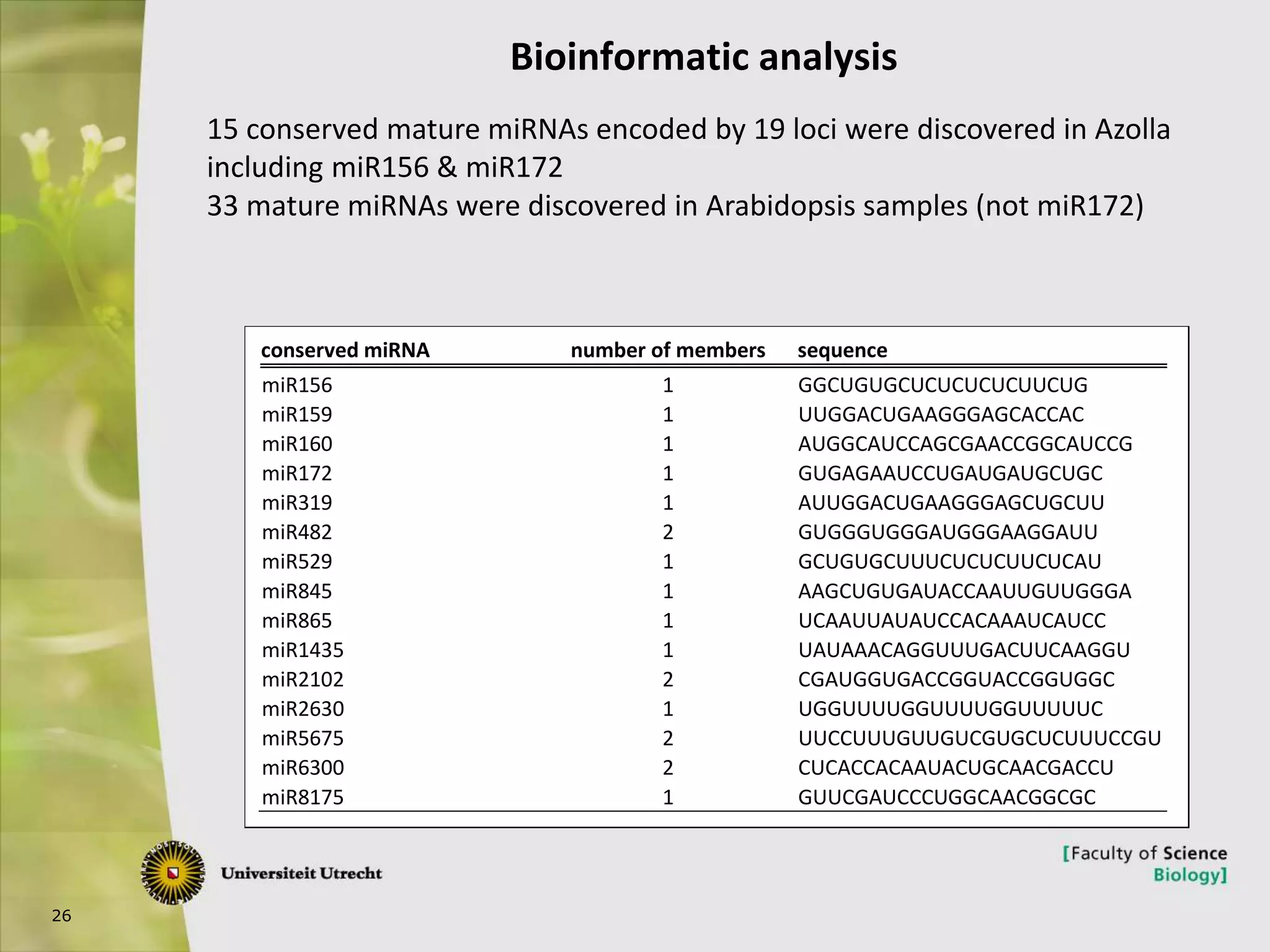
conserved miRNA number of members sequence
miR156 1 GGCUGUGCUCUCUCUCUUCUG
miR159 1 UUGGACUGAAGGGAGCACCAC
miR160 1 AUGGCAUCCAGCGAACCGGCAUCCG
miR172 1 GUGAGAAUCCUGAUGAUGCUGC
miR319 1 AUUGGACUGAAGGGAGCUGCUU
miR482 2 GUGGGUGGGAUGGGAAGGAUU
miR529 1 GCUGUGCUUUCUCUCUUCUCAU
miR845 1 AAGCUGUGAUACCAAUUGUUGGGA
miR865 1 UCAAUUAUAUCCACAAAUCAUCC
miR1435 1 UAUAAACAGGUUUGACUUCAAGGU
miR2102 2 CGAUGGUGACCGGUACCGGUGGC
miR2630 1 UGGUUUUGGUUUUGGUUUUUC
miR5675 2 UUCCUUUGUUGUCGUGCUCUUUCCGU
miR6300 2 CUCACCACAAUACUGCAACGACCU
miR8175 1 GUUCGAUCCCUGGCAACGGCGC
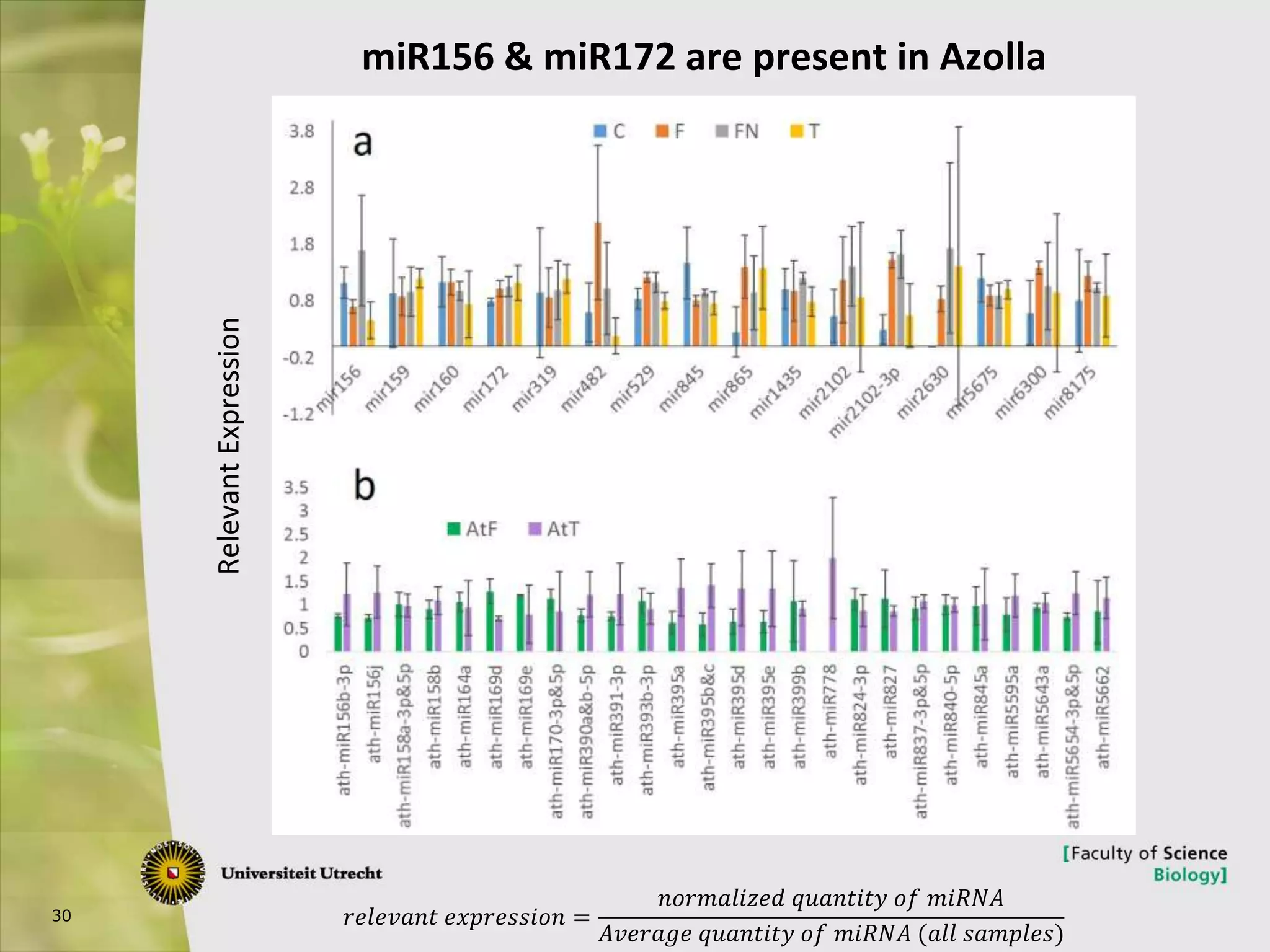
15 conserved mature miRNAs encoded by 19 loci were discovered in Azolla
including miR156 & miR172
33 mature miRNAs were discovered in Arabidopsis samples (not miR172)
27
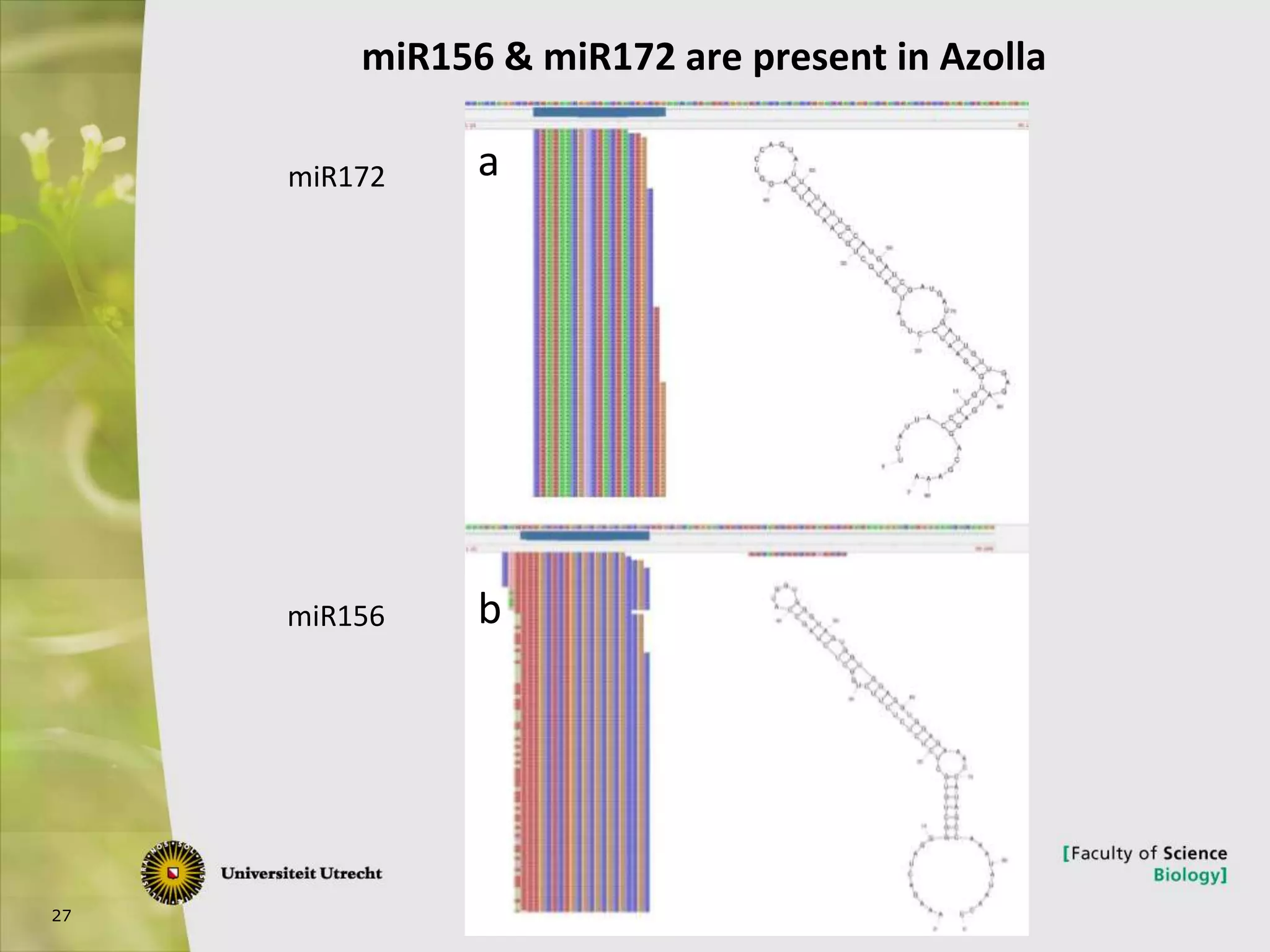
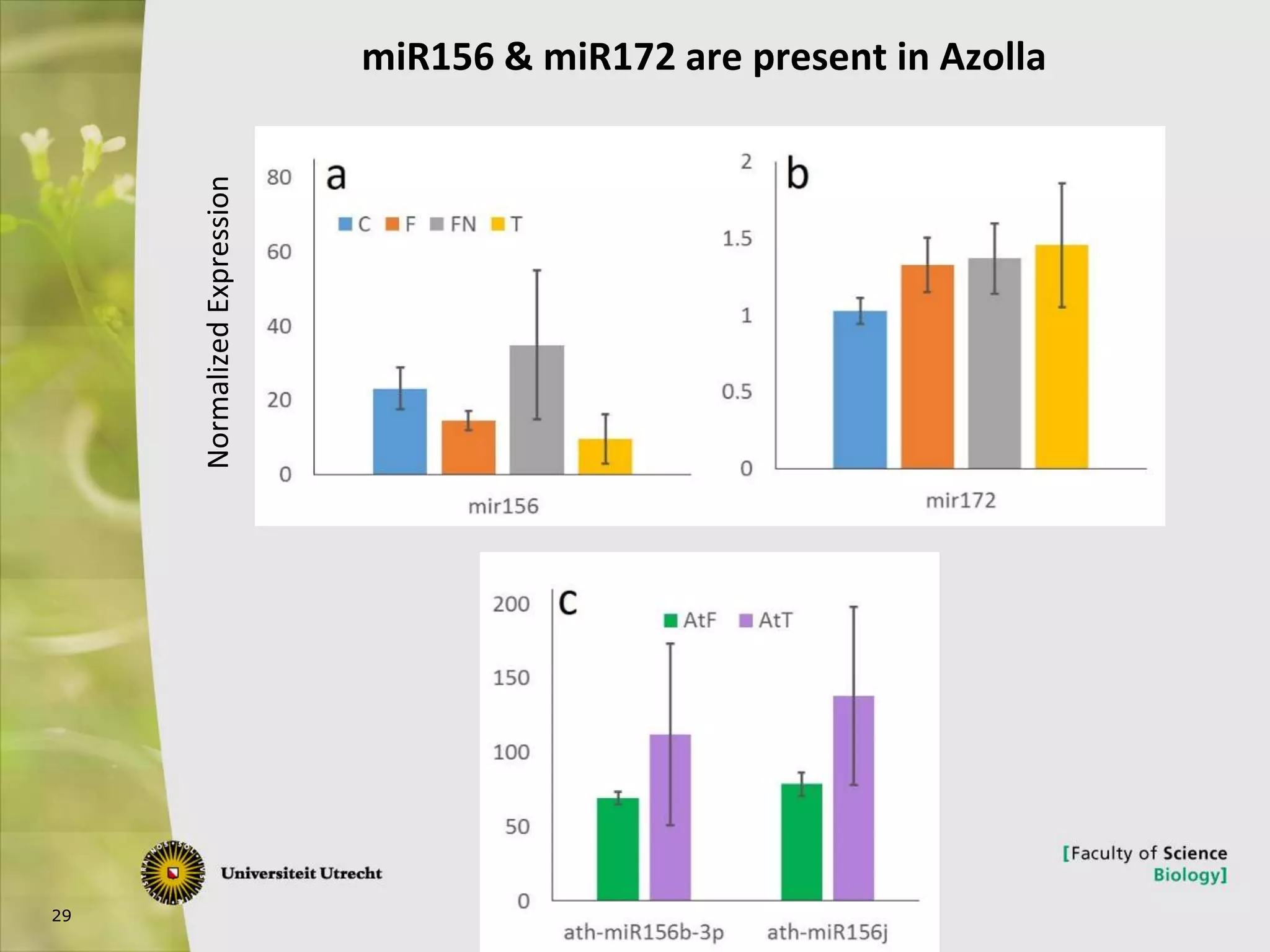
miR156 & miR172 are present in Azolla
a
b
miR172
miR156
28
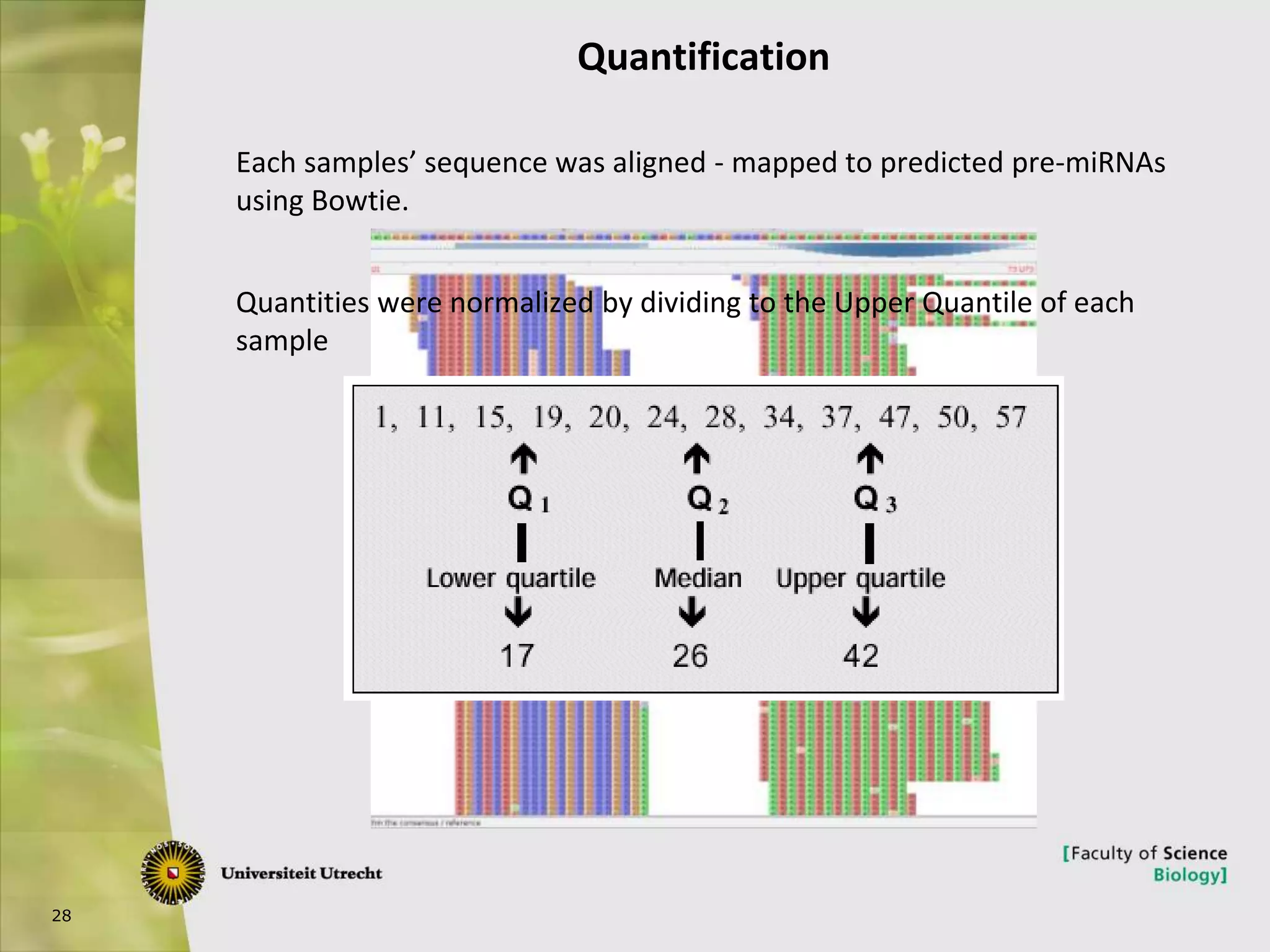
Quantification
Each samples’ sequence was aligned - mapped to predicted pre-miRNAs
using Bowtie.
Quantities were normalized by dividing to the Upper Quantile of each
sample
29
miR156 & miR172 are present in Azolla
NormalizedExpression
30
miR156 & miR172 are present in Azolla
𝑟𝑒𝑙𝑒𝑣𝑎𝑛𝑡 𝑒𝑥𝑝𝑟𝑒𝑠𝑠𝑖𝑜𝑛 =
𝑛𝑜𝑟𝑚𝑎𝑙𝑖𝑧𝑒𝑑 𝑞𝑢𝑎𝑛𝑡𝑖𝑡𝑦 𝑜𝑓 𝑚𝑖𝑅𝑁𝐴
𝐴𝑣𝑒𝑟𝑎𝑔𝑒 𝑞𝑢𝑎𝑛𝑡𝑖𝑡𝑦 𝑜𝑓 𝑚𝑖𝑅𝑁𝐴 (𝑎𝑙𝑙 𝑠𝑎𝑚𝑝𝑙𝑒𝑠)
RelevantExpression
31
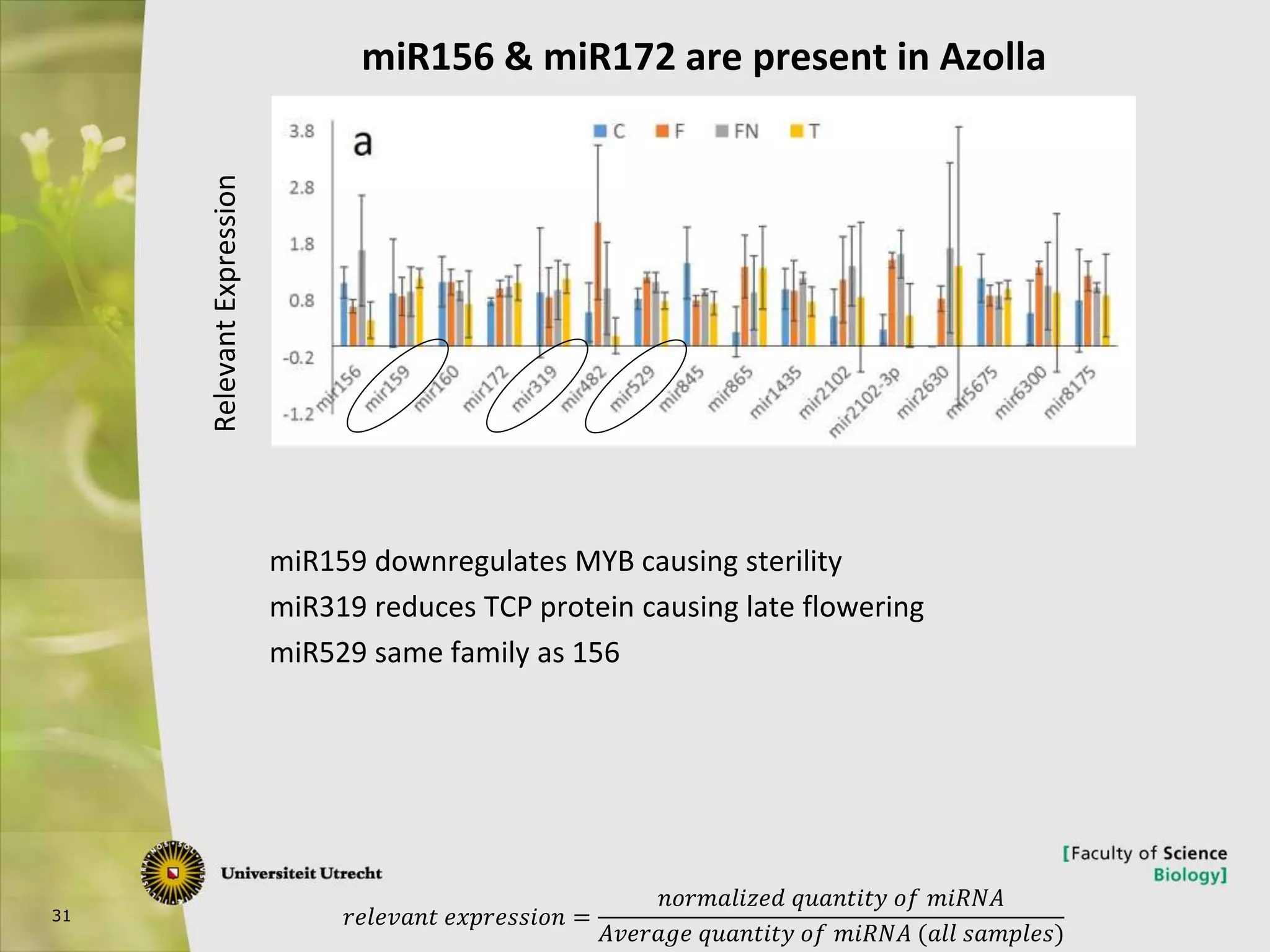
miR156 & miR172 are present in Azolla
𝑟𝑒𝑙𝑒𝑣𝑎𝑛𝑡 𝑒𝑥𝑝𝑟𝑒𝑠𝑠𝑖𝑜𝑛 =
𝑛𝑜𝑟𝑚𝑎𝑙𝑖𝑧𝑒𝑑 𝑞𝑢𝑎𝑛𝑡𝑖𝑡𝑦 𝑜𝑓 𝑚𝑖𝑅𝑁𝐴
𝐴𝑣𝑒𝑟𝑎𝑔𝑒 𝑞𝑢𝑎𝑛𝑡𝑖𝑡𝑦 𝑜𝑓 𝑚𝑖𝑅𝑁𝐴 (𝑎𝑙𝑙 𝑠𝑎𝑚𝑝𝑙𝑒𝑠)
RelevantExpression
miR159 downregulates MYB causing sterility
miR319 reduces TCP protein causing late flowering
miR529 same family as 156
32
miR156 & miR172 are present in Azolla
ὁ ἀνεξέταστος βίος οὐ βιωτὸς ἀνθρώπῳ
The unexamined life is not worth living
Σωκρατης απολογία
33
miR156 & miR172 are present in Azolla
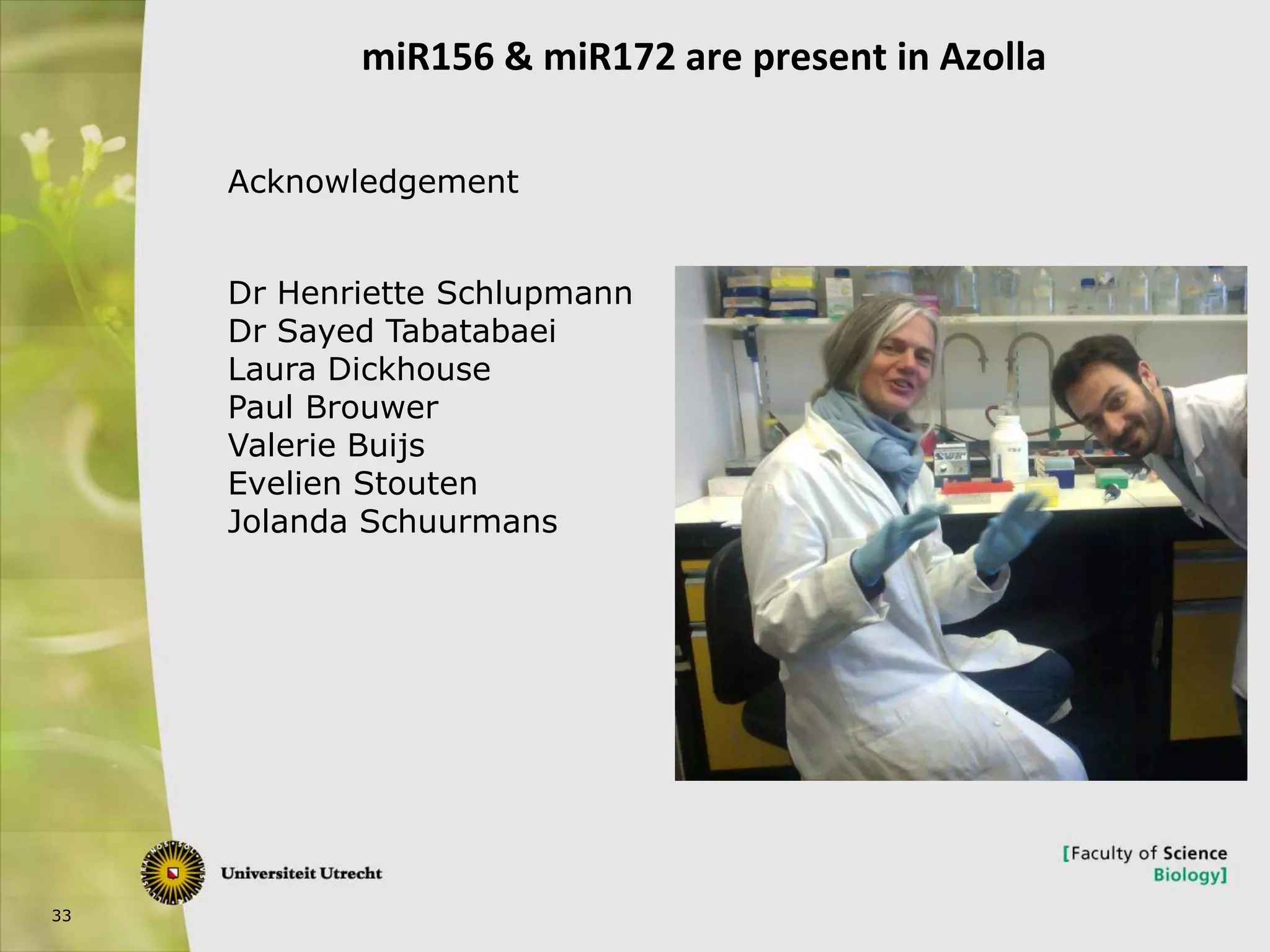
Acknowledgement
Dr Henriette Schlupmann
Dr Sayed Tabatabaei
Laura Dickhouse
Paul Brouwer
Valerie Buijs
Evelien Stouten
Jolanda Schuurmans
34
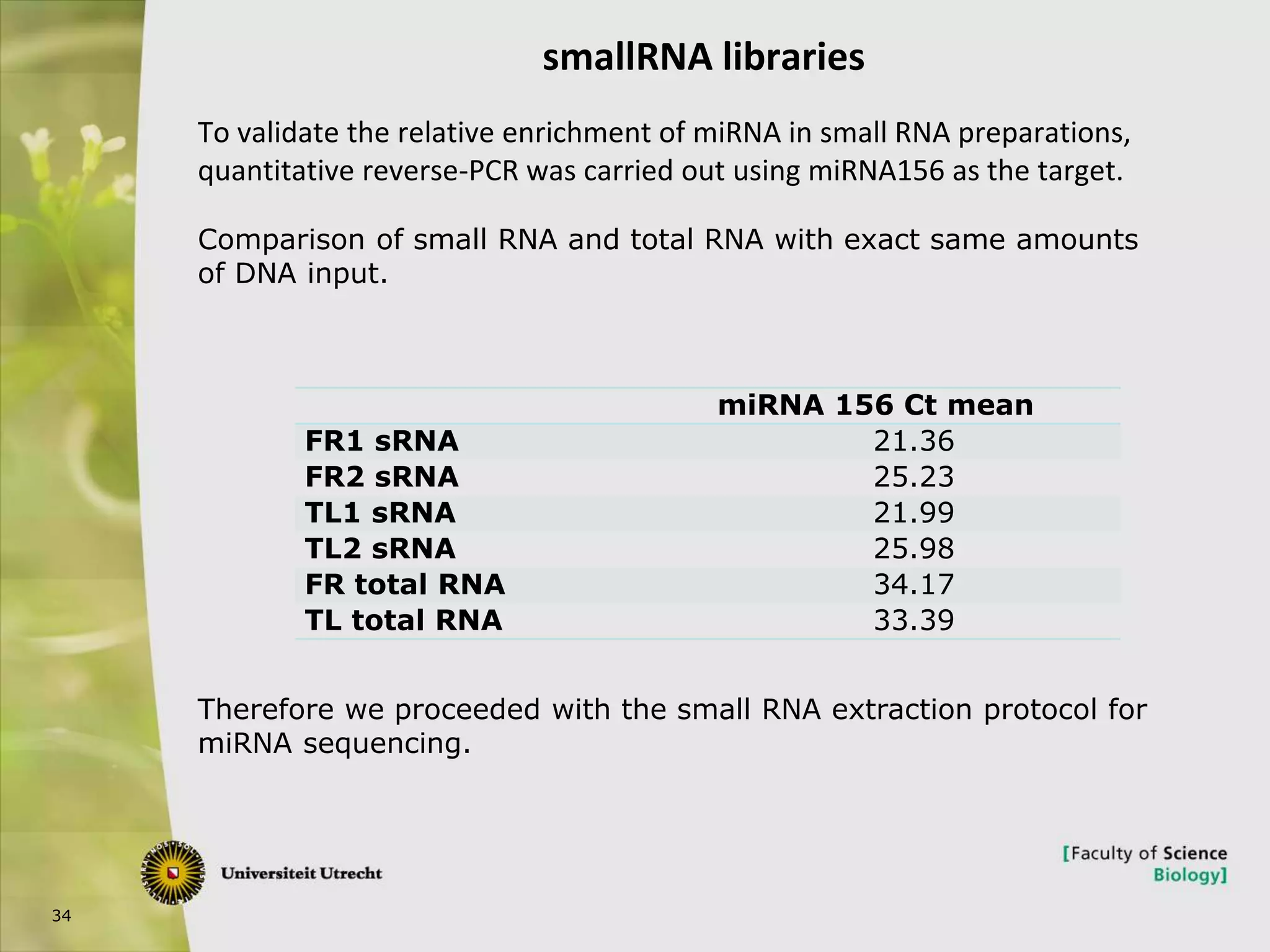
To validate the relative enrichment of miRNA in small RNA preparations,
quantitative reverse-PCR was carried out using miRNA156 as the target.
smallRNA libraries
miRNA 156 Ct mean
FR1 sRNA 21.36
FR2 sRNA 25.23
TL1 sRNA 21.99
TL2 sRNA 25.98
FR total RNA 34.17
TL total RNA 33.39
Comparison of small RNA and total RNA with exact same amounts
of DNA input.
Therefore we proceeded with the small RNA extraction protocol for
miRNA sequencing.

final presentation Zangos

  • 1.
    1 Control of thereproductive cycle in Azolla filiculoides 2015-2016 Internship Thursday 08/09/2016 Georgos Zangos
  • 2.
    2 Azolla filiculoides Lam Azollafiliculoides is a fern that harbors symbiotic nitrogen-fixing cyanobacteria. Azolla grows free-floating on freshwater. Image from the Ecolink website. http://ecolinc.vic.edu.au/sites/default/files/uploaded_files/discovering_wetlands/galler y/view/141-1073.html Azolla (left) and its endosymbiont Anabaena (right). Image courtesy of the University of Wisconsin’s Department of Botany website. http://botit.botany.wisc.edu/Resources/Botany/Bacteria/Anabaena/ http://theazollafoundation.org/azolla/the-azolla-anabaena-symbiosis-2/
  • 3.
    3 It occurs inponds, ditches and paddy fields of warm-temperate and tropical regions throughout the world (Lumpkin 1980) http://www.au.all.biz/azolla-filiculoides-red-azolla- g13190#.VmbeOLgrLcs Azolla filiculoides Lam
  • 4.
    4 Azolla filiculoides Lam Theagronomic potential of Azolla has long been recognized in Southeast Asia as a biological nitrogen fertilizer for rice cultivation (Moore, 1969). http://anupamfolkrice.blogspot.nl/2014/09/mr- purnendu-basu-agriculture-minister.html
  • 5.
    5 Azolla filiculoides Lam Azollawas also used as a protein supplement for animal feeding (Becerra et al., 1990), (Leterme et al., 2010) http://dhartiputrakisansewa.blogspot.co.uk/
  • 6.
    6 Azolla filiculoides Lam oras biomass for biofuel, partially replacing soybean in tropical and temperate countries with sufficient water (Hossain et al., 2011). https://kenaseka.wordpress.com/
  • 7.
    8 Control over Azollasexual reproduction will be of paramount importance for disseminating existing varieties or breed new varieties. The Azolla genome has been sequenced and a 37649 unigene database covers metabolism, cellular processes and regulatory networks. 165 unigenes were similar to Arabidopsis thaliana genes involved in flowering. Brouwer et al. 2013 miRNA 156 and 172 that control the transition to sexual development in seed plants have been reported in ferns but their role in the induction of sporulation remains unknown. The repertoire of fern miRNA is also entirely unknown. Domestication of Azolla
  • 8.
  • 9.
  • 10.
  • 11.
    12 Nitrogen in themedium represses sporulation.
  • 12.
    13 Nitrogen in themedium represses sporulation. sample pH at DAY36 -N I 6,00 -N II 6,09 -N III 6,21 +N I 3,72 +N II 3,66 +N III 3,62 NH4 I 4,04 NH4 II 3,73 NH4 III 3,86 NO3 I 7,14 NO3 II 7,38 NO3 III 7,57
  • 13.
    14 Arabidopsis response toFR and TL light (n= 10-20) (n= 15-21) (n= 42)
  • 14.
    15 Bioinformatic analysis mirna foldingand prediction Small RNA extraction Small RNA Raw reads SmallRNA library preparation and sequencing Removal of low quality reads, sequences without primer and barcode Trimmed Sequences Mapped Reads Map to the genome miRNA candidates identify homologous miRNAs Conserved miRNA Novel miRNA Exclude false candidates, Introns, exons, other non-coding-RNA CAAGAGAAACGCAAAGAAACUGACAGAAGAGAGUGAGCACACAAAGGCAAUUUGCAUAUCAUUGCACUUGCUUCUCUUGCGUGCUCACUGCUCUUUCUGUCA 200 nt extention Mir/miR* up to 4 mismatches, 2 nt overhang in each arm max 1 bulge of 2nt (Mayers et al., 2008) MFE < -20 (Bonneet et al., 2004)
  • 15.
    17 Bioinformatic analysis test Tests:8 trimmed small-RNA libraries generated by four developmental stages of leaves and siliques (Thatcher SR, et al. 2014) and the Arabidopsis genome. Short-stack (Axtel et al., 2013) – web based Automatically trims reads, map reads to the genome and predict miRNA candidates 18 miRNAs candidates predicted and uploaded to miRBase for homology resulting in 16 mature miRNA / 427 reported in miRBase (100% identical) sharp prediction that delivers high probability positive miRNAs but at the cost of very low miRNA discovery
  • 16.
    18 Bioinformatic analysis test 545miRNAs candidates predicted bu miREAP and subjected to miRBase for homology resulting in 21 mature miRNA / 427 reported in miRBase (100% identical) A more flexible set of tools Bowtie mapping miREAP folding & prediction and Blastn homology Higher number of predicted miRNAs Safe to proceed with
  • 17.
    19 A scheme ofconditions was planned for differential miRNA sequencing. Triplicates of each condition was assessed smallRNA libraries preparation FR TL Azolla +cyano/-N +cyano/-N +cyano/+N -cyano/+N Arabodopsis Azolla plants constantly kept under TL ligh were transferred to FR light Samples were collected 7 days later 0800 h Arabidopsis seeds were sawed to adjusted ½ MS medium (no sugars, no vitamins, no intibiotics) and were collected 7 days after germination 0800 h
  • 18.
    20 small-RNA sequence 5’ Adapterligation cDNA Synthesis PCR amplification 15 cycles PCR Primers Sample Barcode 3’ Adapter ligation library purification 8% PAGE gel smallRNA libraries preparation
  • 19.
    21 160 bp 140 bp smallRNAlibraries preparation
  • 20.
  • 21.
    23 PCR amplification Raw read ClusteringSequencing Next Generation Sequencing 1 x 75 bp reads single end Illumina NextSeq500 was used smallRNA libraries preparation
  • 22.
    24 Bioinformatic analysis Small RNAextraction Small RNA libraries 285,219,714 raw reads SmallRNA library preparation and sequencing Removal of low quality reads, sequences without primer and barcode using Trimomatic Trimmed Sequences 276,904,904 reads 165,891,928 total reads 21,935,456 unique reads Discart sequences longer that 26 nt and shorter than 18nt 93,867,190 (83.69%) Azolla 52,285,210 (97.30%) Arabidopsis mapped reads Map to the genomes using topHat 11,304 Azolla and 2,202 Arabidopsis miRNA candidates mirna prediction using miRa Blast against miRBase to identify homologous miRNAs 76,111 Azolla and 9,654 Arabidopsis miRNA candidates 13 conserved miRNAs in Azolla and 35 in Arabidopsis Exclude false candidates mira name chromosome start end Mira output real sequence precursor_2570_0_minus 2 6566469 6566497 GTGAAATCGGAGAGGGAATTCGTCAGCG CAAAATCGCCAACGAATTTCCTCTCCGA GAGAGGAAATTCGTTGGCGATTTT TGACGAATTCCCTCTCCGATTTCA precursor_135_8_minus 3 1924211 1924236 AAGTGTACGAATCAAACCGTGAAAA AGTGTACGAATCAAACAGTGAAAAA TTCACTGTTTGATTCGTACACTTA TCACGGTTTGATTCGTACACTTGG precursor_5410_2_minus 1 29244151 29244170 GCAGCCACTGTAAATAAGT ACATTTTTGCAGCCACTTT ATTTCACAAAGTGGCTGCAAA AGTTGAGACTTATTTACAGTG precursor_3395_3_plus 5 14154330 14154354 TTGACCCATGAATTTTGACCCATT TTGACCCATGAATTTTGACCCATT TTAGAGATTTTAGTTGGTTTAA TTAGAGATTTTAGTTGGTTTAA precursor_2621_0_plus 2 6612085 6612110 AGAGCCGGTTGTTGGAGAGTTGGTC AGAGCCGGTTGTTGGAGAGTTGGTC TCAACTCTCCAACAACCGGCTCTAC TCAACTCTCCAACAACCGGCTCTAC mira name chromosome start end Mira output real sequence precursor_2570_0_minus 2 6566469 6566497 GTGAAATCGGAGAGGGAATTCGTCAGCG CAAAATCGCCAACGAATTTCCTCTCCGA GAGAGGAAATTCGTTGGCGATTTT TGACGAATTCCCTCTCCGATTTCA precursor_135_8_minus 3 1924211 1924236 AAGTGTACGAATCAAACCGTGAAAA AGTGTACGAATCAAACAGTGAAAAA TTCACTGTTTGATTCGTACACTTA TCACGGTTTGATTCGTACACTTGG precursor_5410_2_minus 1 29244151 29244170 GCAGCCACTGTAAATAAGT ACATTTTTGCAGCCACTTT ATTTCACAAAGTGGCTGCAAA AGTTGAGACTTATTTACAGTG precursor_3395_3_plus 5 14154330 14154354 TTGACCCATGAATTTTGACCCATT TTGACCCATGAATTTTGACCCATT TTAGAGATTTTAGTTGGTTTAA TTAGAGATTTTAGTTGGTTTAA precursor_2621_0_plus 2 6612085 6612110 AGAGCCGGTTGTTGGAGAGTTGGTC AGAGCCGGTTGTTGGAGAGTTGGTC TCAACTCTCCAACAACCGGCTCTAC TCAACTCTCCAACAACCGGCTCTAC mira name chromosome start end Mira output real sequence precursor_2570_0_minus 2 6566469 6566497 GTGAAATCGGAGAGGGAATTCGTCAGCG CAAAATCGCCAACGAATTTCCTCTCCGA GAGAGGAAATTCGTTGGCGATTTT TGACGAATTCCCTCTCCGATTTCA precursor_135_8_minus 3 1924211 1924236 AAGTGTACGAATCAAACCGTGAAAA AGTGTACGAATCAAACAGTGAAAAA TTCACTGTTTGATTCGTACACTTA TCACGGTTTGATTCGTACACTTGG precursor_5410_2_minus 1 29244151 29244170 GCAGCCACTGTAAATAAGT ACATTTTTGCAGCCACTTT ATTTCACAAAGTGGCTGCAAA AGTTGAGACTTATTTACAGTG precursor_3395_3_plus 5 14154330 14154354 TTGACCCATGAATTTTGACCCATT TTGACCCATGAATTTTGACCCATT TTAGAGATTTTAGTTGGTTTAA TTAGAGATTTTAGTTGGTTTAA precursor_2621_0_plus 2 6612085 6612110 AGAGCCGGTTGTTGGAGAGTTGGTC AGAGCCGGTTGTTGGAGAGTTGGTC TCAACTCTCCAACAACCGGCTCTAC TCAACTCTCCAACAACCGGCTCTAC miR172 not discovered
  • 23.
    25 Bioinformatic analysis Small RNAextraction Small RNA libraries 285,219,714 raw reads SmallRNA library preparation and sequencing Removal of low quality reads, sequences without primer and barcode using Trimomatic Trimmed Sequences 276,904,904 reads 165,891,928 total reads 21,935,456 unique reads Discart sequences longer that 26 nt and shorter than 18nt 72,474,851 total mapped reads 15,239,874 unique mapped reads Map to the genomes using Bowtie 11,305 Azolla and 20203 Arabidopsis miRNA candidates mirna prediction using miREAP Blast against miRBase to identify homologous miRNAs 11,305 Azolla and 2203 Arabidopsis miRNA candidates 21 conserved miRNAs in Azolla and 33 in Arabidopsis Exclude false candidates
  • 24.
    26 Bioinformatic analysis conserved miRNAnumber of members sequence miR156 1 GGCUGUGCUCUCUCUCUUCUG miR159 1 UUGGACUGAAGGGAGCACCAC miR160 1 AUGGCAUCCAGCGAACCGGCAUCCG miR172 1 GUGAGAAUCCUGAUGAUGCUGC miR319 1 AUUGGACUGAAGGGAGCUGCUU miR482 2 GUGGGUGGGAUGGGAAGGAUU miR529 1 GCUGUGCUUUCUCUCUUCUCAU miR845 1 AAGCUGUGAUACCAAUUGUUGGGA miR865 1 UCAAUUAUAUCCACAAAUCAUCC miR1435 1 UAUAAACAGGUUUGACUUCAAGGU miR2102 2 CGAUGGUGACCGGUACCGGUGGC miR2630 1 UGGUUUUGGUUUUGGUUUUUC miR5675 2 UUCCUUUGUUGUCGUGCUCUUUCCGU miR6300 2 CUCACCACAAUACUGCAACGACCU miR8175 1 GUUCGAUCCCUGGCAACGGCGC 15 conserved mature miRNAs encoded by 19 loci were discovered in Azolla including miR156 & miR172 33 mature miRNAs were discovered in Arabidopsis samples (not miR172)
  • 25.
    27 miR156 & miR172are present in Azolla a b miR172 miR156
  • 26.
    28 Quantification Each samples’ sequencewas aligned - mapped to predicted pre-miRNAs using Bowtie. Quantities were normalized by dividing to the Upper Quantile of each sample
  • 27.
    29 miR156 & miR172are present in Azolla NormalizedExpression
  • 28.
    30 miR156 & miR172are present in Azolla 𝑟𝑒𝑙𝑒𝑣𝑎𝑛𝑡 𝑒𝑥𝑝𝑟𝑒𝑠𝑠𝑖𝑜𝑛 = 𝑛𝑜𝑟𝑚𝑎𝑙𝑖𝑧𝑒𝑑 𝑞𝑢𝑎𝑛𝑡𝑖𝑡𝑦 𝑜𝑓 𝑚𝑖𝑅𝑁𝐴 𝐴𝑣𝑒𝑟𝑎𝑔𝑒 𝑞𝑢𝑎𝑛𝑡𝑖𝑡𝑦 𝑜𝑓 𝑚𝑖𝑅𝑁𝐴 (𝑎𝑙𝑙 𝑠𝑎𝑚𝑝𝑙𝑒𝑠) RelevantExpression
  • 29.
    31 miR156 & miR172are present in Azolla 𝑟𝑒𝑙𝑒𝑣𝑎𝑛𝑡 𝑒𝑥𝑝𝑟𝑒𝑠𝑠𝑖𝑜𝑛 = 𝑛𝑜𝑟𝑚𝑎𝑙𝑖𝑧𝑒𝑑 𝑞𝑢𝑎𝑛𝑡𝑖𝑡𝑦 𝑜𝑓 𝑚𝑖𝑅𝑁𝐴 𝐴𝑣𝑒𝑟𝑎𝑔𝑒 𝑞𝑢𝑎𝑛𝑡𝑖𝑡𝑦 𝑜𝑓 𝑚𝑖𝑅𝑁𝐴 (𝑎𝑙𝑙 𝑠𝑎𝑚𝑝𝑙𝑒𝑠) RelevantExpression miR159 downregulates MYB causing sterility miR319 reduces TCP protein causing late flowering miR529 same family as 156
  • 30.
    32 miR156 & miR172are present in Azolla ὁ ἀνεξέταστος βίος οὐ βιωτὸς ἀνθρώπῳ The unexamined life is not worth living Σωκρατης απολογία
  • 31.
    33 miR156 & miR172are present in Azolla Acknowledgement Dr Henriette Schlupmann Dr Sayed Tabatabaei Laura Dickhouse Paul Brouwer Valerie Buijs Evelien Stouten Jolanda Schuurmans
  • 32.
    34 To validate therelative enrichment of miRNA in small RNA preparations, quantitative reverse-PCR was carried out using miRNA156 as the target. smallRNA libraries miRNA 156 Ct mean FR1 sRNA 21.36 FR2 sRNA 25.23 TL1 sRNA 21.99 TL2 sRNA 25.98 FR total RNA 34.17 TL total RNA 33.39 Comparison of small RNA and total RNA with exact same amounts of DNA input. Therefore we proceeded with the small RNA extraction protocol for miRNA sequencing.

Editor's Notes

  • #25 Figure 5 Distribution of sequences length over all sequences. Quality control shows a high peack at 21 and 24 nt length showing high small-RNA abundance of disired length. a) for F1 ,b) for C3, c) for AtF1, d) for AtT1. To the left a)and c) present high consentration of reads between disered length. To the right b) and c) show high peaks in longer sequences suggesting degraded products
  • #35 The Ct value for miRNA156 in the total RNA preparations was 34, whilst Ct value for miRNA156 in small RNA preparations ranged from 21 to 25, indicating a strong enrichment of the miRNA in the small RNA preparations. For miRNA sequencing we therefore proceeded with the small RNA extraction protocol.