TEXTILE COLORATION
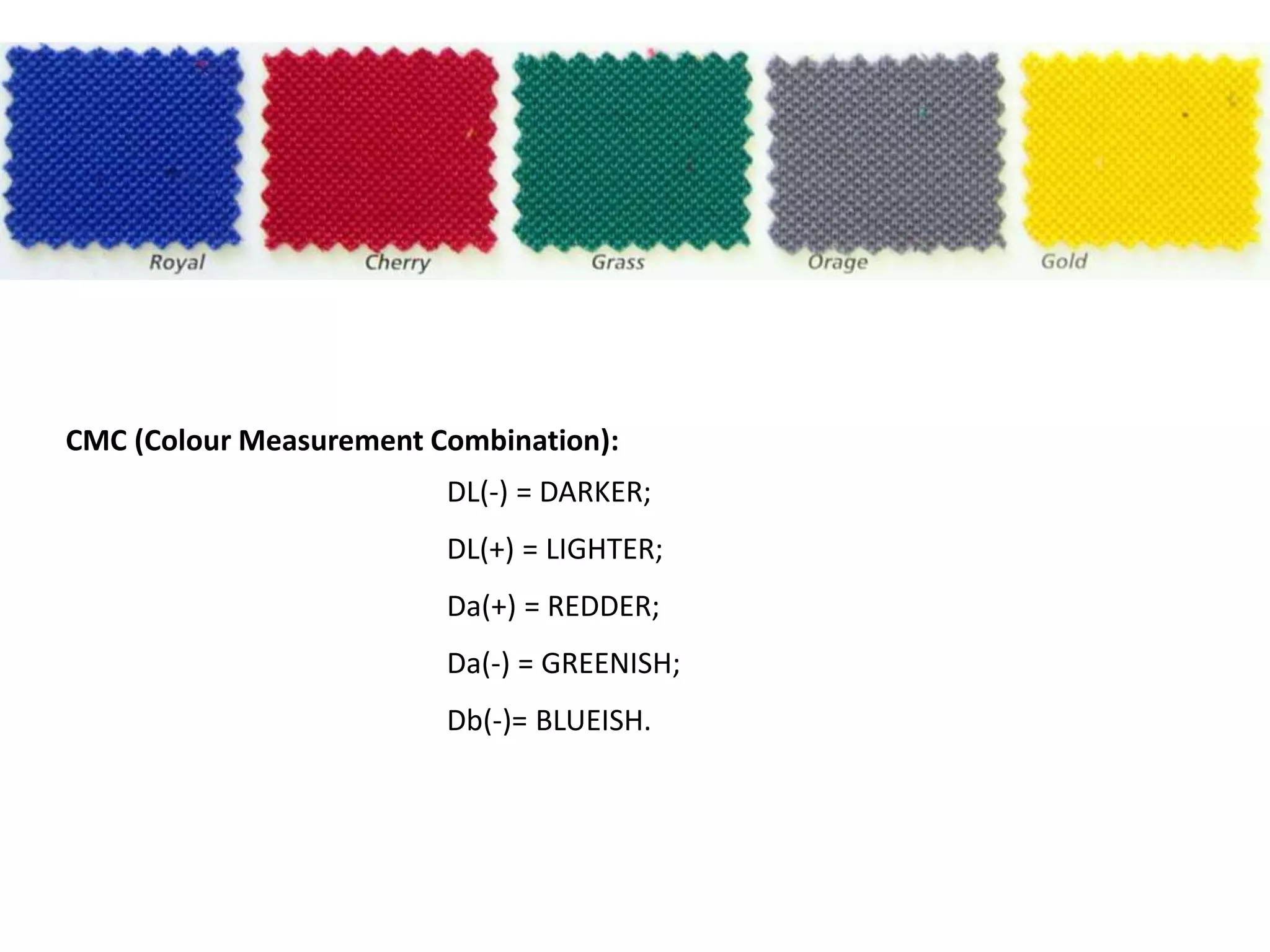
CMC (Colour Measurement Combination):
DL(-) = DARKER;
DL(+) = LIGHTER;
Da(+) = REDDER;
Da(-) = GREENISH;
Db(-)= BLUEISH.
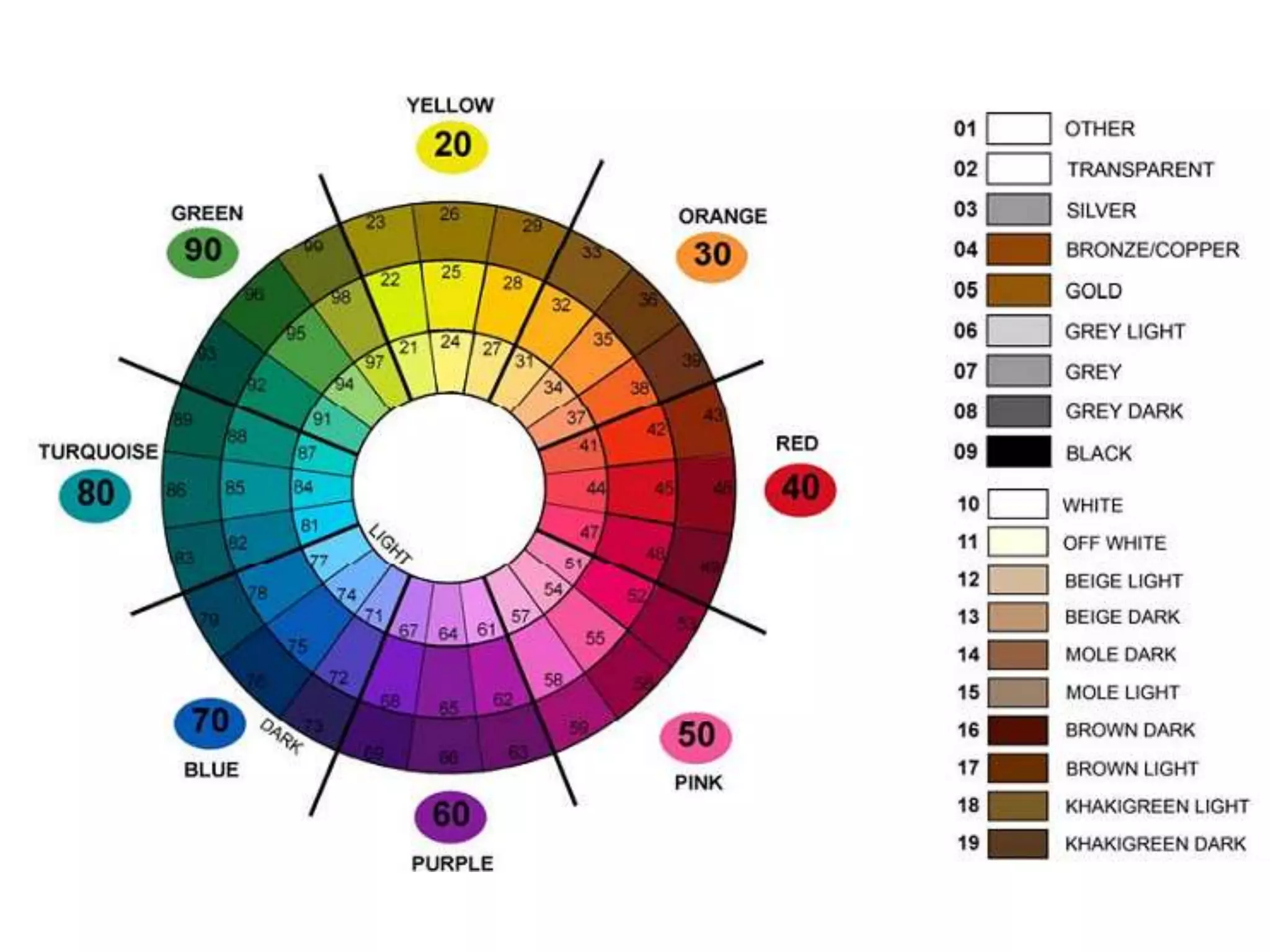
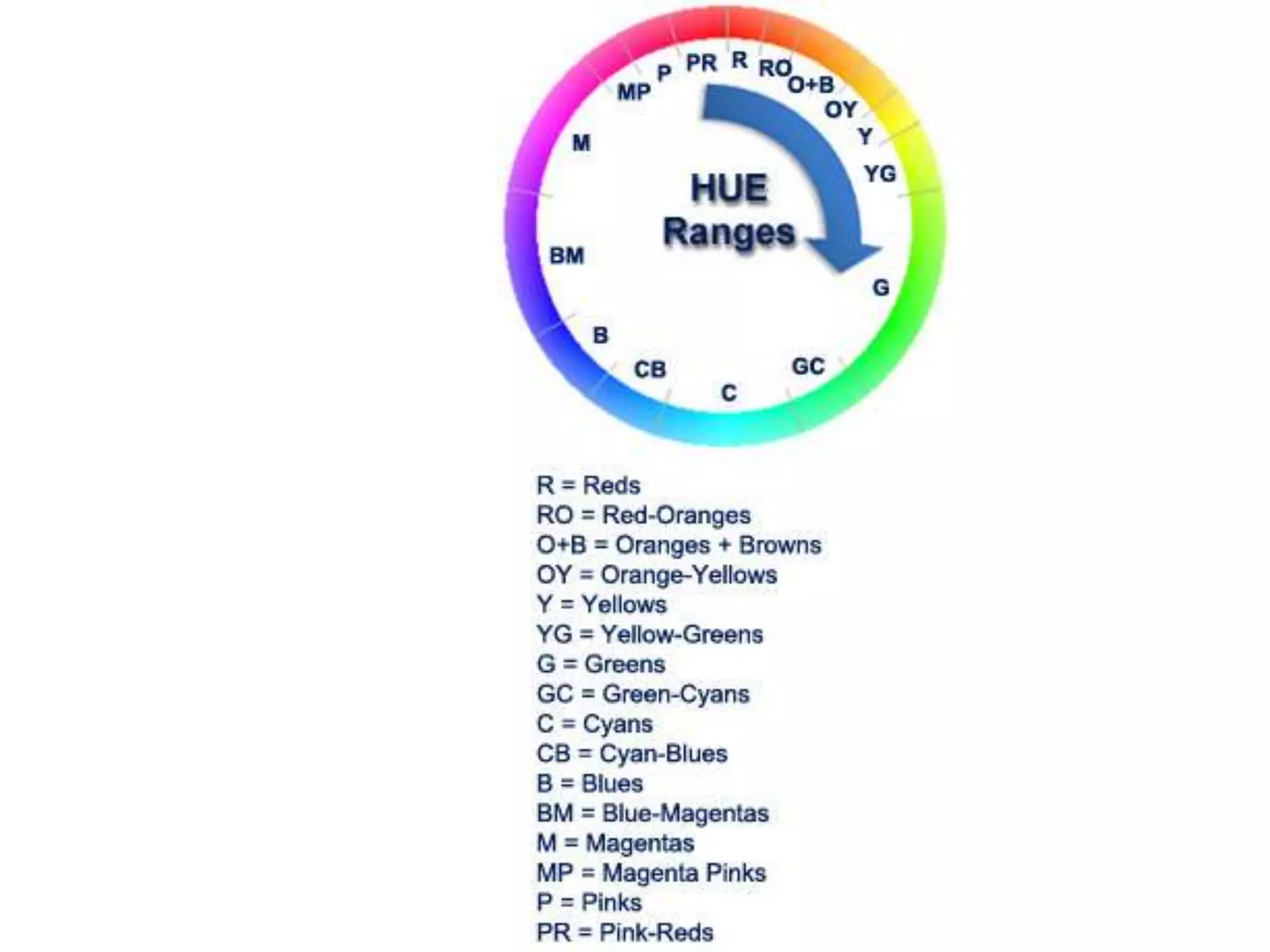
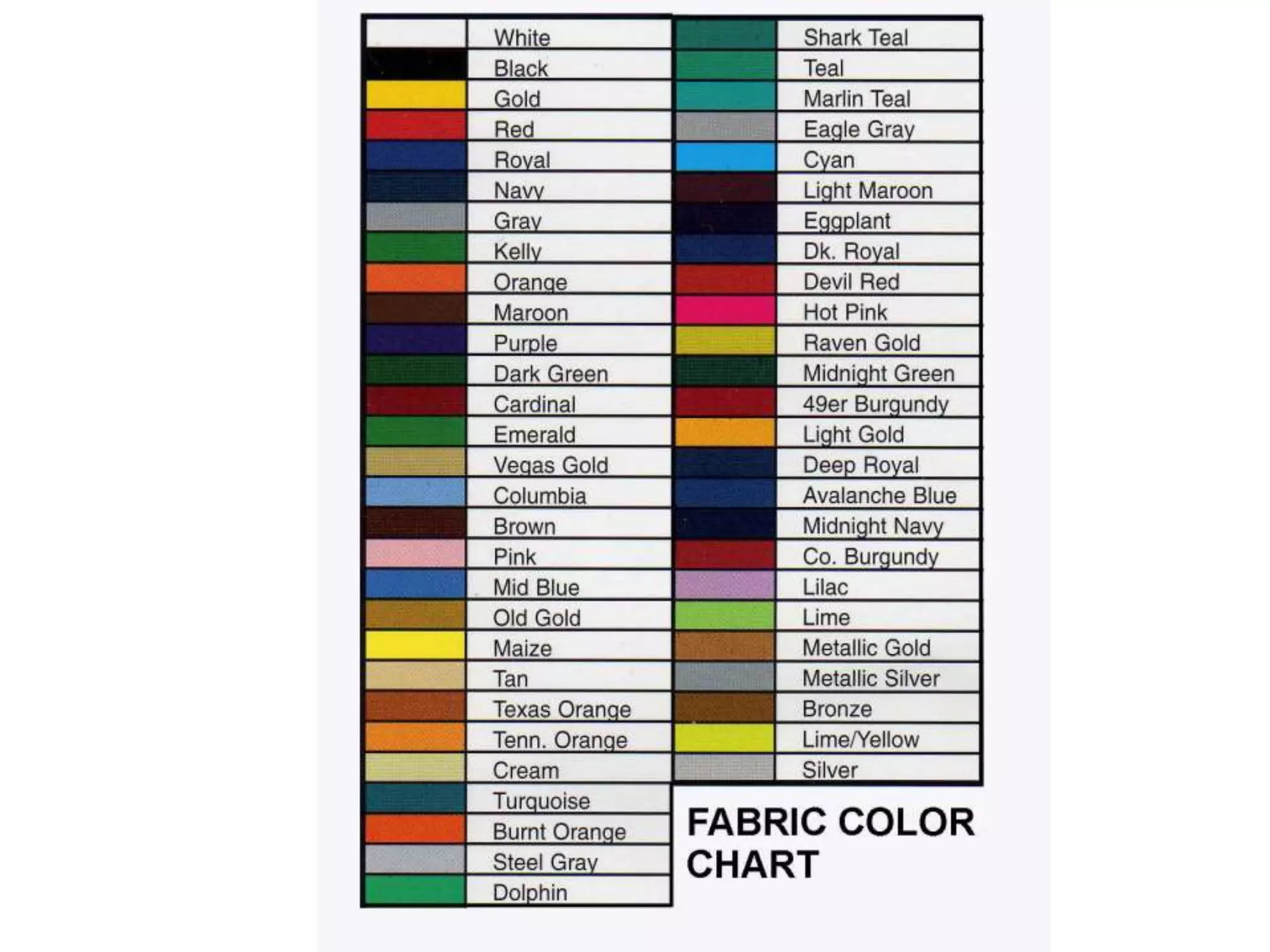
Color are divided in following class
1. Avarage color
2. Black color
3. Blue /turquise /Green
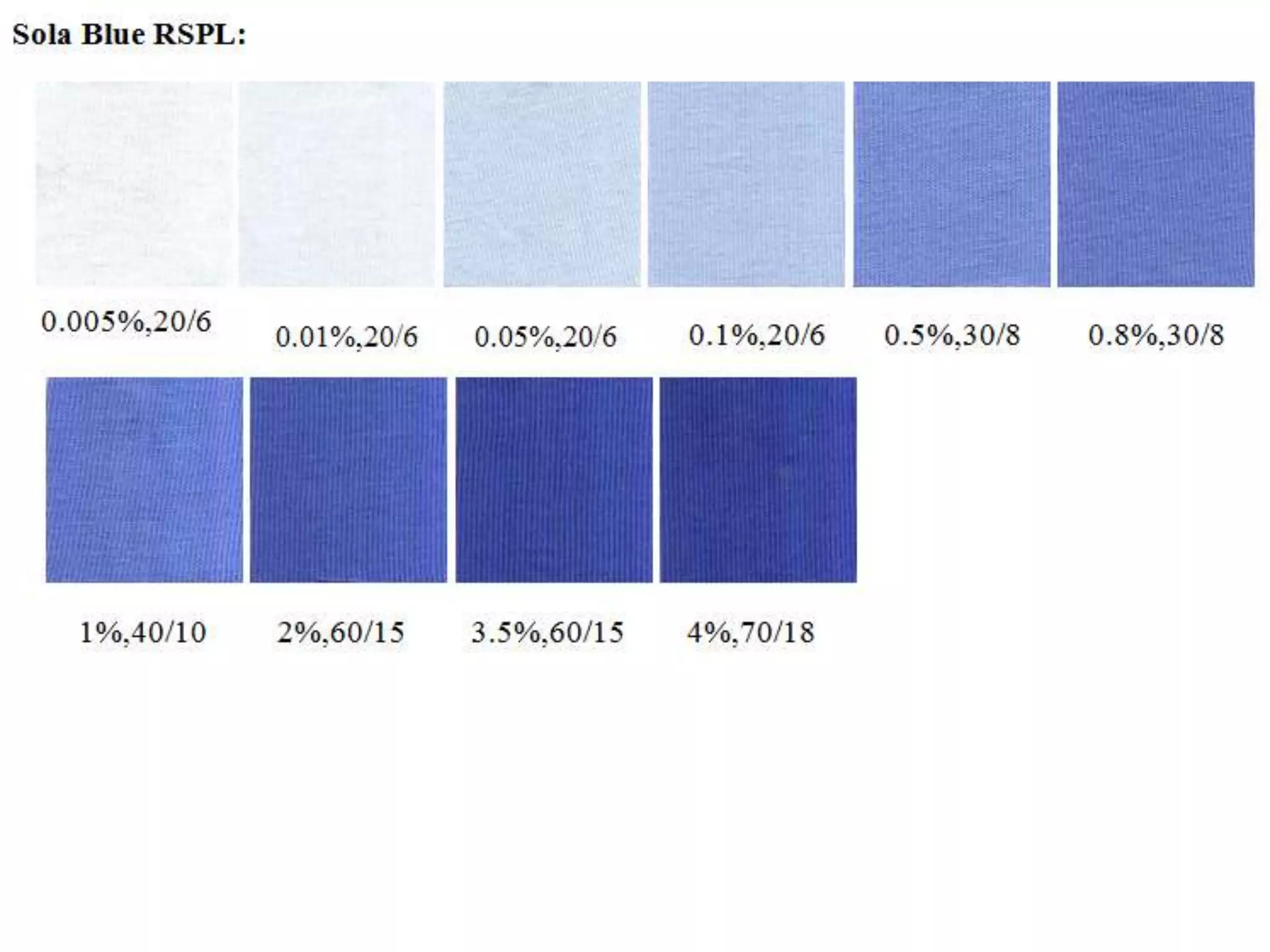
4. Royal blue R SPCL
5. Brawon
6. White
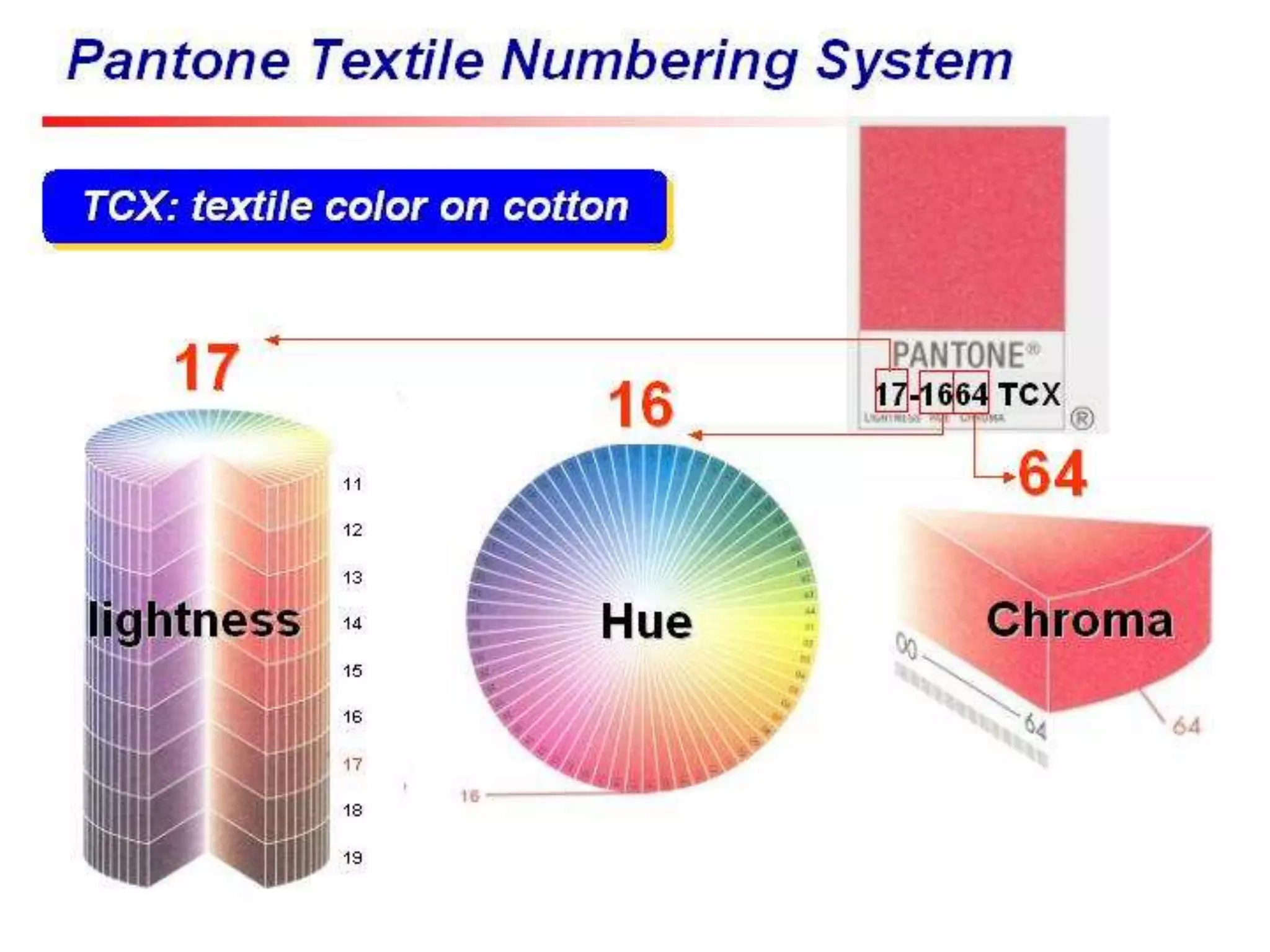
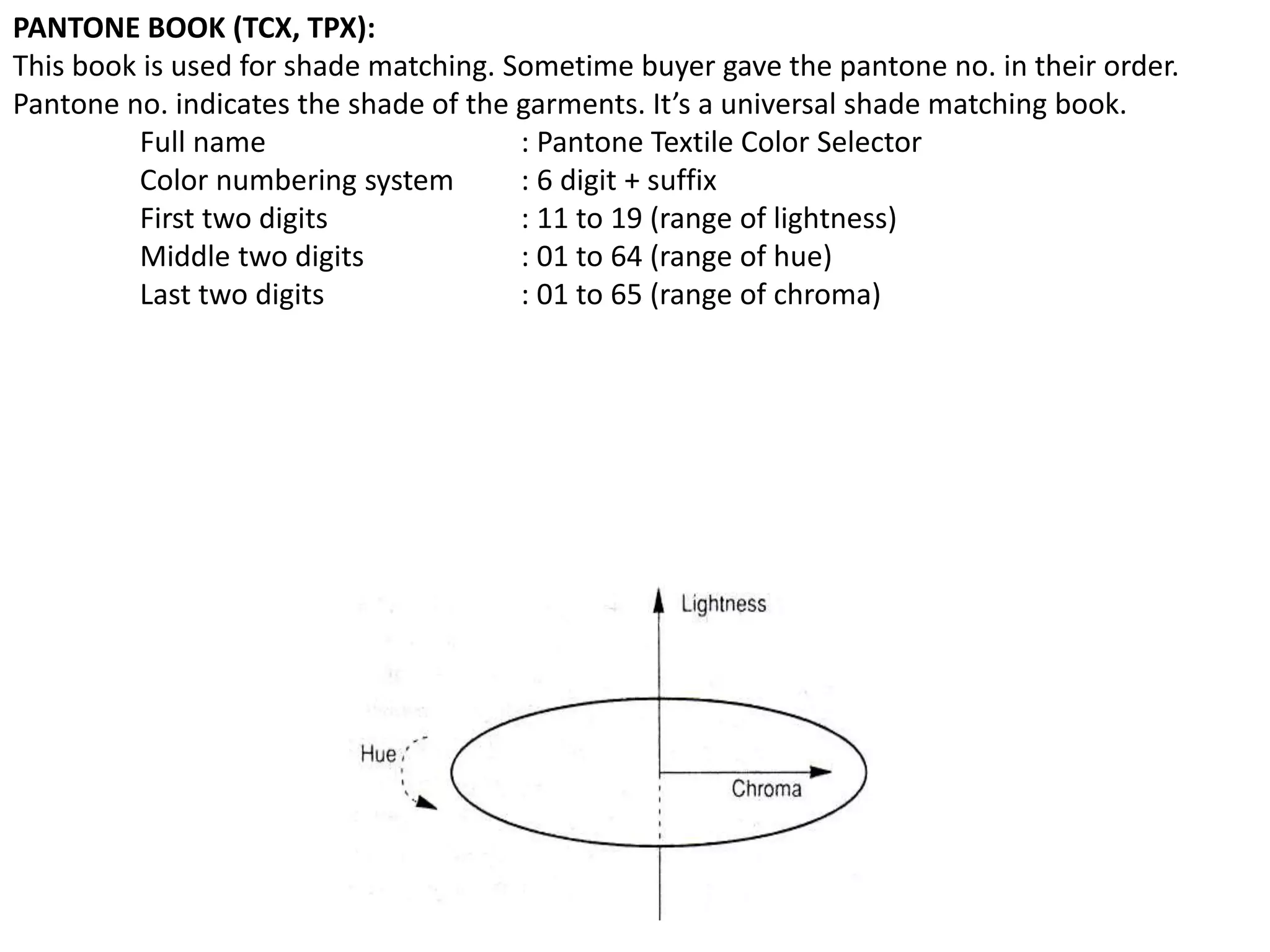
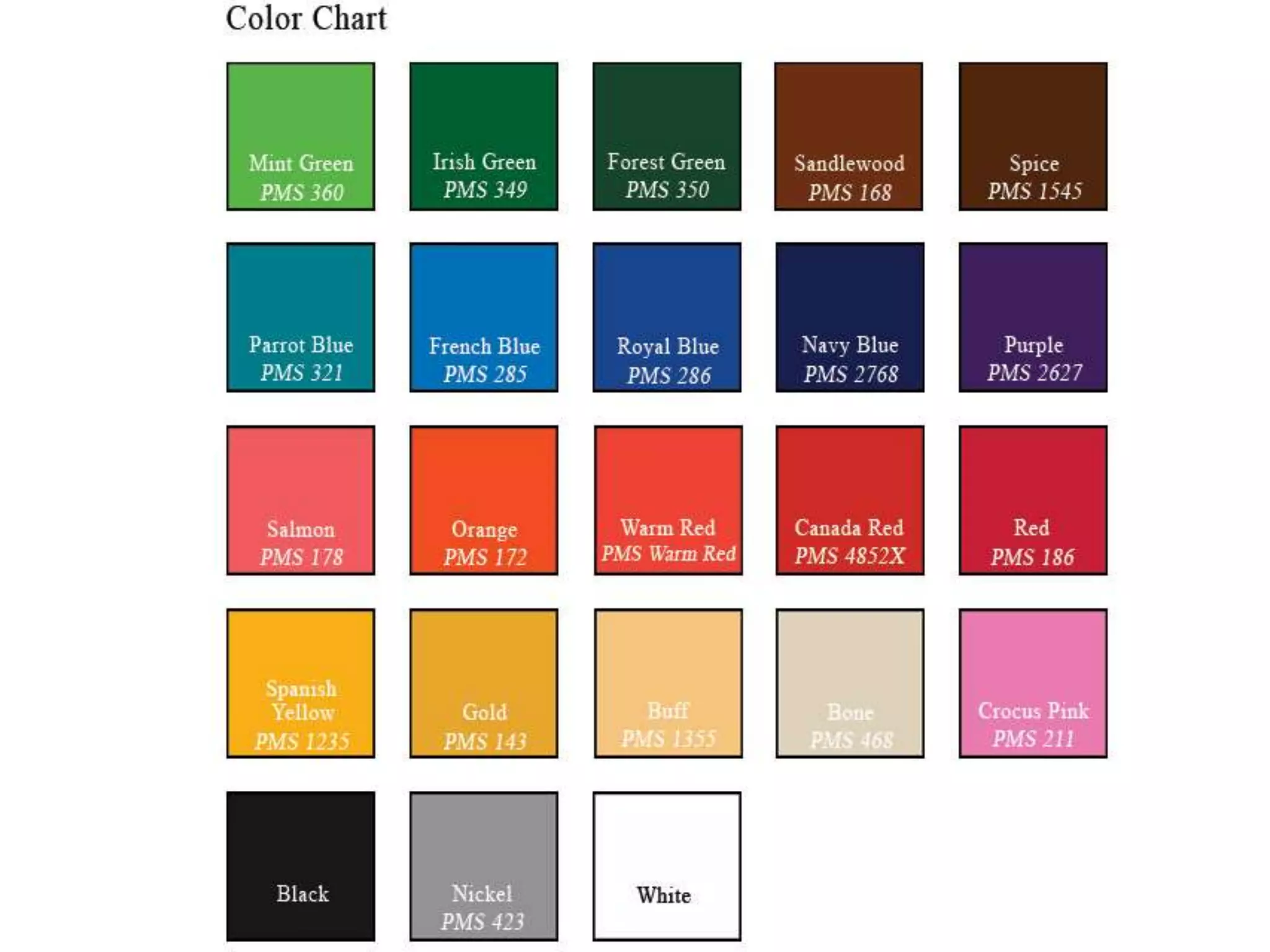
PANTONE BOOK (TCX, TPX):
This book is used for shade matching. Sometime buyer gave the pantone no. in their order.
Pantone no. indicates the shade of the garments. It’s a universal shade matching book.
Full name : Pantone Textile Color Selector
Color numbering system : 6 digit + suffix
First two digits : 11 to 19 (range of lightness)
Middle two digits : 01 to 64 (range of hue)
Last two digits : 01 to 65 (range of chroma)
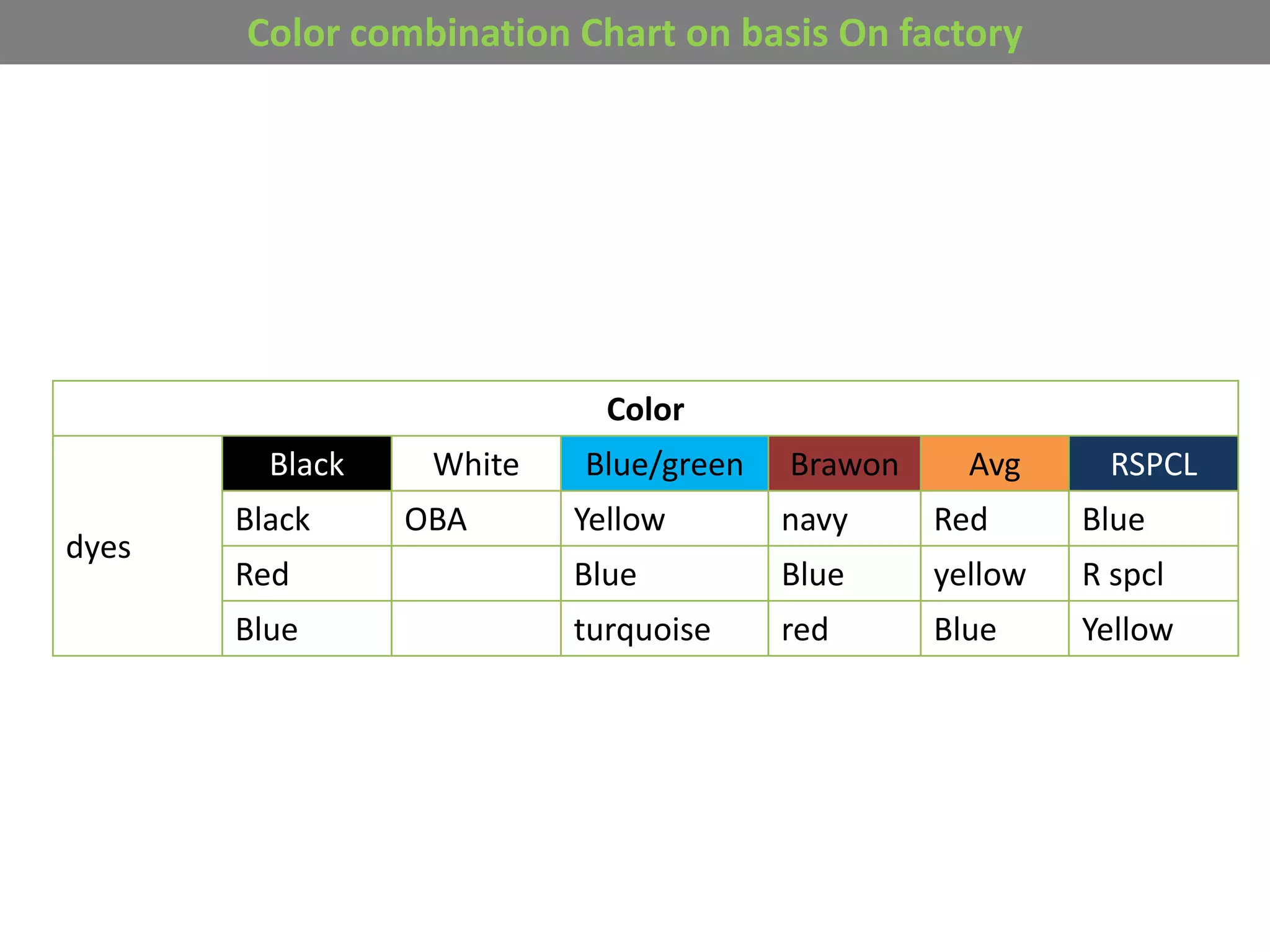
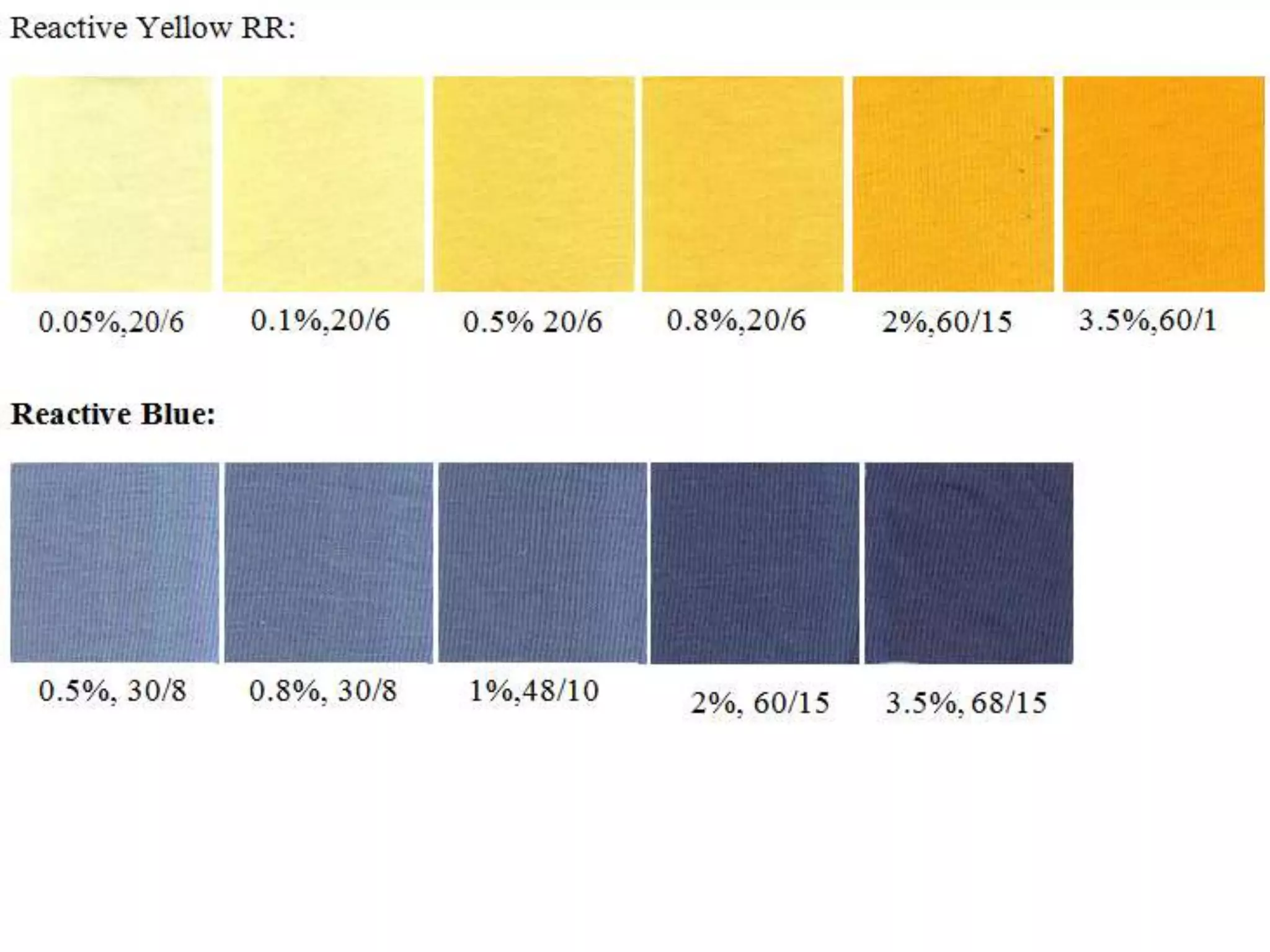
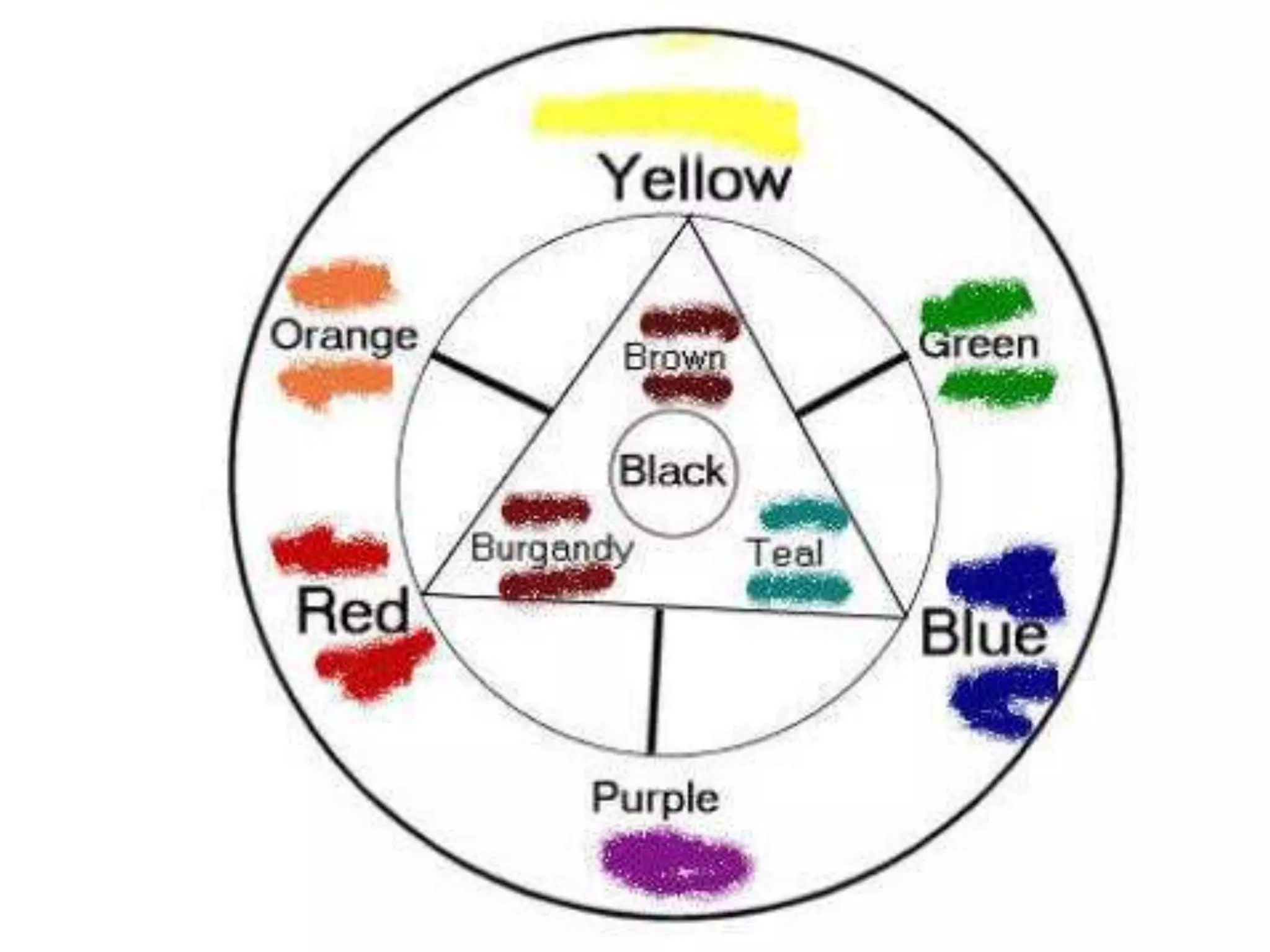
Color combination Chart on basis On factory
Color
dyes
Black White Blue/green Brawon Avg RSPCL
Black OBA Yellow navy Red Blue
Red Blue Blue yellow R spcl
Blue turquoise red Blue Yellow
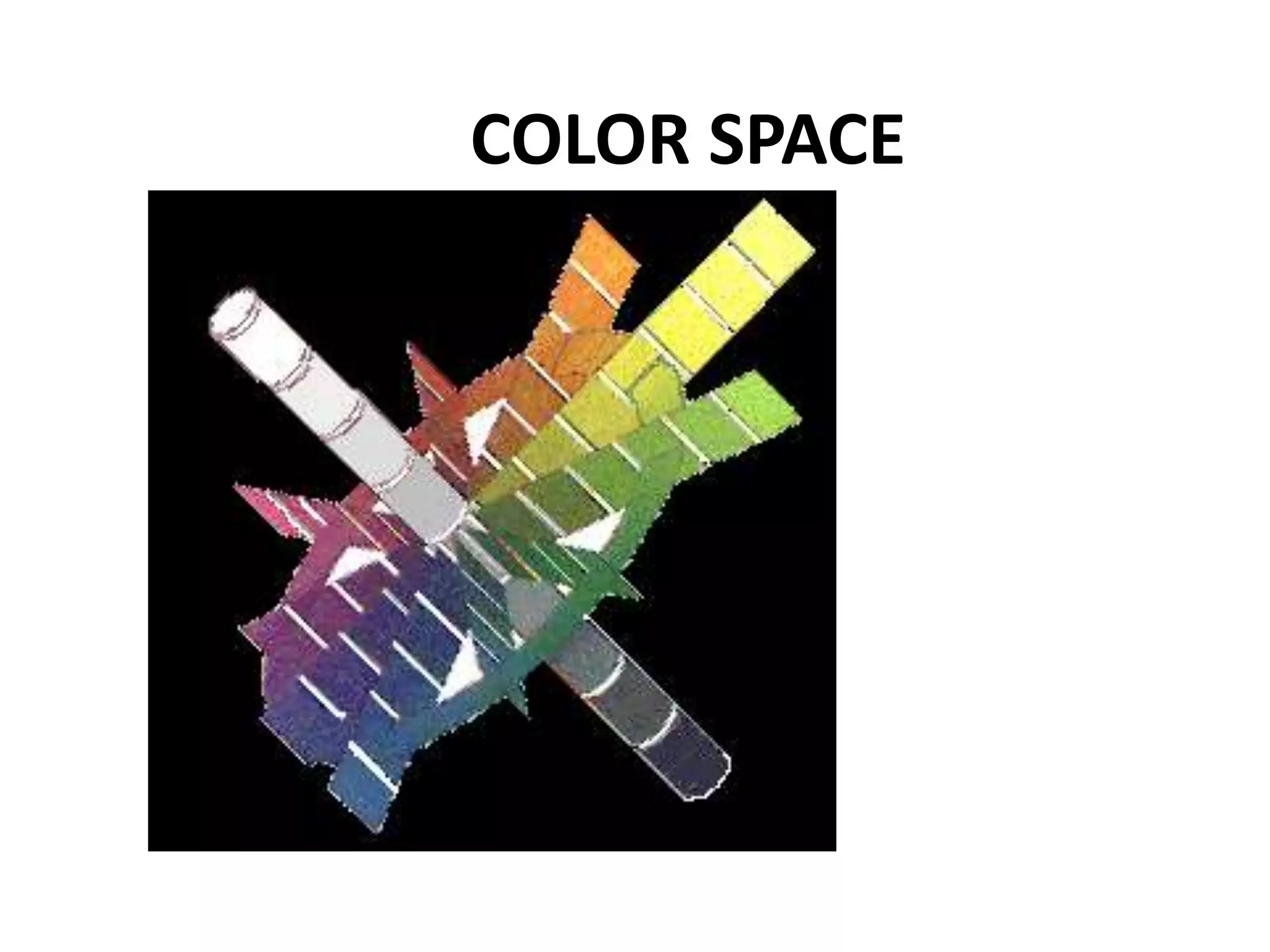
COLOR SPACE
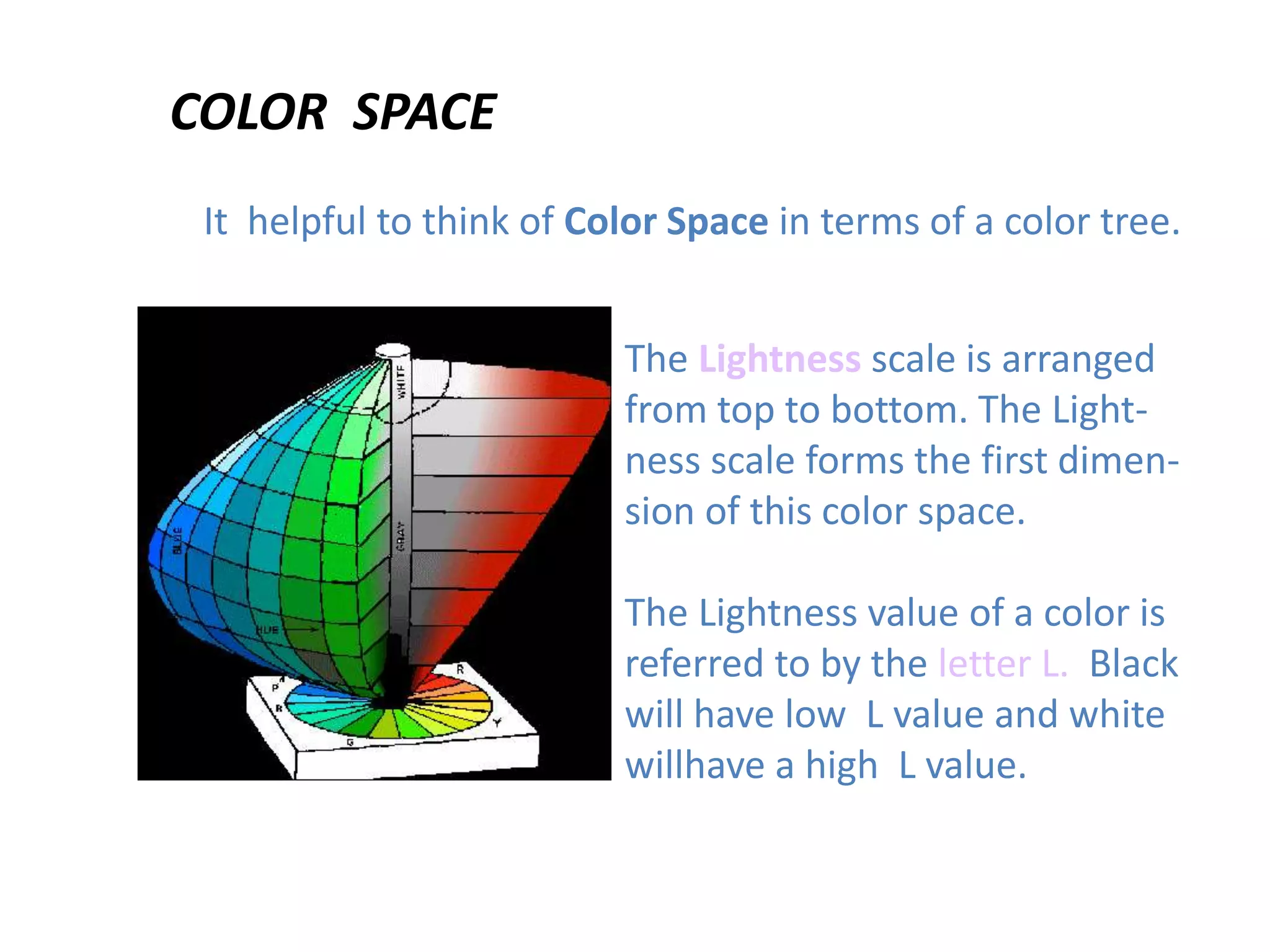
It helpful to think of Color Space in terms of a color tree.
COLOR SPACE
The Lightness scale is arranged
from top to bottom. The Light-
ness scale forms the first dimen-
sion of this color space.
The Lightness value of a color is
referred to by the letter L. Black
will have low L value and white
willhave a high L value.
Color Space
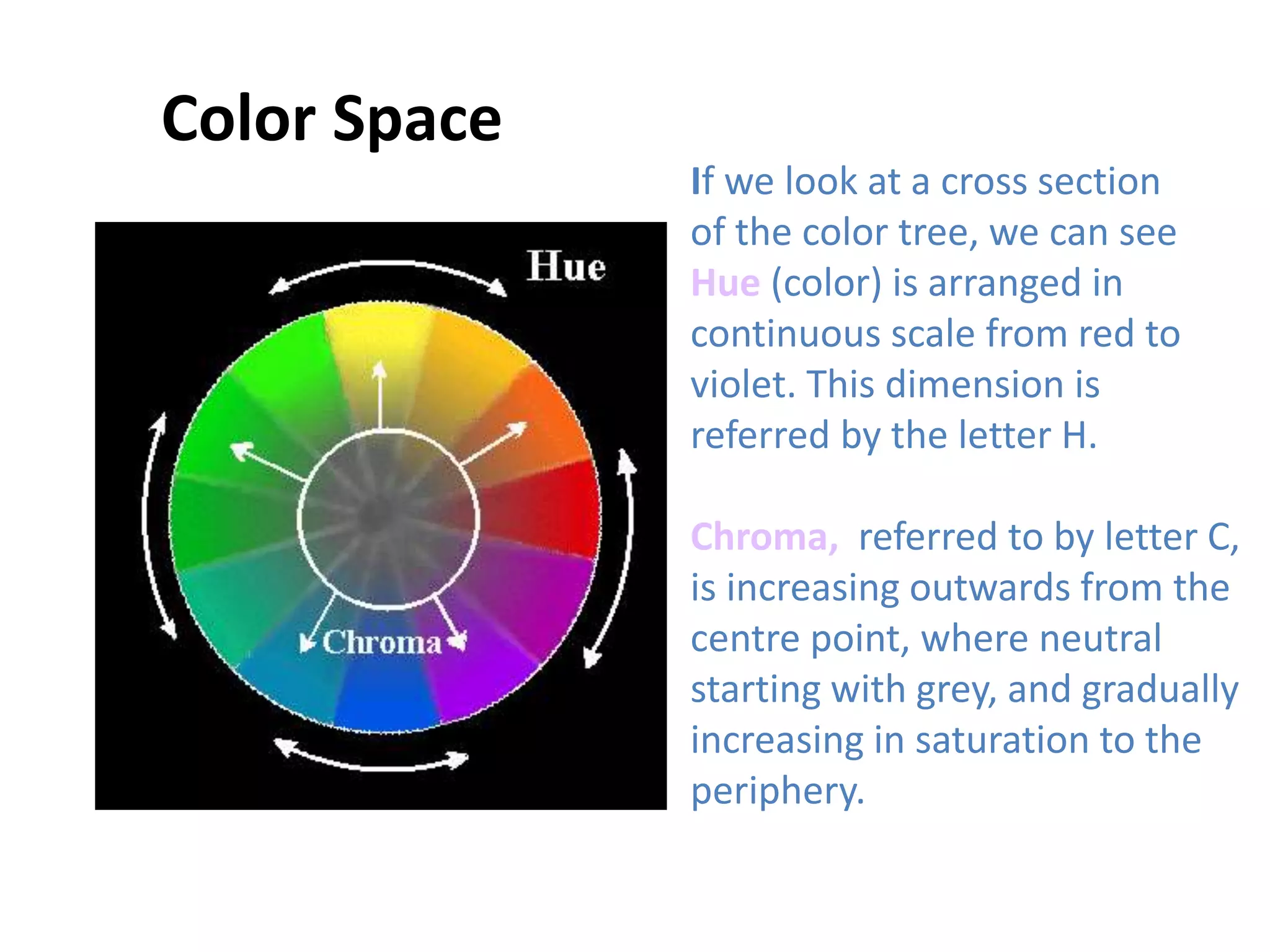
If we look at a cross section
of the color tree, we can see
Hue (color) is arranged in
continuous scale from red to
violet. This dimension is
referred by the letter H.
Chroma, referred to by letter C,
is increasing outwards from the
centre point, where neutral
starting with grey, and gradually
increasing in saturation to the
periphery.
CIELab
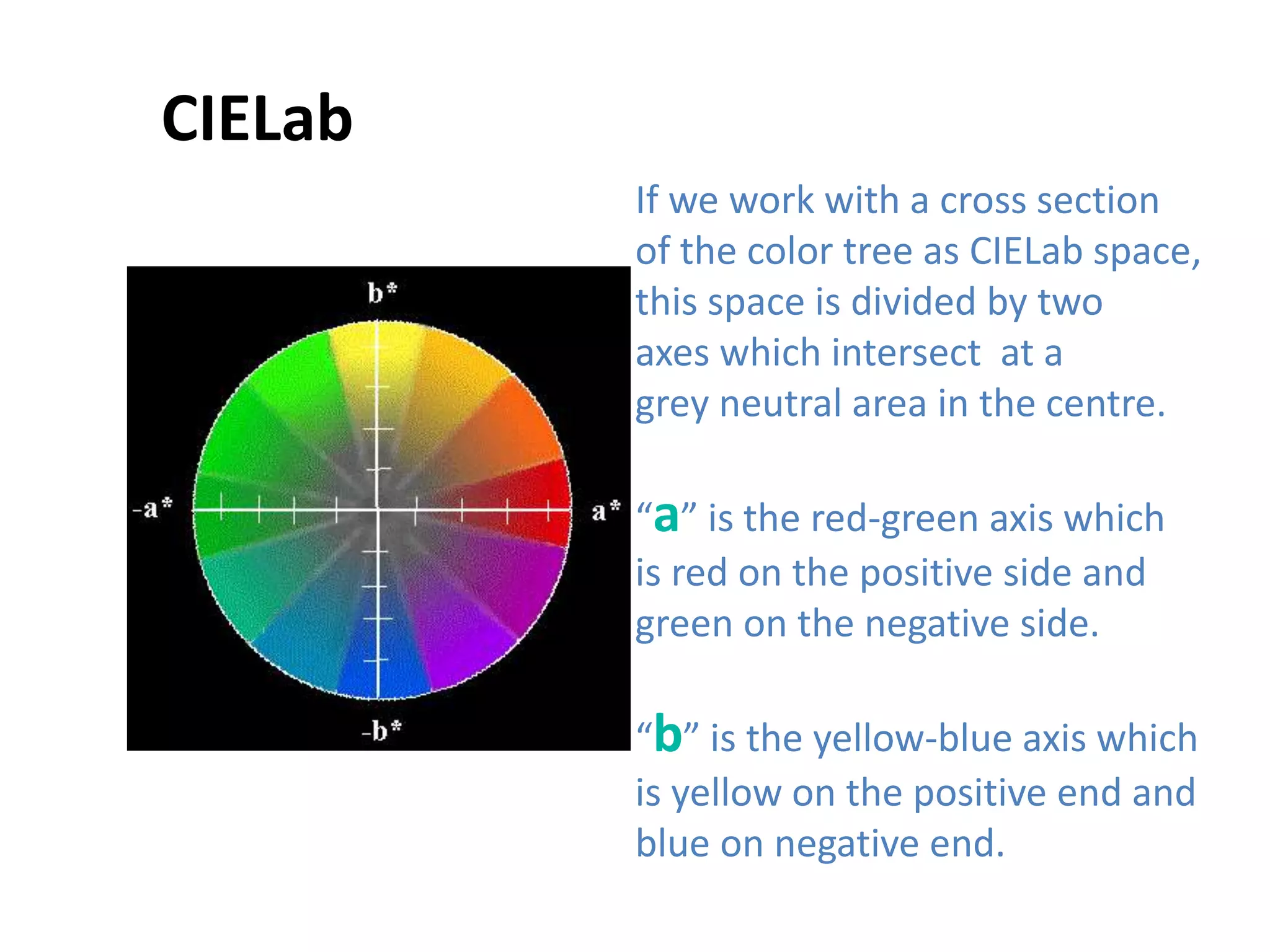
If we work with a cross section
of the color tree as CIELab space,
this space is divided by two
axes which intersect at a
grey neutral area in the centre.
“a” is the red-green axis which
is red on the positive side and
green on the negative side.
“b” is the yellow-blue axis which
is yellow on the positive end and
blue on negative end.
CIELab
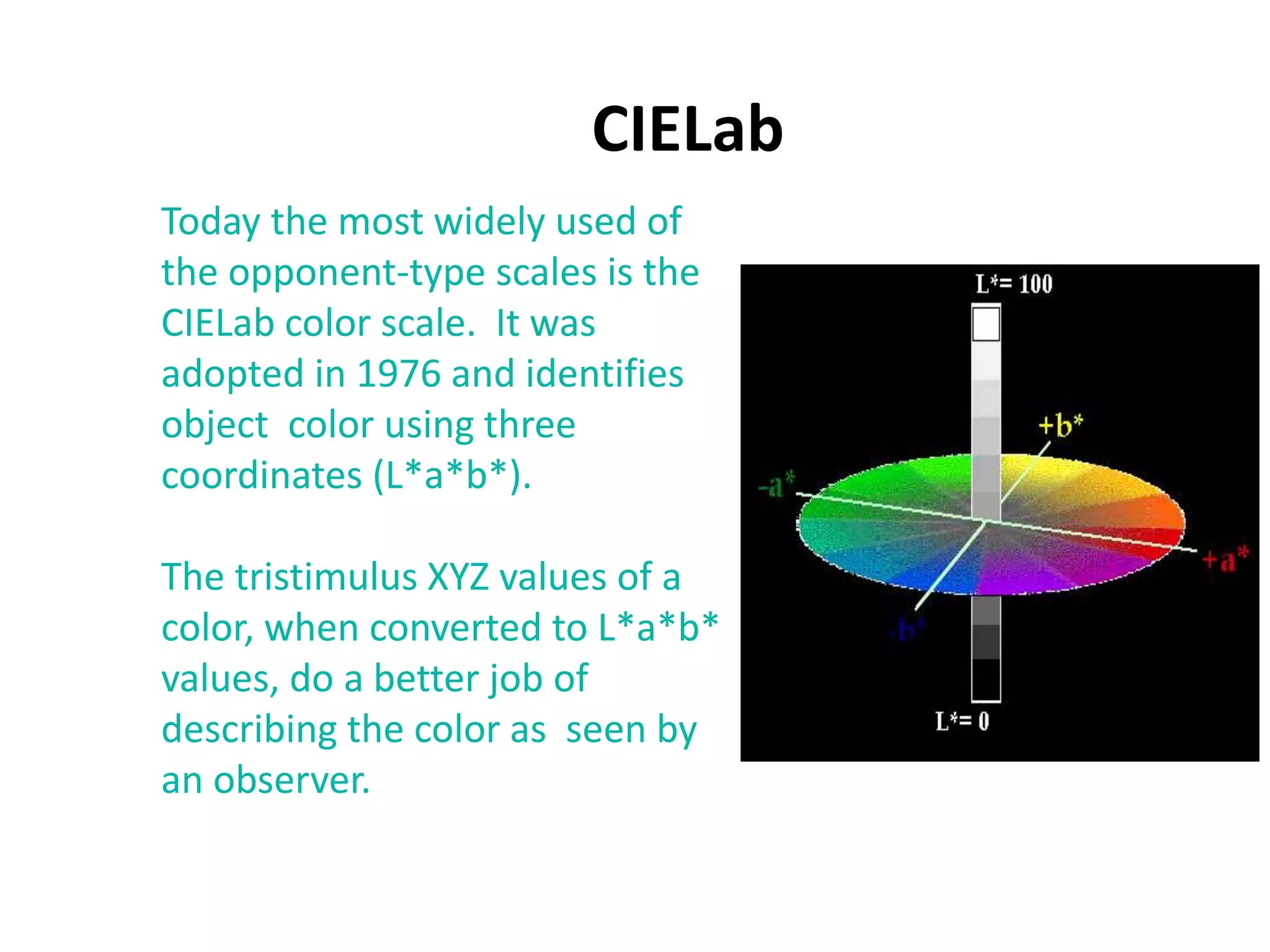
Today the most widely used of
the opponent-type scales is the
CIELab color scale. It was
adopted in 1976 and identifies
object color using three
coordinates (L*a*b*).
The tristimulus XYZ values of a
color, when converted to L*a*b*
values, do a better job of
describing the color as seen by
an observer.
Color Difference
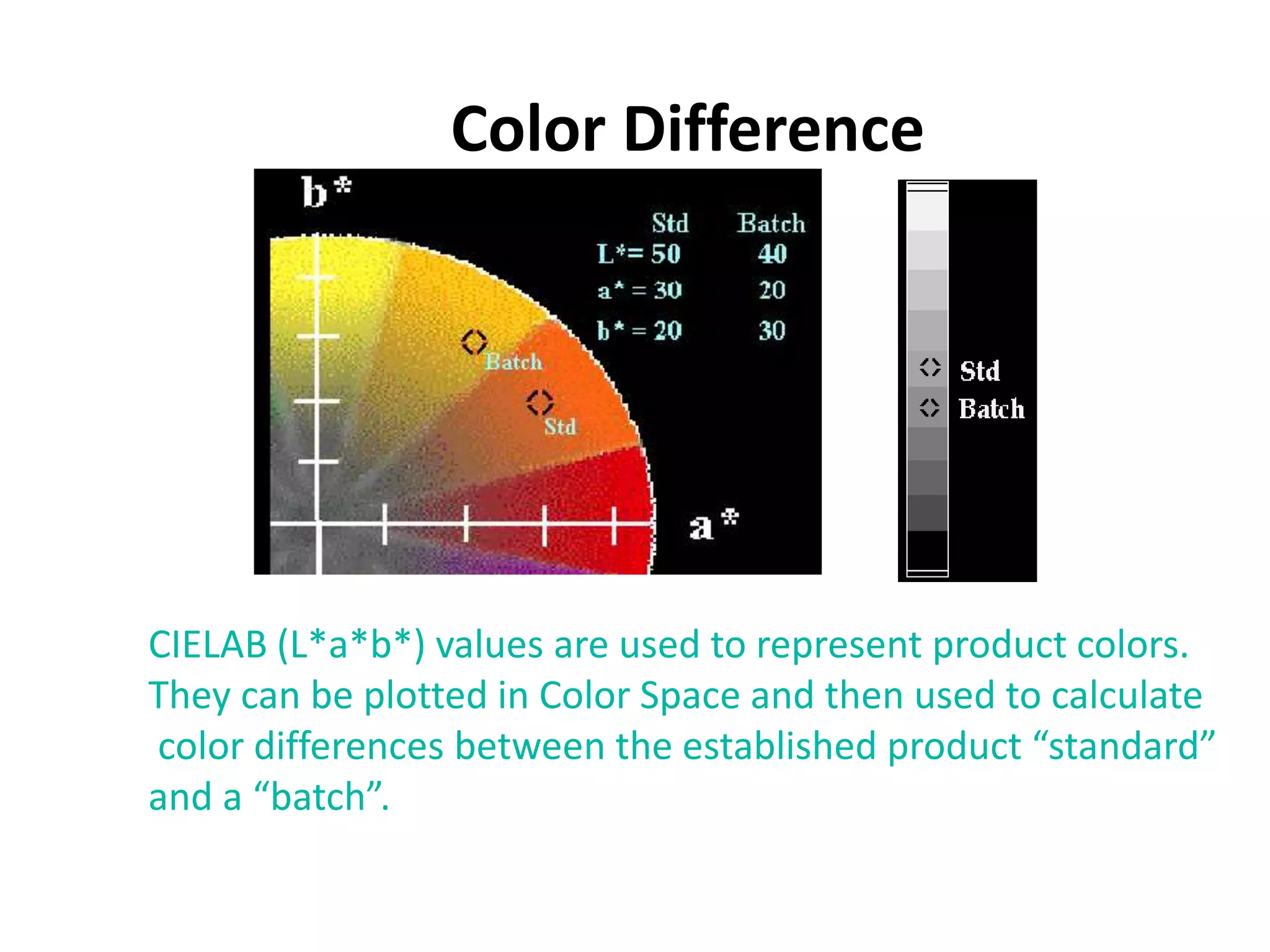
CIELAB (L*a*b*) values are used to represent product colors.
They can be plotted in Color Space and then used to calculate
color differences between the established product “standard”
and a “batch”.
Color Difference
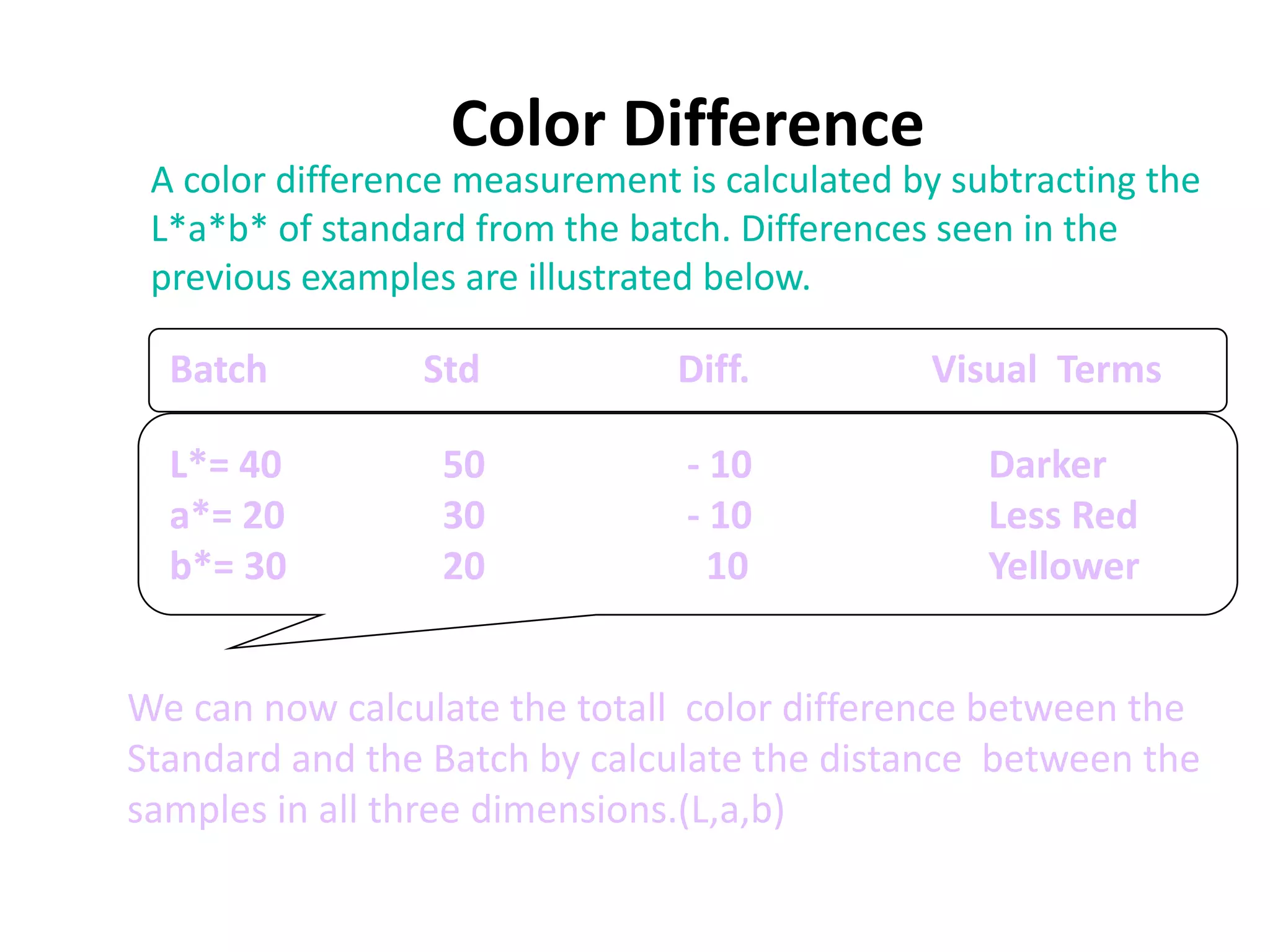
A color difference measurement is calculated by subtracting the
L*a*b* of standard from the batch. Differences seen in the
previous examples are illustrated below.
Batch Std Diff. Visual Terms
L*= 40 50 - 10 Darker
a*= 20 30 - 10 Less Red
b*= 30 20 10 Yellower
We can now calculate the totall color difference between the
Standard and the Batch by calculate the distance between the
samples in all three dimensions.(L,a,b)
Color Difference
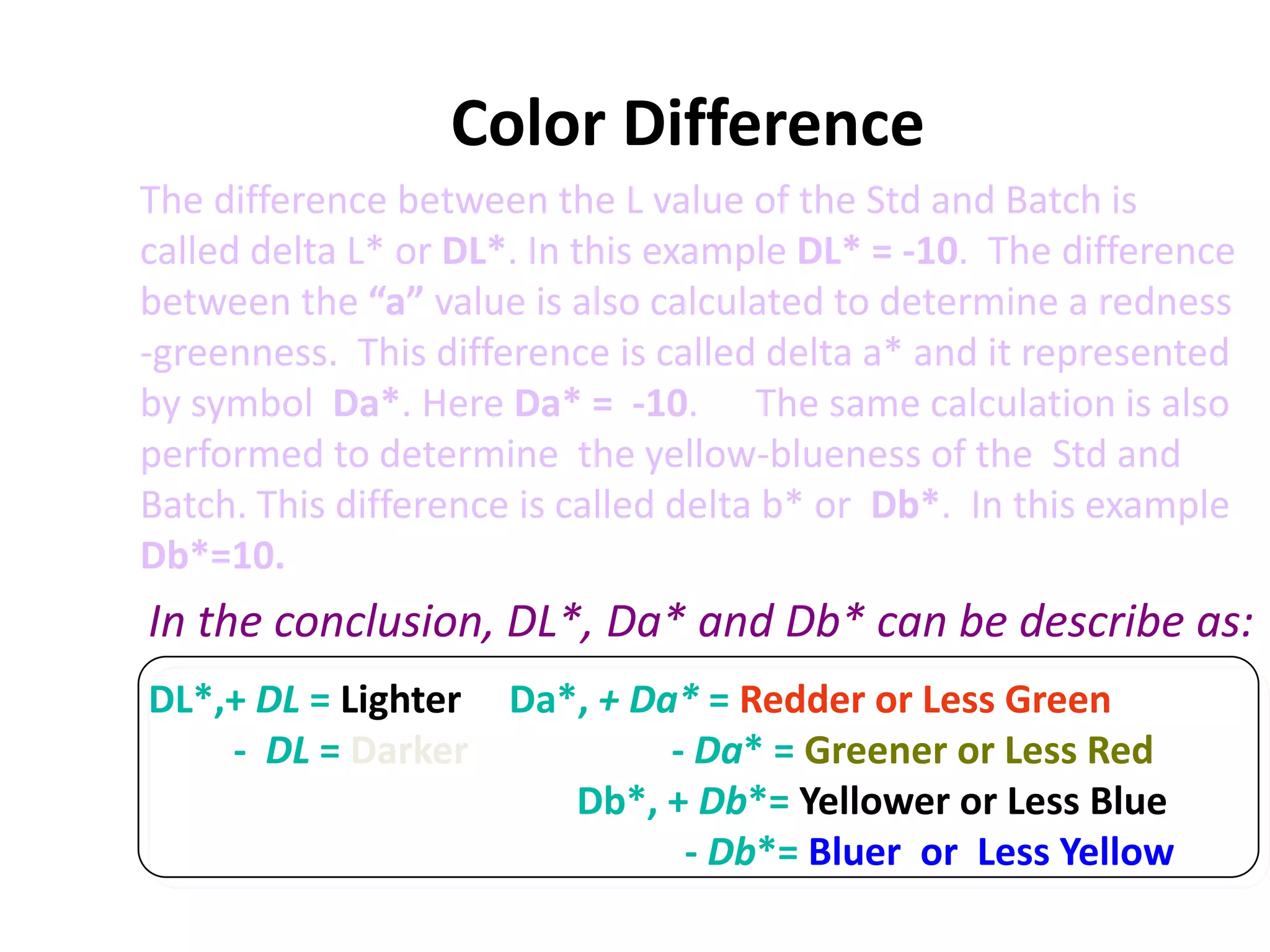
The difference between the L value of the Std and Batch is
called delta L* or DL*. In this example DL* = -10. The difference
between the “a” value is also calculated to determine a redness
-greenness. This difference is called delta a* and it represented
by symbol Da*. Here Da* = -10. The same calculation is also
performed to determine the yellow-blueness of the Std and
Batch. This difference is called delta b* or Db*. In this example
Db*=10.
DL*,+ DL = Lighter Da*, + Da* = Redder or Less Green
- DL = Darker - Da* = Greener or Less Red
Db*, + Db*= Yellower or Less Blue
- Db*= Bluer or Less Yellow
In the conclusion, DL*, Da* and Db* can be describe as:
Color Difference
If we draw the line from
intersection of “a” and ”b”
axis to the point represent
the sample, longer the line
is higher the chroma in color.
Chroma difference is referred by
DC*, if DC* is positive a batch has
a higher chroma (stronger); if
negative DC* a batch is weaker
than Std.
As Hue difference is an angular difference, it is not in
CIELAB unit and therefore the preferred component, so
DH* can be calculate by DH*=[(DE)2
-(DL*)2
-(DC*)2
]1/2
Total Color Difference
A color difference equation using DL*, Da* and Db* to
calculate the Total Color Difference between Std and the
Batch. This Total Color Difference is called delta E and it
represented by symbol DE*. DE* can be calculated using
this equation;
DE* = [(DL*)2 + (Da*)2 + (Db*)2 ]1/2
With reservation it can be said that color difference DE* >1
Color Tolerance
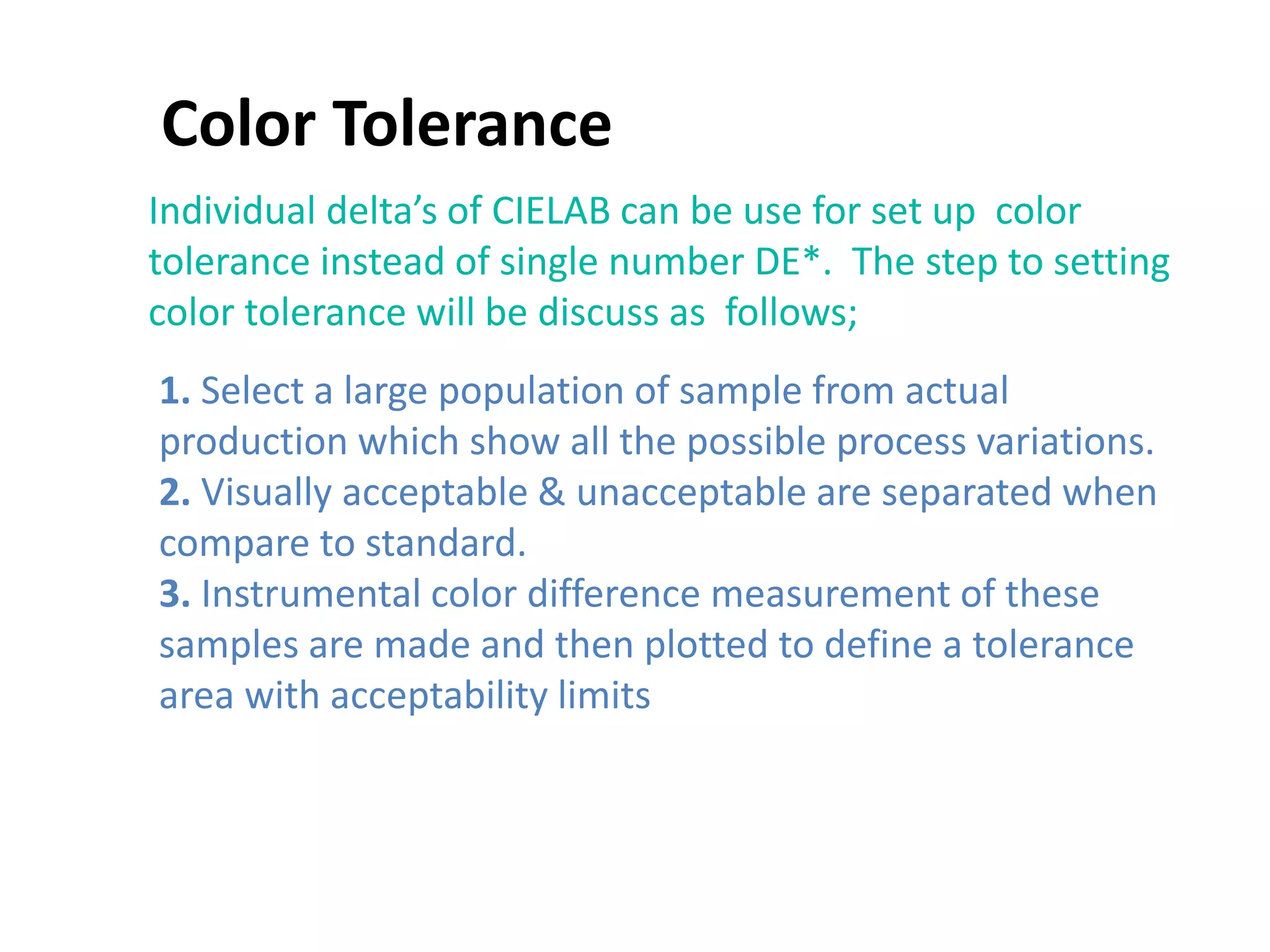
Individual delta’s of CIELAB can be use for set up color
tolerance instead of single number DE*. The step to setting
color tolerance will be discuss as follows;
1. Select a large population of sample from actual
production which show all the possible process variations.
2. Visually acceptable & unacceptable are separated when
compare to standard.
3. Instrumental color difference measurement of these
samples are made and then plotted to define a tolerance
area with acceptability limits
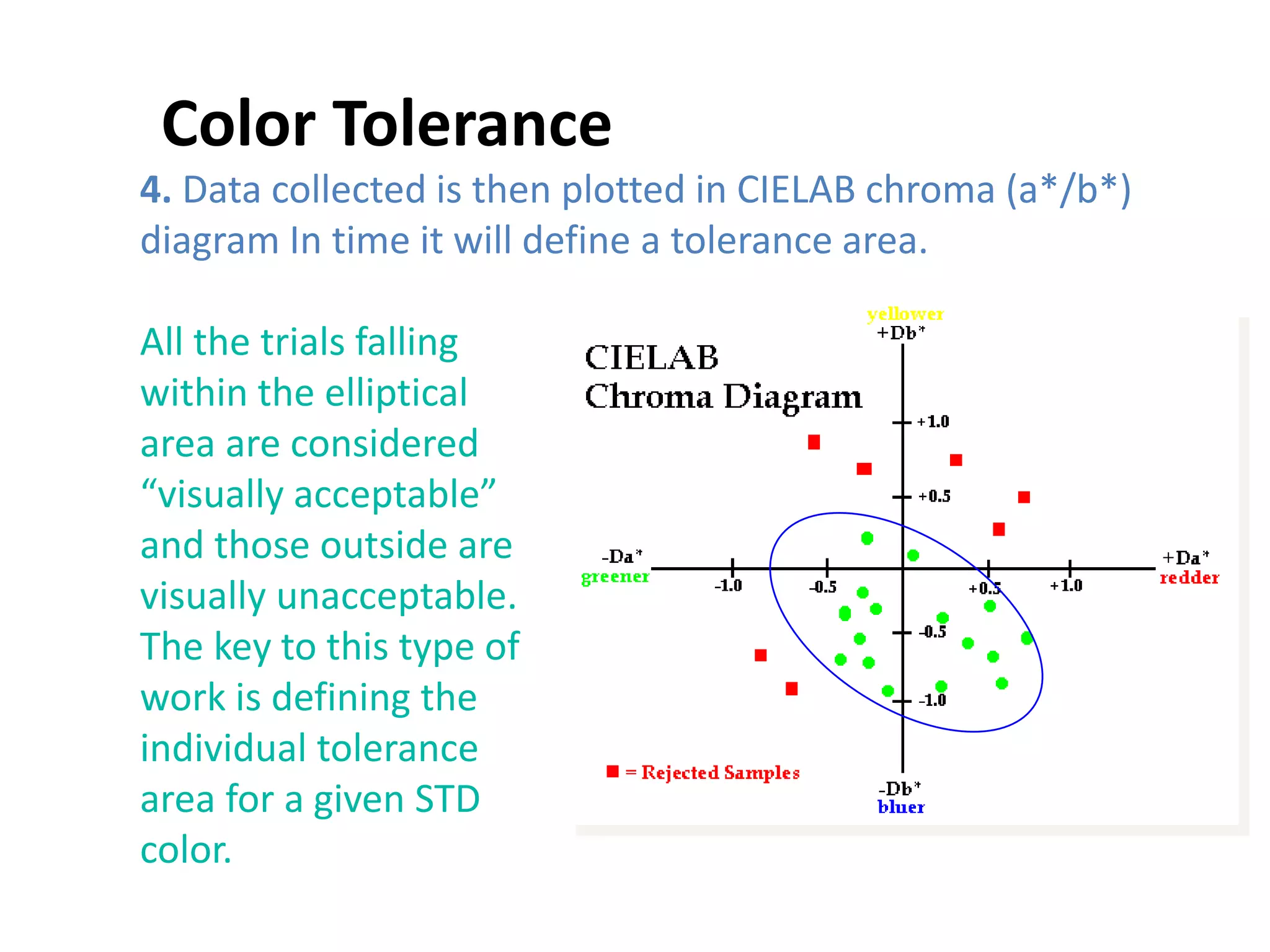
4. Data collected is then plotted in CIELAB chroma (a*/b*)
diagram In time it will define a tolerance area.
All the trials falling
within the elliptical
area are considered
“visually acceptable”
and those outside are
visually unacceptable.
The key to this type of
work is defining the
individual tolerance
area for a given STD
color.
Color Tolerance
Color Tolerance
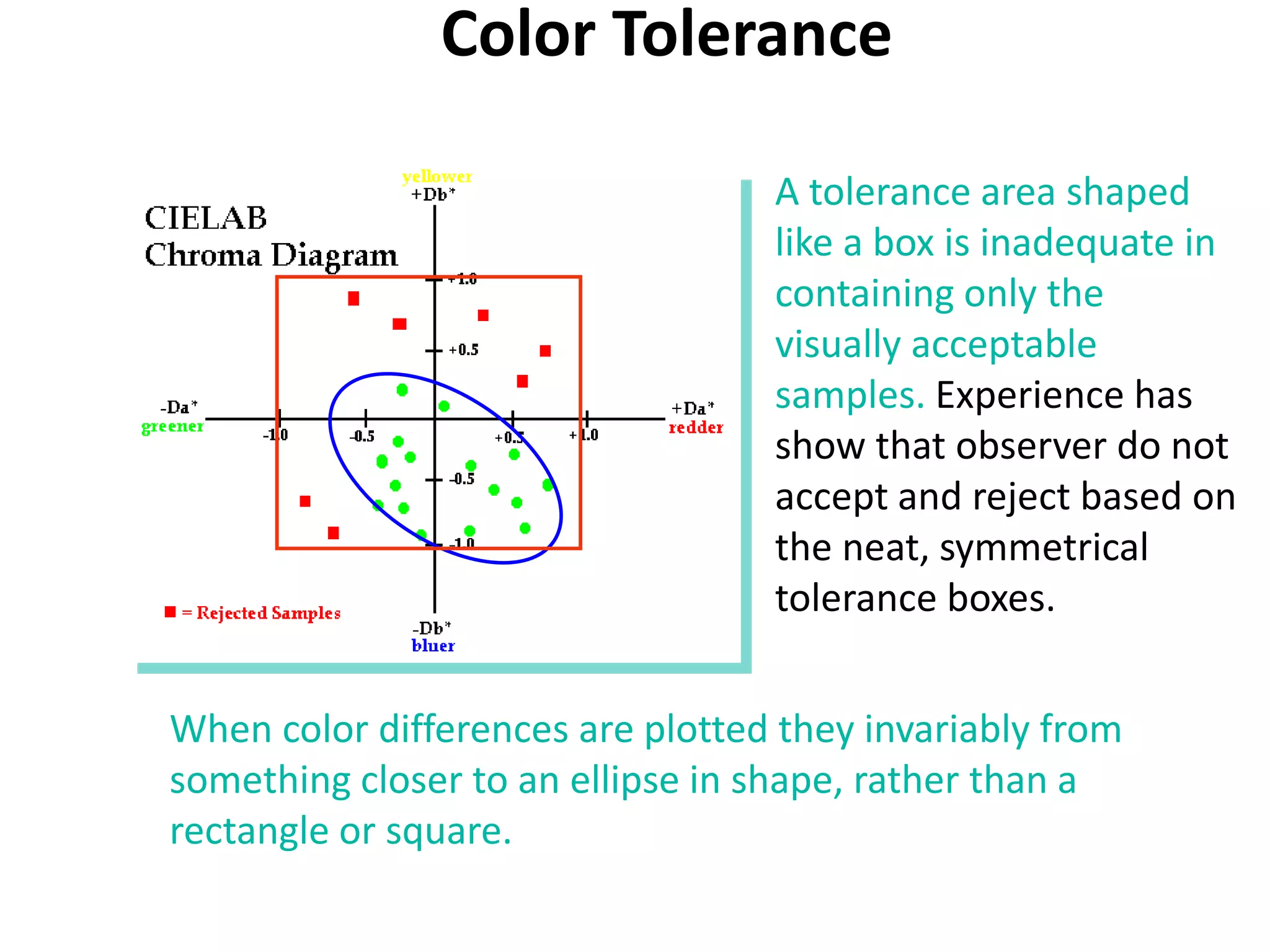
A tolerance area shaped
like a box is inadequate in
containing only the
visually acceptable
samples. Experience has
show that observer do not
accept and reject based on
the neat, symmetrical
tolerance boxes.
When color differences are plotted they invariably from
something closer to an ellipse in shape, rather than a
rectangle or square.

Textile coloration

  • 1.
  • 4.
    CMC (Colour MeasurementCombination): DL(-) = DARKER; DL(+) = LIGHTER; Da(+) = REDDER; Da(-) = GREENISH; Db(-)= BLUEISH.
  • 5.
    Color are dividedin following class 1. Avarage color 2. Black color 3. Blue /turquise /Green 4. Royal blue R SPCL 5. Brawon 6. White
  • 8.
    PANTONE BOOK (TCX,TPX): This book is used for shade matching. Sometime buyer gave the pantone no. in their order. Pantone no. indicates the shade of the garments. It’s a universal shade matching book. Full name : Pantone Textile Color Selector Color numbering system : 6 digit + suffix First two digits : 11 to 19 (range of lightness) Middle two digits : 01 to 64 (range of hue) Last two digits : 01 to 65 (range of chroma)
  • 9.
    Color combination Charton basis On factory Color dyes Black White Blue/green Brawon Avg RSPCL Black OBA Yellow navy Red Blue Red Blue Blue yellow R spcl Blue turquoise red Blue Yellow
  • 35.
  • 36.
    It helpful tothink of Color Space in terms of a color tree. COLOR SPACE The Lightness scale is arranged from top to bottom. The Light- ness scale forms the first dimen- sion of this color space. The Lightness value of a color is referred to by the letter L. Black will have low L value and white willhave a high L value.
  • 37.
    Color Space If welook at a cross section of the color tree, we can see Hue (color) is arranged in continuous scale from red to violet. This dimension is referred by the letter H. Chroma, referred to by letter C, is increasing outwards from the centre point, where neutral starting with grey, and gradually increasing in saturation to the periphery.
  • 38.
    CIELab If we workwith a cross section of the color tree as CIELab space, this space is divided by two axes which intersect at a grey neutral area in the centre. “a” is the red-green axis which is red on the positive side and green on the negative side. “b” is the yellow-blue axis which is yellow on the positive end and blue on negative end.
  • 39.
    CIELab Today the mostwidely used of the opponent-type scales is the CIELab color scale. It was adopted in 1976 and identifies object color using three coordinates (L*a*b*). The tristimulus XYZ values of a color, when converted to L*a*b* values, do a better job of describing the color as seen by an observer.
  • 40.
    Color Difference CIELAB (L*a*b*)values are used to represent product colors. They can be plotted in Color Space and then used to calculate color differences between the established product “standard” and a “batch”.
  • 41.
    Color Difference A colordifference measurement is calculated by subtracting the L*a*b* of standard from the batch. Differences seen in the previous examples are illustrated below. Batch Std Diff. Visual Terms L*= 40 50 - 10 Darker a*= 20 30 - 10 Less Red b*= 30 20 10 Yellower We can now calculate the totall color difference between the Standard and the Batch by calculate the distance between the samples in all three dimensions.(L,a,b)
  • 42.
    Color Difference The differencebetween the L value of the Std and Batch is called delta L* or DL*. In this example DL* = -10. The difference between the “a” value is also calculated to determine a redness -greenness. This difference is called delta a* and it represented by symbol Da*. Here Da* = -10. The same calculation is also performed to determine the yellow-blueness of the Std and Batch. This difference is called delta b* or Db*. In this example Db*=10. DL*,+ DL = Lighter Da*, + Da* = Redder or Less Green - DL = Darker - Da* = Greener or Less Red Db*, + Db*= Yellower or Less Blue - Db*= Bluer or Less Yellow In the conclusion, DL*, Da* and Db* can be describe as:
  • 43.
    Color Difference If wedraw the line from intersection of “a” and ”b” axis to the point represent the sample, longer the line is higher the chroma in color. Chroma difference is referred by DC*, if DC* is positive a batch has a higher chroma (stronger); if negative DC* a batch is weaker than Std. As Hue difference is an angular difference, it is not in CIELAB unit and therefore the preferred component, so DH* can be calculate by DH*=[(DE)2 -(DL*)2 -(DC*)2 ]1/2
  • 44.
    Total Color Difference Acolor difference equation using DL*, Da* and Db* to calculate the Total Color Difference between Std and the Batch. This Total Color Difference is called delta E and it represented by symbol DE*. DE* can be calculated using this equation; DE* = [(DL*)2 + (Da*)2 + (Db*)2 ]1/2 With reservation it can be said that color difference DE* >1
  • 45.
    Color Tolerance Individual delta’sof CIELAB can be use for set up color tolerance instead of single number DE*. The step to setting color tolerance will be discuss as follows; 1. Select a large population of sample from actual production which show all the possible process variations. 2. Visually acceptable & unacceptable are separated when compare to standard. 3. Instrumental color difference measurement of these samples are made and then plotted to define a tolerance area with acceptability limits
  • 46.
    4. Data collectedis then plotted in CIELAB chroma (a*/b*) diagram In time it will define a tolerance area. All the trials falling within the elliptical area are considered “visually acceptable” and those outside are visually unacceptable. The key to this type of work is defining the individual tolerance area for a given STD color. Color Tolerance
  • 47.
    Color Tolerance A tolerancearea shaped like a box is inadequate in containing only the visually acceptable samples. Experience has show that observer do not accept and reject based on the neat, symmetrical tolerance boxes. When color differences are plotted they invariably from something closer to an ellipse in shape, rather than a rectangle or square.