MERCERIZING
Mercerizing is the process of treatment of cellulosic
material with cold or hot caustic conditions under
specific conditions to improve its appearance and
physical as well as chemical properties.
In simple terms it is the process to treat (cotton yarns or
fabric) with caustic alkali under tension, in order to
increase strength, lustre, and affinity for dye.
Mercerized cotton is sometimes referred to in the crafts
as pearl cotton.
The added desirable water handling properties gained
are a secondary bonus.
MERCERIZATION PROCESS
Impregnation of the material in in relaxed state , cold caustic
solution of required strength and wettability.
 Stretching while the material is still impregnated in the
caustic solution.
Washing off the caustic soda from the material while keeping
the material still in the stretch state.
To get the desired luster and tensile strength, cotton is held
under specified tension for about ten minutes (without the
tension there is no increased luster because cotton
mercerized in a relaxed state gains no luster) with an
application of between 21%-23% caustic soda (NaOH) and
wetting agents (used to facilitate the transfer of the NaOH into
the fibers), at room temperature. Then the fabric is
neutralized in an acid bath.
In steps it is performed as follows:-
CHANGES DURING MERCERIZING PROCESS
Fibre level
 Swelling
 Cross sectional morphology changes from beam shape to round shape.
 Shrinkage along with longitudinal direction.
 Increase in lustre of yarn
 The cotton hair swells in strong caustic soda solution ,which change its
cross section from squashed circular pipe shape to an oval shaped . if the
fibres are placed under a tension or stretched position in the swollen
state and then washed to reduce the caustic concentration below a
particular limit, then there is an increase in the lustre of the fibre.
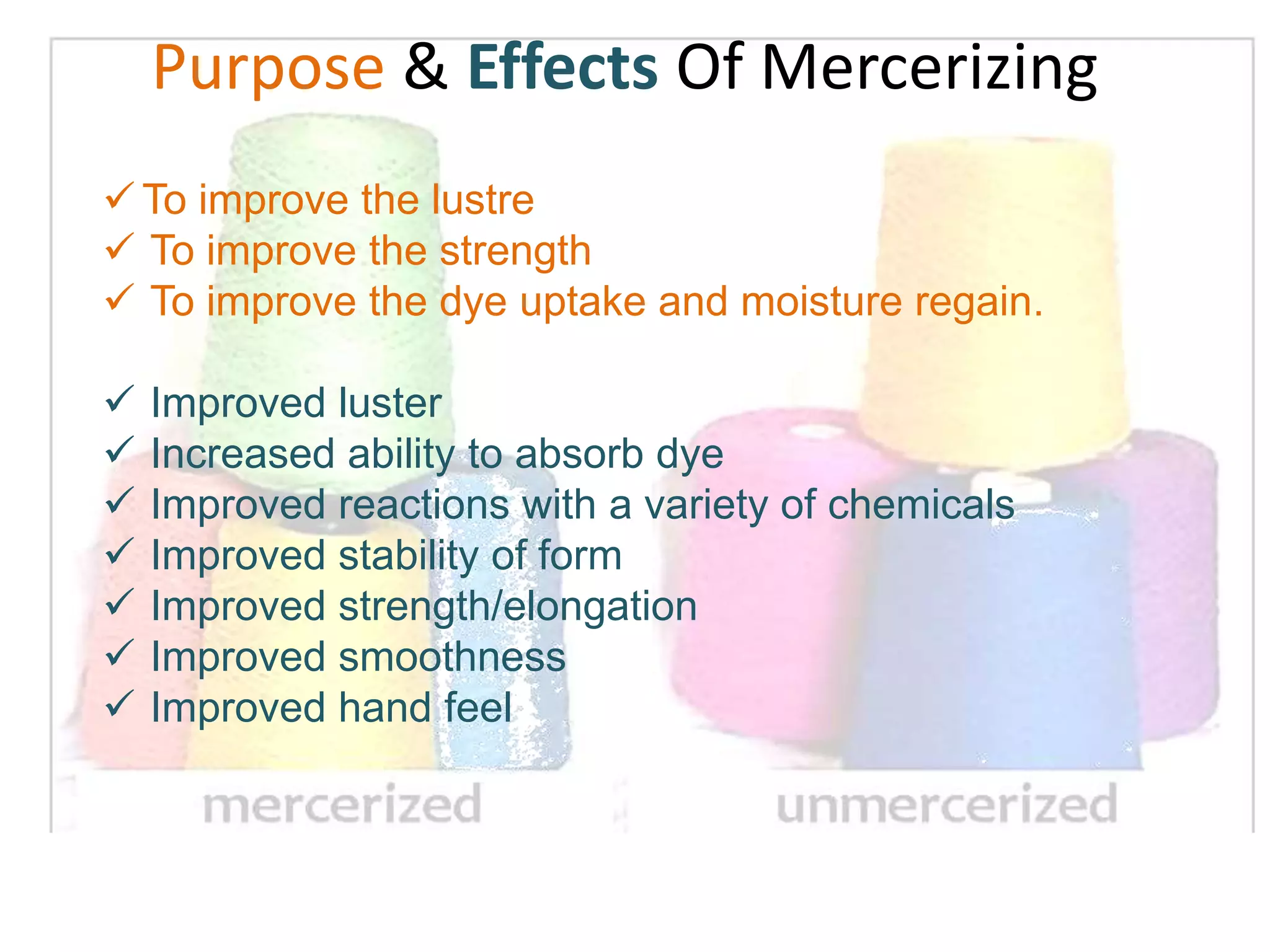
 To improve the lustre
 To improve the strength
 To improve the dye uptake and moisture regain.
 Improved luster
 Increased ability to absorb dye
 Improved reactions with a variety of chemicals
 Improved stability of form
 Improved strength/elongation
 Improved smoothness
 Improved hand feel
Purpose & Effects Of Mercerizing
ADVANTAGES OF MERCERIZING
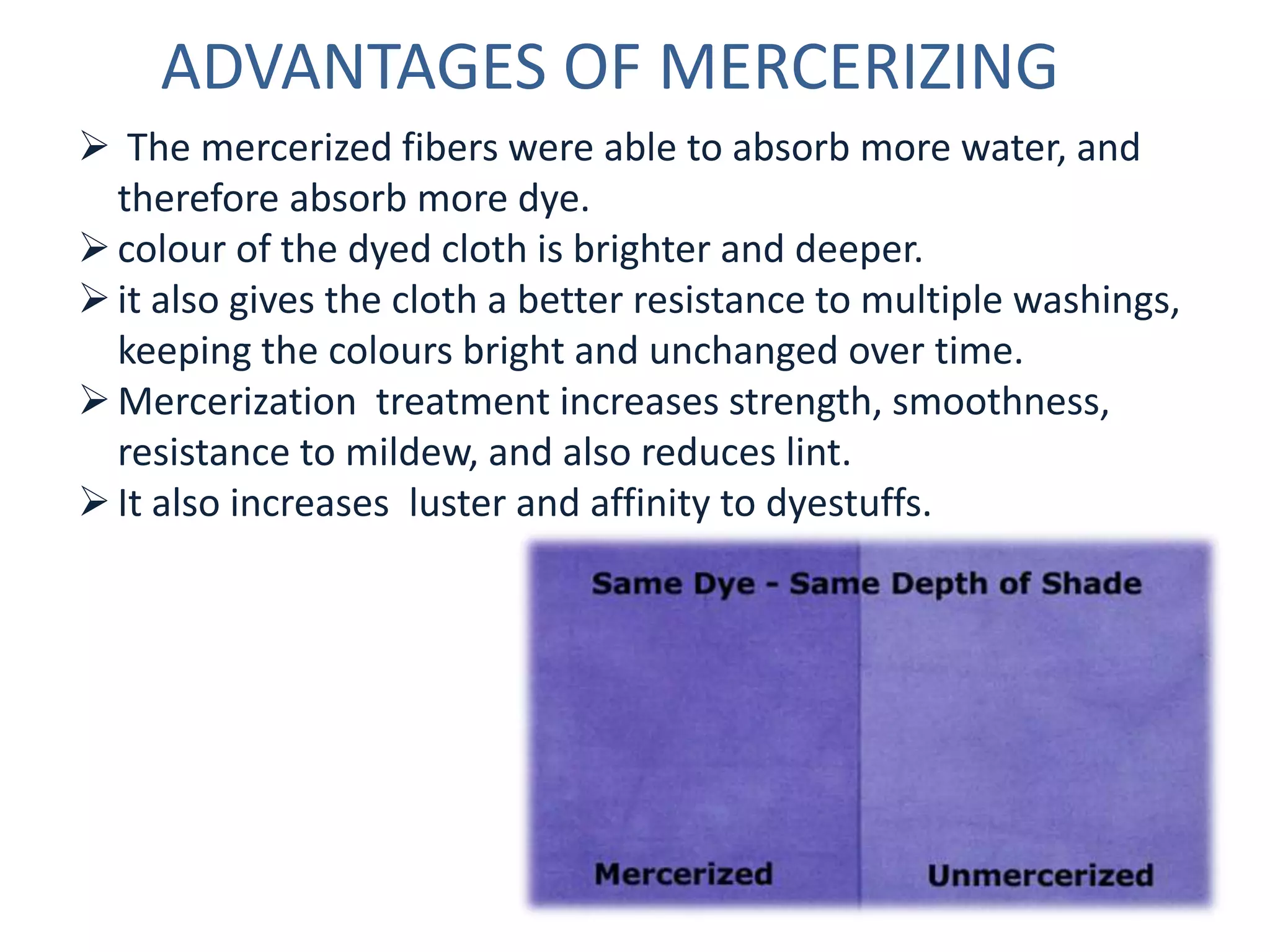
 The mercerized fibers were able to absorb more water, and
therefore absorb more dye.
colour of the dyed cloth is brighter and deeper.
it also gives the cloth a better resistance to multiple washings,
keeping the colours bright and unchanged over time.
Mercerization treatment increases strength, smoothness,
resistance to mildew, and also reduces lint.
It also increases luster and affinity to dyestuffs.
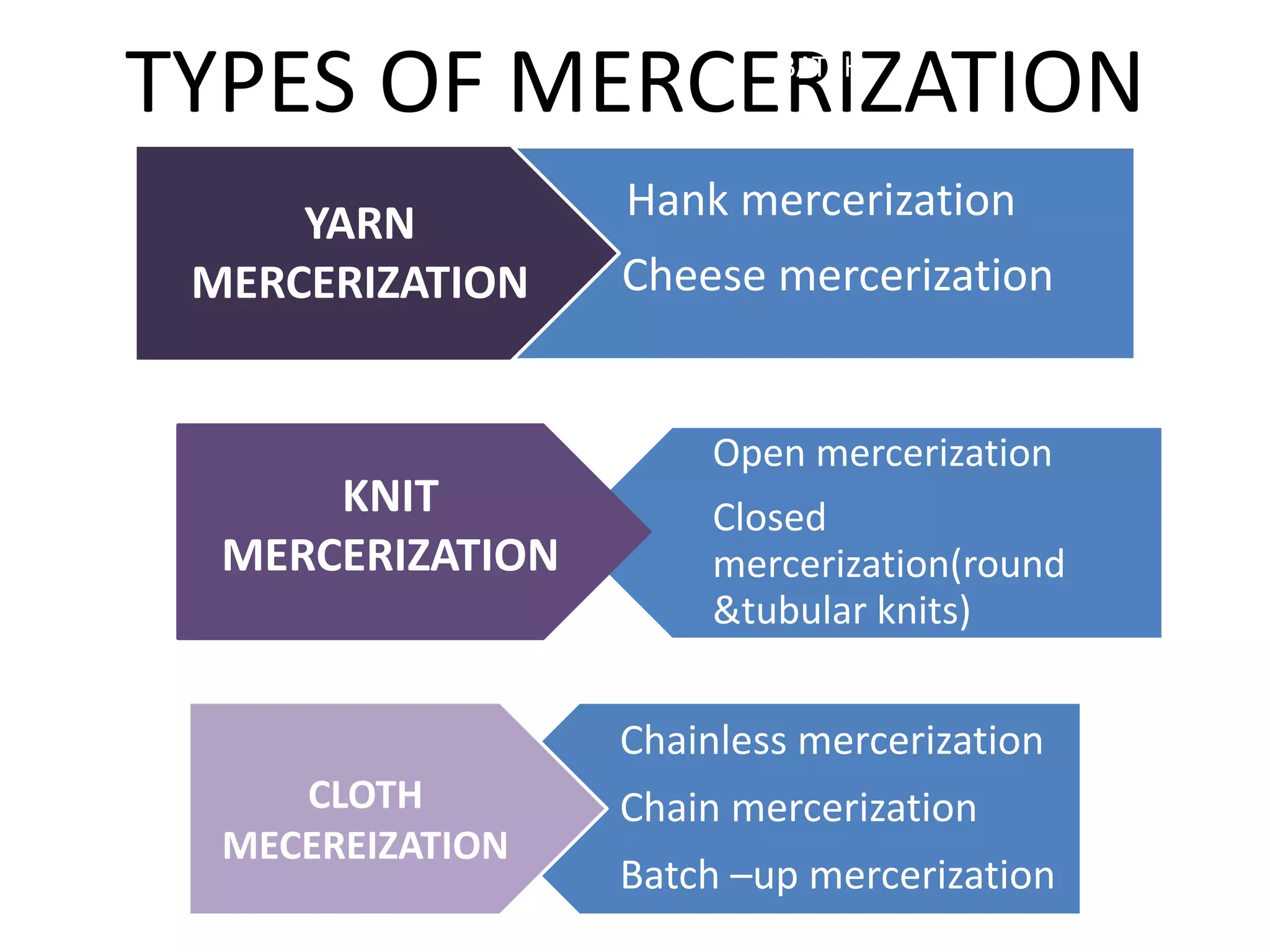
TYPES OF MERCERIZATIONBATCH
Hank mercerization
Cheese mercerization
CONTINUOUS
Open mercerization
Closed
mercerization(round
&tubular knits)
Chainless mercerization
Chain mercerization
Batch –up mercerization
YARN
MERCERIZATION
KNIT
MERCERIZATION
CLOTH
MECEREIZATION
HANK MERCERIZATION
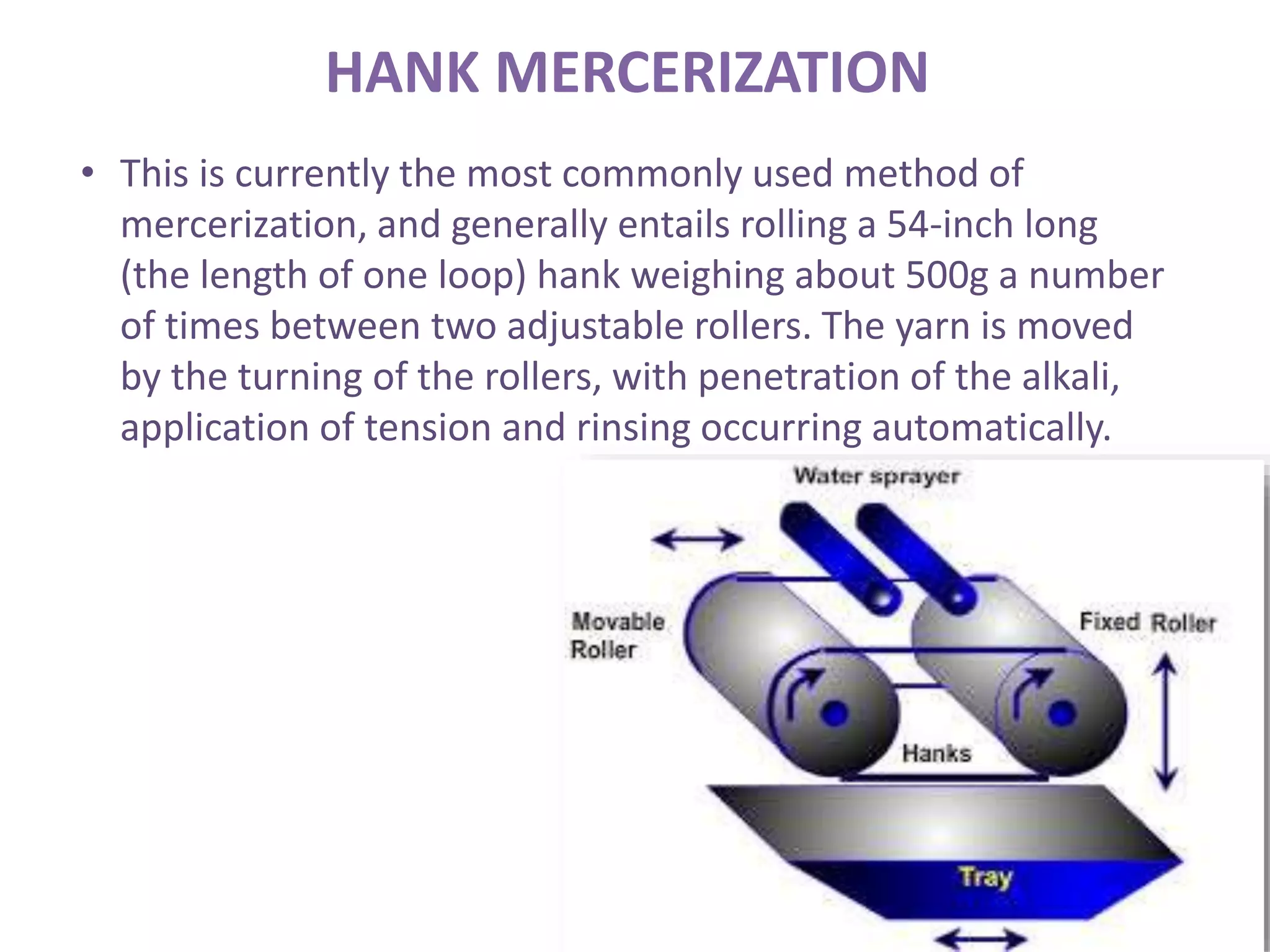
• This is currently the most commonly used method of
mercerization, and generally entails rolling a 54-inch long
(the length of one loop) hank weighing about 500g a number
of times between two adjustable rollers. The yarn is moved
by the turning of the rollers, with penetration of the alkali,
application of tension and rinsing occurring automatically.
KNIT
MERCERIZATION
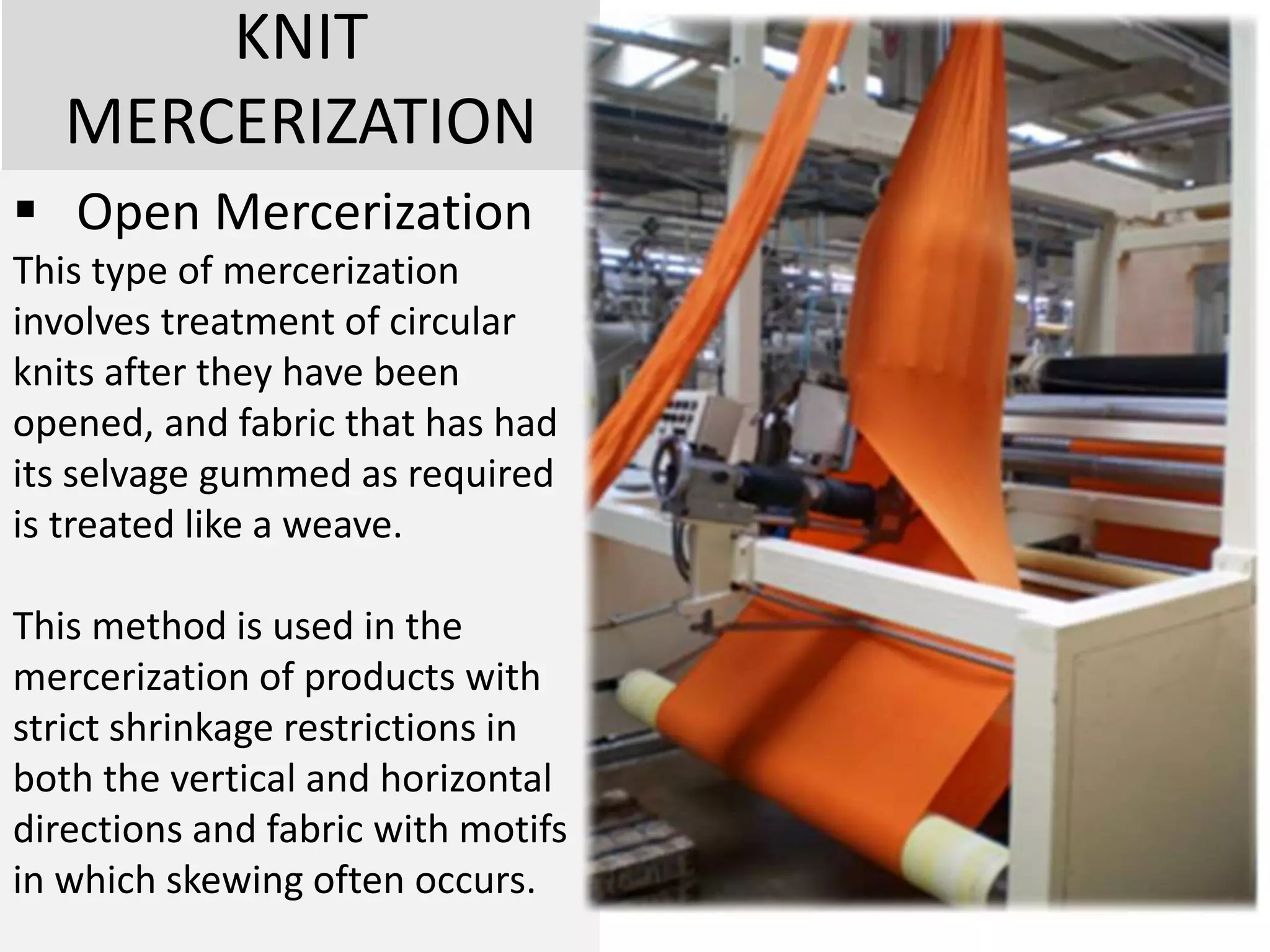
 Open Mercerization
This type of mercerization
involves treatment of circular
knits after they have been
opened, and fabric that has had
its selvage gummed as required
is treated like a weave.
This method is used in the
mercerization of products with
strict shrinkage restrictions in
both the vertical and horizontal
directions and fabric with motifs
in which skewing often occurs.
Closed Mercerization
(Tubular Mercerization)
 This method involves not
opening round knits but
mercerizing them in their
tubular state. Knits are usually
treated as two flat pieces of
material which have been laid
together.
For this, strong tension or pressure
applied longitudinally to the folds
of the two edges of the long sides
of the fabric causes differences in
yarn density on both faces of one
of the knits.
Cloth Mercerization
Chainless mercerization
This method of mercerization running fabric through a number of
rollers without the use of a clip stenter is also called roller
mercerization. The machine used has a number of stainless rollers
and rubber rollers, of a relatively-large diameter tiered zigzag in
close contact to each other inside a long trough, with the lower tier
designed to submerge in alkaline solution for mercerization. This
type is bound to limited length of fabric.
A similar device is used for the removal of most alkali following this
initial stage of alkali penetration and fabric swelling, and an open-
width soaping machine for further removal and neutralization.
Chain mercerization
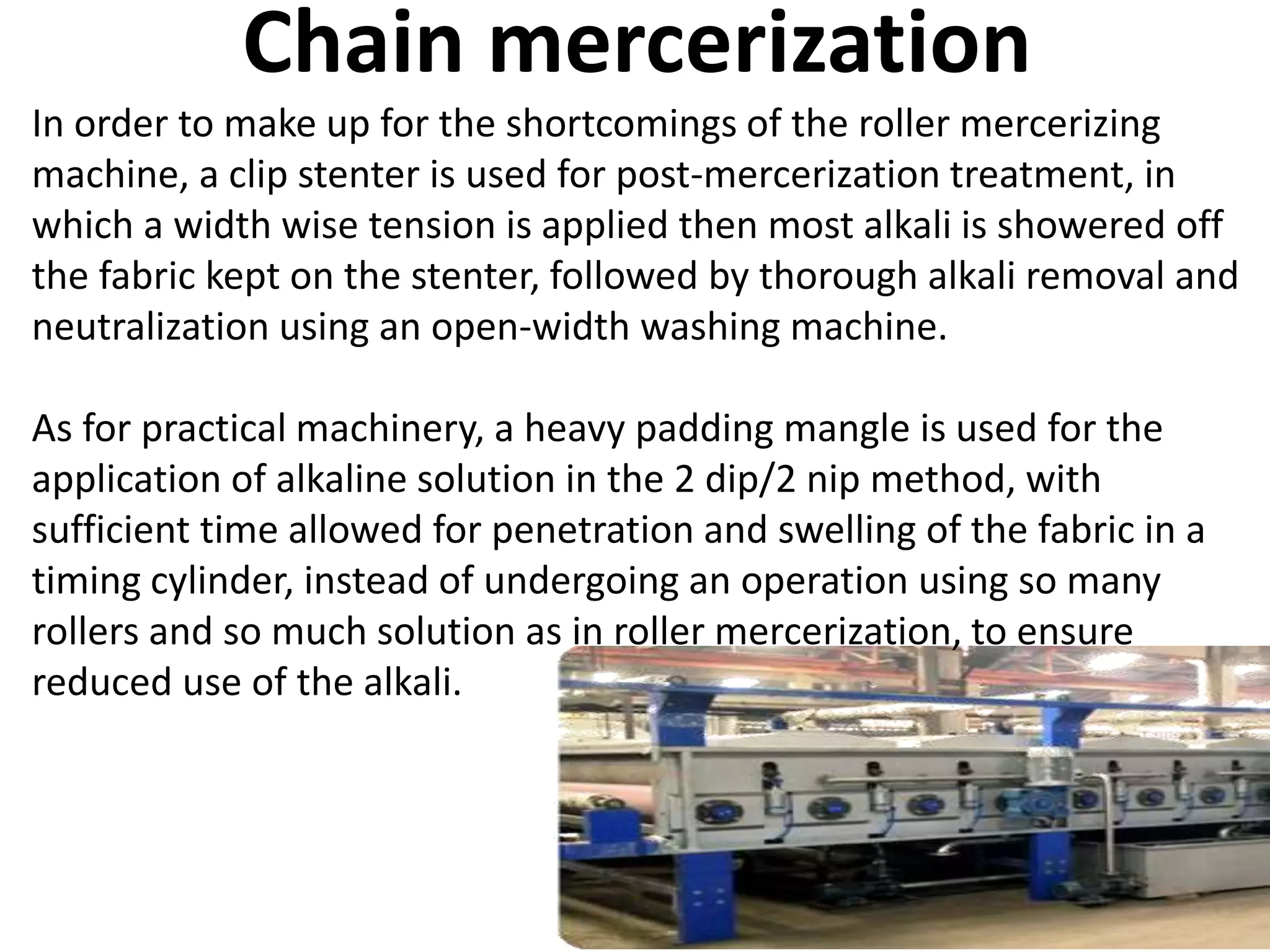
In order to make up for the shortcomings of the roller mercerizing
machine, a clip stenter is used for post-mercerization treatment, in
which a width wise tension is applied then most alkali is showered off
the fabric kept on the stenter, followed by thorough alkali removal and
neutralization using an open-width washing machine.
As for practical machinery, a heavy padding mangle is used for the
application of alkaline solution in the 2 dip/2 nip method, with
sufficient time allowed for penetration and swelling of the fabric in a
timing cylinder, instead of undergoing an operation using so many
rollers and so much solution as in roller mercerization, to ensure
reduced use of the alkali.
Batch-up mercerisation
In this method, an alkaline solution is padded onto fabric which is
then rolled up, and when padding is completed the alkali is removed
through continuous cold rinsing. Although the use of the method is
not common in Japan, a certain degree of application, including in
knits, can be found in Western Europe.
Despite costs for facilities being remarkably low, it is not an
interesting method except for some special cases, as quality
management and productivity remain problematic. Still, for the
growing cases of carrying out alkali reduction for the polyester side
of cotton/polyester blends to achieve both the mercerization of
cotton and the alkali reduction of polyester in a single treatment, the
application of this cold batch method is particularly interesting as a
device that can combine the two separate stages which would
otherwise raise facility problems.
THANK YOU
PARMEET KAUR
TEXTILE SCIENCE (CPT’15)

Mercerization

  • 1.
    MERCERIZING Mercerizing is theprocess of treatment of cellulosic material with cold or hot caustic conditions under specific conditions to improve its appearance and physical as well as chemical properties. In simple terms it is the process to treat (cotton yarns or fabric) with caustic alkali under tension, in order to increase strength, lustre, and affinity for dye. Mercerized cotton is sometimes referred to in the crafts as pearl cotton. The added desirable water handling properties gained are a secondary bonus.
  • 2.
    MERCERIZATION PROCESS Impregnation ofthe material in in relaxed state , cold caustic solution of required strength and wettability.  Stretching while the material is still impregnated in the caustic solution. Washing off the caustic soda from the material while keeping the material still in the stretch state. To get the desired luster and tensile strength, cotton is held under specified tension for about ten minutes (without the tension there is no increased luster because cotton mercerized in a relaxed state gains no luster) with an application of between 21%-23% caustic soda (NaOH) and wetting agents (used to facilitate the transfer of the NaOH into the fibers), at room temperature. Then the fabric is neutralized in an acid bath. In steps it is performed as follows:-
  • 3.
    CHANGES DURING MERCERIZINGPROCESS Fibre level  Swelling  Cross sectional morphology changes from beam shape to round shape.  Shrinkage along with longitudinal direction.  Increase in lustre of yarn  The cotton hair swells in strong caustic soda solution ,which change its cross section from squashed circular pipe shape to an oval shaped . if the fibres are placed under a tension or stretched position in the swollen state and then washed to reduce the caustic concentration below a particular limit, then there is an increase in the lustre of the fibre.
  • 4.
     To improvethe lustre  To improve the strength  To improve the dye uptake and moisture regain.  Improved luster  Increased ability to absorb dye  Improved reactions with a variety of chemicals  Improved stability of form  Improved strength/elongation  Improved smoothness  Improved hand feel Purpose & Effects Of Mercerizing
  • 5.
    ADVANTAGES OF MERCERIZING The mercerized fibers were able to absorb more water, and therefore absorb more dye. colour of the dyed cloth is brighter and deeper. it also gives the cloth a better resistance to multiple washings, keeping the colours bright and unchanged over time. Mercerization treatment increases strength, smoothness, resistance to mildew, and also reduces lint. It also increases luster and affinity to dyestuffs.
  • 6.
    TYPES OF MERCERIZATIONBATCH Hankmercerization Cheese mercerization CONTINUOUS Open mercerization Closed mercerization(round &tubular knits) Chainless mercerization Chain mercerization Batch –up mercerization YARN MERCERIZATION KNIT MERCERIZATION CLOTH MECEREIZATION
  • 7.
    HANK MERCERIZATION • Thisis currently the most commonly used method of mercerization, and generally entails rolling a 54-inch long (the length of one loop) hank weighing about 500g a number of times between two adjustable rollers. The yarn is moved by the turning of the rollers, with penetration of the alkali, application of tension and rinsing occurring automatically.
  • 8.
    KNIT MERCERIZATION  Open Mercerization Thistype of mercerization involves treatment of circular knits after they have been opened, and fabric that has had its selvage gummed as required is treated like a weave. This method is used in the mercerization of products with strict shrinkage restrictions in both the vertical and horizontal directions and fabric with motifs in which skewing often occurs.
  • 9.
    Closed Mercerization (Tubular Mercerization) This method involves not opening round knits but mercerizing them in their tubular state. Knits are usually treated as two flat pieces of material which have been laid together. For this, strong tension or pressure applied longitudinally to the folds of the two edges of the long sides of the fabric causes differences in yarn density on both faces of one of the knits.
  • 10.
    Cloth Mercerization Chainless mercerization Thismethod of mercerization running fabric through a number of rollers without the use of a clip stenter is also called roller mercerization. The machine used has a number of stainless rollers and rubber rollers, of a relatively-large diameter tiered zigzag in close contact to each other inside a long trough, with the lower tier designed to submerge in alkaline solution for mercerization. This type is bound to limited length of fabric. A similar device is used for the removal of most alkali following this initial stage of alkali penetration and fabric swelling, and an open- width soaping machine for further removal and neutralization.
  • 11.
    Chain mercerization In orderto make up for the shortcomings of the roller mercerizing machine, a clip stenter is used for post-mercerization treatment, in which a width wise tension is applied then most alkali is showered off the fabric kept on the stenter, followed by thorough alkali removal and neutralization using an open-width washing machine. As for practical machinery, a heavy padding mangle is used for the application of alkaline solution in the 2 dip/2 nip method, with sufficient time allowed for penetration and swelling of the fabric in a timing cylinder, instead of undergoing an operation using so many rollers and so much solution as in roller mercerization, to ensure reduced use of the alkali.
  • 12.
    Batch-up mercerisation In thismethod, an alkaline solution is padded onto fabric which is then rolled up, and when padding is completed the alkali is removed through continuous cold rinsing. Although the use of the method is not common in Japan, a certain degree of application, including in knits, can be found in Western Europe. Despite costs for facilities being remarkably low, it is not an interesting method except for some special cases, as quality management and productivity remain problematic. Still, for the growing cases of carrying out alkali reduction for the polyester side of cotton/polyester blends to achieve both the mercerization of cotton and the alkali reduction of polyester in a single treatment, the application of this cold batch method is particularly interesting as a device that can combine the two separate stages which would otherwise raise facility problems.
  • 13.