Teratology
Themba Hospital FCOG(SA) Part 1 Tutorials
By Dr N.E Manana
Intro
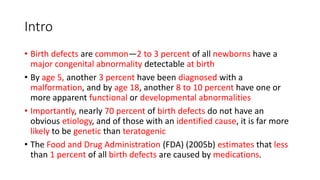
• Birth defects are common—2 to 3 percent of all newborns have a
major congenital abnormality detectable at birth
• By age 5, another 3 percent have been diagnosed with a
malformation, and by age 18, another 8 to 10 percent have one or
more apparent functional or developmental abnormalities
• Importantly, nearly 70 percent of birth defects do not have an
obvious etiology, and of those with an identified cause, it is far more
likely to be genetic than teratogenic
• The Food and Drug Administration (FDA) (2005b) estimates that less
than 1 percent of all birth defects are caused by medications.
TERATOLOGY
• The study of birth defects and their etiology is termed teratology.
• The word teratogen is derived from the Greek teratos, meaning
monster
• Pragmatically, a teratogen may be defined as any agent that acts
during embryonic or fetal development to produce a permanent
alteration of form or function
• A Trophogen is an agent that alters growth
• A Hadegen—after the god Hades—is an agent that interferes with
normal maturation and function of an organ
Studies in Pregnant Women
• The study of medication safety—or teratogenicity—in pregnant women is
fraught with complications.
• Animal studies are considered necessary but insufficient, which is a lesson
learned from the safety of thalidomide in several animal species
• Rarely are medications approved by the FDA with the specific indication for
their use being pregnancy.
• Between 1996 and 2011, for example, the only medication approved
specifically for pregnancy was hydroxyprogesterone caproate for recurrent
preterm birth prevention
• Pregnant women are generally considered a special population and
excluded from trials
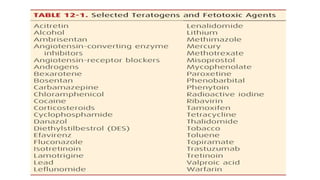
• Table 12.1
CRITERIA FOR DETERMINING
TERATOGENICITY
• Table 12.2
COUNSELING FOR TERATOGEN EXPOSURE
• Women who request counselling for prenatal drug exposure often have
misinformation regarding their level of risk.
• Not uncommonly, they may underestimate the background risk for birth
defects in the general population and exaggerate the potential risks
associated with medication exposure
• Koren and colleagues (1989) reported that a fourth of women exposed to
nonteratogenic drugs thought they had a 25-percent risk for fetal
anomalies.
• Misinformation may be amplified by inaccurate reports in the lay press.
• Knowledgeable counseling may allay anxiety considerably and in some
situations may even avoid pregnancy termination
The Food and Drug Administration
Classification System
• Table 12.3
GENETIC AND PHYSIOLOGICAL
SUSCEPTIBILITY TO TERATOGENS
• Teratogens act by disturbing specific physiological processes, which
may in turn lead to abnormal cellular differentiation, altered tissue
growth, or cell death
• But even the most potent teratogen induces birth defects in only a
fraction of exposed embryos
• Despite the numerous factors that influence exposure, teratogens
appear merely to have potential to cause birth defects.
• The reasons why some infants are affected and others are not
remains largely unknown
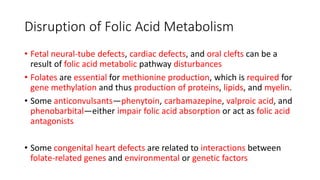
Disruption of Folic Acid Metabolism
• Fetal neural-tube defects, cardiac defects, and oral clefts can be a
result of folic acid metabolic pathway disturbances
• Folates are essential for methionine production, which is required for
gene methylation and thus production of proteins, lipids, and myelin.
• Some anticonvulsants—phenytoin, carbamazepine, valproic acid, and
phenobarbital—either impair folic acid absorption or act as folic acid
antagonists
• Some congenital heart defects are related to interactions between
folate-related genes and environmental or genetic factors
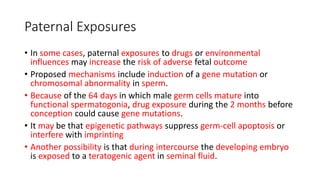
Paternal Exposures
• In some cases, paternal exposures to drugs or environmental
influences may increase the risk of adverse fetal outcome
• Proposed mechanisms include induction of a gene mutation or
chromosomal abnormality in sperm.
• Because of the 64 days in which male germ cells mature into
functional spermatogonia, drug exposure during the 2 months before
conception could cause gene mutations.
• It may be that epigenetic pathways suppress germ-cell apoptosis or
interfere with imprinting
• Another possibility is that during intercourse the developing embryo
is exposed to a teratogenic agent in seminal fluid.
KNOWN AND SUSPECTED TERATOGENS
Alcohol
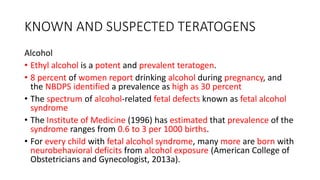
• Ethyl alcohol is a potent and prevalent teratogen.
• 8 percent of women report drinking alcohol during pregnancy, and
the NBDPS identified a prevalence as high as 30 percent
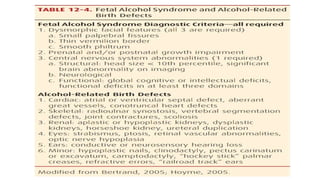
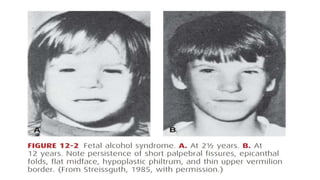
• The spectrum of alcohol-related fetal defects known as fetal alcohol
syndrome
• The Institute of Medicine (1996) has estimated that prevalence of the
syndrome ranges from 0.6 to 3 per 1000 births.
• For every child with fetal alcohol syndrome, many more are born with
neurobehavioral deficits from alcohol exposure (American College of
Obstetricians and Gynecologist, 2013a).
• Table 12.4
• Figure 12.2
Anticonvulsant Medications
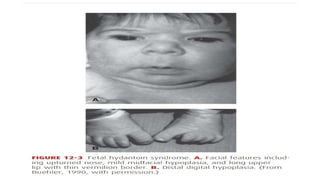
• Pragmatically, no anticonvulsant drugs are considered truly “safe” in
pregnancy.
• This is because most medications used to treat epilepsy have been proven
or suspected to confer an increased risk for fetal malformations
• Management of epilepsy in pregnancy, including risks associated with
individual anticonvulsants
• Women treated with valproic acid are at significantly increased risk for
malformations
• The most frequently reported anomalies are orofacial clefts, cardiac
malformations, and neural-tube defects (Food and Drug Administration,
2009)
• Figure 12.3
Angiotensin-Converting Enzyme Inhibitors
and Angiotensin-Receptor Blocking Drugs
• Angiotensin-converting enzyme (ACE) inhibitors are considered
fetotoxic and result in ACE-inhibitor fetopathy
• Normal renal development depends on the fetal renal-angiotensin
system
• ACE-inhibitor medication causes fetal hypotension and renal
hypoperfusion, with subsequent ischemia and anuria
• Reduced perfusion may cause fetal-growth restriction and calvarium
maldevelopment, whereas oligohydramnios may result in pulmonary
hypoplasia and limb contractures
• The possible embryotoxicity of these two drug classes is less certain
Antifungal Medications
• From this class of drugs, fluconazole has been associated with a
pattern of congenital malformations resembling the autosomal
recessive Antley-Bixler syndrome
• Abnormalities include oral clefts, abnormal facies, and cardiac, skull,
long-bone, and joint abnormalities.
• Such findings have been reported only with chronic, high-dose
treatment in the first trimester—at doses of 400 to 800 mg daily.
• The FDA (2011e) lists fluconazole as pregnancy category D, but it
states that a single 150-mg dose to treat vulvovaginal candidiasis does
not appear to be teratogenic
Anti-inflammatory Agents
Nonsteroidal Antiinflammatory Drugs
• This drug class includes both aspirin and traditional “NSAIDs” such as
ibuprofen and indomethacin
• They exert their effects by inhibiting prostaglandin synthesis.
• At least 20 percent of pregnant women report use of these drugs in
the first trimester.
• But, based on data from the NBDPS, such exposure does not appear
to be a major risk factor for birth defects
• Importantly, NSAIDs may cause adverse fetal effects when taken in
late pregnancy .
Leflunomide
• This is a pyrimidine-synthesis inhibitor used to treat rheumatoid
arthritis
• It is considered contraindicated in pregnancy because when given at
or below human-equivalent doses in several animal species, it is
associated with multiple abnormalities.
• These include hydrocephalus, eye anomalies, skeletal abnormalities,
and embryo death
Antimicrobial Drugs
• Medications used to treat infections are among those most
commonly administered during pregnancy
• Aminoglycosides: Preterm infants treated with gentamicin or
streptomycin have developed nephrotoxicity and ototoxicity
• Chloramphenicol: The gray baby syndrome was described in neonates
who received the medication
• Nitrofurantoin: NBDPS found an association between first-trimester
nitrofurantoin exposure and selected birth defects.
• The ACOG(2013b) has concluded that first-trimester nitrofurantoin
use is appropriate if no suitable alternatives are available
Antimicrobial Drugs
• Sulfonamides: The NBDPS found associations between first-trimester
exposure and a threefold increased risk for anencephaly and left
ventricular outflow tract obstruction,
• an eightfold increased risk for choanal atresia, and a twofold
increased risk for diaphragmatic hernia
• Tetracyclines: These drugs are no longer commonly used in pregnant
women.
• They are associated with yellowish-brown discoloration of deciduous
teeth when used after 25 weeks, although the risk for subsequent
dental caries does not appear increased
Antineoplastic Agents
• Cancer management in pregnancy includes many chemotherapeutic
agents generally considered to be at least potentially toxic to the
embryo, fetus, or both
• Cyclophosphamide: Pregnancy loss is increased, and reported
malformations include skeletal abnormalities, limb defects, cleft
palate, and eye abnormalities
• Methotrexate: cause defects known collectively as the fetal
methotrexate-aminopterin syndrome.
Antineoplastic Agents
• Tamoxifen: Although it has not been associated with fetal
malformations, it is fetotoxic and carcinogenic in rodents, inducing
malformations similar to those caused by diethylstilbestrol (DES)
• Trastuzumab:This drug has not been associated with fetal
malformations, but cases of oligohydramnios, anhydramnios, and
fetal renal failure have been described
• Use may result in fetal pulmonary hypoplasia, skeletal abnormalities,
and neonatal death.
Antiviral Agents
• Ribavirin: This nucleoside analogue is a component of therapy for
hepatitis C infection
• Reported malformations include skull, palate, eye, skeleton, and
gastrointestinal abnormalities.
• Efavirenz: This is a nonnucleoside reverse transcriptase inhibitor used
to treat HIV infection
• Multiple case reports of central nervous system abnormalities
following human exposure
Sex Hormones
• Testosterone and Anabolic Steroids: Exposure of a female fetus may
cause varying degrees of virilization and may result in ambiguous
genitalia similar to that encountered in cases of congenital adrenal
hyperplasia
• Danazol: Brunskill (1992) reported that 40 percent of exposed female
fetuses were virilized.
• There was a dose-related pattern of clitoromegaly, fused labia, and
urogenital sinus malformation.
• Diethylstilbestrol: Herbst and associates (1971) reported a series of
eight women exposed to DES in utero who developed an otherwise
rare neoplasm, vaginal clear-cell adenocarcinoma
Immunosuppressant Medications
• Corticosteroids: Corticosteroids have been associated with clefts in animal
studies
• A 10-year prospective cohort study by the same group, however, did not
identify increased risks for major malformations.
• Radioiodine: Radioiodine is contraindicated during pregnancy because it
readily crosses the placenta and is then concentrated in the fetal thyroid
gland by 12 weeks.
• It causes irreversible fetal hypothyroidism and may increase the risk for
childhood thyroid cancer
• Lead: Prenatal lead exposure is associated with fetal-growth abnormalities
and with childhood developmental delay and behavioral abnormalities
Psychiatric Medications
• Lithium: This medication has been associated with Ebstein anomaly, a
cardiac abnormality characterized by apical displacement of the
tricuspid valve
• Selective Serotonin- and Norepinephrine Reuptake Inhibitors: these
medications are not considered major teratogens
• The one exception is paroxetine, which has been associated with
increased risk for cardiac anomalies, particularly atrial and ventricular
septal defects.
Antipsychotic Medications
• There are no antipsychotic medications that are considered
teratogenic.
• Exposed neonates have manifested abnormal extrapyramidal muscle
movements and withdrawal symptoms,
• These findings are nonspecific and transient, similar to the neonatal
behavioral syndrome that has been described following SSRI exposure
• An FDA (2011a) alert cited all medications in this class. These include
older drugs such as haloperidol and chlorpromazine, as well as newer
medications such as aripiprazole, olanzapine, quetiapine, and
risperidone
Retinoids
• These vitamin A derivatives are among the most potent human
teratogens.
• Three retinoids available are highly teratogenic when orally
administered—isotretinoin, acitretin, and bexarotene
• By inhibiting neural-crest cell migration during embryogenesis, they
result in a pattern of cranial neural-crest defects—termed retinoic
acid embryopathy
• Specific anomalies may include ventriculomegaly, maldevelopment of
the facial bones or cranium, microtia or anotia, micrognathia, cleft
palate, conotruncal heart defects, and thymic aplasia or hypoplasia
Warfarin
• Like other coumarin derivatives, warfarin is a vitamin K antagonist and
a potent anticoagulant
• It has a low molecular weight and readily crosses the placenta,
causing embryotoxic and fetotoxic effects.
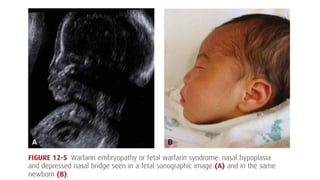
• Exposure between the 6th and 9th weeks may result in warfarin
embryopath
• This is characterized by stippling of the vertebrae and femoral
epiphyses and by nasal hypoplasia with depression of the nasal bridge
• Affected infants may also have choanal atresia, resulting in respiratory
distress.
• Figure 12.5
Recreational Drugs
• At least 10 percent of fetuses are exposed to one or more illicit drugs
(American Academy of Pediatrics and the American College of
Obstetricians and Gynecologists, 2012)
• Assessment of outcomes attributable to illicit drugs may be
confounded by factors such as poor maternal health, malnutrition,
infectious disease, and polysubstance abuse
• Moreover, illegal substances may contain toxic contaminants such as
lead, cyanide, herbicides, and pesticides.
Recreational Drugs
• Amphetamines: These sympathomimetic amines are not considered to be
major teratogens
• Cocaine: Studies of congenital abnormalities in the setting of cocaine
exposure have yielded conflicting results, but associations have been
reported with cleft palate, cardiovascular abnormalities, and urinary tract
abnormalities
• Opioids–Narcotics: As a class, opioids are not considered to be major
teratogens
• NBDPS has identified a slightly increased risk for spina bifida, gastroschisis,
and cardiac abnormalities
• In contrast, opioid use is strongly associated with adverse fetal and
neonatal effects
Miscellaneous Drugs
• Marijuana use has not been associated with an increased risk for
human fetal anomalies
• Phencyclidine (PCP) or angel dust is not associated with congenital
anomalies.
• More than half of exposed newborns, however, experience
withdrawal symptoms
• Toluene is a common solvent used in paints and glue. Occupational
exposure is reported to have significant fetal risk
• When abused by women in early pregnancy, it is associated with
toluene embryopathy
Tobacco
• Cigarette smoke contains a complex mixture of nicotine, cotinine,
cyanide, thiocyanate, carbon monoxide, cadmium, lead, and various
hydrocarbons
• In addition to being fetotoxic, many of these substances have
vasoactive effects or reduce oxygen levels.
• Tobacco is not considered a major teratogen, although selected birth
defects have been reported to occur with increased frequency among
infants of women who smoke.
• It is plausible that the vasoactive properties of tobacco smoke could
produce congenital defects related to vascular disturbances
Thank you

8. Teratology.pptx

  • 1.
    Teratology Themba Hospital FCOG(SA)Part 1 Tutorials By Dr N.E Manana
  • 2.
    Intro • Birth defectsare common—2 to 3 percent of all newborns have a major congenital abnormality detectable at birth • By age 5, another 3 percent have been diagnosed with a malformation, and by age 18, another 8 to 10 percent have one or more apparent functional or developmental abnormalities • Importantly, nearly 70 percent of birth defects do not have an obvious etiology, and of those with an identified cause, it is far more likely to be genetic than teratogenic • The Food and Drug Administration (FDA) (2005b) estimates that less than 1 percent of all birth defects are caused by medications.
  • 3.
    TERATOLOGY • The studyof birth defects and their etiology is termed teratology. • The word teratogen is derived from the Greek teratos, meaning monster • Pragmatically, a teratogen may be defined as any agent that acts during embryonic or fetal development to produce a permanent alteration of form or function • A Trophogen is an agent that alters growth • A Hadegen—after the god Hades—is an agent that interferes with normal maturation and function of an organ
  • 4.
    Studies in PregnantWomen • The study of medication safety—or teratogenicity—in pregnant women is fraught with complications. • Animal studies are considered necessary but insufficient, which is a lesson learned from the safety of thalidomide in several animal species • Rarely are medications approved by the FDA with the specific indication for their use being pregnancy. • Between 1996 and 2011, for example, the only medication approved specifically for pregnancy was hydroxyprogesterone caproate for recurrent preterm birth prevention • Pregnant women are generally considered a special population and excluded from trials
  • 5.
  • 6.
  • 7.
    COUNSELING FOR TERATOGENEXPOSURE • Women who request counselling for prenatal drug exposure often have misinformation regarding their level of risk. • Not uncommonly, they may underestimate the background risk for birth defects in the general population and exaggerate the potential risks associated with medication exposure • Koren and colleagues (1989) reported that a fourth of women exposed to nonteratogenic drugs thought they had a 25-percent risk for fetal anomalies. • Misinformation may be amplified by inaccurate reports in the lay press. • Knowledgeable counseling may allay anxiety considerably and in some situations may even avoid pregnancy termination
  • 8.
    The Food andDrug Administration Classification System • Table 12.3
  • 9.
    GENETIC AND PHYSIOLOGICAL SUSCEPTIBILITYTO TERATOGENS • Teratogens act by disturbing specific physiological processes, which may in turn lead to abnormal cellular differentiation, altered tissue growth, or cell death • But even the most potent teratogen induces birth defects in only a fraction of exposed embryos • Despite the numerous factors that influence exposure, teratogens appear merely to have potential to cause birth defects. • The reasons why some infants are affected and others are not remains largely unknown
  • 10.
    Disruption of FolicAcid Metabolism • Fetal neural-tube defects, cardiac defects, and oral clefts can be a result of folic acid metabolic pathway disturbances • Folates are essential for methionine production, which is required for gene methylation and thus production of proteins, lipids, and myelin. • Some anticonvulsants—phenytoin, carbamazepine, valproic acid, and phenobarbital—either impair folic acid absorption or act as folic acid antagonists • Some congenital heart defects are related to interactions between folate-related genes and environmental or genetic factors
  • 11.
    Paternal Exposures • Insome cases, paternal exposures to drugs or environmental influences may increase the risk of adverse fetal outcome • Proposed mechanisms include induction of a gene mutation or chromosomal abnormality in sperm. • Because of the 64 days in which male germ cells mature into functional spermatogonia, drug exposure during the 2 months before conception could cause gene mutations. • It may be that epigenetic pathways suppress germ-cell apoptosis or interfere with imprinting • Another possibility is that during intercourse the developing embryo is exposed to a teratogenic agent in seminal fluid.
  • 12.
    KNOWN AND SUSPECTEDTERATOGENS Alcohol • Ethyl alcohol is a potent and prevalent teratogen. • 8 percent of women report drinking alcohol during pregnancy, and the NBDPS identified a prevalence as high as 30 percent • The spectrum of alcohol-related fetal defects known as fetal alcohol syndrome • The Institute of Medicine (1996) has estimated that prevalence of the syndrome ranges from 0.6 to 3 per 1000 births. • For every child with fetal alcohol syndrome, many more are born with neurobehavioral deficits from alcohol exposure (American College of Obstetricians and Gynecologist, 2013a).
  • 13.
  • 14.
  • 15.
    Anticonvulsant Medications • Pragmatically,no anticonvulsant drugs are considered truly “safe” in pregnancy. • This is because most medications used to treat epilepsy have been proven or suspected to confer an increased risk for fetal malformations • Management of epilepsy in pregnancy, including risks associated with individual anticonvulsants • Women treated with valproic acid are at significantly increased risk for malformations • The most frequently reported anomalies are orofacial clefts, cardiac malformations, and neural-tube defects (Food and Drug Administration, 2009)
  • 16.
  • 17.
    Angiotensin-Converting Enzyme Inhibitors andAngiotensin-Receptor Blocking Drugs • Angiotensin-converting enzyme (ACE) inhibitors are considered fetotoxic and result in ACE-inhibitor fetopathy • Normal renal development depends on the fetal renal-angiotensin system • ACE-inhibitor medication causes fetal hypotension and renal hypoperfusion, with subsequent ischemia and anuria • Reduced perfusion may cause fetal-growth restriction and calvarium maldevelopment, whereas oligohydramnios may result in pulmonary hypoplasia and limb contractures • The possible embryotoxicity of these two drug classes is less certain
  • 18.
    Antifungal Medications • Fromthis class of drugs, fluconazole has been associated with a pattern of congenital malformations resembling the autosomal recessive Antley-Bixler syndrome • Abnormalities include oral clefts, abnormal facies, and cardiac, skull, long-bone, and joint abnormalities. • Such findings have been reported only with chronic, high-dose treatment in the first trimester—at doses of 400 to 800 mg daily. • The FDA (2011e) lists fluconazole as pregnancy category D, but it states that a single 150-mg dose to treat vulvovaginal candidiasis does not appear to be teratogenic
  • 19.
    Anti-inflammatory Agents Nonsteroidal AntiinflammatoryDrugs • This drug class includes both aspirin and traditional “NSAIDs” such as ibuprofen and indomethacin • They exert their effects by inhibiting prostaglandin synthesis. • At least 20 percent of pregnant women report use of these drugs in the first trimester. • But, based on data from the NBDPS, such exposure does not appear to be a major risk factor for birth defects • Importantly, NSAIDs may cause adverse fetal effects when taken in late pregnancy .
  • 20.
    Leflunomide • This isa pyrimidine-synthesis inhibitor used to treat rheumatoid arthritis • It is considered contraindicated in pregnancy because when given at or below human-equivalent doses in several animal species, it is associated with multiple abnormalities. • These include hydrocephalus, eye anomalies, skeletal abnormalities, and embryo death
  • 21.
    Antimicrobial Drugs • Medicationsused to treat infections are among those most commonly administered during pregnancy • Aminoglycosides: Preterm infants treated with gentamicin or streptomycin have developed nephrotoxicity and ototoxicity • Chloramphenicol: The gray baby syndrome was described in neonates who received the medication • Nitrofurantoin: NBDPS found an association between first-trimester nitrofurantoin exposure and selected birth defects. • The ACOG(2013b) has concluded that first-trimester nitrofurantoin use is appropriate if no suitable alternatives are available
  • 22.
    Antimicrobial Drugs • Sulfonamides:The NBDPS found associations between first-trimester exposure and a threefold increased risk for anencephaly and left ventricular outflow tract obstruction, • an eightfold increased risk for choanal atresia, and a twofold increased risk for diaphragmatic hernia • Tetracyclines: These drugs are no longer commonly used in pregnant women. • They are associated with yellowish-brown discoloration of deciduous teeth when used after 25 weeks, although the risk for subsequent dental caries does not appear increased
  • 23.
    Antineoplastic Agents • Cancermanagement in pregnancy includes many chemotherapeutic agents generally considered to be at least potentially toxic to the embryo, fetus, or both • Cyclophosphamide: Pregnancy loss is increased, and reported malformations include skeletal abnormalities, limb defects, cleft palate, and eye abnormalities • Methotrexate: cause defects known collectively as the fetal methotrexate-aminopterin syndrome.
  • 24.
    Antineoplastic Agents • Tamoxifen:Although it has not been associated with fetal malformations, it is fetotoxic and carcinogenic in rodents, inducing malformations similar to those caused by diethylstilbestrol (DES) • Trastuzumab:This drug has not been associated with fetal malformations, but cases of oligohydramnios, anhydramnios, and fetal renal failure have been described • Use may result in fetal pulmonary hypoplasia, skeletal abnormalities, and neonatal death.
  • 25.
    Antiviral Agents • Ribavirin:This nucleoside analogue is a component of therapy for hepatitis C infection • Reported malformations include skull, palate, eye, skeleton, and gastrointestinal abnormalities. • Efavirenz: This is a nonnucleoside reverse transcriptase inhibitor used to treat HIV infection • Multiple case reports of central nervous system abnormalities following human exposure
  • 26.
    Sex Hormones • Testosteroneand Anabolic Steroids: Exposure of a female fetus may cause varying degrees of virilization and may result in ambiguous genitalia similar to that encountered in cases of congenital adrenal hyperplasia • Danazol: Brunskill (1992) reported that 40 percent of exposed female fetuses were virilized. • There was a dose-related pattern of clitoromegaly, fused labia, and urogenital sinus malformation. • Diethylstilbestrol: Herbst and associates (1971) reported a series of eight women exposed to DES in utero who developed an otherwise rare neoplasm, vaginal clear-cell adenocarcinoma
  • 27.
    Immunosuppressant Medications • Corticosteroids:Corticosteroids have been associated with clefts in animal studies • A 10-year prospective cohort study by the same group, however, did not identify increased risks for major malformations. • Radioiodine: Radioiodine is contraindicated during pregnancy because it readily crosses the placenta and is then concentrated in the fetal thyroid gland by 12 weeks. • It causes irreversible fetal hypothyroidism and may increase the risk for childhood thyroid cancer • Lead: Prenatal lead exposure is associated with fetal-growth abnormalities and with childhood developmental delay and behavioral abnormalities
  • 28.
    Psychiatric Medications • Lithium:This medication has been associated with Ebstein anomaly, a cardiac abnormality characterized by apical displacement of the tricuspid valve • Selective Serotonin- and Norepinephrine Reuptake Inhibitors: these medications are not considered major teratogens • The one exception is paroxetine, which has been associated with increased risk for cardiac anomalies, particularly atrial and ventricular septal defects.
  • 29.
    Antipsychotic Medications • Thereare no antipsychotic medications that are considered teratogenic. • Exposed neonates have manifested abnormal extrapyramidal muscle movements and withdrawal symptoms, • These findings are nonspecific and transient, similar to the neonatal behavioral syndrome that has been described following SSRI exposure • An FDA (2011a) alert cited all medications in this class. These include older drugs such as haloperidol and chlorpromazine, as well as newer medications such as aripiprazole, olanzapine, quetiapine, and risperidone
  • 30.
    Retinoids • These vitaminA derivatives are among the most potent human teratogens. • Three retinoids available are highly teratogenic when orally administered—isotretinoin, acitretin, and bexarotene • By inhibiting neural-crest cell migration during embryogenesis, they result in a pattern of cranial neural-crest defects—termed retinoic acid embryopathy • Specific anomalies may include ventriculomegaly, maldevelopment of the facial bones or cranium, microtia or anotia, micrognathia, cleft palate, conotruncal heart defects, and thymic aplasia or hypoplasia
  • 31.
    Warfarin • Like othercoumarin derivatives, warfarin is a vitamin K antagonist and a potent anticoagulant • It has a low molecular weight and readily crosses the placenta, causing embryotoxic and fetotoxic effects. • Exposure between the 6th and 9th weeks may result in warfarin embryopath • This is characterized by stippling of the vertebrae and femoral epiphyses and by nasal hypoplasia with depression of the nasal bridge • Affected infants may also have choanal atresia, resulting in respiratory distress.
  • 32.
  • 33.
    Recreational Drugs • Atleast 10 percent of fetuses are exposed to one or more illicit drugs (American Academy of Pediatrics and the American College of Obstetricians and Gynecologists, 2012) • Assessment of outcomes attributable to illicit drugs may be confounded by factors such as poor maternal health, malnutrition, infectious disease, and polysubstance abuse • Moreover, illegal substances may contain toxic contaminants such as lead, cyanide, herbicides, and pesticides.
  • 34.
    Recreational Drugs • Amphetamines:These sympathomimetic amines are not considered to be major teratogens • Cocaine: Studies of congenital abnormalities in the setting of cocaine exposure have yielded conflicting results, but associations have been reported with cleft palate, cardiovascular abnormalities, and urinary tract abnormalities • Opioids–Narcotics: As a class, opioids are not considered to be major teratogens • NBDPS has identified a slightly increased risk for spina bifida, gastroschisis, and cardiac abnormalities • In contrast, opioid use is strongly associated with adverse fetal and neonatal effects
  • 35.
    Miscellaneous Drugs • Marijuanause has not been associated with an increased risk for human fetal anomalies • Phencyclidine (PCP) or angel dust is not associated with congenital anomalies. • More than half of exposed newborns, however, experience withdrawal symptoms • Toluene is a common solvent used in paints and glue. Occupational exposure is reported to have significant fetal risk • When abused by women in early pregnancy, it is associated with toluene embryopathy
  • 36.
    Tobacco • Cigarette smokecontains a complex mixture of nicotine, cotinine, cyanide, thiocyanate, carbon monoxide, cadmium, lead, and various hydrocarbons • In addition to being fetotoxic, many of these substances have vasoactive effects or reduce oxygen levels. • Tobacco is not considered a major teratogen, although selected birth defects have been reported to occur with increased frequency among infants of women who smoke. • It is plausible that the vasoactive properties of tobacco smoke could produce congenital defects related to vascular disturbances
  • 37.

Editor's Notes

  • #3 Although only a relatively small number of medications have proven harmful effects, there is significant concern surrounding medication use in pregnancy. This is because most pregnant women take medications and for most medications, available safety data are limited. More recently, data from the National Birth Defects Prevention Study showed that women use an average of 2 to 3 medications per pregnancy and that 70 percent take medication in the first trimester
  • #4 Thus, a teratogen may be a drug or other chemical substance, a physical or environmental factor such as heat or radiation, a maternal metabolite such as in phenylketonuria or diabetes, a genetic abnormality, or an infection. Tightly defined, a teratogen causes structural abnormalities, whereas a hadegen—after the god Hades—is an agent that interferes with normal maturation and function of an organ Substances in the latter two groups typically affect development in the fetal period or after birth, when exposures are often more difficult to document. In most circumstances, teratogen is used to refer to all three types of agents
  • #5 Specifically, changes in volume of distribution, cardiac output, gastrointestinal absorption, hepatic metabolism, and renal clearance may each affect drug concentration and thus embryo-fetal exposure Potentially harmful agents may be monitored by clinicians who prospectively enroll exposed pregnancies in a registry Similar to case series, exposure registries are limited by lack of a control group. To compare the prevalence of an abnormality identified among exposed infants with that expected in the general population, investigators use a birth defect registry In these studies, investigators retrospectively assess prenatal exposure to particular substances between affected infants and controls. Birth defect registries are ideal for ascertainment of cases. However, case-control studies have two inherent weaknesses. First, there is potential for recall bias, in which the mother of an affected infant may be more likely to recall exposure. Second, case-control studies can only evaluate associations, rather than causality, and are thus hypothesis-generating.
  • #6 Several major teratogens were first described by astute clinicians. Congenital rubella syndrome was identified in this way by Gregg (1941), an Australian ophthalmologist whose observations challenged the view that the uterine environment was impervious to noxious agents. Other teratogens identified through case series include thalidomide and alcohol (Jones, 1973; Lenz, 1962)
  • #10 Because pathophysiological processes may be induced in various cell types and tissues, exposure may result in multiple effects, and because different teratogens may disturb similar processes, they may produce similar phenotypic abnormalities Fetal Genome In some cases, genetic composition has been linked to susceptibility to teratogenic effects of specific medications. For example, fetuses exposed to hydantoin are more likely to develop anomalies if homozygous for a gene mutation that results in abnormally low levels of epoxide hydrolase (Buehler, 1990) If activity of epoxide hydrolase enzyme is reduced, then hydantoin, carbamazepine, and phenobarbital are metabolized by microsomes to oxidative intermediates that accumulate in fetal tissues These free oxide radicals have carcinogenic, mutagenic, and other toxic effects that are dose related and increase with multidrug therapy
  • #11 The resultant low periconceptional folic acid levels in some women with epilepsy may then cause fetal malformations In one study of more than 5000 infants with birth defects, exposure to these folic acid antagonists was associated with a two- to threefold increased risk for oral clefts and cardiac abnormalities In a case-control study with more than 500 infants with a cardiac defect, maternal polymorphisms in three folate-related genes were found to increase the risk for cardiac anomalies when combined with maternal cigarette smoking, alcohol consumption, or obesitY
  • #12 There is some evidence to support these hypotheses. For example, ethyl alcohol, cyclophosphamide, lead, and certain opiates have been associated with an increased risk of behavioral defects in the offspring of exposed male rodents In humans, paternal environmental exposure to mercury, lead, solvents, pesticides, anesthetic gases, or hydrocarbons may be associated with early pregnancy loss Other occupations associated with an increased risk for men to have anomalous offspring include janitors, woodworkers, firemen, printers, and painters Risk attribution is limited because assessment of paternal exposure is often imprecise, and there is potential for simultaneous maternal exposure, particularly for environmental agents such as pesticides
  • #13 Alcohol is one of the most frequent nongenetic causes of mental retardation as well as the leading cause of preventable birth defects in the United States. According to the Centers for Disease Control and Prevention (CDC)(2012) Between 1 and 2 percent of pregnant women admit to binge drinking The fetal effects of alcohol abuse have been recognized since the 1800s. Lemoine (1968) and Jones (1973) and their coworkers are credited with describing Fetal alcohol spectrum disorder is an umbrella term that includes the full range of prenatal alcohol damage that may not meet the criteria for fetal alcohol syndrome. Prevalence of this disorder is estimated to be as high as 1 percent of births in the United States (Centers for Disease Control, 2012; Guerri, 2009)
  • #14 Clinical Characteristics Fetal alcohol syndrome has specific criteria, listed in Table 12-4, and which include dysmorphic facial features, pre- or postnatal growth impairment, and central nervous system abnormalities that may be structural, neurological, or functional (Bertrand, 2005) Dose Effect Fetal vulnerability to alcohol is modified by genetic factors, nutritional status, environmental factors, coexisting maternal disease, and maternal age (Abel, 1995) The minimum amount of alcohol required to produce adverse fetal consequences is unknown. Binge drinking, however, is believed to pose particularly high risk for alcohol-related birth defects and has also been linked to an increased risk for stillbirth (Centers for Disease Control, 2012; Maier, 2001; StrandbergLarsen, 2008).
  • #15 The distinctive facial features are shown in Figure 12-2. Other alcohol-related major and minor birth defects include cardiac and renal anomalies, orthopedic problems, and abnormalities of the eyes and ears An association has also been reported between periconceptional alcohol use and omphalocele and gastroschisis (Richardson, 2011). There are no established criteria for prenatal diagnosis of fetal alcohol syndrome, although in some cases, major abnormalities or growth restriction may be suggestive (Paintner, 2012).
  • #16 The North American Antiepileptic Drug (NAAED) Pregnancy Registry was established to improve counseling information. Providers are encouraged to enroll pregnant women treated with antiepileptic medication through the FDA website or 1–888–233– 2334. Traditionally, women with epilepsy were informed that their risk for fetal malformations was increased two- to threefold. More recent data suggest that the risk may not be as great as once thought, particularly for newer agents In a recent population-based study involving more than 800,000 pregnancies, exposure to newer anticonvulsants was associated with a 3-percent major malformation risk, compared with a 2-percent risk in unexposed fetuses Similarly, the United Kingdom Epilepsy and Pregnancy Registry reported a 3-percent risk for major malformations in pregnancies treated with a single anticonvulsant—monotherapy This is the same malformation rate as for those with untreated epilepsy (Morrow, 2006) Several older anticonvulsants produce a constellation of malformations similar to the fetal hydantoin syndrome (Fig. 12-3). Of agents in current use, valproic acid confers the greatest risk. The NAAED Pregnancy Registry reported that major malformations occurred in 9 percent of fetuses with first-trimester valproate exposure and included a 4-percent risk for neural-tube defects Moreover, children with in utero exposure to valproic acid are reported to have significantly lower intelligence quotient (IQ) scores at age 3 years compared with scores of those exposed to phenytoin, carbamazepine, or lamotrigine (Meador, 2009). Of the newer agents, topiramate has recently been reported by the NAAED Pregnancy Registry and the NBDPS to confer a risk for orofacial clefts at least fivefold higher than in unexposed pregnancies
  • #18 Because angiotensin-receptor blockers have a similar mechanism of action, concerns regarding fetotoxicity have been generalized to include this entire medication class. Given the many therapeutic options for treating hypertension during pregnancy, discussed in Chapter 50 (p. 1006), it is recommended that ACE inhibitors and angiotensin receptor-blocking drugs be avoided.
  • #19 In a recent population-based cohort of more than 7000 pregnancies with first-trimester exposure to low-dose fluconazole, a threefold increased risk for tetralogy of Fallot was identified However, risks for other birth defects were not increased.
  • #20 Indomethacin may cause constriction of the fetal ductus arteriosus, resulting in pulmonary hypertension, may also decrease fetal urine production and thereby reduce amnionic fluid volumeAspirin is not considered to increase the overall risk for congenital malformations (Kozer, 2002). Low-dose aspirin, 100 mg daily or lower, does not confer an increased risk for constriction of the ductus arteriosus or for adverse infant outcomes (Di Sessa, 1994; Grab, 2000). As with other NSAIDs, however, high-dose aspirin use should be avoided, particularly in the third trimester reduce amnionic fluid volume. This is presumed due to an increase in vasopressin levels and vasopressin responsiveness Fetal ductal constriction is more likely when the drug is taken in the third trimester for longer than 72 hours’ duration. In a study of 60 exposed pregnancies, ductal constriction developed in 50 percent and was significantly more likely after 30 weeks (Vermillion, 1997). Fortunately, ductal flow velocity returned to normal in all fetuses following discontinuation of therapy. Other NSAIDs are assumed to confer similar risks.
  • #21 Women of childbearing potential who discontinue this medication should consider cholestyramine treatment/washout, followed by verification that serum levels are undetectable on two tests performed 14 days apart The active metabolite of leflunomide is detectable in plasma for up to 2 years following its discontinuation Guidelines are also available for cholestyramine treatment/washout for men who discontinue leflunomide and who are contemplating fatherhood
  • #22 Aminoglycosides Despite theoretical concern for potential fetal toxicity, no adverse effects have been demonstrated, and no congenital defects resulting from prenatal exposure have been identified Chloramphenicol Preterm infants were unable to conjugate and excrete the drug and manifested abdominal distention, respiratory abnormalities, an ashen-gray color, and vascular collapse (Weiss, 1960). Chloramphenicol was subsequently avoided in late pregnancy due to theoretical concerns. Nitrofurantoin These include a fourfold increased risk for hypoplastic left heart syndrome and microphthalmia/anophthalmia and a twofold increased risk for clefts and atrial septal defects (Crider, 2009). For postexposure counseling purposes, the absolute risk of these defects remains quite low. For example, a fourfold increased incidence of hypoplastic left heart would result in a prevalence of less than 1 per 1000 exposed infants
  • #23 Sulfonamides The American College of Obstetricians and Gynecologists (2013b) considers sulfonamides appropriate for first-trimester use if suitable alternatives are lacking. There are also theoretical concerns that because sulfonamides displace bilirubin from protein binding sites, they may worsen hyperbilirubinemia if given near the time of preterm delivery. However, a recent population-based review of more than 800,000 births from Denmark found no association between receiving sulfamethoxazole in late pregnancy and neonatal jaundice
  • #24 methotrexate-aminopterin syndrome. This includes craniosynostosis with “clover-leaf” skull, wide nasal bridge, low-set ears, micrognathia, and limb abnormalities Cyclophosphamide This alkylating agent inflicts a chemical insult on developing fetal tissues and leads to cell death and heritable DNA alterations in surviving cells.Surviving infants may have growth abnormalities and developmental delays. Environmental exposure among health-care workers is associated with an increased risk for spontaneous abortion Methotrexate This folic-acid antagonist is a potent teratogen. It is used for cancer chemotherapy, immunosuppression in conditions such as autoimmune diseases and psoriasis, nonsurgical treatment of ectopic pregnancy, and finally, as an abortifacient. It is similar in action to aminopterin, which is no longer in clinical use The critical developmental period of these abnormalities is believed to be 8 to 10 weeks, at a dosage of at least 10 mg/week, although this is not universally accepted Thus, ongoing pregnancies after treatment with methotrexate—especially if it is used in conjunction with misoprostol—raise serious concerns for fetal malformations
  • #25 Tamoxifen This nonsteroidal selective estrogen-receptor modulator (SERM) is used as an adjuvant to treat breast cancer tamoxifen is pregnancy category D. It is recommended that women who become pregnant while either on therapy or within 2 months of its discontinuation be apprised of potential long-term risks of a DES-like syndrome. Exposed offspring should be monitored for carcinogenic effects for up to 20 years Trastuzumab This is a recombinant monoclonal antibody directed to the human epidermal growth factor receptor 2 (HER2) protein. It is used to treat breast cancers that over express HER2 protein
  • #26 Ribavirin , discussed in Chapter 55 (p. 1091). Ribavirin causes birth defects in multiple animal species at doses significantly lower than those recommended for human use. The drug has a long halflife and persists in extravascular compartments following discontinuation of therapy. It is recommended that women use two forms of contraception while on therapy and delay childbearing for 6 months following drug discontinuation Efavirenz (Chap. 65, p. 1279). Central nervous system and ocular abnormalities have been reported in cynomolgus monkeys treated with human-comparable doses
  • #27 Testosterone and Anabolic Steroids Androgen exposure in reproductive-aged women is typically anabolic steroid use to increase lean body mass and muscular strength. Findings may include labioscrotal fusion with first-trimester exposure and phallic enlargement from later fetal exposure (Grumbach, 1960; Schardein, 1985). Danazol This ethinyl testosterone derivative has weak androgenic activity. It is used to treat endometriosis, immune thrombocytopenic purpura, migraine headaches, premenstrual syndrome, and fibrocystic breast disease. In a review of inadvertent exposure during early pregnancy, Diethylstilbestrol From 1940 until 1971, between 2 and 10 million pregnant women were given this synthetic estrogen. The absolute cancer risk in DES-exposed fetuses was approximately 1 per 1000, with no relationship to dosage. Women with in utero DES exposure also had a twofold increase in vaginal and cervical intraepithelial neoplasia Diethylstilbestrol exposure has further been associated with genital tract abnormalities in exposed fetuses of both genders. Women may have a hypoplastic, T-shaped uterine cavity; cervical collars, hoods, septa, and coxcombs; and “withered” fallopian tubes, as described and illustrated in Chapter 3 (p. 42) (Goldberg, 1999; Salle, 1996). Later in life, women exposed inutero have slightly higher rates of earlier menopause and breast cancer (Hoover, 2011). Men may develop epididymal cysts, microphallus, hypospadias, cryptorchidism, and testicular hypoplasia (Klip, 2002; Stillman, 1982).
  • #28 Corticosteroids These medications include glucocorticoids and mineralocorticoids, which have antiinflammatory and immunosuppressive actions. They are commonly used to treat serious disorders such as asthma and autoimmune disease In a metaanalysis of case-control studies by the Motherisk program, systemic corticosteroid exposure was associated with a threefold increase in clefts, an absolute risk of 3 per 1000 exposed fetuses (ParkWyllie, 2000) Based on these findings, corticosteroids are not considered to represent a major teratogenic risk. Unlike other corticosteroids, the active metabolite of prednisone, which is prednisolone, is inactivated by the placental enzyme 11-betahydroxysteroid dehydrogenase 2 and does not effectively reach the fetus Lead According to the CDC (2010), there is no lead exposure level that is considered safe in pregnancy. Care for at-risk pregnancies Mercury Environmental spills of methyl mercury in Minamata Bay, Japan, and rural Iraq demonstrated that the developing nervous system is particularly susceptible to this heavy metal. Prenatal exposure causes disturbances in neuronal cell division and migration and leads to a range of defects from developmental delay to microcephaly and severe brain damage (Choi, 1978). The principal concern for prenatal mercury exposure is the consumption of certain species of large fish (Chap. 9, p. 183). Pregnant women are advised to not eat shark, swordfish, king mackerel, or tilefish, and consumption of albacore tuna should be limited to 6 ounces per week (Food and Drug Administration, 2004)
  • #29 Approximately 25 percent of infants exposed to SSRIs in late pregnancy have been found to manifest one or more nonspecific findings considered to represent poor neonatal adaptation (neonatal behavioral syndrome) Lithium Ebstein anomaly often results in severe tricuspid regurgitation and marked right atrial enlargement, which confer significant morbidity. Its prevalence in the absence of lithium is approximately 1 per 20,000 births. Although a report from the Lithium Baby Register initially suggested that the risk for Ebstein anomaly was as high as 3 percent, subsequent series have demonstrated that the attributable risk is only 1 to 2 per 1000 exposed pregnancies Fetal echocardiography should be considered for pregnancies exposed to lithium in the first trimester. Neonatal lithium toxicity from exposure near delivery has been well documented. Findings typically persist for 1 to 2 weeks and may include hypothyroidism, diabetes insipidus, cardiomegaly, bradycardia, electrocardiogram abnormalities, cyanosis, and hypotonia (American College of Obstetricians and Gynecologists, 2012b; Briggs, 2011). For these reasons, the American College of Obstetricians and Gynecologists (2012b) recommends that paroxetine be avoided in women planning pregnancy, and that fetal echocardiography be considered for those with first-trimester paroxetine exposure neonatal behavioral syndrome, findings may include jitteriness, irritability, hyper- or hypotonia, feeding abnormalities, vomiting, hypoglycemia, thermoregulatory instability, and respiratory abnormalities. Fortunately, these neonatal effects are typically mild and self-limited, lasting only about 2 days. Jordan and coworkers (2008) reported that newborns of mothers whose depression was not treated with medication were not more likely to require a higher level of care or extended hospitalization than SSRI-exposed newborns. Rarely, infants exposed to SSRIs in late pregnancy may demonstrate more severe adaptation abnormalities, including seizures, hyperpyrexia, excessive weight loss, or respiratory failure. This has been reported in 0.3 percent and has been compared to manifestations of SSRI toxicity or withdrawal in adults Another concern with late-pregnancy exposure is the possible association of SSRI medications with persistent pulmonary hypertension of the newborn. Its baseline incidence is 1 to 2 per 1000 term infants
  • #30 withdrawal symptoms, including agitation, abnormally increased or decreased muscle tone, tremor, sleepiness, feeding difficulty, and respiratory abnormalities
  • #31 retinoic acid embryopathy—that involve the central nervous system, face, heart, and thymus Thalidomide and Lenalidomide Thalidomide was marketed outside the United States from 1956 to 1960, before its teratogenicity was appreciated. The ensuing disaster, with thousands of affected children, was instructive of a number of important teratological principles: The placenta is not a perfect barrier to the transfer of toxic substances from mother to fetus (Dally, 1998). There is extreme variability in species susceptibility to drugs and chemicals. Because thalidomide produced no defects in experimental mice and rats, it had been assumed to be safe for humans. 3. There is a close relationship between exposure timing and defect type (Knapp, 1962). Upper-limb phocomelia developed with thalidomide exposure during days 27 to 30. This coincides with appearance of the upper-limb buds at day 27. Lower-limb phocomelia was associated with exposure during days 30 to 33, gallbladder aplasia at 42 to 43 days, duodenal atresia at 40 to 47 days. Thalidomide was first approved in the United States in 1999, and currently it is used to treat leprosy and multiple myeloma (Celgene, 2013). The FDA has mandated an REMS for thalidomide called THALOMID REMS, which is found at: www.thalomidrems.com/. This web-based restricted distribution program is required before participation by patients, physicians, and pharmacies. Lenalidomide is an analogue of thalidomide that is used to treat some types of myelodysplastic syndrome and multiple myeloma. Because of obvious teratogenicity concerns, an REMS has been developed similar to that used for thalidomide, called the Revlimid REMS and is found at: www.revlimidrems.com/.
  • #32 The syndrome is a phenocopy of chondrodysplasia punctata, a group of genetic diseases thought to be caused by defects in osteocalcin In studies conducted before the mid-1980s, warfarin embryopathy was reported in approximately 10 percent of exposed pregnancies (Briggs, 2011). A more recent study by the European Network of Teratology Information Services involving more than 600 pregnancies exposed to vitamin K antagonists found that warfarin embryopathy occurred in less than 1 percent of cases. However, the overall rate of structural abnormalities was increased nearly fourfold
  • #33 When used beyond the first trimester, warfarin exposure may result in hemorrhage into fetal structures, which can cause abnormal growth and deformation from scarring (Warkany, 1976). Abnormalities may include agenesis of the corpus callosum; cerebellar vermian agenesis, which is the Dandy-Walker malformation; microphthalmia; and optic atrophy (Hall, 1980). Affected infants are also at risk for blindness, deafness, and developmental delays
  • #35 Amphetamines These sympathomimetic amines are not considered to be major teratogens. Some are used to dilute other illicit drugs. Methamphetamine is prescribed to treat obesity, narcolepsy, and attention deficit disorders. In utero exposure to methamphetamine is associated with fetal-growth restriction and with behavioral abnormalities in both infancy and early childhood. Limited data are available regarding later development ( Cocaine This central nervous system stimulant is derived from the leaves of the Erythroxylum coca tree. Most adverse outcomes associated with cocaine result from its vasoconstrictive and hypertensive effects. It can cause serious maternal complications such as cerebrovascular hemorrhage, myocardial damage, and placental abruption. Cocaine use is also associated with fetal-growth restriction and preterm delivery. Children exposed as fetuses are at increased risk for behavioral abnormalities and cognitive impairments Opioids–Narcotics Heroin-addicted pregnant women are at increased risk for preterm birth, placental abruption, fetal-growth restriction, and fetal death—in part due to the effects of repeated narcotic withdrawal on the fetus and placenta (American College of Obstetricians and Gynecologists, 2012a; Center for Substance Abuse Treatment, 2008). Neonatal narcotic withdrawal, which is called the neonatal abstinence syndrome, may manifest in up to 90 percent of exposed infants It is characterized by central nervous system irritability that may progress to seizures if untreated, along with tachypnea, episodes of apnea, poor feeding, and failure to thrive.
  • #36 toluene embryopathy, which is phenotypically similar to fetal alcohol syndrome. Abnormalities include pre- and postnatal growth deficiency, microcephaly, and characteristic face and hand findings. These include midface hypoplasia, short palpebral fissures, wide nasal bridge, and abnormal palmar creases (Pearson, 1994). Up to 40 percent of exposed children have developmental delays
  • #37 For example, the prevalence of Poland sequence, which is caused by an interruption in the vascular supply to one side of the fetal chest and ipsilateral arm, is increased twofold (Martinez-Frias, 1999). An increased risk for cardiac anomalies has also been reported and may be dose-related A study using data from the National Vital Statistics System of more than 6 million births found an association between maternal smoking and hydrocephaly, microcephaly, omphalocele, gastroschisis, cleft lip and palate, and hand abnormalities The best-documented adverse reproductive outcome from smoking is a dose-response reduction in fetal growth. Newborns of mothers who smoke weigh an average of 200 g less than newborns of nonsmokers (D’Souza, 1981). Smoking doubles the risk of low birthweight and increases the risk of fetal-growth restriction two- to threefold Women who stop smoking early in pregnancy generally have neonates with normal birthweights (Cliver, 1995). Cigarette smoking has also been linked to subfertility and spontaneous abortions, to an increased risk for placenta previa and placental abruption, and to preterm delivery