TenseMd Obaidur Rahman
Student of BGMEA University
Venue:
BGMEA University of Fashion & Technology
Prepared Date: 2016/08/16
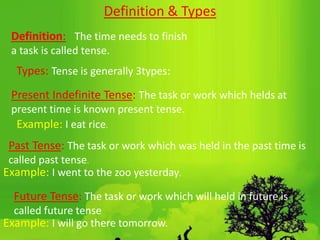
Definition & Types
Definition: The time needs to finish
a task is called tense.
Types: Tense is generally 3types:
Present Indefinite Tense: The task or work which helds at
present time is known present tense.
Example: I eat rice.
Past Tense: The task or work which was held in the past time is
called past tense.
Example: I went to the zoo yesterday.
Future Tense: The task or work which will held in future is
called future tense
Example: I will go there tomorrow.
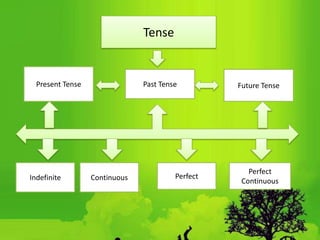
Present Tense Past Tense Future Tense
Indefinite Continuous Perfect
Perfect
Continuous
Tense
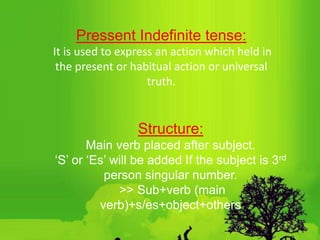
Pressent Indefinite tense:
It is used to express an action which held in
the present or habitual action or universal
truth.
Structure:
Main verb placed after subject.
‘S’ or ‘Es’ will be added If the subject is 3rd
person singular number.
˃˃ Sub+verb (main
verb)+s/es+object+others
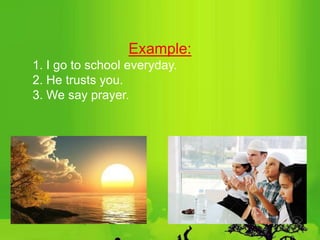
Example:
1. I go to school everyday.
2. He trusts you.
3. We say prayer.
Present Continuous tense:
It is used to express an action which is running
at present. If any task still is continuing is known
present continuous tense.
Structure:
Am/is/are placed on the basis of subject.
1. If the subject 1st person then ‘am’
2. If the subject 3rd person then ‘is’
3. & ‘are’ will placed with the rest of all.
˃˃Subject+Am/is/are+(main verb+ing)+object+others
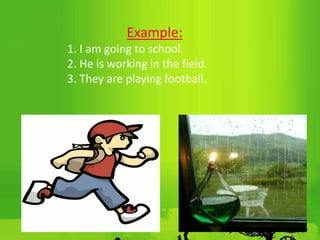
Example:
1. I am going to school.
2. He is working in the field.
3. They are playing football.
Structure:
have/has placed on the basis of Subject.
1.If the subject 3rd person singular number then ‘has’
and with the rest of all ‘have’
2. Past Participle of main verb.
˃˃ Sub+have/has+past participle of main
verb+object+others.
Present Perfect Tense:
It is used to express an action which has just been
finished a few moments ago or just now but the
result is present then it will be present perfect tense.
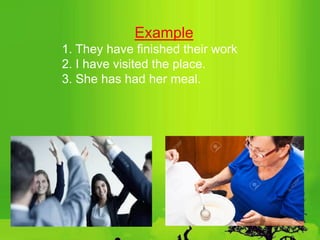
Example
1. They have finished their work
2. I have visited the place.
3. She has had her meal.
Present Perfect Continuous Tense
It is used to express an action which has started
in past but it is still continuing and not
completed so far.
Structure
‘Have been’/‘has been’ placed on the basis of subject.
Gerund (ing) added with main verb & for/since/from
placed on the basis of time.
˃˃ sub+have been/has been+(main
verb+ing)+object+for/since+object
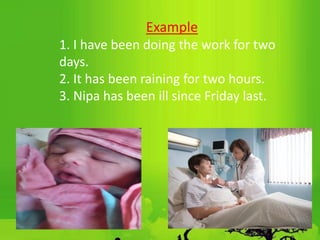
Example
1. I have been doing the work for two
days.
2. It has been raining for two hours.
3. Nipa has been ill since Friday last.
Past Indefinite Tense
It is used to express an action which has
completed in past or the habitual action
in the past.
Structure
The past form of verb is placed after subject. To
understand the past habitual action
Would/Could/Used to after subject but this time
main verb will in the present form.
˃˃ Sub+Past form of main verb+object+others
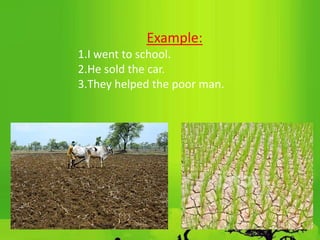
Example:
1.I went to school.
2.He sold the car.
3.They helped the poor man.
Past Continuous
It is used to express an ongoing task or
continued action till a certain time in past.
Structure
Was/Were placed after subject and Gerund(ing) added
with the main verb.
˃˃ Sub+Was/Were+(Main verb+ing)+Object+Others
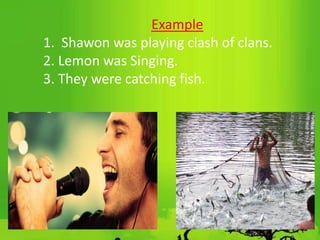
Example
1. Shawon was playing clash of clans.
2. Lemon was Singing.
3. They were catching fish.
Past Perfect Tense
It is used to express an action which has happened or
completed in past. If two works/event happened in the
past at a time ; The work/event which was happened at
first that is past perfect tense and the second is Past
Indefinite tense.
Structure:
Had is placed after Subject and the past participle
form of main verb. Before/After used to complete
this sentense.
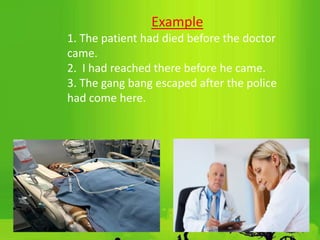
Example
1. The patient had died before the doctor
came.
2. I had reached there before he came.
3. The gang bang escaped after the police
had come here.
Past Perfect Continuous
Past Perfect Continuous Tense is used to express
a continued or ongoing action that started in
past and is continued till a specific time.
Structure:
Had been placed after subject & gerund|(ing)
added with main verb. After ‘before’ the last
part will in past simple. For/since placed on the
basis of time.
>> Sub+had been+(verb+ing)+before+past
simple
>> Sub+had been+(verb+ing)+for/since +object
Example:
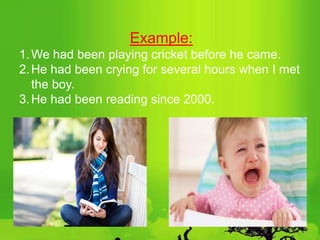
1.We had been playing cricket before he came.
2.He had been crying for several hours when I met
the boy.
3.He had been reading since 2000.
Future Indefinite Tense
It is used to express an action which has not
happened yet and will happen after sometime
in future.
Structure:
Shall/will placed on the basis of after subject &
the verb will in present form.
>>Sub+ will/shall + verb (Ist form) + object.
Example:
1. I shall go to school.
2. He will come soon.
3. They will not help him.
Future Continuous Tense
It is used to express an action which will
be continued in the future.
Structure
Shall be/ will be will placed on the basis of after
subject and Gerund(ing) will be added with
main verb.
>>Subject+Shall/Will+Be+Verb(Ist form)
+Ing+Object
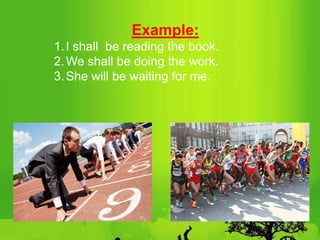
Example:
1.I shall be reading the book.
2.We shall be doing the work.
3.She will be waiting for me.
Future Perfect Tense
It is used to express an action which will
happen/occur in future and will be
completed by a certain time of future.
Structure
Shall have/ Will have placed on the basis of after
subject and verb will in past participle form and
the rest of the sentense in present or future
indefinite tense.
>>Subject + Will/Shall + Have + Verb (3rd Form) +
Object .
Example:
1. I shall have typed the email by that time.
2. I shall have done the work before my father
comes.
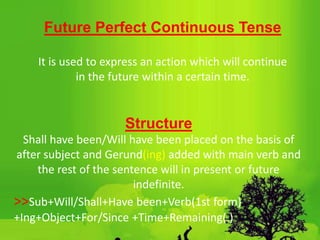
Future Perfect Continuous Tense
It is used to express an action which will continue
in the future within a certain time.
Structure
Shall have been/Will have been placed on the basis of
after subject and Gerund(ing) added with main verb and
the rest of the sentence will in present or future
indefinite.
>>Sub+Will/Shall+Have been+Verb(1st form)
+Ing+Object+For/Since +Time+Remaining(.)
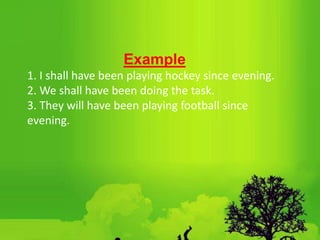
Example
1. I shall have been playing hockey since evening.
2. We shall have been doing the task.
3. They will have been playing football since
evening.
Thank You
For Watching

Presentation on Tense

  • 1.
    TenseMd Obaidur Rahman Studentof BGMEA University Venue: BGMEA University of Fashion & Technology Prepared Date: 2016/08/16
  • 2.
    Definition & Types Definition:The time needs to finish a task is called tense. Types: Tense is generally 3types: Present Indefinite Tense: The task or work which helds at present time is known present tense. Example: I eat rice. Past Tense: The task or work which was held in the past time is called past tense. Example: I went to the zoo yesterday. Future Tense: The task or work which will held in future is called future tense Example: I will go there tomorrow.
  • 3.
    Present Tense PastTense Future Tense Indefinite Continuous Perfect Perfect Continuous Tense
  • 4.
    Pressent Indefinite tense: Itis used to express an action which held in the present or habitual action or universal truth. Structure: Main verb placed after subject. ‘S’ or ‘Es’ will be added If the subject is 3rd person singular number. ˃˃ Sub+verb (main verb)+s/es+object+others
  • 5.
    Example: 1. I goto school everyday. 2. He trusts you. 3. We say prayer.
  • 6.
    Present Continuous tense: Itis used to express an action which is running at present. If any task still is continuing is known present continuous tense. Structure: Am/is/are placed on the basis of subject. 1. If the subject 1st person then ‘am’ 2. If the subject 3rd person then ‘is’ 3. & ‘are’ will placed with the rest of all. ˃˃Subject+Am/is/are+(main verb+ing)+object+others
  • 7.
    Example: 1. I amgoing to school. 2. He is working in the field. 3. They are playing football.
  • 8.
    Structure: have/has placed onthe basis of Subject. 1.If the subject 3rd person singular number then ‘has’ and with the rest of all ‘have’ 2. Past Participle of main verb. ˃˃ Sub+have/has+past participle of main verb+object+others. Present Perfect Tense: It is used to express an action which has just been finished a few moments ago or just now but the result is present then it will be present perfect tense.
  • 9.
    Example 1. They havefinished their work 2. I have visited the place. 3. She has had her meal.
  • 10.
    Present Perfect ContinuousTense It is used to express an action which has started in past but it is still continuing and not completed so far. Structure ‘Have been’/‘has been’ placed on the basis of subject. Gerund (ing) added with main verb & for/since/from placed on the basis of time. ˃˃ sub+have been/has been+(main verb+ing)+object+for/since+object
  • 11.
    Example 1. I havebeen doing the work for two days. 2. It has been raining for two hours. 3. Nipa has been ill since Friday last.
  • 12.
    Past Indefinite Tense Itis used to express an action which has completed in past or the habitual action in the past. Structure The past form of verb is placed after subject. To understand the past habitual action Would/Could/Used to after subject but this time main verb will in the present form. ˃˃ Sub+Past form of main verb+object+others
  • 13.
    Example: 1.I went toschool. 2.He sold the car. 3.They helped the poor man.
  • 14.
    Past Continuous It isused to express an ongoing task or continued action till a certain time in past. Structure Was/Were placed after subject and Gerund(ing) added with the main verb. ˃˃ Sub+Was/Were+(Main verb+ing)+Object+Others
  • 15.
    Example 1. Shawon wasplaying clash of clans. 2. Lemon was Singing. 3. They were catching fish.
  • 16.
    Past Perfect Tense Itis used to express an action which has happened or completed in past. If two works/event happened in the past at a time ; The work/event which was happened at first that is past perfect tense and the second is Past Indefinite tense. Structure: Had is placed after Subject and the past participle form of main verb. Before/After used to complete this sentense.
  • 17.
    Example 1. The patienthad died before the doctor came. 2. I had reached there before he came. 3. The gang bang escaped after the police had come here.
  • 18.
    Past Perfect Continuous PastPerfect Continuous Tense is used to express a continued or ongoing action that started in past and is continued till a specific time. Structure: Had been placed after subject & gerund|(ing) added with main verb. After ‘before’ the last part will in past simple. For/since placed on the basis of time. >> Sub+had been+(verb+ing)+before+past simple >> Sub+had been+(verb+ing)+for/since +object
  • 19.
    Example: 1.We had beenplaying cricket before he came. 2.He had been crying for several hours when I met the boy. 3.He had been reading since 2000.
  • 20.
    Future Indefinite Tense Itis used to express an action which has not happened yet and will happen after sometime in future. Structure: Shall/will placed on the basis of after subject & the verb will in present form. >>Sub+ will/shall + verb (Ist form) + object.
  • 21.
    Example: 1. I shallgo to school. 2. He will come soon. 3. They will not help him.
  • 22.
    Future Continuous Tense Itis used to express an action which will be continued in the future. Structure Shall be/ will be will placed on the basis of after subject and Gerund(ing) will be added with main verb. >>Subject+Shall/Will+Be+Verb(Ist form) +Ing+Object
  • 23.
    Example: 1.I shall bereading the book. 2.We shall be doing the work. 3.She will be waiting for me.
  • 24.
    Future Perfect Tense Itis used to express an action which will happen/occur in future and will be completed by a certain time of future. Structure Shall have/ Will have placed on the basis of after subject and verb will in past participle form and the rest of the sentense in present or future indefinite tense. >>Subject + Will/Shall + Have + Verb (3rd Form) + Object .
  • 25.
    Example: 1. I shallhave typed the email by that time. 2. I shall have done the work before my father comes.
  • 26.
    Future Perfect ContinuousTense It is used to express an action which will continue in the future within a certain time. Structure Shall have been/Will have been placed on the basis of after subject and Gerund(ing) added with main verb and the rest of the sentence will in present or future indefinite. >>Sub+Will/Shall+Have been+Verb(1st form) +Ing+Object+For/Since +Time+Remaining(.)
  • 27.
    Example 1. I shallhave been playing hockey since evening. 2. We shall have been doing the task. 3. They will have been playing football since evening.
  • 28.