Project Name
Temperature
Controlled DC Fan
Group - G
 Group Member:
1.Anupam Das
ID:151-15-392
2. Israt Jahan Nourin
ID:161-15-711
3. MD. Hamayoun kabir
ID:161-15-713
4. Rizwana Mumu
ID:161-15-729
Israt Jahan Nourin
Id: 161-15-711
Introduction:
 Temperature controlled DC fan is a temperature
based fan.
 It can cool the devices by operating a DC fan when
the temperature in its vicinity increases above the
preset level.
 Its operation is fully automatic and turns off when
the temperature returns normal.
Components Required:
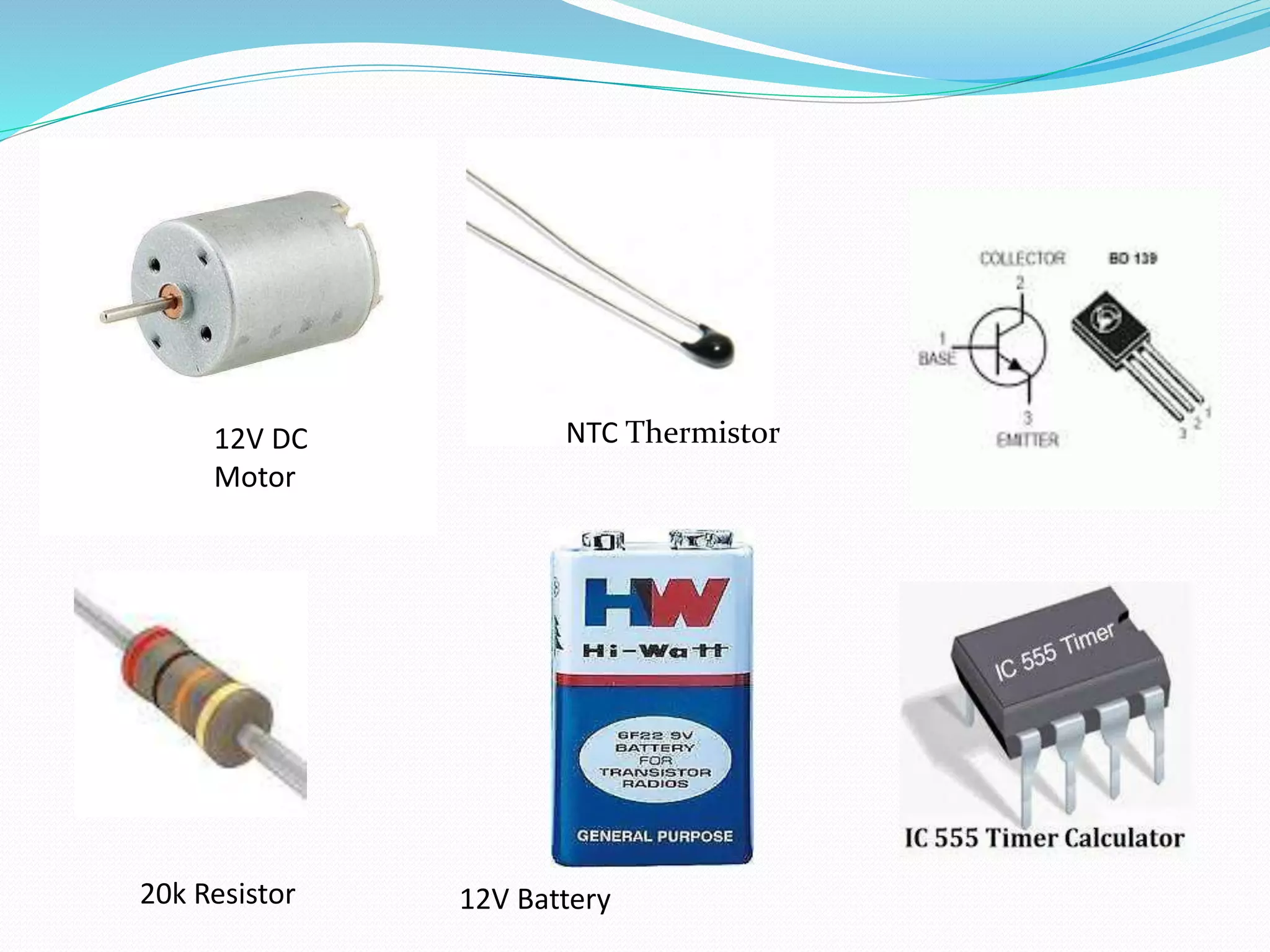
 NTC Thermistor - 10k
 Resistor - 20k, 1k
 Capacitor - 0.1uF, 0.01uF
 IC - NE555
 Diode - 1n4007
 DC Fan - 12V
 Transistor - BD139
 DC Battery - 12v
 Spread Board
 Wires
 Soldering Iron
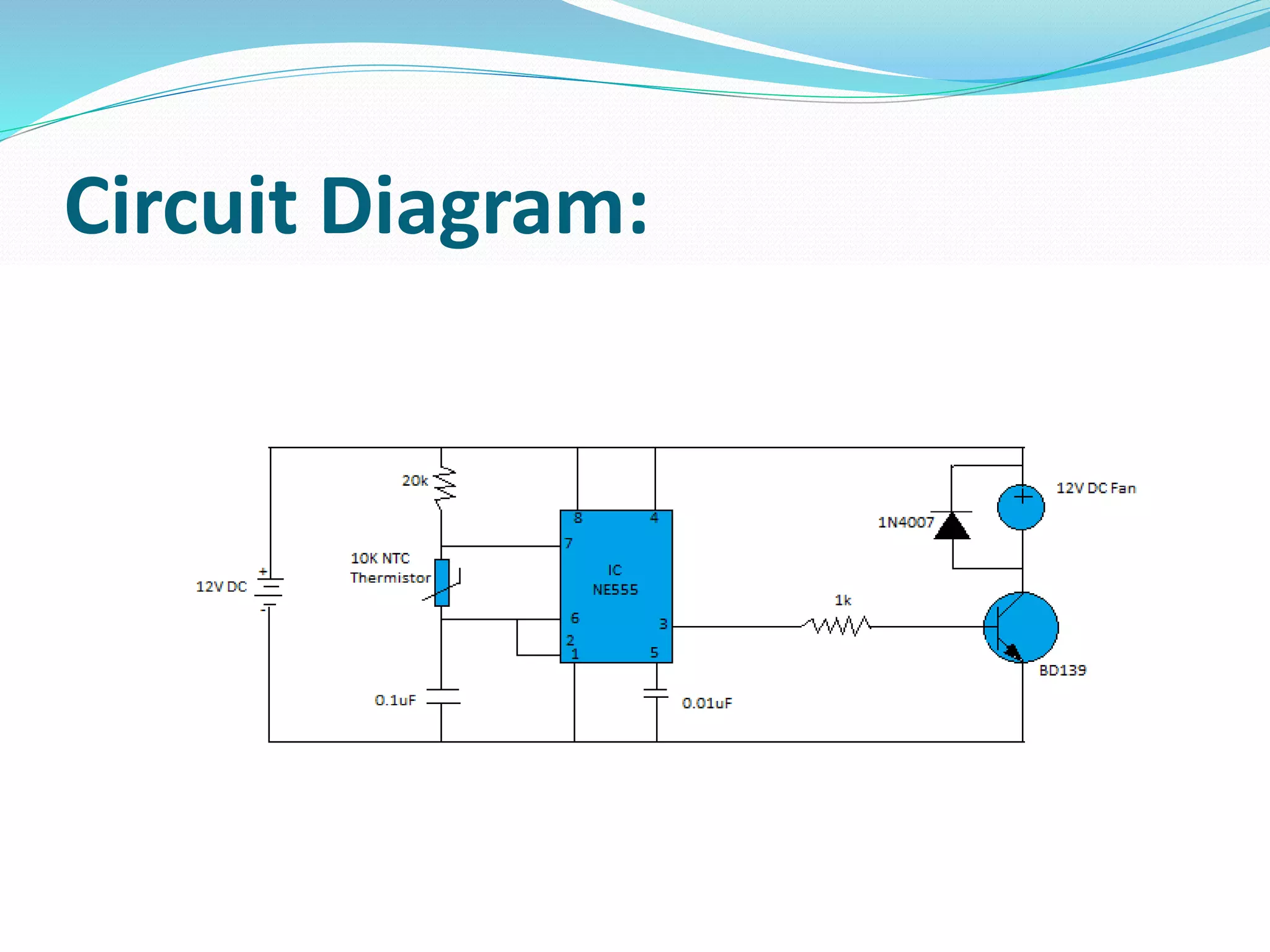
Circuit Diagram:
12V DC
Motor
NTC Thermistor
20k Resistor 12V Battery
MD. Hamayoun kabir
ID: 161-15-713
What are NTC Thermistors:
 NTC means “Negative Temperature Coefficient”. NTC
thermistors are resistors with a negative temperature
coefficient, which means that the resistance decreases
with increasing temperature. They are primarily used as
resistive temperature sensors and current-limiting
devices. The temperature sensitivity coefficient is about
five times greater than that of silicon temperature
sensors and about ten times greater than those of
Resistance Temperature Detectors. NTC sensors are
typically used in a range from −55°C to 200°C.
Types & Properties of NTC
Thermistors:
 Materials typically involved in the fabrication of NTC
resistors are platinum, nickel, cobalt, iron and oxides
of silicon, used as pure. NTC Thermistors can be
classified into three groups, depending on the pro
 duction process used.
Bead
thermistors
Disk and Chip
thermistors Glass encapsulated
NTC thermistors
Bead thermistors: Fast response times, better
stability and allow operation at higher
temperatures than Disk and Chip NTC sensors,
however they are more weak. The typical sizes
range from 0.075 – 5mm in diameter.
Bead
thermistors
Disk and Chip thermistors: They are larger and as a result
have slower reaction times than bead type NTC resistors.
However, because of their size, they have a higher
dissipation constant like power required to raise their
temperature by 1°C and since power dissipated by the
thermistor is proportional to the square of the current, they
can handle higher currents much better than bead type
thermistors. The typical sizes range from 0.25-25mm in
diameter.
Disk and Chip
thermistors
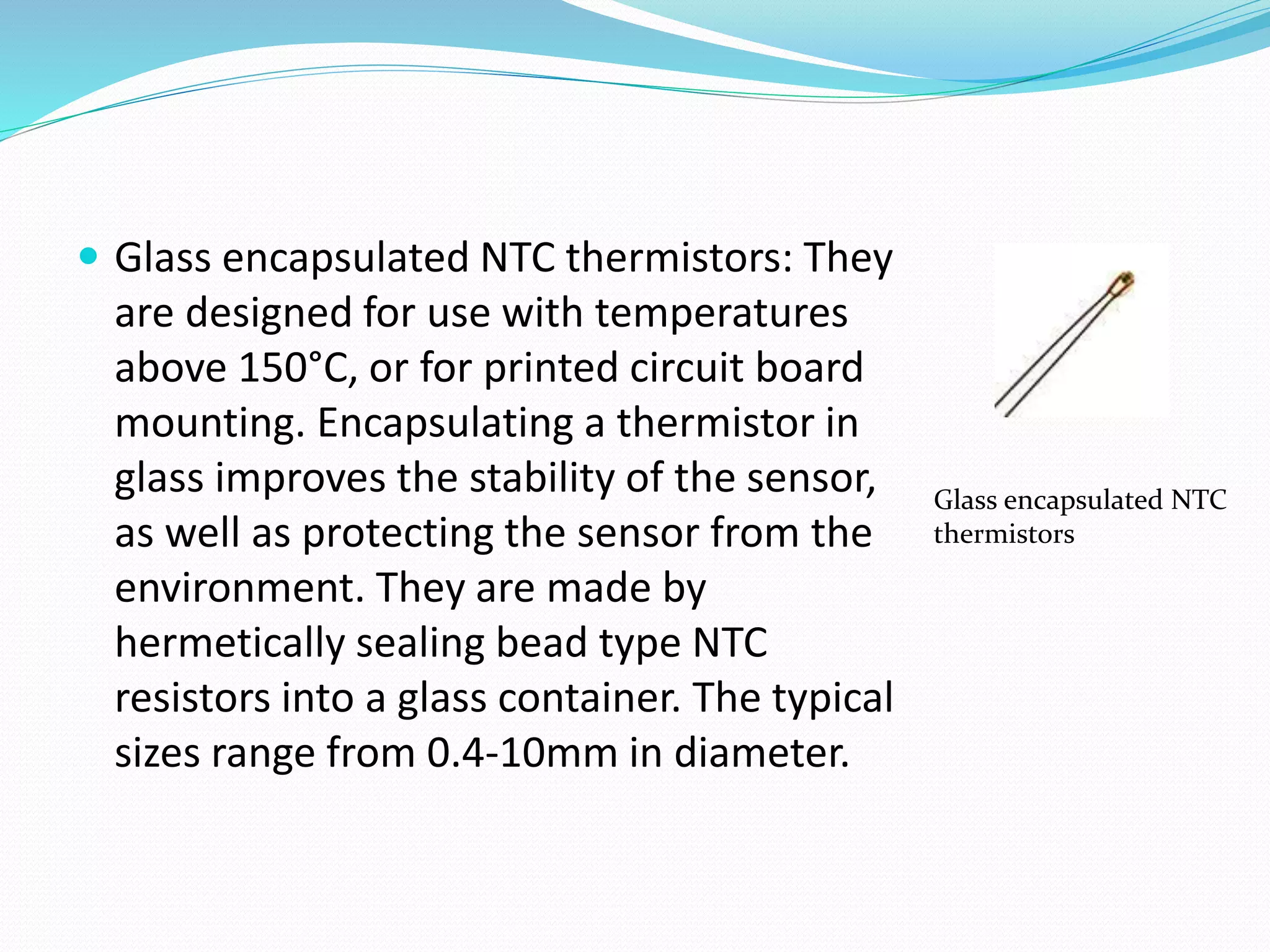
 Glass encapsulated NTC thermistors: They
are designed for use with temperatures
above 150°C, or for printed circuit board
mounting. Encapsulating a thermistor in
glass improves the stability of the sensor,
as well as protecting the sensor from the
environment. They are made by
hermetically sealing bead type NTC
resistors into a glass container. The typical
sizes range from 0.4-10mm in diameter.
Glass encapsulated NTC
thermistors
IC NE555:
 Integrated circuit (IC), sometimes called as a chip or microchip,
is a semiconductor wafer on which a thousand or millions of
tiny resistors, capacitors, and transistors are fabricated. An IC
can be a function as an amplifier, oscillator, timer, counter,
computer memory, or microprocessor.
IC NE555
Dc Battery:
 A battery converts chemical energy into electrical energy
by a chemical reaction. Usually the chemicals are kept
inside the battery. It is used in a circuit to power other
components. A battery produces direct current electricity
and electricity that flows in one direction, and does not
switch back and forth.
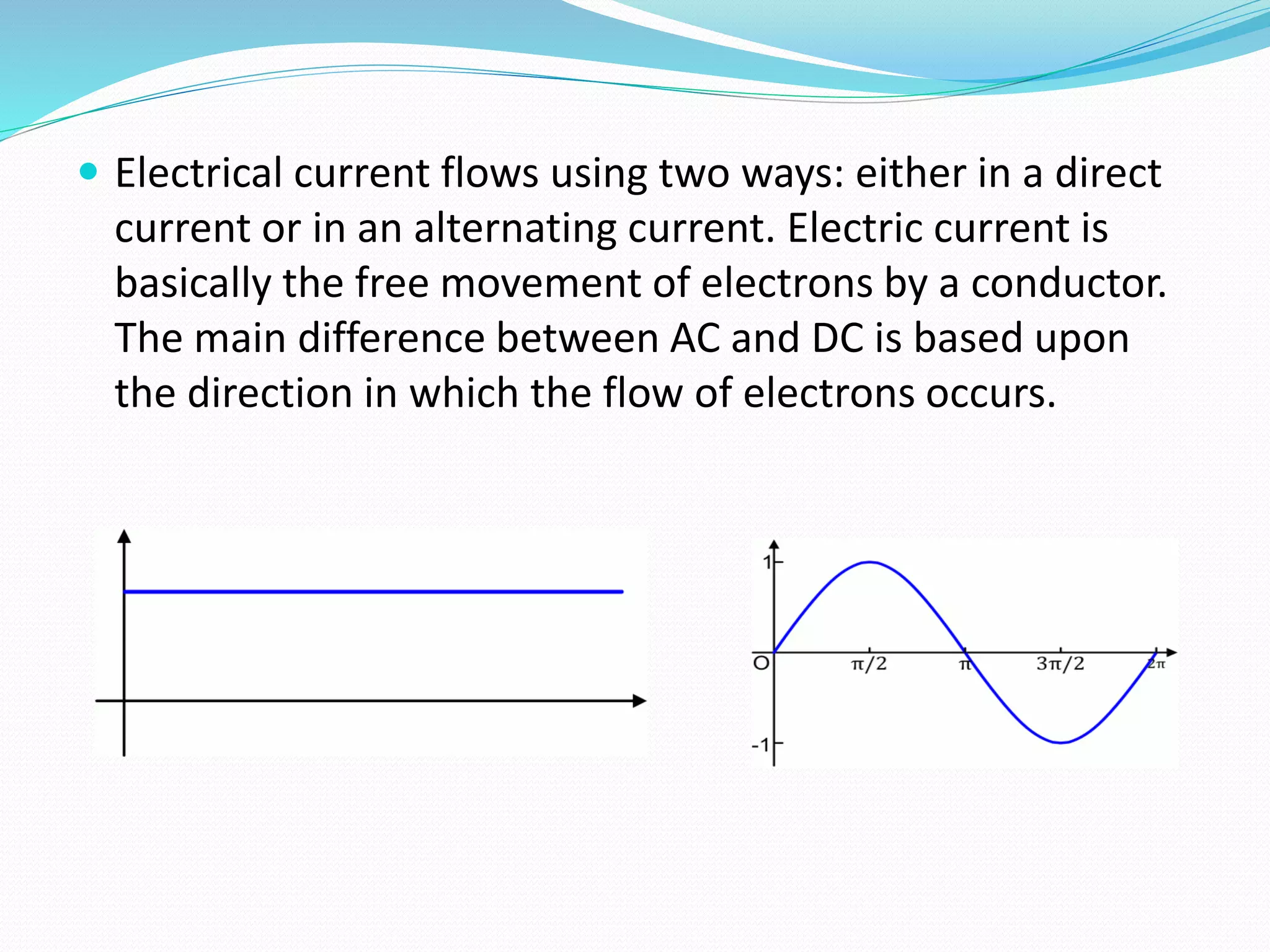
 Electrical current flows using two ways: either in a direct
current or in an alternating current. Electric current is
basically the free movement of electrons by a conductor.
The main difference between AC and DC is based upon
the direction in which the flow of electrons occurs.
Anupam Das
ID: 151-15-392
1n4007 Diode:
 A rectifier diode is used as a one-way
check valve. Since these diodes only
allow electrical current to flow in one
direction, they are used to convert
AC power into DC power.
TRANSISTOR – BD139:
 Transistors amplify current. For example, they can be
used to amplify the small output current from a logic IC
so that it can operate a lamp, relay, motor or other high
current device
Capacitor:
 Its function is to store the electrical energy and give this
energy again to the circuit when necessary. In other
words, it charges and discharges the electric charge
stored in it.
Capacitor
0.1uF
Advantage:
 It is very economical and easy to handle.
 Motor fan runs automatically, so that it controls
the temperature without using it manually.
 It is very easy to install at heat dissipating devices
to cool down them.
 Saves the energy by turns OFF the motor fan at
normal or low temperature automatically.
Rizwana Mumu
ID:161-15-729
Working Mechanism:
 The basic working principle of temperature controlled
dc fan is based on the thermistor.
 IC NE555 compares the voltage across the NTC
thermistor and voltage across the 20k Ω resistor.
 At room temperature the voltage across the NTC will
be greater than or equals to the voltage across the
20k Ω resistor. So the IC NE555 output will be either
negative or zero voltage which can not turn ON the
Transistor.
 If the temperature rises the resistance of thermistor
decreases as temperature which can turn ON the
Transistor.
 When transistor turns ON, the motor(FAN) will be
connected across the DC supply and starts to rotate.
 The motor will be turns OFF when the temperature
returns back to room temperature.
Applications:
 Temperature Controlled Fan can be used to control
the temperature of devices, rooms, electronic
components etc. by monitoring the temperature.
 The circuit can be used for Car Engine to reduce the
heat.
 Cooling Pads in personal computers.
Thank You
Any Question??

Temperature controlled dc fan

  • 2.
  • 3.
    Group - G Group Member: 1.Anupam Das ID:151-15-392 2. Israt Jahan Nourin ID:161-15-711 3. MD. Hamayoun kabir ID:161-15-713 4. Rizwana Mumu ID:161-15-729
  • 4.
  • 5.
    Introduction:  Temperature controlledDC fan is a temperature based fan.  It can cool the devices by operating a DC fan when the temperature in its vicinity increases above the preset level.  Its operation is fully automatic and turns off when the temperature returns normal.
  • 6.
    Components Required:  NTCThermistor - 10k  Resistor - 20k, 1k  Capacitor - 0.1uF, 0.01uF  IC - NE555  Diode - 1n4007  DC Fan - 12V  Transistor - BD139  DC Battery - 12v  Spread Board  Wires  Soldering Iron
  • 7.
  • 8.
    12V DC Motor NTC Thermistor 20kResistor 12V Battery
  • 9.
  • 10.
    What are NTCThermistors:  NTC means “Negative Temperature Coefficient”. NTC thermistors are resistors with a negative temperature coefficient, which means that the resistance decreases with increasing temperature. They are primarily used as resistive temperature sensors and current-limiting devices. The temperature sensitivity coefficient is about five times greater than that of silicon temperature sensors and about ten times greater than those of Resistance Temperature Detectors. NTC sensors are typically used in a range from −55°C to 200°C.
  • 11.
    Types & Propertiesof NTC Thermistors:  Materials typically involved in the fabrication of NTC resistors are platinum, nickel, cobalt, iron and oxides of silicon, used as pure. NTC Thermistors can be classified into three groups, depending on the pro  duction process used. Bead thermistors Disk and Chip thermistors Glass encapsulated NTC thermistors
  • 12.
    Bead thermistors: Fastresponse times, better stability and allow operation at higher temperatures than Disk and Chip NTC sensors, however they are more weak. The typical sizes range from 0.075 – 5mm in diameter. Bead thermistors Disk and Chip thermistors: They are larger and as a result have slower reaction times than bead type NTC resistors. However, because of their size, they have a higher dissipation constant like power required to raise their temperature by 1°C and since power dissipated by the thermistor is proportional to the square of the current, they can handle higher currents much better than bead type thermistors. The typical sizes range from 0.25-25mm in diameter. Disk and Chip thermistors
  • 13.
     Glass encapsulatedNTC thermistors: They are designed for use with temperatures above 150°C, or for printed circuit board mounting. Encapsulating a thermistor in glass improves the stability of the sensor, as well as protecting the sensor from the environment. They are made by hermetically sealing bead type NTC resistors into a glass container. The typical sizes range from 0.4-10mm in diameter. Glass encapsulated NTC thermistors
  • 14.
    IC NE555:  Integratedcircuit (IC), sometimes called as a chip or microchip, is a semiconductor wafer on which a thousand or millions of tiny resistors, capacitors, and transistors are fabricated. An IC can be a function as an amplifier, oscillator, timer, counter, computer memory, or microprocessor. IC NE555
  • 15.
    Dc Battery:  Abattery converts chemical energy into electrical energy by a chemical reaction. Usually the chemicals are kept inside the battery. It is used in a circuit to power other components. A battery produces direct current electricity and electricity that flows in one direction, and does not switch back and forth.
  • 16.
     Electrical currentflows using two ways: either in a direct current or in an alternating current. Electric current is basically the free movement of electrons by a conductor. The main difference between AC and DC is based upon the direction in which the flow of electrons occurs.
  • 17.
  • 18.
    1n4007 Diode:  Arectifier diode is used as a one-way check valve. Since these diodes only allow electrical current to flow in one direction, they are used to convert AC power into DC power.
  • 19.
    TRANSISTOR – BD139: Transistors amplify current. For example, they can be used to amplify the small output current from a logic IC so that it can operate a lamp, relay, motor or other high current device
  • 20.
    Capacitor:  Its functionis to store the electrical energy and give this energy again to the circuit when necessary. In other words, it charges and discharges the electric charge stored in it. Capacitor 0.1uF
  • 21.
    Advantage:  It isvery economical and easy to handle.  Motor fan runs automatically, so that it controls the temperature without using it manually.  It is very easy to install at heat dissipating devices to cool down them.  Saves the energy by turns OFF the motor fan at normal or low temperature automatically.
  • 22.
  • 23.
    Working Mechanism:  Thebasic working principle of temperature controlled dc fan is based on the thermistor.  IC NE555 compares the voltage across the NTC thermistor and voltage across the 20k Ω resistor.  At room temperature the voltage across the NTC will be greater than or equals to the voltage across the 20k Ω resistor. So the IC NE555 output will be either negative or zero voltage which can not turn ON the Transistor.
  • 24.
     If thetemperature rises the resistance of thermistor decreases as temperature which can turn ON the Transistor.  When transistor turns ON, the motor(FAN) will be connected across the DC supply and starts to rotate.  The motor will be turns OFF when the temperature returns back to room temperature.
  • 25.
    Applications:  Temperature ControlledFan can be used to control the temperature of devices, rooms, electronic components etc. by monitoring the temperature.  The circuit can be used for Car Engine to reduce the heat.  Cooling Pads in personal computers.
  • 26.
  • 27.