TEMPERATURE CONTROLLED
DC FAN
BATCH NO:02
PROJECT ASSOCIATES:
S. ZAHEER BASHA (13091A02B9)
G. SIVA SAI PADMA (13091A0280)
S. USHA (13091A02A3)
Under the esteemed guidance of
Mr. G. BALA SUBBA RAYUDU MTech
Asst. Prof. in Dept. of E.E.E
Contents:
 INTRODUCTION
 COMPONENTS REQUIRED
 THERMISTOR BEHAVIOUR
 CIRCUIT DIAGRAM
 WORKING
 ADVANTAGES
 APPLICATIONS
 RESULT
Introduction:
 Temperature controlled DC fan is a
temperature based fan.
 It can cool the devices by operating a DC fan
when the temperature in its vicinity increases
above the preset level.
 Its operation is fully automatic and turns off
when the temperature returns normal.
Components Required:
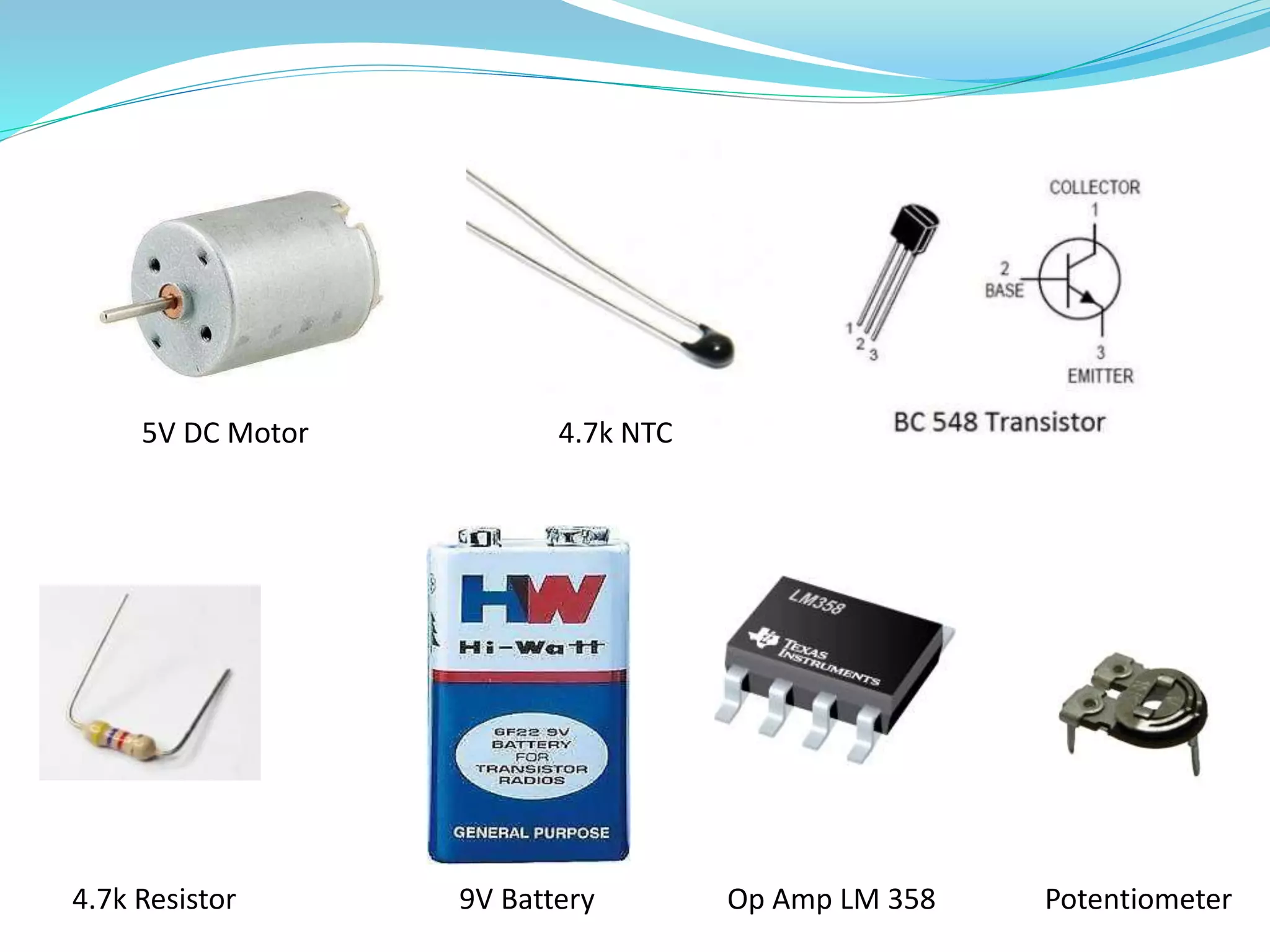
 Resistors (4.7kΩ)
 Op Amp (LM 358)
 Transistor (BC 548)
 5V DC Motor
 9V DC Battery
 NTC Thermistor (4.7k Ω)
 Potentiometer (4.7k Ω)
5V DC Motor 4.7k NTC
4.7k Resistor 9V Battery Op Amp LM 358 Potentiometer
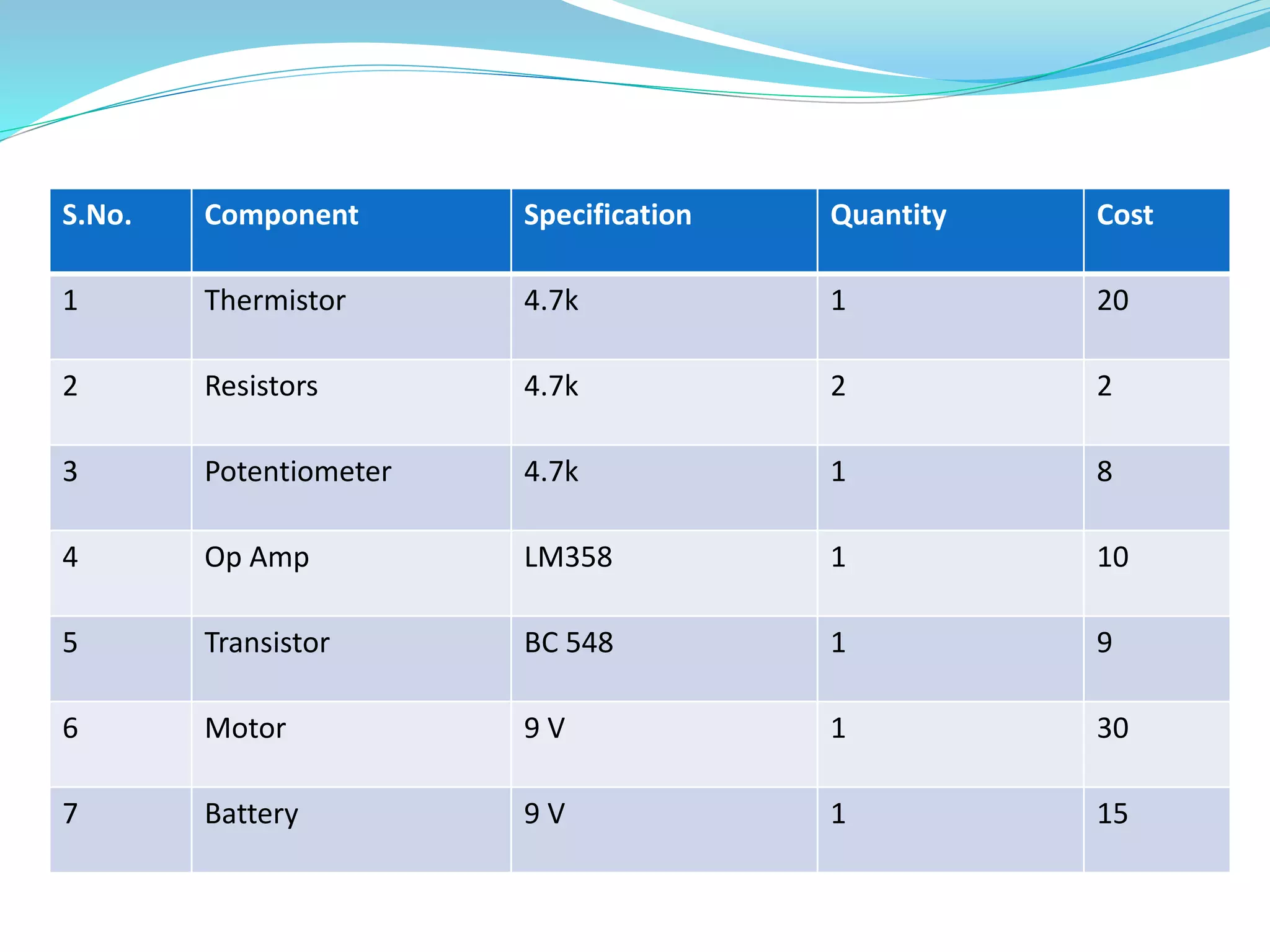
S.No. Component Specification Quantity Cost
1 Thermistor 4.7k 1 20
2 Resistors 4.7k 2 2
3 Potentiometer 4.7k 1 8
4 Op Amp LM358 1 10
5 Transistor BC 548 1 9
6 Motor 9 V 1 30
7 Battery 9 V 1 15
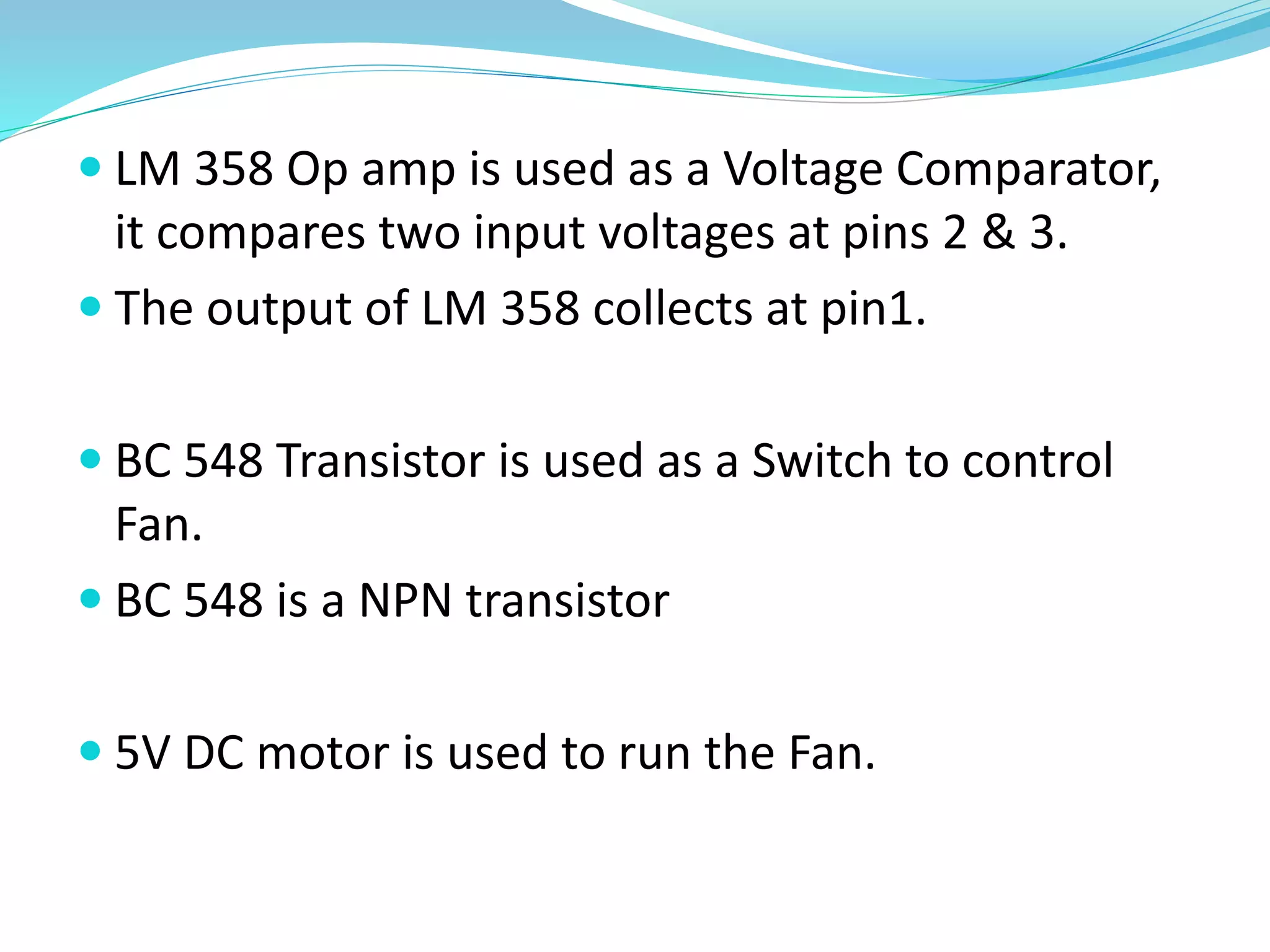
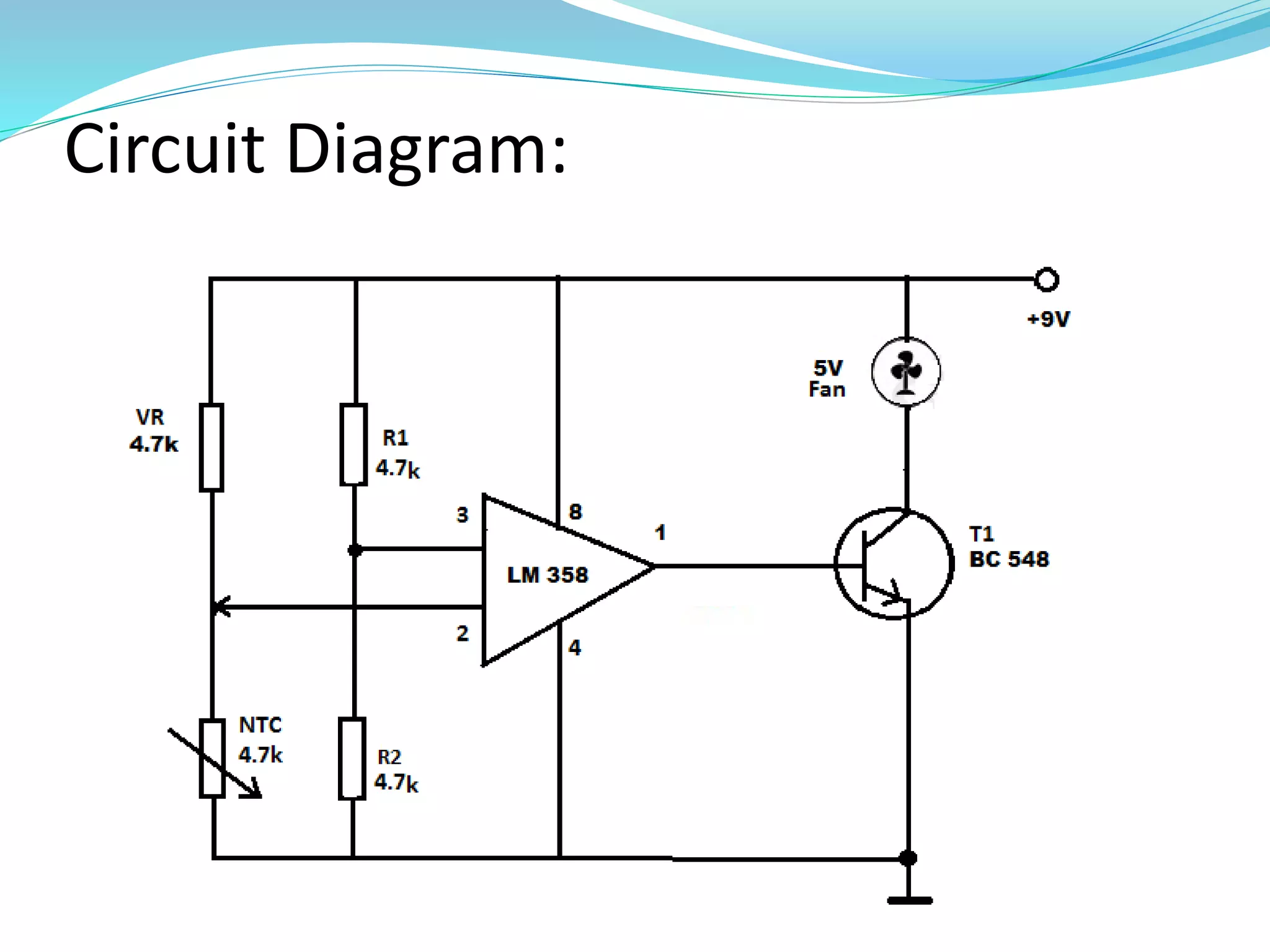
 LM 358 Op amp is used as a Voltage Comparator,
it compares two input voltages at pins 2 & 3.
 The output of LM 358 collects at pin1.
 BC 548 Transistor is used as a Switch to control
Fan.
 BC 548 is a NPN transistor
 5V DC motor is used to run the Fan.
Thermistor Behaviour:
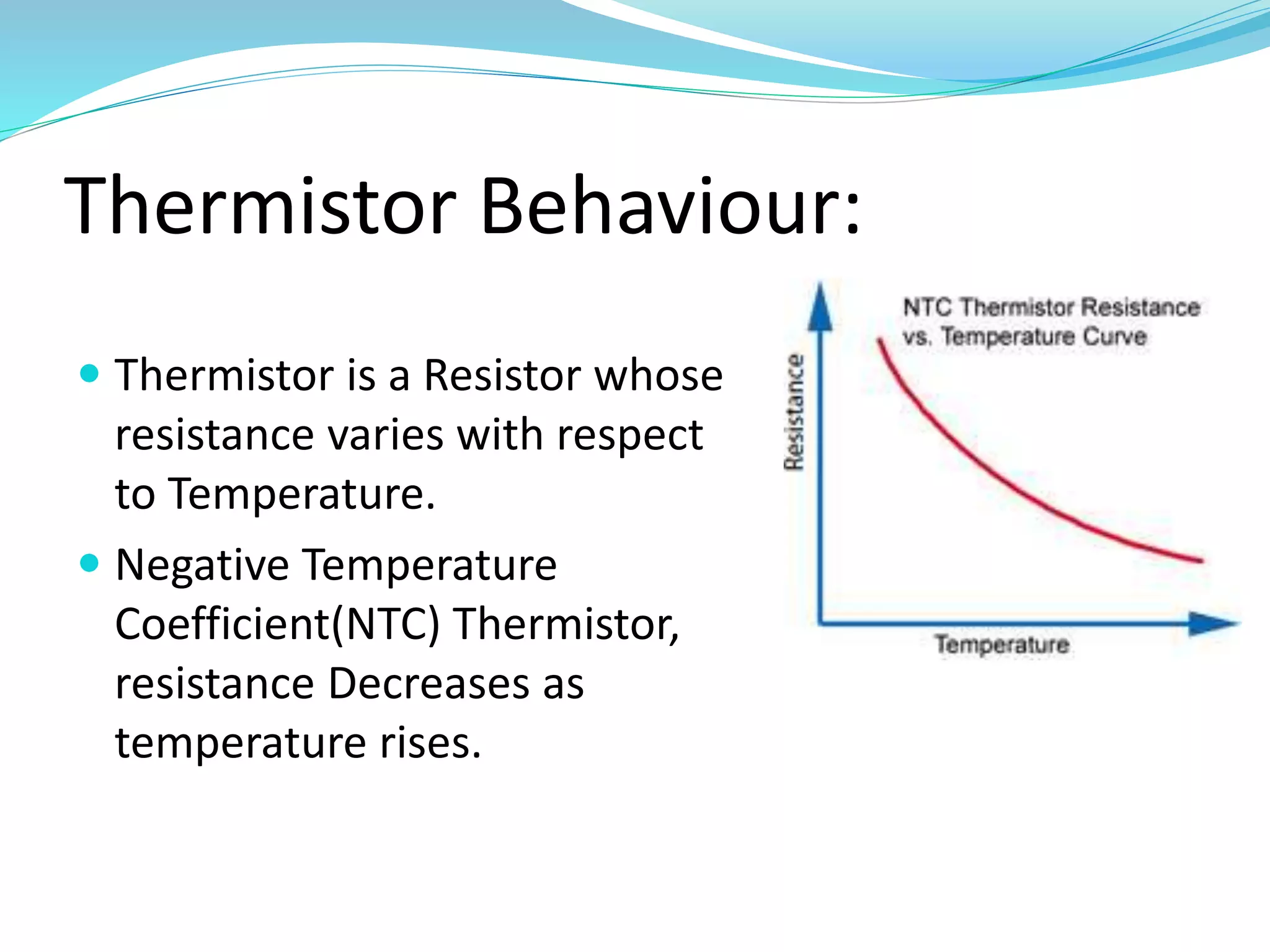
 Thermistor is a Resistor whose
resistance varies with respect
to Temperature.
 Negative Temperature
Coefficient(NTC) Thermistor,
resistance Decreases as
temperature rises.
Circuit Diagram:
WORKING:
 The basic working principle of temperature
controlled dc fan is based on the thermistor.
 LM 358 compares the voltage across the NTC
thermistor and voltage across the 4.7k Ω resistor.
 At room temperature the voltage across the NTC
will be greater than or equals to the voltage
across the 4.7k Ω resistor. So the Op Amp output
will be either negative or zero voltage which can
not turn ON the Transistor.
 If the temperature rises above the preset value, it
leads to decrement of Thermistor resistance and
voltage across it.
 Then if this voltage lesser than the voltage across
4.7k Ω resistor, the output of Op Amp will be
positive voltage which can turn ON the Transistor.
 When transistor turns ON, the motor(FAN) will be
connected across the DC supply and starts to
rotate.
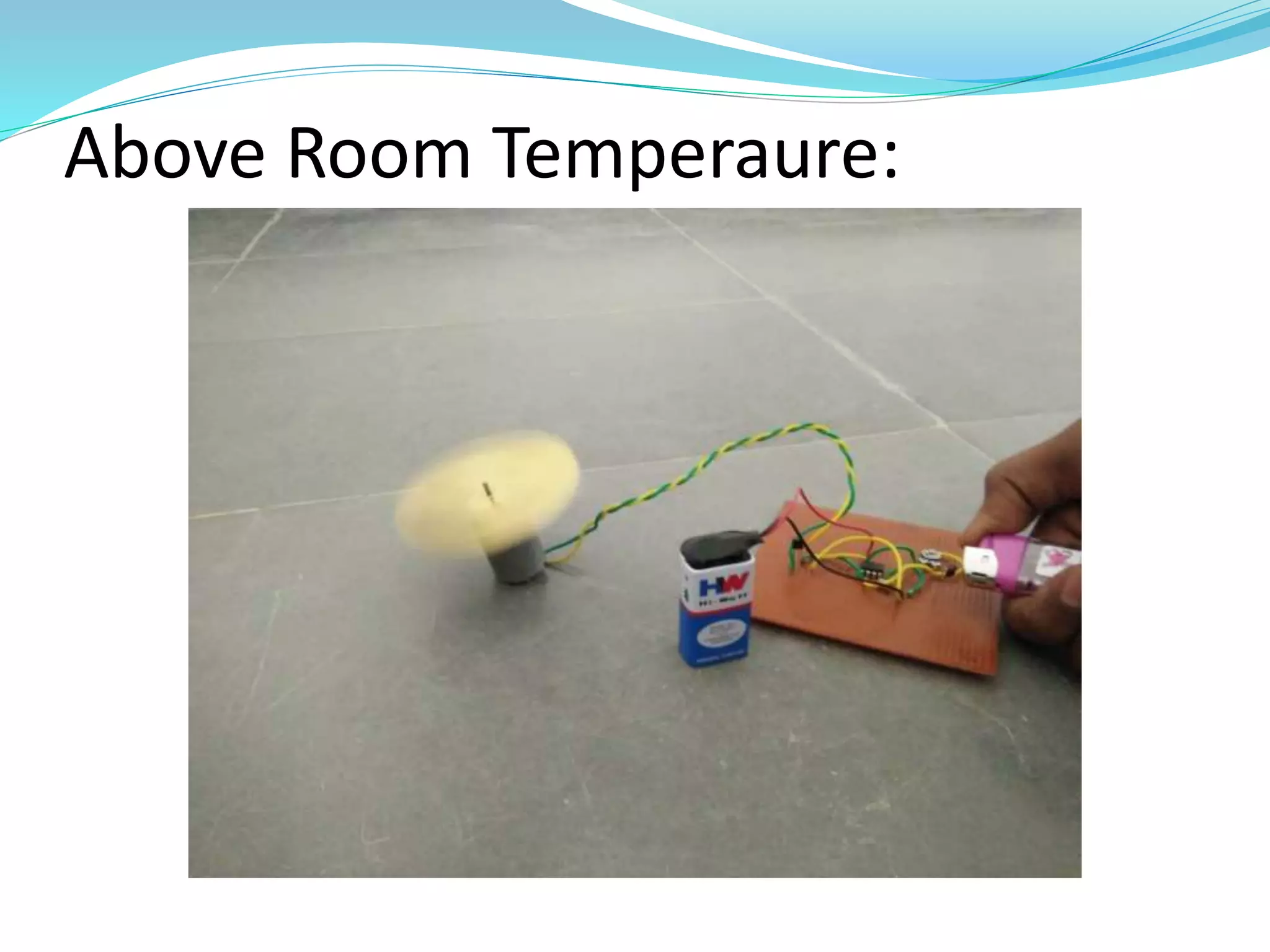
 The motor will be turns OFF when the
temperature returns back to room temperature.
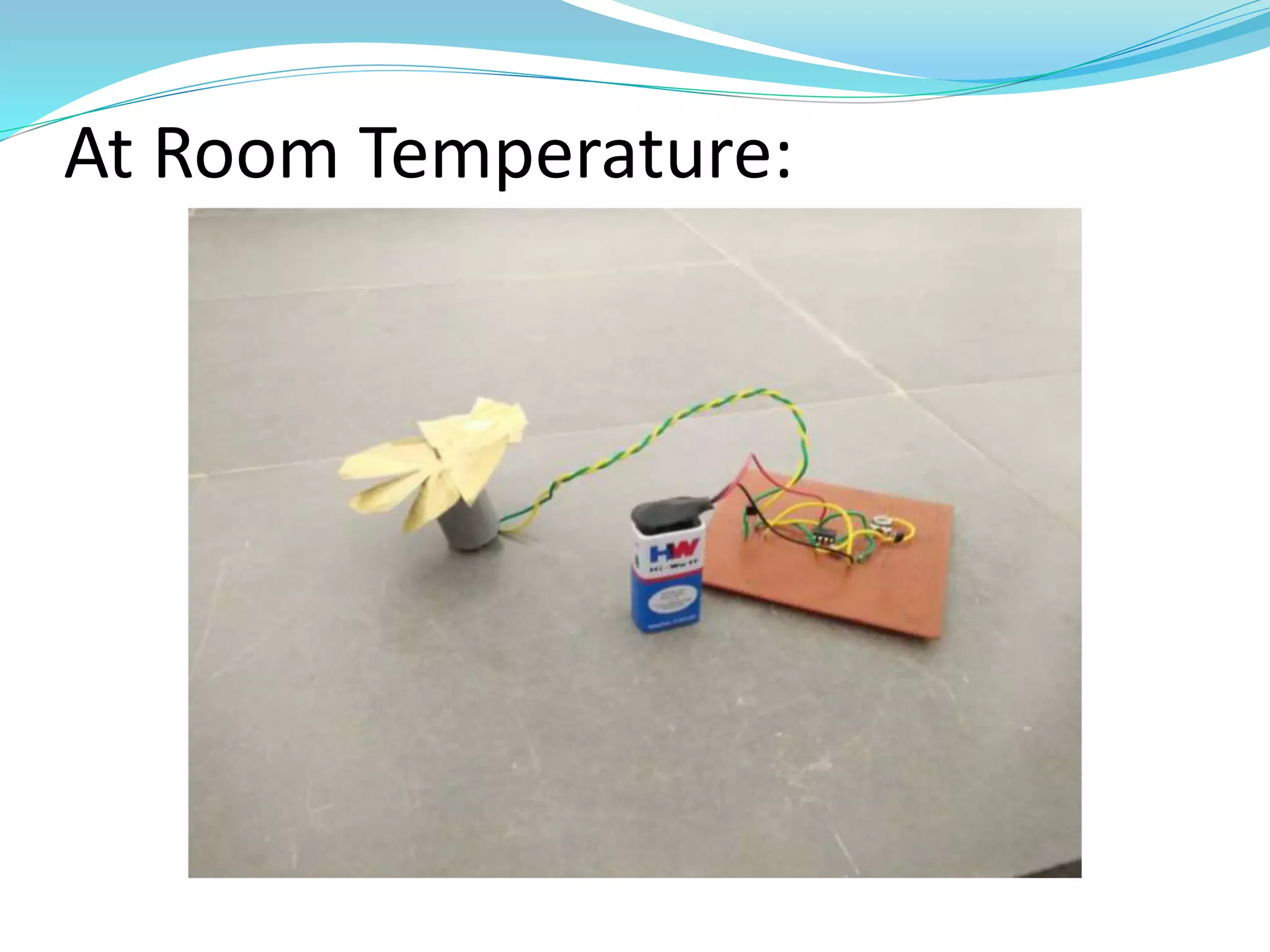
At Room Temperature:
Above Room Temperaure:
Advantages:
 It is very economical and easy to handle.
 Motor fan runs automatically, so that it controls
the temperature without using it manually.
 It is very easy to install at heat dissipating devices
to cool down them.
 Saves the energy by turns OFF the motor fan at
normal or low temperature automatically.
Applications:
 Temperature Controlled Fan can be used to
control the temperature of devices, rooms,
electronic components etc. by monitoring the
temperature.
 The circuit can be used for Car Engine to reduce
the heat.
 Cooling Pads in personal computers.
Result:
 The electric fan operates automatically
according to temperature rises in order to
compensate the rise in the temperature and
turns off when the temperature returns back
to the norml temperature.
THANK YOU

Temperature Controlled DC fan using Thermistor

  • 1.
    TEMPERATURE CONTROLLED DC FAN BATCHNO:02 PROJECT ASSOCIATES: S. ZAHEER BASHA (13091A02B9) G. SIVA SAI PADMA (13091A0280) S. USHA (13091A02A3) Under the esteemed guidance of Mr. G. BALA SUBBA RAYUDU MTech Asst. Prof. in Dept. of E.E.E
  • 2.
    Contents:  INTRODUCTION  COMPONENTSREQUIRED  THERMISTOR BEHAVIOUR  CIRCUIT DIAGRAM  WORKING  ADVANTAGES  APPLICATIONS  RESULT
  • 3.
    Introduction:  Temperature controlledDC fan is a temperature based fan.  It can cool the devices by operating a DC fan when the temperature in its vicinity increases above the preset level.  Its operation is fully automatic and turns off when the temperature returns normal.
  • 4.
    Components Required:  Resistors(4.7kΩ)  Op Amp (LM 358)  Transistor (BC 548)  5V DC Motor  9V DC Battery  NTC Thermistor (4.7k Ω)  Potentiometer (4.7k Ω)
  • 5.
    5V DC Motor4.7k NTC 4.7k Resistor 9V Battery Op Amp LM 358 Potentiometer
  • 6.
    S.No. Component SpecificationQuantity Cost 1 Thermistor 4.7k 1 20 2 Resistors 4.7k 2 2 3 Potentiometer 4.7k 1 8 4 Op Amp LM358 1 10 5 Transistor BC 548 1 9 6 Motor 9 V 1 30 7 Battery 9 V 1 15
  • 7.
     LM 358Op amp is used as a Voltage Comparator, it compares two input voltages at pins 2 & 3.  The output of LM 358 collects at pin1.  BC 548 Transistor is used as a Switch to control Fan.  BC 548 is a NPN transistor  5V DC motor is used to run the Fan.
  • 8.
    Thermistor Behaviour:  Thermistoris a Resistor whose resistance varies with respect to Temperature.  Negative Temperature Coefficient(NTC) Thermistor, resistance Decreases as temperature rises.
  • 9.
  • 10.
    WORKING:  The basicworking principle of temperature controlled dc fan is based on the thermistor.  LM 358 compares the voltage across the NTC thermistor and voltage across the 4.7k Ω resistor.  At room temperature the voltage across the NTC will be greater than or equals to the voltage across the 4.7k Ω resistor. So the Op Amp output will be either negative or zero voltage which can not turn ON the Transistor.
  • 11.
     If thetemperature rises above the preset value, it leads to decrement of Thermistor resistance and voltage across it.  Then if this voltage lesser than the voltage across 4.7k Ω resistor, the output of Op Amp will be positive voltage which can turn ON the Transistor.  When transistor turns ON, the motor(FAN) will be connected across the DC supply and starts to rotate.  The motor will be turns OFF when the temperature returns back to room temperature.
  • 12.
  • 13.
  • 14.
    Advantages:  It isvery economical and easy to handle.  Motor fan runs automatically, so that it controls the temperature without using it manually.  It is very easy to install at heat dissipating devices to cool down them.  Saves the energy by turns OFF the motor fan at normal or low temperature automatically.
  • 15.
    Applications:  Temperature ControlledFan can be used to control the temperature of devices, rooms, electronic components etc. by monitoring the temperature.  The circuit can be used for Car Engine to reduce the heat.  Cooling Pads in personal computers.
  • 16.
    Result:  The electricfan operates automatically according to temperature rises in order to compensate the rise in the temperature and turns off when the temperature returns back to the norml temperature.
  • 17.