Mini project presentation
AUTOMATIC TEMPERATURE
CONTROLLED FAN
Abhilash.K.M(02)
Abin Baby(03)
Ajith Kumar R(04)
Bineesh Babu P(10)

College of Engineering Munnar
Mini project by
Students of
College of Engineering, Munnar

College of Engineering Munnar
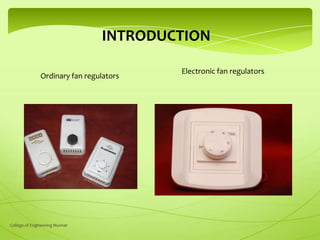
INTRODUCTION
Ordinary fan regulators

College of Engineering Munnar

Electronic fan regulators
Why automatic temperature
controlled fan?

College of Engineering Munnar
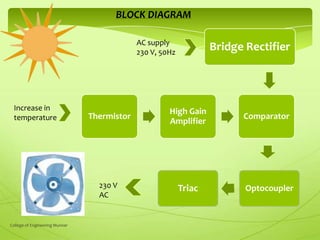
BLOCK DIAGRAM
AC supply
230 V, 50Hz

Increase in
temperature

Bridge Rectifier

High Gain
Amplifier

230 V
AC

College of Engineering Munnar

Thermistor

Triac

Comparator

Optocoupler
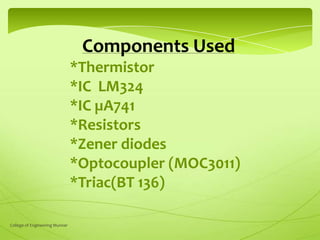
Components Used
*Thermistor
*IC LM324
*IC µA741
*Resistors
*Zener diodes
*Optocoupler (MOC3011)
*Triac(BT 136)
College of Engineering Munnar
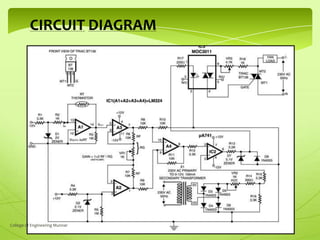
CIRCUIT DIAGRAM

College of Engineering Munnar
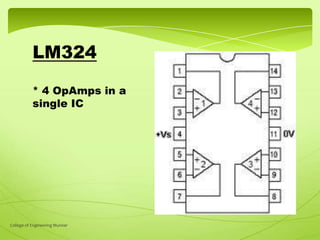
LM324
* 4 OpAmps in a
single IC

College of Engineering Munnar
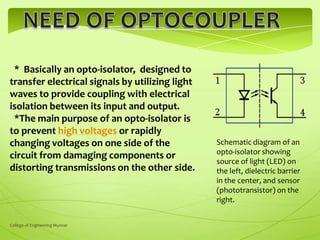
* Basically an opto-isolator, designed to
transfer electrical signals by utilizing light
waves to provide coupling with electrical
isolation between its input and output.
*The main purpose of an opto-isolator is
to prevent high voltages or rapidly
changing voltages on one side of the
circuit from damaging components or
distorting transmissions on the other side.

College of Engineering Munnar

Schematic diagram of an
opto-isolator showing
source of light (LED) on
the left, dielectric barrier
in the center, and sensor
(phototransistor) on the
right.
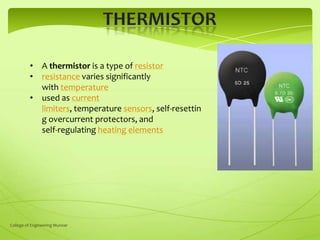
• A thermistor is a type of resistor
• resistance varies significantly
with temperature
• used as current
limiters, temperature sensors, self-resettin
g overcurrent protectors, and
self-regulating heating elements

College of Engineering Munnar
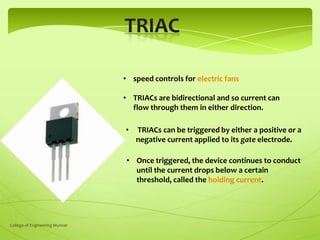
• speed controls for electric fans

• TRIACs are bidirectional and so current can
flow through them in either direction.
•

TRIACs can be triggered by either a positive or a
negative current applied to its gate electrode.

• Once triggered, the device continues to conduct
until the current drops below a certain
threshold, called the holding current.

College of Engineering Munnar
OUR PROGRESS

We have designed and wired the circuit on the bread board level, and the output
is obtained upto 2 stages.

REFERENCE

Wikipedia, electronicsforyo
u.com
COST
250 rs

College of Engineering Munnar

Automatic tempearture controlled fan

  • 1.
    Mini project presentation AUTOMATICTEMPERATURE CONTROLLED FAN Abhilash.K.M(02) Abin Baby(03) Ajith Kumar R(04) Bineesh Babu P(10) College of Engineering Munnar
  • 2.
    Mini project by Studentsof College of Engineering, Munnar College of Engineering Munnar
  • 3.
    INTRODUCTION Ordinary fan regulators Collegeof Engineering Munnar Electronic fan regulators
  • 4.
    Why automatic temperature controlledfan? College of Engineering Munnar
  • 5.
    BLOCK DIAGRAM AC supply 230V, 50Hz Increase in temperature Bridge Rectifier High Gain Amplifier 230 V AC College of Engineering Munnar Thermistor Triac Comparator Optocoupler
  • 6.
    Components Used *Thermistor *IC LM324 *ICµA741 *Resistors *Zener diodes *Optocoupler (MOC3011) *Triac(BT 136) College of Engineering Munnar
  • 7.
    CIRCUIT DIAGRAM College ofEngineering Munnar
  • 8.
    LM324 * 4 OpAmpsin a single IC College of Engineering Munnar
  • 9.
    * Basically anopto-isolator, designed to transfer electrical signals by utilizing light waves to provide coupling with electrical isolation between its input and output. *The main purpose of an opto-isolator is to prevent high voltages or rapidly changing voltages on one side of the circuit from damaging components or distorting transmissions on the other side. College of Engineering Munnar Schematic diagram of an opto-isolator showing source of light (LED) on the left, dielectric barrier in the center, and sensor (phototransistor) on the right.
  • 10.
    • A thermistoris a type of resistor • resistance varies significantly with temperature • used as current limiters, temperature sensors, self-resettin g overcurrent protectors, and self-regulating heating elements College of Engineering Munnar
  • 11.
    • speed controlsfor electric fans • TRIACs are bidirectional and so current can flow through them in either direction. • TRIACs can be triggered by either a positive or a negative current applied to its gate electrode. • Once triggered, the device continues to conduct until the current drops below a certain threshold, called the holding current. College of Engineering Munnar
  • 12.
    OUR PROGRESS We havedesigned and wired the circuit on the bread board level, and the output is obtained upto 2 stages. REFERENCE Wikipedia, electronicsforyo u.com COST 250 rs College of Engineering Munnar
  • 13.