By- Swasti S Satpathy
     Roll no-RBS/11-13/31
Ravenshaw Business School
 Introduction
 Different Policy Instruments
 Technology Policy of India
 Aims and objectives of Technology Policy of India
 Priorities
 Indigenous Technology
 Technology Acquisition
 Technology Transfer
 Implementation
 Effectiveness
 Conclusion
 Science  and technology as the basis of
  economic progress
 Technological advances are influencing life-
  styles as well as societal expectations.
 The use and development of technology must
  relate to the people’s aspirations
 India’s need-Technological self-reliance, a
  swift and tangible improvement in the
  conditions of the weakest sections of the
  population and the speedy development of
  backward regions
 Policy-set of guidelines to avoid negative
  externality and to get direction for future
 A set of legal instruments
 Fiscal instruments
 Financial instruments
 Administrative instruments
   First introduced in 1983
    Clearly define systems for the choice of technology, taking into
    account
   Economic social and cultural factors along with technical
    considerations
    Indigenous development and support to technology, and
    utilization of such technology
    Acquisition of technology through import and its subsequent
    absorption
    Adaptation and upgradation
    Ensuring competitiveness at international levels in all necessary
    areas
    Establishing links between the various elements concerned with
    generation of technology, its transformation into economically
    utilizable form, the sector responsible for production (which is
    the user of such technology), financial institutions concerned
    with the resources needed for these activities, and the
    promotional and regulating arms of the Government.
  Attain technological competence and self-
  reliance, to reduce vulnerability, particularly in
  strategic and critical areas, making the
  maximum use of indigenous resources;
 Provide the maximum gainful and satisfying
  employment to all strata of society, with
  emphasis on the employment of women and
  weaker sections of society;
 Use traditional skills and capabilities, making
  them commercially competitive;
 Ensure the correct mix between mass
  production technologies and production by the
  masses;
 Ensure maximum development with minimum
  capital outlay;
   Identify obsolescence of technology in use and
    arrange for modernization of both equipment and
    technology;
   Develop technologies which are internationally
    competitive, particularly those with export potential;
   Improve production speedily through greater
    efficiency and fuller utilization of existing
    capabilities, and enhance the quality and reliability
    of performance and output;
   Reduce demands on energy, particularly energy from
    non-renewable sources;
   Ensure harmony with the environment, preserve the
    ecological balance and improve the quality of the
    habitat; and
   Recycle waste material and make full utilization of
    by-products.
 Need  for Perspective Planning
 Employment
 Energy(efficiency of its production,
  distribution and utilization, as well as
  improvement of efficiency in processes and
  equipment)
 Efficiency and Productivity
 Environment(ecological balance)
 Some Specific Areas(agriculture, optimum
  use of water resources, provision of drinking
  water in rural areas, low-cost housing,
  industrial development)
 Importance of Technology Development
 Inventions
 Enhancing Traditional Skills and Capabilities
 Ensuring Timely Availability
 Upgradation to Prevent Obsolescence
 Increasing the Demand for Indigenous Technology
 Fiscal Incentives(pilot plants, prototype
  development plants-commercial production)
 Design Engineering
 Engineering Consultancy(essential link between
  R&D institutions and industry)
 In-house R&D
 Mix of Indigenous and Imported Technology
 Principles of Acquisition and Technology
  Assessment
 Technological Information
 International Competitiveness and
  Technology Exports
 Technical Cooperation among Developing
  Countries
 Protection : Legislative Framework
 Success  in implementation demands a
  conscious integrated approach covering
  technology assessment
 development
 acquisition
 utilization
 Diffusion
 connected aspects of financing, based on
  overall national interests, priorities and the
  attainment of the most challenging
  technological goals.
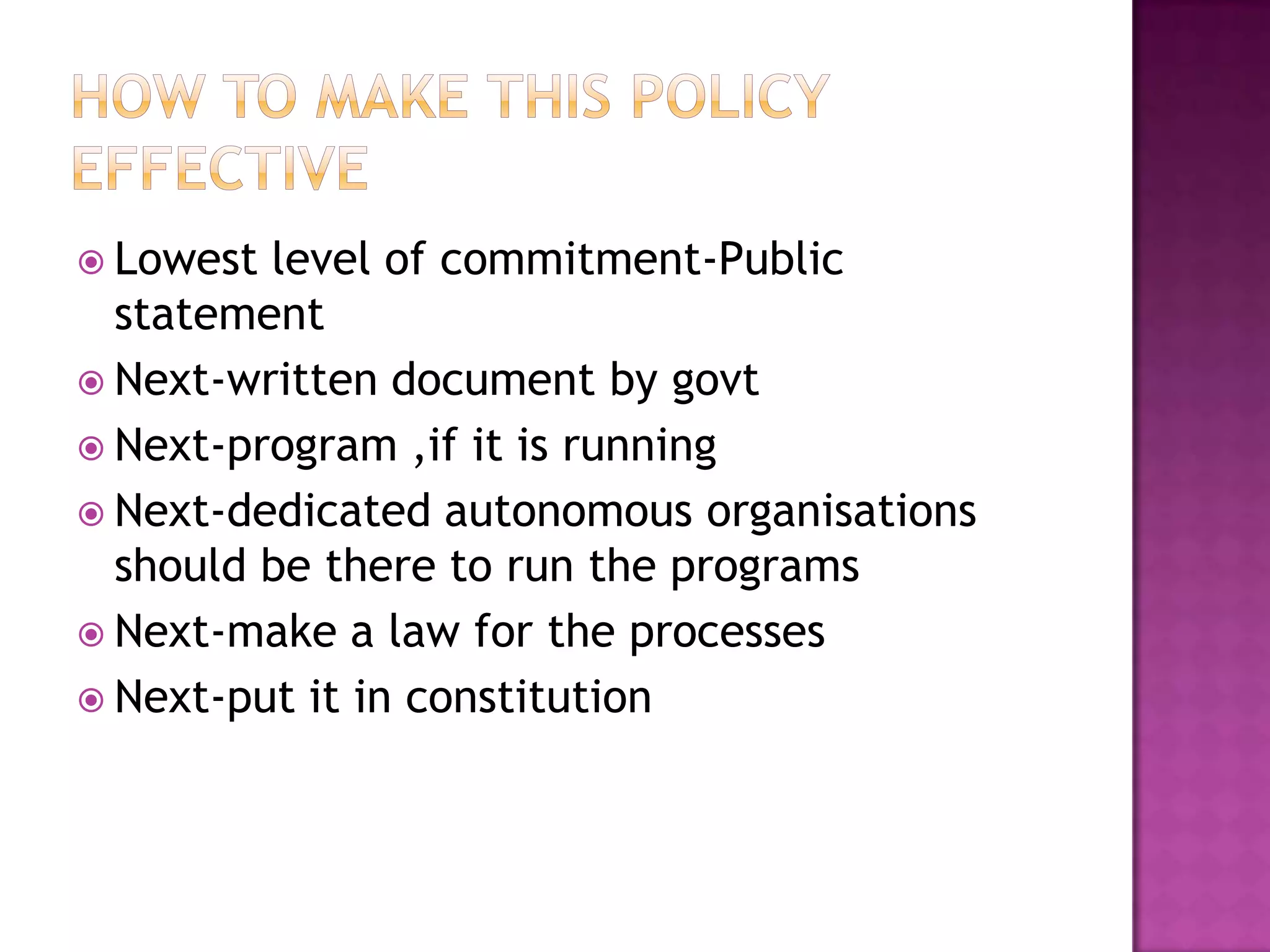
 Lowest level of commitment-Public
  statement
 Next-written document by govt
 Next-program ,if it is running
 Next-dedicated autonomous organisations
  should be there to run the programs
 Next-make a law for the processes
 Next-put it in constitution
 Effective,expeditious, transparent and
 science-based monitoring and reviewing
 mechanisms will be significantly
 strengthened, and wherever not available
 will be put in place. It will be ensured that
 the scientific community is involved in, and
 responsible for, smooth and speedy
 implementation.
Technology policy of India

Technology policy of India

  • 1.
    By- Swasti SSatpathy Roll no-RBS/11-13/31 Ravenshaw Business School
  • 2.
     Introduction  DifferentPolicy Instruments  Technology Policy of India  Aims and objectives of Technology Policy of India  Priorities  Indigenous Technology  Technology Acquisition  Technology Transfer  Implementation  Effectiveness  Conclusion
  • 3.
     Science and technology as the basis of economic progress  Technological advances are influencing life- styles as well as societal expectations.  The use and development of technology must relate to the people’s aspirations  India’s need-Technological self-reliance, a swift and tangible improvement in the conditions of the weakest sections of the population and the speedy development of backward regions
  • 4.
     Policy-set ofguidelines to avoid negative externality and to get direction for future  A set of legal instruments  Fiscal instruments  Financial instruments  Administrative instruments
  • 5.
    First introduced in 1983 Clearly define systems for the choice of technology, taking into account  Economic social and cultural factors along with technical considerations  Indigenous development and support to technology, and utilization of such technology  Acquisition of technology through import and its subsequent absorption  Adaptation and upgradation  Ensuring competitiveness at international levels in all necessary areas  Establishing links between the various elements concerned with generation of technology, its transformation into economically utilizable form, the sector responsible for production (which is the user of such technology), financial institutions concerned with the resources needed for these activities, and the promotional and regulating arms of the Government.
  • 6.
     Attaintechnological competence and self- reliance, to reduce vulnerability, particularly in strategic and critical areas, making the maximum use of indigenous resources;  Provide the maximum gainful and satisfying employment to all strata of society, with emphasis on the employment of women and weaker sections of society;  Use traditional skills and capabilities, making them commercially competitive;  Ensure the correct mix between mass production technologies and production by the masses;  Ensure maximum development with minimum capital outlay;
  • 7.
    Identify obsolescence of technology in use and arrange for modernization of both equipment and technology;  Develop technologies which are internationally competitive, particularly those with export potential;  Improve production speedily through greater efficiency and fuller utilization of existing capabilities, and enhance the quality and reliability of performance and output;  Reduce demands on energy, particularly energy from non-renewable sources;  Ensure harmony with the environment, preserve the ecological balance and improve the quality of the habitat; and  Recycle waste material and make full utilization of by-products.
  • 8.
     Need for Perspective Planning  Employment  Energy(efficiency of its production, distribution and utilization, as well as improvement of efficiency in processes and equipment)  Efficiency and Productivity  Environment(ecological balance)  Some Specific Areas(agriculture, optimum use of water resources, provision of drinking water in rural areas, low-cost housing, industrial development)
  • 9.
     Importance ofTechnology Development  Inventions  Enhancing Traditional Skills and Capabilities  Ensuring Timely Availability  Upgradation to Prevent Obsolescence  Increasing the Demand for Indigenous Technology  Fiscal Incentives(pilot plants, prototype development plants-commercial production)  Design Engineering  Engineering Consultancy(essential link between R&D institutions and industry)  In-house R&D
  • 10.
     Mix ofIndigenous and Imported Technology  Principles of Acquisition and Technology Assessment  Technological Information
  • 11.
     International Competitivenessand Technology Exports  Technical Cooperation among Developing Countries  Protection : Legislative Framework
  • 12.
     Success in implementation demands a conscious integrated approach covering technology assessment  development  acquisition  utilization  Diffusion  connected aspects of financing, based on overall national interests, priorities and the attainment of the most challenging technological goals.
  • 13.
     Lowest levelof commitment-Public statement  Next-written document by govt  Next-program ,if it is running  Next-dedicated autonomous organisations should be there to run the programs  Next-make a law for the processes  Next-put it in constitution
  • 14.
     Effective,expeditious, transparentand science-based monitoring and reviewing mechanisms will be significantly strengthened, and wherever not available will be put in place. It will be ensured that the scientific community is involved in, and responsible for, smooth and speedy implementation.