T.BHAVYA SRI(1214112244)
T.VIJAY BHASKAR(1214112245)
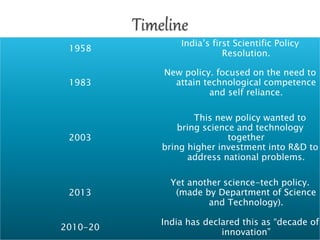
1958
India’s first Scientific Policy
Resolution.
1983
New policy. focused on the need to
attain technological competence
and self reliance.
2003
This new policy wanted to
bring science and technology
together
bring higher investment into R&D to
address national problems.
2013
Yet another science-tech policy.
(made by Department of Science
and Technology).
2010-20
India has declared this as “decade of
innovation”
Goal of new Science, Technology and Innovation
Policy (STI) policy = SRISHTI.
SRISHTI= Science, Research and innovation
system for High technology led path for India.
(that is not SRISHTI….that is SRISHTLPFI, but
these Government officials will forcibly turn any
scheme into a catchy phrase)
Released in the Indian Science Congress at Kolkata.
Use STI for faster, sustainable and more inclusive growth
Focus on both STI for people and people for STI.
To position India among the top five global scientific powers by
2020
To Encourage private sector to invest in Research and
Development (R&D)
To Achieve gender parity in S&T. (meaning bring more female
scientists)
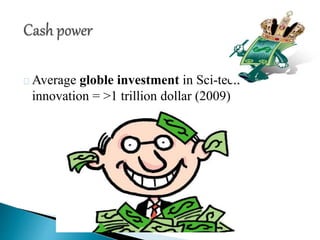
Average globle investment in Sci-tech-
innovation = >1 trillion dollar (2009)
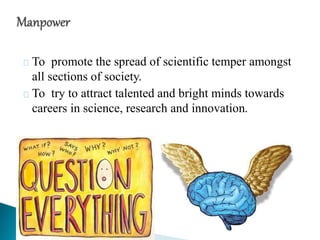
To promote the spread of scientific temper amongst
all sections of society.
To try to attract talented and bright minds towards
careers in science, research and innovation.
To increase R&D intentsity in Service sector, small
and medium scale enterprises.
The investment in S&T is risky.
To provide new financing mechanisms for
entrepreneurs
To create a public procurement policy that favors
indigenous innovations.
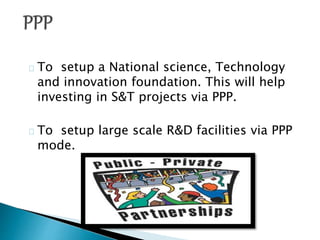
To setup a National science, Technology
and innovation foundation. This will help
investing in S&T projects via PPP.
To setup large scale R&D facilities via PPP
mode.
To modify the Intellectual property
rights(IPR) for social goods.
green manufacturing
regulatory and legal framework.
To bridge the gap.
Various ministries associated with socio-
economic sectors, are already running
schemes for R&D in their sector
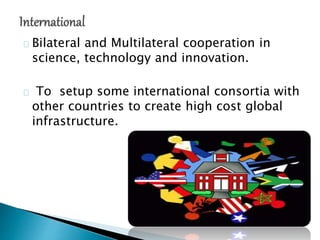
Bilateral and Multilateral cooperation in
science, technology and innovation.
To setup some international consortia with
other countries to create high cost global
infrastructure.
When private sector invests in R&D, their aim is
always profitability.
They’re not much interested in delivery of social
goods.
Government is already giving many tax reliefs to Indian corporate so
they can invest more in research, buying / import necessary machinery
without hassle etc. yet they do not invest that much in R&D compared
to their American counterparts.
We take pride in our IT sector. But our IT sector is mostly involved in
the back-office tasks and software coding for international giants like
Google, Microsoft and Apple. We don’t have an Indian brand of our
own, that can compete with them.
Research – Development has long gestation period.
The new STI policy doesn’t provide any
analysis / reason why the last three policies
failed.
It aims to emerge as a science policy for people and
seeks a STI path for faster, sustainable and inclusive
growth of a Nation.
science technology innovation policy 2013 ppt (STI)

science technology innovation policy 2013 ppt (STI)

  • 1.
  • 2.
    1958 India’s first ScientificPolicy Resolution. 1983 New policy. focused on the need to attain technological competence and self reliance. 2003 This new policy wanted to bring science and technology together bring higher investment into R&D to address national problems. 2013 Yet another science-tech policy. (made by Department of Science and Technology). 2010-20 India has declared this as “decade of innovation”
  • 3.
    Goal of newScience, Technology and Innovation Policy (STI) policy = SRISHTI. SRISHTI= Science, Research and innovation system for High technology led path for India. (that is not SRISHTI….that is SRISHTLPFI, but these Government officials will forcibly turn any scheme into a catchy phrase)
  • 4.
    Released in theIndian Science Congress at Kolkata. Use STI for faster, sustainable and more inclusive growth Focus on both STI for people and people for STI. To position India among the top five global scientific powers by 2020 To Encourage private sector to invest in Research and Development (R&D) To Achieve gender parity in S&T. (meaning bring more female scientists)
  • 6.
    Average globle investmentin Sci-tech- innovation = >1 trillion dollar (2009)
  • 7.
    To promote thespread of scientific temper amongst all sections of society. To try to attract talented and bright minds towards careers in science, research and innovation.
  • 8.
    To increase R&Dintentsity in Service sector, small and medium scale enterprises. The investment in S&T is risky. To provide new financing mechanisms for entrepreneurs To create a public procurement policy that favors indigenous innovations.
  • 9.
    To setup aNational science, Technology and innovation foundation. This will help investing in S&T projects via PPP. To setup large scale R&D facilities via PPP mode.
  • 10.
    To modify theIntellectual property rights(IPR) for social goods. green manufacturing regulatory and legal framework.
  • 13.
    To bridge thegap. Various ministries associated with socio- economic sectors, are already running schemes for R&D in their sector
  • 14.
    Bilateral and Multilateralcooperation in science, technology and innovation. To setup some international consortia with other countries to create high cost global infrastructure.
  • 16.
    When private sectorinvests in R&D, their aim is always profitability. They’re not much interested in delivery of social goods.
  • 17.
    Government is alreadygiving many tax reliefs to Indian corporate so they can invest more in research, buying / import necessary machinery without hassle etc. yet they do not invest that much in R&D compared to their American counterparts. We take pride in our IT sector. But our IT sector is mostly involved in the back-office tasks and software coding for international giants like Google, Microsoft and Apple. We don’t have an Indian brand of our own, that can compete with them. Research – Development has long gestation period.
  • 18.
    The new STIpolicy doesn’t provide any analysis / reason why the last three policies failed.
  • 19.
    It aims toemerge as a science policy for people and seeks a STI path for faster, sustainable and inclusive growth of a Nation.