Teambuilding
with Purpose
What & How
1. Why / How / What
2. Team Bonding vs Team Building
3. Content & Logistics
4. DIY Events
5. Leveraging your Superpowers
6. Turn Key Events
7. Check Lists
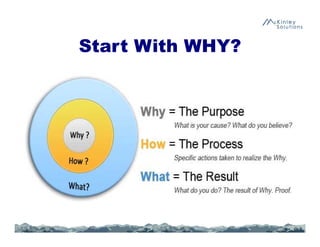
Start With WHY?
Team Building vs. Team
Bonding
Synonymous, but not the same! But they
can overlap. The clearer you make this the
better!
1) What is the true purpose of this event?
2) Do you have any quantifiable objectives for
the event?
3) If you would like to see some quantifiable
improvements, how much time are you willing
to commit?
Team Building vs. Team
Bonding
Teambuilding
• Focuses on behaviors and their impact
• Is practiced over time
• Encourages deeper discussion & processing
Team Bonding
• Allows people to connect in a different setting
• Helps people see each other in a different light
• Usually a one-time activity
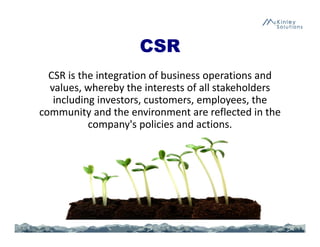
CSR
CSR is the integration of business operations and 
values, whereby the interests of all stakeholders 
including investors, customers, employees, the 
community and the environment are reflected in the 
company's policies and actions.
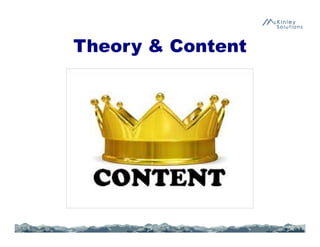
Theory & Content
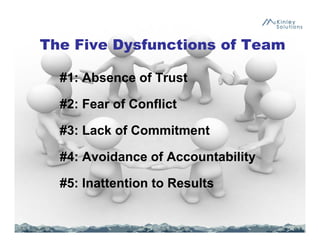
The Five Dysfunctions of Team
#1: Absence of Trust
#2: Fear of Conflict
#3: Lack of Commitment
#4: Avoidance of Accountability
#5: Inattention to Results
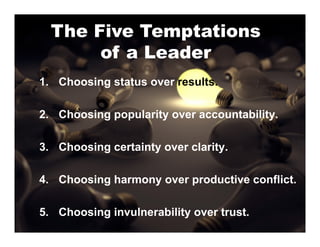
1. Choosing status over results.
2. Choosing popularity over accountability.
3. Choosing certainty over clarity.
4. Choosing harmony over productive conflict.
5. Choosing invulnerability over trust.
The Five Temptations
of a Leader
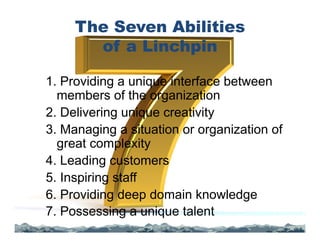
The Seven Abilities
of a Linchpin
1. Providing a unique interface between
members of the organization
2. Delivering unique creativity
3. Managing a situation or organization of
great complexity
4. Leading customers
5. Inspiring staff
6. Providing deep domain knowledge
7. Possessing a unique talent
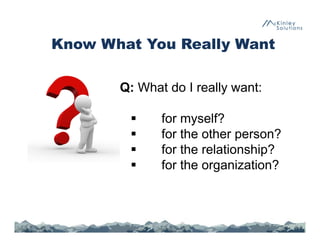
Know What You Really Want
Conversation. Focus on What you 
Want Out of the ConversationAsQ: What do I really want:
ď‚§ for myself?
ď‚§ for the other person?
ď‚§ for the relationship?
ď‚§ for the organization?
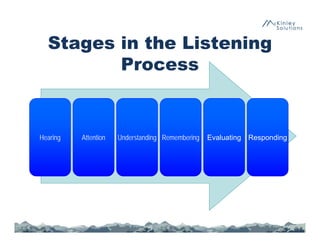
Stages in the Listening
Process
Hearing Attention Understanding Remembering Evaluating Responding
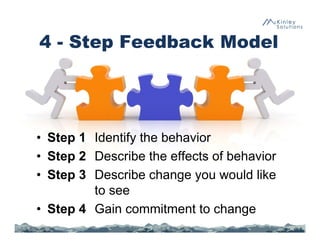
4 - Step Feedback Model
• Step 1 Identify the behavior
• Step 2 Describe the effects of behavior
• Step 3 Describe change you would like
to see
• Step 4 Gain commitment to change
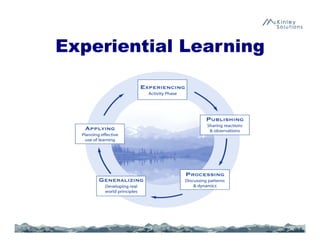
Experiential Learning
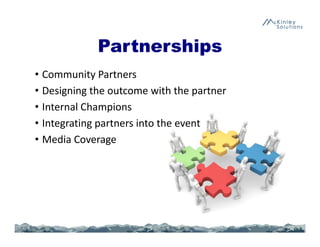
Partnerships
• Community Partners
• Designing the outcome with the partner
• Internal Champions
• Integrating partners into the event
• Media Coverage
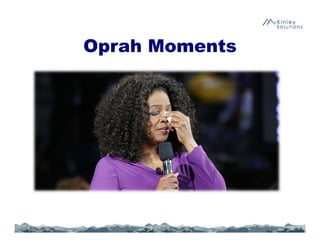
Oprah Moments
© 2011 McKinley Solutions
Do It Yourself Events
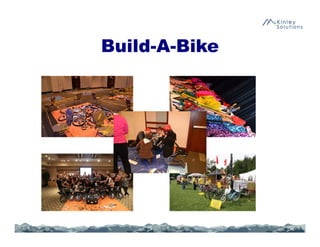
Build-A-Bike
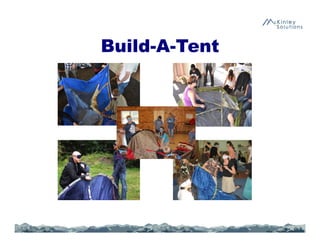
Build-A-Tent
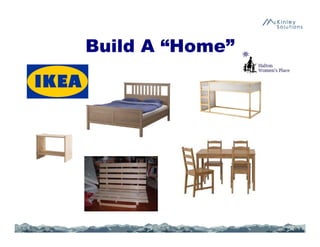
Build A “Home”
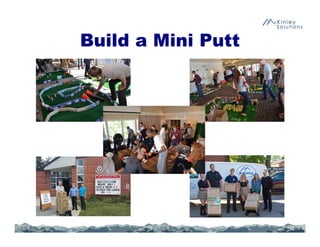
Build a Mini Putt
© 2011 McKinley Solutions
What is your
Superpower?
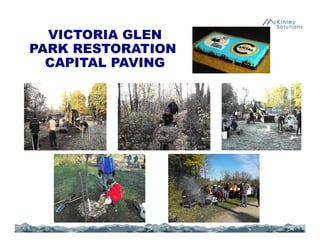
VICTORIA GLEN
PARK RESTORATION
CAPITAL PAVING
Turn Key Events
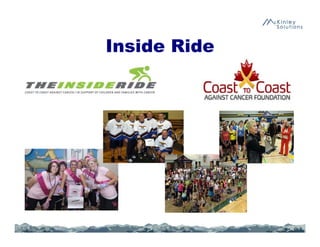
Inside Ride
Bear Buddies
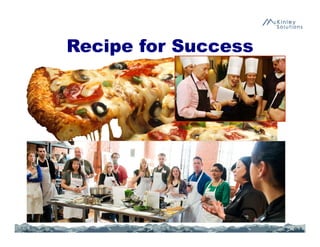
Recipe for Success
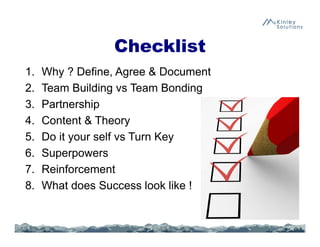
Checklist
1. Why ? Define, Agree & Document
2. Team Building vs Team Bonding
3. Partnership
4. Content & Theory
5. Do it your self vs Turn Key
6. Superpowers
7. Reinforcement
8. What does Success look like !
STOP-START-CONTINUE
Individual & Group Challenge:
Use a Start-Stop-Continue
template to create specific
action for yourself
Take Action Now
© 2011 McKinley Solutions
The Challenge
of Change
The Challenge
of Change
© 2011 McKinley Solutions
The Challenge of Change
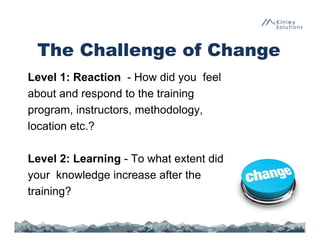
Level 1: Reaction - How did you feel
about and respond to the training
program, instructors, methodology,
location etc.?
Level 2: Learning - To what extent did
your knowledge increase after the
training?
35
The Challenge of Change
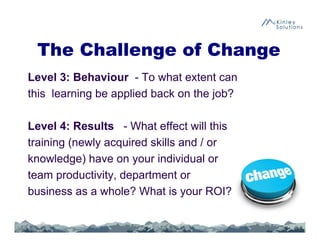
Level 3: Behaviour - To what extent can
this learning be applied back on the job?
Level 4: Results - What effect will this
training (newly acquired skills and / or
knowledge) have on your individual or
team productivity, department or
business as a whole? What is your ROI?
36
The Challenge of Change
• Step 1 – Identify one of the themes
(create a culture of commitment,
communication, delegation, customer
service on which you want to focus.
• Step 2 – Define the objectives for
performance improvement in the area of
your chosen theme.
• Step 3 – Write five action steps to
achieve each of your objectives.
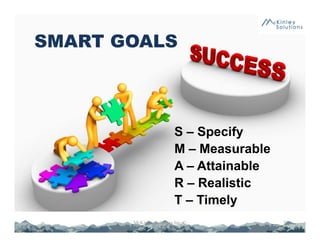
SMART GOALS
38McKinley Solutions Inc. ©
S – Specify
M – Measurable
A – Attainable
R – Realistic
T – Timely
Clear Direction?
• Where are you going?
Clear Strategy?
• How are you going to get there?
Clear set of Expectations?
• What does your team expect
from you ?
• What do you expect from the
team?
39McKinley Solutions Inc. ©
The Challenge of Change
1. Why are we changing?
2. What is in it for me?
3. What can we/I to do
differently?
4. What tools/support do we
have?
5. How will we be
measured?
© 2011 McKinley Solutions
Guiding Questions
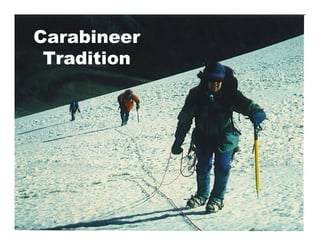
Carabineer
Tradition
Carabineer Tradition
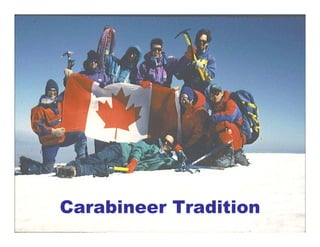
In mountain climbing in particular, the
carabineer is the link that ensures
that one climber is securely attached
to another or to the mountain itself
A climber’s carabineer - provides a vital
connection, a bond, necessary to
complete one’s challenge or task
Carabineer Tradition
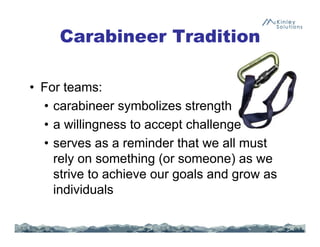
• For teams:
• carabineer symbolizes strength
• a willingness to accept challenge
• serves as a reminder that we all must
rely on something (or someone) as we
strive to achieve our goals and grow as
individuals
Carabineer Tradition
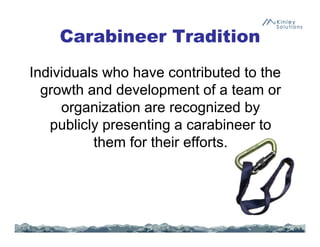
Individuals who have contributed to the
growth and development of a team or
organization are recognized by
publicly presenting a carabineer to
them for their efforts.
Carabineer Tradition
McKinley Solutions Inc. © 46
Mark R. Thompson
w: www.mckinleysolutions.com
e: mark@mckinleysolutions.com
t: 888-769-1577 x 222
www.twitter.com/mckinleysolns
www.slideshare.net/mckinleysolutions
www.flickr.com/photos/mckinleysolutions
www.facebook.com/mckinleysolutions
www.linkedin.com/company/mckinley-solutions

Team building with purpose HRPA 2015