Team Member
involved in hearing
Screening & their
role.
M R . A M B U J K U S H AWA H A
R E S E A R C H S C H O L A R
A I I S H - M Y S O R E
Introduction
o Hearing Loss in children is a serious concern as it interferes with
the development of language
o Our primary is that the child should develop a communication skill
during the critical period.
o During critical periods, all aspects of development occur, such as
physical, motor, speech, language, social, and psychological
development.
Many research studies have demonstrated that early intervention with hearing
impairment children result is improve in language development, increased academics
success and increased quality of life.
• Early identification and intervention of hearing loss involve teamwork and
requires a group of professionals.
• The effect of hearing loss is devastating as it causes many problems in
individuals, which includes a total lack of communication, leading to a variety
of social and emotional discrepancies.
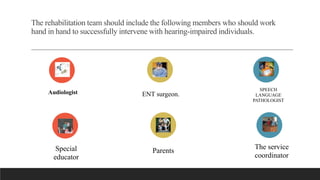
The rehabilitation team should include the following members who should work
hand in hand to successfully intervene with hearing-impaired individuals.
Special
educator
Parents
The service
coordinator
Audiologist ENT surgeon.
SPEECH
LANGUAGE
PATHOLOGIST
Pediatrician
• The health professional on whom parents depend for the general
health care of the child is probably a pediatrician.
• Paediatricians treat only children as well as adults.
• This professional will not be able to help parents with hearing loss
itself.
• However, he/she may treat inflammations and infection of the ear
and upper respiratory system that can affect hearing as well as
other conditions that children may encounter.
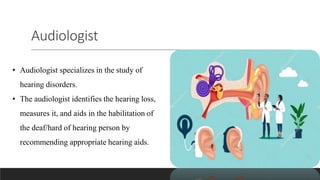
Audiologist
• Audiologist specializes in the study of
hearing disorders.
• The audiologist identifies the hearing loss,
measures it, and aids in the habilitation of
the deaf/hard of hearing person by
recommending appropriate hearing aids.
ENT surgeon (Otolaryngologist)
• Otolaryngologist is a physician who specializes in
diseases of the ear, nose & throat.
• Otolaryngologists examine a child to rule out any
medical complications before parents purchase a
hearing aid, and ENT should check every child
periodically.
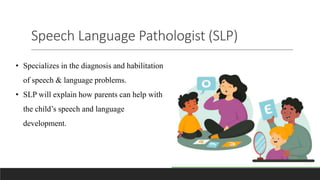
Speech Language Pathologist (SLP)
• Specializes in the diagnosis and habilitation
of speech & language problems.
• SLP will explain how parents can help with
the child’s speech and language
development.
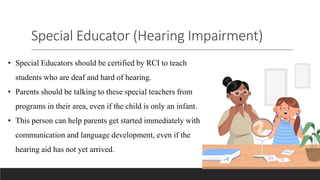
Special Educator (Hearing Impairment)
• Special Educators should be certified by RCI to teach
students who are deaf and hard of hearing.
• Parents should be talking to these special teachers from
programs in their area, even if the child is only an infant.
• This person can help parents get started immediately with
communication and language development, even if the
hearing aid has not yet arrived.
• Most areas have programs for infants and toddlers and their
parents.
• Teachers in these programs will become one of the team’s most
valuable members, providing home visits and one-on-one early
intervention for parents and children.
Parents
• Parents are the most important team members because they will
stay with the child throughout, even when professionals leave
and they will decide on the child’s rehabilitation procedures.
• Parents are the best people who will identify a child's hearing
loss, but some parents do not accept that their child has hearing
loss because they have emotions like shock and denial.
• It is the professional role to counsel these parents to overcome this
problem.
• Parent, together with help from the professionals, will help decide the
child’s rehabilitation procedures and the hearing-impaired child’s future.
Thus, parents play a very important role in the rehabilitation process.
The Service Coordinator
• He is responsible for coordinating all services for the
child and will serve as a person for parents to contact
when seeking to obtain necessary services and assistance.
• The service coordinator is also required to assist parents
in identifying and locating available services and service
providers and to inform parents of the availability of
rehabilitation services

Team Member involved in hearing Screening.pptx

  • 1.
    Team Member involved inhearing Screening & their role. M R . A M B U J K U S H AWA H A R E S E A R C H S C H O L A R A I I S H - M Y S O R E
  • 2.
    Introduction o Hearing Lossin children is a serious concern as it interferes with the development of language o Our primary is that the child should develop a communication skill during the critical period. o During critical periods, all aspects of development occur, such as physical, motor, speech, language, social, and psychological development.
  • 3.
    Many research studieshave demonstrated that early intervention with hearing impairment children result is improve in language development, increased academics success and increased quality of life. • Early identification and intervention of hearing loss involve teamwork and requires a group of professionals. • The effect of hearing loss is devastating as it causes many problems in individuals, which includes a total lack of communication, leading to a variety of social and emotional discrepancies.
  • 4.
    The rehabilitation teamshould include the following members who should work hand in hand to successfully intervene with hearing-impaired individuals. Special educator Parents The service coordinator Audiologist ENT surgeon. SPEECH LANGUAGE PATHOLOGIST
  • 5.
    Pediatrician • The healthprofessional on whom parents depend for the general health care of the child is probably a pediatrician. • Paediatricians treat only children as well as adults. • This professional will not be able to help parents with hearing loss itself. • However, he/she may treat inflammations and infection of the ear and upper respiratory system that can affect hearing as well as other conditions that children may encounter.
  • 6.
    Audiologist • Audiologist specializesin the study of hearing disorders. • The audiologist identifies the hearing loss, measures it, and aids in the habilitation of the deaf/hard of hearing person by recommending appropriate hearing aids.
  • 7.
    ENT surgeon (Otolaryngologist) •Otolaryngologist is a physician who specializes in diseases of the ear, nose & throat. • Otolaryngologists examine a child to rule out any medical complications before parents purchase a hearing aid, and ENT should check every child periodically.
  • 8.
    Speech Language Pathologist(SLP) • Specializes in the diagnosis and habilitation of speech & language problems. • SLP will explain how parents can help with the child’s speech and language development.
  • 9.
    Special Educator (HearingImpairment) • Special Educators should be certified by RCI to teach students who are deaf and hard of hearing. • Parents should be talking to these special teachers from programs in their area, even if the child is only an infant. • This person can help parents get started immediately with communication and language development, even if the hearing aid has not yet arrived.
  • 10.
    • Most areashave programs for infants and toddlers and their parents. • Teachers in these programs will become one of the team’s most valuable members, providing home visits and one-on-one early intervention for parents and children.
  • 11.
    Parents • Parents arethe most important team members because they will stay with the child throughout, even when professionals leave and they will decide on the child’s rehabilitation procedures. • Parents are the best people who will identify a child's hearing loss, but some parents do not accept that their child has hearing loss because they have emotions like shock and denial.
  • 12.
    • It isthe professional role to counsel these parents to overcome this problem. • Parent, together with help from the professionals, will help decide the child’s rehabilitation procedures and the hearing-impaired child’s future. Thus, parents play a very important role in the rehabilitation process.
  • 13.
    The Service Coordinator •He is responsible for coordinating all services for the child and will serve as a person for parents to contact when seeking to obtain necessary services and assistance. • The service coordinator is also required to assist parents in identifying and locating available services and service providers and to inform parents of the availability of rehabilitation services