By Atul Salunke
 Team building is a process that developes
cooperation and teamwork within a work unit.
 To constitute a efficient team,it’s members
must share a common goal, have respect for
each other, and be motivated to use strength
of each member to achieve their objectives.
 Current corporate philosphy stresses that
each member of a team plays an integral part
in the successs of the company.
 With understaffing ,burnout, outsourcing and
other moral-defeating activities on the rise, many
corporation realize they must nurture
communication within the organization.
 In addition, many businesses from team, or
committees, for varying purpose, therefore
individuals can be members of several teams. For
an effective team, time should be established for
getting acquainted and the exchange of idea.
 From employee point of view, being a part of
team usually provide a sense and ownership.
1. Interpersonal conflict’s among the team
members.
2. Disagreement between the team members
and it’s leader.
3. Confusion/Disagreement over the role
performed by team members.
4. Resistance to changes or to new ideas by
some or most of the team members.
1. Negative criticism and bickering within the
team.
2. Low group moral.
3. Lack of cooperative attitude within the team.
4. Disagreement on methods or procedures
adopted by the team to conduct activities,etc.
 This signals may have positive effect on the
functioning and performance of the team.
 Team members learn to balance one
another’s strength and weaknesses, and
strong bond of caring often emerges among
the team maembers.
 Team members learn problem-solving and
decision-making skills.
 Team members develops mutual trust and
respect.
 It helps to develop moral and high level of
cooperative attitude.
 It develops intra group and inter-group
communication.
 Team building processes has a positive effect
on the functioning and performance of
teams.
 Team members become open to change and
new ideas.
 Team members become proactive to avoid
inter-personal problems from emerging.
 1.Understand the team
concept. Open lines of
communication as a
foundation. Sharpen
communication techniques and
skills. Learn techniques for
building a better team.
 2.nderstand your style and role
as a team leader. Sharpen your
team’s goal setting, motivation
and output/performance.
Understand team members and
team dynamics.
Practice,discuss,and problem
solve.
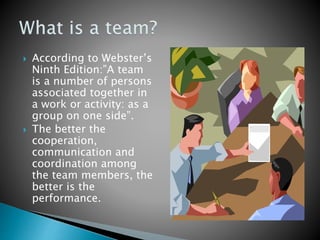
 According to Webster’s
Ninth Edition:”A team
is a number of persons
associated together in
a work or activity: as a
group on one side”.
 The better the
cooperation,
communication and
coordination among
the team members, the
better is the
performance.
 Athletic Perspective :Here, ”Team” connotes
winning and losing. In an athletic arena,
winning is the ultimate goal.
 The Power Of Two: ”Team” implies
partnership. This includes both bussiness and
personal partnership such as marriage.
 Team initiate change often those at the top of
the organisation are challenged by what
changes are necessary within an organisation.
Teams provide a valuable source of feedback
 Teams are natural problem solving devices.A
team setting opens up new communication
lines.Because of the necessity of
communication within a team, members
encounter problems and challenges in early
stages and are able to head them off with
greater efficiency and succes.
 Common need is the overriding need of all
people working for the same organization:To
make the organization profitable.
 Created by manager to meet the firm’s goals.
1. Cross-Fucntioning:Members of different
departments.
2. Cross-Culture:Members of different cultures.
3. Research and Development Teams:Create new
products.
4. Top Management Teams:Help develop firm’s
direction.
5. Task Force:Create to meet a given objed to
completeective
6. Self-Managed Teams:Members are
empowered to complete some given
 Created by members to meet their needs.
 Friendship Groups:Made by employee who
trust each others company.
 Satisfy the needs for human interraction and
social support.
 Interest Groups:Workers seek to a achieve a
common goal based on their membership in
the organisation.
 Manager should observe interest groups for
efficient performance.
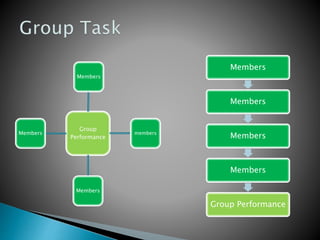
Group
Performance
Members
members
Members
Members
Members
Members
Members
Members
Group Performance
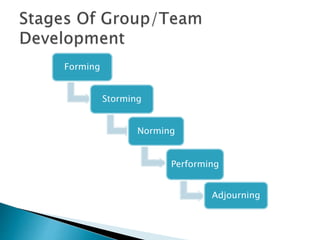
Forming
Storming
Norming
Performing
Adjourning
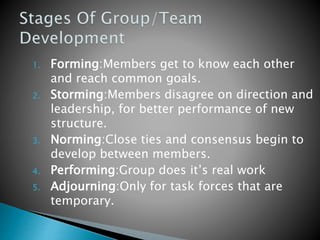
1. Forming:Members get to know each other
and reach common goals.
2. Storming:Members disagree on direction and
leadership, for better performance of new
structure.
3. Norming:Close ties and consensus begin to
develop between members.
4. Performing:Group does it’s real work
5. Adjourning:Only for task forces that are
temporary.
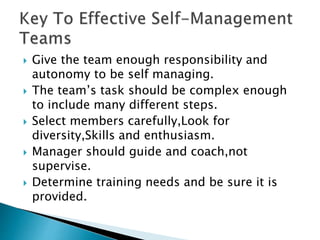
 Give the team enough responsibility and
autonomy to be self managing.
 The team’s task should be complex enough
to include many different steps.
 Select members carefully,Look for
diversity,Skills and enthusiasm.
 Manager should guide and coach,not
supervise.
 Determine training needs and be sure it is
provided.
 Role:Set of behavior a group member is
expected to perform because of their
position in the group.
 In cross-function teams, members
perform
roles in their speciality.
 Managers need to clearly describe
expected
roles to group members when they are
assigned to a group.
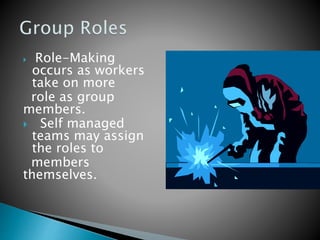
 Role-Making
occurs as workers
take on more
role as group
members.
 Self managed
teams may assign
the roles to
members
themselves.

Team building powerpoint

  • 1.
  • 2.
     Team buildingis a process that developes cooperation and teamwork within a work unit.  To constitute a efficient team,it’s members must share a common goal, have respect for each other, and be motivated to use strength of each member to achieve their objectives.  Current corporate philosphy stresses that each member of a team plays an integral part in the successs of the company.
  • 3.
     With understaffing,burnout, outsourcing and other moral-defeating activities on the rise, many corporation realize they must nurture communication within the organization.  In addition, many businesses from team, or committees, for varying purpose, therefore individuals can be members of several teams. For an effective team, time should be established for getting acquainted and the exchange of idea.  From employee point of view, being a part of team usually provide a sense and ownership.
  • 4.
    1. Interpersonal conflict’samong the team members. 2. Disagreement between the team members and it’s leader. 3. Confusion/Disagreement over the role performed by team members. 4. Resistance to changes or to new ideas by some or most of the team members.
  • 5.
    1. Negative criticismand bickering within the team. 2. Low group moral. 3. Lack of cooperative attitude within the team. 4. Disagreement on methods or procedures adopted by the team to conduct activities,etc.  This signals may have positive effect on the functioning and performance of the team.
  • 6.
     Team memberslearn to balance one another’s strength and weaknesses, and strong bond of caring often emerges among the team maembers.  Team members learn problem-solving and decision-making skills.  Team members develops mutual trust and respect.  It helps to develop moral and high level of cooperative attitude.
  • 7.
     It developsintra group and inter-group communication.  Team building processes has a positive effect on the functioning and performance of teams.  Team members become open to change and new ideas.  Team members become proactive to avoid inter-personal problems from emerging.
  • 8.
     1.Understand theteam concept. Open lines of communication as a foundation. Sharpen communication techniques and skills. Learn techniques for building a better team.  2.nderstand your style and role as a team leader. Sharpen your team’s goal setting, motivation and output/performance. Understand team members and team dynamics. Practice,discuss,and problem solve.
  • 9.
     According toWebster’s Ninth Edition:”A team is a number of persons associated together in a work or activity: as a group on one side”.  The better the cooperation, communication and coordination among the team members, the better is the performance.
  • 10.
     Athletic Perspective:Here, ”Team” connotes winning and losing. In an athletic arena, winning is the ultimate goal.  The Power Of Two: ”Team” implies partnership. This includes both bussiness and personal partnership such as marriage.
  • 11.
     Team initiatechange often those at the top of the organisation are challenged by what changes are necessary within an organisation. Teams provide a valuable source of feedback
  • 12.
     Teams arenatural problem solving devices.A team setting opens up new communication lines.Because of the necessity of communication within a team, members encounter problems and challenges in early stages and are able to head them off with greater efficiency and succes.
  • 13.
     Common needis the overriding need of all people working for the same organization:To make the organization profitable.
  • 14.
     Created bymanager to meet the firm’s goals. 1. Cross-Fucntioning:Members of different departments. 2. Cross-Culture:Members of different cultures. 3. Research and Development Teams:Create new products. 4. Top Management Teams:Help develop firm’s direction. 5. Task Force:Create to meet a given objed to completeective 6. Self-Managed Teams:Members are empowered to complete some given
  • 15.
     Created bymembers to meet their needs.  Friendship Groups:Made by employee who trust each others company.  Satisfy the needs for human interraction and social support.  Interest Groups:Workers seek to a achieve a common goal based on their membership in the organisation.  Manager should observe interest groups for efficient performance.
  • 16.
  • 17.
  • 18.
    1. Forming:Members getto know each other and reach common goals. 2. Storming:Members disagree on direction and leadership, for better performance of new structure. 3. Norming:Close ties and consensus begin to develop between members. 4. Performing:Group does it’s real work 5. Adjourning:Only for task forces that are temporary.
  • 19.
     Give theteam enough responsibility and autonomy to be self managing.  The team’s task should be complex enough to include many different steps.  Select members carefully,Look for diversity,Skills and enthusiasm.  Manager should guide and coach,not supervise.  Determine training needs and be sure it is provided.
  • 20.
     Role:Set ofbehavior a group member is expected to perform because of their position in the group.
  • 21.
     In cross-functionteams, members perform roles in their speciality.  Managers need to clearly describe expected roles to group members when they are assigned to a group.
  • 22.
     Role-Making occurs asworkers take on more role as group members.  Self managed teams may assign the roles to members themselves.