



Chapter 6TeachingtheLanguageSystem
Study: is a repetition, explanation and practicethatispart of a controlledpracticephase of thelessonsequence
Personalisationhappens once thestudents’ attention has beendrawntothelanguage in question. Usedtotalkabouttheirlives
There are twodifferentapproachesto introduce studentstoanspecificaspect of language: deductive and inductiveapproach
ThedeductiveapproachStudents are givenexplanations of GRAMMAR rules, and then, basedonexplanationsor rules theymakephrases and sentencesusingthe new language
Theinductiveapproach(theotherwayaround)Produce languageInstead of studying rules, studentsstudyexamples of language and try toworkoutthose rules (practice) (fluency)
Forexample: findexamples of past tenses and sayhow and whythey are usedSequenceengage- activate- study
Students can use monolinguallearners’ dictionariesactivitiesorcomputerpurposestodevelopevocabulary
ExplainingmeaningA waytoexplainthemeaning of somethingisto show itEx: pointanbooktolearntheword ‘book’Foractions use mimeSuperlatives: use armsFacial expressions: happy, sad …
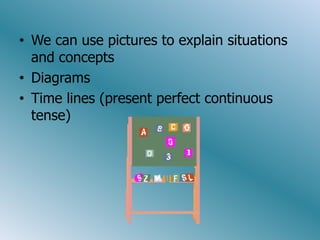
We can use picturestoexplainsituations and conceptsDiagramsTime lines (presentperfectcontinuous tense)
Ifwecant’ show something in one of thewaysmentionedabove, we can describe themeaning of thewordForexample: nastyistheopposite of niceFor a betterunderstanding use CHECK QUESTIONS?
Wealso can demonstrateword and sentence stress bybeating time withourarms. We can show intonationpatternsby ‘drawing’ the tune in the air
Studentsmayfindgestures and graphicssufficient, butothersliketoseewrittenexplanationsordiagramsonboardsorprojectors
Example:IF+had+pastparticiple: would+have+pastparticiple
PracticeWeteachersaskstudentstopractice. Whilepracticingwe can correctiftheyhavemistakes. Thispassesfrom short termmemorytolongtermmemory
Short termmemoryiswhenthings are stored as long as needed in a human’slifeLong termmemoryisforthethingsthatwewantto ‘keep’  (id’s, passwords…)
PracticegrammarRepetition

Teaching the Language System