Teaching inTeaching in
ConceptConcept
By Kris TrairatanaBy Kris Trairatana
August 13, 2008August 13, 2008
Concept TeachingConcept Teaching
 Refers to the learning of specific concepts, theRefers to the learning of specific concepts, the
nature of concepts, or the development ofnature of concepts, or the development of
logical reasoning and critical thinkinglogical reasoning and critical thinking
 Be categorized into two approaches: inductiveBe categorized into two approaches: inductive
and deductive strategiesand deductive strategies
 Proceeds through four primary phases for eachProceeds through four primary phases for each
approachapproach
Inductive vs. InductiveInductive vs. Inductive
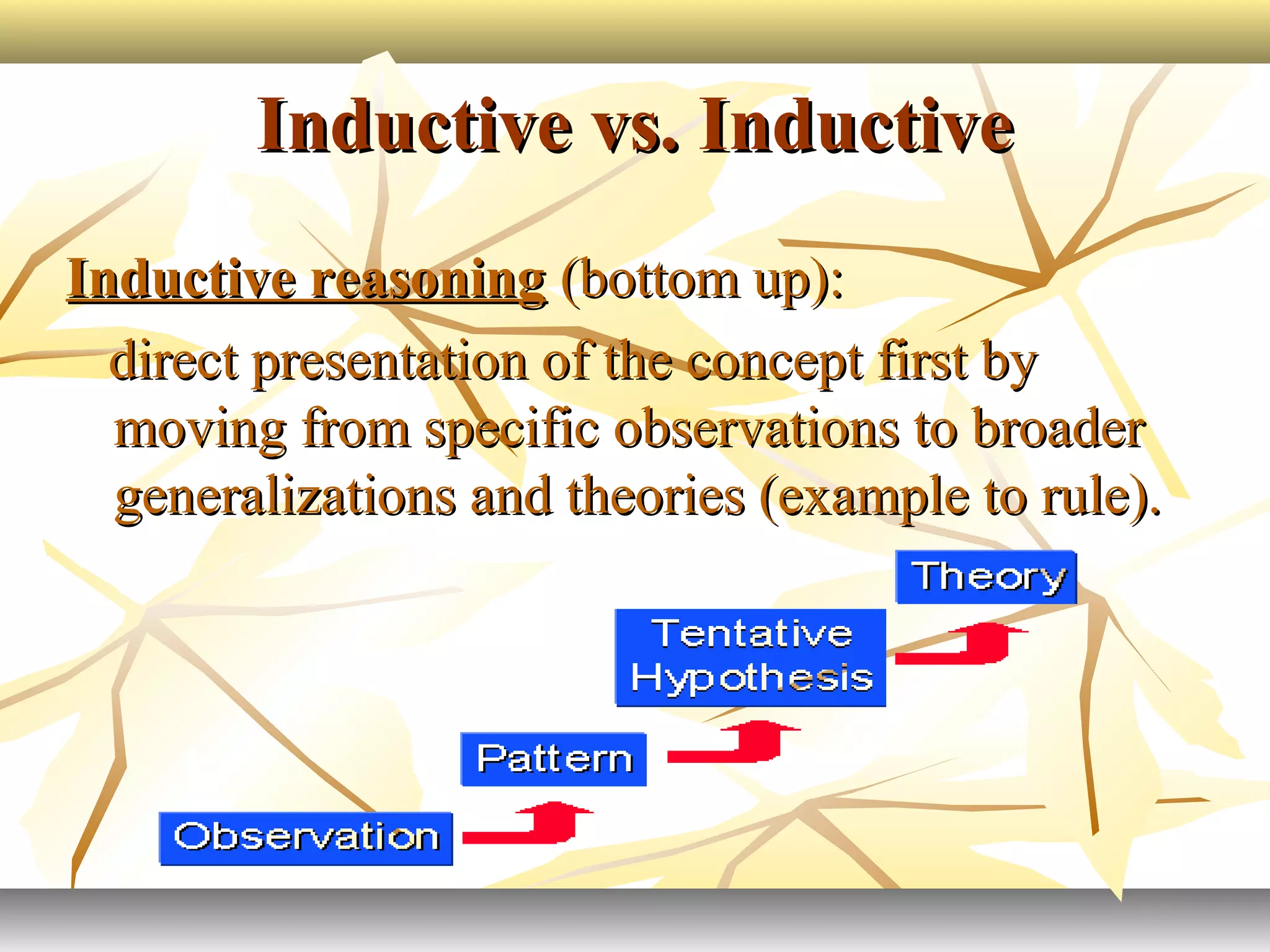
Inductive reasoningInductive reasoning (bottom up):(bottom up):
direct presentation of the concept first bydirect presentation of the concept first by
moving from specific observations to broadermoving from specific observations to broader
generalizations and theories (example to rule).generalizations and theories (example to rule).
Inductive vs. Inductive (cont.)Inductive vs. Inductive (cont.)
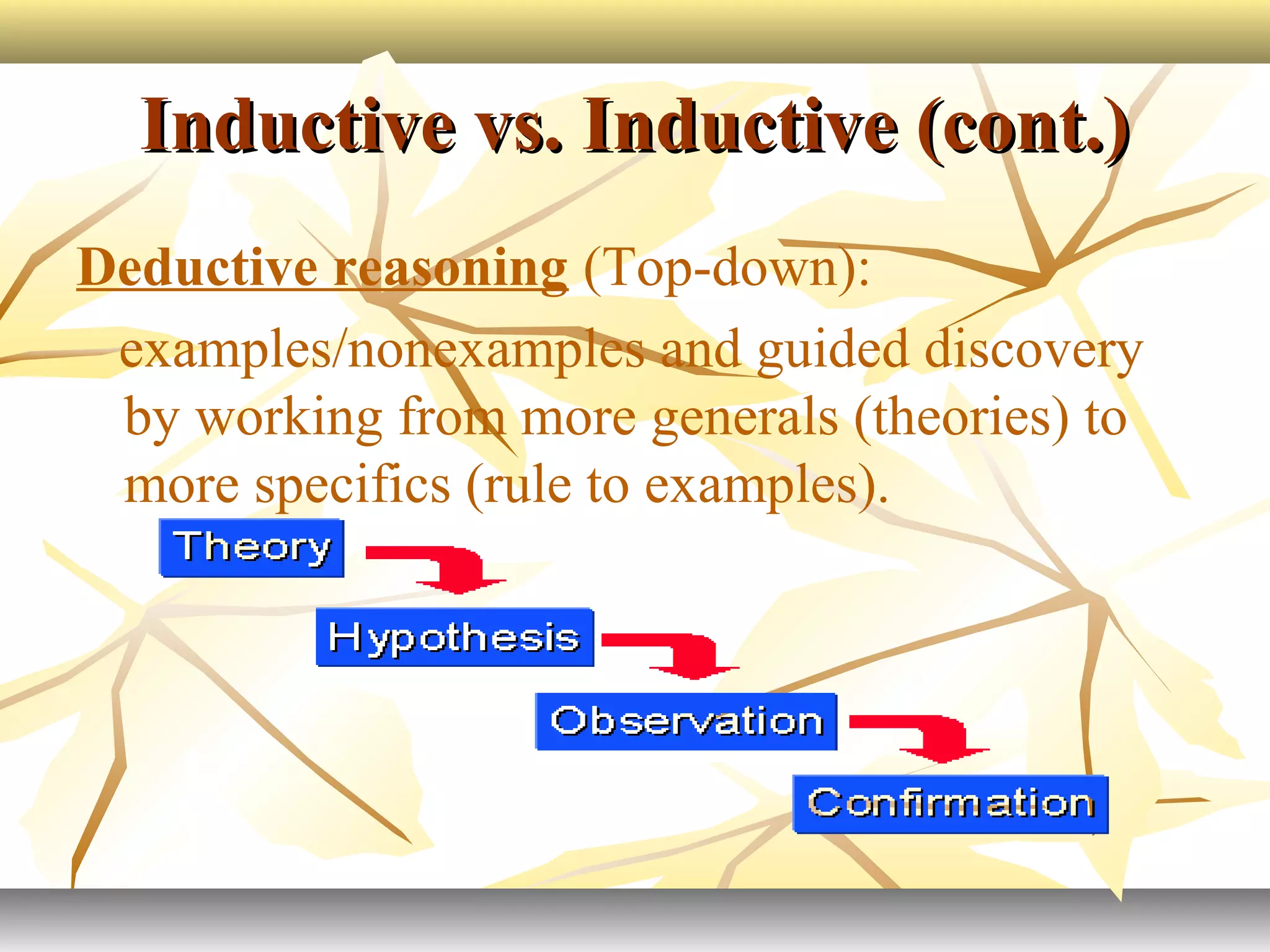
Deductive reasoning (Top-down):
examples/nonexamples and guided discovery
by working from more generals (theories) to
more specifics (rule to examples).
Process of Primary PhasesProcess of Primary Phases
 Clarify goals and conditionsClarify goals and conditions
 Illustrate examples and nonexamplesIllustrate examples and nonexamples
 Students provide examples and nonexamplesStudents provide examples and nonexamples
to demonstrate attainment of conceptto demonstrate attainment of concept
 Guide students to think about their ownGuide students to think about their own
thinking (examine their decisions,thinking (examine their decisions,
consequences of choices, how concept its inconsequences of choices, how concept its in
with bigger picture) by using both deductivewith bigger picture) by using both deductive
and inductive approaches or each one.and inductive approaches or each one.
Using Concept Teaching in ClassUsing Concept Teaching in Class
 Select Big Idea Concept and determine theSelect Big Idea Concept and determine the
best approach (deductive or inductive)best approach (deductive or inductive)
 Clarify aims/establish a “hook” to drawClarify aims/establish a “hook” to draw
students in…students in…
 Proceed through the selected approach usingProceed through the selected approach using
 Get students to demonstrate theirGet students to demonstrate their
understandingunderstanding
 Employ higher-level questioning andEmploy higher-level questioning and
discussion strategiesdiscussion strategies
ReferencesReferences
 Rodriguez, Mark A. (2006).Rodriguez, Mark A. (2006). Models of instructionModels of instruction..
Retrieved on August 10, 2008 fromRetrieved on August 10, 2008 from
http://www.csus.edu/indiv/r/rodriguezm/373bspring0http://www.csus.edu/indiv/r/rodriguezm/373bspring0
6/concept_teaching_instru_model.htm6/concept_teaching_instru_model.htm
 Trochim, William M.K. (2006).Trochim, William M.K. (2006). Deductive andDeductive and
inductive thinkinginductive thinking. Retrieved on August 10, 2008. Retrieved on August 10, 2008
fromfrom
http://www.socialresearchmethods.net/kb/dedind.phphttp://www.socialresearchmethods.net/kb/dedind.php

Teaching in concept

  • 1.
    Teaching inTeaching in ConceptConcept ByKris TrairatanaBy Kris Trairatana August 13, 2008August 13, 2008
  • 2.
    Concept TeachingConcept Teaching Refers to the learning of specific concepts, theRefers to the learning of specific concepts, the nature of concepts, or the development ofnature of concepts, or the development of logical reasoning and critical thinkinglogical reasoning and critical thinking  Be categorized into two approaches: inductiveBe categorized into two approaches: inductive and deductive strategiesand deductive strategies  Proceeds through four primary phases for eachProceeds through four primary phases for each approachapproach
  • 3.
    Inductive vs. InductiveInductivevs. Inductive Inductive reasoningInductive reasoning (bottom up):(bottom up): direct presentation of the concept first bydirect presentation of the concept first by moving from specific observations to broadermoving from specific observations to broader generalizations and theories (example to rule).generalizations and theories (example to rule).
  • 4.
    Inductive vs. Inductive(cont.)Inductive vs. Inductive (cont.) Deductive reasoning (Top-down): examples/nonexamples and guided discovery by working from more generals (theories) to more specifics (rule to examples).
  • 5.
    Process of PrimaryPhasesProcess of Primary Phases  Clarify goals and conditionsClarify goals and conditions  Illustrate examples and nonexamplesIllustrate examples and nonexamples  Students provide examples and nonexamplesStudents provide examples and nonexamples to demonstrate attainment of conceptto demonstrate attainment of concept  Guide students to think about their ownGuide students to think about their own thinking (examine their decisions,thinking (examine their decisions, consequences of choices, how concept its inconsequences of choices, how concept its in with bigger picture) by using both deductivewith bigger picture) by using both deductive and inductive approaches or each one.and inductive approaches or each one.
  • 6.
    Using Concept Teachingin ClassUsing Concept Teaching in Class  Select Big Idea Concept and determine theSelect Big Idea Concept and determine the best approach (deductive or inductive)best approach (deductive or inductive)  Clarify aims/establish a “hook” to drawClarify aims/establish a “hook” to draw students in…students in…  Proceed through the selected approach usingProceed through the selected approach using  Get students to demonstrate theirGet students to demonstrate their understandingunderstanding  Employ higher-level questioning andEmploy higher-level questioning and discussion strategiesdiscussion strategies
  • 7.
    ReferencesReferences  Rodriguez, MarkA. (2006).Rodriguez, Mark A. (2006). Models of instructionModels of instruction.. Retrieved on August 10, 2008 fromRetrieved on August 10, 2008 from http://www.csus.edu/indiv/r/rodriguezm/373bspring0http://www.csus.edu/indiv/r/rodriguezm/373bspring0 6/concept_teaching_instru_model.htm6/concept_teaching_instru_model.htm  Trochim, William M.K. (2006).Trochim, William M.K. (2006). Deductive andDeductive and inductive thinkinginductive thinking. Retrieved on August 10, 2008. Retrieved on August 10, 2008 fromfrom http://www.socialresearchmethods.net/kb/dedind.phphttp://www.socialresearchmethods.net/kb/dedind.php