

elt-training.com
              Teacher training webinars
                                               Jo Gakonga
                              jo.gakonga@elt-training.com

For a free voiced over recording of this presentation, go to
                       www.elt-training.com
Teaching Grammar I

Getting creative with controlled
            practice
Creative Automaticity
Gatbonton, E. and Segalowitz, N. (1988) ‘Creative automatization: Principles
for promoting fluency within a communicative framework’, TESOL
Quarterly, 22, 3.


‘The techniques for this approach are designed to provide students with ample
opportunities for repetition and practice within a wholly communicative
context, without the shortcomings usually characteristic of pattern drills or
other more traditional methods’


http://scottthornbury.wordpress.com/?s=A+is+for
What isn’t so helpful...
•   Teacher: I found the book.
•   Students: I found the book.
•   Teacher: Pen.
•   Students: I found the pen.
•   Teacher: Bought.
•   Students: I bought the pen.
Example of a mindless gap fill..
Use the present perfect to complete these sentences:

1.   I _______ ________ (see) the Eiffel Tower.
2.   She ________ _________ (eat) snake.
3.   They ________ __________ (swim) in the sea.
4.   We ________ _________ (fill) in too many of these gap-fill
     exercises………
Activities [that promote creative automatization]
                     should be …
1. genuinely communicative i.e. require students to make use of utterances
as a result of a task-related need, rather than simply for the purpose of saying
something.

2. psychologically authentic i.e. require students to allocate attentional
resources to both the encoding and decoding of language, and to the effect of
that language on events.

3. focused i.e. organised around one or a few functions and notions so as to
establish particular utterances as characteristic exponents of particular
functions/notions.

4. formulaic i.e. utterances must be short, memorizable, and multi-
situational.

5. inherently repetitive
Some common examples…
• A class photo…

• Find someone who…

• What’s my line?

• What kind of animal am I? (“Do you have four
  legs? Can you fly? Do you lay eggs?” etc).
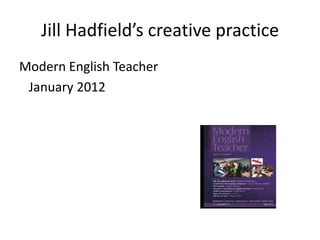
Jill Hadfield’s creative practice
Modern English Teacher
 January 2012
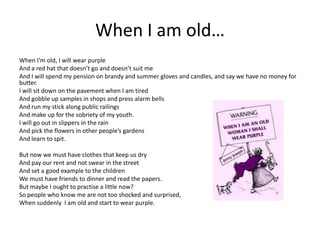
When I am old…
When I’m old, I will wear purple
And a red hat that doesn’t go and doesn’t suit me
And I will spend my pension on brandy and summer gloves and candles, and say we have no money for
butter.
I will sit down on the pavement when I am tired
And gobble up samples in shops and press alarm bells
And run my stick along public railings
And make up for the sobriety of my youth.
I will go out in slippers in the rain
And pick the flowers in other people’s gardens
And learn to spit.

But now we must have clothes that keep us dry
And pay our rent and not swear in the street
And set a good example to the children
We must have friends to dinner and read the papers.
But maybe I ought to practise a little now?
So people who know me are not too shocked and surprised,
When suddenly I am old and start to wear purple.
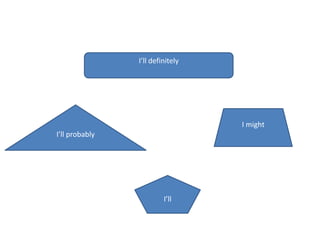
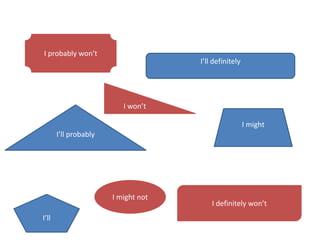
I’ll definitely


                                  I might
I’ll probably


                         I’ll
I probably won’t
                                     I’ll definitely


                          I won’t

                                                       I might
       I’ll probably


                       I might not
                                         I definitely won’t
I’ll
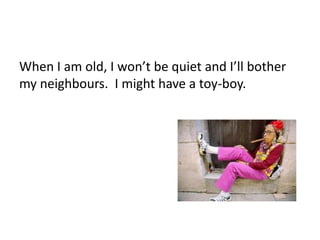
When I am old, I won’t be quiet and I’ll bother
my neighbours. I might have a toy-boy.
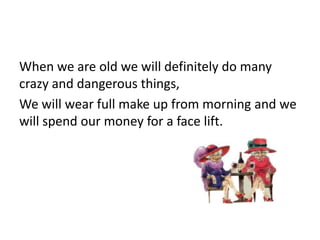
When we are old we will definitely do many
crazy and dangerous things,
We will wear full make up from morning and we
will spend our money for a face lift.
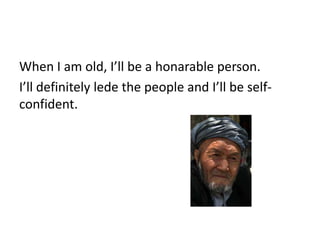
When I am old, I’ll be a honarable person.
I’ll definitely lede the people and I’ll be self-
confident.
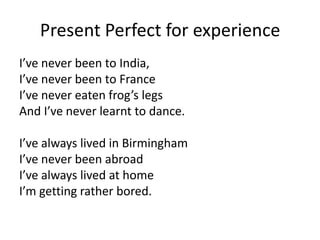
Present Perfect for experience
I’ve never been to India,
I’ve never been to France
I’ve never eaten frog’s legs
And I’ve never learnt to dance.

I’ve always lived in Birmingham
I’ve never been abroad
I’ve always lived at home
I’m getting rather bored.
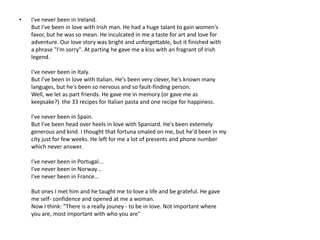
•   I've never been in Ireland.
    But I've been in love with Irish man. He had a huge talant to gain women's
    favor, but he was so mean. He inculcated in me a taste for art and love for
    adventure. Our love story was bright and unforgettable, but it finished with
    a phrase "I'm sorry". At parting he gave me a kiss with an fragrant of Irish
    legend.

    I've never been in Italy.
    But I've been in love with Italian. He's been very clever, he's known many
    languges, but he's been so nervous and so fault-finding person.
    Well, we let as part friends. He gave me in memory (or gave me as
    keepsake?) the 33 recipes for Italian pasta and one recipe for happiness.

    I've never been in Spain.
    But I've been head over heels in love with Spaniard. He's been extemely
    generous and kind. I thought that fortuna smaled on me, but he'd been in my
    city just for few weeks. He left for me a lot of presents and phone number
    which never answer.

    I've never been in Portugal...
    I've never been in Norway...
    I've never been in France...

    But ones I met him and he taught me to love a life and be grateful. He gave
    me self- confidence and opened at me a woman.
    Now I think: "There is a really jouney - to be in love. Not important where
    you are, most important with who you are"
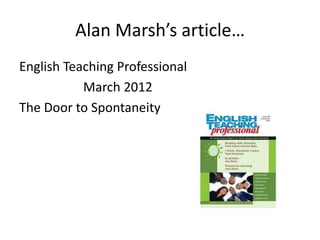
Alan Marsh’s article…
English Teaching Professional
           March 2012
The Door to Spontaneity
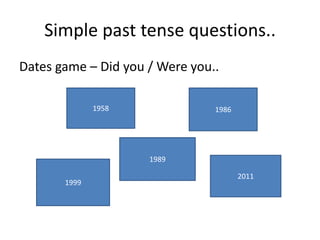
Simple past tense questions..
Dates game – Did you / Were you..

              1958              1986


                     1989

                                       2011
       1999
Thrill Drills
Milada Krejewska’s blog
http://miladakrajewska.wordpress.com/
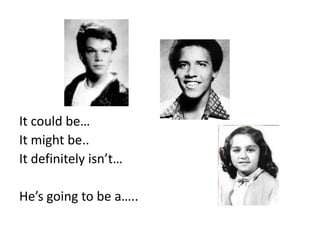
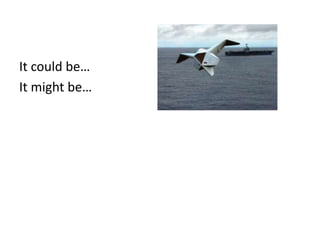
It could be…
It might be..
It definitely isn’t…

He’s going to be a…..
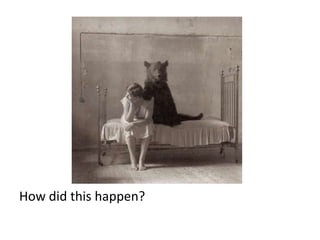
Using odd pictures


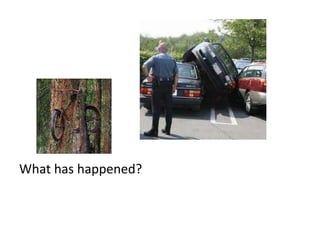
How did this happen?
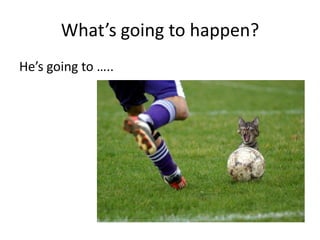
What’s going to happen?
He’s going to …..
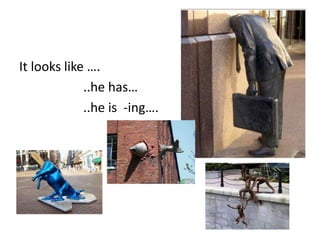
It looks like ….
             ..he has…
             ..he is -ing….
What has happened?
It could be…
It might be…
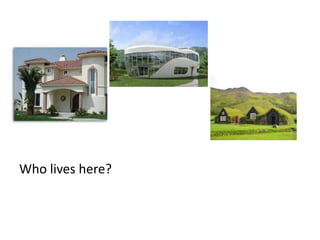
Who lives here?
Any other ideas?

Teaching grammar- Getting creative with controlled practice

  • 1.
    elt-training.com Teacher training webinars Jo Gakonga jo.gakonga@elt-training.com For a free voiced over recording of this presentation, go to www.elt-training.com
  • 2.
    Teaching Grammar I Gettingcreative with controlled practice
  • 4.
    Creative Automaticity Gatbonton, E.and Segalowitz, N. (1988) ‘Creative automatization: Principles for promoting fluency within a communicative framework’, TESOL Quarterly, 22, 3. ‘The techniques for this approach are designed to provide students with ample opportunities for repetition and practice within a wholly communicative context, without the shortcomings usually characteristic of pattern drills or other more traditional methods’ http://scottthornbury.wordpress.com/?s=A+is+for
  • 5.
    What isn’t sohelpful... • Teacher: I found the book. • Students: I found the book. • Teacher: Pen. • Students: I found the pen. • Teacher: Bought. • Students: I bought the pen.
  • 6.
    Example of amindless gap fill.. Use the present perfect to complete these sentences: 1. I _______ ________ (see) the Eiffel Tower. 2. She ________ _________ (eat) snake. 3. They ________ __________ (swim) in the sea. 4. We ________ _________ (fill) in too many of these gap-fill exercises………
  • 7.
    Activities [that promotecreative automatization] should be … 1. genuinely communicative i.e. require students to make use of utterances as a result of a task-related need, rather than simply for the purpose of saying something. 2. psychologically authentic i.e. require students to allocate attentional resources to both the encoding and decoding of language, and to the effect of that language on events. 3. focused i.e. organised around one or a few functions and notions so as to establish particular utterances as characteristic exponents of particular functions/notions. 4. formulaic i.e. utterances must be short, memorizable, and multi- situational. 5. inherently repetitive
  • 8.
    Some common examples… •A class photo… • Find someone who… • What’s my line? • What kind of animal am I? (“Do you have four legs? Can you fly? Do you lay eggs?” etc).
  • 9.
    Jill Hadfield’s creativepractice Modern English Teacher January 2012
  • 10.
    When I amold… When I’m old, I will wear purple And a red hat that doesn’t go and doesn’t suit me And I will spend my pension on brandy and summer gloves and candles, and say we have no money for butter. I will sit down on the pavement when I am tired And gobble up samples in shops and press alarm bells And run my stick along public railings And make up for the sobriety of my youth. I will go out in slippers in the rain And pick the flowers in other people’s gardens And learn to spit. But now we must have clothes that keep us dry And pay our rent and not swear in the street And set a good example to the children We must have friends to dinner and read the papers. But maybe I ought to practise a little now? So people who know me are not too shocked and surprised, When suddenly I am old and start to wear purple.
  • 11.
    I’ll definitely I might I’ll probably I’ll
  • 12.
    I probably won’t I’ll definitely I won’t I might I’ll probably I might not I definitely won’t I’ll
  • 13.
    When I amold, I won’t be quiet and I’ll bother my neighbours. I might have a toy-boy.
  • 14.
    When we areold we will definitely do many crazy and dangerous things, We will wear full make up from morning and we will spend our money for a face lift.
  • 15.
    When I amold, I’ll be a honarable person. I’ll definitely lede the people and I’ll be self- confident.
  • 16.
    Present Perfect forexperience I’ve never been to India, I’ve never been to France I’ve never eaten frog’s legs And I’ve never learnt to dance. I’ve always lived in Birmingham I’ve never been abroad I’ve always lived at home I’m getting rather bored.
  • 17.
    I've never been in Ireland. But I've been in love with Irish man. He had a huge talant to gain women's favor, but he was so mean. He inculcated in me a taste for art and love for adventure. Our love story was bright and unforgettable, but it finished with a phrase "I'm sorry". At parting he gave me a kiss with an fragrant of Irish legend. I've never been in Italy. But I've been in love with Italian. He's been very clever, he's known many languges, but he's been so nervous and so fault-finding person. Well, we let as part friends. He gave me in memory (or gave me as keepsake?) the 33 recipes for Italian pasta and one recipe for happiness. I've never been in Spain. But I've been head over heels in love with Spaniard. He's been extemely generous and kind. I thought that fortuna smaled on me, but he'd been in my city just for few weeks. He left for me a lot of presents and phone number which never answer. I've never been in Portugal... I've never been in Norway... I've never been in France... But ones I met him and he taught me to love a life and be grateful. He gave me self- confidence and opened at me a woman. Now I think: "There is a really jouney - to be in love. Not important where you are, most important with who you are"
  • 18.
    Alan Marsh’s article… EnglishTeaching Professional March 2012 The Door to Spontaneity
  • 19.
    Simple past tensequestions.. Dates game – Did you / Were you.. 1958 1986 1989 2011 1999
  • 20.
    Thrill Drills Milada Krejewska’sblog http://miladakrajewska.wordpress.com/
  • 21.
    It could be… Itmight be.. It definitely isn’t… He’s going to be a…..
  • 23.
    Using odd pictures Howdid this happen?
  • 24.
    What’s going tohappen? He’s going to …..
  • 25.
    It looks like…. ..he has… ..he is -ing….
  • 26.
  • 27.
    It could be… Itmight be…
  • 28.
  • 29.

Editor's Notes

  • #2 Hello and welcome to another teacher training webinar from elt-training.com