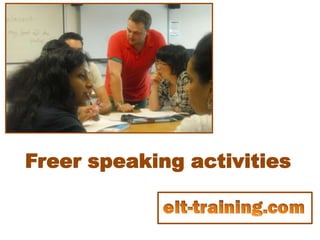
Freer speaking activities
‘Grammar for Language
   Teachers’ course
Contents
What are freer speaking activities?
   Why have freer speaking activities?
      What makes them successful?
             What problems can arise?
Accuracy       Fluency
  Controlled    Freer
  practice      practice
Why have
   freer
 speaking
activities?
Isn’t this just conversation
           practice?
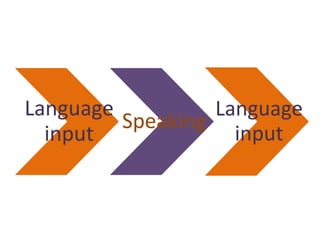
Language          Language
         Speaking
  input             input
Language          Language
         Speaking
  input             input
PPP
Language
         Speaking
  input
               Presentation
               Practice
               Production
Task Based Learning
Dogme


        Speaking Language
                   input
Language          Language
         Speaking
  input             input
What
  makes
   them
successful?
Example
activity 1
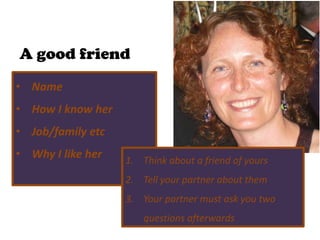
A good friend
• Name
• How I know her
• Job/family etc
• Why I like her   1. Think about a friend of yours
                   2. Tell your partner about them
                   3. Your partner must ask you two
                       questions afterwards
Language          Language
         Speaking
  input             input

     Adjectives of
     personality
     Describing people
Example
activity 2
Teenagers
                                         Is there any chance of –ing
                                         Would you mind if I –ed

                                         I’d be really careful…


Parents
  I don't think that’s a great idea.
  I’d like to but….

  If you borrowed it, you’d probably….
Parents
Error Correction

If you would borrow the
car, you would crash!

Please let me to borrow it!

You will accident.
Language          Language
         Speaking
  input             input
What
  makes
   them
successful?
An
    interesting
       topic

Note: Cultural sensitivity
Personalisation
Warm up
       Model
Time for preparation
Purpose
            Structure
                        A bit of
                        conflict can
Structure


                        help!

              Level
Relaxed atmosphere
 Even participation
 Appropriate level
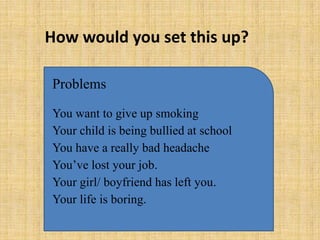
How would you set this up?

Problems

You want to give up smoking
Your child is being bullied at school
You have a really bad headache
You’ve lost your job.
Your girl/ boyfriend has left you.
Your life is boring.
What problems can arise?
Learners are unable to express themselves.
Learners feel inhibited
Learners have nothing to say.
Learners are unclear about what to do.
Some learners are silent, others do all the talking.
Learners use their mother tongue.
Learners make lots of mistakes with the language.
Learners are unable to express themselves.
Learners feel inhibited
Learners have nothing to say.
Learners are unclear about what to do.
Some learners are silent, others do all the talking.
Learners use their mother tongue.
Learners make lots of mistakes with the language.
Learners are unable to express themselves.
Learners feel inhibited
Learners have nothing to say.
Learners are unclear about what to do.
Some learners are silent, others do all the talking.
Learners use their mother tongue.
Learners make lots of mistakes with the language.
Learners are unable to express themselves.
Learners feel inhibited
Learners have nothing to say.
Learners are unclear about what to do.
Some learners are silent, others do all the talking.
Learners use their mother tongue.
Learners make lots of mistakes with the language.
Learners are unable to express themselves.
Learners feel inhibited
Learners have nothing to say.
Learners are unclear about what to do.
Some learners are silent, others do all the talking.
Learners use their mother tongue.
Learners make lots of mistakes with the language.
Learners are unable to express themselves.
Learners feel inhibited
Learners have nothing to say.
Learners are unclear about what to do.
Some learners are silent, others do all the talking.
Learners use their mother tongue.
Learners make lots of mistakes with the language.

Freer speaking activities

  • 1.
  • 2.
    ‘Grammar for Language Teachers’ course
  • 3.
    Contents What are freerspeaking activities? Why have freer speaking activities? What makes them successful? What problems can arise?
  • 4.
    Accuracy Fluency Controlled Freer practice practice
  • 5.
    Why have freer speaking activities?
  • 7.
    Isn’t this justconversation practice?
  • 8.
    Language Language Speaking input input
  • 9.
    Language Language Speaking input input
  • 10.
    PPP Language Speaking input Presentation Practice Production
  • 11.
    Task Based Learning Dogme Speaking Language input
  • 12.
    Language Language Speaking input input
  • 13.
    What makes them successful?
  • 14.
  • 15.
    A good friend •Name • How I know her • Job/family etc • Why I like her 1. Think about a friend of yours 2. Tell your partner about them 3. Your partner must ask you two questions afterwards
  • 16.
    Language Language Speaking input input Adjectives of personality Describing people
  • 17.
  • 20.
    Teenagers Is there any chance of –ing Would you mind if I –ed I’d be really careful… Parents I don't think that’s a great idea. I’d like to but…. If you borrowed it, you’d probably….
  • 21.
  • 22.
    Error Correction If youwould borrow the car, you would crash! Please let me to borrow it! You will accident.
  • 23.
    Language Language Speaking input input
  • 24.
    What makes them successful?
  • 25.
    An interesting topic Note: Cultural sensitivity
  • 26.
  • 27.
    Warm up Model Time for preparation
  • 28.
    Purpose Structure A bit of conflict can Structure help! Level
  • 29.
    Relaxed atmosphere Evenparticipation Appropriate level
  • 30.
    How would youset this up? Problems You want to give up smoking Your child is being bullied at school You have a really bad headache You’ve lost your job. Your girl/ boyfriend has left you. Your life is boring.
  • 31.
  • 32.
    Learners are unableto express themselves. Learners feel inhibited Learners have nothing to say. Learners are unclear about what to do. Some learners are silent, others do all the talking. Learners use their mother tongue. Learners make lots of mistakes with the language.
  • 33.
    Learners are unableto express themselves. Learners feel inhibited Learners have nothing to say. Learners are unclear about what to do. Some learners are silent, others do all the talking. Learners use their mother tongue. Learners make lots of mistakes with the language.
  • 34.
    Learners are unableto express themselves. Learners feel inhibited Learners have nothing to say. Learners are unclear about what to do. Some learners are silent, others do all the talking. Learners use their mother tongue. Learners make lots of mistakes with the language.
  • 35.
    Learners are unableto express themselves. Learners feel inhibited Learners have nothing to say. Learners are unclear about what to do. Some learners are silent, others do all the talking. Learners use their mother tongue. Learners make lots of mistakes with the language.
  • 36.
    Learners are unableto express themselves. Learners feel inhibited Learners have nothing to say. Learners are unclear about what to do. Some learners are silent, others do all the talking. Learners use their mother tongue. Learners make lots of mistakes with the language.
  • 37.
    Learners are unableto express themselves. Learners feel inhibited Learners have nothing to say. Learners are unclear about what to do. Some learners are silent, others do all the talking. Learners use their mother tongue. Learners make lots of mistakes with the language.