Prepared By: Sidra Javed
 Polymers are high
molecular weight
compounds whose
structures are made up of
a large number of simple
repeating units.
The repeating units are
usually low molecular
mass compounds called
as Monomers.
Prepared By: Sidra Javed
The reaction by which monomers
are converted into polymers is
called Polymerization.
Example: Formation of polyethylene
Prepared By: Sidra Javed
Homopolymers :
Polymers which are
prepared from only one
type of monomers
Copolymers: Polymers which
are prepared from more
than one kind of monomers
Prepared By: Sidra Javed
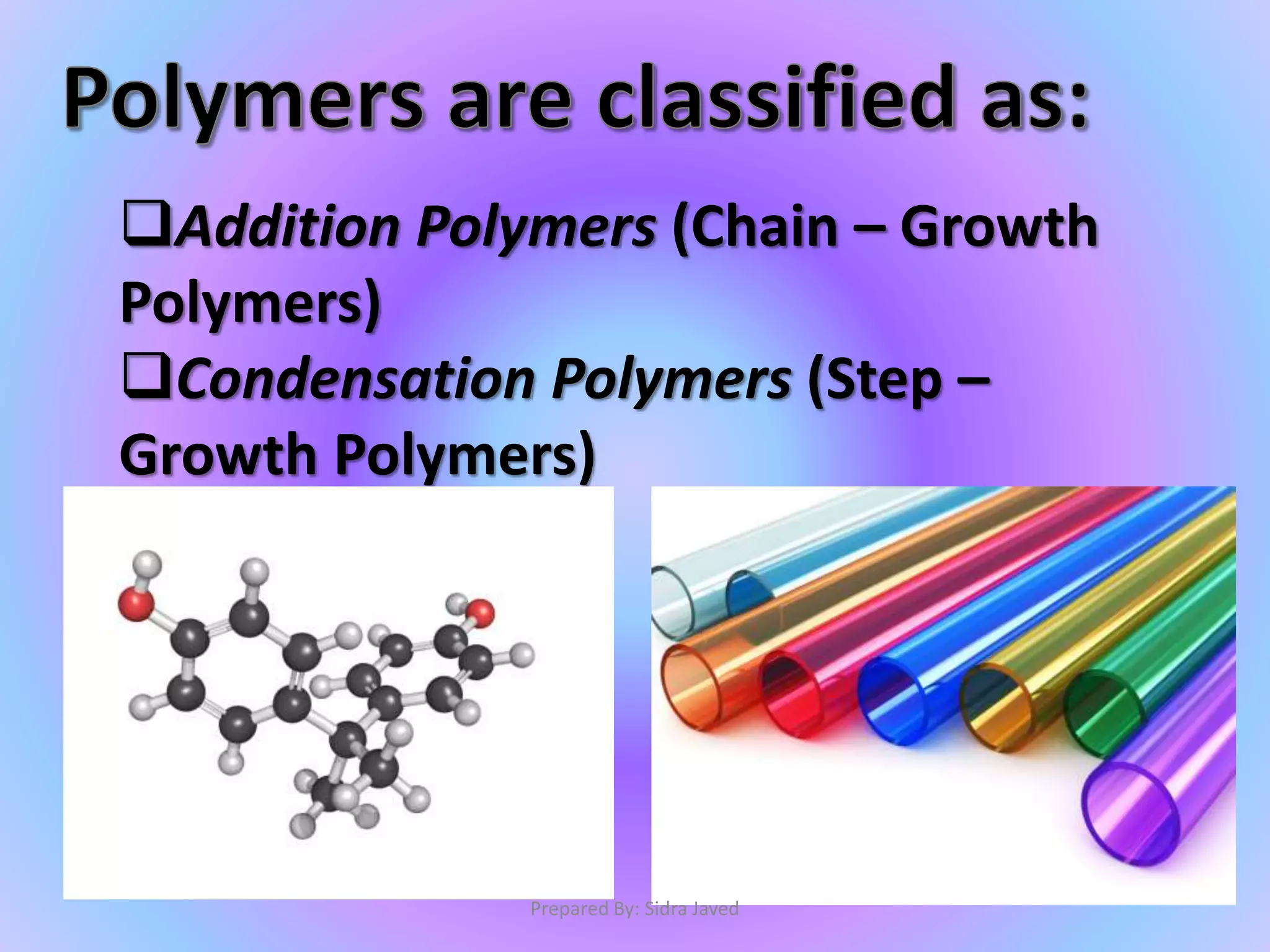
Addition Polymers (Chain – Growth
Polymers)
Condensation Polymers (Step –
Growth Polymers)
Prepared By: Sidra Javed
These are formed by combination of alkenes
monomers to produce a single huge molecule.
Reactions are catalyzed by Peroxides or acids.
Required Pressure is 1000 atm and
Temperature is 2000oC
Zeigler Catalyst i.e. Trialkyl aluminium and
titanium tetra chloride in an inert solvent can be
used to perform reaction at lower Pressure &
Temperature
Prepared By: Sidra Javed
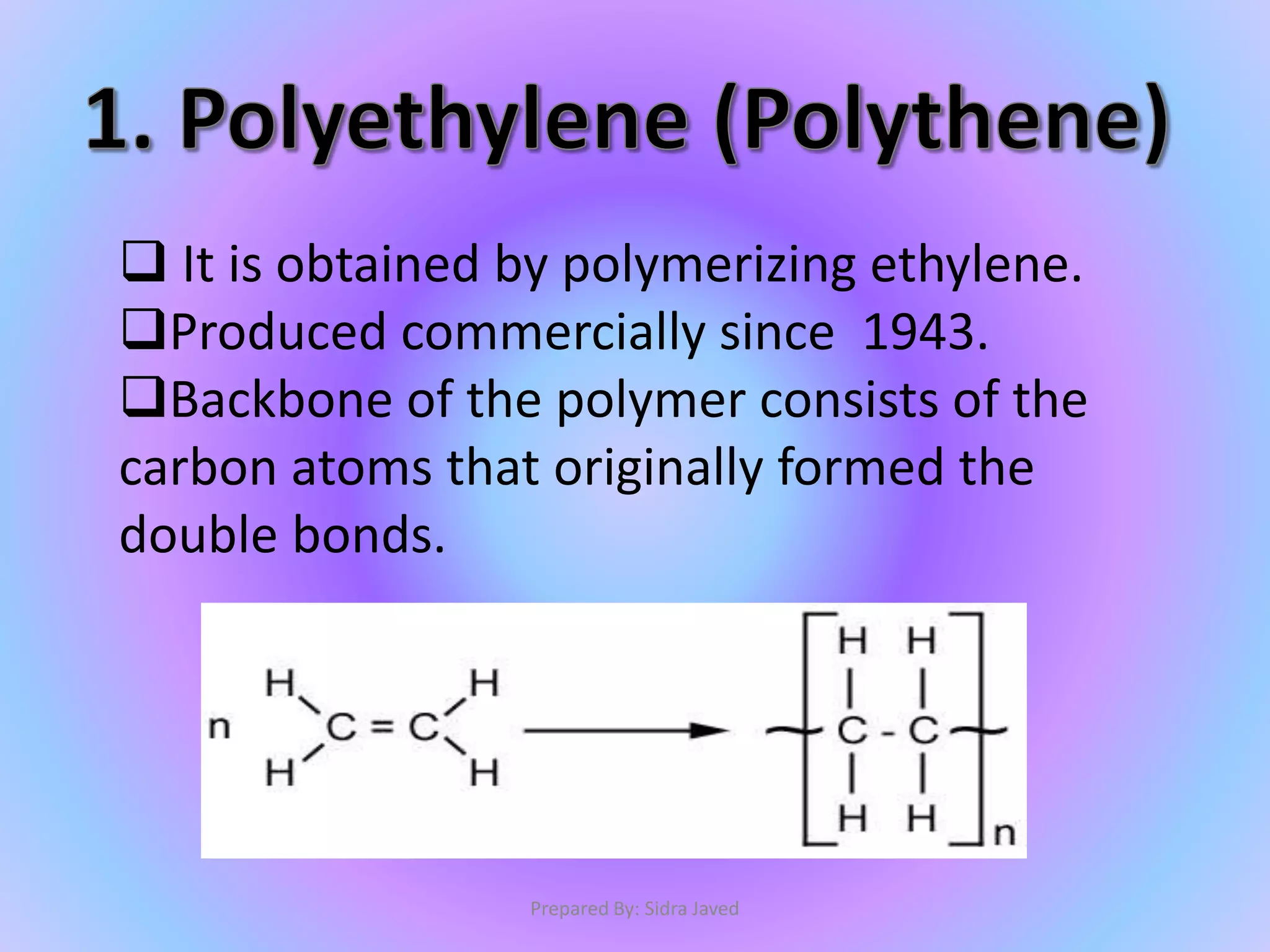
 It is obtained by polymerizing ethylene.
Produced commercially since 1943.
Backbone of the polymer consists of the
carbon atoms that originally formed the
double bonds.
Prepared By: Sidra Javed
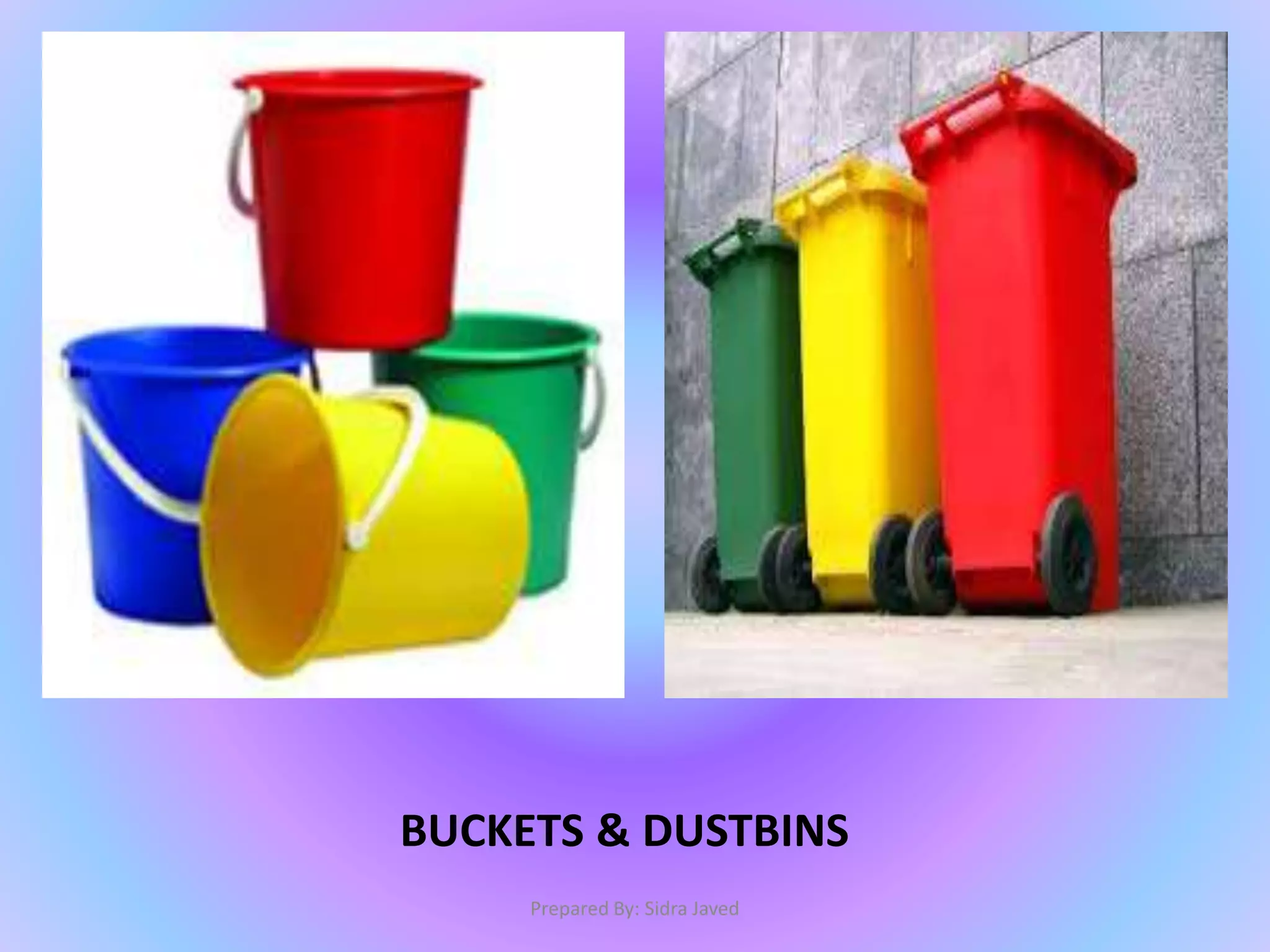
BUCKETS & DUSTBINS
Prepared By: Sidra Javed
CARPET BACKING
Prepared By: Sidra Javed
PACKING MATERIALS
Prepared By: Sidra Javed
CABLE INSULATION
Prepared By: Sidra Javed
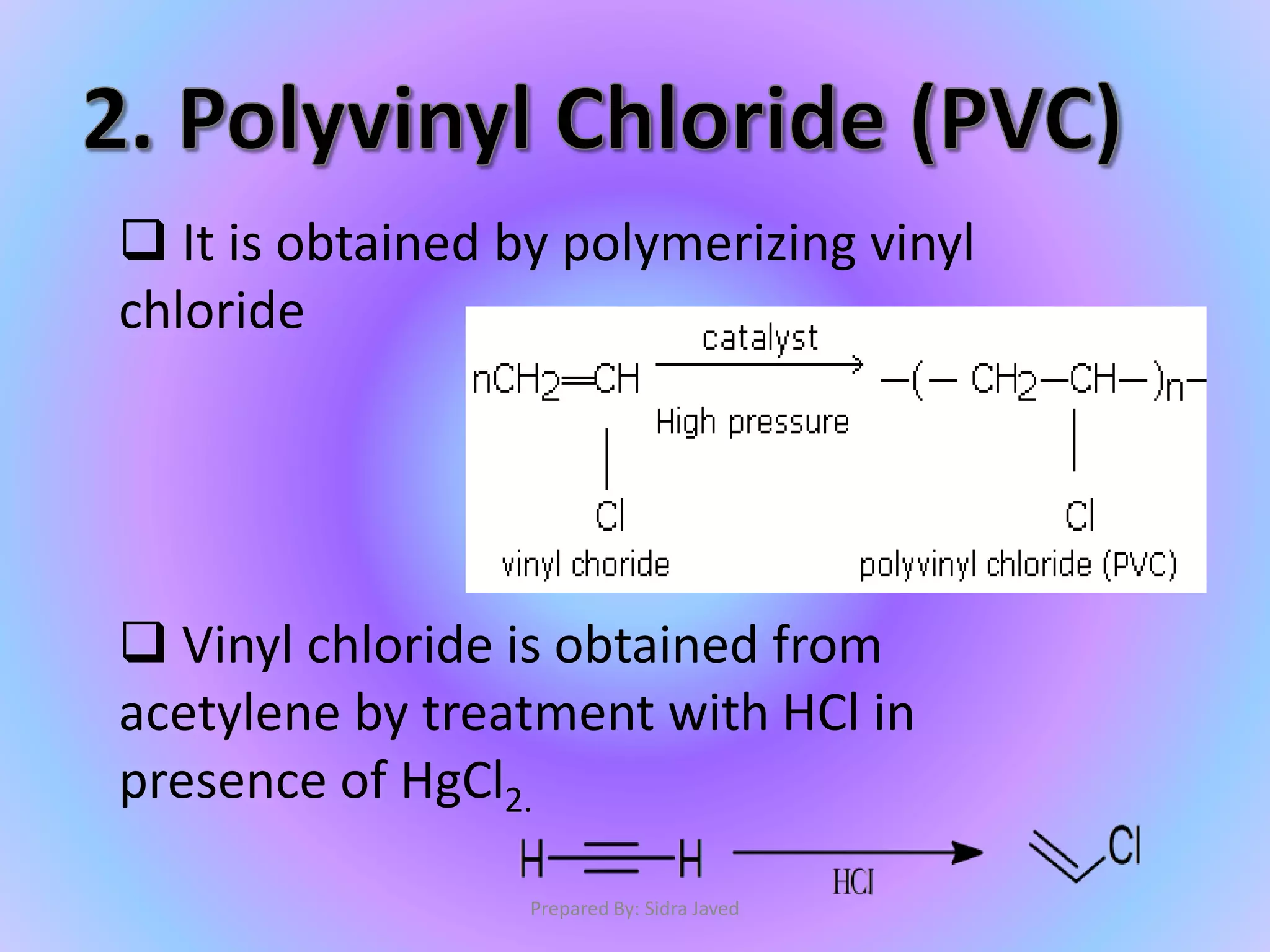
 It is obtained by polymerizing vinyl
chloride
 Vinyl chloride is obtained from
acetylene by treatment with HCl in
presence of HgCl2.
Prepared By: Sidra Javed
IMITATION LEATHER
Prepared By: Sidra Javed
FLOOR COVERING
Prepared By: Sidra Javed
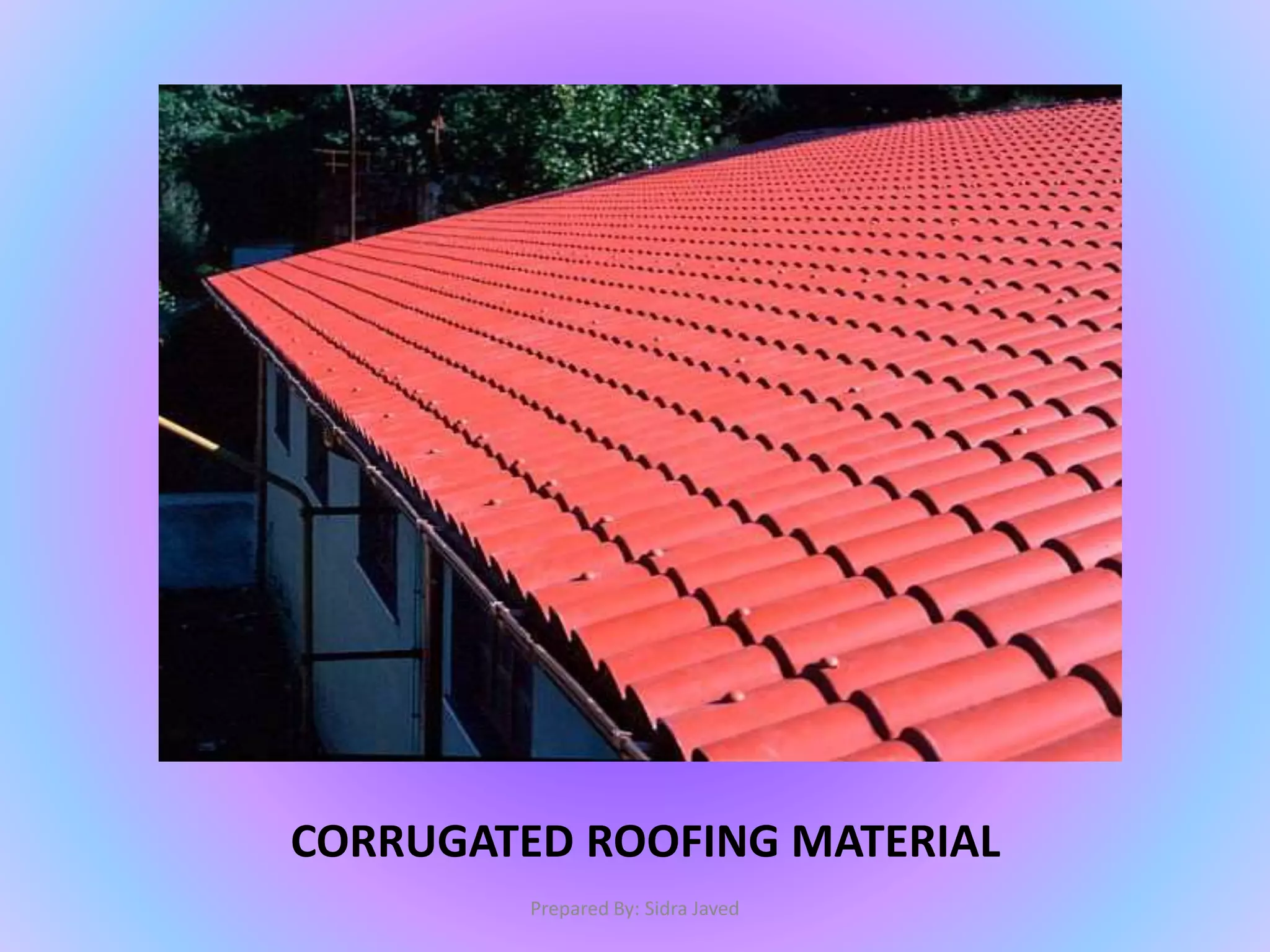
CORRUGATED ROOFING MATERIAL
Prepared By: Sidra Javed
GRAMOPHONE RECORDS
Prepared By: Sidra Javed
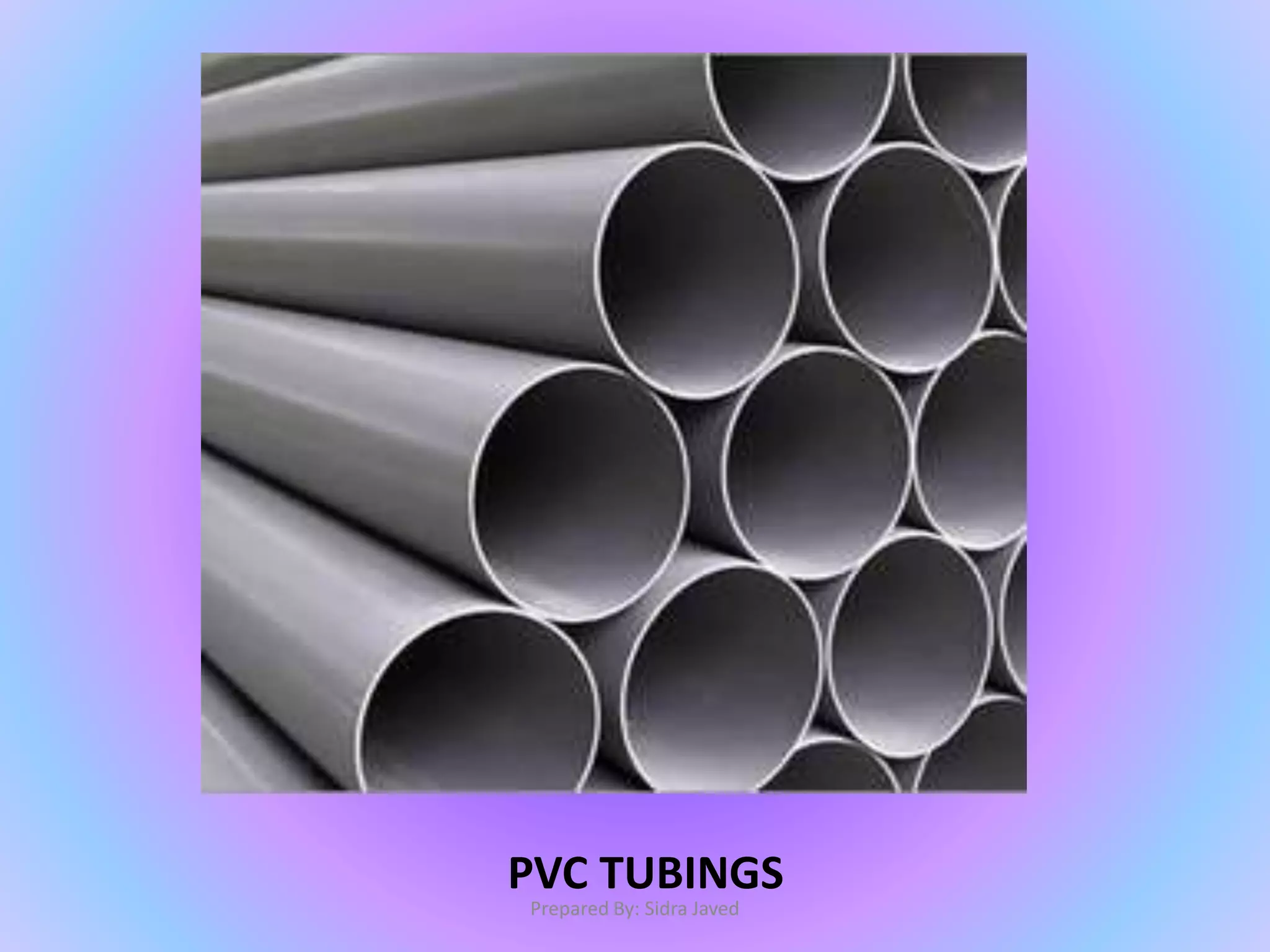
PVC TUBINGS
Prepared By: Sidra Javed
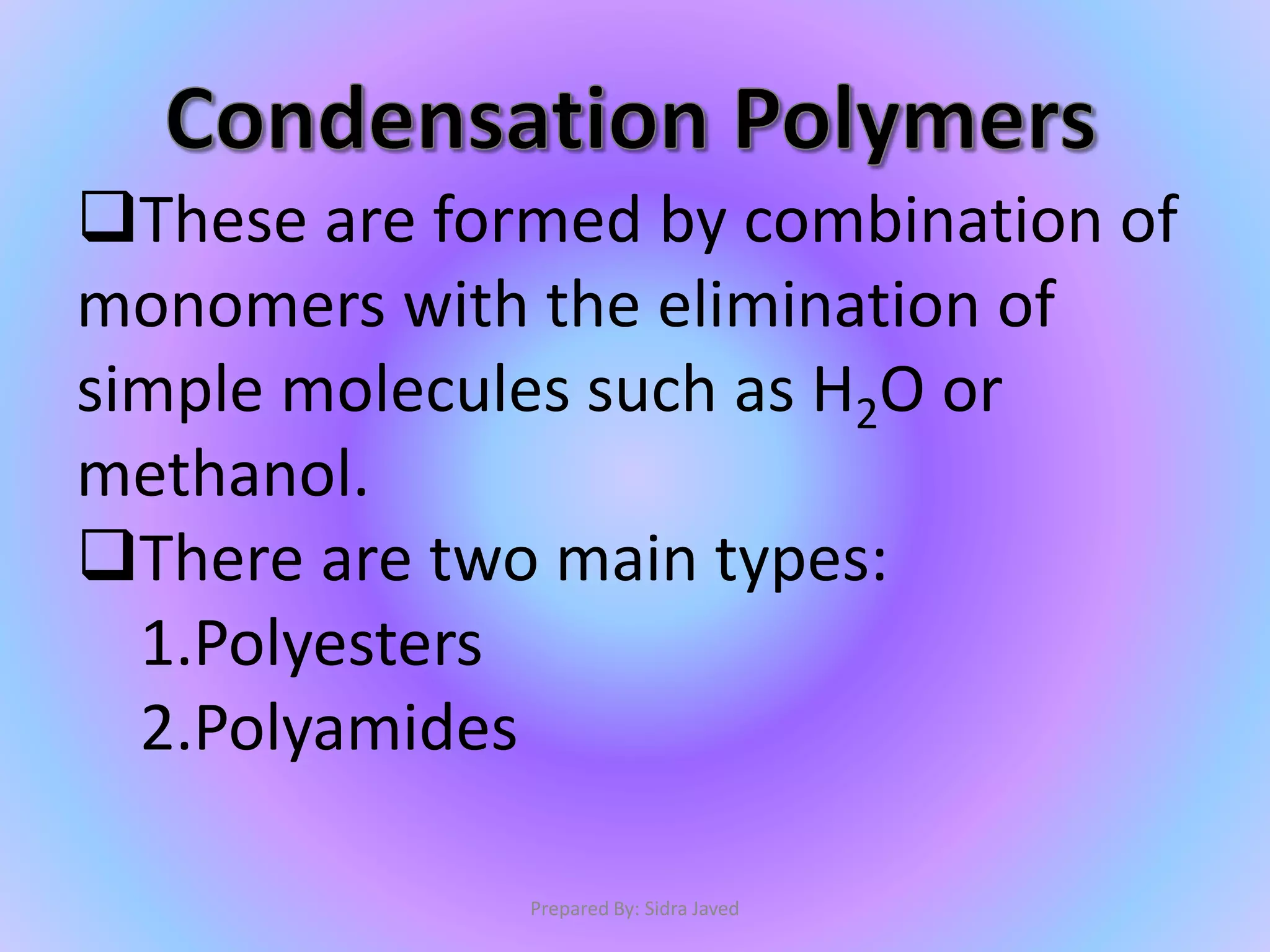
These are formed by combination of
monomers with the elimination of
simple molecules such as H2O or
methanol.
There are two main types:
1.Polyesters
2.Polyamides
Prepared By: Sidra Javed
An important Polyamide
Prepared by heating Adipic Acid with
Hexamethylene Diamine under Nitrogen at
2000o C
Prepared By: Sidra Javed
CH2 = CHCH = CH2
1,3-BUTADIENE
Cl2
(1,4 –Addition)
ClCH2CH=CHCH2Cl
NaCN
NCCH2CH=CH CH2CN
H2/NI
N CH2CH2CH2CH2CH2CN
H2O/H+
HOOC(CH2)4COOH
ADIPIC ACID
LiAlH4
H2N(CH2)4 NH2
HEXAMETHYLENE
DIAMINE
Nylon-6,6 derives its names from its raw materials,
adipic acid and hexamethylene diamine (both have 6
carbon atoms)
The raw materiasa can be prepared from
1,3-Butadiene as shown below:
Prepared By: Sidra Javed
Nylon-6,6 was developed as a synthetic
fiber fir the production of stocking and
other clothing apparel
It was introduced to the public at the
New York World’s Fair in 1939.
Prepared By: Sidra Javed
CLOTHING MATERIALS
Prepared By: Sidra Javed
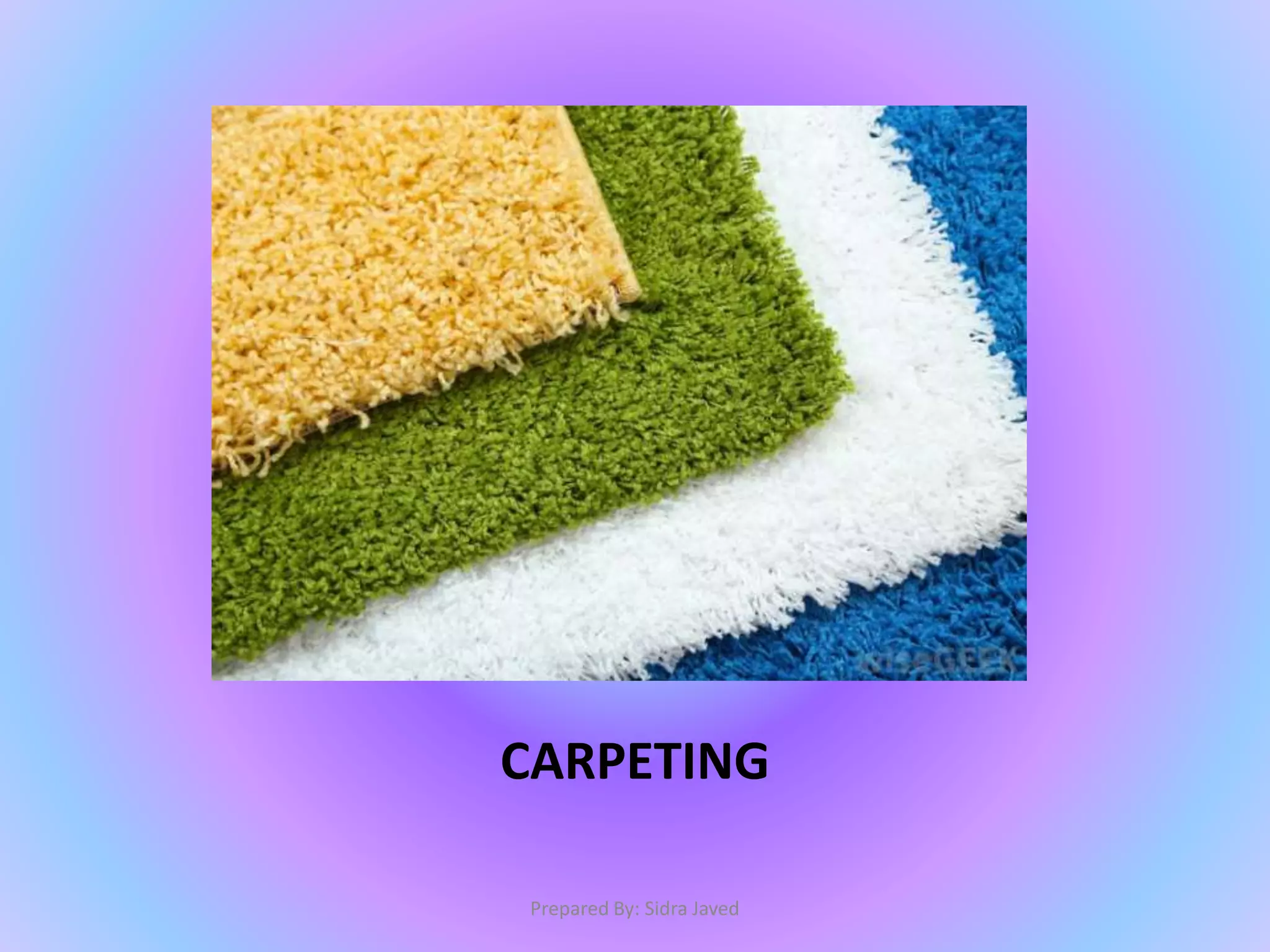
CARPETING
Prepared By: Sidra Javed
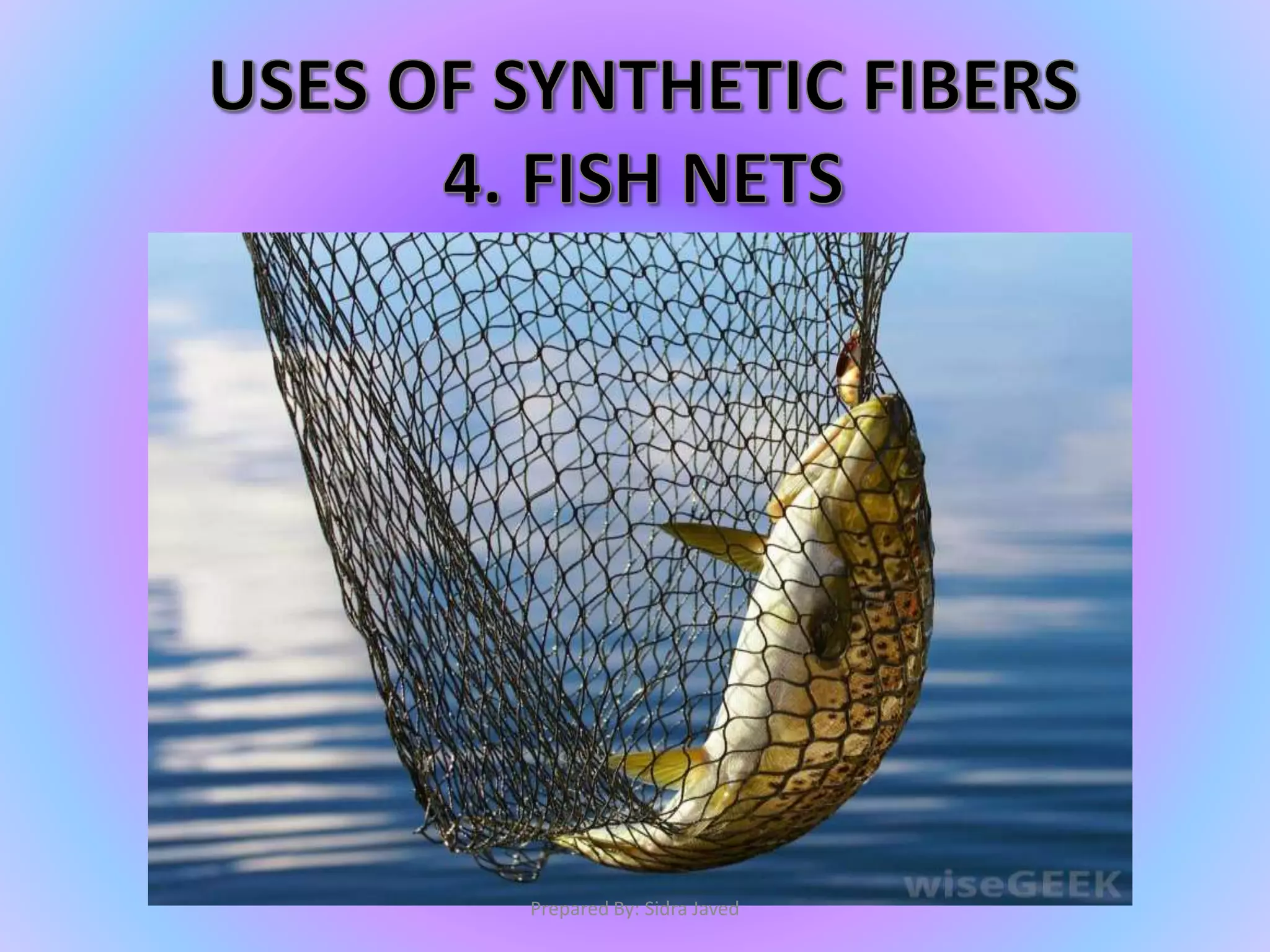
FISHING LINES & ROPES
Prepared By: Sidra Javed
BRISTLES FOR BRUSHES
Prepared By: Sidra Javed
Gears & Bearings
Prepared By: Sidra Javed
A thermoplastic polymer is one which
softens on heating and becomes hard on
cooling.
Prepared By: Sidra Javed
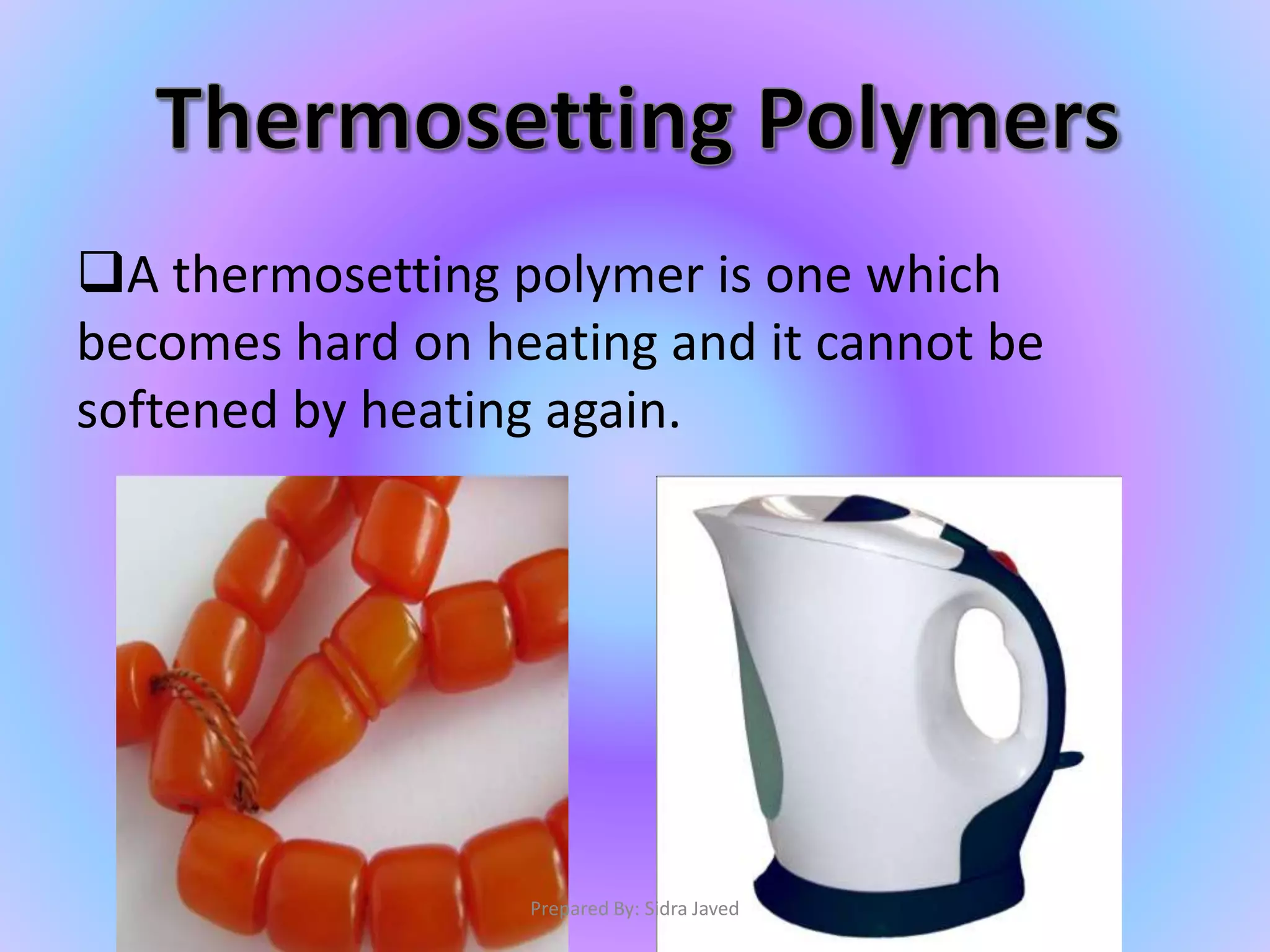
A thermosetting polymer is one which
becomes hard on heating and it cannot be
softened by heating again.
Prepared By: Sidra Javed
Development of Synthetic Fibers:
Nylon – First synthetic fiber.
Synthetic fibers are made from synthesized polymers or small
molecules.
Raw materials are usually Petrochemicals.
Prepared By: Sidra Javed
MELT SPINNING PROCESS
Prepared By: Sidra Javed
Adding metallic properties to clothing for the
purpose of fashion
Elimination and prevention of static charge
build-up
Conducting electricity to transmit
information
Conduction of heat
Prepared By: Sidra Javed
Synthetics are used in soil to
help the plants grow better
Expanded polystyrene flakes
Urea-formaldehyde form resin
Polyurethane form phenolic
resin foam
Prepared By: Sidra Javed
Synthetic Polymers

Synthetic Polymers