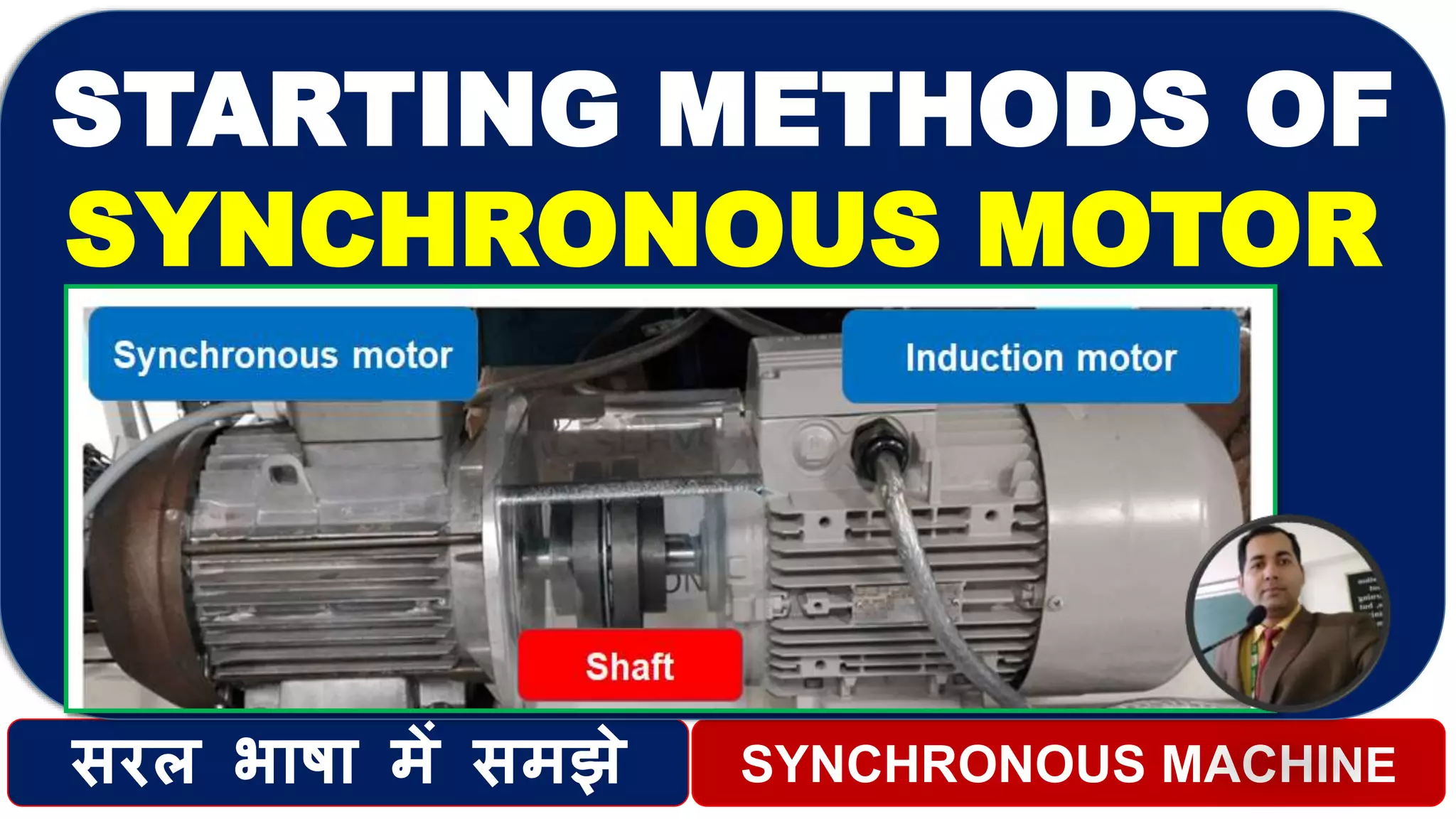


SYNCHRONOUS MACHINEसरल भाषा में समझे
STARTING METHODS OF
SYNCHRONOUS MOTOR
ELECTRICAL MACHINE
Syllabus
 Introduction of Machine
 Classification of Machine
 Construction of DC, Induction & Synchronous machine
 Working Principle of
 DC Machine
 Synchronous machine
 Induction machine
 EMF Equation of
 DC Machine
 Synchronous Machine
 Comparison Between Salient And Cylindrical Poles
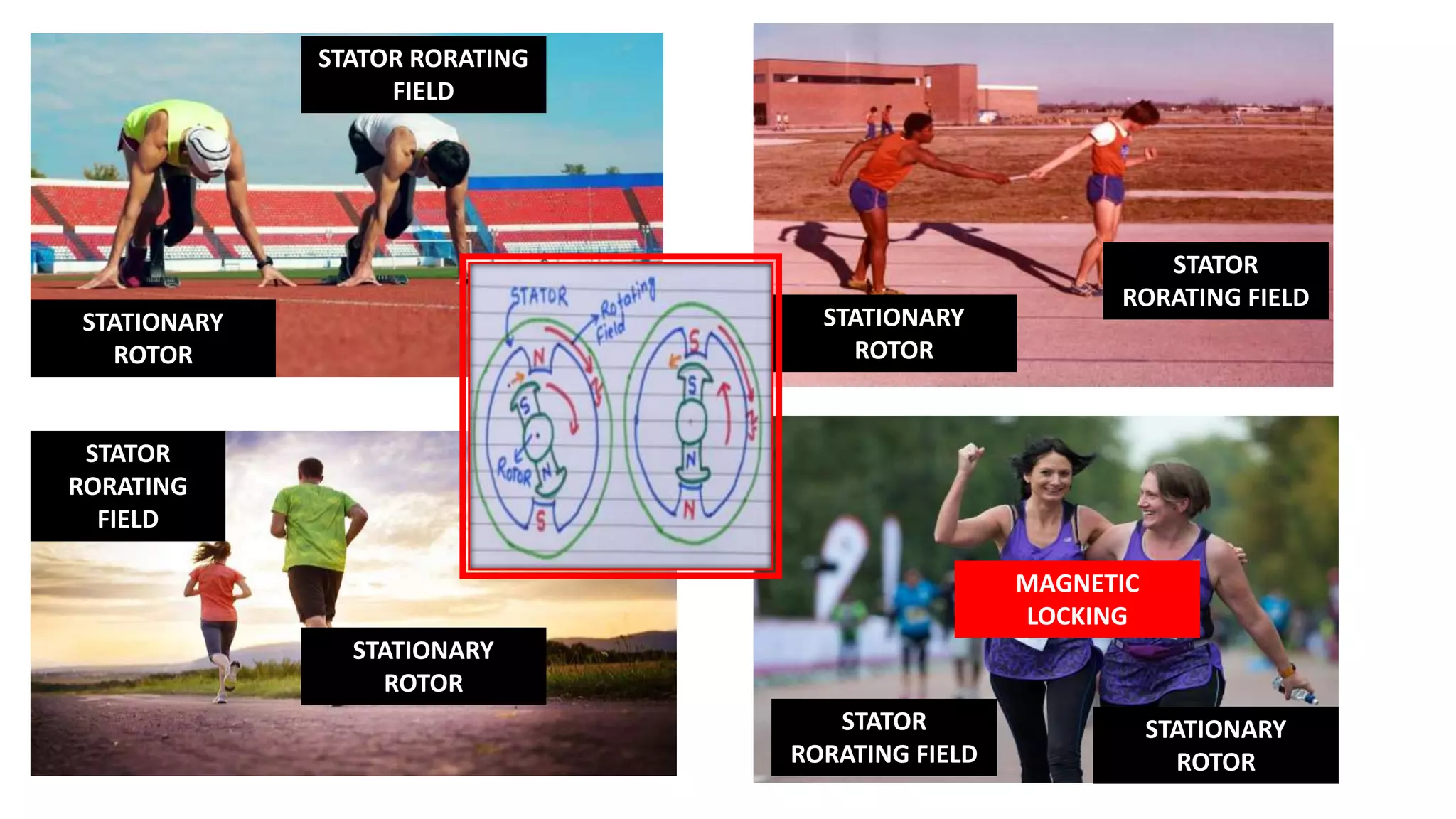
 Why synchronous motor is not self start?
 Starting methods of synchronous motor
STATOR RORATING
FIELD
STATIONARY
ROTOR
STATIONARY
ROTOR
STATOR
RORATING
FIELD
STATOR
RORATING FIELD
STATOR
RORATING FIELD
STATIONARY
ROTOR
STATIONARY
ROTOR
MAGNETIC
LOCKING
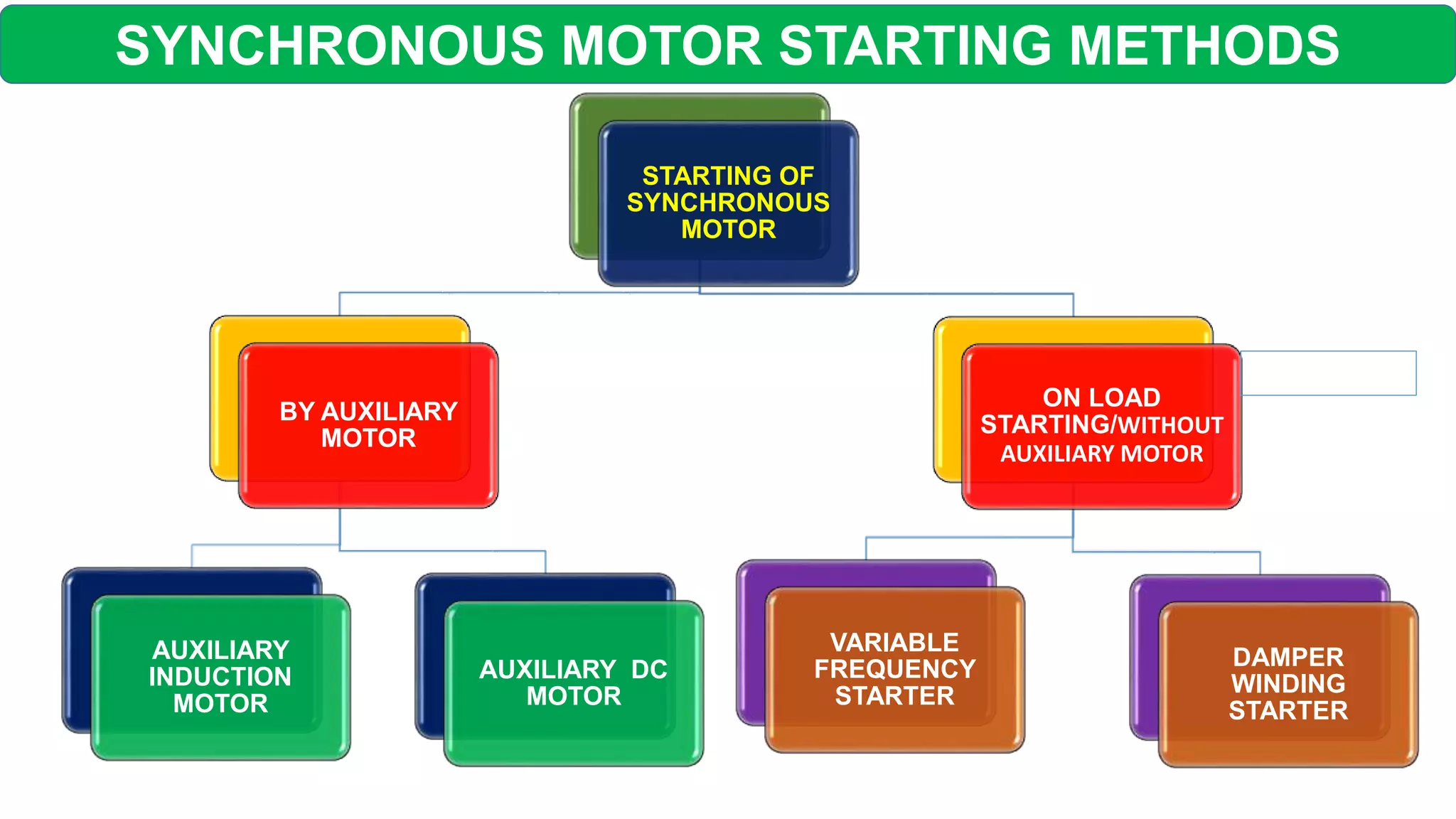
SYNCHRONOUS MOTOR STARTING METHODS
STARTING OF
SYNCHRONOUS
MOTOR
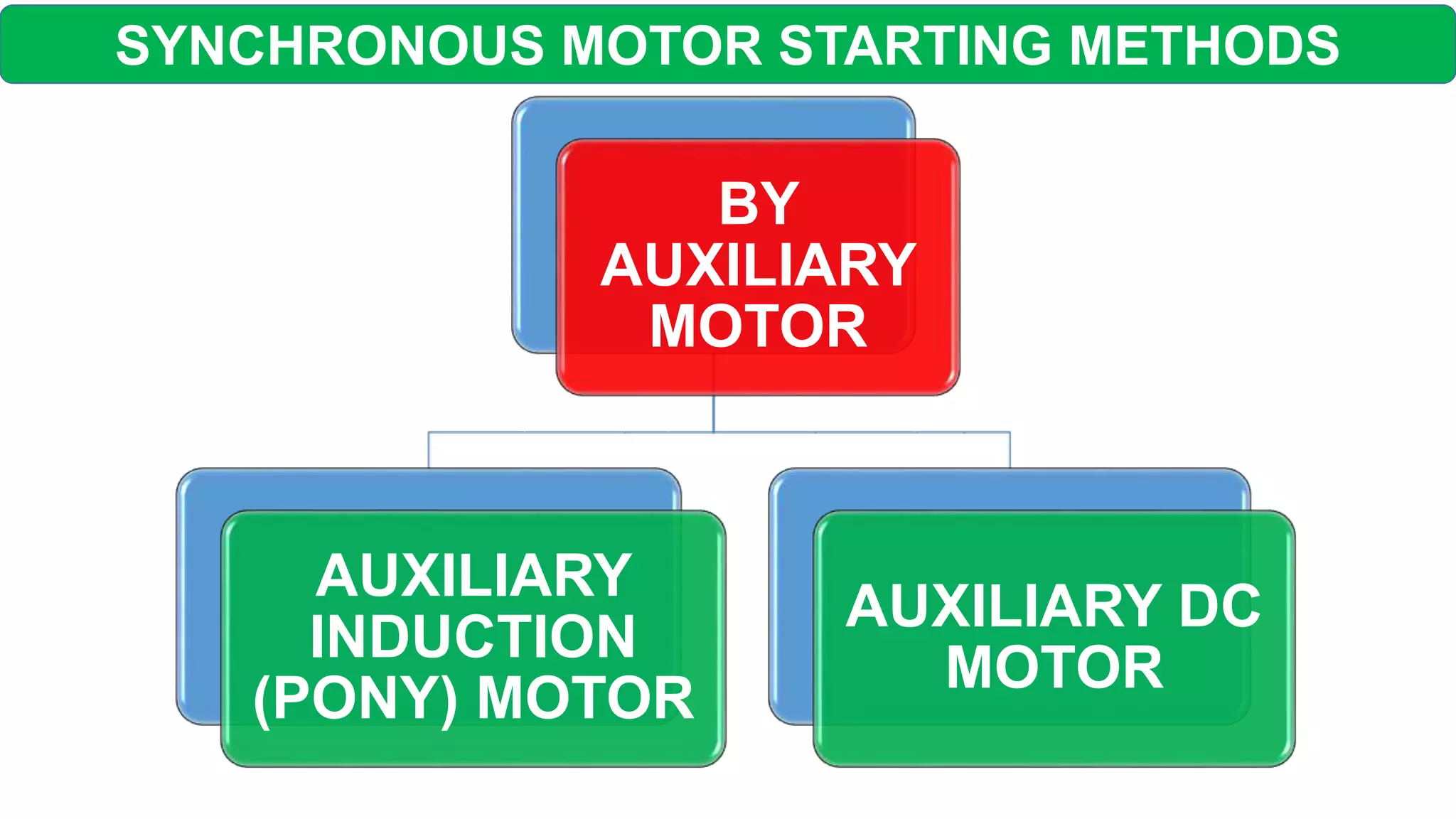
BY AUXILIARY
MOTOR
AUXILIARY
INDUCTION
MOTOR
AUXILIARY DC
MOTOR
ON LOAD
STARTING/WITHOUT
AUXILIARY MOTOR
VARIABLE
FREQUENCY
STARTER
DAMPER
WINDING
STARTER
SYNCHRONOUS MOTOR STARTING METHODS
BY
AUXILIARY
MOTOR
AUXILIARY
INDUCTION
(PONY) MOTOR
AUXILIARY DC
MOTOR
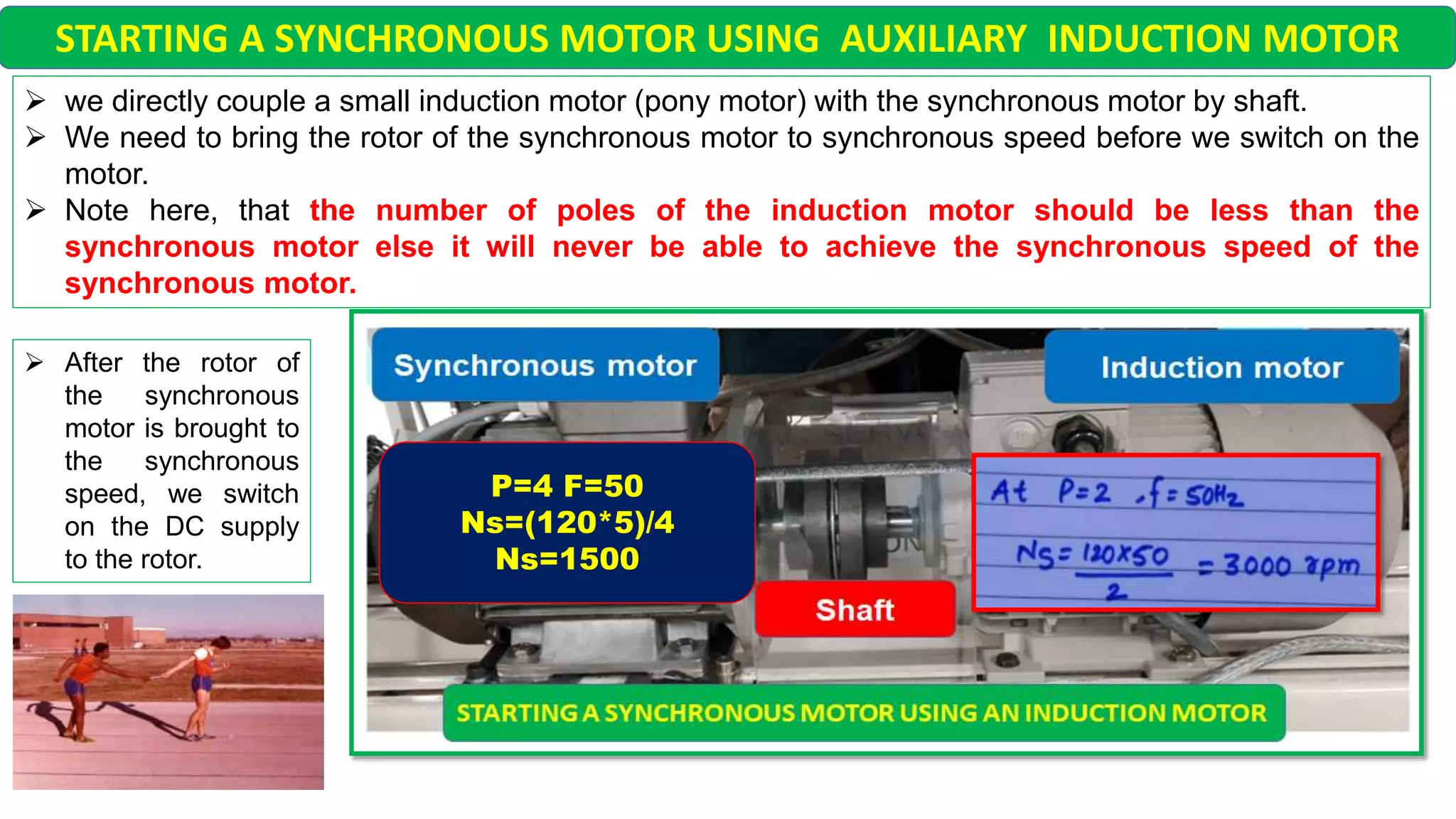
STARTING A SYNCHRONOUS MOTOR USING AUXILIARY INDUCTION MOTOR
 we directly couple a small induction motor (pony motor) with the synchronous motor by shaft.
 We need to bring the rotor of the synchronous motor to synchronous speed before we switch on the
motor.
 Note here, that the number of poles of the induction motor should be less than the
synchronous motor else it will never be able to achieve the synchronous speed of the
synchronous motor.
 After the rotor of
the synchronous
motor is brought to
the synchronous
speed, we switch
on the DC supply
to the rotor.
P=4 F=50
Ns=(120*5)/4
Ns=1500
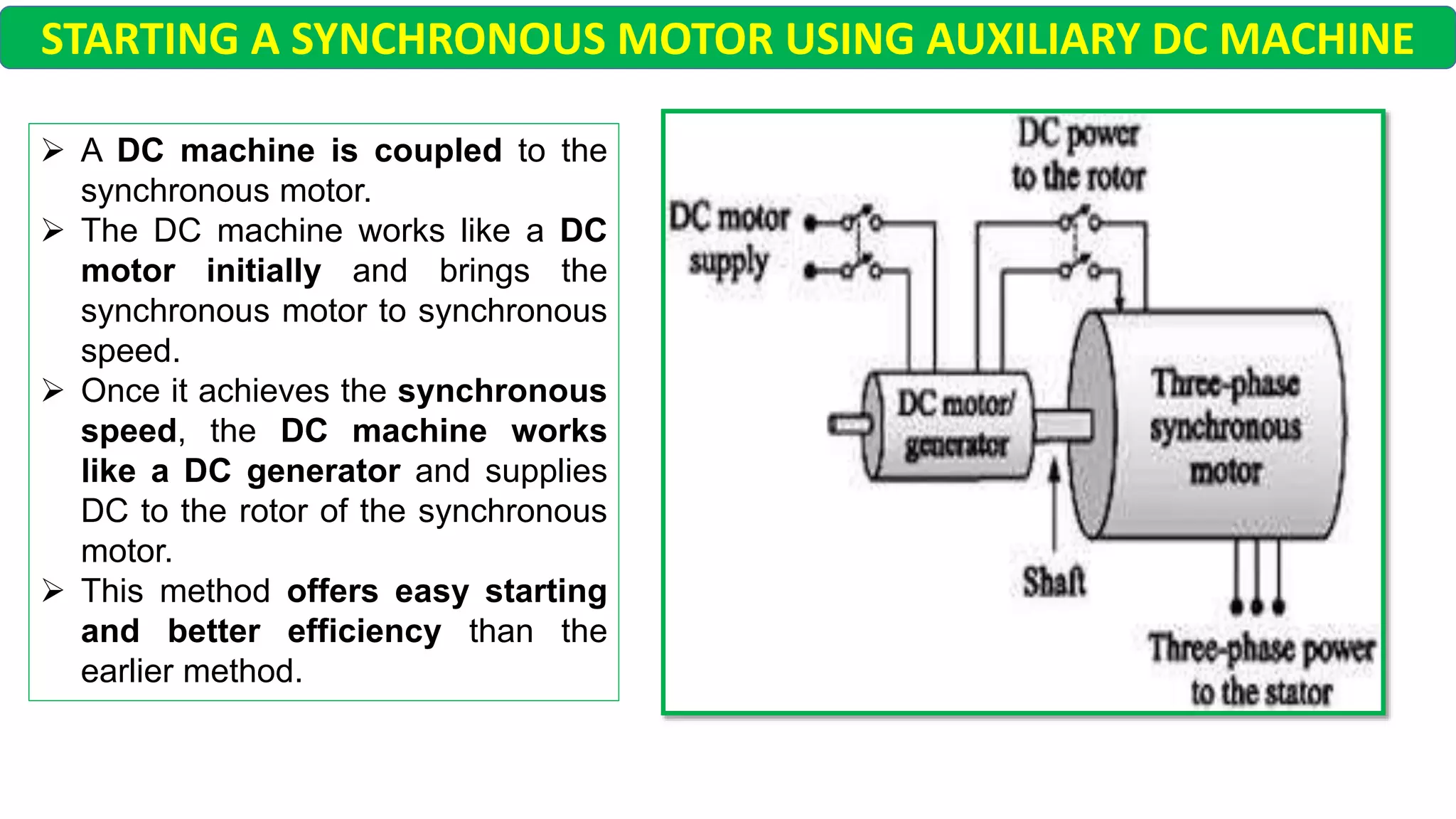
STARTING A SYNCHRONOUS MOTOR USING AUXILIARY DC MACHINE
 A DC machine is coupled to the
synchronous motor.
 The DC machine works like a DC
motor initially and brings the
synchronous motor to synchronous
speed.
 Once it achieves the synchronous
speed, the DC machine works
like a DC generator and supplies
DC to the rotor of the synchronous
motor.
 This method offers easy starting
and better efficiency than the
earlier method.
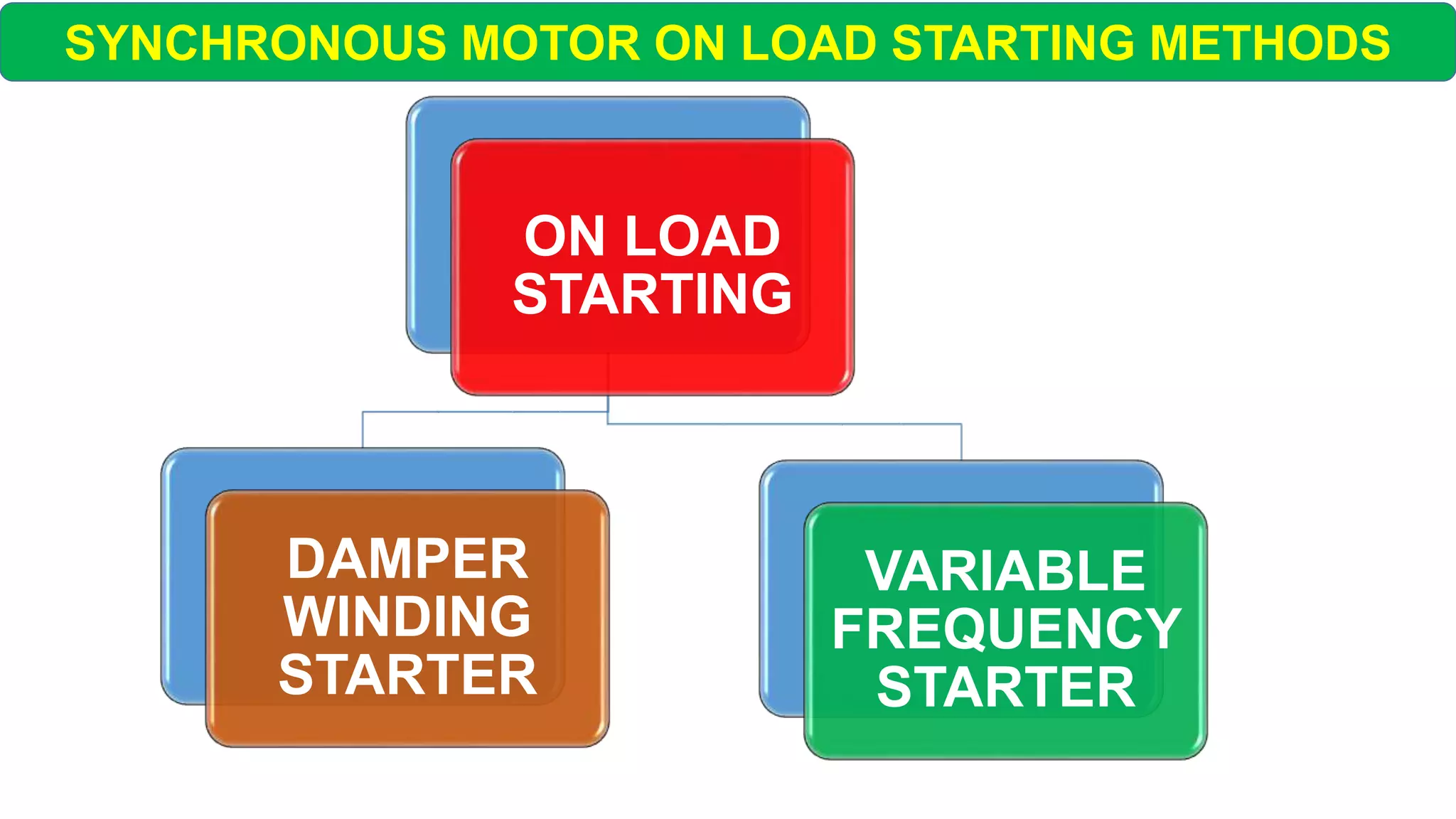
SYNCHRONOUS MOTOR ON LOAD STARTING METHODS
ON LOAD
STARTING
VARIABLE
FREQUENCY
STARTER
DAMPER
WINDING
STARTER
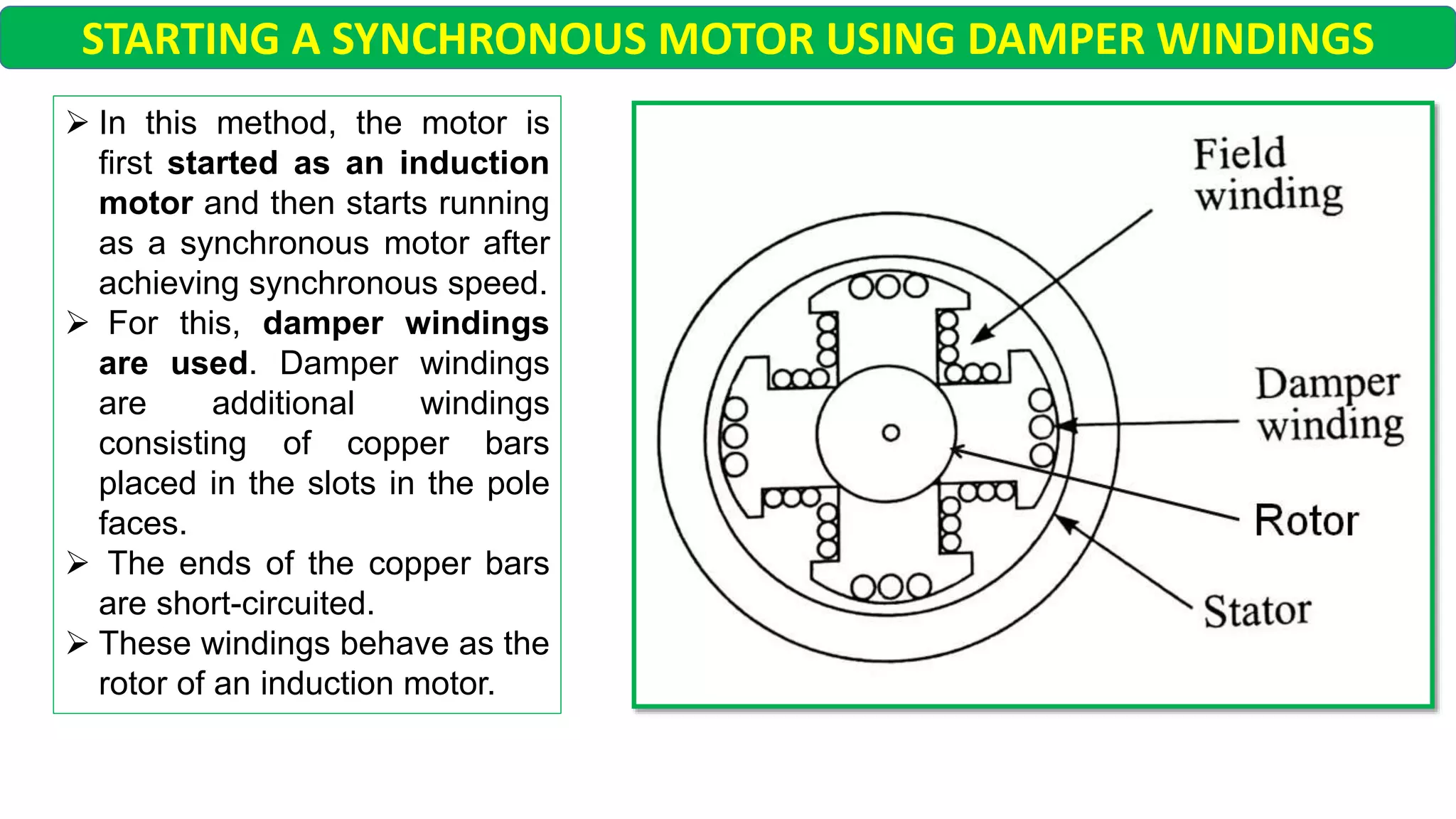
STARTING A SYNCHRONOUS MOTOR USING DAMPER WINDINGS
 In this method, the motor is
first started as an induction
motor and then starts running
as a synchronous motor after
achieving synchronous speed.
 For this, damper windings
are used. Damper windings
are additional windings
consisting of copper bars
placed in the slots in the pole
faces.
 The ends of the copper bars
are short-circuited.
 These windings behave as the
rotor of an induction motor.
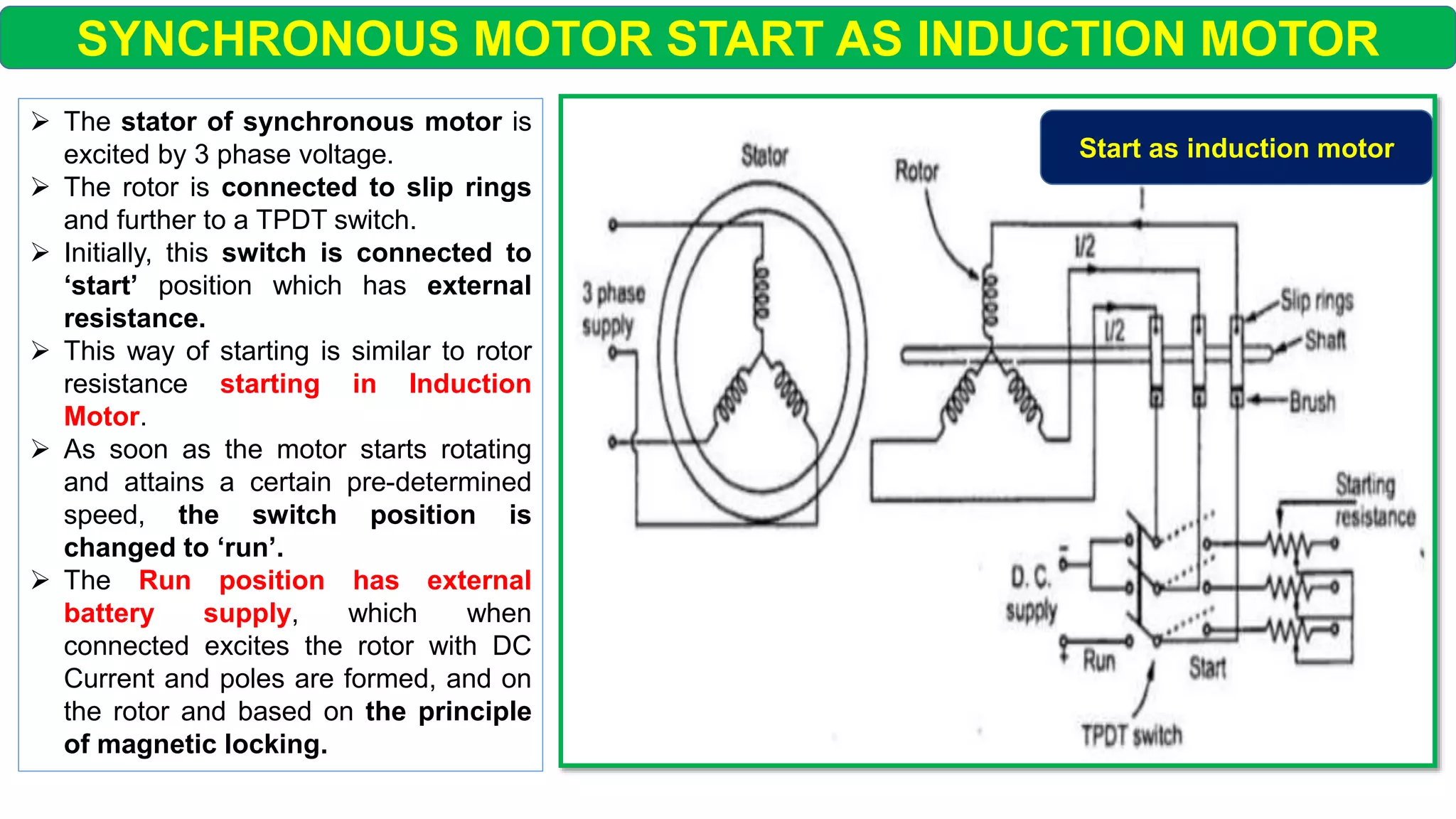
SYNCHRONOUS MOTOR START AS INDUCTION MOTOR
 The stator of synchronous motor is
excited by 3 phase voltage.
 The rotor is connected to slip rings
and further to a TPDT switch.
 Initially, this switch is connected to
‘start’ position which has external
resistance.
 This way of starting is similar to rotor
resistance starting in Induction
Motor.
 As soon as the motor starts rotating
and attains a certain pre-determined
speed, the switch position is
changed to ‘run’.
 The Run position has external
battery supply, which when
connected excites the rotor with DC
Current and poles are formed, and on
the rotor and based on the principle
of magnetic locking.
Start as induction motor
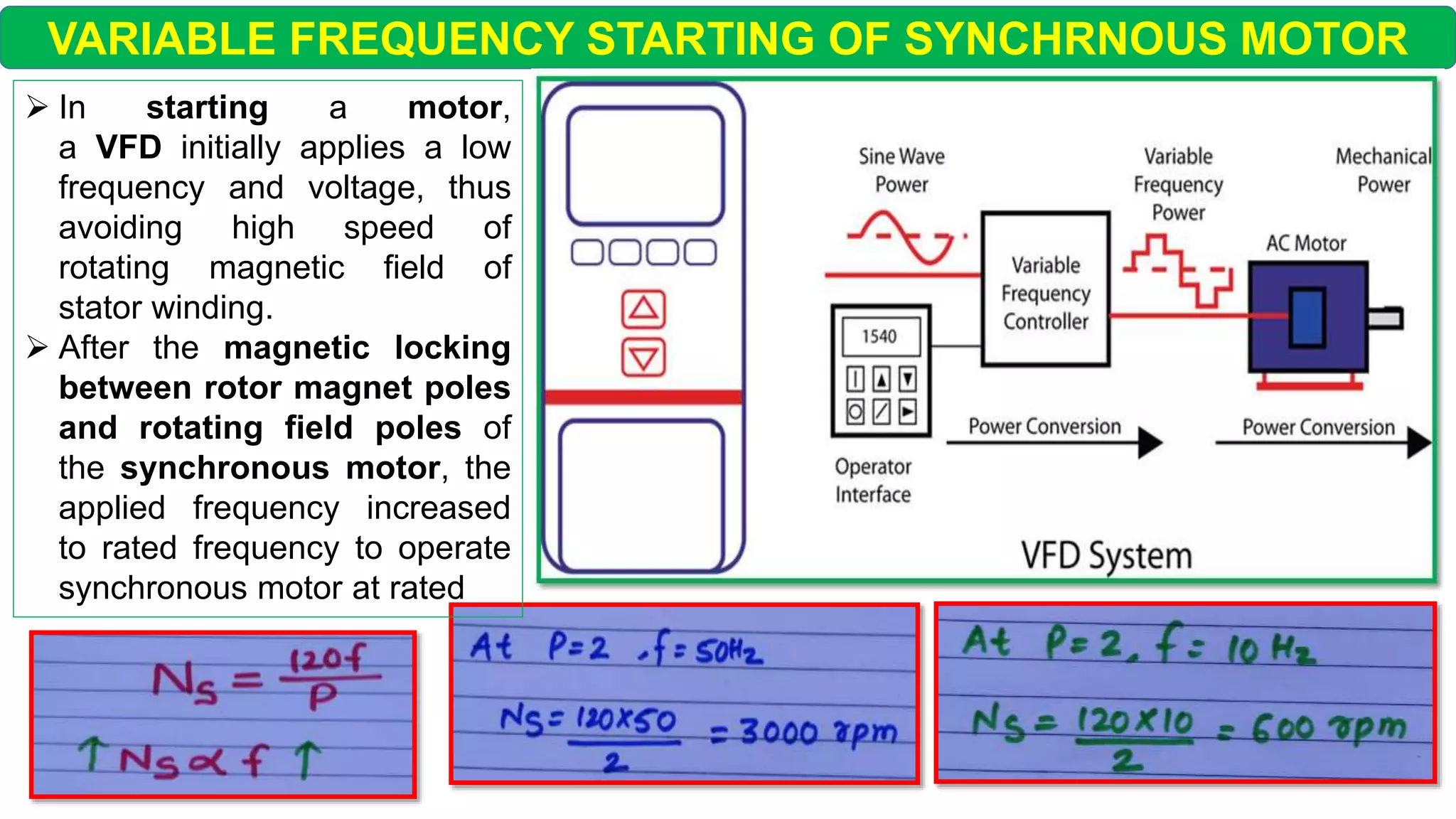
VARIABLE FREQUENCY STARTING OF SYNCHRNOUS MOTOR
 In starting a motor,
a VFD initially applies a low
frequency and voltage, thus
avoiding high speed of
rotating magnetic field of
stator winding.
 After the magnetic locking
between rotor magnet poles
and rotating field poles of
the synchronous motor, the
applied frequency increased
to rated frequency to operate
synchronous motor at rated
THANKS FOR WATCHING
PLEASE subscribe MY
YOUTUBE CHANNEL FOR
DETAIL
SAI ACADEMY OF ELECTRICAL
ENGINEERING
THANKS FOR WATCHING
PLEASE VISIT MY YOUTUBE
CHANNEL FOR DETAIL
SAI ACADEMY OF ELECTRICAL
ENGINEERING
LINK GIVEN IN DESCRIPTION

SYNCHRONOUS MOTOR STARTING METHODS, START करने के METHODS|DAMPER WINDING, AUXILIARY MOTOR| MACHINE

  • 1.
    SYNCHRONOUS MACHINEसरल भाषामें समझे STARTING METHODS OF SYNCHRONOUS MOTOR
  • 2.
    ELECTRICAL MACHINE Syllabus  Introductionof Machine  Classification of Machine  Construction of DC, Induction & Synchronous machine  Working Principle of  DC Machine  Synchronous machine  Induction machine  EMF Equation of  DC Machine  Synchronous Machine  Comparison Between Salient And Cylindrical Poles  Why synchronous motor is not self start?  Starting methods of synchronous motor
  • 3.
  • 4.
    SYNCHRONOUS MOTOR STARTINGMETHODS STARTING OF SYNCHRONOUS MOTOR BY AUXILIARY MOTOR AUXILIARY INDUCTION MOTOR AUXILIARY DC MOTOR ON LOAD STARTING/WITHOUT AUXILIARY MOTOR VARIABLE FREQUENCY STARTER DAMPER WINDING STARTER
  • 5.
    SYNCHRONOUS MOTOR STARTINGMETHODS BY AUXILIARY MOTOR AUXILIARY INDUCTION (PONY) MOTOR AUXILIARY DC MOTOR
  • 6.
    STARTING A SYNCHRONOUSMOTOR USING AUXILIARY INDUCTION MOTOR  we directly couple a small induction motor (pony motor) with the synchronous motor by shaft.  We need to bring the rotor of the synchronous motor to synchronous speed before we switch on the motor.  Note here, that the number of poles of the induction motor should be less than the synchronous motor else it will never be able to achieve the synchronous speed of the synchronous motor.  After the rotor of the synchronous motor is brought to the synchronous speed, we switch on the DC supply to the rotor. P=4 F=50 Ns=(120*5)/4 Ns=1500
  • 7.
    STARTING A SYNCHRONOUSMOTOR USING AUXILIARY DC MACHINE  A DC machine is coupled to the synchronous motor.  The DC machine works like a DC motor initially and brings the synchronous motor to synchronous speed.  Once it achieves the synchronous speed, the DC machine works like a DC generator and supplies DC to the rotor of the synchronous motor.  This method offers easy starting and better efficiency than the earlier method.
  • 8.
    SYNCHRONOUS MOTOR ONLOAD STARTING METHODS ON LOAD STARTING VARIABLE FREQUENCY STARTER DAMPER WINDING STARTER
  • 9.
    STARTING A SYNCHRONOUSMOTOR USING DAMPER WINDINGS  In this method, the motor is first started as an induction motor and then starts running as a synchronous motor after achieving synchronous speed.  For this, damper windings are used. Damper windings are additional windings consisting of copper bars placed in the slots in the pole faces.  The ends of the copper bars are short-circuited.  These windings behave as the rotor of an induction motor.
  • 10.
    SYNCHRONOUS MOTOR STARTAS INDUCTION MOTOR  The stator of synchronous motor is excited by 3 phase voltage.  The rotor is connected to slip rings and further to a TPDT switch.  Initially, this switch is connected to ‘start’ position which has external resistance.  This way of starting is similar to rotor resistance starting in Induction Motor.  As soon as the motor starts rotating and attains a certain pre-determined speed, the switch position is changed to ‘run’.  The Run position has external battery supply, which when connected excites the rotor with DC Current and poles are formed, and on the rotor and based on the principle of magnetic locking. Start as induction motor
  • 11.
    VARIABLE FREQUENCY STARTINGOF SYNCHRNOUS MOTOR  In starting a motor, a VFD initially applies a low frequency and voltage, thus avoiding high speed of rotating magnetic field of stator winding.  After the magnetic locking between rotor magnet poles and rotating field poles of the synchronous motor, the applied frequency increased to rated frequency to operate synchronous motor at rated
  • 12.
    THANKS FOR WATCHING PLEASEsubscribe MY YOUTUBE CHANNEL FOR DETAIL SAI ACADEMY OF ELECTRICAL ENGINEERING
  • 13.
    THANKS FOR WATCHING PLEASEVISIT MY YOUTUBE CHANNEL FOR DETAIL SAI ACADEMY OF ELECTRICAL ENGINEERING LINK GIVEN IN DESCRIPTION