TOPIC: GELATIN BEADS AS
SUSTAINED RELEASE DRUG
DELIVERY SYSTEM
PRESENTED BY: SUMEL ASHIQUE
DEPT.OF PHARMACEUTICS
ROLL NO-1813691
IST YR.2ND SEM
1
 INTRODUCTION
 ADVANTAGES
 DISADVANTAGES
 METHODS OF PREPRATION
 EVALUATIONS
 CONCLUSION
 REFERENCE
2
Beads can be used for the sustained release of drugs, vaccines, antibiotics,
and hormones. For example, by taking advantage of the characteristics of
beads, beyond the basic benefits, the beads could provide a larger surface
area and possess an easier estimation of diffusion and mass transfer behavior.
The method that is described in this study is achieved with
natural polymers.
The main advantages of natural polymers are that they are biocompatible,
biodegradable and produce no systemic toxicity on administration.
Preparation and evaluation of beads of Propranolol HCL with biodegradable
natural polymers fish gelatin and gelatin B as carriers by using physical
cross-linking to avoid toxicity of chemical cross-linking agents has been
attempted to obtain a suitable oral sustained drug delivery .
3
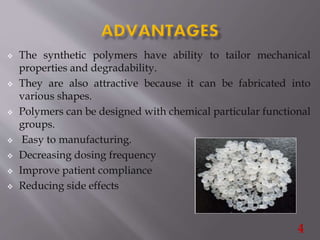
 The synthetic polymers have ability to tailor mechanical
properties and degradability.
 They are also attractive because it can be fabricated into
various shapes.
 Polymers can be designed with chemical particular functional
groups.
 Easy to manufacturing.
 Decreasing dosing frequency
 Improve patient compliance
 Reducing side effects
4
 It is always higher in cost; the production cost is also
much in higher compared with natural polymer.
 Some synthetic polymer are not biocompatible and
produces toxicity.
 During synthesis of synthetic polymer it causes
environment pollution.
 It also produces side effect (acute and chronic effect).
 •Poor patient compliance.
5
 Propranolol HCL
 Gelatin Type –B
 Fish Gelatin,
 Glutaraldehyde.
 Tween 80
ALL other chemicals used are of analytical grade.
6
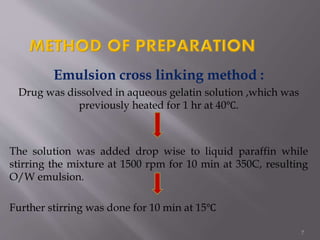
Emulsion cross linking method :
Drug was dissolved in aqueous gelatin solution ,which was
previously heated for 1 hr at 40℃.
The solution was added drop wise to liquid paraffin while
stirring the mixture at 1500 rpm for 10 min at 350C, resulting
O/W emulsion.
Further stirring was done for 10 min at 15℃
7
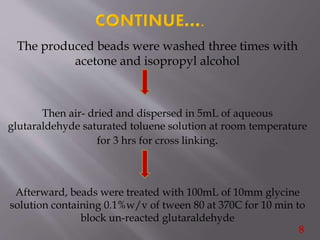
The produced beads were washed three times with
acetone and isopropyl alcohol
Then air- dried and dispersed in 5mL of aqueous
glutaraldehyde saturated toluene solution at room temperature
for 3 hrs for cross linking.
Afterward, beads were treated with 100mL of 10mm glycine
solution containing 0.1%w/v of tween 80 at 370C for 10 min to
block un-reacted glutaraldehyde
8
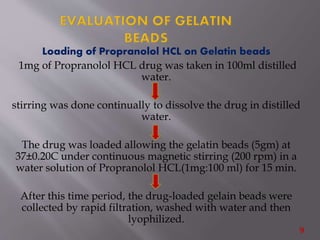
Loading of Propranolol HCL on Gelatin beads
1mg of Propranolol HCL drug was taken in 100ml distilled
water.
stirring was done continually to dissolve the drug in distilled
water.
The drug was loaded allowing the gelatin beads (5gm) at
37±0.20C under continuous magnetic stirring (200 rpm) in a
water solution of Propranolol HCL(1mg:100 ml) for 15 min.
After this time period, the drug-loaded gelain beads were
collected by rapid filtration, washed with water and then
lyophilized.
9
Entrapment efficiency : 1gm of drug loaded gelatin Type-B
beads was placed in100 ml
phosphate buffer, pH 7.4
Mechanically agitated on shaker at 200 rpm for 24 h.
The resultant dispersions were filtered and analyzed at 289 nm
using UV spectrophotometer.
% Drug efficiency= Practical drug content ×100
Theoretical drug content
10
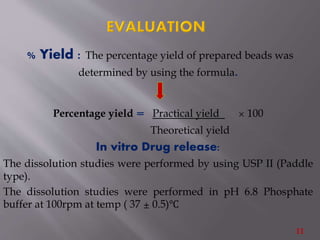
% Yield : The percentage yield of prepared beads was
determined by using the formula.
Percentage yield = Practical yield × 100
Theoretical yield
In vitro Drug release:
The dissolution studies were performed by using USP II (Paddle
type).
The dissolution studies were performed in pH 6.8 Phosphate
buffer at 100rpm at temp ( 37 ± 0.5)℃
11
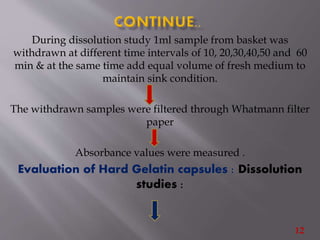
During dissolution study 1ml sample from basket was
withdrawn at different time intervals of 10, 20,30,40,50 and 60
min & at the same time add equal volume of fresh medium to
maintain sink condition.
The withdrawn samples were filtered through Whatmann filter
paper
Absorbance values were measured .
Evaluation of Hard Gelatin capsules : Dissolution
studies :
12
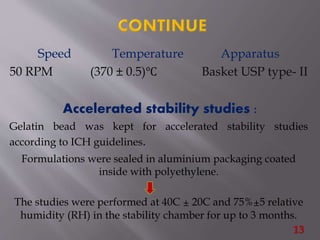
Speed Temperature Apparatus
50 RPM (370 ± 0.5)℃ Basket USP type- II
Accelerated stability studies :
Gelatin bead was kept for accelerated stability studies
according to ICH guidelines.
Formulations were sealed in aluminium packaging coated
inside with polyethylene.
The studies were performed at 40C ± 20C and 75%±5 relative
humidity (RH) in the stability chamber for up to 3 months.
13
Invitro drug release were conducted periodically (initial, 1, 2,
3 months) for the entire period of stability study.
14
 ALGINATE MICRO-BEADS IN NOVEL DRUG DELIVERY SYSTEM:
AN OVERVIEW , RITESH KUMAR TIWARI, LALIT SINGH AND
VIJAY SHARMA , VOL.5 NO.1 JANUARY-JUNE 2013, PP.1-13
 GELATIN BEADS AS SUSTAINED RELEASE DRUG DELIVERY SYSTEM
PATHAN AZHAR KHAN*1, SHAIKH JAVED ISMAIL1, SHAIKH RAFIK GANI1
1 DEPARTMENT OF QUALITY ASSURANCE, ALLANA COLLEGE OF
PHARMACY, AZAM CAMPUS, CAMP, PUNE
15

SUSTAINED RELEASE BEADS

  • 1.
    TOPIC: GELATIN BEADSAS SUSTAINED RELEASE DRUG DELIVERY SYSTEM PRESENTED BY: SUMEL ASHIQUE DEPT.OF PHARMACEUTICS ROLL NO-1813691 IST YR.2ND SEM 1
  • 2.
     INTRODUCTION  ADVANTAGES DISADVANTAGES  METHODS OF PREPRATION  EVALUATIONS  CONCLUSION  REFERENCE 2
  • 3.
    Beads can beused for the sustained release of drugs, vaccines, antibiotics, and hormones. For example, by taking advantage of the characteristics of beads, beyond the basic benefits, the beads could provide a larger surface area and possess an easier estimation of diffusion and mass transfer behavior. The method that is described in this study is achieved with natural polymers. The main advantages of natural polymers are that they are biocompatible, biodegradable and produce no systemic toxicity on administration. Preparation and evaluation of beads of Propranolol HCL with biodegradable natural polymers fish gelatin and gelatin B as carriers by using physical cross-linking to avoid toxicity of chemical cross-linking agents has been attempted to obtain a suitable oral sustained drug delivery . 3
  • 4.
     The syntheticpolymers have ability to tailor mechanical properties and degradability.  They are also attractive because it can be fabricated into various shapes.  Polymers can be designed with chemical particular functional groups.  Easy to manufacturing.  Decreasing dosing frequency  Improve patient compliance  Reducing side effects 4
  • 5.
     It isalways higher in cost; the production cost is also much in higher compared with natural polymer.  Some synthetic polymer are not biocompatible and produces toxicity.  During synthesis of synthetic polymer it causes environment pollution.  It also produces side effect (acute and chronic effect).  •Poor patient compliance. 5
  • 6.
     Propranolol HCL Gelatin Type –B  Fish Gelatin,  Glutaraldehyde.  Tween 80 ALL other chemicals used are of analytical grade. 6
  • 7.
    Emulsion cross linkingmethod : Drug was dissolved in aqueous gelatin solution ,which was previously heated for 1 hr at 40℃. The solution was added drop wise to liquid paraffin while stirring the mixture at 1500 rpm for 10 min at 350C, resulting O/W emulsion. Further stirring was done for 10 min at 15℃ 7
  • 8.
    The produced beadswere washed three times with acetone and isopropyl alcohol Then air- dried and dispersed in 5mL of aqueous glutaraldehyde saturated toluene solution at room temperature for 3 hrs for cross linking. Afterward, beads were treated with 100mL of 10mm glycine solution containing 0.1%w/v of tween 80 at 370C for 10 min to block un-reacted glutaraldehyde 8
  • 9.
    Loading of PropranololHCL on Gelatin beads 1mg of Propranolol HCL drug was taken in 100ml distilled water. stirring was done continually to dissolve the drug in distilled water. The drug was loaded allowing the gelatin beads (5gm) at 37±0.20C under continuous magnetic stirring (200 rpm) in a water solution of Propranolol HCL(1mg:100 ml) for 15 min. After this time period, the drug-loaded gelain beads were collected by rapid filtration, washed with water and then lyophilized. 9
  • 10.
    Entrapment efficiency :1gm of drug loaded gelatin Type-B beads was placed in100 ml phosphate buffer, pH 7.4 Mechanically agitated on shaker at 200 rpm for 24 h. The resultant dispersions were filtered and analyzed at 289 nm using UV spectrophotometer. % Drug efficiency= Practical drug content ×100 Theoretical drug content 10
  • 11.
    % Yield :The percentage yield of prepared beads was determined by using the formula. Percentage yield = Practical yield × 100 Theoretical yield In vitro Drug release: The dissolution studies were performed by using USP II (Paddle type). The dissolution studies were performed in pH 6.8 Phosphate buffer at 100rpm at temp ( 37 ± 0.5)℃ 11
  • 12.
    During dissolution study1ml sample from basket was withdrawn at different time intervals of 10, 20,30,40,50 and 60 min & at the same time add equal volume of fresh medium to maintain sink condition. The withdrawn samples were filtered through Whatmann filter paper Absorbance values were measured . Evaluation of Hard Gelatin capsules : Dissolution studies : 12
  • 13.
    Speed Temperature Apparatus 50RPM (370 ± 0.5)℃ Basket USP type- II Accelerated stability studies : Gelatin bead was kept for accelerated stability studies according to ICH guidelines. Formulations were sealed in aluminium packaging coated inside with polyethylene. The studies were performed at 40C ± 20C and 75%±5 relative humidity (RH) in the stability chamber for up to 3 months. 13
  • 14.
    Invitro drug releasewere conducted periodically (initial, 1, 2, 3 months) for the entire period of stability study. 14
  • 15.
     ALGINATE MICRO-BEADSIN NOVEL DRUG DELIVERY SYSTEM: AN OVERVIEW , RITESH KUMAR TIWARI, LALIT SINGH AND VIJAY SHARMA , VOL.5 NO.1 JANUARY-JUNE 2013, PP.1-13  GELATIN BEADS AS SUSTAINED RELEASE DRUG DELIVERY SYSTEM PATHAN AZHAR KHAN*1, SHAIKH JAVED ISMAIL1, SHAIKH RAFIK GANI1 1 DEPARTMENT OF QUALITY ASSURANCE, ALLANA COLLEGE OF PHARMACY, AZAM CAMPUS, CAMP, PUNE 15