Insects Bites
• Insect bites are puncture wounds or lacerations
made by insects.
• An insect maybite when it is agitated and defends
itself, or when it wants to feed.
• Insects typically inject formic acid.
• This can lead to blisters, inflammation, redness,
swelling, pain, itching, and irritation
Definition
• Stings and bites from insects are common.
• They often result in redness and swelling in the injured area.
• Sometimes a sting or bite can cause a life-threatening allergic
reaction or transmit pathogens (viruses, bacteria or parasites,
for example) to humans
• Many bites will clear up within a few hours or days and
can be safely treated at home
• It can be difficult to identify what you were bitten
Common insect bites and stings include:
• Wasp and hornet stings
• Bee stings
• Mosquito bites
• Tick bites
• Horsefly bites
• Midge or gnat bites
• Bedbug bite
• Mite bites
• Flea bites
• Spider bites
• Ant stings and bites
• Ladybird bites
• Flower bug bites
• Caterpillar hairs
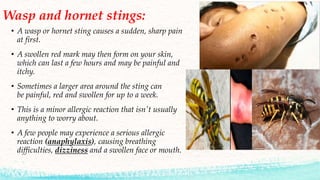
Wasp and hornet stings:
• A wasp or hornet sting causes a sudden, sharp pain
at first.
• A swollen red mark may then form on your skin,
which can last a few hours and may be painful and
itchy.
• Sometimes a larger area around the sting can
be painful, red and swollen for up to a week.
• This is a minor allergic reaction that isn't usually
anything to worry about.
• A few people may experience a serious allergic
reaction (anaphylaxis), causing breathing
difficulties, dizziness and a swollen face or mouth.
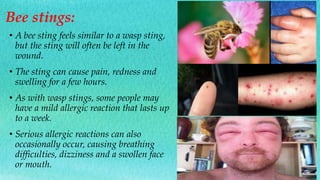
Bee stings:
• A bee sting feels similar to a wasp sting,
but the sting will often be left in the
wound.
• The sting can cause pain, redness and
swelling for a few hours.
• As with wasp stings, some people may
have a mild allergic reaction that lasts up
to a week.
• Serious allergic reactions can also
occasionally occur, causing breathing
difficulties, dizziness and a swollen face
or mouth.
Mosquito bites:
• Bites from mosquitoes often cause
small red lumps on your skin.
• These are usually very itchy. Some people
may also develop fluid-filled blisters.
• Mosquitoes don't cause major harm in
some countries , but in some parts of the
world they can spread serious illnesses
such as malaria.
• After a mosquito bite develop worrying
symptoms, such as a fever,
chills, headaches and vomiting
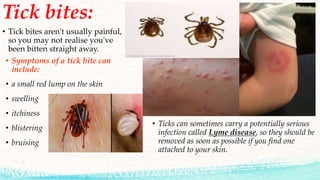
Tick bites:
• Tick bites aren't usually painful,
so you may not realise you've
been bitten straight away.
• Symptoms of a tick bite can
include:
• a small red lump on the skin
• swelling
• itchiness
• blistering
• bruising
• Ticks can sometimes carry a potentially serious
infection called Lyme disease, so they should be
removed as soon as possible if you find one
attached to your skin.
Horsefly bites:
• A bite from a horsefly can be very painful and the
bitten area of skin will usually be red and raised.
• Horsefly bites can take a while to heal and can become
infected
• Symptoms of a tick bite can include:
• a larger red, raised rash (called hives or urticaria)
• dizziness
• weakness
• wheezing
• part of your body becoming puffy and swollen
Midge or gnat bites:
• Midge and gnat bites often look
similar to mosquito bites.
• They usually cause small, red
lumps that can be painful and
very itchy, and can
sometimes swell up alarmingly.
• Some people may also develop
fluid-filled blisters.
Bedbug bites:
• Bedbug bites typically occur on the
face, neck, hands or arms.
• They're typically found in straight
lines across the skin.
• The bites aren't usually painful, and
if you've not been bitten by bedbugs
before, you may not have any
symptoms.
• If you have been bitten before, you
may develop itchy red bumps that can
last for several days.
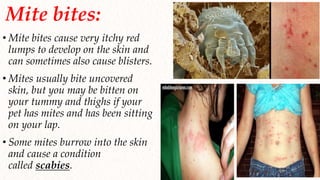
Mite bites:
• Mite bites cause very itchy red
lumps to develop on the skin and
can sometimes also cause blisters.
• Mites usually bite uncovered
skin, but you may be bitten on
your tummy and thighs if your
pet has mites and has been sitting
on your lap.
• Some mites burrow into the skin
and cause a condition
called scabies.
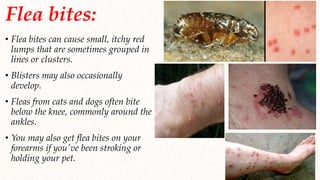
Flea bites:
• Flea bites can cause small, itchy red
lumps that are sometimes grouped in
lines or clusters.
• Blisters may also occasionally
develop.
• Fleas from cats and dogs often bite
below the knee, commonly around the
ankles.
• You may also get flea bites on your
forearms if you've been stroking or
holding your pet.
Spider bites:
• some native spiders – such as the false
widow spider (see image above) – are
capable of giving a nasty bite.
• Spider bites leave small puncture marks
on the skin, which can be painful and
cause redness and swelling.
• Some spiders are venomous and their
bites can cause nausea, vomiting,
sweating and dizziness.
• Bites can also become infected or cause a
severe allergic reaction in rare cases.
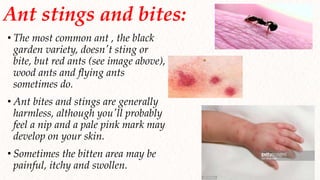
Ant stings and bites:
• The most common ant , the black
garden variety, doesn't sting or
bite, but red ants (see image above),
wood ants and flying ants
sometimes do.
• Ant bites and stings are generally
harmless, although you'll probably
feel a nip and a pale pink mark may
develop on your skin.
• Sometimes the bitten area may be
painful, itchy and swollen.
Ladybird bites:
• All ladybirds can bite, but a type
called the harlequin ladybird found
throughout much more aggressive
and tends to bite more often.
• The harlequin ladybird can be red or
orange with multiple spots.
• Look out for a white spot on its head –
other ladybirds don't have these
patches.
• Ladybird bites can be painful, but
aren't usually
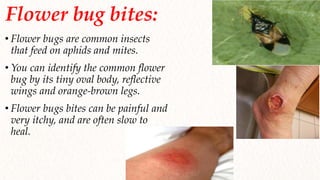
Flower bug bites:
• Flower bugs are common insects
that feed on aphids and mites.
• You can identify the common flower
bug by its tiny oval body, reflective
wings and orange-brown legs.
• Flower bugs bites can be painful and
very itchy, and are often slow to
heal.
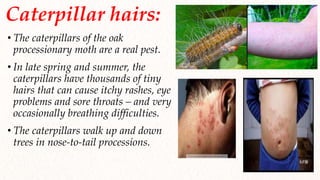
Caterpillar hairs:
• The caterpillars of the oak
processionary moth are a real pest.
• In late spring and summer, the
caterpillars have thousands of tiny
hairs that can cause itchy rashes, eye
problems and sore throats – and very
occasionally breathing difficulties.
• The caterpillars walk up and down
trees in nose-to-tail processions.
By : Mahi

Surgery insects bites

  • 2.
    Insects Bites • Insectbites are puncture wounds or lacerations made by insects. • An insect maybite when it is agitated and defends itself, or when it wants to feed. • Insects typically inject formic acid. • This can lead to blisters, inflammation, redness, swelling, pain, itching, and irritation Definition
  • 3.
    • Stings andbites from insects are common. • They often result in redness and swelling in the injured area. • Sometimes a sting or bite can cause a life-threatening allergic reaction or transmit pathogens (viruses, bacteria or parasites, for example) to humans • Many bites will clear up within a few hours or days and can be safely treated at home • It can be difficult to identify what you were bitten
  • 4.
    Common insect bitesand stings include: • Wasp and hornet stings • Bee stings • Mosquito bites • Tick bites • Horsefly bites • Midge or gnat bites • Bedbug bite • Mite bites • Flea bites • Spider bites • Ant stings and bites • Ladybird bites • Flower bug bites • Caterpillar hairs
  • 5.
    Wasp and hornetstings: • A wasp or hornet sting causes a sudden, sharp pain at first. • A swollen red mark may then form on your skin, which can last a few hours and may be painful and itchy. • Sometimes a larger area around the sting can be painful, red and swollen for up to a week. • This is a minor allergic reaction that isn't usually anything to worry about. • A few people may experience a serious allergic reaction (anaphylaxis), causing breathing difficulties, dizziness and a swollen face or mouth.
  • 6.
    Bee stings: • Abee sting feels similar to a wasp sting, but the sting will often be left in the wound. • The sting can cause pain, redness and swelling for a few hours. • As with wasp stings, some people may have a mild allergic reaction that lasts up to a week. • Serious allergic reactions can also occasionally occur, causing breathing difficulties, dizziness and a swollen face or mouth.
  • 7.
    Mosquito bites: • Bitesfrom mosquitoes often cause small red lumps on your skin. • These are usually very itchy. Some people may also develop fluid-filled blisters. • Mosquitoes don't cause major harm in some countries , but in some parts of the world they can spread serious illnesses such as malaria. • After a mosquito bite develop worrying symptoms, such as a fever, chills, headaches and vomiting
  • 8.
    Tick bites: • Tickbites aren't usually painful, so you may not realise you've been bitten straight away. • Symptoms of a tick bite can include: • a small red lump on the skin • swelling • itchiness • blistering • bruising • Ticks can sometimes carry a potentially serious infection called Lyme disease, so they should be removed as soon as possible if you find one attached to your skin.
  • 9.
    Horsefly bites: • Abite from a horsefly can be very painful and the bitten area of skin will usually be red and raised. • Horsefly bites can take a while to heal and can become infected • Symptoms of a tick bite can include: • a larger red, raised rash (called hives or urticaria) • dizziness • weakness • wheezing • part of your body becoming puffy and swollen
  • 10.
    Midge or gnatbites: • Midge and gnat bites often look similar to mosquito bites. • They usually cause small, red lumps that can be painful and very itchy, and can sometimes swell up alarmingly. • Some people may also develop fluid-filled blisters.
  • 11.
    Bedbug bites: • Bedbugbites typically occur on the face, neck, hands or arms. • They're typically found in straight lines across the skin. • The bites aren't usually painful, and if you've not been bitten by bedbugs before, you may not have any symptoms. • If you have been bitten before, you may develop itchy red bumps that can last for several days.
  • 12.
    Mite bites: • Mitebites cause very itchy red lumps to develop on the skin and can sometimes also cause blisters. • Mites usually bite uncovered skin, but you may be bitten on your tummy and thighs if your pet has mites and has been sitting on your lap. • Some mites burrow into the skin and cause a condition called scabies.
  • 13.
    Flea bites: • Fleabites can cause small, itchy red lumps that are sometimes grouped in lines or clusters. • Blisters may also occasionally develop. • Fleas from cats and dogs often bite below the knee, commonly around the ankles. • You may also get flea bites on your forearms if you've been stroking or holding your pet.
  • 14.
    Spider bites: • somenative spiders – such as the false widow spider (see image above) – are capable of giving a nasty bite. • Spider bites leave small puncture marks on the skin, which can be painful and cause redness and swelling. • Some spiders are venomous and their bites can cause nausea, vomiting, sweating and dizziness. • Bites can also become infected or cause a severe allergic reaction in rare cases.
  • 15.
    Ant stings andbites: • The most common ant , the black garden variety, doesn't sting or bite, but red ants (see image above), wood ants and flying ants sometimes do. • Ant bites and stings are generally harmless, although you'll probably feel a nip and a pale pink mark may develop on your skin. • Sometimes the bitten area may be painful, itchy and swollen.
  • 16.
    Ladybird bites: • Allladybirds can bite, but a type called the harlequin ladybird found throughout much more aggressive and tends to bite more often. • The harlequin ladybird can be red or orange with multiple spots. • Look out for a white spot on its head – other ladybirds don't have these patches. • Ladybird bites can be painful, but aren't usually
  • 17.
    Flower bug bites: •Flower bugs are common insects that feed on aphids and mites. • You can identify the common flower bug by its tiny oval body, reflective wings and orange-brown legs. • Flower bugs bites can be painful and very itchy, and are often slow to heal.
  • 18.
    Caterpillar hairs: • Thecaterpillars of the oak processionary moth are a real pest. • In late spring and summer, the caterpillars have thousands of tiny hairs that can cause itchy rashes, eye problems and sore throats – and very occasionally breathing difficulties. • The caterpillars walk up and down trees in nose-to-tail processions.
  • 19.