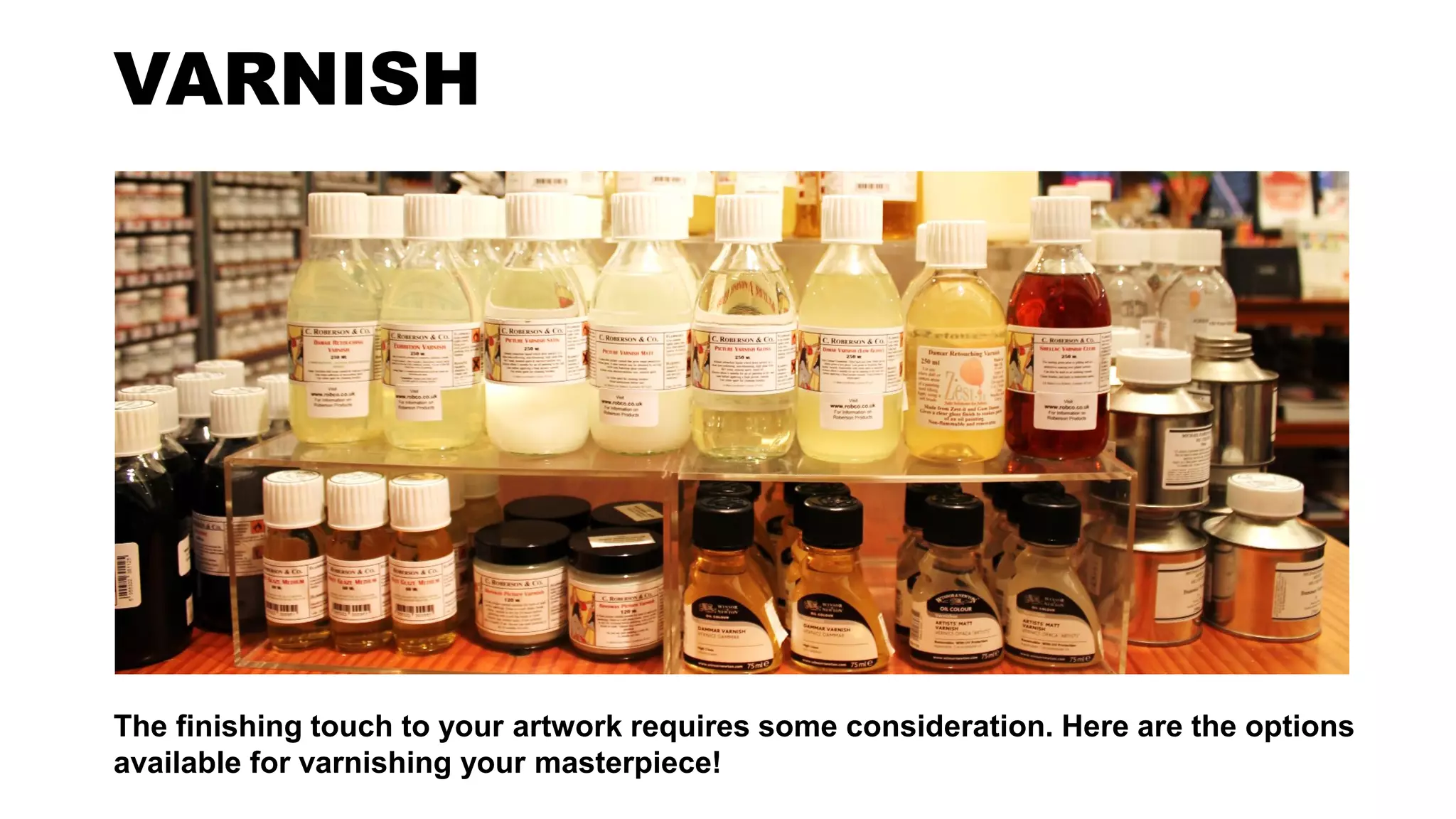
The finishing touch to your artwork requires some consideration. Here are the options
available for varnishing your masterpiece!
WHY WOULD YOU VARNISH?
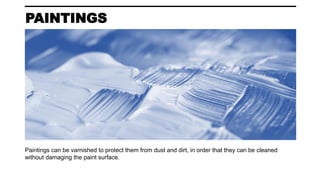
PAINTINGS
Paintings can be varnished to protect them from dust and dirt, in order that they can be cleaned
without damaging the paint surface.
VARNISHES FOR OIL PAINTINGS
OIL PAINTINGS
If you have used fast drying mediums, you may be able to varnish after 3
months.
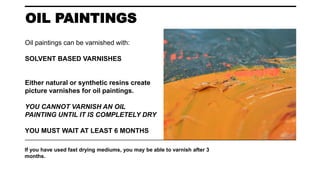
Oil paintings can be varnished with:
SOLVENT BASED VARNISHES
Either natural or synthetic resins create
picture varnishes for oil paintings.
YOU CANNOT VARNISH AN OIL
PAINTING UNTIL IT IS COMPLETELY DRY
YOU MUST WAIT AT LEAST 6 MONTHS
PICTURE VARNISH
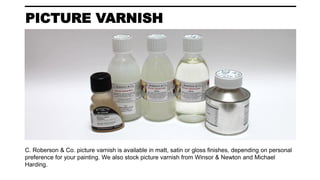
C. Roberson & Co. picture varnish is available in matt, satin or gloss finishes, depending on personal
preference for your painting. We also stock picture varnish from Winsor & Newton and Michael
Harding.
DAMMAR VARNISH
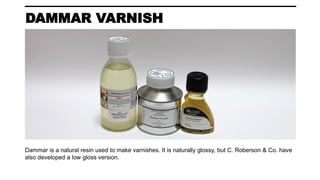
Dammar is a natural resin used to make varnishes. It is naturally glossy, but C. Roberson & Co. have
also developed a low gloss version.
RE-TOUCHING VARNISH
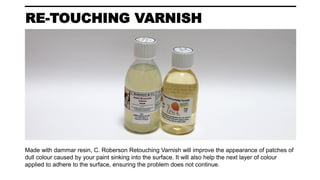
Made with dammar resin, C. Roberson Retouching Varnish will improve the appearance of patches of
dull colour caused by your paint sinking into the surface. It will also help the next layer of colour
applied to adhere to the surface, ensuring the problem does not continue.
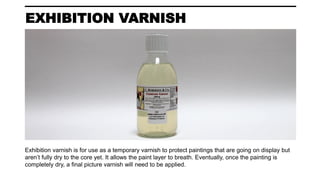
EXHIBITION VARNISH
Exhibition varnish is for use as a temporary varnish to protect paintings that are going on display but
aren’t fully dry to the core yet. It allows the paint layer to breath. Eventually, once the painting is
completely dry, a final picture varnish will need to be applied.
VARNISHES FOR OIL AND ACRYLIC PAINTINGS
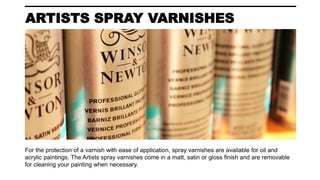
ARTISTS SPRAY VARNISHES
For the protection of a varnish with ease of application, spray varnishes are available for oil and
acrylic paintings. The Artists spray varnishes come in a matt, satin or gloss finish and are removable
for cleaning your painting when necessary.
VARNISHES FOR ACRYLIC PAINTINGS
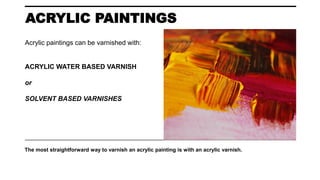
ACRYLIC PAINTINGS
The most straightforward way to varnish an acrylic painting is with an acrylic varnish.
Acrylic paintings can be varnished with:
ACRYLIC WATER BASED VARNISH
or
SOLVENT BASED VARNISHES
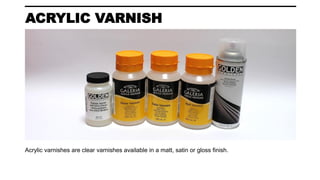
ACRYLIC VARNISH
Acrylic varnishes are clear varnishes available in a matt, satin or gloss finish.
WHAT ABOUT WATERCOLOUR PAINTINGS?
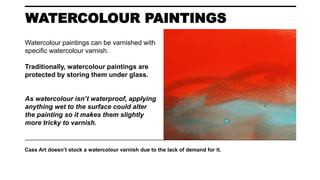
WATERCOLOUR PAINTINGS
Cass Art doesn’t stock a watercolour varnish due to the lack of demand for it.
Watercolour paintings can be varnished with
specific watercolour varnish.
Traditionally, watercolour paintings are
protected by storing them under glass.
As watercolour isn’t waterproof, applying
anything wet to the surface could alter
the painting so it makes them slightly
more tricky to varnish.
DIFFERENT TYPES OF VARNISH AVAILABLE
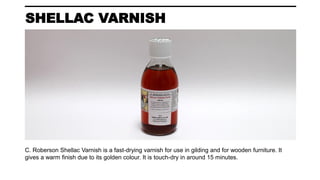
SHELLAC VARNISH
C. Roberson Shellac Varnish is a fast-drying varnish for use in gilding and for wooden furniture. It
gives a warm finish due to its golden colour. It is touch-dry in around 15 minutes.
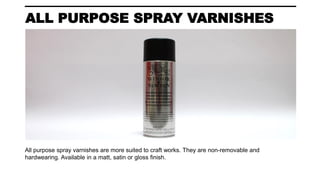
ALL PURPOSE SPRAY VARNISHES
All purpose spray varnishes are more suited to craft works. They are non-removable and
hardwearing. Available in a matt, satin or gloss finish.
HOW TO APPLY A VARNISH
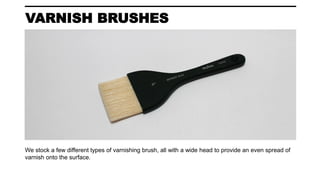
VARNISH BRUSHES
We stock a few different types of varnishing brush, all with a wide head to provide an even spread of
varnish onto the surface.
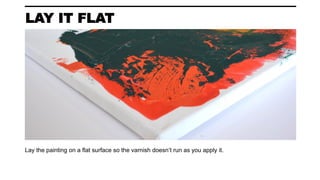
LAY IT FLAT
Lay the painting on a flat surface so the varnish doesn’t run as you apply it.
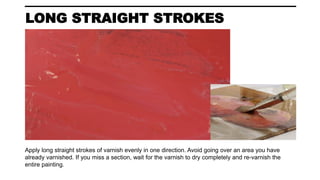
LONG STRAIGHT STROKES
Apply long straight strokes of varnish evenly in one direction. Avoid going over an area you have
already varnished. If you miss a section, wait for the varnish to dry completely and re-varnish the
entire painting.
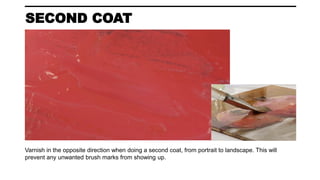
SECOND COAT
Varnish in the opposite direction when doing a second coat, from portrait to landscape. This will
prevent any unwanted brush marks from showing up.
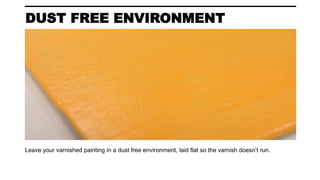
DUST FREE ENVIRONMENT
Leave your varnished painting in a dust free environment, laid flat so the varnish doesn’t run.
PROTECT YOUR WORK WITH A VARNISH!
Surfaces&display varnishes v1.1

Surfaces&display varnishes v1.1

  • 1.
    The finishing touchto your artwork requires some consideration. Here are the options available for varnishing your masterpiece!
  • 2.
    WHY WOULD YOUVARNISH?
  • 3.
    PAINTINGS Paintings can bevarnished to protect them from dust and dirt, in order that they can be cleaned without damaging the paint surface.
  • 4.
  • 5.
    OIL PAINTINGS If youhave used fast drying mediums, you may be able to varnish after 3 months. Oil paintings can be varnished with: SOLVENT BASED VARNISHES Either natural or synthetic resins create picture varnishes for oil paintings. YOU CANNOT VARNISH AN OIL PAINTING UNTIL IT IS COMPLETELY DRY YOU MUST WAIT AT LEAST 6 MONTHS
  • 6.
    PICTURE VARNISH C. Roberson& Co. picture varnish is available in matt, satin or gloss finishes, depending on personal preference for your painting. We also stock picture varnish from Winsor & Newton and Michael Harding.
  • 7.
    DAMMAR VARNISH Dammar isa natural resin used to make varnishes. It is naturally glossy, but C. Roberson & Co. have also developed a low gloss version.
  • 8.
    RE-TOUCHING VARNISH Made withdammar resin, C. Roberson Retouching Varnish will improve the appearance of patches of dull colour caused by your paint sinking into the surface. It will also help the next layer of colour applied to adhere to the surface, ensuring the problem does not continue.
  • 9.
    EXHIBITION VARNISH Exhibition varnishis for use as a temporary varnish to protect paintings that are going on display but aren’t fully dry to the core yet. It allows the paint layer to breath. Eventually, once the painting is completely dry, a final picture varnish will need to be applied.
  • 10.
    VARNISHES FOR OILAND ACRYLIC PAINTINGS
  • 11.
    ARTISTS SPRAY VARNISHES Forthe protection of a varnish with ease of application, spray varnishes are available for oil and acrylic paintings. The Artists spray varnishes come in a matt, satin or gloss finish and are removable for cleaning your painting when necessary.
  • 12.
  • 13.
    ACRYLIC PAINTINGS The moststraightforward way to varnish an acrylic painting is with an acrylic varnish. Acrylic paintings can be varnished with: ACRYLIC WATER BASED VARNISH or SOLVENT BASED VARNISHES
  • 14.
    ACRYLIC VARNISH Acrylic varnishesare clear varnishes available in a matt, satin or gloss finish.
  • 15.
  • 16.
    WATERCOLOUR PAINTINGS Cass Artdoesn’t stock a watercolour varnish due to the lack of demand for it. Watercolour paintings can be varnished with specific watercolour varnish. Traditionally, watercolour paintings are protected by storing them under glass. As watercolour isn’t waterproof, applying anything wet to the surface could alter the painting so it makes them slightly more tricky to varnish.
  • 17.
    DIFFERENT TYPES OFVARNISH AVAILABLE
  • 18.
    SHELLAC VARNISH C. RobersonShellac Varnish is a fast-drying varnish for use in gilding and for wooden furniture. It gives a warm finish due to its golden colour. It is touch-dry in around 15 minutes.
  • 19.
    ALL PURPOSE SPRAYVARNISHES All purpose spray varnishes are more suited to craft works. They are non-removable and hardwearing. Available in a matt, satin or gloss finish.
  • 20.
    HOW TO APPLYA VARNISH
  • 21.
    VARNISH BRUSHES We stocka few different types of varnishing brush, all with a wide head to provide an even spread of varnish onto the surface.
  • 22.
    LAY IT FLAT Laythe painting on a flat surface so the varnish doesn’t run as you apply it.
  • 23.
    LONG STRAIGHT STROKES Applylong straight strokes of varnish evenly in one direction. Avoid going over an area you have already varnished. If you miss a section, wait for the varnish to dry completely and re-varnish the entire painting.
  • 24.
    SECOND COAT Varnish inthe opposite direction when doing a second coat, from portrait to landscape. This will prevent any unwanted brush marks from showing up.
  • 25.
    DUST FREE ENVIRONMENT Leaveyour varnished painting in a dust free environment, laid flat so the varnish doesn’t run.
  • 26.
    PROTECT YOUR WORKWITH A VARNISH!