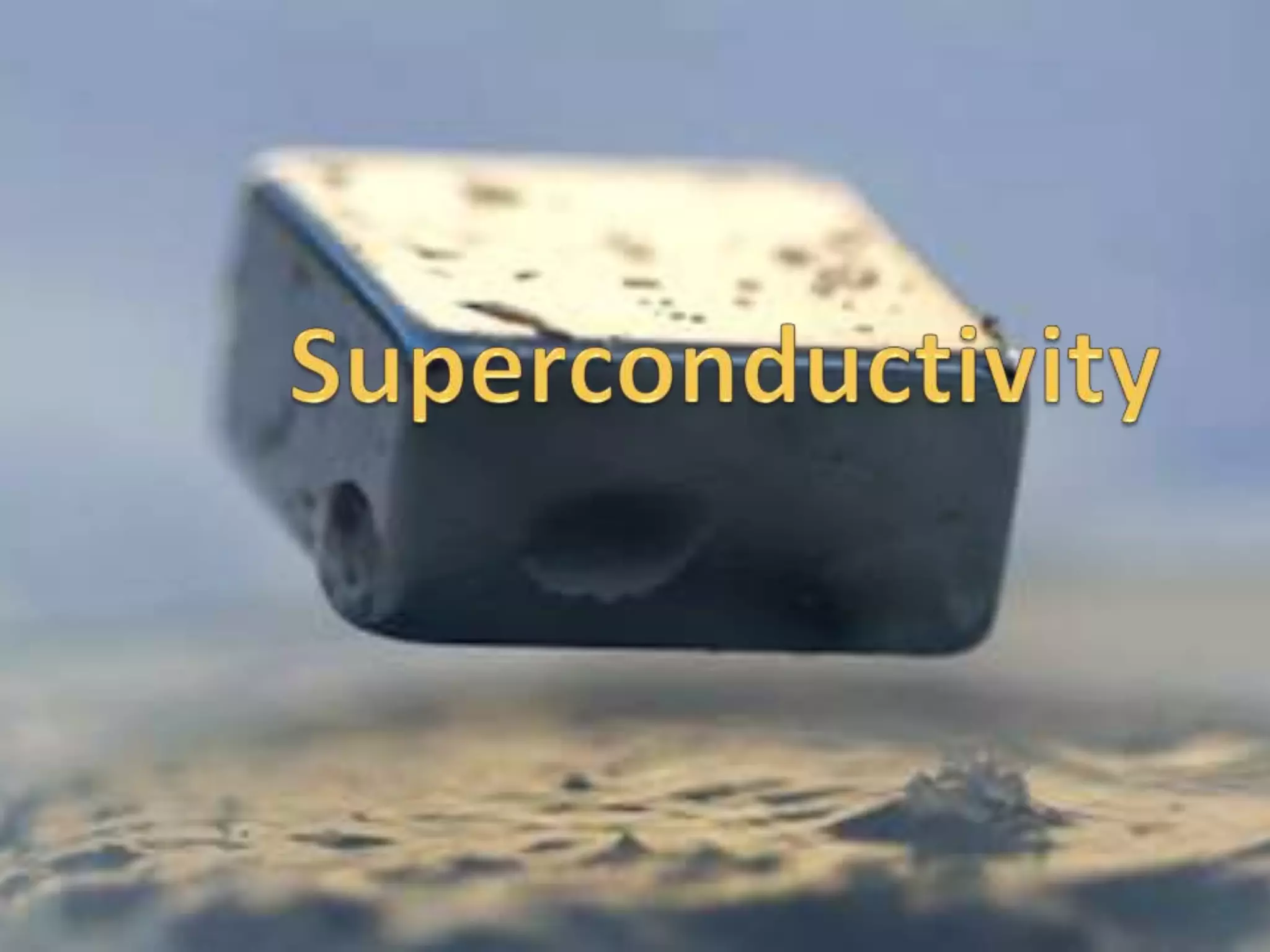
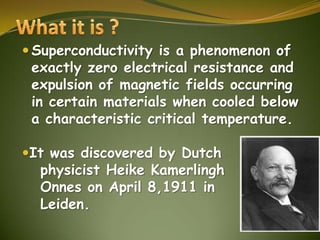
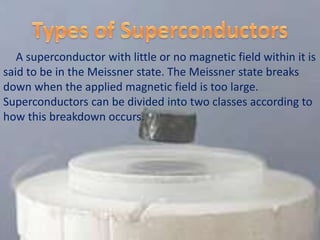
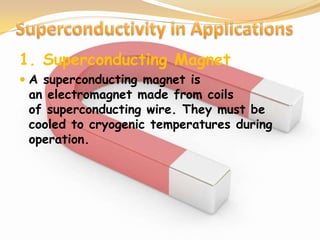
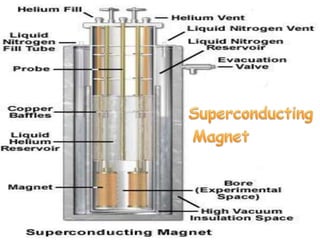
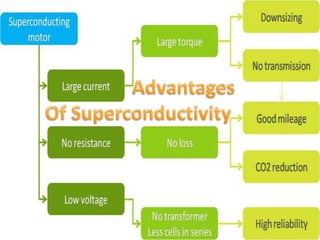
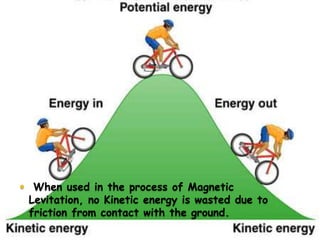
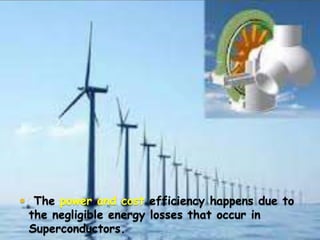
Superconductivity is a phenomenon where electrical resistance drops to exactly zero and magnetic fields are expelled when certain materials are cooled below their critical temperature. It was discovered in 1911 by Heike Kamerlingh Onnes. Superconductors can be used in applications like computer processors and electric trains to use very little electricity. Superconductors are divided into two types - Type I exhibit zero resistivity and exclude magnetic fields below a critical temperature, while Type II can maintain higher magnetic fields and are used to construct high-field magnets. Creating a practical superconductor that works at room temperature remains a challenge.