Santosh Pandey
Ram Sharan Chaulagain
Prakash Gyawali
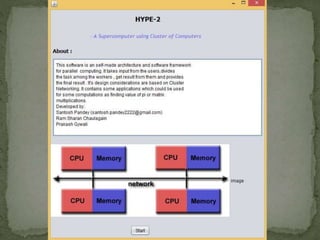
- A supercomputer( HYPE -2 )
Supervisor
Prof. Dr. Subarna Shakya
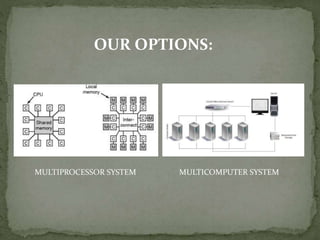
OUR OPTIONS:
MULTIPROCESSOR SYSTEM MULTICOMPUTER SYSTEM
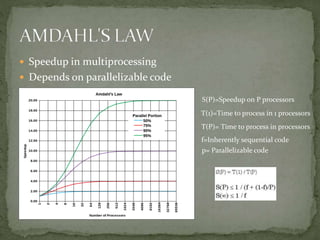
 Speedup in multiprocessing
 Depends on parallelizable code
S(P)=Speedup on P processors
T(1)=Time to process in 1 processors
T(P)= Time to process in processors
f=Inherently sequential code
p= Parallelizable code
 High performance computing for research
 Achieving super computing at a cheaper rate
than mainframes
 Muni Sakhya (1980’s)
 16 nodes
 First and the only one
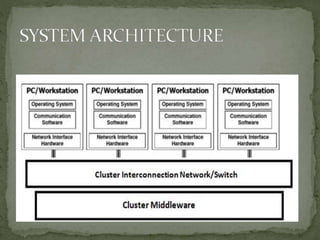
 Middleware
 Network Architecture
 Multicore Computers
 SIMD (Single Instruction Multiple Data)
 MIMD (Multiple Instruction Multiple Data)
 Every application don’t have same parallelism model
 Specific Applications must be programmed
 Extend Methods of our Architecture
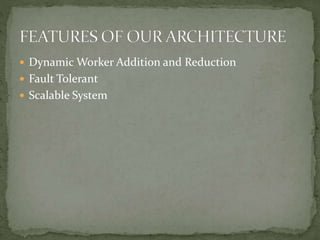
 Dynamic Worker Addition and Reduction
 Fault Tolerant
 Scalable System
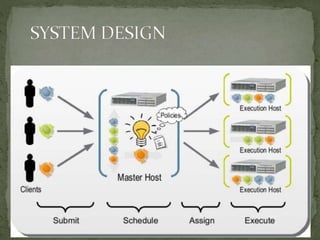
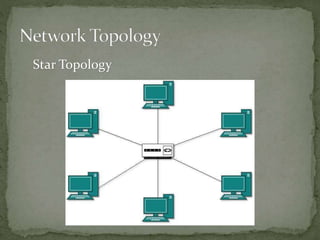
Star Topology
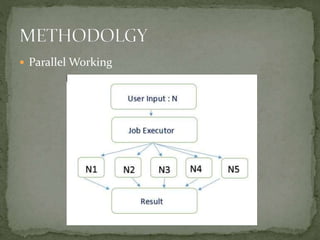
 Parallel Working
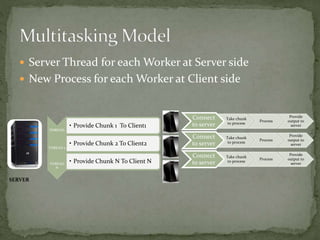
 Server Thread for each Worker at Server side
 New Process for each Worker at Client side
SERVER
THREAD1
• Provide Chunk 1 To Client1
THREAD 2
• Provide Chunk 2 To Client2
THREAD
N
• Provide Chunk N To Client N
Connect
to server
Take chunk
to process
Process
Provide
output to
server
Connect
to server
Take chunk
to process
Process
Provide
output to
server
Connect
to server
Take chunk
to process
Process
Provide
output to
server
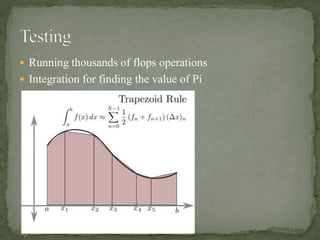
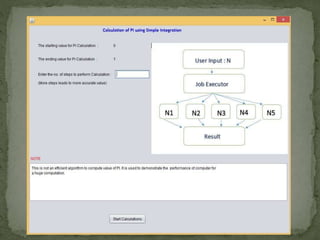
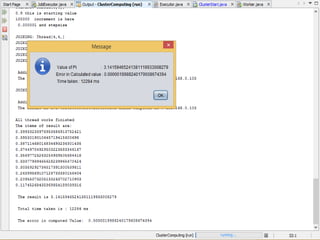
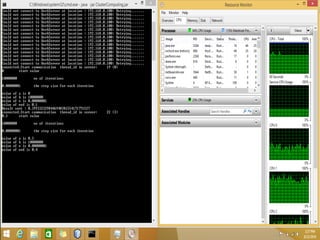
 Running thousands of flops operations
 Integration for finding the value of Pi
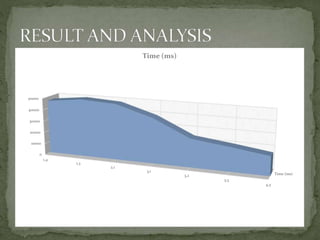
Time (ms)
0
10000
20000
30000
40000
50000
1,4
1,3
2,1
3,1
3,2
3,3
4,3
Time (ms)
1(10000) 2(20000) 5(50000) 7(70000) 15(150000)
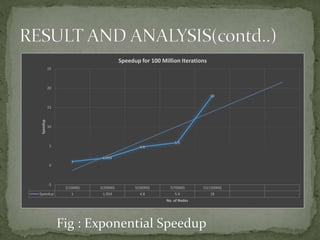
Speedup 1 1.954 4.8 5.9 18
1
1.954
4.8
5.9
18
-5
0
5
10
15
20
25
Speedup
No. of Nodes
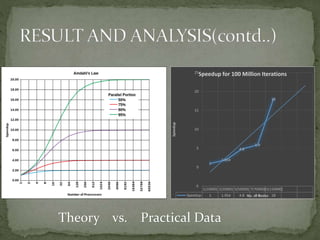
Speedup for 100 Million Iterations
Fig : Exponential Speedup
1(10000) 2(20000) 5(50000) 7(70000)15(150000)
Speedup 1 1.954 4.8 5.9 18
1
1.954
4.8
5.9
18
-5
0
5
10
15
20
25
Speedup
No. of Nodes
Speedup for 100 Million Iterations
Theory vs. Practical Data
 No official data for comparing
 Probably the fastest in Nepal
 Cryptography
 Data Mining
 Weather Forecasting
 Research
 Artificial Intelligence
 Not comparable with bigger super computer due to
less nodes
 Extension of Architecture library to define new
application
 Supporting Complex Computations
 Inter-process Communication for dependent tasks
 Implementing GPU for Computation
Websites:
 Don Berker. Robert G. Brown. Greg Lindahl. Forrest Hoffman.
Putchong Uthayopas. Kragen Sitaker. Frequently Asked Questions
[Online]. Available: http://www.beowulf.org/overview.faq.html
 Technopedia. Computer Cluster [Online]. Available:
http://www.technopedia.com/definition/6581/computer-cluster
 Dr. Wu-chun. Feng. (2015). The Green500 list- November 2015 [Online].
Available: http://www.green500/list/green201511
Books:
 Shiflet, Introduction to Computational Science: Modeling and
Simulation for Sciences, Princeton University Press, 2014.
 Kumar, Lenina, MATLAB: Easy Way to Learning, PHI Learning, 2016.
 Etter, Introduction to MATLAB, Prentice Hall, 2015
 Lemay Laura, Charles L. Perkins, Teach Yourself Java in 21 Days,
Samsnet, 1996.
Super COMPUTING Journal

Super COMPUTING Journal

  • 1.
    Santosh Pandey Ram SharanChaulagain Prakash Gyawali - A supercomputer( HYPE -2 ) Supervisor Prof. Dr. Subarna Shakya
  • 5.
  • 7.
     Speedup inmultiprocessing  Depends on parallelizable code S(P)=Speedup on P processors T(1)=Time to process in 1 processors T(P)= Time to process in processors f=Inherently sequential code p= Parallelizable code
  • 8.
     High performancecomputing for research  Achieving super computing at a cheaper rate than mainframes
  • 9.
     Muni Sakhya(1980’s)  16 nodes  First and the only one
  • 11.
     Middleware  NetworkArchitecture  Multicore Computers
  • 13.
     SIMD (SingleInstruction Multiple Data)  MIMD (Multiple Instruction Multiple Data)
  • 14.
     Every applicationdon’t have same parallelism model  Specific Applications must be programmed  Extend Methods of our Architecture
  • 17.
     Dynamic WorkerAddition and Reduction  Fault Tolerant  Scalable System
  • 19.
  • 20.
  • 21.
     Server Threadfor each Worker at Server side  New Process for each Worker at Client side SERVER THREAD1 • Provide Chunk 1 To Client1 THREAD 2 • Provide Chunk 2 To Client2 THREAD N • Provide Chunk N To Client N Connect to server Take chunk to process Process Provide output to server Connect to server Take chunk to process Process Provide output to server Connect to server Take chunk to process Process Provide output to server
  • 22.
     Running thousandsof flops operations  Integration for finding the value of Pi
  • 24.
  • 25.
    1(10000) 2(20000) 5(50000)7(70000) 15(150000) Speedup 1 1.954 4.8 5.9 18 1 1.954 4.8 5.9 18 -5 0 5 10 15 20 25 Speedup No. of Nodes Speedup for 100 Million Iterations Fig : Exponential Speedup
  • 26.
    1(10000) 2(20000) 5(50000)7(70000)15(150000) Speedup 1 1.954 4.8 5.9 18 1 1.954 4.8 5.9 18 -5 0 5 10 15 20 25 Speedup No. of Nodes Speedup for 100 Million Iterations Theory vs. Practical Data
  • 27.
     No officialdata for comparing  Probably the fastest in Nepal
  • 28.
     Cryptography  DataMining  Weather Forecasting  Research  Artificial Intelligence
  • 33.
     Not comparablewith bigger super computer due to less nodes  Extension of Architecture library to define new application
  • 34.
     Supporting ComplexComputations  Inter-process Communication for dependent tasks  Implementing GPU for Computation
  • 35.
    Websites:  Don Berker.Robert G. Brown. Greg Lindahl. Forrest Hoffman. Putchong Uthayopas. Kragen Sitaker. Frequently Asked Questions [Online]. Available: http://www.beowulf.org/overview.faq.html  Technopedia. Computer Cluster [Online]. Available: http://www.technopedia.com/definition/6581/computer-cluster  Dr. Wu-chun. Feng. (2015). The Green500 list- November 2015 [Online]. Available: http://www.green500/list/green201511 Books:  Shiflet, Introduction to Computational Science: Modeling and Simulation for Sciences, Princeton University Press, 2014.  Kumar, Lenina, MATLAB: Easy Way to Learning, PHI Learning, 2016.  Etter, Introduction to MATLAB, Prentice Hall, 2015  Lemay Laura, Charles L. Perkins, Teach Yourself Java in 21 Days, Samsnet, 1996.